

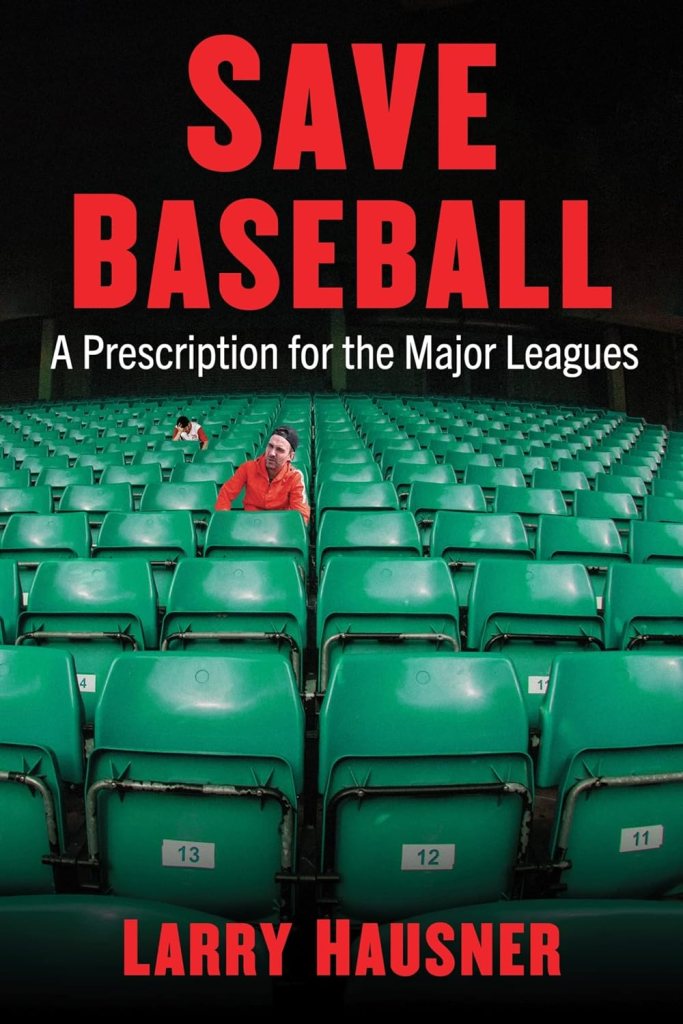
“Save Baseball: A Prescription for the Major Leagues”
The author:
Larry Hausner
The publishing info:
McFarland; 208 pages; $35; released Feb. 9, 2024
The links:
The publishers website; at Bookshop.org; at Powells.com; at Vromans.com; at Target.com; at BarnesAndNoble.com; at Amazon.com
The review in 90 feet or less
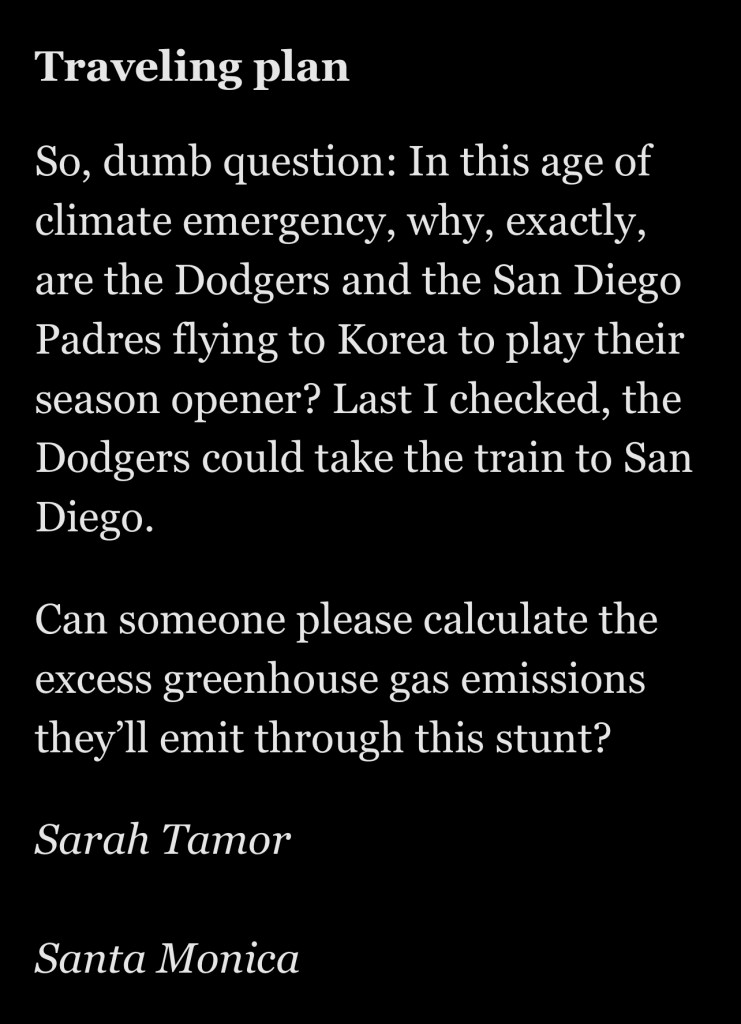
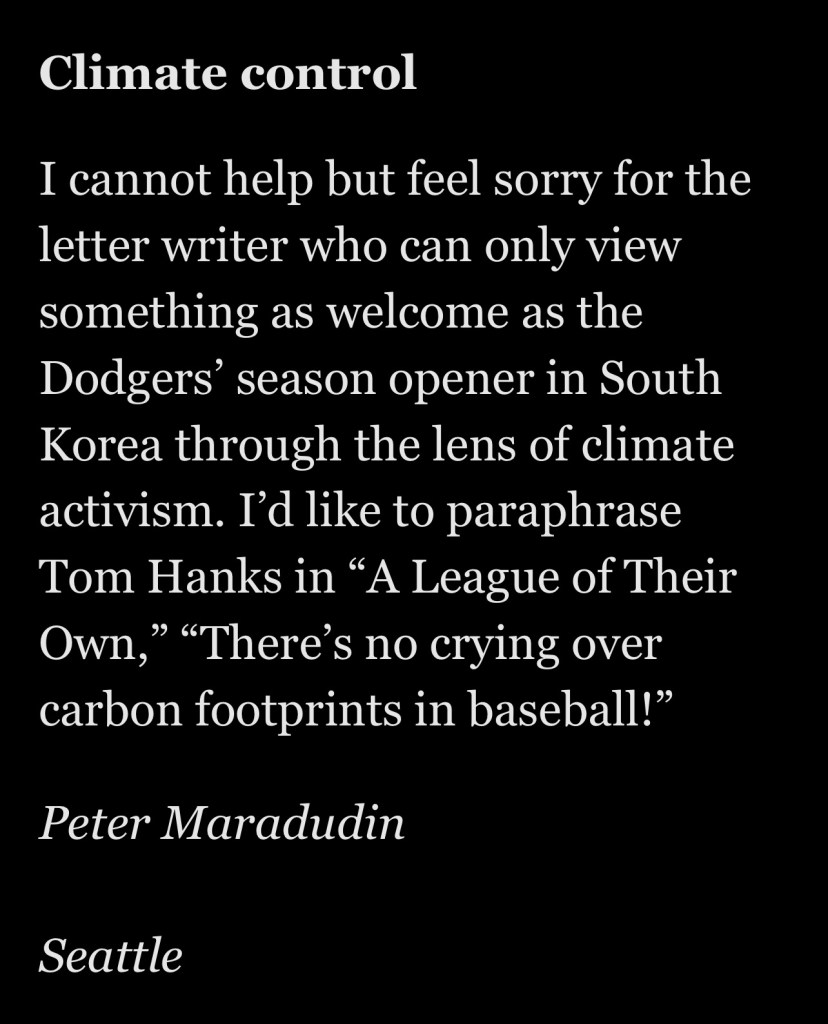
Was it just a dream, half-awake watching the Dodgers and Padres lap it up in South Korea thousands of miles away from their home bases on official business.
Or has March Madness taken on a ultra-sharp visual experience with our new Apple Vision Pro?
We are still learning what’s going on today and looking at tomorrow in the same glimpse. And what Korean-style baseball is all about. Now what are we supposed to do with the rest of our day/night? Listen to day-long replays of the Dodgers’ radio play-by-play as a sleep activator?
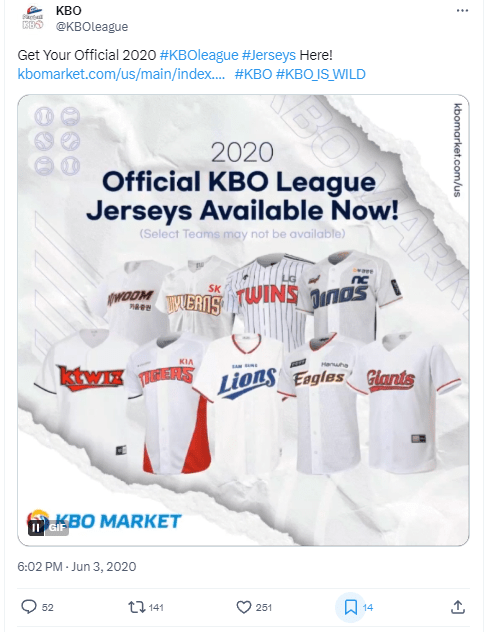
It kinda reminded me of when, during the early days of COVID-19 lockdown and ESPN desperate to fill air time and generate ad revenue, someone decided to throw on live Korean Baseball Organization games in 2020.
KBO-Oh no you didn’t. With 2020 hindsight, was that a good idea now?
We learned baeball isn’t just baseball. Quality of play matters. Player identification draws connection. Team logo recognition helps. We couldn’t even bet on those things, so why were we even engaged (more on that later)?
The smart money was realizing that if one was drawn to KBO, it was only to cure boredom, and that was kind of sad unto itself. We had much bigger time-consuming issues to deal with. Sports didn’t have to be there as a distraction — especially if players were at risk. We needed to focus time and attention, time and time again, to our own safety, accruing groceries, taking care of loved ones.
Baseball boredom may not have been cured in the U.S. since some strategic rule changes took place last year and were analyzed as overall successful. But baseball, we can all agree, is still in a “save” situation.

As he explains in the preface of “Saving Baseball,” baseball fan/dad Larry Hausner had what he thought was a swell idea to celebrate the 16th birthday of his son, Jacob: Get tickets to the 2016 MLB All Star Game at Petco Park in San Diego. It was just down I-5 from their place in Mission Viejo. His son’s birthday and the game fell on the game day.
Except Jacob turned down the idea. “Baseball is boring,” he said.
It’s enough to make a dad reassess his priorities. What have I done wrong?
The boringness of baseball, often attributed to those who won’t let go of tradition and old-guard values, might be its most endearing quality when compared to other sports. It inspires conversations among strangers. It was actively passive. One can fetch a beer and hot dog and not miss a lot. One can get up, and take a walk around the park for some stimulation if necessary.
Hausner found this episode to be a teachable moment. Because he’s an educated guy, in the education field, and even wrote a book about it in “The Principal Coaching Model: How to Plan, Design, and Implement a Successful Program.“
The associate prof of education at USC, as explained to the San Diego Union Tribune in 2021, found this career diversion as he was trying to enunciate his way through a sportscasting pursuit during his 20s.
“I talked with some minor league players about what they do in the off-season, and one was a substitute teacher,” said Hausner, who had a bachelor’s degree from Cal State Fullerton in radio, television and film. He decided to try substituting too and “felt it was a calling, serving students and the community. I never looked back after I started.”
Hausner grew up in Tustin, got a teaching credential at Chapman University, a master’s degree in school administration from Azusa Pacific University and as doctorate in K-12 leadership in urban settings from the USC. He’s been a teacher, assistant principal and principal in Orange County and down San Diego way.
He said some are hesitant to go into administration because the job means having to speak to large audiences, “but I had those (skills) in my toolbox,” he said, alluding to his sports broadcasting work with the short-lived Sports Channel L.A. (1989 to 1992), doing pregame reporting on the Dodgers and Angels, and some minor-league radio play by play with the Rancho Cucamonga Quakes.
Hausner has spoken up and is using more tools — critical thinking, excavating information, doing interviews, problem solving. He notes in the bibliography he conversed with people like George Will, former Dodgers Justin Turner and Jerry Reuss, former MLB managers Joe Maddon and Buck Showalter, writer Jay Jaffe, USC professors John Roach and David Carter, former MLB GM Bill Bavasi, plus Darrell Miller, the former Angels catcher now involved in MLB youth development (and brother of Reggie and Cheryl Miller).
It’s Carter, our world-traveling friend and one of our most vital go-to sources on sports and business over the last couple of decades, who says on page 82 about baseball: “(The venue experience) needs to be more contemporary. Younger and hipper make sense. Teams are adding craft beers perhaps aimed at the 40-something fan. Right now, the MLB game is uneventful. It’s not cool.” He also adds on page 25: “Baseball must take the risk (of trying possible solutions) if it plans on continuing as a major sport in America.”
We may not agree on all the ways Hausner puts out to lead this revolution, but “we can have a healthy disagreement about what the issues are or are not,” he writes.
We agree. So amidst what Hausner suggests about the value of pitch clocks, better replay, ticket subscriptions, creating stronger youth academies, reversing the minor-league team contraction model, brand building and improving in-venue experience, two issues jump out for our purposes here:
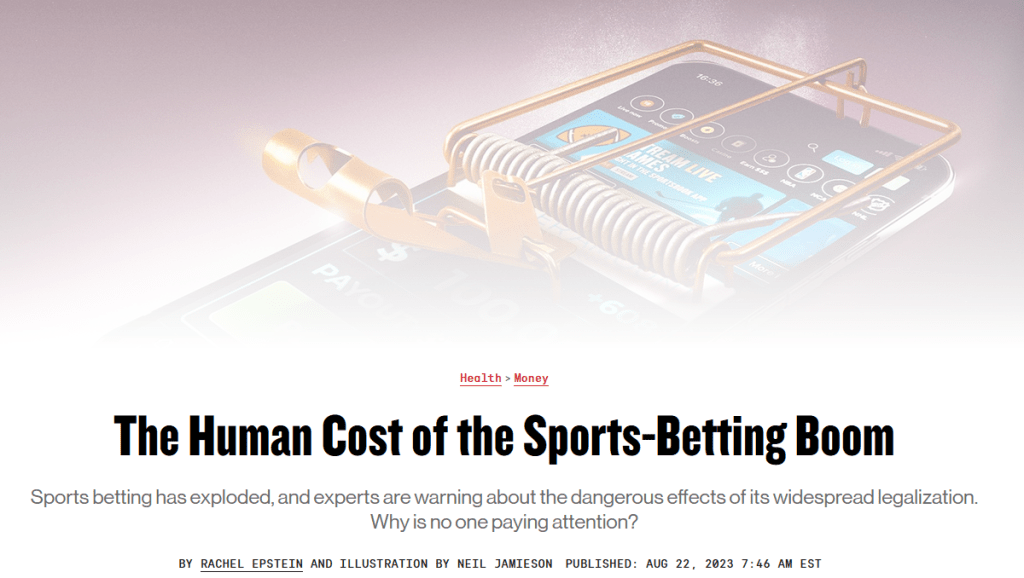
== Sports betting will lead to better interest in the game.
Mike Palm, the VP of operations for several Las Vegas casinos and a regular on the gaming channel ViSN, tells Hausner in the book that the perception of this activity has changed in the years (decades … century?) since the 1919 Black Sox Scandal. We know better. This is now a part of society and a growing component of the sports’ overall business.
Gambling improves the fan experience, he insisted, because they’ll stick through a 9-2 game in the fifth inning to see how it ends up because they have over-under action on it or other mercenary measures. Mobile platforms make it all so much easier now as well. It’s community building. You know, like fantasy baseball once was.
Hausner cites more studies and others in the business trying to advance the normalcy of gambling. Hauser’s conclusion: Sports gambling is “clearly acceptable in American culture. Teams … should embrace sports betting and, better yet, increase their marketing revenue by creating partnerships with one of the sports betting entities.” He brings this up in Chapter 3 about “Withering Fan Experience,” and again at the end when he reviews more than two dozen action items.
It’s an easy trap argument. All Hausner has to do here before going forward is to go back in his own book, on page 62, in a chapter about “America’s Pastime in Recession,” when he gets into the history of cheating scandals. The gist of it is the Houston Astros’ 2017 kerfuffle.
This is what sports gambling can circle back to post-Black Sox. Or worse.
No matter how many checks and balances in place, sports gambling seeps into our culture like a virus that has very little immunity to its harmful ways. Think of it as bits of plastic that have entered our digestive system over time because of our dependency on its usefulness. This is also toxic to the observers of the game who need “extra juice” to become more invested in a contest’s outcome.
The adrenaline rush of an NFL, NBA or NHL game isn’t the same in the MLB, and that’s on purpose. Amping things up aren’t necessarily needed to artificially infuse baseball enjoyment.
For some, maybe. For generations beyond us Boomers who are screen-dependent and all the other cliches attached to that. But gaming is a poor road to addiction and passive ways of solving it once we’ve introduced this to people who can’t self-control their habits. Especially if this is how we decide this is a way to bring Gen Zers into the tent.
Sports gambling is the frog in the pot of slow-boiling water. It’s not a matter of if, but when, it leads to a crisis in sports and fans’ own financial stability. Baseball should take leadership in knowing this. History doesn’t need to repeat itself. The game almost shut down, and its trust was betrayed, by sports gambling. You can’t wish this into a cornfield. The slope isn’t slippery. It’s going off a cliff. Bet on that.
Or maybe we can get a straight answer out of Shohei Ohtani’s interpreter about his gambling habits have now become problematic.
== The Korean Baseball Organization experience.
Fancy that.
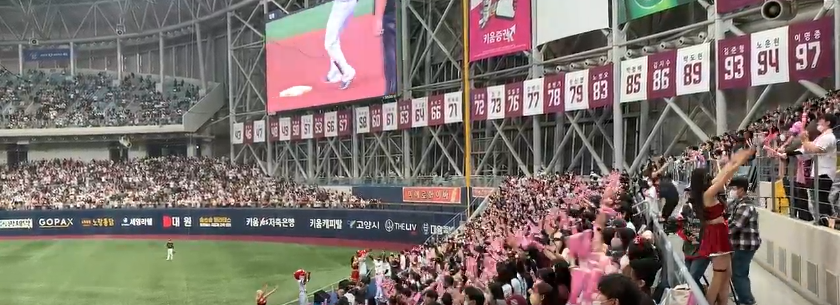
Hauser talked to Jeeho Yoo of the Yonhap News Agency about how the Korean fan experience. You’ve now got a new taste of constant cheering, singing, dancing and chanting, often prompted. Players have special theme songs. Fans stay until the end. As for MLB’s involvement and acknowledgement, South Korean fans have bought into it even more.
(Remember when the Dodgers had Hee-Seop Choi as their first baseman? We can still hear the chants of his name after his three home-run day in 2005.)
“MLB is like an opera; KBO is rock and roll,” Hauser quotes an expatriate and university professor.
That imply the general public isn’t sophisticated enough to appreciate The Marriage of Figaro — roll over Beethoven and tell Kluszewski the news — and that again is OK in the general scope of things.
If one really wanted a change of pace, find a Savannah Bananas game. Where the music never stops, rules change on the fly, a time limit is enforced, and players (and umpires) dancing is required. As we brought up during the 2023 book reviews, the Bananas foster frenzy wherever they go. Tickets resold are frowned upon. This could be Americanized KBO, without the thought that baseball needed its own version of the Harlem Globetrotters to over-value the entertainment side of a competitive contest.
Savannah Ball could be a template that, as it tours the U.S. map, provides the next iteration of the Major League Baseball game. Don’t slip and fall on this idea. Kind of what the XFL did for NFL ingenuity when things got stale, as least in how TV covered the game.
Witness more KBO-type cheering yourself during the Dodgers-Padres series. It may be easy to dismiss as a cultural thing. But it has merit if it can be organic instead of force-fed.
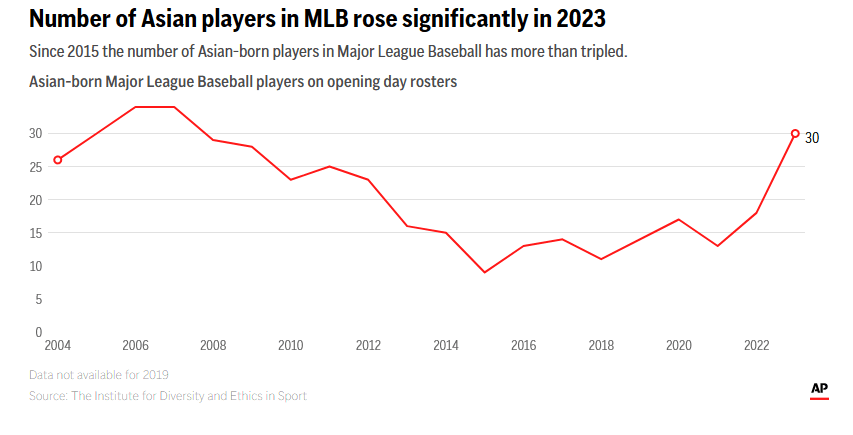
One other thing to consider: As Ohtani continues to ignite Japanese culture to embrace his fame and attend games — and become fans — more and more Asian players will aspire to become MLB players. It felt that was something attainable when Chan Ho Park signed with the Dodgers out of Korea in 1994. With that will come more cultural change for the fan experience.
I like baseball because I like baseball. But if people are also having fun at the game, all the better the atmosphere. It’s a great vibe that could translate to the U.S., especially in markets like Tampa, Phoenix or Seattle. Or whatever minor league parks are still in operation.
How it goes in the scorebook:

Grade A for all the effort, execution and evaluation. Just please rethink endorsing gambling as something that’s already normalized. There’s a reason why California voters have not passed this law yet.
“There you have it, MLB — your marching orders,” Hausner concludes. “Now get to it. Your future depends on it.”
It depends on what you really want to focus on and cultivate. Baseball can wither away for future generations based on its ways. Or it can be taught to be observed and appreciated. It can also be saved by its traditions and rituals as other things are tried and fail in more desperate sports ventures.
There is amazing grace in this game. Keep tossing around ideas. Just read the room and make sure the paying fans are on board before force-feeding ideas that can be cultural specific.
Post script: Hausner said in the SDUT interview that he now lives in downtown San Diego, closer to his latest education administration role. And closer to Petco Park. We suspect Hausner was up very early/very late to catch the Padres playing the Dodgers, watching the MLB start its season from a distance, and wondering: Is this better than KBO? Yes, it is. For many reasons.

 Tom Hoffarth's The Drill: More Farther Off the Wall
1 thought on “Day 2 of 2024 baseball book reviews: Can baseball sell, or save, its soul in Seoul?”