

“The Catch: A Novel”

The author:
Jon Weisman
The publishing info:
Self-published; 378 pages; $13.99; released Nov. 1, 2023
The links:
At the author’s website; at the author’s Substack site; at the author’s IMdB.com site; at Bookshop.org; at Powells.com; at Vromans.com; at TheLastBookStoreLA; at Skylight Books; at PagesABookstore.com; at BarnesAndNoble.com; at Amazon.com
The review in 90 feet or less
Give Jon Weisman the benefit of the doubt. In the lengthy process it took him to purge his first novel from his artistic soul, baseball somehow had to be stitched, baked, sautéed and seared into the plot, the twists, the detours and the final out.

Just don’t go into this thinking it’s a “baseball” book. Which can be a McCovey-like stretch since the author has been the Dodgers’ vice president of communications since September of 2023, and the team’s former Director of Digital and Print Content (2013 to 2017) is the creator of the website DodgerThoughts.com and the author of the regularly updated “100 Things Dodgers Fans Should Know & Do Before They Die” (Triumph Books, 368 pages) as well as the 2018 fantastically researched “Brothers in Arms: Koufax, Kershaw and the Dodgers’ Extraordinary Pitching Tradition” (Triumph Books, 384 pages). And, from a silver screen perspective, he’s also one of the story lines in the 2009 documentary “Bluetopia: The L.A. Dodgers Movie.”
Weisman is wise enough not to just dodge baseball altogether here. One of his three main characters is a) the son of a hard-ass baseball coach who becomes the inspiration for his own best-selling book, b) a former University of Texas outfielder whose claim to fame is running down a long fly ball for the final out of a College World Series win against USC (we looked it up — that is complete fiction) and c) has an adorable mom who watches as many games as possible on TV and loved her time as a host for minor-league players in her North Carolina suburb.

But other than that …
So when Harry met Maya, when Maya met Daniel and when Daniel met Harry, it’s up to you to find those “Easter eggs” hidden amidst the pages. A quote from Zack Greinke (which, in real life, is somewhat difficult to extract). A mention of a Craig Biggio glove (was it a catcher’s glove, a second baseman glove, a center fielder’s glove or) …
Time out. Our pitch clock has expired. We now take a personal diversion: Our experience is that baseball as the focal point of a novel can be hit and miss. Some classics are out there. Others reach great potential. Other not-so-classics have made their way through the pipeline, ended up here, and we were far from dazzled.

Case in point: 2023, The Fireballer. Also case in point: 2022: The Cactus League. For what it’s worth, this isn’t even the first novel we’ve reviewed titled “The Catch.” In 2022, Alison Faribrother’s first book for Random House caught our eye. Here, “The Catch” is the name of a poem recited at a father’s funeral. We were curious as to why there was something called “a lucky baseball” that was to be given to someone important, so we read the book. Fine.
Back to the game: As Weisman explains, this novel idea has been rolling around in his head for some 30 years, and he dedicated three years to putting it together. He purposely steers it clear otherwise of anything horsehide. It’s all about why three friends at critical points in their connected lives try to find out if one can help the other, and help another, and figure out some of the challenges in their journeys can be reconciled.
Still, it kind of reminds us how, anyone who understands the emotional power and hold of baseball and the way it relates to life, how it’s centered on relationships and multi-generational connections, it can’t help but somehow be included. It’s just how it is.
An author Q&A:

Weisman explains more about his book responding to our queries:
Q: The back of the cover synopsis goes this way: “What happens when three old friends in crisis fall into an unexpected love triangle? (The characters) … embark upon an emotional journey that forces them to confront unresolved pain, present-day traumas and powerful desires, leading them to question the very meaning of love and fulfillment. … a tale of ordinary people seeking the extraordinary – or, if that’s asking too much, some damn peace of mind.” Since we weren’t sure if you were given the chance to write that or someone else did, we were wondering: If you have just a few seconds to describe the plot to potential readers, what’s your pitch?
A: I did write the synopsis and the elevator pitch is the first sentence of the synopsis, though depending whom I’m talking to I will say “midlife crisis.”
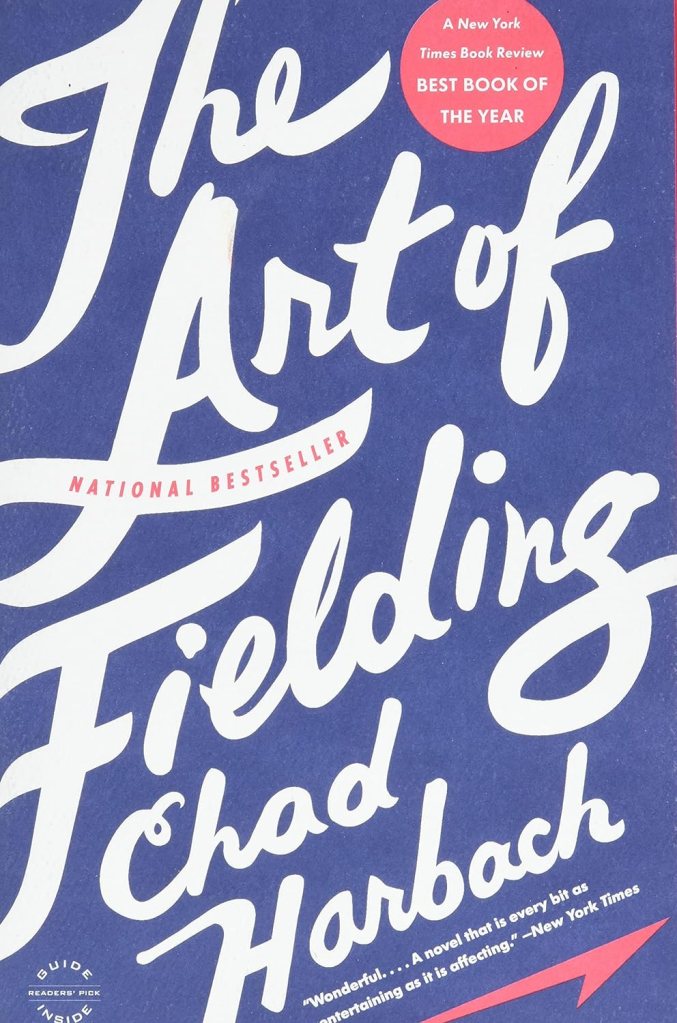
Q: Are there novels you’ve read, or authors you’ve come to admire, that you might have channeled into this – another way to give a reader an idea where you’re coming from? Or, like Vin, did you purposely not read or listen to other writers so as not to influence how you wanted to do your own novel?
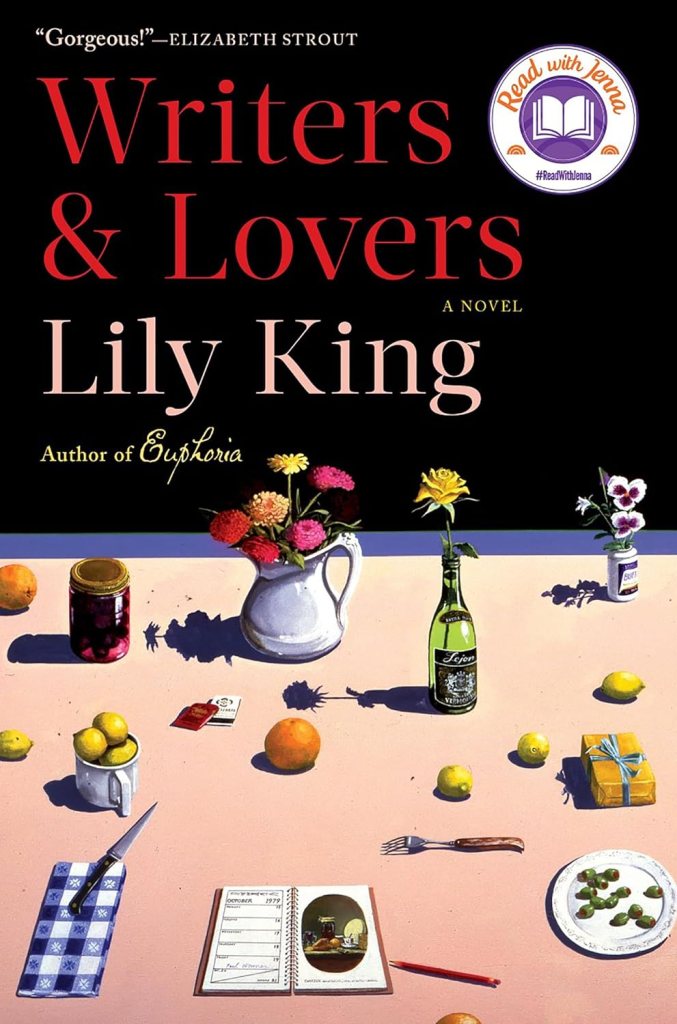
A: Over the course of writing what was my first novel, I definitely read more fiction to immerse myself. I think I have a style all my own, but I don’t mind bucking Vin’s advice in this case. Chad Harbach’s “The Art of Fielding” — which has far more baseball than my book– is the biggest influence for “The Catch,” with Lily King’s “Writers & Lovers” close behind. They have the style and sensitivity and insight that I have aspired to. But as you find when you read the book, music was also a big influence, and Emmylou Harris was my muse.
And going back to your first question, the Patty Griffin lyric that I use ahead of the epilogue was something I came upon very late but really captures everything I wanted so well.
Something as simple as boys and girls
Gets tossed all around and then lost in the world
Something as hard as a prayer on your back
Can wait a long time for an answer
Q: What other novels have you read for pleasure or purpose that have influenced your writing over the years?
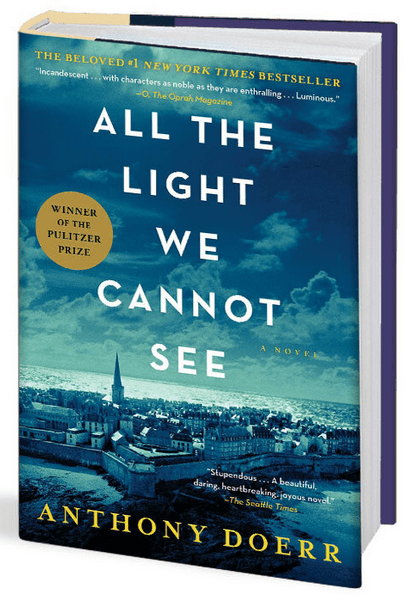
A: Alongside those two novels, “All the Light We Cannot See” is one of my three favorite novels of the 21st century. For years, I would say John Updike’s “Rabbit, Run” was my favorite novel, but (recency bias or not) the passage of time has changed that. After I read “Writers & Lovers,” I got my hands on everything Lily King has written and read five other books of hers in a matter of months. Though this list came after I was done writing “The Catch,” this Slayed by Voices post goes a long way toward revealing my taste.
Q: What was the process you’ve alluded to about settling on the title of “The Catch”? It is pretty catchy actually?
A: I had a really tough time with the title, and I relied a lot upon friends for their input. Two previous contenders were “What Do the Normal People See?” and “The Two That Got Away.” Those were not widely loved, and when I came up with “The Catch,” I won a lot of people over. I had reservations because I did not want people to think it was only another baseball book, but ultimately the title was short and sweet, and it had enough multiple meanings that I got on board.

Q: Writing this as opposed to non-fiction, historical fact-digging about the Dodgers, how would you characterize the multi-character fiction writing process here? Was it as exhilarating as it might’ve been exhausting?
A: It was so much harder to do than my Dodger books that if I had known, I don’t know that I would have started. It certainly was exhilarating and exhausting. While finding writing time that didn’t conflict with my day job, I ended up spending three years (at least 85 percent revising my original draft). In contrast, I outlined and wrote each of my Dodger books in under six months. It was much easier for me to translate history into narrative than create characters and situations from scratch and filter them through the themes I wanted to explore.
Q: What did it mean to you to have full control of it from start to finish and the process of actually putting a book together in today’s publishing world?
A: I loved the control. I got lots of feedback from a diverse spectrum of friends-and-family readers, but I do like being my own editor. That said, I did zealously pursue a publisher before shifting into the self-publishing mode, which ended up bringing its own rewards.
Q: Without giving away too much, can your own outlook on life and why we exist mirror the darkness of Alexandra’s as well as the simplicity of Rosaline’s, and can they co-exist?
A: This is an overgeneralization, but all the characters in “The Catch” have some aspect of me in them. So, the short answer is “yes.” I do believe in both “the scam” that Alexandra describes and the wry hope that Rosaline embodies.

Q: Do you envision making a film or TV screenplay of this now? Or selling the rights to someone who might – and then watch the process Harry goes through sour you on the whole process?
A: I won’t lie to you — I do believe my story would adapt well to the screen, though the direction I took in publishing has muted that dream. If it came to be, I think I would have an easier time with the process than Harry did because for him, it was his true-life memoir being transposed, as opposed to something he made up. Another big influence for “The Catch” was the movie “Local Hero,” (editor’s note: a 100 percent rating for reviews on RottenTomatoes.com) and I wish the entertainment climate today enabled more films like that to be made.
How it goes in the scorebook
Don’t play a game of catch-up here.
If you’re not sure about trying a baseball-somewhat-influenced novel, it’s a catch-as-catch-can pursuit for this one. And by the way, nice catch, rookie.
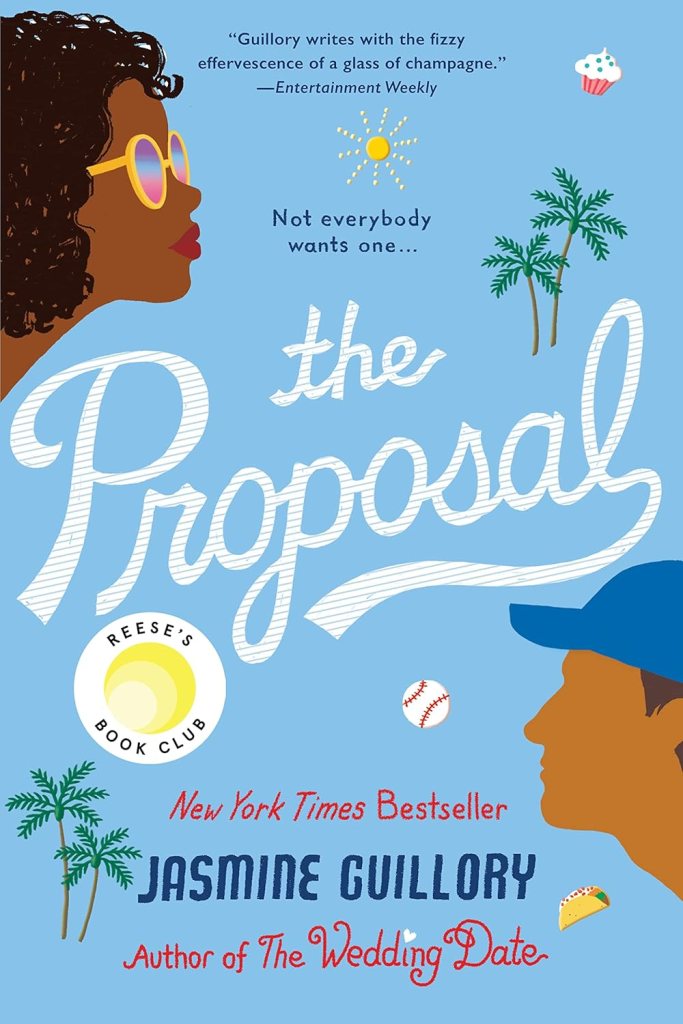
This won’t be subjugated to be shelved as a “baseball” book – it is about as much as Jasmine Guillory’s “The Proposal” is a baseball book because the cover is very Dodger-centric and the hook is how a guy proposes to his girlfriend on the Dodger Stadium message board and she is mortified. And we once thought enough about that one to make it the lead to an L.A. Times “Morning Briefing” item (back when such a thing existed).
Instead, in “The Catch,” one will find threads of baseball comfortably holding it together, especially for those who’ve come to understand its emotional bonding power and the way it relates to life, mult-generational relationship and forgiveness, all of which resonate in this novel.
There is no contrived baseball, dialogue, or scenery, or descriptions that complicate or manipulate, or divert from the true story. Quite the opposite. It’s very real baseball visual and language incorporated, and it’s very welcome as a way to connect human beings with human frailties and deep emotions that connect our present to our past, and make us understand how maturity and life can come together at a particular moment, and make it most impact, in helping us understanding how we’re just trying to connect with people and make sense of a lot of things that don’t make sense with life and death, marriage and divorce, father, son, relationships, parent children, relationships, husband, wife, relationships, father, daughter, relationships, and multi racial realities.

Take to heart this blurb by Josh Wilker, author of “Cardboard Gods,” who relays:
“What do you reach for, and what do you miss? You can feel the pulse of these questions in every great story, and so it’s no surprise that they’re at the aching heart of … Jon Weisman’s moving exploration of love, loss, mistakes, and healing. ‘The Catch’ manages with wisdom, humor, lyricism, and empathy, to pull us along to an even deeper realm of questioning: How do you keep reaching? How do you hold on? You’ll find yourself racing through its pages to pursue answers to these questions for the wonderfully three-dimensional characters Weisman has created, and you’ll come away from the story, as with every great story, with a powerful reminder that the questions are at the center of your own aching heart.”
You can look it up: More to ponder
== The Atlantic recently released its list of the greatest American novels. The list includes 45 debut novels, nine winners of the Pulitzer Prize for Fiction, and three children’s books. Twelve were published before the introduction of the mass-market paperback to America, and 24 after the release of the Kindle. At least 60 have been banned by schools or libraries. Together, they represent the best of what novels can do: challenge us, delight us, pull us in and then release us, a little smarter and a little more alive than we were before. You have to read them. (As well as get an Atlantic subscription).
In Episode #242 of Rob Neyer’s SABRcast weekly post posted in late November, 2023, Neyer and Weisman talk about things such as: How former St. Louis Cardinals player and manager Eddie Dyer finds his way into the narrative, why Reggie Smith was his favorite Dodger growing up (versus everyone else’s choice of Steve Garvey) and Don Newcombe was someone he wish he could have done a biography about …
How he wanted to grow up to be Vin Scully and the rest of his career journey (see the documentary “Bluetopia“), why he idolized Timmy Lupus from “The Bad News Bears,” and why he doesn’t mind including alternative Dodger Stadium routes – despite his father’s disappointment – in his previous book “100 Things Dodgers Fans Should Know & Do Before They Die.”

Let it be known: Weisman wrote one of my favorite essays in my forthcoming book, “Perfect Eloquence: An Appreciation of Vin Scully,” one I purposefully placed as the final of 67 contributions because of the impact it had on my emotional pull.

 Tom Hoffarth's The Drill: More Farther Off the Wall
1 thought on “Day 3 of 2024 baseball book reviews: Two guys and a girl, but no pizza place — or when Harry met Maya, Maya met Daniel and Daniel wished Harry could just get over his college playing days”