
“Remembering Torn-Down Ballparks, Over a Cold Beer:
A Beer Table Book Celebrating Lost Ballparks”

The author: Ken Finnigan
The publishing info: Sports Publishing LLC; 124 pages; $24.95; released March 5, 2024
The links: The publishers website; the authors website; at Bookshop.org; at Powells.com; at BarnesAndNoble.com; at Amazon.com
The review in 90 feet or less

Season 5, episode 22: “Seinfeld” closes the 1994 run with Kramer creating and marketing a coffee table book about celebrity coffee tables– which he insists can be used as an actual coffee table. Somehow, he’s smooding it up with “Regis and Kathie Lee” , which seems more far-fetched than the actual premise.
Considering how Kramer also thought up the idea of car periscopes, bathtub garbage disposals, butter aftershave, tie dispensers, a combo ketchup/mustard bottle, a rubber bladder for an oil tanker, a do-it-yourself pizza pie restaurant, beach cologne and the manssiere, perhaps this was pumping the breaks on his Einstein existence.
Except, there are some retailers today who sell a replica of the Kramer Coffee Table Concept. One Etsy creator fashioned an actual size table, in the shape of the cover, with pages. Just $98.
There will likely be no such tribute, or tributary revenue streams, for what Ken Finnigan created here in a 8.1 X 10.2 X 0.7 inch publication weighing in at a meager 1.6 pounds.
Finnigan, a self-proclaimed home beer brewer and Long Beach State grad with a degree in civil engineering, has the endearing sales pitch to this project: Going back to Chicago’s Comiskey Park in 1990, he and his older brother, Tom, took road trips to examine where former high-profile ballparks used to exists, and what they’ve become. It could have easily started with L.A.’s old Wrigley Field.
As Finnigan says in the author’s note: “As an apprentice bricklayer in younger days, I used masonry blocks to build. To hear of ballparks dismantled in piles of bricks shards seemed like an ironic twist of fate.”
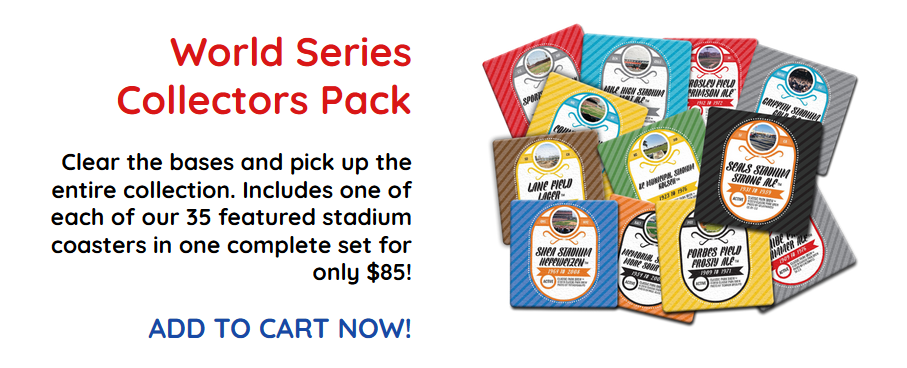
So the idea from that idea was: Why not create a souvenir, or something tangible, that gives baseball fans a sense that they have a piece of generated memorabilia from those old parks. We’ll take them back to write about 34 old parks. And then make beer coasters. To sell. At $3.50 each. Because it would be fun.
Let us know how this plays out.
How it goes in the scorebook
A bad-hops grounder. Maybe it results in a single purchase. Maybe it’s still fielded cleanly. The play is ready for some sort of review.
It likely sells in Milwaukee. Or St. Louis. Or at a kiosk outside a craft beer festival in San Diego.
It’s just that the sales pitch seems to make the book somewhat irrelevant to the bigger pitcher.
I’ve had my own lost ballpark trips during my travels. It’s part of understanding the city’s history. In Pittsburgh, it was the Forbes Field visit, seeing the placement of the old home plate in a University of Pittsburgh building hallway, and the old fence. In St. Louis, it was where older versions of Busch Stadium was.
It started with the 40th anniversary of the raising of L.A. Wrigley Field, and doing a story about it that included informing the president of the Wrigley Little League why it was so named. He didn’t even know.
I made countless trips to Jack Murphy Stadium in San Diego in the ’70s, ’80s, ’90s … went to the ’84 World Series there. And a side trip or two to the old Lane Field to see if we could see the ghost of Ted Williams.
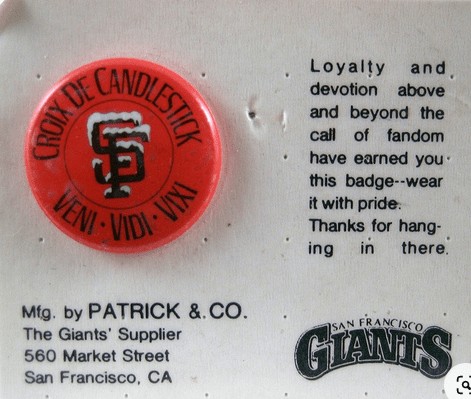
Several games at Candlestick Park — including a Sunday doubleheader against Houston where me and a couple of pals drove all night after our midnight newspaper shift ended Saturday, saw both games, fueled up and drove back. We collected a few of these pins over the years as well.
I have ventured over to former L.A. ballpark sites such as Washington Park, Vernon Stadium and Gilmore Field, trying to imagine.

Maybe I’m missing something here, but rarely have been as disappointed with the product that I felt something, in my cold brew, was over promised and under delivered.
Moreso, if you buy into the book’s premise, then you are apparently led to believe that the real experience is to buy into a side hustle this Carlsbad-based entrepreneur has developed with selling nostalgia under the premise of alcohol consumption.
We can all coast through life using coasters or not, but the sales pitch of buying coasters as a sort of a upscale baseball card and conversation starter for someone recalling a old stadium in a Wikipedia sort of tribute comes off as somewhat disingenuous.
A bit lazy with the hazy.
Far more books that go much deeper into history and non-repetitive paragraphs about ballparks that once existed. Track those down tenfold before using this book as one giant roller coaster ride.
Or, then again, raise your stein to modern day ingenuity, dazzling marketing and a man’s attachment to his beer and his baseball life, and yearning for the past.
If you can make baseball great again by printing up some alliterative coasters — FWIW: There are 35 coasters for 34 stadiums, as Ebbets Field gets two — cheers. If someone bought me the set as a gift, I’d probably use them instead of store them away. Because I’d feel spending $85 was a nice investment they made for my entertainment and art appreciation over an L.A. Wrigley Rye Ale (trademark, apparently).
Otherwise, with our reference point to Coasters, we all about this kind of searching:
You can look it up: More to ponder
It’s not lost on us that at least one book about lost ballparks we reviewed in 2017 still holds up as enlightening, respectful and, most important, more photos. We’ve excavated it from the archives:


 Tom Hoffarth's The Drill: More Farther Off the Wall
1 thought on “Day 5 of 2024 baseball book reviews: Crying in our beer”