

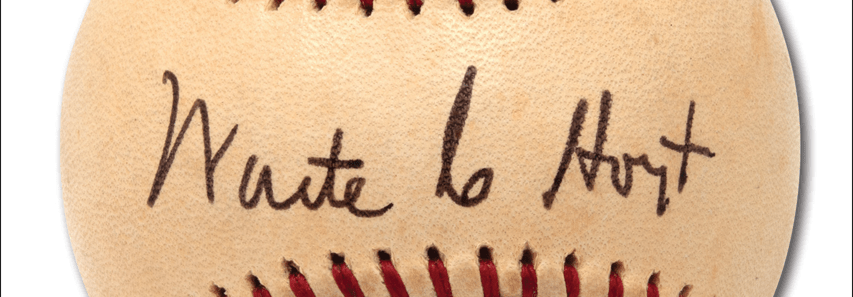
“Schoolboy: The Untold Journey of a Yankees Hero”
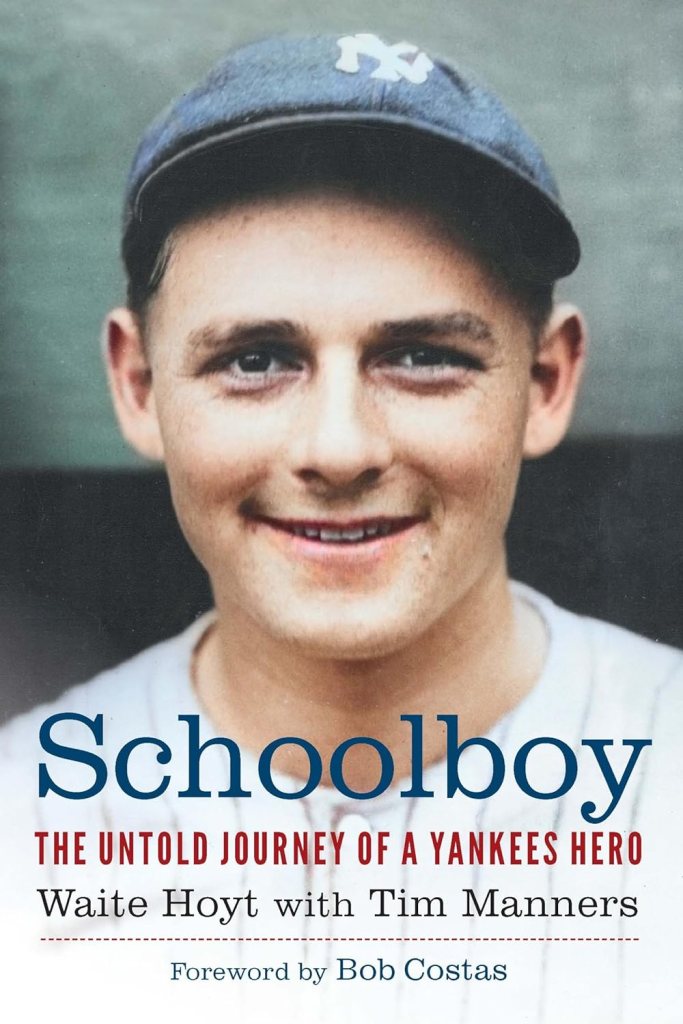
The author:
Waite Hoyt
Tim Manners
The publishing info:
University of Nebraska Press; 260 pages; $34.95; released April 1, 2024
The links:
The publishers website; the authors website; at Bookshop.org; at Powells.com; at BarnesAndNoble.com; at Amazon.com
The review in 90 feet or less
Wait a second … “Schoolboy” Waite Hoyt has finally come out with his story? What have we been missing here?
Who’s the fool of this April 1 prank?
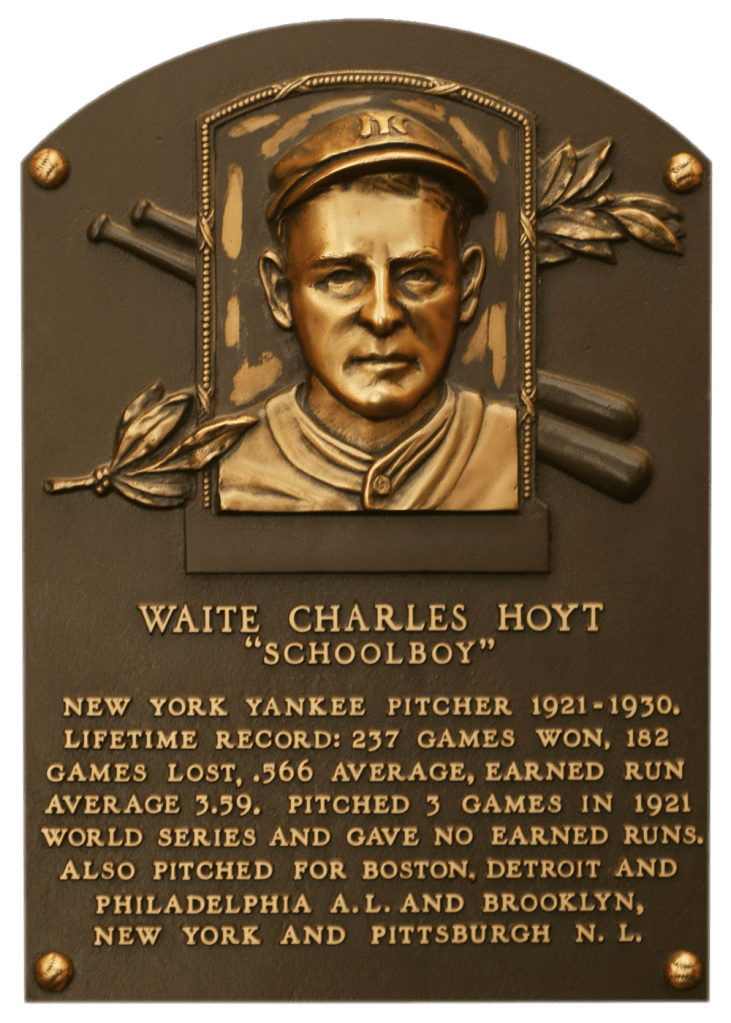
For all intents and purposes, this certified Baseball Hall of Famer, and one of the most well-known baseball broadcasters of his day, has just been waiting for his close-up.
It got done, nearly 40 years after his death.
Hoyt may seem like an ancillary part to the 1920s-era New York Yankees’ dynasty. Sure he went 22-7 and 23-7 in back-to-back seasons – but these were the ’27 and ’28 Yankees. Aside from that he won 19 games in back-to-back years with the Yankees in the ’21 and ’22 seasons. And 18 more in ’24. And 17 to boot in ’23.
That’s 157 total in his 10 years. When he retired, that was fourth all-time in franchise history (and now sits ninth, as well as ninth for pitching WAR at 36.4 and eighth in innings pitched and games started).
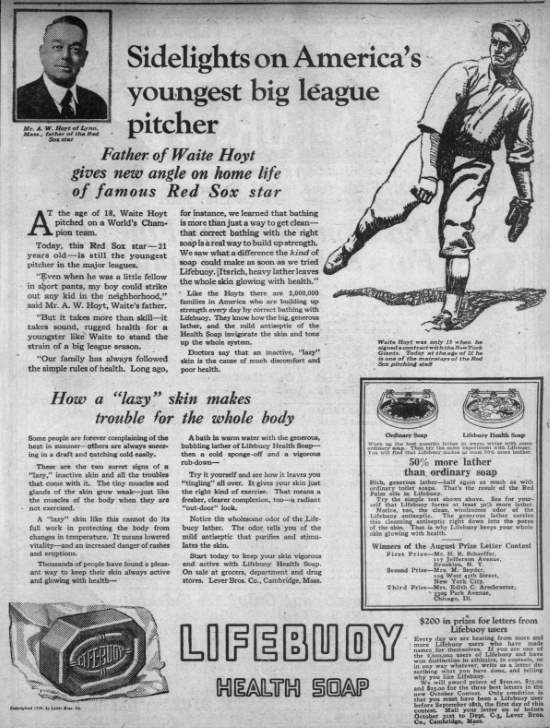
Yet for 14 of the 15 years Hoyt mingled with six other franchises, he had a sub-.500 record. The exception was a 10-5 stretch for the Philadelphia Athletics for half a season of 1931, when he was selected off waivers from Detroit in July. But then the A’s released in the ’32 off season, he signed with his hometown Brooklyn Dodgers as a free agent, and then he was released in June of ’32.
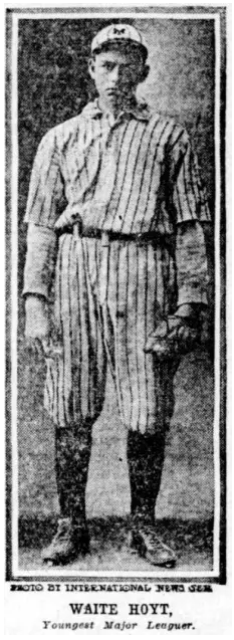
It’s tough to think of him as a young man, but his claim to fame for many years was that he was a teenage player, under contract with the New York Giants, thanks to manager John McGraw.
Yes, just a school boy.
But in the end, he circled back to Brooklyn and was sadly discarded as a 38 year old by the Dodgers in 1938 after an 0-3 start in six games and only one start.
Because of the nickname, Hoyt may even be confused in baseball lore with Schoolboy Rowe, who overlapped Hoyt’s career for six seasons (two of them as an All Star with three World Series Detroit Tiers teams).
Now, we’ve been set straight.
By Waite Hoyt himself.
And mostly by his son, who kept a box of his stuff and gave it up to someone who could finally craft this quasi-autobiography at a time when he was perhaps best known for his decades of work broadcasting Cincinnati Reds game.
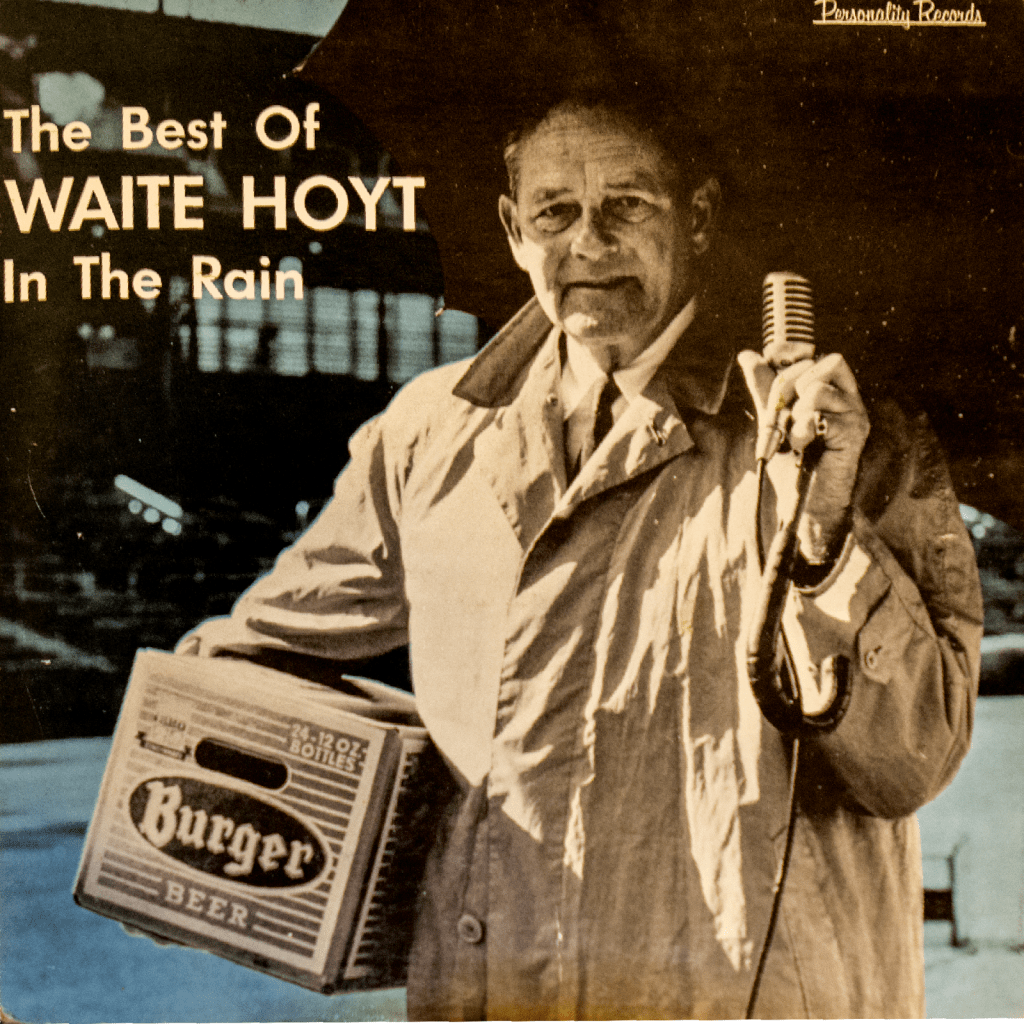

Here’s the deal: Hoyt’s son, Chris, had all this material. His cousin once thought of doing a book about Hoyt, but never followed through. So Chris handed it over to his workfriend, Tim Manners, and in a manner of years, this is the outcome.
Blindsidingly fantastic.
A rhetoric gem from someone whose high school English teacher, it turns out, was upset he didn’t stay in school and become a journalism major. It’s like hearing something out of Lawrence Ritter’s “Voices of the Game,” from someone who crafted his own style of communications while calling the Reds and finally getting some national attention when the team made it to the 1961 World Series against his former team, the Yankees.
What draws the reader in right away and doesn’t let them loose is Hoyt’s description in the prologue of the way he experienced his released by those Dodgers in ’38, finding a Western Union telegram on the chair of his locker stall stacked on top of other mail.
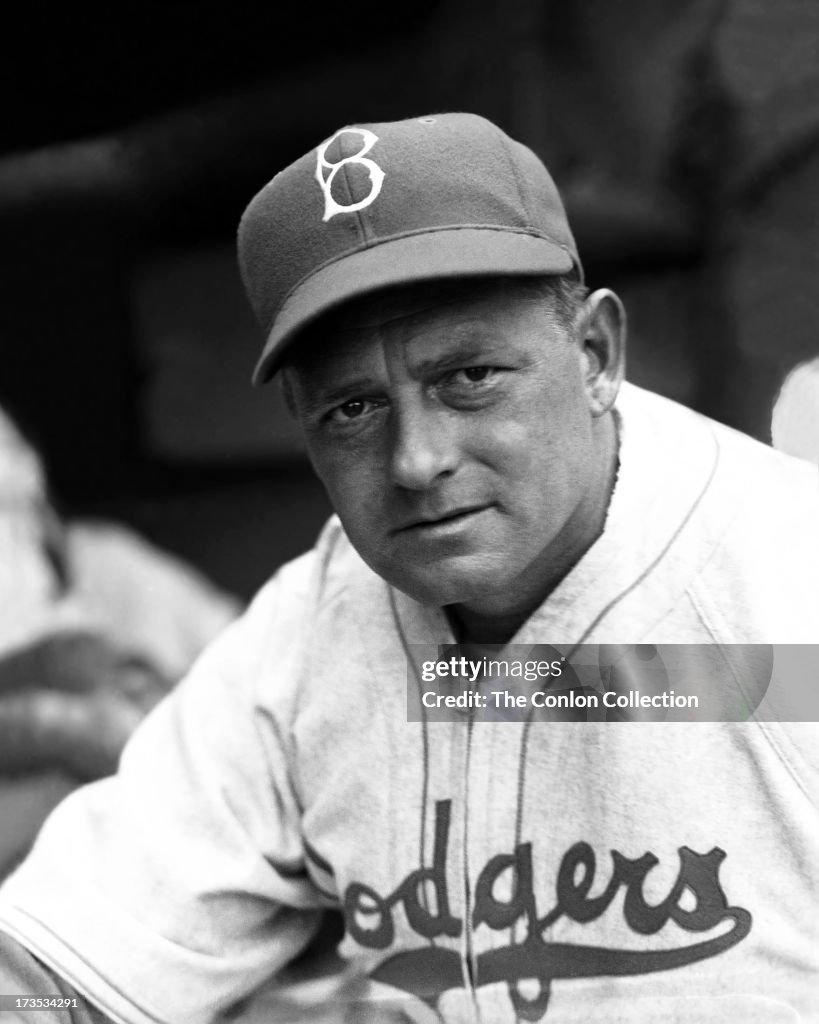
“My arm was spent, my legs were gone, and my time was up,” he writes. “I was not the only one. The Dodgers, that year, were a shambles of a ballclub. Ebbets Field itself showed unmistakable signs of severe wear, tear and neglect. It used to be a wonderful park …”
Hoyt admits that on the day he was inducted into Cooperstown – voted in by the veterans committee – he thought back to his high school teacher, Miss Scoville, and her advice to him to try a career as a writer.
“I stood up on the dias next to Bowie Kuhn, the baseball commissioner, and after thanking everyone and saying all the usual things, I mused that ‘I could have chosen to become a journalist instead. I could have forgiven the audience for thinking, What the hell does this guy want? Well, I never really knew what I wanted; that’s just the issue. … When I review my life in its entirety, its escapades and things I’ve done, it doesn’t present a rhyme or reason. I always had a feeling that I should get on with it, but didn’t know what I should get on with.”
From there, it’s Hoyt telling the story of his life, all its revived prose from Manners.
Hoyt purposely never flinches from the truth – in fact, it examines it more deeply than you’d expect from a big-league player who also spent time in vaudeville, battled alcoholism and found some happiness was the Reds’ voice, able to use his words and accent to connect with listeners.
He goes into depth about his relationship with Babe Ruth and Lou Gehrig, about his own legacy and life philosophy. About his time as an actual mortician. About then his insights as well on players from Connie Mack to Pete Rose – because Hoyt saw them all.
Somehow, Hoyt comes out smelling clean and confident by the final chapter.
How it goes in the scorebook
Well worth the wait. Could be the most entertaining and don’t-put-down baseball book for the ’24 season.
We just wonder if there’s a way Hoyt can someday qualify for perpetual acknowledgement in the Baseball Hall of Fame’s broadcast wing, as well as its players wing, this may be the manuscript that clinches such a rarity.
Bob Costas even writes how Hoyt did his call in “a unique past-tense style. The standard call would be, ‘Pinson swings, and there’s a fly ball in front of the wall.’ In Hoyt’s telling it became, ‘Pinson hit a long fly ball to center, and Mays made the catch on the warning track’ — almost as if he was doing a teletype re-creation. Okay, give him this — it was distinctive.”
This book carries a lot of distinction as well. In a very present-tense way. And a future in broadcasting Fame could be next.
You can look it up: More to ponder
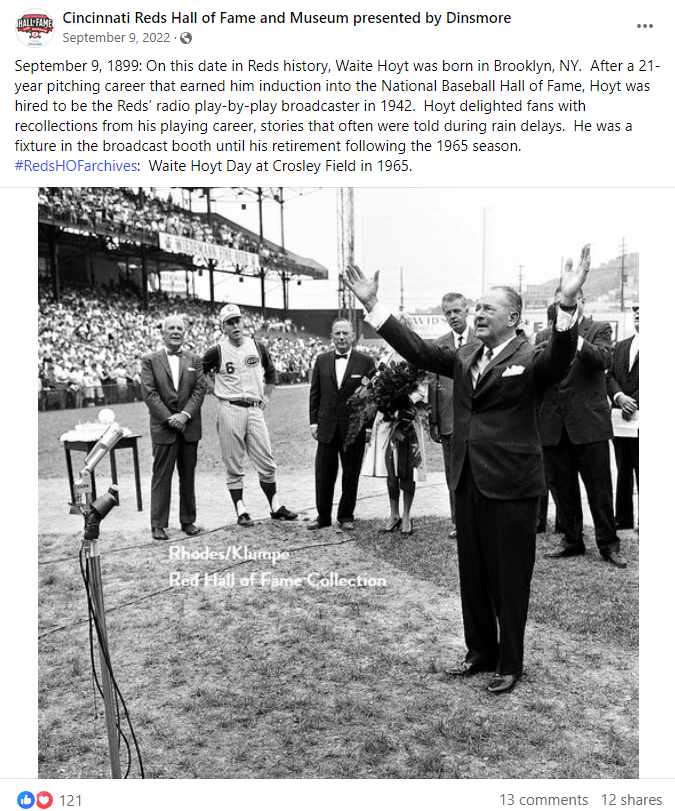
== Hoyt was born on 9-9-99 and that quirk is just part of his bio as a mortician by Sports Stories by Eric Nusbaum, posted in 2019.

== The Library of Congress has made available a book, “Babe Ruth As I Knew Him,” which Hoyt produced in 1948 for New York/Dell Publishing.
== Hoyt’s bio as a broadcaster by SABR research as well as his bio as a player. Not to overlook his Baseball Hall of Fame bio.
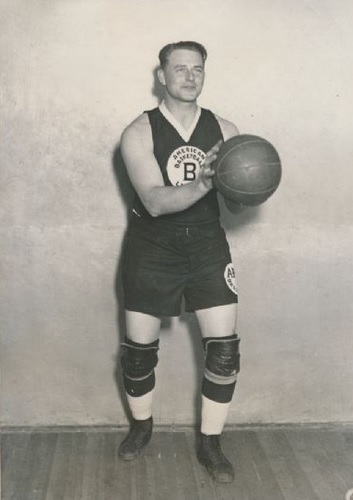
== Hoyt’s career as a pro basketball player: One game for Brooklyn Arcadians of the ABL – in the MLB off season while he was pitching for the Yankees.
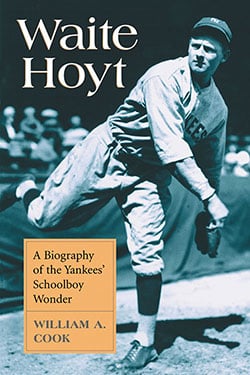
== Willian Cook produced a Hoyt biography for McFarland books in 2004.
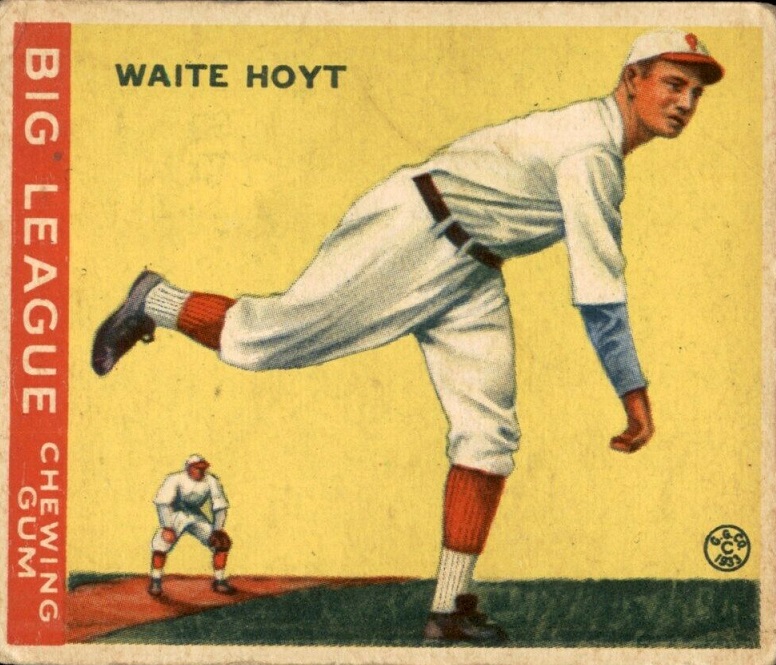
== The story of Hoyt’s 1933 Goudy baseball card.
== On CooperstownExpert.com there is a collection of his handwritten notes from Hoyt. Included was this one that reads:
In this handwritten letter he answers a fan’s question about the Dodger uniforms.
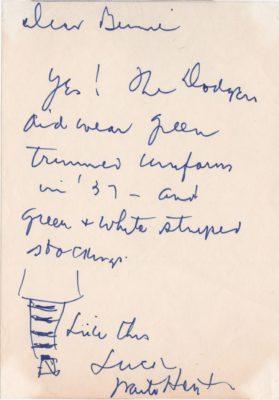
“Yes! The Dodgers did wear green trimmed uniforms in 1937 and green and white striped stockings.”
Hoyt then draws a picture of a striped stocked adding the words, “Like this”.
== If you are interested in hearing Hoyt’s voice, check out the last inning-plus of him calling the national TV broadcasting of the Reds-Yankees Game 3 of the 1961 World Series:

 Tom Hoffarth's The Drill: More Farther Off the Wall
Hi Tom. Thanks for an excellent review! You hit all of the key points and your clarity is excellent! All the Best! Chris Hoyt
LikeLiked by 1 person