


“Baseball Heaven: Up Close and Personal,
What It Was Really Like in the Major Leagues”

The author:
Peter Golenbock
The publishing info:
Rowman & Littlefield; 344 pages; $28.95; released March 5, 2024
The links:
The publishers website; at Bookshop.org; at Powells.com; at Vromans.com; at Walmart; at BarnesAndNoble.com; at Amazon.com
The review in 90 feet or less
Gaze upon the heavens today.
If you’re in Cleveland, today rocks. While waiting for the start of the Guardians’ home opener against the Chicago White Sox, the ballpark was be filled with thousands staring into space to witness a rare total solar eclipse.
Hopefully, precautions were taken. We did this drill in 2017. Some need reminders.
The Guardians of our baseball galaxy decided to push the start of its game to 5:10 p.m. local time, two hours after this celestial event is celebrated. The eclipse peaked at 3:13 p.m.
Cleveland’s team then blinded the White Sox a few hours later in a 4-0 win.

This kind of event hasn’t happened in Northeast Ohio since 1806, and it isn’t supposed to happen again until 2444, if the planet hasn’t melted. It is cause to pause and consider if former Cleveland first baseman Julio Franco had a career that spanned that long.
Heaven also help us, as Peter Golenbock has come up with another idea to make us wonder if an Iowa cornfield really is heaven on earth.

Goldenbock has been one of the most prolific baseball book authors in the business’ history since the early 1970s — more than 60, including 10 New York Times’ best seller, including “Bums: An Oral History of the Brooklyn Dodgers” from 1984 as well as “American Nero: The History of the Destruction of the Rule of Law and Why Trump is the Worst Offender” in 2020.
His latest launch is more autobiographical. As the 78 year old recently told Florida Trend magazine:
“When I was 12, I read a book called ‘The New York Yankees: An Informal History’ by Frank Graham (first published in 1943). I still have the book. I was enamored. There were discussions with Babe Ruth, Lou Gehrig and Joe DiMaggio, and I thought: ‘How fabulous is this?’ So, when I went to Dartmouth, I joined the sports staff of The Dartmouth student newspaper and very quickly discovered that I was pretty good at sports writing. By my junior year, I was sports editor, and I was writing articles for the New York Times and the Boston Globe, and I was just enjoying the hell out of my life.”
Much of that is also repeated in the book’s introduction. He also has a a confession: His last book, “Whispers of the Gods,” did pretty well, “now my publisher wants a sequel.” Our review of “Whispers” in 2022 happened to be when the MLB was trying to correct its course after the 2021-22 lockout, resolving a five-year CBA renewal that pushed Opening Day back to April 7.
For this sequel — could this be Golenbock’s last baseball book? — he dove deeper into his audio treasure trove. As someone whose books always carry plenty of linear velocity — that’s also a total solar eclipse term — had to wonder just how much material he has left.
Plenty.
“It’s 2023 and I’m still at it,” Golenbock also writes, noting the year he completed this project. “What I thought I’d do this time is choose particularly riveting interviews from baseball figures I interviewed over the past fifty years. They are an interesting group, not just a cross section of thoughtful, insightful ballplayers, but men such as team owner Del Webb of the Yankees, and Albert Happy Chandler, who arguably made the most important decision in the history of the game, allowing Jackie Robinson to play for the Brooklyn Dodgers. Each one of these people tells us something we don’t know but wish we had known … These are the ones who remind us all why we love the game of baseball so much.”
So let’s put that to the test and see what we can glean from Webb and Chandler.
The loose language used at the time by the two executives reflect what was in the air at the time. Not that it is acceptable. It’s there for the reminder of how things were.
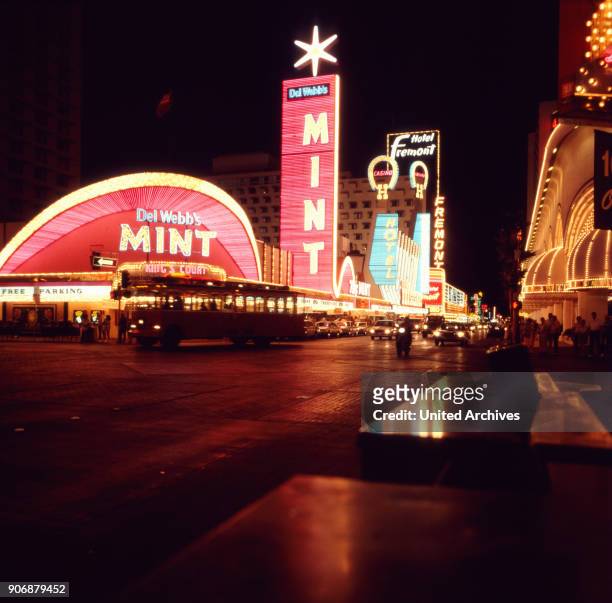
Webb, the construction company czar who built the Flamingo Hotel and Casino for Bugsy Siegel in Las Vegas in 1946, then spread out to developments in Arizona and more resorts in Las Vegas, was part of the Yankees ownership group that won 14 World Series.
Goldenbock writes that he talked to Webb at his L.A. mansion, and got him to recall his time during World War I when he was a pitcher in the Pacific Coast League. Webb also nearly died of typhoid.
Then he ranted on about his greatest achievements. Like the Poston War Relocation Center, which housed 17,000 Japanese Americans ordered to be held captive after the attack on Pearl Harbor.

After bragging about his company’s ability to build nine barracks for the U.S. Army near the Arizona-Mexican border in 90 days, Webb continued: “The greatest job we ever did was to build the concentration camp for the Japs in California at the bottom of that river. Jesus Christ, we built a house every 14 and a half minutes down there.”
Goldenbock replies: Did it ever bother you that you were sticking all these people in the middle of the Arizona desert in 120 degree heat?

Webb continues: “Well, I’ve been criticized for saying the greatest thing I ever accomplished in my my life … this was after it was all over with. Of course, when I made that statement, people took it different from what I meant. What I meant was, the greatest construction accomplishment I ever made. I wasn’t even thinking about the Japs. That wasn’t my problem. And some of those fellows thought I meant taking the Japs and moving them down there. That wasn’t what I meant. We had nothing to do with all that. We had built the houses for them, and the government moved them down there. It was a great accomplishment because we were down in the desert where there was absolutely nothing. You couldn’t even drive a truck down there. We had to walk out there and it was 120 degrees in that goddamn July, Jesus Christ. Rattlesnakes all over the place.”
Oh, OK. Now we get why it was such a cool deal.
Webb later speaks about how the MLB owners at the time weren’t sold on Chandler as becoming the second commissioner, following the death of Judge Kenisaw Mountain Landis.
When Chandler’s six-year team expired, and before the MLB owners deciding to bring in Ford Frick as the third commissioner, Webb said 200 were interviewed — including J. Edgar Hoover, judge Earl Warren and Richard Nixon.
“I talked to him two or three times about it,” Webb says of Nixon, offering him a $100,000 salary. He finally decided to stay in politics.”
Dwight Eisenhower was also asked.
“He couldn’t take it because he was involved in the goddamn war, see,” Webb said of the future U.S. president, who took Nixon as his vice president. “I would have liked to have him.”

As for Chandler, Goldenbock writes that his 1981 interview with the then 82-year old southern politician focused on how he gave his blessing for Robinson’s emergence in breaking the baseball color barrier in ’47.
It happened despite a 15-1 vote against it by the owners.
“I was not surprised these people were so violently against it,” says Chandler, rather happily. “See, I had to go against 15 fellows. (Yankees owners) Topping and Webb. … They didn’t give good reasons (against it), but rather excuses. … There was a lot of ignorance. … See, here was a fellow (Robinson) with talent, and there wasn’t anything bad they could say about his character. He had a good record at UCLA.”
Chandler explains how Dodgers GM Branch Rickey came to Kentucky to meet with him and talked about the ramifications of the decision.
“I said to him, ‘Mr. Rickey, I’m going to have to meet my maker some day, and if he asks me why I didn’t let this boy play and if I said, ‘Because he’s black,’ that might not be a sufficient answer. … See, I had known Josh Gibson and Buck Leonard and Satchel Paige .. Gibson died without even having a chance, and I thought that was an injustice.”

Chandler also talks about meeting with Pittsburgh Courier reporter Wendell Smith, one of Robinson’s loyal supporters in the press. Chandler said he told Smith: “I am for full freedom .. If a black boy can make it to Iwo Jima and Guadalcanal, he can make it in baseball. Once I tell you something, brother, I will never change.”
Chandler spoke about how he “lived with black people all my life” in Western Kentucky on a small farm, working in a mill shelling corn, “and I was the only white one. But I had to work. We got about a quarter a day and I got along fine with the black people. … I never had any trouble with black fellows in my life.”
Chandler also explained how he couldn’t take the baseball commissioner’s job when it was offered to him because as a U.S. Senator from Kentucky, he was on the military finance committee, and World War II wasn’t over yet.
“I hadn’t sought the job (of commissioner),” he said, but noted he was elected anyway.

“And so I approved the contract from Montreal to Brooklyn and after Jackie Robinson came into baseball, Rickey never did credit me. He always talked like he had done it all by himself. Which he could not have done. My goodness, I’ll tell you. I don’t want anything. See, Landis and (subsequent baseball commissioner Ford) Frick are in the Hall of Fame. They have ignored me so far.”
As an update: Chandler was voted into the Baseball Hall of Fame in 1982, even though he served just one six-year term as baseball’s second-ever commissioner, and was dismissed by much of those owners who once voted 15-1 against his Robinson decision. Everyone happy now?
How it goes in the scorebook
Heavens to Betsy. Heavens to Murgatroyd.
And good heavens to the rest of us.
On this day when Costo also forces all those using the food court to have proper proof of membership, we show our membership to the Golenbock Fan Club.
We realize every interview transcribed here involves someone who has gone to the great beyond — sadly, that includes Southern California natives Gary Carter (1954 to 2012) and Doc Ellis (1945 to 2008).
The conversations Golenbock has with Carter and Ellis are enlightening. Ellis, for example, has perhaps the most profound view of life. It happens as Ellis is playing for a short-lived Senior Professional Baseball League in Florida.
Ellis said Dodgers scout King Marr had tried to sign him after watching him play in an L.A. city tournament.
“I’m not signing shit,” Ellis said he told him. “I wasn’t leaving home to go to Vero Beach. I didn’t even know where the fuck Vero Beach was.”
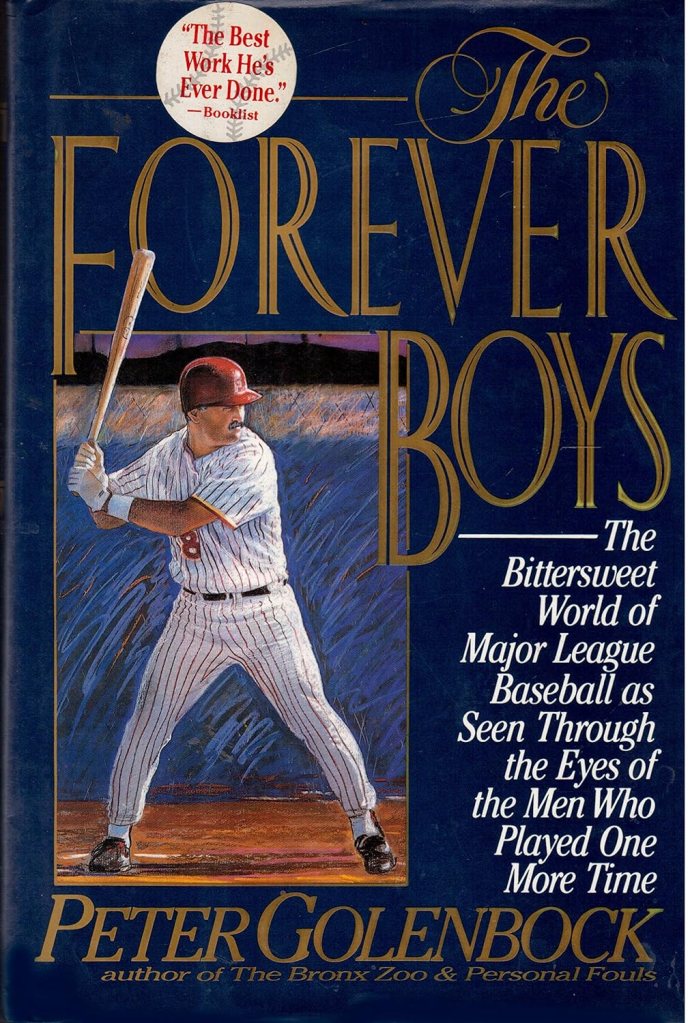
Ellis told Goldenbock all this while they were in West Palm Beach. The interviews became the basis for Golenbock’s 1992 book, “The Forever Boys.”
All said, it’ll be a dark day when Golenbock stops churning out another baseball book. If this is his walkoff, enjoy the literary sunset.

 Tom Hoffarth's The Drill: More Farther Off the Wall
1 thought on “Day 14 of 2024 baseball books: For heaven’s sake, is this Goldenbock’s last golden book? It comes solar powered”