

This is the latest post for an ongoing media project — SoCal Sports History 101: The Prime Numbers from 00 to 99 that Uniformly, Uniquely and Unapologetically Reveal The Narrative of Our Region’s Athletic Heritage. Pick a number and highlight an athlete — person, place or thing — most obviously connected to it by fame and fortune, someone who isn’t so obvious, and then take a deeper dive into the most interesting story tied to it. It’s a combination of star power, achievement, longevity, notoriety, and, above all, what makes that athlete so Southern California. Quirkiness and notoriety factor in. And it should open itself to more discussion and debate — which is what sports is best at doing.
The most obvious choices for No. 29:
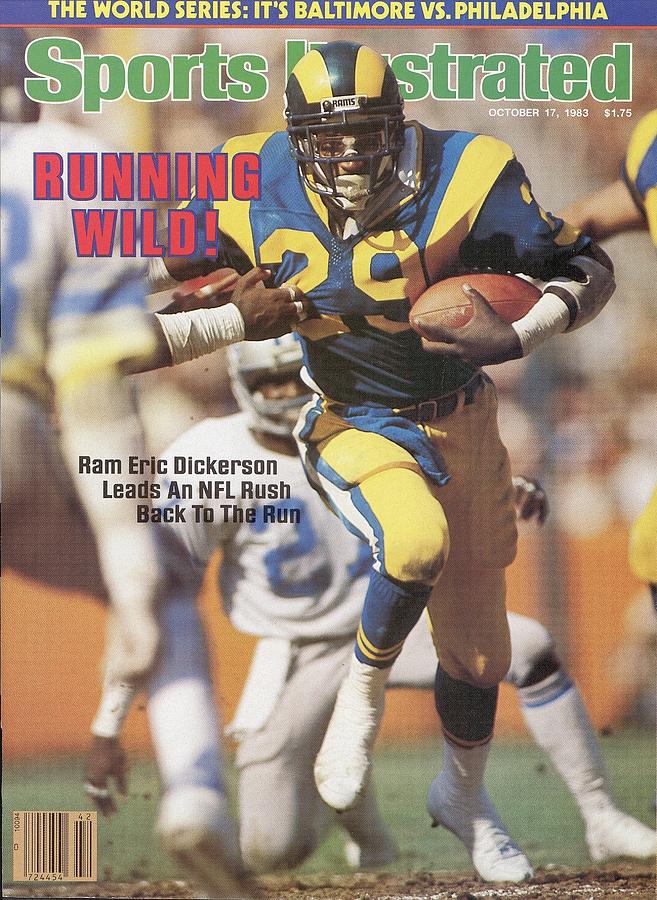
= Eric Dickerson: Los Angeles Rams and Los Angeles Raiders
= Rod Carew: California Angels
= Adrian Beltre: Los Angeles Dodgers
= Eric Turner: UCLA football
The not-so-obvious choices for No. 29:
= Harold Jackson: Los Angeles Rams
= Billy Smith: Los Angeles Kings
The most interesting story for No. 29:
Eric Dickerson: Los Angeles Rams running back (1983 to 1987); Los Angeles Raiders running back (1992)
Southern California map pinpoints:
Anaheim; Los Angeles (Coliseum)
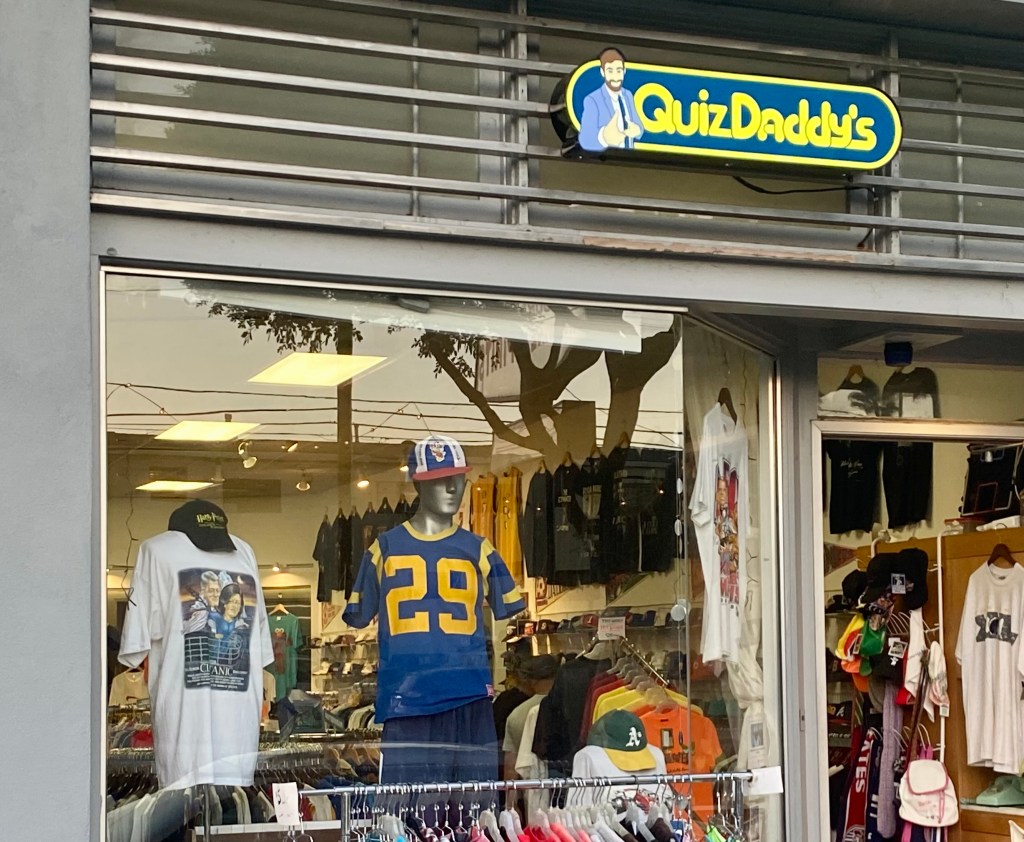
Amidst a collection of fading Star Wars memorabilia and outdated Elton John concert T-shirts, the window of a vintage clothing store on Main Street in Santa Monica knows how to cash in nostalgia and draw customer attention with a Rams’ No. 29 blue-and-gold jersey.
The gold numbers are bold and dynamic. Large and upright.
Like Eric Dickerson.
All that was missing were a pair of aviator goggles, a neck roll and boxy shoulder pads.
A running style that almost made him look like a thoroughbred race horse shifting through the pack of competitors with deft precision, Dickerson was only around for four-plus seasons in Los Angeles for the Rams, and none were in Los Angeles.
The greatest single-season in yards accumulated for an NFL runner in league history came in 1984, in Anaheim. The most polarizing contract debate about the same player’s future came three years later. Cashing in on his own notoriety.
Dickerson had a series of nicknames in his career. “Mr. Fourth Quarter,” because of his stamina; “Number One,” because he was often the first choice in the offensive play calling.
He was also “Mr. Benny,” for his known frugality.
For obvious reasons, he was also “The Dick.”

The bickersome Dickerson left Southern California in 1987. Prematurely. To some, it left the Rams in a ramshackle status for years beyond.
Dickerson did come back to L.A., with enemy colors, for one last statement, in 1992.
At least 20 years after his NFL retirement, in 2016, when the Rams moved back to L.A., Dickerson signed a one-day contract with the Rams so he could officially quit on his terms with the team.
By then, who was paying attention?
The background

On Pro Football Reference.com, under players “whose career was of similar quality and shape,” Eric Dickerson is determined to be on par at various points in his career with Franco Harris, Barry Sanders, Thurman Thomas, Tony Dorsett, Marcus Allen, Walter Payton, Emmitt Smith and O.J. Simpson. Dickerson ultimately is most compared to Simpson, since it was Simpson’s single-season NFL rushing record that Dickerson right past blew past 12 years after Simpson was the first to break 2,000 yards.
Six Pro Bowls, five first-team All Pro selections and four rushing titles were on Dickerson’s resume when he retired in 1993 with 13,259 yards. At the time, only Payton (16,726) had more yards. Jim Brown, considered the benchmark of any NFL running back, had retired with 12,312 in 1965 with a standard no one came close to until Payton passed him more than a decade later.

Dickerson was the Texas native from a city famous for making bed mattresses. He wore No. 19 for four years when he was part of a “Pony Express” backfield at Dallas’ Southern Methodist University, twice leading the nation in rushing and third in the 1982 Heisman voting behind Herschel Walker and John Elway.
In the 1983 NFL draft, Dickerson landed in the Rams’ laps at No. 2 overall because, in the famous “Year of the Quarterback” draft, Elway went No. 1 (to Baltimore, traded to Denver), and the first round included Jim Kelly, Dan Marino, Todd Blackledge, Tony Eason and Ken O’Brien. Dickerson already angered Houston fans by stating flatly that he didn’t want to play for the Oilers and later irritated more Texans by asserting that he hated the Dallas Cowboys.
In cool and collected SoCal, Dickerson set the NFL record with 2,105 yards rushing in 16 games, which adds up to 131 yards a game. A 5.6 yards per carry went with a league-best 14 touchdowns, which were four fewer than he scored as a rookie the year before when he also racked up 1,808 yards.
In 1985, he thought he was worth more money. He held out the first two games of the season. Some Rams fans seemed to side with team management and some threw Monopoly money at him, others setting fire to their own No. 29 jerseys.
In a 2025 USA Today story about the NFL’s timeline of the most notable holdouts, Dickerson was at the top. While he did returning and help the Rams to the playoffs with his 1,234 rushing yards and 12 touchdowns, the damage was done.
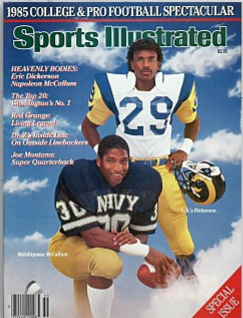
Back to a full season in ’86 at age 26, Dickerson piled up another 1,821 yard rushing season on a phenomenal 404 rushing attempts. For the third season in his first four years, he also went past 2,000 in total offense, leading the league each time.
Those first four seasons as a Ram also accounted for about 7,000 yards rushing and about 1,600 carries. As of 2025, three of the top 25 NFL single-season rushing seasons were posted by Dickerson in a Rams’ uniform at age 23, 24 and 26.
But when the 1987 season started, the Rams were again baffled by Dickerson’s latest training camp holdout. He was making $682,000 that season. The Rams offered him $975,000. Not the million-a-year Dickerson thought he was worth.
So after the first three games, Dickerson’s incessant complaining led the Rams to trade him to Indianapolis in a blockbuster 10-player, three-team deal. The Rams hardly got a even trade, accepting Greg Bell and Owen Gill to fill his place.
The Colts gave Dkcierson a four-year, $5.6 million deal.
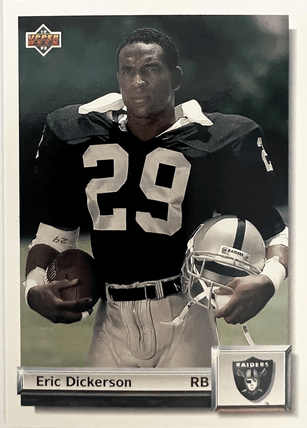
By 1988, Dickerson was back to leading the league with 1,659 yards rushing.
Dickerson still wore No. 29 the entire time.
Still, “The Dick” was underneath.
The Colts suspended him for part of the 1991 season for “conduct detrimental to the team,” and subsequently traded him to the Los Angeles Raiders for the 1992 season. The Raiders, using him as a situational running back, released him at age 32. He signed with the Atlanta Falcons.
He retired in 1993 after four games, never having played in the Super Bowl. But he had a smokescreen.
In his 2022 memoir, “Watch My Smoke,” Dickerson is in vintage 1980s NFL Jheri curls.

It reminded me of a friend who once asked Dickerson to sign a photo of himself so he could give it to his dad, whose name was Dick.
“From one Dick to another,” Dickerson wrote.
Two years after he was named to the NFL’s 100th anniversary team, he took the time in a book to explain himself – the contention with Rams management that led to his ridiculous trade, the opinions he holds today that allows him to be a frequent guests on Los Angeles talk radio and has a role in the Rams front office as vice president of business development.
Of course, in 2016, Dickerson used his clout to dismiss things coach Jeff Fisher was doing on the field. Dickerson revealed that Fisher, in his mind, banned him from the sidelines because of his criticism toward the team. Dickerson vowed then that he would not show up to a Rams game so long as Fisher was employed. Fisher was fired. Dickerson is back.
In his book, he talks more about the life of a black celebrity in a town of celebrities and all other things he encountered. The scandal he was part of when recruited at SMU in the 1970s.
The legacy

Imagine Dickerson in today’s college football world of name, image and likeness. There he is in a Super Bowl commercial, wearing his Pro Football Hall of Fame yellow jacket outside of SoFi Stadium, jogging through the city in a Rams sweatshirt, putting on his goggles, and espousing the benefits of a Sleep Number bed.
We’re guessing his sleep number is … 29? Like the ads he’s also been doing on local radio for the Spotlight 29 Casino out in trendy Coachella?
“The numbers two and nine stand for my birthday. Sort of,” he told me once. “My birthday is actually Sept. 2 — or 9-2 — but that doesn’t work for a running back so I flipped the numbers around.”
Wonder what the folks in Sealy, Tex., think about all that while taking a nap from their long day working at the mattress factory.
Who else wore No. 29 in SoCal sports history?
Make a case for:

Rod Carew, California Angels first baseman (1979 to 1985):
Best known: After 12 seasons in Minnesota, it could be said that Carew retired to Anaheim to collect his 3,000th hit and become an AL All-Star six more times. His .314 average with the Angels in 834 games didn’t tarnish a career mark of .328 when his Hall of Fame career was finished. The Angels retired his number in 1986 (before a game against the Twins) and, at the time, it was the first player number ever retired by the franchise (after No. 26 for owner Gene Mauch). During the ceremony he received a Los Angeles Rams football jersey number 29 from Eric Dickerson. Carew moved to Anaheim Hills after leaving the game as a coach.
Now well remembered: Carew wrote a book about miraculous post-playing career health issues, “One Tough Out: Fighting Off Life’s Curveballs.”
Adrian Beltré, Los Angeles Dodgers third baseman (1998 to 2004):

Best known: Beltré’s first seven MLB seasons started when he was (allegedly) aged 19 playing in Los Angeles. It ended with him establishing the then-franchise single-season home run record of 48 in 2004. That total also not only led the National League, but it propelled him into a free-agent frenzy — thanks to aggressive agent Scott Boras. After marginal stops in Seattle and Boston, Beltré became a Texas legend. As Mike DiGiovanna wrotes in the L.A. Times as the 2024 Hall ballots were being counted, Beltré was “considered a teenage prodigy” when he agreed to a $23,000 deal with the Dodgers in 1994. “There was little about his early career, marred by a birth-certificate issue and his slow recovery from a botched appendectomy in the Dominican Republic, which screamed surefire Hall-of-Famer,” wrote DiGiovanna. Beltre’s first five seasons with the Dodgers (’99 to ’03) were a less-than-impressive .262, with a .748 on-base-plus-slugging percentage and averaging just 16 homers and 65 RBIs a season. The Dodgers nearly lost him in 2000 when a Major League Baseball investigation found they had signed him before his 16th birthday. Beltré sat out the first six weeks of 2001 after undergoing surgery to close a wound in his large intestine, the result of an infection from an emergency appendectomy that January. Beltre’s 147 homers as a Dodger franchise player is 18th all time. Voted into the Baseball Hall of Fame with 95 percent in his first year of eligibility in 2024.
Not well remembered: Beltre was never was part of an NL All Star team as a Dodger even thought he was second in MVP voting in ’04 when he was fourth in the league hitting .334 and had 121 RBIs with a 1.017 OPS. The red flag was that Beltré played most of that season with bone spurs in his left ankle that required surgery after the season.
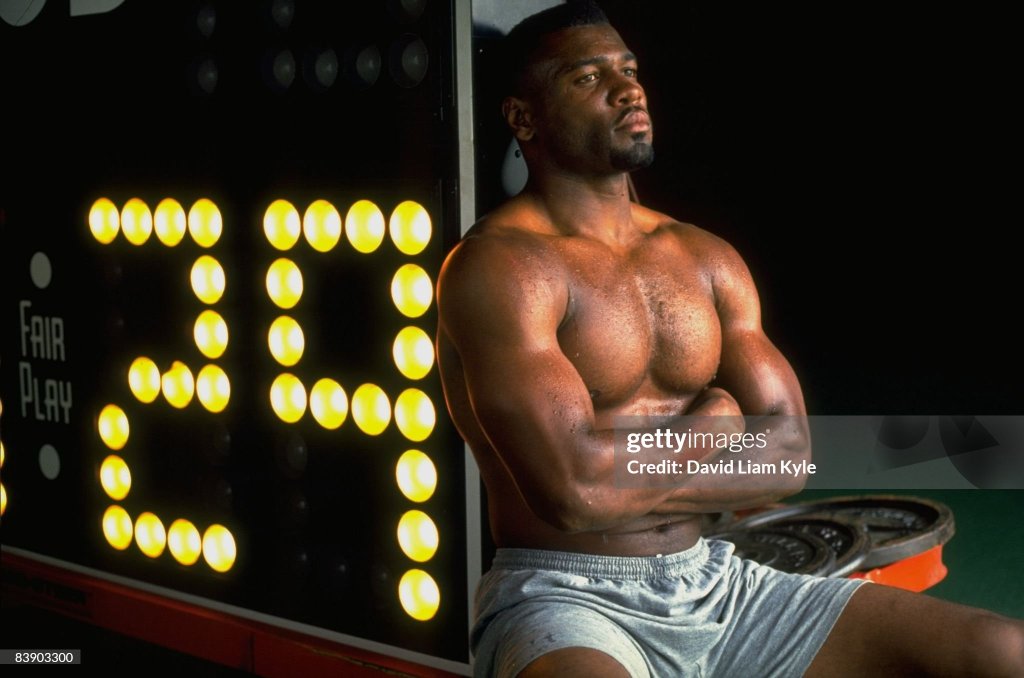
Eric Turner, UCLA football defensive back (1987 to 1990):
Best known: A three-year starter, Turner set a UCLA program record with 14 interceptions in 44 games, which led to him becoming the No. 2 overall pick in the 1991 NFL draft, the highest drafted defensive back in modern pro football history.
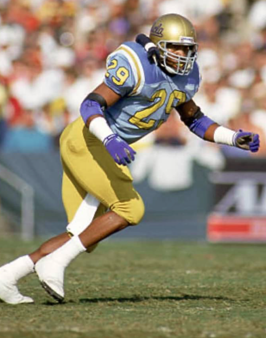
Out of Ventura High, where he not only was all-league in basketball but All-CIF in track as a sprinter rand long jumper, Turner led the school to three straight Channel League football titles as a running back (988 yards rushing and 14 touchdowns) and defensive back. He ran a 4.56 in the 40. At UCLA, Turner was nicknamed “E-Rock” and often compared to former Bruins greats Kenny Easley and Don Rodgers.
“Eric looks the way a man is supposed to look at the safety position,” said UCLA defensive backs coach Tom Hayes in 1987. “And he has the intensity to knock people around. When he hits you, you’re hit.” As UCLA held the nation’s No. 1 ranking during Turner’s sophomore year en route to a 10-2 finish, he was third on the team with 87 tackles and three picks, one returned 54 yards for a touchdown against Stanford. As a junior in 1989, he ranked second on the team with 141 tackles and gaining honorable mention All-America acclaim. A first-team All-American as a senior and voted UCLA’s Most Valuable Player on defense, Turner led the Bruins with 93 tackles and five interceptions. His late interception at Washington set-up Brad Daluiso’s game-winning field goal with 10 seconds remaining as the Bruins upset the No. 2-ranked Huskies, 25-22 on November 10.
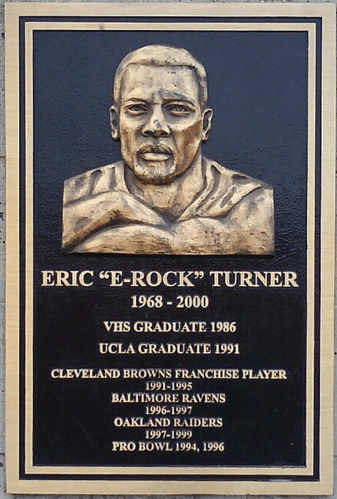
After nine years and two Pro Bowl appearances, it was revealed in the 2000 NFL offseason that Turner was battling abdominal cancer and he died in Thousand Oaks at age 31. The Ventura High field was named in his honor, he was inducted into the Ventura County Sports Hall of Fame in 2001, and then into the UCLA Athletics Hall of Fame in 2008. At the time of Turner’s death, he still ranked fourth in career tackles at UCLA (369). with 369, trailing only three-time consensus All-America linebacker Jerry Robinson (468), Rogers (405) and Easley (374), also a three-time consensus All-American.
In 2009, Turner’s son, E.J., who also prepped at Ventura High and played on the field named after his dad, made the UCLA football team and wore the No. 29. E.J. caught 32 passes for 378 yards and two TDs for Ventura as a senior.
Not well remembered: As the first half was coming to a close in the 1987 UCLA-USC game at the Coliseum, Eric Turner intercepted a pass from USC’s Rodney Peete at the goal line to not only prevent a Trojans touchdown, but he decided to try to return it. In what looked like a sure 100-yard pick-six, Peete ran him down and tackled him about 10 yards short of the end zone. The play went as an 89-yard return.
Harold Jackson, Los Angeles Rams receiver (1968, 1973 to 1977):
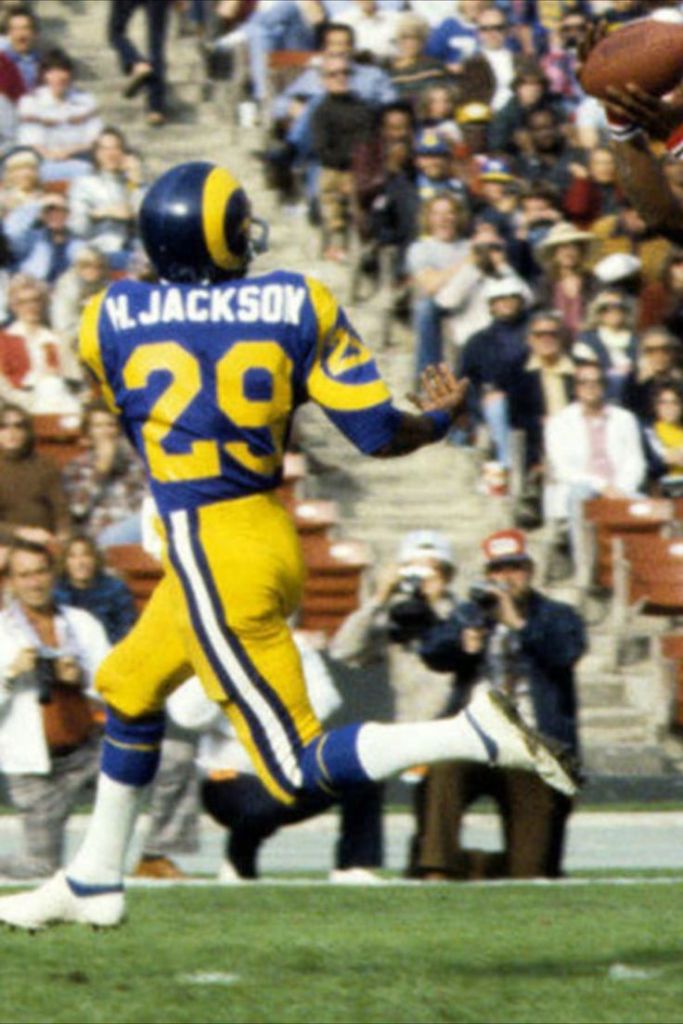
Best known: Three of his five Pro Bowls, more than 3,000 of his career 10,372 yards receiving and 36 of his 76 career touchdowns came with the Rams, where he began as a rookie No. 48 for just two games in 1968 before he was traded to Philadelphia and emerged as en elite receiver. The Rams re-acquired him in 1973 — but the price was quarterback Roman Gabriel. Statistically, Jackson’s greatest NFL game came against Dallas on October 14, 1973 when he caught seven passes for 238 yards and four touchdowns, which came amidst a streak of four games where he caught 13 passes for 422 yards and eight TDs.
Have you heard this story:
Billy Smith, Los Angeles Kings goalie (1971-72):
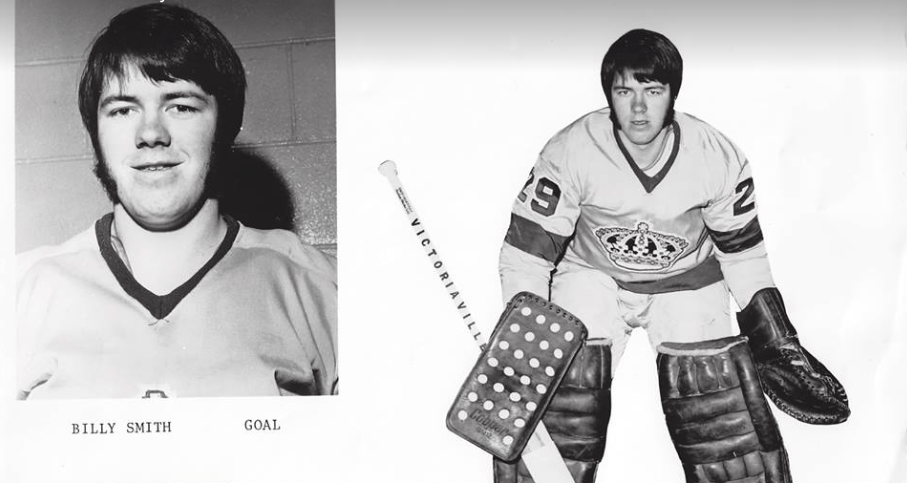
A fifth-round pick by the Kings in the 1970 draft, Smith got into five games as a rookie in the 1971-72 season, gave up 23 goals, and lost three times. As the No. 3 netminder behind Gary Edwards and Rogie Vachon, Smith was made available in the 1972 expansion draft, and the New York Islanders grabbed him. In 17 seasons there, the team won four Stanley Cups (1980, ’81, ’82 and ’83, and lost in ’84), Smith won the Vezina (in ’82), Jennings and Smythe (in ’83), went into the Hockey Hall of Fame in 1993. He was named to the NHL’s Top 100 players of all time in 2017, one of the 15 goalies honored.
Chuck Essegian, Los Angeles Dodgers outfielder (1959 to 1960):
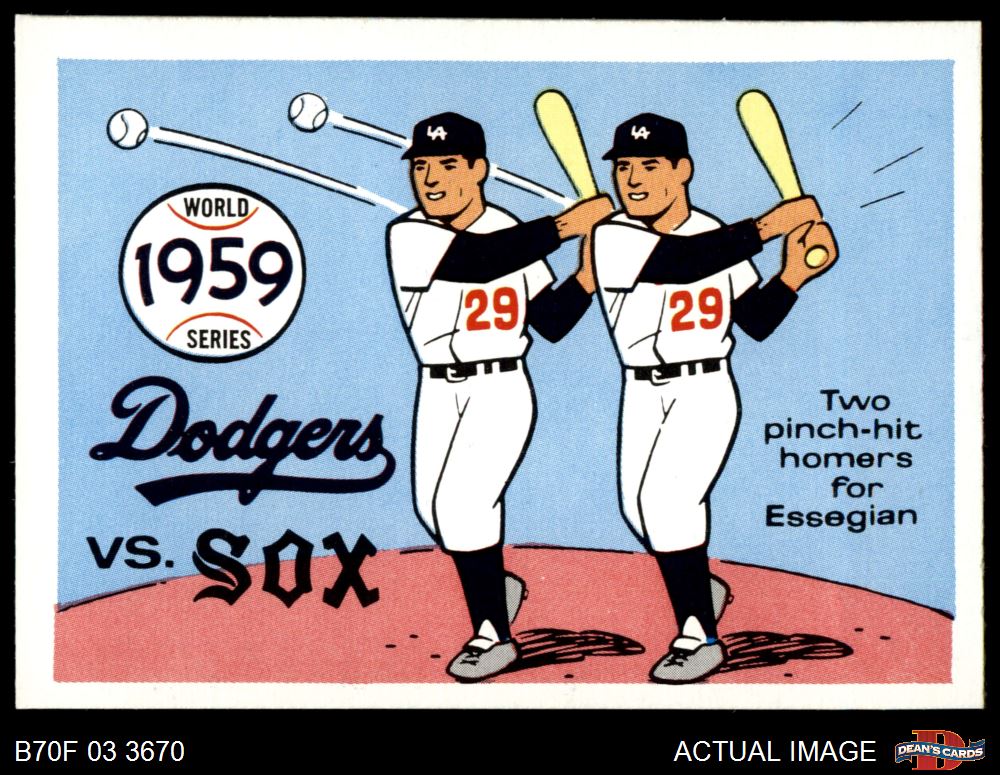
The L.A. Fairfax High grad was able to come back and finish his career for his hometown team after the Dodgers moved from Brooklyn. Essegian may have hit two pinch-hit home runs for the Dodgers during their 1959 World Series run, but he but wasn’t assured of a roster spot in 1960 until the end of spring training. The 28-year-old reserve outfielder wasn’t even listed in the opening game’s official program, but as the Dodgers went into the 11th inning of the ’60 opener at the Coliseum against the Chicago Cubs, Essegian was sent up to bat with two out for starting pitcher Don Drysdale. Essegian hit a slider to deep left field for a walk-off homer in a 3-2 win before more than 67,000 fans. That marked his third pinch-hit homer in three official times at bat.
Don Stanhouse, Los Angeles Dodgers pitcher (1980):
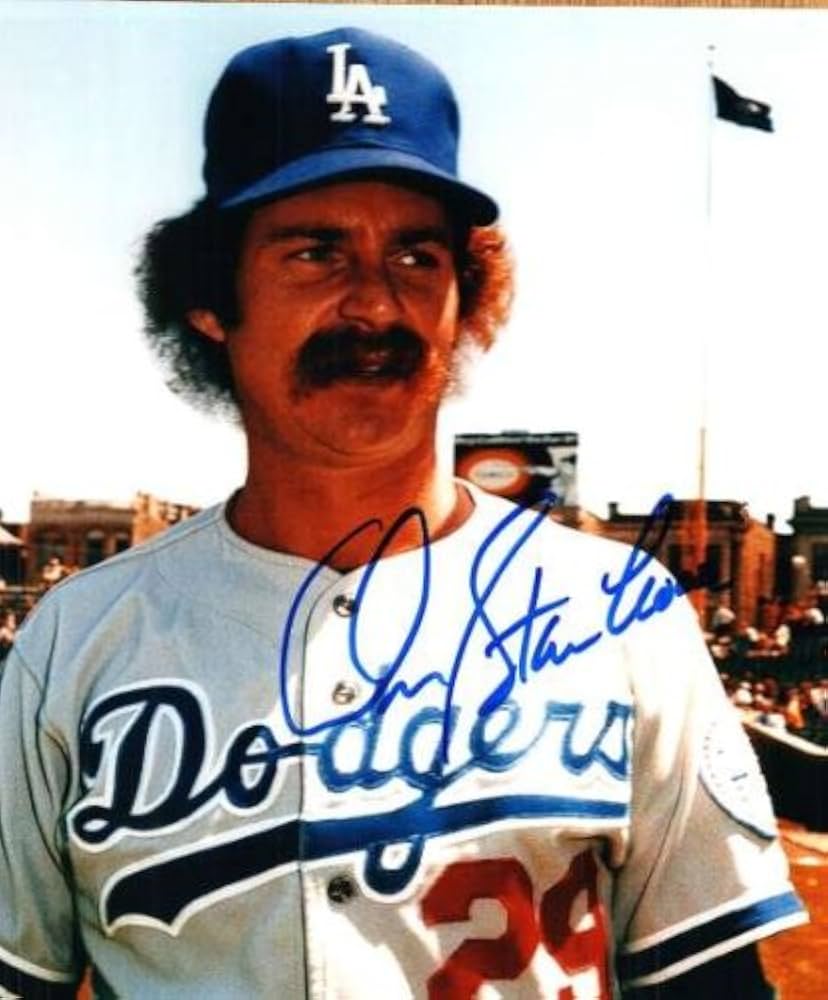
His eccentricity, bushy hair and extreme mustache preceded him to Los Angeles. As his SABR biography notes: Known as “Stan the Man Unusual” as well as “Fullpack” (a reflection of the number of cigarettes Orioles manager Earl Weaver would smoke while Stanhouse came into a game), Stanhouse was noted to arrive in spring training in a black Cadillac to match his outfit and the paint scheme of his apartment. He used to bring a stuffed gorilla to the games, perhaps the inspiration for the primal screams he would yelp as batting practice concluded and the game was about to start. Coming from his only AL All-Star team selection and from a Baltimore squad that had won the 1979 World Series, Stanhouse benefited from the Dodgers’ desperation to rebound from a losing season by getting a five-year, $2.1 million contract. After only four appearances for the Dodgers, Stanhouse spent the next three months on the disabled list. He ended up striking out only five batters in 21 relief appearances, posting a 2-2 record with seven saves and a 5.04 ERA. By the end of the season, rookie Steve Howe replaced him as the bullpen closer. The Dodgers released him before the 1981 season, where they went on to win a World Series and continued to pay his salary through 1984, by which time he had been retired for two seasons.
We also have:
Tommy McDonald, Los Angeles Rams receiver (1965 to 1966)
Bobby Knopp, Los Angeles/California Angels infielder (1964 to 1969)
Tim Wallach, Los Angeles Dodgers third baseman (1994 to 1996, also wore No. 25 in 1993 and No. 23 for the California Angels in 1996)
Christian “Chicho” Arango, LAFC forward (2021 to 2022)
Anyone else worth nominating?

 Tom Hoffarth's The Drill: More Farther Off the Wall
1 thought on “No. 29: Eric Dickerson”