

“Don Drysdale: Up and In
The Life of a Dodgers Legend”

The author: Mark Whicker
The details: Triumph Books, 256 pages, $30, released Feb. 18, 2025; best available at the publishers website and Bookshop.org.
A review in 90 feet or less
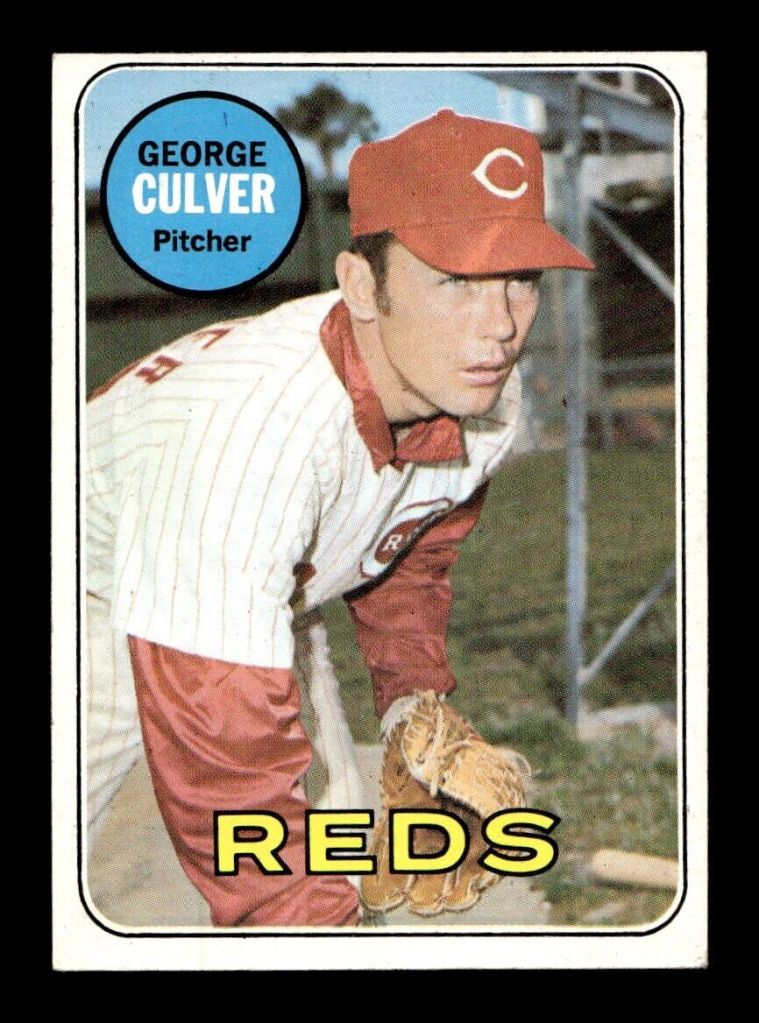
Growing up in Bakersfield in the ’50s and ’60s, George Culver wanted to be like Don Drysdale.

In his new autobiography, “The Earl of Oildale” — the title spins off a nicknamed pinned on him by Dodgers’ broadcaster Vin Scully — Culver explains how it was as a Little Leaguer that he first saw Drysdale play baseball in his hometown.
It was 1954. Drysdale, who had done well as a second baseman on his Van Nuys High team, hadn’t taken up pitching until his senior year as something of a fluke. His arm, and temperament, rocketed him to a pro career immediately after graduation. The 17-year-old signed a contract and went a hundred miles north as a member of the Bakersfield Indians, which were the Brooklyn Dodgers’ C-level Cal League team. He and his family almost decided to take Pittsburgh GM Branch Rickey up on an offer to join the Pirates’ Hollywood Stars of the Pacific Coast League first as a way to the major leagues, but the destination seemed filled more with potential potholes.
In Bakersfield, Drysdale managed an 8-5 mark and 3.45 ERA in 14 starts, including 11 complete games. That somehow put him on a fast track to the big leagues — next stop was one year at Triple-A Montreal in ’55 as the Dodgers won their first World Series title, and, by ‘56, a spot in the Brooklyn rotation as a 19-year-old.
Culver, a star athlete at North High in Bakersfield and then at Bakersfield College, could see still Drysdale in person pitch at the L.A. Coliseum and then Dodger Stadium after the franchise made its move from Brooklyn to Los Angeles. By 1966, Culver reached the big leagues himself as a 22-year-old with Cleveland.

Now, two seasons later — in the magical 1968 “Year of the Pitcher” that included Drysdale establishing his MLB-record 58 2/3 scoreless innings streak — Culver was in the Cincinnati Reds’ rotation, en route to posting a career-high 226 innings in 35 starts. Just a month after Drysdale set his streak with six straight shutouts, the Dodgers and Reds faced off on a Friday night in early July at Dodger Stadium.
It was Drysdale vs. Culver.
“I was about to get a chance to not only pitch against him, but hit against him and that nasty side-arm deliver,” Culver writes on page 53 of his book. “What a thrill (why me?)”
The game was scoreless through 10 innings — and Drysdale and Culver were still pitching.
Drysdale’s line against a Reds’ lineup that included Pete Rose in left field, Tony Perez at third base, Johnny Bench catching and Lee May at first: Five hits, one walk, three strike outs.
Culver gave up five hits as well, walking two, striking out two. Drysdale, who may have also been the most feared bat in the Dodgers’ lineup, grounded out three times against Culver. Ken Boyer pinch hit for Drysdale in the bottom of the 10th and struck out — the last batter Culver faced. So went the Dodgers’ offense.
Culver came out for a pinch hitter as well in the top of the 11th-inning as 23-year-old Don Sutton came on in relief of Drysdale. Against those two future Hall of Famers, the Reds won, 2-0, on May’s run-run double in the 12th inning.
It was a split decision in Drysdale vs. Culver — actually, a no-decision for both.
“This was, without a doubt, the best game I ever pitched in the major leagues,” wrote Culver.
Consider that four starts later, Culver tossed a no-hitter against the Phillies at Connie Mack Stadium.
He had five walks in that one and actually trailed, 1-0, in the second inning because his teammates would make three errors behind him in total.
By 1972, Culver had become was a relief pitcher and was traded to the Dodgers in spring training. It was just a brief visit — 28 games, before he was traded again, effectively ending his nine-year MLB career. Unfortunately, Drysdale had retired three years earlier so they weren’t Dodgers’ teammates.
In a golden era of baseball pitching, where someone like Culver who produced a career WAR of 4.7 could actually go up against future Hall of Famers like Sutton (who ended up with a career WAR of 66.7), Tom Seaver (109.9), Bob Gibson (89.1), Steve Carlson (90.2), Juan Marichal (62.8), Phil Niekro (95.9), Fergie Jenkins (84.1) or Gaylord Perry (90.0), it was how he measured up to Drysdale (67.1 career WAR) that mattered most.
Tenacity, toughness and intimidation isn’t easy to quantify as a stat.
Culver also took pride in his book that he got a hit off Drysdale once in six career at bats. That happened during the only time they went head-to-head. On July 3, ’69, about a month before Drysdale’s retirement, the Retrosheet.org play-by-play says that in the fifth inning, Culver “singled to pitcher” with runners on first and third. Perhaps, it was a dribbler back to Drysdale, who fielded it and decided it was better just to hang on to it so the runner on third stayed.
Still, a hit’s a hit.
In this rematch, neither Culver nor Drysdale again got the decision in a 4-3 Reds win that sorted itself out in the ninth inning. Culver, who gave up two runs, walked four and struck out five, came out after giving up a pinch-single to Willie Crawford, hitting for Drysdale, in the bottom of the seventh. Drysdale gave up two runs as well in seven innings with just two strikeouts.
Those players who became dedicated members of the Drysdale Admiration Society continued years later.
Ila Borders, the Whittier native who became the first female to start a game as a pitcher in a men’s professional baseball league, recounts how she found herself as the subject of a CBS “60 Minutes” profile in 1998. A camera crew tried to follow her every move as she was preparing for her start with the Duluth-Super Dukes of the Northern League.
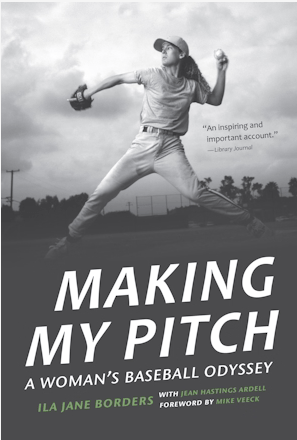
In the prologue of her 2017 book, “Making My Pitch: A Woman’s Baseball Odyssey,” Borders wrote about how she had to retreat to the women’s restroom at the ballpark and put her feet up so no one could detect she was in the stall. She wasn’t all about just smiling and being cute for the cameras.
“I’m an athlete here to win,” she wrote. “Now get the hell out of my face. Would you tell a guy to smile? Growing up I heard about Don Drysdale, the Los Angeles Dodgers star right-hander of the 1950s and 1960s. I was crazy about Drysdale, who everyone said was the nicest guy around — except for the days he pitched. Then no one went near him. … I’ve been fighting for this since I was ten years old.”
By the time Mike Wallace had the chance to sit down with her, Borders couldn’t really fight her way out of the whole thing. She told Wallace: “I’ve always had this fierce spirit to do what I want to do.”
Borders was born six years after Drysdale retired.
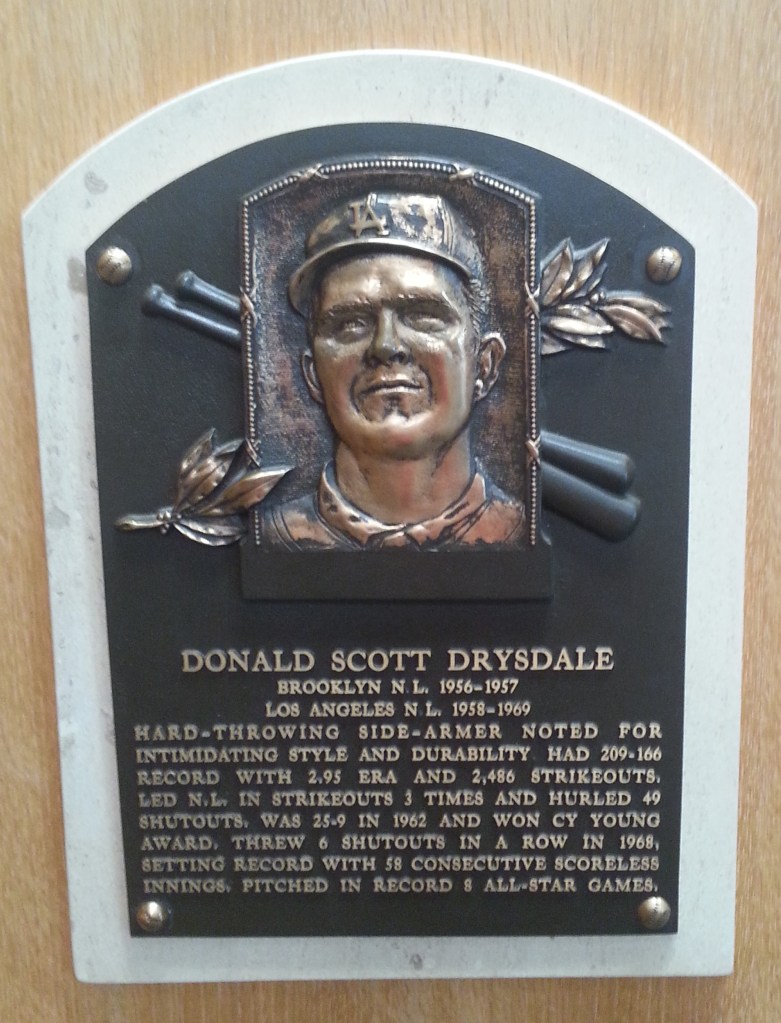
In respect to Drysdale’s playing career — 209 wins over 14 seasons, a 2.95 ERA, eight All-Star appearances, five World Series appearances, a 1962 Cy Young Award during the Dodgers’ first year at Dodger Stadium — baseball history often just leaves us with data and box scores, so others can crunch the numbers to compare and contrast. It barely touches the whole scope of things.
There’s more an urgent need to collect the stories, provide the context, reflect on the outcomes, before those observations disappear.
Incredibly, and perhaps regrettably, more than 30 years have passed since Drysdale’s out-of-the-blue death by heart failure while on the road as a broadcaster with the Dodgers in Montreal during the 1993 season. That’s just about equal to Drysdale’s age when he retired as a player in ’69, having just turned 33 with shoulder rotator cuff issues.
Why did it take so long for someone attempting any sort of A-plus book on Big D?

Whicker, the Orange County Register sports columnist from 1987 through retirement in 2022 and writing professionally since ’73, explains in his book that he had gathered material more than 10 years ago for a Drysdale project, but it fell through. A recent query by a Triumph Books contact led to this revival.
So while interviews were done with those who also had since passed on — Vin Scully, Jeff Torborg, Carl Erskine, Frank Howard and Tim McCarver to name a few — Whicker could re-engage with Ann Meyers Drysdale, her son DJ, some of Drysdale’s relatives, and even Sandy Koufax and Bill Bavasi, to restoke the conversation. Whicker also leaned into former broadcast partners such as Ken Harrelson, Dave Van Horne, Ross Porter and Larry Dierker — the later, another standout from the San Fernando Valley who made the big leagues.
Nearly 40 voices suddenly became part of the chorus that, in this manuscript, form less of a linear biographical recount but more of a round-table appreciation/tribute/eulogy.
Typical bios take a different approach and tone — start with Drysdale’s SABR bio-project library entry. Whicker’s approach feels as if, in his writing style, it gives readers a feel as if they are part of a group chat. They can smile and nod, fully appreciating what joy and enjoyment Drysdale brought so many who felt they knew him best. It also allows Drysdale’s children, and to some extent his wife, to better appreciate the scope of the person they knew outside the home and ballpark.
During a recent appearance on Larry Mantle’s “Air Talk” on LAist/KPCC 89.3 FM, Whicker surmised that Drysdale was drawn to people like him who didn’t take themselves seriously, but were very serious about particular things that they saw not up to standards.
“I think he was a unique personality and all those who were with him saw him as a great leader,” said Whicker. “They may have respected and appreciated Koufax, but Don was more connected to how the team functioned, grabbing a six-pack, sitting on the team bus and telling stories. Very opinionated on and off the air. A strong ethic about how the game was played.”
Former broadcast partner Dick Enberg, who died in 2017, once said to me: “Every day was a good day when you were with Don Drysdale,” and then threw in some classic off-color stories that wouldn’t be fit to print, especially comments could make to him after he muted his mic.
In this case, any time there’s opportunity to read something new about Big D, that’s a pretty dandy as well.
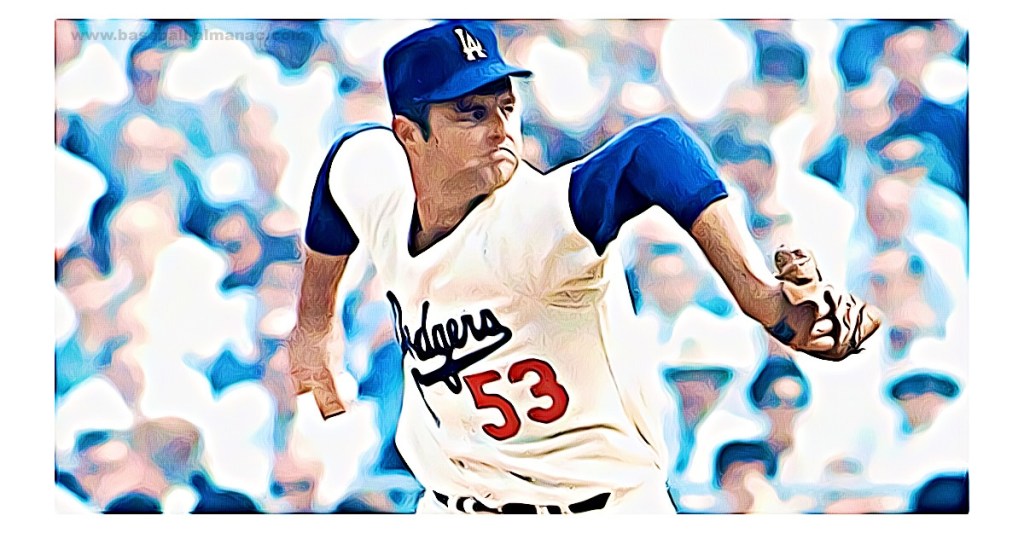
How it goes in the scorebook
HBP: Score it a Hit By the Publishers. Triumph made something happen.
Faithful to journalistic storytelling yet casual and breezy in many ways that reflects Drysdale himself, “Up and In” takes us higher and tighter. There’s so much people have relatable to Drysdale as a product of the Southern California sports history landscape, first as a native, then a player, and a voice on TV and radio often chuckling aloud about how the game was so much different. It was all wrapped up in a portrait of a Hall of Fame human being.
Reviews by Publishers’ Weekly and Library Journal both note the narrative here can tend to meander and wander, and there’s not a lot of digging much into Drysdale’s early life. That’s a fair call. Some has been covered in previous books, such as his biography done 35 years ago.
There is a bit of randomness to this until it reaches the third chapter. Both reviewers agree the book will nonetheless appeal to fans because of its “reverent tone” and familiarity with subject. Again, accurate. Baseball fans have waited too long for something of this magnitude. The style and tone of the book fits Whicker’s approach to storytelling for years. Get it done, get it out there.
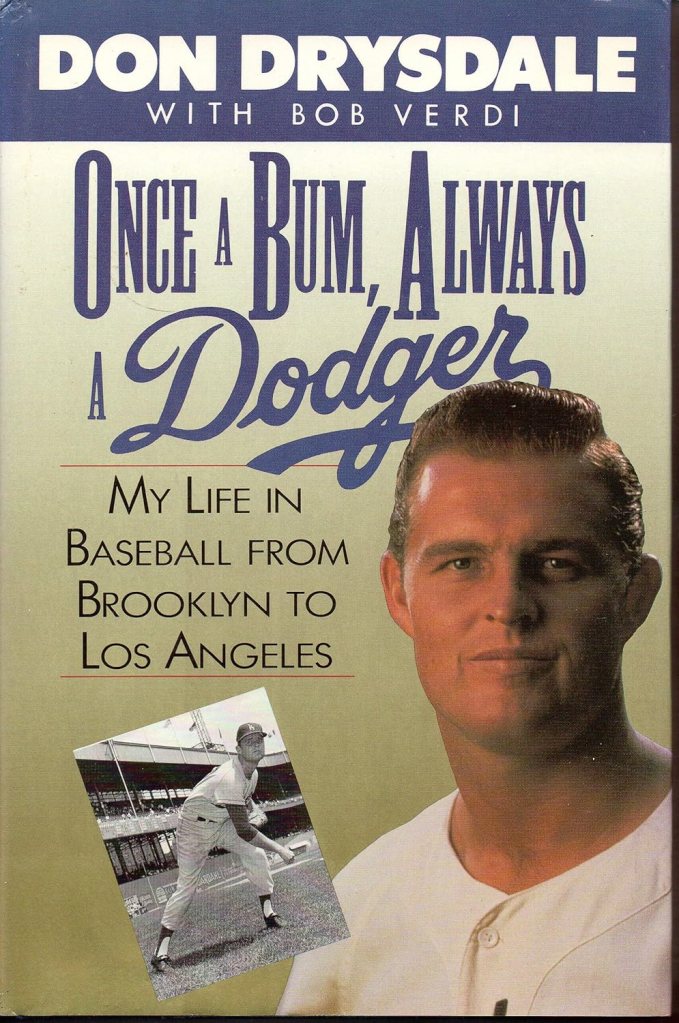
In our book, “Once A Bum, Always a Dodger,” the Drysdale manuscript that came out in 1990 with Bob Verdi in 1990, will be where we turn to if we need to hear his voice again.
In “Up and In,” we get to hear the other voices who round out his impact — substantial ones — that include Whicker’s own style knotting it together.
“Thanks to the memory of Don Drysdale himself,” Whicker writes in his acknowledgements. “I hope I’ve been able to convey how he managed to be such a symbol and yet retained the common touch … I wrote this books in hopes of making sure he would be commemorated and remembered.”
You can look it up: More to ponder
== “To Tell The Truth,” 1959.
Will the real Don Drysdale please reveal yourself?

 Tom Hoffarth's The Drill: More Farther Off the Wall
1 thought on “Day 3 of 2025 baseball book reviews: Dutiful Devotion to Double D”