
“Here Comes The Pizzer:
The Found Poetry of Baseball Announcers”
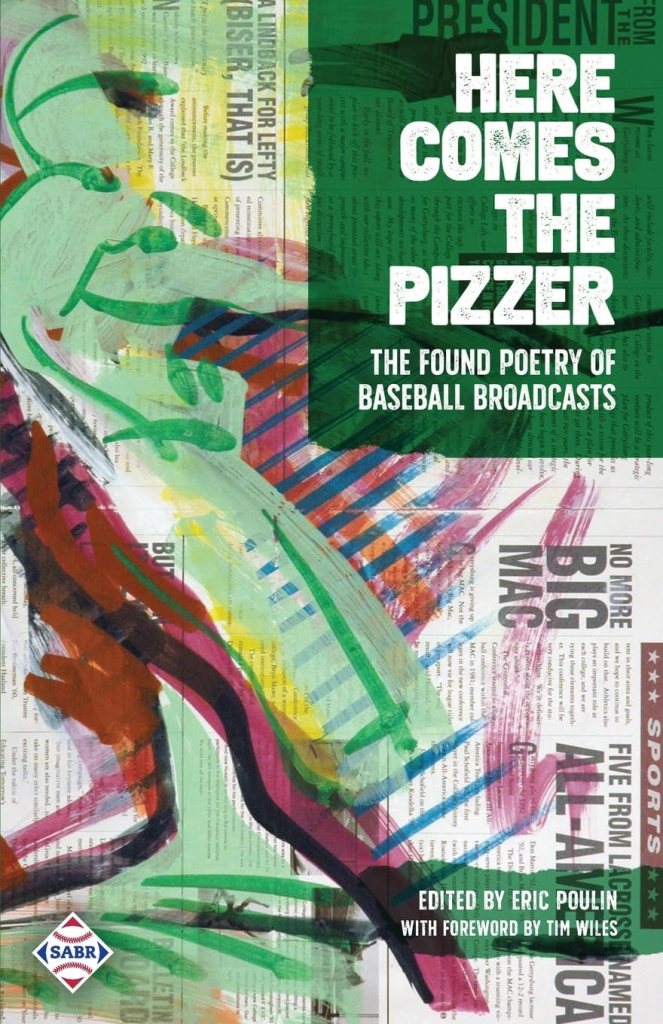
The editor: Eric Poulin
The contributors: Jim Armenti, Gabriel Bogart, Kurt Blumenau, Frank Cressotti, Dan D’Addona, T.S. Flynn, Harrison Golden, Pallas Gutierrez, Joanne Hulbert, Molly McClure, Jordan Nielsen, Ray L. Nielsen, Byron Petraroja, Eric Poulin, Mark Schwaber, Hart Seely, Mark S. Sternman, Cecilia Tan, James R. Walker, Tim Wiles, Robert Zussman
The cover art: “Roger” by Frank Cressotti
The details: Society of American Baseball Research, $14.95, 116 pages, released March 18, 2025; best available at the SABR publishers’ website or Bookshop.org. Also free digitally with a SABR membership.
“The Ancient Wisdom of Baseball:
Lessons for Life from
Homer’s Odyssey to the World Series”
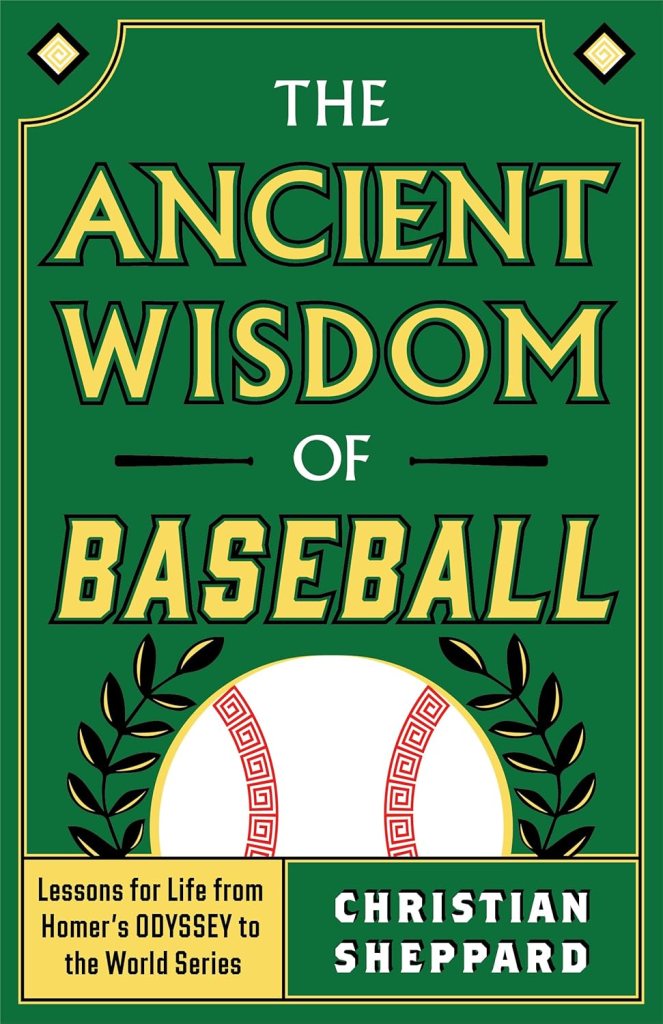
The author: Christian Sheppard
The details: Greenleaf Book Group, $27.95, 184 pages, released March 25, 2025; best available at the publishers’ website, the author’s website and Bookshop.org
A review in 90 feet or less
About three dozen Vin Scully “vintage” broadcasts, recorded between 1957 and 1980, have found a spot on the Youtube.com home of Classic Baseball on the Radio. The Tuesday afternoon July 29, 1969 game where the Dodgers are facing the Chicago Cubs at Wrigley Field is a fine example of what’s been captured for our modern listening pleasure.
About the 20 minutes into that particular broadcast, after the Cubs’ Fergie Jenkins walked the Dodgers’ Bill Sudakis in the top of the second inning of a scoreless game. Scully, ever mindful that he’s living up the title as game’s polyunsaturated poet laureate, reminds listeners that “this Dodgers-Cubs broadcast is coming from Chicago.”
He then recites 10 seconds of script perfectly timed to create a window where stations on the Dodgers radio network can do their top-of-the-hour ID.
This is what might otherwise be an innocuous transcript of that moment in time: You know, when your telephone rings it’s a good idea to try to answer it as promptly as possible. It’s thoughtful, courteous and a good way to make sure your caller doesn’t hang up.
So now if we go ee cummings on you, re-imagine that as “found poetry.”
Take existing words — printed, spoken, mangled — and refashion them, reorder them, and present them as poems. The literary equivalent of a collage.
So that so-so Scully clip/transcript above becomes sonnetized for your pleasure:
You know,
when your telephone rings
it’s a good idea to try to answer it
as promptly as possible …
It’s thoughtful,
courteous
AND
a good way to make sure your caller
doesn’t hang up
That message, once lost, is now found. Maybe this is why some refer to baseball innings as “stanzas.”
And maybe even more telling, this Scully PSA does not age well. A quarter century later, it’s an archaic reminder: Back when we only had rotary phones, it rang, you picked it up, and likely, it was someone you knew. Today, who dares to call someone on an iPhone, knowing the recipient sees the caller ID, and purposefully allows it to go straight to voicemail, bewildered this was your means of reaching out without the courtesy of a prior email, text, Facebook message or Tik-Tok tariff legal summons.

Eric Poulin, who had the creative itch during the COVID pandemic lockdown to dream up and compile what has become “Here Comes the Pizzer: The Found Poetry of Baseball Broadcasts,” put on a poetically dynamic presentation last March at the NINE convention in Tempe, Ariz., channeling his inner Ralph Kiner Waldo Emerson in a performance art immersion that went far beyond what he was trying to achieve with this project.
In the leadoff spot — for this presentation, and in the book — Poulin pulled up Dick Enberg’s first KMPC-AM (710) broadcast with the California Angels. What a polished gem. The Halos faced the brand-new Seattle Pilots on April 8, 1969 at the Big A. This was a broadcast also on Classic Baseball on the Radio (see below). And about nine minutes into the clip, Don Wells tees up the broadcast for a man who would launch into a five-decade career in this craft after working as a part-time baseball coach at San Fernando Valley State:
In transcription, it looks like this in the book (and we added the vignette filter for dramatic effect):
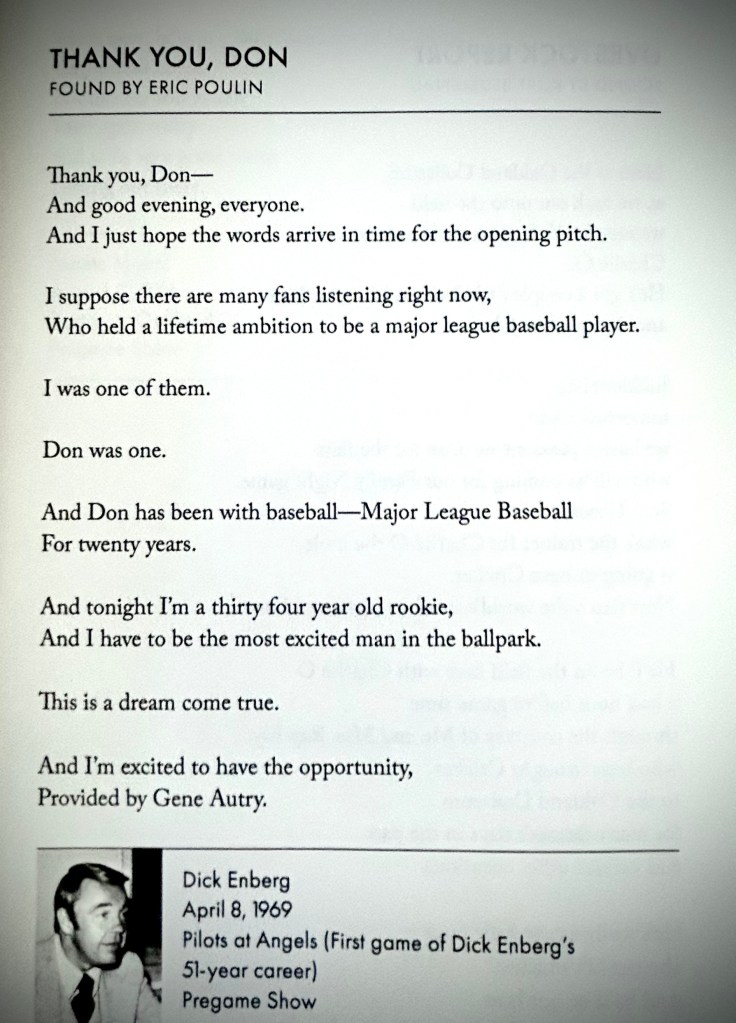
Oh, my.
And so we are off to pound some poetic justice.
Punctuation punctual. Periods periodically. Oxford commas far less communal. The results speak for themselves.

In early 2023, Poulin went on SABR’s Northern New England Chapter virtual platform to explain what’s at stake here. Great starting line. The project began as a way to capture the essence of the late Jerry Remy, the one-time Angels infielder whose Boston accent accentuated a popular run with the Red Sox as a broadcaster before his passing in October of ’21.
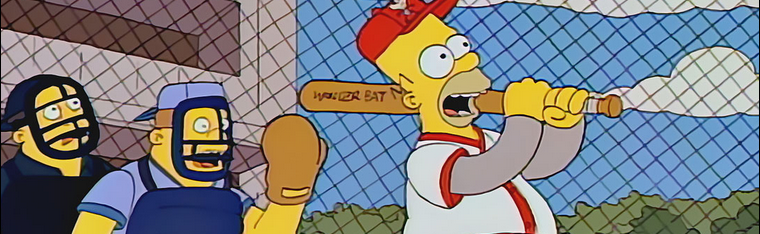
There was a belief, at times, he mispronounced common words. Because, well, the “a” at the end of a word often defaults to “er” when you’re in Beantown. Like Mayor Quimby on “The Simpsons.”
Theretofore, “pizza” becoming “pizzer.” Isn’t that a pisser?
A lifelong resident of Easthampton, Mass., and Assistant Professor of Practice at the Simmons School of Library and Information Science in Boston, Poulin would naturally gravitate toward the gravity of a Remy broadcast. Poulin could best engage as someone who appreciates, and translates, this communicational exercise.
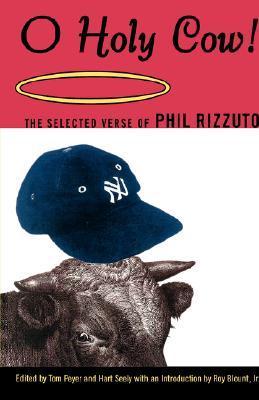
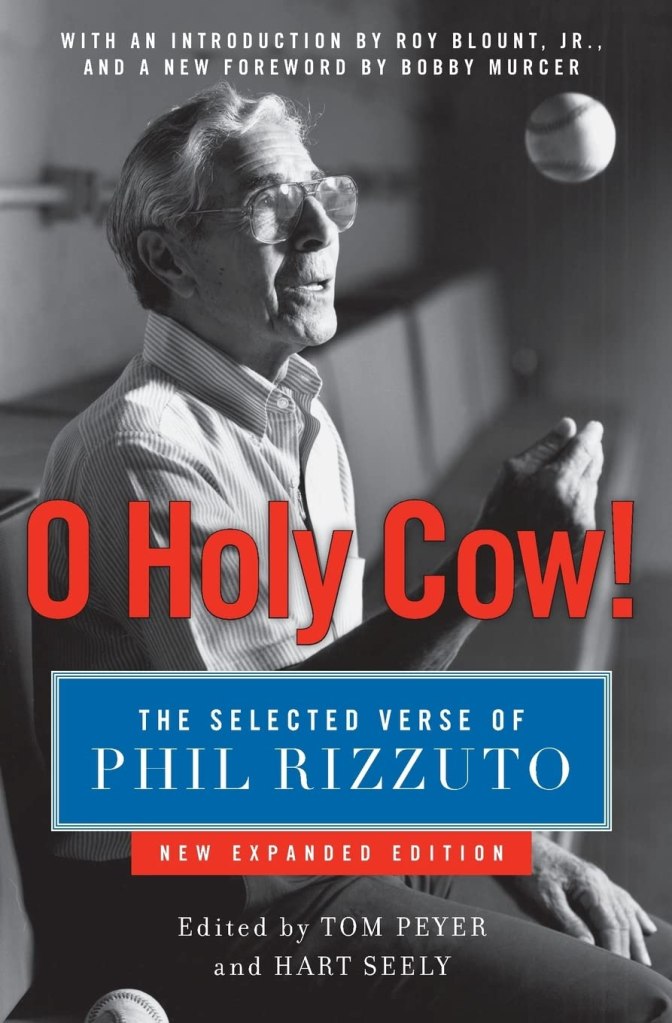
Poulin was also able to glean from the success of the book, “O Holy Cow! The Selected Verse of Phil Rizzuto,” launched in 1993 and mercurially updated in 2008, shortly after the death of the New York Yankees Hall of Fame shortstop-turned-somewhat broadcaster (who should also be in the broadcaster’s wing).
The power of the SABR community pooled its time and talents to answer the call, and Poulin workshoped it during SABR’s Aug. 2024 edition of Turnstyle.
As a tribute, Remy has 10 of the 60-plus entries in the book. Enberg, Snoop Dogg, Bing Crosby, Howard Cosell and Jimmy Piersall are in once each — and it is likely the first sentence every compiled in human history that includes those five names together.
During his spring-training Chautauqua in Tempe, Poulin declared that an entire book could be compiled just on Scully’s work — and Scully’s work is included four times, touching on a variety of observations, proclamations and flat-out historic interpretations (see: beards, the Henry Aaron home run, and the ’86 Buckner error).
Here’s another (via a SABR posting preserving it for all its intent and emotion):
I have said enough for a lifetime …
You and I have been friends for a long time
but I know in my heart
I’ve always needed you
more than you’ve ever needed me
I’ll miss our time together
more than I can say
But you know what?
There will be a new day
and eventually a new year
and when the coming winter gives way to spring
Oh, rest assured
once again
it will be ‘time for Dodger baseball.’
So this is Vin Scully
wishing you a very pleasant good afternoon
wherever you may be
Consider this, and our phone clip above, ready made for the book’s second printing.
Holy cowabunga.
With poetry comes wisdom. Or, perhaps, the act of trying to accept what is wise, leading to the neck-craning activity of looking to the sky and, while pondering why it has lasted this long, trying to hear of the umpire is going to call the infield fly rule, allow you to drop it and deceive the runner(s) (all within the rules) or catch it (the ethical outcome) and proceed.
(Or, in the case of a recent Dodgers-Nationals game at Dodger Stadium, the pitcher fumbled a Austin Barnes’ popup with Pages at first, there was no infield fly call that we could tell, yet, it the double play was erased when the umpires huddled, realized this wasn’t reviewable, and they “corrected” it causing the Washington skipper, with an 8-1 lead in the seventh, to come unglued).

If only the umps could replay some ancient wisdom to assess this mistake.
In “The Ancient Wisdom of Baseball,” Sheppard’s beautiful and admirable intent to get our heads around a deeper appreciation of heroic episodes, such as the 2016 World Series runs of his beloved Chicago Cubs, requires the reader to be in the right mindset to understand why myths don’t have to be mythological-considered fairy tales. Why the power of courage, the virtue of virtue, the adroitness of prudence, temperance and justice are what make life beautiful. Tragedy vs. comedy, dancing around happiness, isn’t accidental.

As a professor of liberal arts at the School of the Art Institute of Chicago and former teacher of the “Great Books” at the University of Chicago, Sheppard’s shepherding us into this world that lives daily in head and heart can be daunting. He also lives within walking distance of Wrigley Field, which in itself is quite poetic. That’s where he finds his happiness, as well as with his interactions with his daughter, and comes through in this manuscript.
Sheppard write what he knows, and you can tell he loves the process. He wants to share that exuberance, as Kirkus Reviews explains that this is “Sheppard’s lyrical paean to America’s enduring pastime.”
Lots of dots and ideas to connect. While we thought we had more elasticity in our brain cells, we admit to having been cramping up from our old college philosophy class days. Perhaps some of our creative atoms have snapped at some of the aging synapses. We’re hardwired for hardball, and that can be hard to get out of at times when you want to poke the ball to an area where we ain’t.
Life would imply that, with age, we become wiser. Having seen my parents go through their struggles in their mid-80s, we have to account for the fact we do become less patient. We have to get out of our own way. Nor have we decided this is too much for us to handle: We’re willing to go back and re-read for full effect.
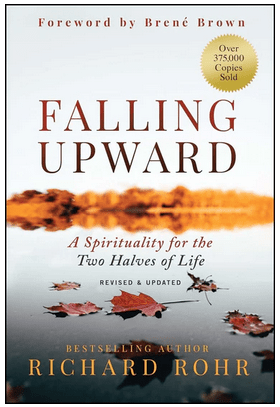
(Aside: Allow yourself the grace to take in Richard Rohr’s book, “Falling Upward: The Spirituality For the Two Halves of Life,” and you may understand this better. That, too, will take a few readings, and the accompanying workbook, to get the full esoteric/less hard-wired examples, of the point that is being made, and find where your life arch happens to be.)
Sheppard may find it tough to establish a sweet spot for this endeavor. The younger bunch may not have the full-life experience. The older fan may find it a challenge to wedge virtue into baseball they he/she/they are, like paper cuts, asked to process a thought while the modern game counts down a pitch clock and panic sets in. This isn’t a game show. Nor do we always have to go to a New York review board for an immediate decision that will try to make sure we have this event played as perfectly as possible.
Baseball’s poetry and wisdom is being systematically extracted from today’s motion.
In today’s game, a haiku moment can shit the bed.
It is delightful that Sheppard was able to get affable former Cubs GM Theo Epstein to blurb: “The ancient wisdom of baseball is a love letter to baseball that explains its connections to our inner lives and to classical lore in a way that makes one pine for Opening Day.”
It just feels like we could be sitting on the pine for this, finally understanding why our Ancient Wisdom 101 professor kept calling us Smarticus, not in a lovingly way. Take heed there is more a dynamic way to to have Sheppard better explain it by watching and listening versus reading and pondering:
How they go in the scorebook
Homer runs.
Both of these have a deeper purpose, a constellations of value and merit, but must be processed when the brain is still and the spirit isn’t agitated. If not, put them down and do a callback later.
As Vin said, pick up the phone when you hear it ring. It will come when the time is right in your journey.
(Also: Point of contention — baseball has broadcasters, not announcers. As per the Cooperstown Broadcasters Wing. Broadcasters tell stories and report. Announcers announce things. Mr. Scully was adept at explaining that distinction to me at one point — because he once had a goal to become an announcer, at a D.C. radio station, where his job would have been to be the caulk in the gaps of the programming).
Wise-guy writers like these fellow scribes seek to be creative and literate, soaked in passion and meaning, hoping to not just remembered but quoted aloud. Inform and entertain.
Like, Jim Bouton.
When the former New York Yankees pitcher came out with “Ball Four” an eye-opening account of his experiences in the game and including his ridiculous time with the aforementioned Seattle Pilots and then the Houston Astros during the 1969 season, a lot of his brethren who’d told their wives and girlfriends, sometimes on the same day, that this kind of stuff doesn’t really happen.
“I can still remember Pete Rose, on the top step of the dugout screaming, ‘Fuck you, Shakespeare’,” said Bouton.
Maybe Charlie Hustle thought that was as good as referring to a numbskull like him as an “Einstein.”
Howard Bryant’s 2005 history of baseball in the 1990s called “Juicing the Game” made note of that Rose quote, and added: “Literary criticism has seldom been more explicit.”
Bouton, as he should, took it as a compliment because … consider the source. Rose saw it as speaking the unspoken in the baseball community.
Times had changed. Yet these books are the projects to be properly shelved where the academics can circle back at some point and have it revealed: Yes, someone was doing some heavy thinking at one point before this game unraveled into a business-driven tax-write off for hedge fund owners who are cooking their own books.
You can look it up: More to ponder
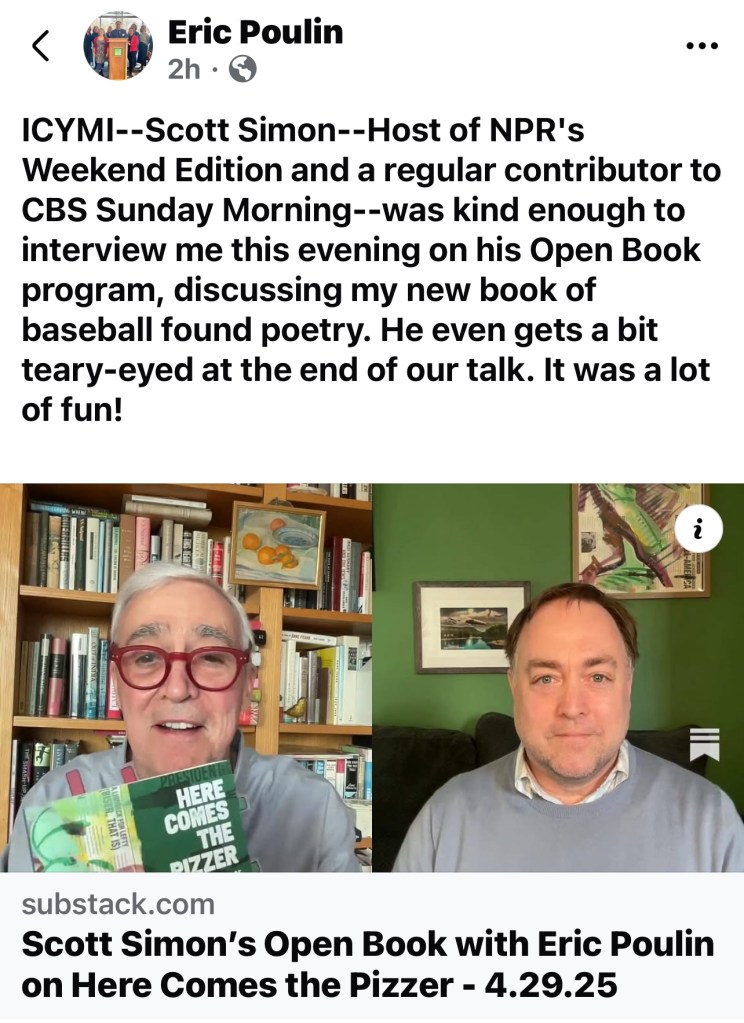
== The esteemed Scott Simon brought Eric Poulin on for a chat that was part of his Substack “Open Book” posting.
== On some days like this, we may default to the Dan Quisenberry book where he slings up his authentic side-armed poems, “On Days Like This,” from 1998.
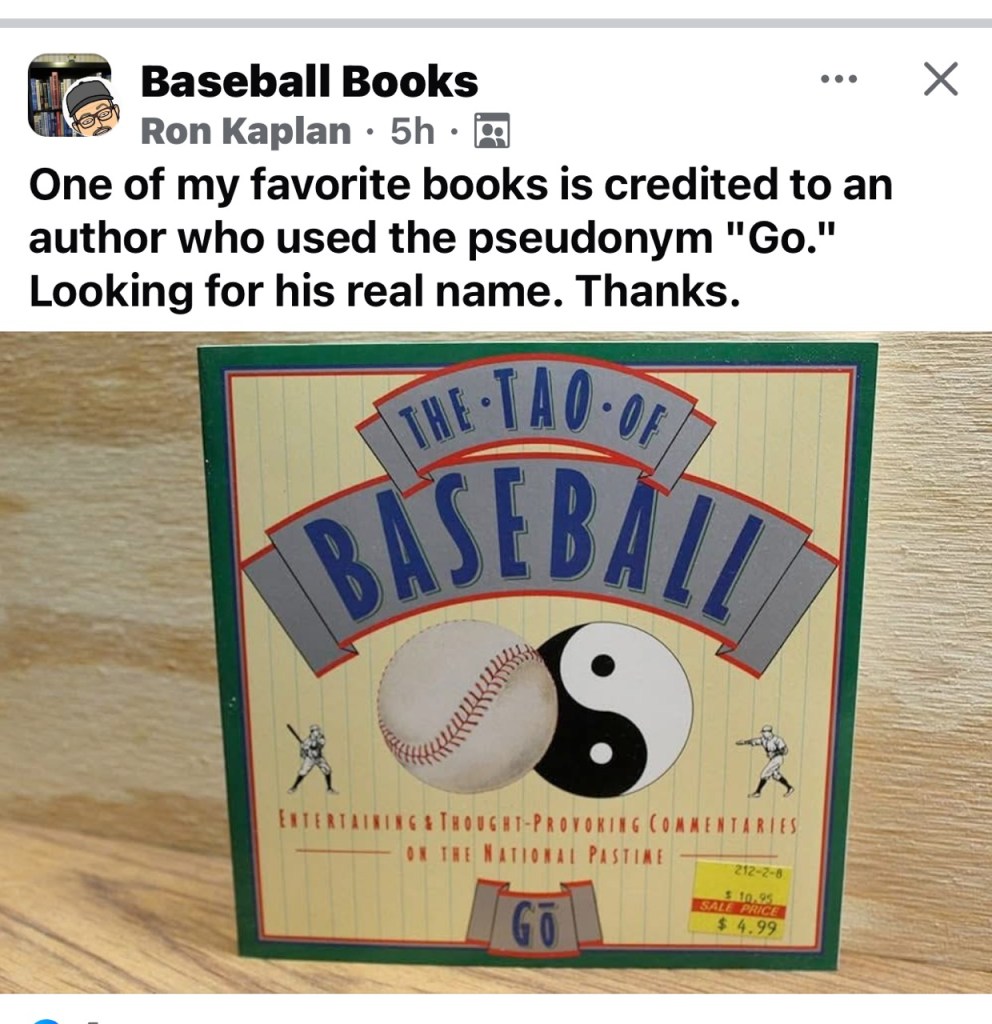
== Hope Ron found the answer to this:

 Tom Hoffarth's The Drill: More Farther Off the Wall
2 thoughts on “Day 9 of 2025 baseball book reviews: Poetic justice, sonnetized and unsanitized”