
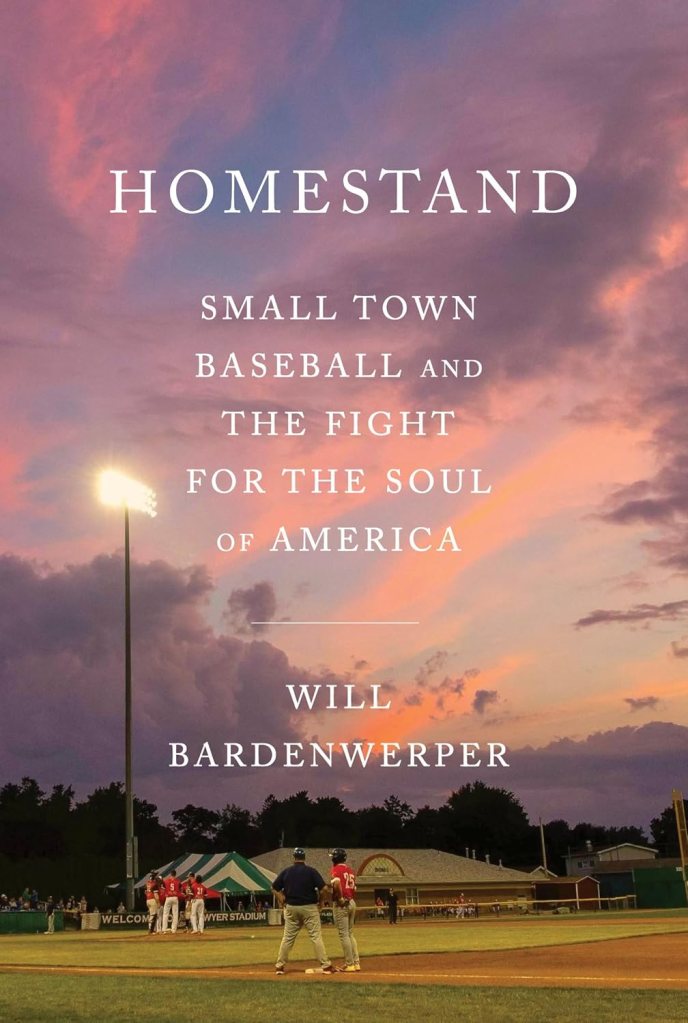
“Homestand: Small Town Baseball
and the Fight for the Soul of America”
The author: Will Bardenwerper
The details: Doubleday, $30, 320 pages, released March 11, 2025; best available at the Penguin/Random House publishers website, the author’s website or BookShop.org
A review in 90 feet or less
Kiké Hernandez hustled to the bat rack in the Dodger Stadium third-base home dugout. He saw me standing there, observing. He pointed at my shirt and made the quick comment as he grabbed a new piece of wood to take back to the batting cage:
“Hey, JetHawks. I played there.”
“I remember,” I replied.
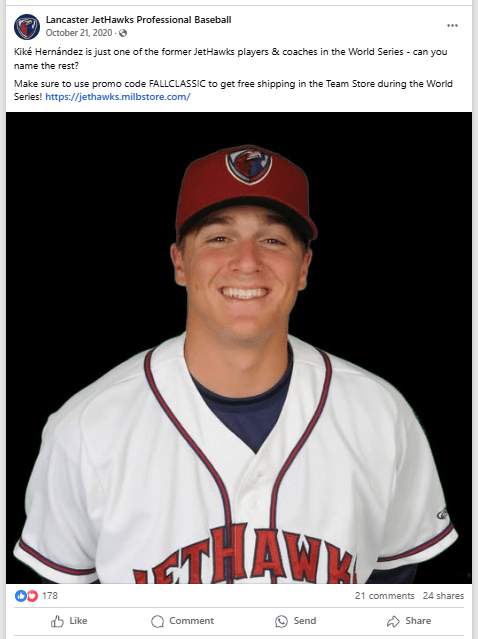
It was some 10 years ago. I was covering a Dodgers game for the LA Daily News. My blue short-sleeve shirt with a Lancaster JetHawks logo on the left side caught the eye of Hernandez, who at that point in his career was referred to as Enrique (read the game stories of that time). Then he became a playoff legend and his calling card was modified (along with a correct hyphen to avoid Spellcheck’s wrath).
At that point, the backup second baseman, shortstop, third baseman, left fielder, center fielder and right fielder had not yet posted a career pitching 9.64 ERA with an 0-1 record in five appearances.
That one season Hernandez spent in the Cal League (100 games, .275 average, .736 OPS, 104 hits, 25 doubles, 7 triples, 5 homers, 49 RBIs, 4 steals) was a celebratory one for Lancaster’s prized entry in 2012. The 20-year old prospect of the Houston Astros was on a roster with future MLB players George Springer, Delino DeShields Jr., Carlos Perez, Domingo Santana and Nick Tropeano, all eventually playing their ways out of the high Single-A ranks to various degrees.
When he came to the U.S. mainland as a 17 year old from Puerto Rico, Hernandez was acclimated in the Astros’ Gulf Coast Rookie League. Future stops would take him to the Tri-City Alley Cats in Troy, N.Y.; the Lexington Legends in Kentucky and the Corpus Christi Hooks in Texas. In 2015, the Oklahoma City RedHawks, the Dodgers’ Triple-A team, would be his last minor stop before launching into an MLB trajectory. The only other times he would sport a minor-league jersey were on rehab assignments – the Tulsa Drillers, the Rancho Cucamonga Quakes, the Worcester Red Sox, the Portland (Maine) Sea Dogs.
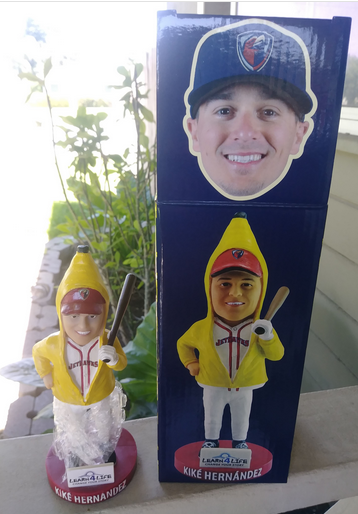
Kiké got around. That’s life in the minors. You also become a community asset. As part of the Class of 2019 for the Lancaster JetHawks Hall of Fame, a key contributor to the team’s first Cal League pennant in 2012, he got a Rally Banana bobblehead to show for it as well.
Where is that Hall of Fame now? In our memories.
I felt an allegiance of sorts to the JetHawks. It was put in a precarious place where a game could have been called because of dangerously high winds just as easily as a sunset beyond the third-base grandstands could be as glorious to watch as it was for a right fielder to wrestle with during a shallow pop fly.
I once had the nerve to ask then-JetHawks play-by-play man Jeff Lasky if he would let me, on a lark known as a column idea, actually call live one inning on the radio broadcast. To show how easy it was. Because I’d bet, for that mid-week day game, if you weren’t at the park that day you didn’t otherwise care. Except there were those in the stands who had radios and were straining their necks to see who had sabotaged Lasky’s eminent domain.
It was, at least, something that could be pulled off in the name of fun. And instructional.
I admired how my friend Brian Golden, a columnist for the Antelope Valley Press, could take the 14 to the 5 from his Landcaster outpost far beyond downtown L.A. for a two-plus, one-way trek just to cover a Dodgers game. He would then work late, drive home, and often crank out a 4 a.m. sports talk radio show.

In 2009, I was also at the Hanger, the JetHawks’ hitter-friendly home field, to see a San Jose Giants’ 19-year-old pitcher named Madison Bumgarner, throwing speed balls to a 22-year-old catcher named Buster Posey. The two would be fast tracked to San Francisco, being vital parts of two World Series title teams less than 10 years later, but in this game, Bumgarner’s only poor outing in a San Jose uniform came here. The JetHawks piled up six runs on six hits in his 3 1/3 innings. He struck out five and walked one, but three errors behind him leading to four unearned runs. The Giants still won the game, 17-7, as Posey homered.
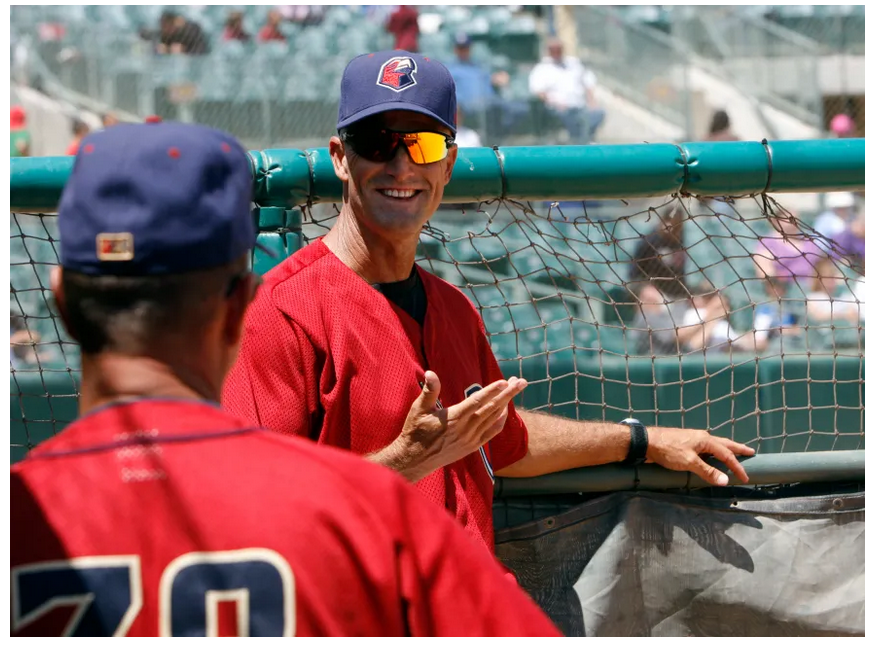
That year I also did a profile of JetHawks’ manager Wes Clements, who I went to high school with in Hawthorne. The roster he had for that one season as a skipper before he was promoted to Double-A Corpus Christi included Roger Clemens’ son, Koby, a catcher who got as high as triple A with the Astros but never got the call up. He would end his playing at 27 in 2014 with the independent Sugar Land Skeeters. Clements is now doing TV game analysis work, most recently with the Los Angeles Angels’ spring training games.
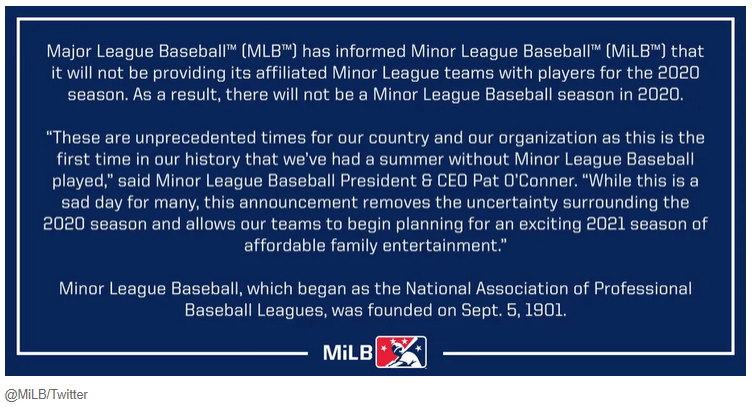
The cancellation of all the 2020 minor-league season affecting 160 teams and tens of thousands of workers because of the COVID pandemic (but not the MLB season) was the beginning of the end of a lot of things. MLB reorganized its contract with the minor leagues and cut out 42 teams — not in tribute to Jack Robinson.
Part of this was erasing the Cal League as a group. Those left moved from High-A to Low-A. The MLB then reacquired the Cal League branding, brought back eight teams in 2022 … and …
The minor league teams in Southern California’s current incarnation has The Inland Empire 66ers in San Bernardino, named after Route 66 (an affiliate of the Angels), the Lake Elsinore Storm (an affiliate of the Padres) and the Quakes in Rancho Cucamonga (a Dodgers affiliate).
Lancaster’s JetHawks were grounded. For life.
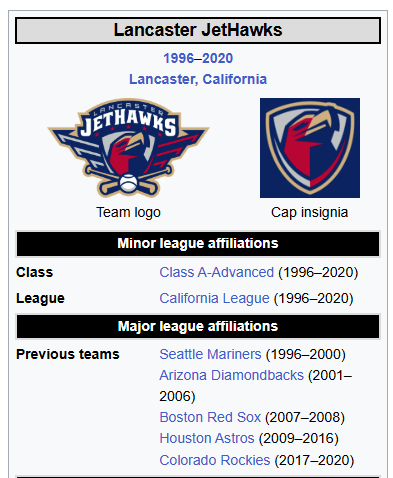
To write the JetHawks’ history in a paragraph: Started as the Reno Silver Sox in 1947, moved to Riverside and were renamed the Pilots in 1993, moved to Lancaster in ’96 despite a lucrative offer to relocate to Palm Springs, where the Angels once had a really nice beachhead as a minor-league team and spring training camp. Came up with the name JetHawks to honor workers of the local aerospace industry — Northrup has a vital facility out there. Highlights included a Buzz Aldrin bobblehead giveaway.
And a bobble for Brian Golden.
Looking back, when Golden retired in 2021 after 37 years at the Press and moved back East, maybe it was the JetHawks’ demise that left him most crushed. His fragile heart couldn’t take it much any more.
In the brief time since the JetHawks’ departure, the Hanger, which sat about 4,500 and could get up to 7,000 for families out in the grass areas of the outfield, was used for community college baseball and something called the Pecos League. But it is undergoing renovation into a soccer pitch for the new Antelope Valley USL League team, keeping the grandstands in place and flattening out the diamond.
From a pitch-perfect ballfield to a soccer pitch, what a bitch.
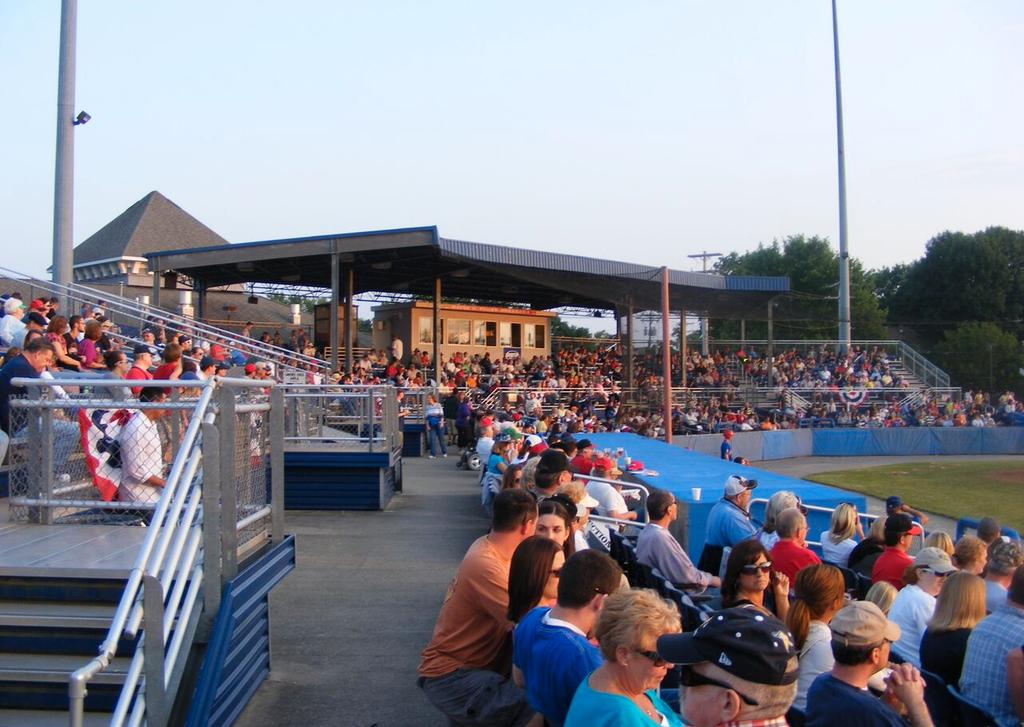
Dwyer Stadium, where the Batavia Muckdogs once mucked it up as a New York-Penn League team until 2020, has stayed in tack. So has the nickname of the Muckdogs. Both support a summer team in what’s called the Perfect Game Collegiate Baseball League.
It’s less than perfect, but it’ll do for now.
That’s the gut-punch at least felt here upon picking up “Homestand: Small Town Baseball and the Fight for the Soul of America,” because Will Bardenwerper knew his project isn’t just about another minor-league baseball team somewhere uniting a community between Buffalo and Rochester, N.Y.
It’s more: Why? Really, why did this have to happen, the whole minor-league contraction, the taking away of the local team?
There’s a scent of “Where Nobody Knows Your Name: Life in the Minor Leagues of Baseball,” by John Feinstein. Even Dan Barry’s “Bottom of the 33rd: Hope, Redemption and Baseball’s Longest Game” that involves the Batavia’s nearby Triple-A Rochester Red Wings. There’s more of the 2023 “Welcome to the Circus of Baseball: A Story of the Perfect Summer,
at the Perfect Ballpark, at the Perfect Time” by Ryan McGee.
It’s really most aligned with Ron Shelton’s film “Bull Durham” as it captures the flavor of the followers who have found this baseball church to regularly and faithfully attend, for its community, kinship and kindness.
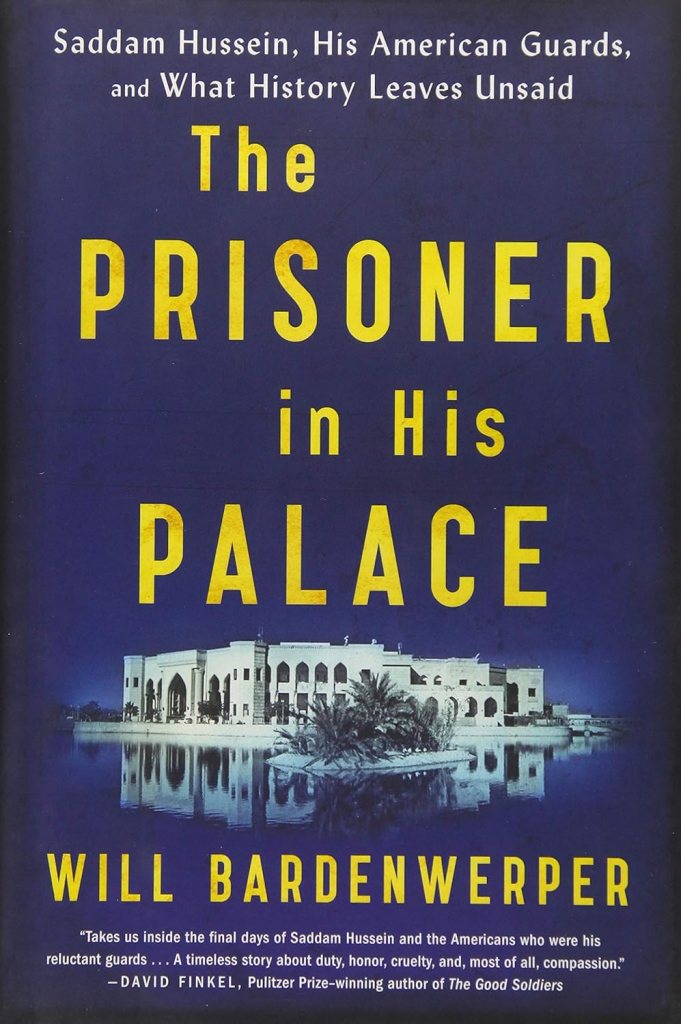
Bardenwerper has a background that gives him reader leverage — he’s done a previous important book, “The Prisoner in His Palace: Saddam Hussein, His American Guards and What History Leaves Unsaid” (an interview with NPR in 2017 is here). That came from his experience as an Airborne Ranger officer awarded a Combat Infantryman Badge and a Bronze Star after felt compelled to do something after the events of 9/11. After his time in the U.S. Army, he worked in the Washington bureau of the New York Times.
His life had meaning and purpose. It just wasn’t all that fulfilling when he came home from battle. What did he fight for?
Baseball, for him, included playing two years at Princeton University, as well as nifty memories of he and his brother with endless games of Whiffle ball that gave him memories one just can’t otherwise manufacture by watching a movie.
And when he saw the COVID-sped-up demise of minor-league baseball, he wrote an October, 2021 piece for Harper’s Magazine — “Minor Threat: MLB puts the farm system out to pasture.” The focus there was on Appalachian League’s Pulaski Yankees.
Early in “Homestand,” Bardenwerper goes into his home-run trot and explains and expands:
“What troubled me the most was the fracturing of community, an erosion of the societal bonds holding us together. This was the loss that seemed to be most likely to threaten the soul of the country. It felt as if we were experiencing a gradual evaporation of the America where people from all walks of life came together over beer and BBQ at the local ballpark. Which was exactly what I’d told myself, however naively, I had been fighting to preserve. With each election cycle, campaign yard signs gradually began to strike me not as healthy signs of a vibrant democracy but rather a demoralizing reminders of tribal bifurcation. After fighting alongside fellow young Americans taking on a real enemy that was trying to kill us, it was depressing to see how many Americans back home saw the opposing political party as the existential threat that needed to be vanquished by any means necessary. … This was emblematic of so much of what was wrong with today’s America. Is this, I found myself asking, as I had too many times over the years, the set of values we, as a country, were fighting for?
“This isn’t just a story about baseball. This is a story about America and where we go from here. We have long lamented the closing of the mills and factories in these small and mid-sized cities all over the country. Now the ballpark …”
Especially when the beer is provided by a local brewery. It’s making the local workers a community of participation.
Again, for my JetHawks, I wonder how all those men and women who worked on military plane projects feel about this now. Was their supporting our national defense really worth it if this was the local outcome?

Bardenwerper spent $99 for a Muckdogs 2022 season ticket for their farewell season. He moved from his home in Pittsburgh to spend the summer going to bat for Batavia. He came away with a book of memories.
This is where we area acquainted with Robbie and Nellie Nichols, the Muckdogs owners and concession stand chefs; Joe Kauffman, a former batboy of the team who had been going to games since the 1940s; Russ Salway, a season-seat holder who used to host players at his home in his basement as a living arrangement; and Eric Zweig, who Bardenwerper calls the “resident contrarian.” Sounds like a scripted Netflix series waiting to be made.
Most of this topic is contrary to what we have thought of baseball and America. No matter that we’re just expected to sing along with the National Anthem and believe in its purpose and meaning. This is something that’s needed, as a reminder those days may not return, but they don’t have to be summarily forgotten because the business has failed to support it.
How it goes in the scorebook
Home of the brave, and the brave heart, for its heart-squeezing final stanza.
Sensitive over sensational. Its purely poignant point comes across that the MLB did a lot of people wrong here, not just by ending teams’ existence, but taking away communities civic pride in the memory-making business.
And bravo to the author/publisher for a nice social media push to get our attention on this as it was climbing the charts.
A rather long aside:
After the title page, after his dedication, and before the table of contents, is this:
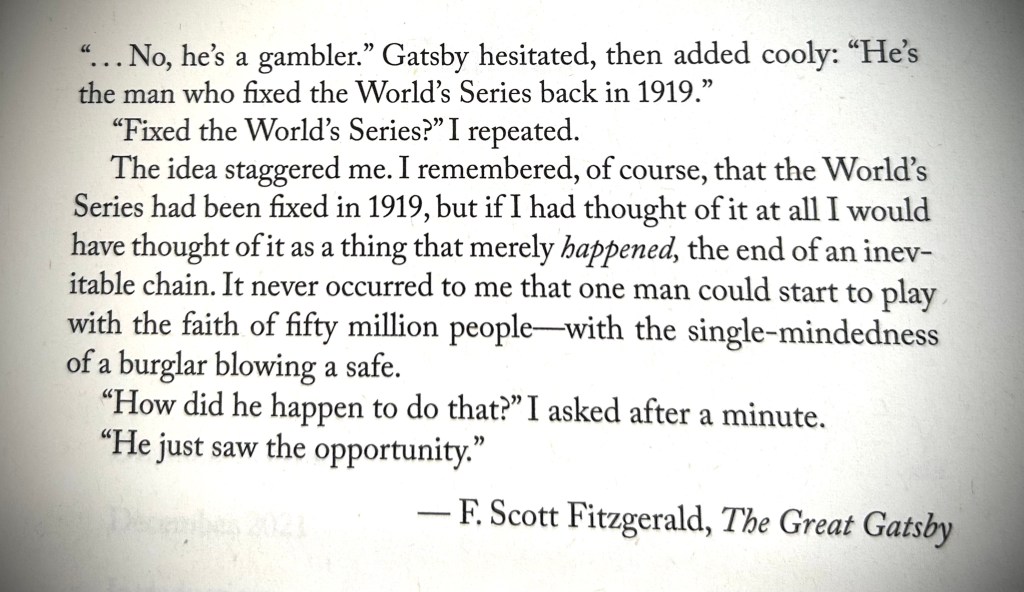
It’s not lost on me that, all things considered, “The Great Gatsby” came out 100 years ago, in April, 1925, to largely a literal yawn. (New Yorker magazine even zinged him good in ’26).
This is the book’s only reference to baseball, and my sense is that this spoke to Bardenwerper because of how the last two lines seem to explain why minor-league baseball is in the state it’s in today — the rules skewed to those who control the gold, and do whatever’s best for the one who’s about to invest in personal gain over civic well being. Follow the money, not the heart.
“Baseball is a game played by idiots for morons” is a line attributed to Fitzgerald.
If so, it’s because Fitzgerald considered his good friend, Ring Lardner, wasting his talent on sports. Baseball, in particular. And he said so in a piece for The New Republic magazine in October of 1933, lambasting him for wanting to cover the Chicago Cubs:
“When most men of promise achieve an adult education, if only in the school of war, Ring moved in the company of a few dozen illiterates playing a boy’s game. A boy’s game, with no more possibilities in it than a boy could master, a game bounded by walls which kept out novelty or danger, change or adventure. This material, the observation of it under such circumstances, was the text of Ring’s schooling during the most formative period of the mind. A writer can spin on about his adventures after thirty, after forty, after fifty, but the criteria by which these adventures are weighed and valued are irrevocably settled at the age of twenty-five. However deeply Ring might cut into it, his cake had exactly the diameter of Frank Chance’s diamond.”
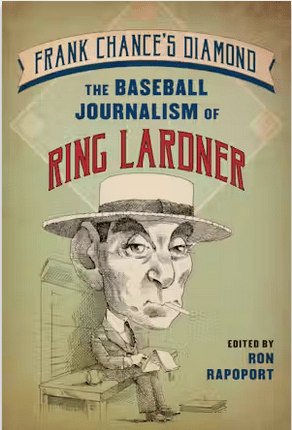
“It’s nasty,” colleague Ron Rapoport once said of the last line, a dig at Lardner’s comfort in writing about the Cubs then managed by Frank Chance, “but it’s kind of true.”
You are now cordially invited to read Ron Rapoport’s 2024 book, “Frank Chance’s Diamond: The Baseball Journalism of Ring Lardner,” along with our review of it.
You can look it up: More to ponder
== An audiobook review of “Homestand” by The Washington Post includes: “Narrator Dan Bittner’s warm, friendly delivery is well suited to the unaffected demeanor and cordiality of the loyal baseball fans of Batavia.”
== In the minor-league category, one more that sets up what happened in 2020:
== “When Minor League Baseball Almost Went Bust: 1946-1963,” edited by George Pawlush (SABR.org books, 164 pages, $24.95, released Jan. 7, 2025), best found at the publisher’s website.
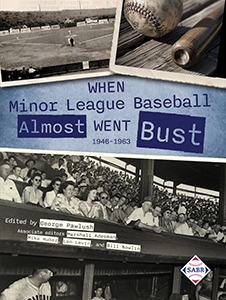
By 1949, the minor leagues had 59 leagues and 448 teams. But boomers in the post-WWII were moving to the suburbs. By ’63, hundreds of team folded, so the National and American Leagues drew up the player development plan — they would pay the salaries of the managers and coaches for up to five minor-league teams, and the teams payed the players. It seemed to work. Until it didn’t. There are 39 members of SABR to contributed stories to this project.
== In the memoir category:
= “Extra Innings: A Memoir of Fathers, Sons, Fandom and Fate,” by Jeff Benjamin (BookBaby, 272 pages, $27.95, released Jan. 30, 2025), best found at the publisher’s website or BookShop.org.
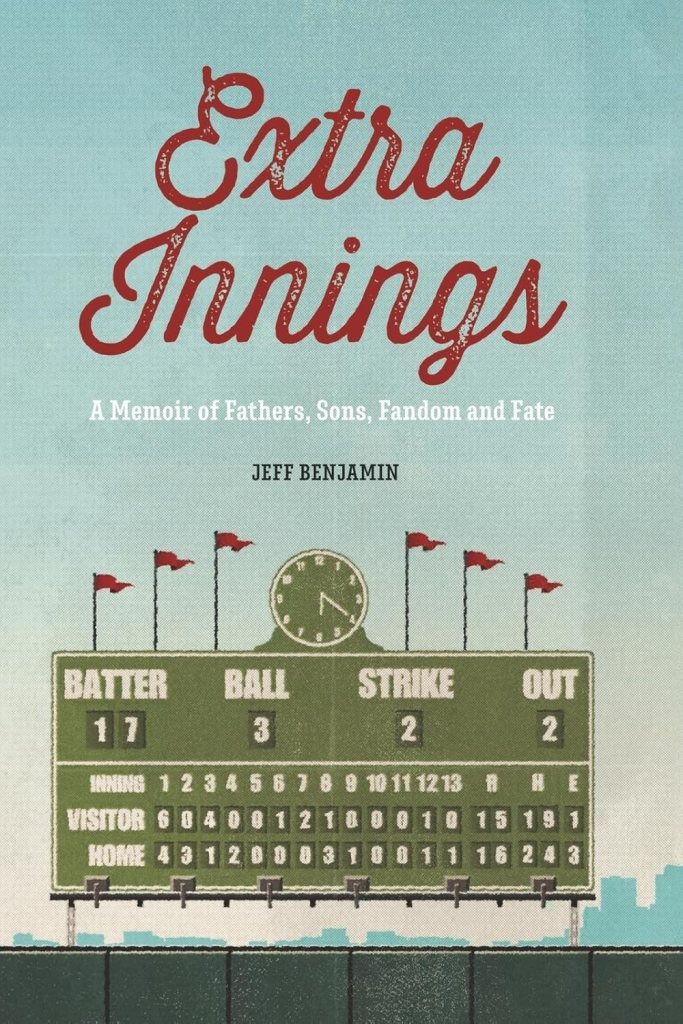
Benjamin, the COO of a high-end Italian restaurant in Philadelphia called Vertri Cucina, grew up in Davenport, Iowa as the son of the only rabbi in town. When Rabbi Benjamin was ousted from his position for demanding equal treatment for black students at the local high school, the family moved to Long Island, N.Y. But as his son’s career takes off, and his father’s health fails, they still bond over the Chicago Cubs, the nearest MLB team to Iowa for those who believe in that field of dreams.

 Tom Hoffarth's The Drill: More Farther Off the Wall
2 thoughts on “Day 10 of 2025 baseball book reviews: The small-town Muck(dog)raker”