

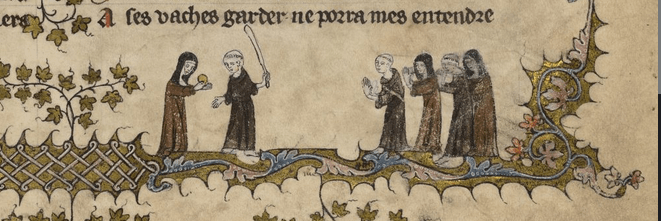
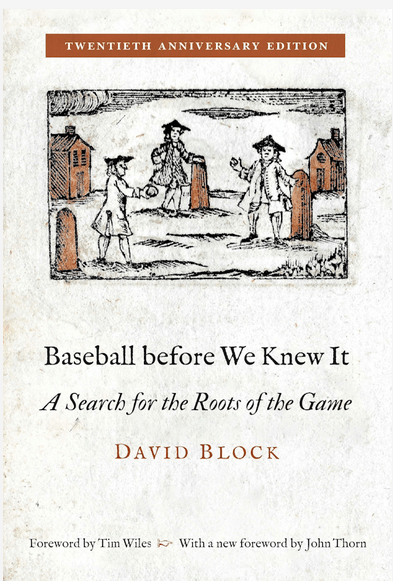
“Baseball before We Knew It:
A Search for the Roots of the Game”
The author: David Block
The details: University of Nebraska Press, 416 pages, $29.95, released April 20, 2025; best available at the publishers website and Bookshop.org
A review in 90 feet or less
We’ve been around the block with David Block on this subject before.

In June of 2019, before we knew it, Block did “Pastime Lost: The Humble, Original and Now Completely Forgotten Game of English Baseball.” We pounded out a review that started out about trying to know more about another book he did in 2005 as a first-time author called … well … see above.
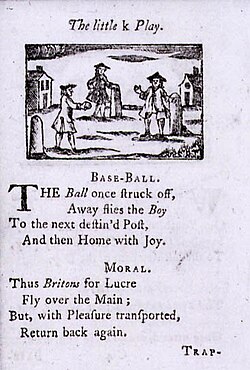
By his own accounts, Block was a retired systems analyst and amateur baseball historian. But he had produced a book that Tom Shieber, the senior curator at the Baseball Hall of Fame, called “to me probably the single most important baseball research of the last 50 years, if not more.” It crushed the whole Doubleday creationist story. It supported the claim that a 1791 ordinance in Pittsfield, Mass., banned the playing of “base-ball” near its town’s new meetinghouse. It brought to light the 1744 English kids book, “A Little Pretty Pocket-Book,” that revealed another earlier usage of the word “base-ball.”
So important was Block’s initial publication, it garnished its own Wikipedia page (which still has not noted the nuance of the second “b” lacking capitalization).
Back to the future, Block’s updated, revised and dusted-off version of “Baseball before We Knew It” 20 years later because just as stimulating as another visit to the La Brea Tar Pits and its sticky-finger museum store.
Like the archeologist who returns to the Egyptian pyramids because he’s got a new, more efficient metal detector/sand sifter, Block can process more of what subsequent historians have dug up through their excavations with the evolution on the dynamic growth charts. John Thorn’s new forward (in addition to the original by Tim Wiles) is proof enough this revision is necessary.
“His book inspired the great work of the past twenty years,” writes Thorn, the MLB official historian since 2011, “which in my view is the very best that has ever been done. Some writer have produced groundbreaking books and papers while others have dug up great finds that have headlined national papers. All of these are on display at Larry McCray’s Protoball website, which Block’s own research did so much to seed.”
When MLB Commissioner Selig named Thorn the game’s Official Historian, that included him being responsible for chairing a special Baseball Origins Committee. Block was among the five “top-drawer baseball scholars” added to it. It was Thorn, who in a 2016 “Our Game” MLB.com post, going back to a 2011 interview, recommended Block’s original book as one of the five he has suggested as best telling the game’s history:

Block picked up where Robert Henderson left off with “Ball, Bat and Bishop” in 1947. David Block was not a professional writer, this was his first book and it came as a complete surprise — out of left field as we say. He’s a lovely writer, an erudite fellow and a very good friend. But at the time the book came out I didn’t know him at all. He sent me the manuscript and asked me to evaluate it and I was completely stunned. It was a brilliant piece of work. The number of specific finds sprinkled through the work, like diamonds in the dust, is dazzling. For example, it was standard fare for sophisticated baseball folk to say that the game arrived from rounders. David Block demonstrated that the name baseball was far older than rounders — that, if anything, rounders derived from baseball. This may seem a trivial distinction in the wider world and one billion Chinese people don’t care about it, but in our little world this is pretty earthshaking.
David is very systematic and careful in his elucidation of fact. He found a German text by a gymnastic professor named Guts Muths — a 1796 text that had never been translated into English. In it he found the rules and diagrams for baseball. It was a staggering find. Subsequent to publishing the book he discovered a diary in Suffolk from 1755 by a man named William Bray discussing an outing to go to play baseball. Another amazing find. We haven’t heard the last of David.
True then, as it is now.

Two new essays by Block include a mea culpa of all the things he didn’t think rang true since his book came out — including the 2004 discovery by researcher George Thompson that a “game of Bace” recorded in 1805 as being a legit ancestor to baseball. Thorn came across another citing, this time calling it “basse.” Block playfully also refers to the “prominent know-it-alls” who have come up with findings, only to have him initially dismiss them but then, as he was pulling this manuscript revival together, “it wormed its way back into my consciousness” and “a klaxon sounded in my head.”
Block also writes about how “fairy tales can come true” as he scanned a list of books up for bidding by a very small auction house in 2022. His Holy Grail is “A Little Pretty Pocket-book,” and even if this one published by John Newberry circa 1770 was missing several pages that, it still had the most important notation of a children’s game played in London that having the earliest known reference to the game. He secured it. His wife was even OK with it.
“If somehow you were to find yourself miraculously in possession of a Gutenberg Bible that was incomplete, or a partial copy of a First Folio, how disappointed would you be?” Block asks.
The fact we have a complete copy of the revised “Baseball before We Knew It” is satisfying in itself.
How it goes in the scorebook
Comeback Book of the Year Award in the Baseball Historiography Category of When Old News is New News, circa Yogi Berra.
Having already received the Seymour Medal from the Society of Baseball Research as well as a North American Society for Sports History book award when it was in its original 340-page form, we shall note this one has almost 100 more, plus many of then with Roman numerals (all the way up to xxxvii).
That seems appropriate. Translations requires doing the old math, Latin style. Even if it involves some prehistoric XBH calculations.
It’s also interesting to have a book 20 years newer, yet the new cover looks 200 years older.
It’s an upper-case “B” in our book. Beneficial, Bountiful and Believable for baseball curators, and in the wheelhouse for a publisher like University of Nebraska Press, whose goal is making baseball stay alive with modern readable material that’s been thoroughly researched, appendix-ed and indexed.
Footnotes always welcome if you’re careful not to step on them.

 Tom Hoffarth's The Drill: More Farther Off the Wall
2 thoughts on “Day 13 of 2025 baseball book reviews: When old news is new news, who knows if that’s the historiography speaking”