


This is the latest post for an ongoing media project — SoCal Sports History 101: The Prime Numbers from 00 to 99 that Uniformly, Uniquely and Unapologetically Reveal The Narrative of Our Region’s Athletic Heritage. Pick a number and highlight an athlete — person, place or thing — most obviously connected to it by fame and fortune, someone who isn’t so obvious, and then take a deeper dive into the most interesting story tied to it. It’s a combination of star power, achievement, longevity, notoriety, and, above all, what makes that athlete so Southern California. Quirkiness and notoriety factor in. And it should open itself to more discussion and debate — which is what sports is best at doing.
The most obvious choices for No. 69:

= Sebastian Joseph-Day, Los Angeles Rams and Los Angeles Chargers
The not-so-obvious choices for No. 69:
= Chase De Leo, Anaheim Ducks
= Al Barry, Los Angeles Chargers (via USC)

The most interesting story for No. 69:
Chase De Leo, Anaheim Ducks center (2023-24)
Southern California map pinpoints:
La Mirada, Norwalk, Whittier, Anaheim
The preamble
Jerry Seinfeld has a rooting interest in the bizarro ways a fan will root for his or her favorite team.
His own fandom not withstanding aligned with the teams of New York — especially the Mets — Seinfield famously has a bit in the evolution of his his comedy career that covers all the bases when it comes to people who are essentially just “rooting for laundry.”
In his 2020 book “Is This Anything?”, which clears out his joke files to examine the evolution of material, that one is covered. So it an observation he once made about the time in our existence when, before caller ID became a thing, we had to punch in *69 — called Star-69 — if we were curious about who just rang us up and we somehow missed it.

Seinfeld’s riff:
“I thought it was a little hostile to the calling party. Someone calls. They hang up. You hit that *69. ‘Nice try, creep. Oh, I know all about your little call. …’
“And 69?
“That’s the number they pick for this thing?
“So that means there isn’t one person at the phone company that went to junior high school? How did that slip through an entire organization?
“If you worked at the phone company, and you heard they were doing this … wouldn’t you walk into the meeting and go, ’69? Are you kidding me? That’s the number you guys came up for the new feature? What the hell is going on here?’
“ ‘We’re the phone company. We can pick any number we want. 68. 70.’
” ‘I can’t wait to hear what you got for 3-Way Calling’.”
In the grand scheme of everything, what does 69 have to do with anything? It’s a callback to immature double entendre. The ding-dong-ditch statement of a world where “Beavis and Butthead” exist. We’d argue that some can only think of it as a single entendre.
Especially outside the ying/yang conundrum, how does it, or not, fit into a non-sexual connotation in sports?
In the entire history of Southern California sports, only a handful of athletes have dared to wear No. 69. You figure many have asked for it. They just didn’t get it. On several levels.
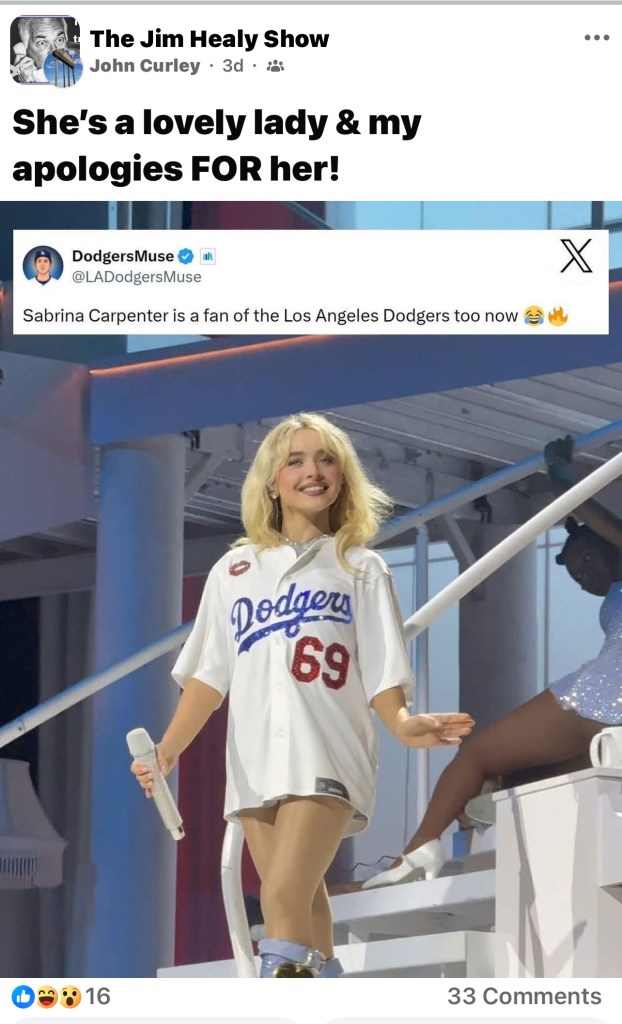
Some may have pulled it off better than others, but in sports, there’s no real star No. 69. It’s more an asterisk. Who’s trying to be the biggest asshat?
Maybe it’s just a call-back to the days we finally stopped using a rotary phone and embraced the push-button technology. To access a voice message. To try to win tickets on a radio station. To try to create a song with the new techno tones.

Going all the way to their Brooklyn roots in the 1880s, the Dodgers never have had a No. 69. No Robin or Superba or Bridegroom dare asked for such a scandalous thing. Likewise, no Angel would even think of it during the MLB existence of the Los Angeles/California/Anaheim/Los Angeles of Anaheim starting in 1961. As for its Pacific Coast League minor-league existence decades earlier, we are still researching.
Hardly a common baseball number anyway. Less than two dozen players in MLB history have worn it.
Pitcher Bronson Arroyo, one-time Dodgers property whose Baseball-Reference.com list of nicknames includes Saturn Nuts, Smokey, Tacks, Dirty, BroYo or Free Love, said 69 was forced on him when he was called up by Pittsburgh in 2000, which seems rather bold on the team’s part.

“I didn’t say anything about it,” he recalled. “It was a locker room at that time that was very segregated, very heavily dominated by the veterans. There wasn’t really room to ask for another pair of pants, much less a new uniform. They just gave me that number. … For me, it wasn’t a big deal, because for one, I was born at the end of February. I’m a Pisces. So, it looked like the two fish swimming around each other.”
Arroyo was not going to be the fish who saved Pittsburgh.
“The reactions I got for it — well, the one I really remember — I was warming up one time in San Diego, and this guy was screaming at me. He went, ‘Arroyo! Yeah, 69! That fits you real good, ‘cause you suck!’ I was like, ‘Wow, man, I never heard that. That’s pretty good.’
“But I’m a superstitious guy, so once I got the number, I didn’t want to give it up.”
Boston didn’t give it to Bronson after the Pirates traded him to the Red Sox three years later. He was sent to L.A. in 2015 via a trade with Atlanta but never pitched for the Dodgers, and never got a number. As it is, Arroyo has the most appearances in MLB history of anyone wearing No. 69.
Luis Medina, a utility player out of Warren High in Downey and Cerritos College in Norwalk wore No. 69 when he debuted for the Cleveland Indians in 1988. He ended up with a career WAR of 0.0. Chase De Jong, a right-handed pitcher out of Long Beach Wilson High and in the Dodgers’ organization in 2015-16, wore No. 69 during the 2020 COVID season for the Houston Astros. It resulted in a 14.73 ERA in three games. Eric Yang, a former standout catcher at El Camino Real High of Woodland Hills and UC Santa Barbara, took No. 69 when he made his MLB debut for Cincinnati as a pinch hitter in 2024. And he struck out.
There’s your De Jong/Yang moment.
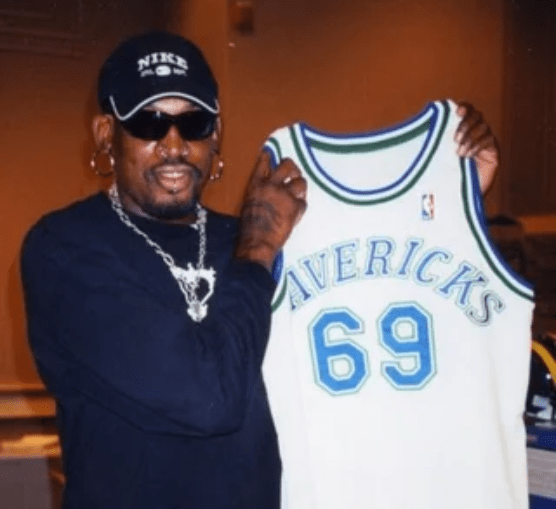
No one who has played for the Lakers’ franchise going back to 1948 in Minneapolis, or have been part of the Clippers’ fabled existence starting in 1970 in Buffalo before sailing to San Diego, has been issued No. 69. No NBA player, for that matter, has actually worn it. Although, there is the story that after leaving the Lakers, Dennis Rodman tried to get it when he joined Dallas for what would be his final NBA season, 1999-2000. The team (and likely the league) wouldn’t allow it. Rodman went one digit up (guess which one?) and took No. 70. Reproductions of Rodman 69 still circulate nonetheless.
In the NHL, the Anaheim Ducks’ all-time roster has one No. 69, but we’re not sure it counts (see below). The Los Angeles Kings’ sweater-wearing history shows it to be 69-less.
Football, however, embraces it. With a more rigid system of assigning numbers based on positions, the NFL and college games finds 69ers falling in line with those who may have felt offended when a coach told them they now had to play on the offensive line. Jared Allen was the first No. 69 inducted into the Pro Football Hall of Fame in 2025 (he wore it with four teams, after wearing No. 41 as a defensive end at Idaho State).
The Rams’ first franchise No. 69 came in 1942, when they were rocking it in Cleveland. They’ve had only 11 total through 2025. The Chargers have 13 No. 69s in their existence, including one during their first year of 1960 in L.A. The Raiders’ existence in Los Angeles resulted in one No. 69, and seven overall spanning Oakland and Las Vegas.
At UCLA, 6-foot-5, 325-pound redshirt senior offensive lineman Oluwafunto Akinshilo has had No. 69 the last two years. He arrived via Laos, Nigeria, with stops at Leuzinger High in Lawndale, El Camino College and two seasons Iowa State. Akinshilo was named to Athletic Director’s Honor Roll for Fall 2024. So it implies he’s smart enough to know.
No player on the 2025 USC roster has No. 69. Offensive lineman Mark Zuvich, a redshirt junior out of Laguna Hills in 2021, was the last to have it for the Trojans, taking it for his senior season after wearing No. 67 the previous three years.
If someone can make up a good story justifying the No. 69 ask, it’s worth a try. Former French soccer star Bixente Lizarazu, who wore No. 3 for several seasons at Bayer Munich (1997 to 2004), returned to the team a second time in 2005 and requested No. 69 because he said a) he was born in 1969, b) his height is 1.69 meters and c) he weighed 69 kilograms.
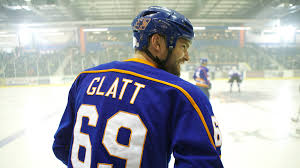
No. 69 can be a goonie number. Which maybe is why Douglass Menachem “Doug The Thug” Glatt (played by Seann William Scott) is the star hockey player in the 2011 film “Goon.”
Then again, no matter the explanation, 69 will always have its place in men’s slow-pitch softball.
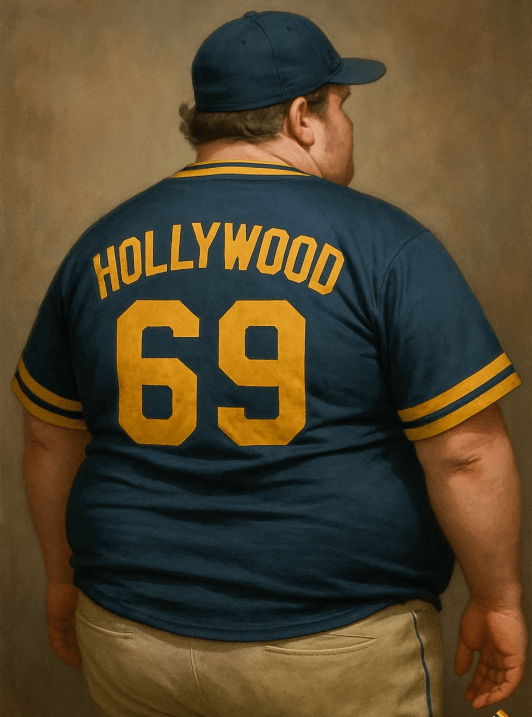
Find a game on any SoCal sports rec field, and there’s likely one No. 69 in the dugout. It’s the guy passing gas while smoking a heater and keeping a warm Coors Light in his glove for when he’s asked to move from left center to right center as the rover.
In men’s slo-pitch, 69 is fine because he got his girl friend/mom to iron it onto his shirt, and its the perfect compliment to “FBI” cap. You know, Female Body Inspector.
Softball Guy No. 69, after his team’s 37-21 victory, is also the one who then jams himself behind the wheel of his Ford F-350 and leads the charge to the local drinking establishment, where there will be an extended recap of the previous game and more importantly, a re-check of the scorebook to make sure all his RBIs are accounted for and potential errors are erased. Personal stats always matter most.
It then behooves the sports bar owner to fully support this after-game gathering. In fact, the pub may also sponsor the team. They are business partners, all part of the coded joyfulness of the moment as the song “Summer of ’69” blares from the jukebox.

When the final bill comes, Softball Guy No. 69 gathers a handful of $20s from his teammates, tries to add it up and finally just hands it to the waitress, hoping there’s enough for a tip.
A $69 gratuity for Belinda the Budweiser bringer-person? That’s karma.
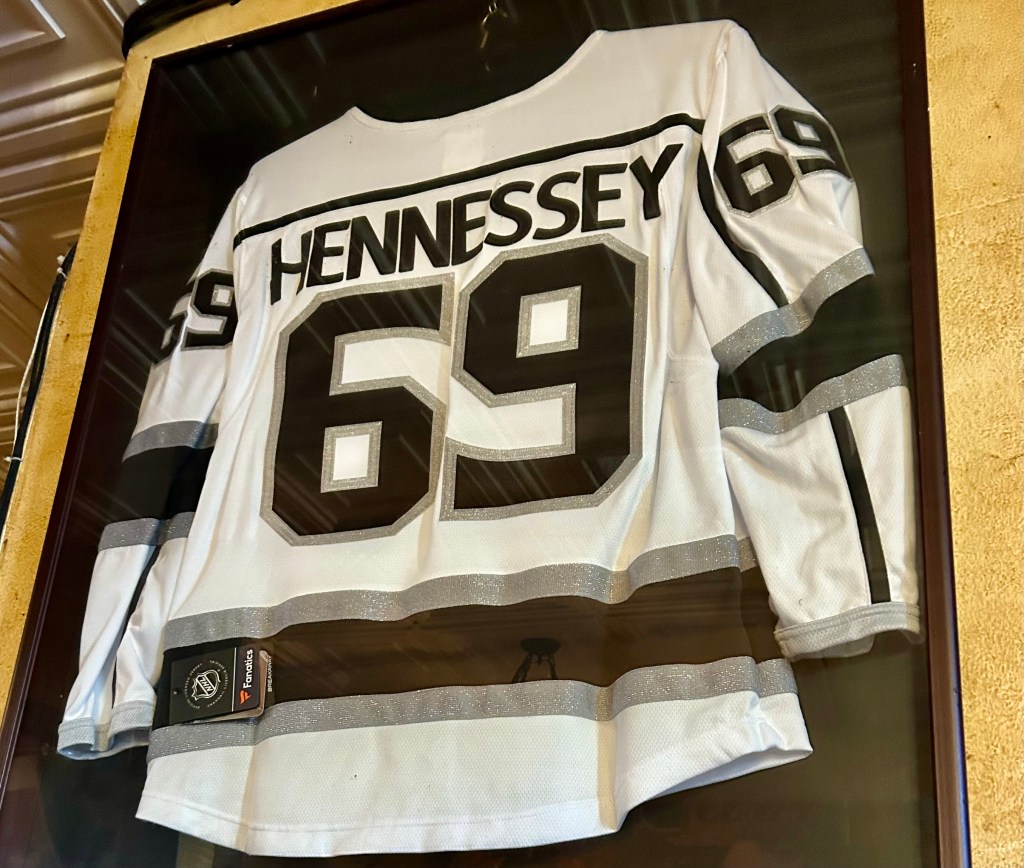
That’s also plenty enough soixante-neuf for this moment.
Who wore No. 69 in SoCal sports history? Make a case for:
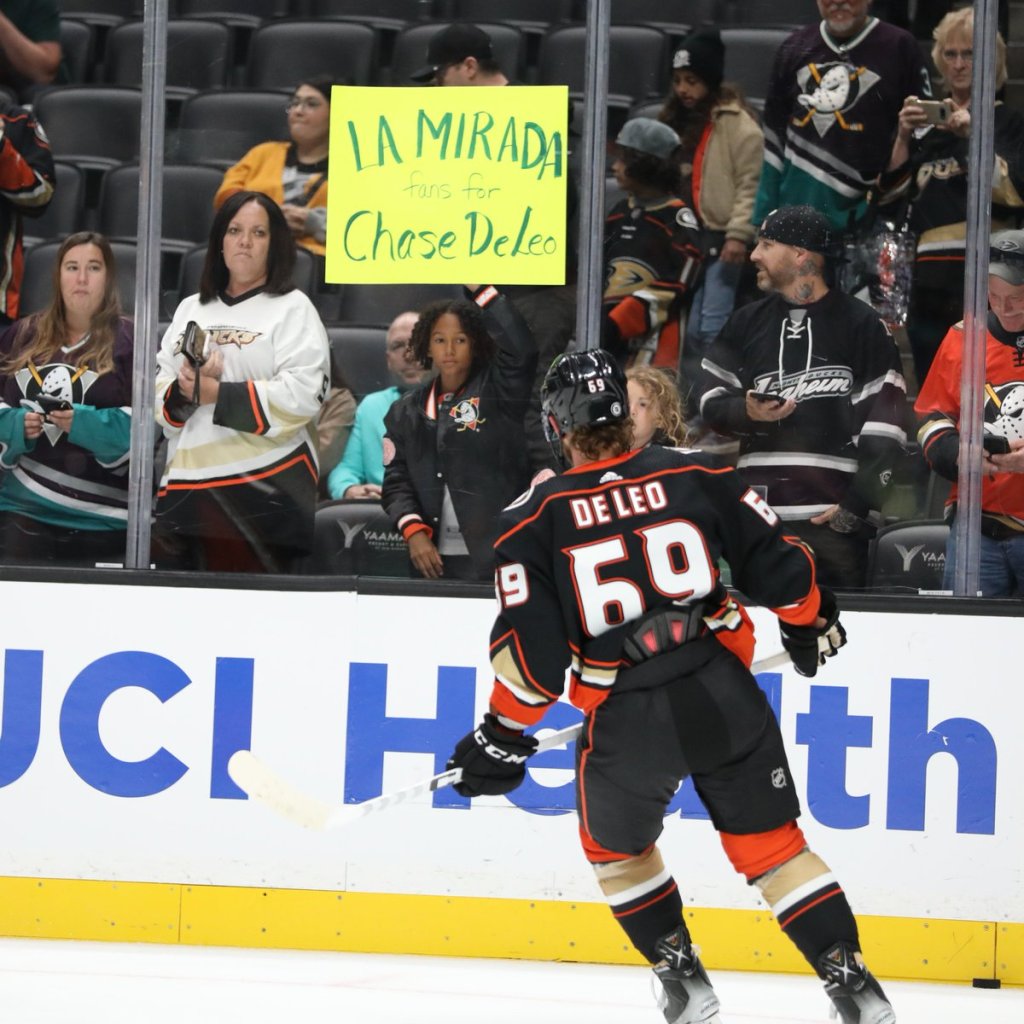
Chase De Leo, Anaheim Ducks center (2018-19 to 2020-21, 2023-24):

La Mirada’s contribution to NHL history officially is documented on Chase De Leo’s Hockey-Reference.com link, a 5-foot-9, 185-pounder given No. 69 during the 2023-24 season for his hometown Anaheim Ducks. He never wore it in a game, but so be it.
That makes De Leo one of only three players to wear the number in NHL lore.
Drafted by the Winnipeg Jets, De Leo was traded to the Ducks and, during the 2018-19 to 2020-21 seasons, wore No. 58 for a total of three games. That included his one and only start in April of ‘21.
His NHL statline: Seven games, a career plus-minus of -1. Enough to take six shots on goal and win four faceoffs.
That counts.
As No. 69, De Leo appeared at the Ducks’ 2023 training camp in Irvine, at least had some photos taken of him in the sweater, but never got into play. He was on injured reserve when the Ducks waived him in November of ’23. That sent him back to their AHL San Diego Gulls affiliate, in that ’23-’24 season, he had 15 goals and 20 assists in 37 games. As a matter of face, De Leo became the Gulls’ all-time leader in points (186), assists (117) and games played (228) and was second in goals (69) and game-winning goals (11) between his callups (flyups?) north to the Ducks.

As the local story in the Los Cerritos Community News goes, De Leo’s parents, John and Janie, owned a wholesale plumbing supply company in La Mirada that had been around for more than 60 years. They lived on a 1½-acre property that featured a menagerie of 22 animals — horses, ponies, pigs, dogs, and a donkey named Hansel.
With access to season tickets for the Ducks, as well as the MLB Anaheim Angels and NFL Los Angeles Rams when they played in Anaheim, Chase was all around sports and played them all.

After attending a Kings-Avalanche game, De Leo decided to roll up on roller hockey with the Orange County Blades. He went to the ice game with the Norwalk Knights as a goalie with the team that played at the old Norwalk Ice Arena.
De Leo played for the Los Angeles Jr. Kings and was moving up the chain when it came time to enter La Serna High in Whittier.
That was fine with his mom. She thought watching Chase play baseball as a kid was boring.

As a 15-year-old, De Leo was drafted by Portland of the Western Hockey League. That led to a fourth-round pick of the Winnipeg Jets in 2014, making his NHL debut two seasons later in a game against the Ducks.

In 2015, playing for the USA Under-20 team in the World Junior Championships, the 19-year-old had a goal in five games.
De Leo, who last January was picked up by the Milwaukee Admirals, has 494 games in the AHL with Manitoba, San Diego and Utica. That adds up to 135 goals and 214 assists for 349 points in the league. Add to that, he appeared in nine games with Kazakhstan’s HC Barys Astana of the Kontinental Hockey League and four contests with Zurich SC of the Swiss National League.

When De Leo made his Anaheim debut Mar. 30, 2019 at Edmonton, he became the fourth Southern California native to play for the Ducks.
Finding hockey players who grew up playing the sport from sunny SoCal is less and less of an anomaly this century. In the past, some may have claimed SoCal birthrights, but it was relocating to the Midwest or East Coast, or to the nether regions of Canada when they found the sport more popular in their formative years that could make a quicker entry into any team or league.

Chris Aherns, an NHL and WHA defenseman in the 1970s born in San Bernardino, seems to be among the first after he grew up in New York. Rik Wilson, born in Long Beach and excelling in roller hockey in the 1970s, moved to Canada to play on the ice and was a first-round pick by St. Louis had eight seasons as an NHL defenseman in the ’80s.
Noah Clarke, born in La Verne, was a left-winger wearing Nos. 25 and 39 who made his NHL debut on December 16, 2003 and scored his first goal on March 12, 2007 to become the first SoCal native to score for the Los Angeles Kings, who took him in the ninth round of the 1999 NHL Draft. He played 20 games for the Kings from 2003-04 to 2006-07. Torrance-born Gabe Gauthier played eight games for the Kings as a forward from 2006-07 to 2007-08 and became a head coach of the Western State Hockey Leauge’s Las Vegas Storm. Matt Nieto, born and raised in Long Beach playing roller hockey, spent his high school years in Connecticut and got 12 years in the NHL from 2013 to ’25 as a left winger. Thousand Oaks’ Trevor Moore, a left-winger wearing No. 12 for the Kings for the last seven seasons, is currently held up as the latest SoCal hockey native success story.

And then there’s Angela Ruggiero, a real icebreaker for SoCal hockey savants.
Born in Panorama City and raised in Michigan, the defenseman spent her formative years playing hockey in Simi Valley on boys teams. After three years at Harvard, she played on the 1998, ’02, ’06 and ’10 U.S. women’s Olympic hockey teams. Part of the IOC executive board, she was inducted into the Hockey Hall of Fame in 2015— the first hockey player with California roots,let along SoCal, to have the honor, male or female.

Her dreams started as a 7-year-old second-grader at White Oak Elementary in Simi Valley, right near the family home on Kuehner Drive. She went to school one day dressed up as a hockey player. Not for Halloween. It was career day. She wanted to be a defenseman for the Los Angeles Kings.
“I have to credit my family for allowing me to have that dream,” Ruggiero said. “We had no girls’ hockey, no women’s Olympic hockey — we barely had any hockey.
“All the kids at school said: What are you? They had never seen hockey gear. They wanted to be astronauts or doctors.
“You don’t know about gender at that age. I wanted to play for the Kings, because that was visible to me. I just knew I loved hockey and I had no idea where it would take me, what doors it would open for me. I just wanted to do it.”
It’s all there in her 2005 book, “Breaking the Ice: My Journey to Olympic Hockey, the Ivy League And Beyond,” where Ruggiero signs copies with the No. 4 next to her name — the number she most associates with her Olympic experience.

At one point in his pro career, De Leo figured out that playing a little less laid back and a little more aggressive would maybe get him farther in his profession.

“When I got to Portland, I was playing that ‘California style’ — all skill and no worries, just about scoring goals and dangling,” De Leo said in 2015. “My coach Travis Green pulled me aside and made it clear nothing was going to be given to me. That was the most valuable lesson I’ve been taught. I had to start from the bottom, start on the fourth line and get two shifts a game and muck and battle and get the puck deep. I’m willing to do whatever it takes at the next level.”
By all Internet database accounts, De Leo has played for 10 teams in five leagues before his 30th birthday. He continues to be on call if anyone wants a SoCal-native hockey guy.
Whatever number you give him is fine with his mom as long as you pronounce their family name correctly.
It’s a big deal to do it right as Deee-Leee-OH.
“Everybody pronounced it differently,” Janie said when her son was with Portland in 2013. “Our friends would always ask us, ‘why do they keep mispronouncing his name?’ But everybody on the team just called him ‘Dels’ anyway.’’

Sebastian Joseph-Day, Los Angeles Rams defensive lineman (2018 to 2021); Los Angeles Chargers defensive lineman (2022 to 2023):

The Rams took the 6-foot-3, 310-pounder in the sixth round of the 2018 NFL draft out of Rutgers. He became a starter in 2019, racking up 44 tackles and two sacks, and, a season later, recording 55 tackles, a sack, a forced fumble and three passes defended.
Battling a torn pectoral muscle in ’21, he was on the Rams’ active roster for their Super Bowl LVI win over Cincinnati — at which team he converted that into a three-year, $24 million deal with the Chargers. He started all 30 games he played with the team, piling up 87 tackles and five sacks and became a team captain. But the team cut him loose in December of 2023 during a coaching change.
And Joseph-Day’s days in SoCal were over.

Al Barry, Los Angeles Chargers offensive guard (1960):

Born on Christmas Eve 1930 in Beverly Hills and a graduate of Beverly Hills High, the 6-foot-2 and 238-pound Barry was a two-way player at USC, as a senior, was an offensive guard on the Trojans’ 1953 Rose Bowl-winning team. He also threw the shot put on the track squad. A 30th round (No. 356 overall) pick of the Green Bay Packers in 1953, Barry hadn’t finished his college eligibility — it was a bet hedged by the NFL team to let him start his rookie season a year later in 1954. After one season as a starting left guard, he took two years away to serve as a captain in the U.S. Air Force, and came back to get his starting job back with the Packers in 1957. Traded to the New York Giants, Barry started on two straight NFL championship teams, including playing in “The Greatest Game Ever Played” against the Colts in the ’58 championship that went into sudden death. Barry was plucked by Dallas in the league’s 1960 expansion draft, balked at going to Texas, and was traded to the Los Angeles Rams. He almost made it to the regular season opener before he was released in mid-September, then caught up on with the upstart American Football League Los Angeles Chargers, becoming a starting guard on the offensive line that won the inaugural championship, on a line with future Hall of Famer Ron Mix and blocking for quarterback Jack Kemp. The coaching staff included Sid Gillman as the head coach and a staff with Chuck Noll, Al Davis and That was it for Barry, who retired at age 30. In 2008, he self-published a book, “The Unknown Lineman: The Lighter Side of The NFL,” recalling his career through teammates such as Frank Gifford, Rosey Grier and coaches like Vince Lombardi and Tom Landry. A financial planner and insurance broker in Pasadena with his family, Barry died at 91 in 2022.
We also have:

Kevin Dotson, Los Angeles Rams offensive lineman (2023 to present)
Chad Overhauser, UCLA football offensive lineman (1994 to 1997)
Dick Braunbeck, UCLA football offensive guard (1953 to 1955)
Greg Meisner, Los Angeles Rams nose tackle (1981 to 1988)
Dante Magnani, Los Angeles Rams halfback/wingback (1947 to 1948)
Anyone else worth nominating?


 Tom Hoffarth's The Drill: More Farther Off the Wall
1 thought on “No. 69: Chase de Leo”