

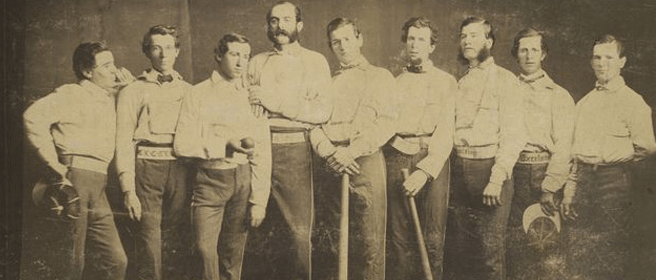
“Death in the Strike Zone:
The Mystery of America’s First Baseball Hero”
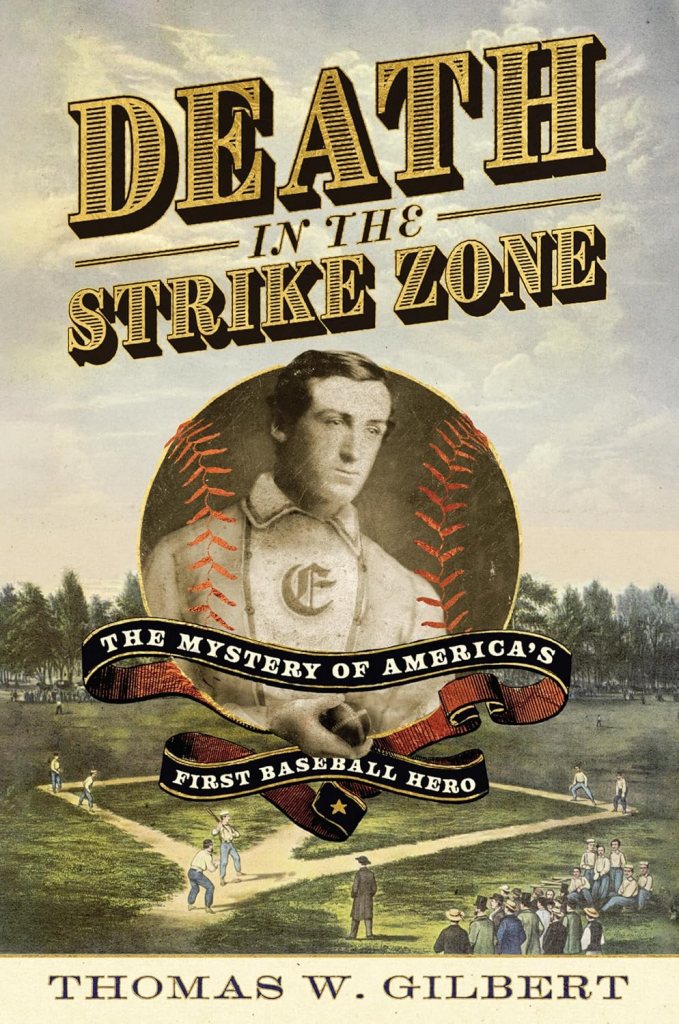
The author: Thomas W. Gilbert
The details: David R. Godine Publishing, 192 pages, $27.95; released March 24, ’26
The links: The publisher, the author website, Bookshop.org
A review in 90 feet or less
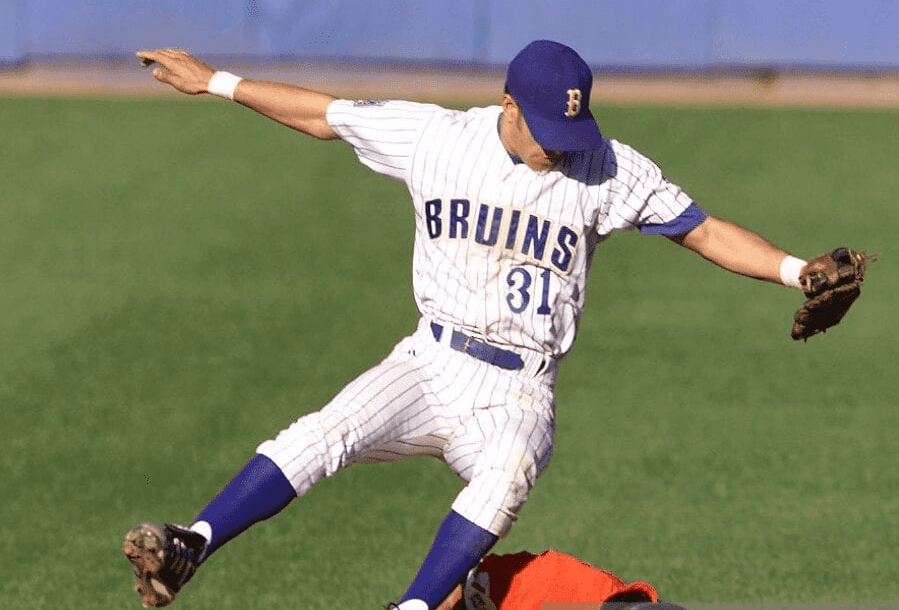
In the summer of 2000, between the junior and senior seasons where he would become UCLA’s starting shortstop, Josh Canales jumped at a chance to go New York and play for the Newark (N.Y.) Raptors of the Northeast Collegiate Baseball League. His second base double-play partner would be Kelsey Osburn, a sophomore at the University of Arizona.
“Our attitudes were similar, our personalities were similar,” Canales would explain. “When we played up the middle we had an awesome chemistry and a lot of fun.”
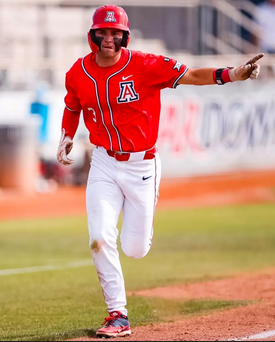
On July 11, as Canales was taking batting practice and Osburn was running the bases, Canales laced a ball heading foul down the third base line. The ball caught Osburn just above the ear on his right temple. Osburn, who had not been wearing a helmet, was conscious for about three minutes, crumpled to the ground and slipped into a coma. He was airlifted from the field in Newark, N.Y. to Strong Memorial Hospital in Rochester, where doctors performed brain surgery.
He never woke up. Osburn was 20.
“I didn’t know if I ever wanted to pick up a bat again,” said Canales, who grew up in Carson and, at 14, briefly joined an inner-city gang out of rebellious adolescence. He had got himself on a productive path — as a senior at Carson High, Canales hit .380 with 25 stolen bases and 43 runs, and was drafted in the 19th round by Oakland.
The 5-foot-9, 145 pound infielder decided to go to the University of Florida for two seasons, transferred to UCLA, and after hitting .248 in 52 games as a junior, and improved to .376 with 15 stolen bases in 16 chances during in 53 games as a senior leading into the 2001 draft — a 16th-round pick by his hometown Dodgers. After logging a few seasons of Single-A ball (aside from one Triple-A at bat with Las Vegas in 2002), his baseball life was done.
But the death of Osburn lingered.
“It was a defining moment in my life,” said Canales, who played with the initials “K.O.” on his glove during the rest of his college and minor-league career. “There isn’t a day that goes by that I don’t remember Kelsey. I feel like when Kelsey died, a piece of his heart went into me. He was 5-feet-5 and had to fight and scrap for everything he ever got. He had the heart of a lion. …
“This built character very quickly,” Canales said about what he went through. “I grew in my faith and learned to put life in perspective.”
It helped that Canales could turn his parents – Isaac, the pastor of 1,300-member Mission Ebenezer Family Church in Carson, and his mother, Ritha, a nurse. Canales has used his experience with this tragedy as he and his wife are pastors at the same Carson church.
“Kelsey Osburn died doing something he loved,” Canales says to help him keep things in perspective.
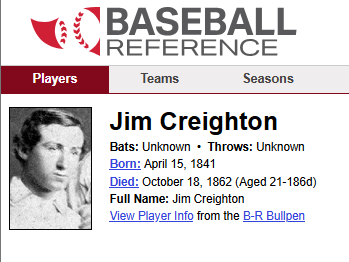
To start chapter 2 in his new book, Thomas Gilbert writes: “Nobody is supposed to die from playing baseball. Especially not amateur baseball — and certainly not a meaningless game with nothing at stake at the end of a season that nobody was playing much attention to. Yet that is how James Creighton, as dominant a pitcher as there has ever been, lost his life in the autumn of 1862.”
As Gilbert compiled what would be an incredibly received, COVID-enduring, myth-busting book released in 2020, “How Baseball Happened: Outrageous Lies Exposed! The True Story Revealed” (our review here) something seemed to sit with him that he couldn’t well shake off.
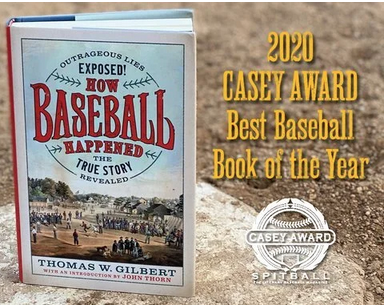
At a time when some 50,000 young men were losing their lives in the Civil War, this one 21-year-old’s death made even less sense.
As Gilbert continued to post blog entries on things he came across in his book research, an essay in March of 2021 titled “The Man Who Invented Modern Pitching — Which Killed Him” seems to have laid the groundwork for expansion of that topic for this book.
It starts: “The story of James Creighton is the oldest and saddest one in the baseball book.”
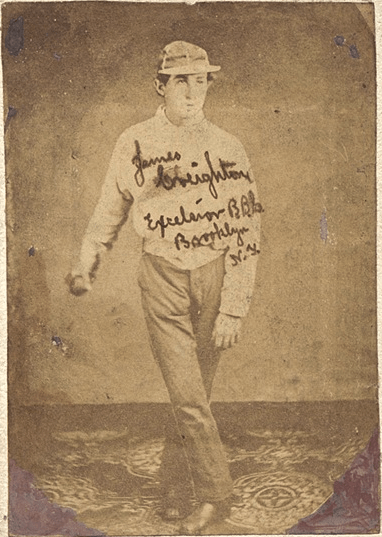
Gilbert fleshes out what he determines to be one of the most incredible misunderstandings — if that’s what it might be — was how on the game’s “first baseball hero” died a death that found itself more impractical than it had been explained by the scribes of that era, and those who had a narrative to keep with.
To Gilbert, Creighton, a 5-foot-7, 150-pound “max-effort” pitcher extraordinaire that challenged the current rule book interpretations of how things without a strike zone should go in the 1850s and ‘60s, is far more influential in the game’s evolution than Babe Ruth would be during his run in the 1920s and ‘30s and became as well known in his part of the country, playing for Brooklyn’s Excelsiors, as a two-way player as Shohei Ohtani.
Gilbert documents how Creighton was the first baseball player referred to in print as a “phenom.” Gilbert also tries to find a modern-day comparison of Creighton’s abilities against his opponents, and one of the best he comes up with, in page 70, is “something similar to what Mickey Mantle said after facing Sandy Koufax in the 1963 World Series. After striking out on two high-velocity fastballs and a devastating 12-6 curve, Mantle turned to Dodgers catcher John Roseboro and complained, ‘How the fuck is anybody supposed to hit that shit?’”
But when Creighton died suddenly at age 21 from what was reported in newspapers to be — take your pick — a rupture of (pick an internal organ), a heart attack, or a “burst blood vessel” caused by “striking at a ball.”
“No one in baseball seems to have tried to correct any of these stories,” Gilbert writes, “and it appears that no one ever publicly gave the real medical facts in Creighton’s death. …
“Lies can be more significant than the truth because truth lacks intent. Lies have a purpose; they tell us what others want us to believe — or not believe, which is revealing.”
And we’re off …
Hiking through reports by the fabled Henry Chadwick, who had his own narrative of the baseball to maintain as it challenged cricket for participation and being rooted in the country’s consciousness, and delving through New York newspapers trying to read between the lines and hyperbole, Gilbert’s excavation seems to settle on Creighton having a hernia that likely wasn’t properly assessed or treated.
But in the process of Gilbert’s research, we put Creighton’s life in context, reliving the New York of the 1850s when the national guard (then, the state militia) was deployed against fellow U.S. citizens, treating them as foreign enemies, and immigration backlash was deep into the politics of those who were convinced Nativism was the proper way to go — who belonged in America, and what did it mean to be American.
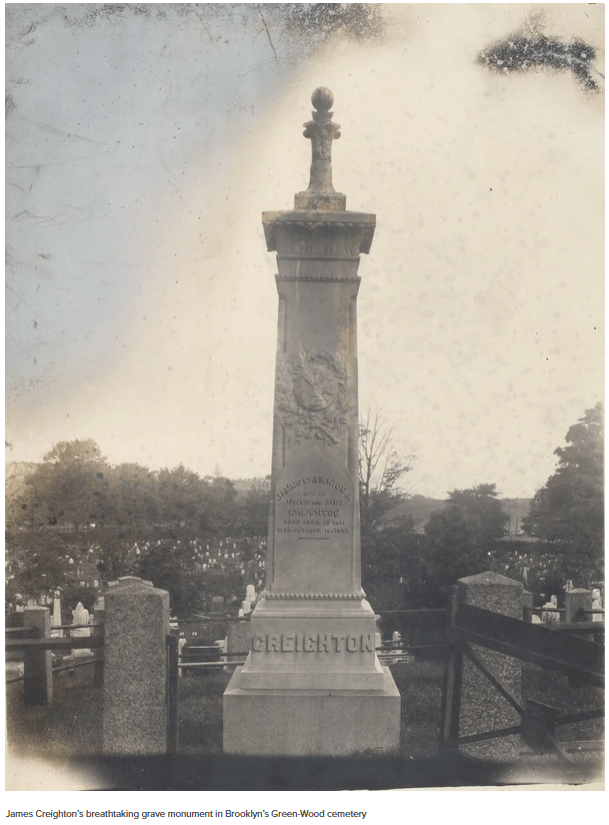
Why Creighton remains so much a part of today’s baseball as its past, again as Gilbert remains actively a participant, is that his grave marker on Tulip Hills in the Green-Wood Cemetery in Brooklyn remains a well-visited and highly visible tombstone. It was revamped in 2014 to preserve its artistic magistracy, on what would have been Creighton’s 173rd birthday.
It is still rather interesting, that in telling the tale of the man who Gilbert has asserted created the first fastball and first curveball, was on the first baseball card, the book cover never mentions Creighton by name.
Yet, if all of this somehow results in Creighton gaining some formal recognition in the Baseball Hall of Fame, here’s where the campaign started. Creighton’s first official bio. Here, and the latest Gilbert blog post that basically lays it all out.
How it goes in the scorebook:
Touch ‘em all.
To be honest, in this annual book review series we launched in 2010 (when it once one review a day for all 30 days of April), it wasn’t always practical to go cover-to-cover to get the impact of the author’s intent, his execution and what impact the work might have. The rhythm, research and a refusal to believe in mythology is what Gilbert shows here to always be inspiring. Just as it was in his book six years ago that set the stage for this.
Just read this line again:
“Lies can be more significant than the truth because truth lacks intent. Lies have a purpose; they tell us what others want us to believe — or not believe, which is revealing.”
More, please.
More to followup:
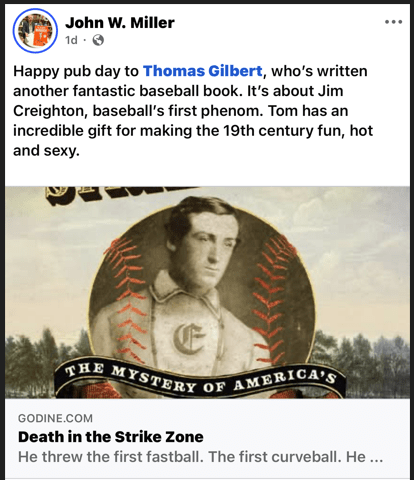
= MLB historian John Thorn has the first-chapter excerpt in his OurGame.MLB.com blog.
And this:
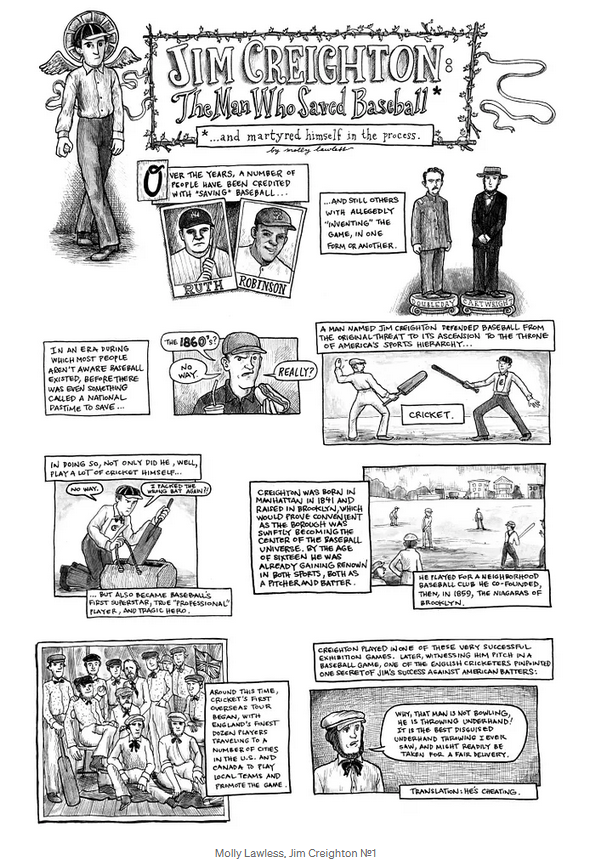
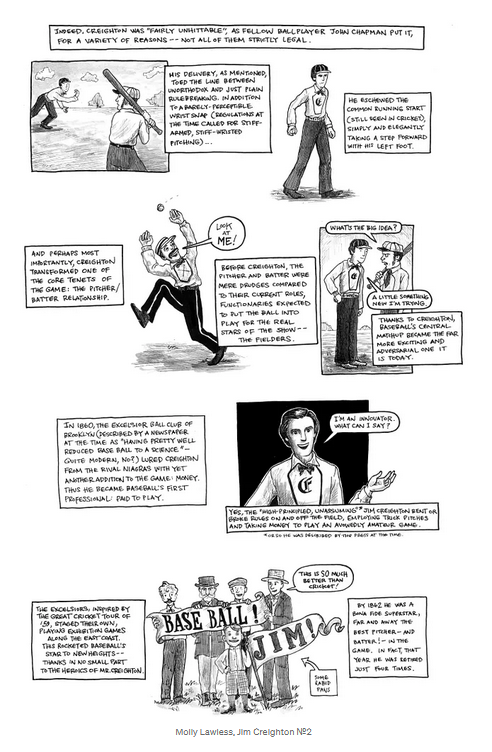
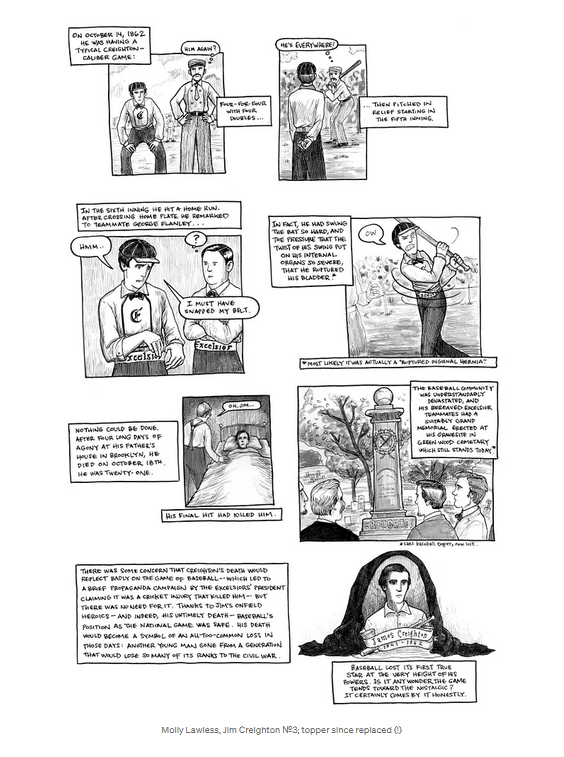
= Publishers Weekly, in a somewhat rare review of a sports-related book, came away impressed: “It’s a fascinating must-read for baseball history buffs.”
= Episode 435 of The “Good Seats Still Available” podcast has more on the subject with Gilbert.
= A SABR essay on Creighton’s death on Oct. 14, 1862 headlined: “The Martyrdom of Jim Creighton,” originally published in the 2013 book, “Inventing Baseball: The 100 Greatest Games of the 19th Century”

 Tom Hoffarth's The Drill: More Farther Off the Wall