

This post is part of a media project called SoCal Sports History 101: The Prime Numbers from 00 to 99 that Uniformly, Uniquely and Unapologetically Reveal The Narrative of Our Region’s Athletic Heritage. Pick a number, and consider the list of athletes attached to it. Who wore it best? Or, what’s the most compelling story linked to it? Any person, place or thing is in play with Southern California connections. Star power, transformational achievement, longevity, notoriety and quirkiness all factor in. Whatever leads to a lively discussion and interpretation.
The most obvious choices for No. 96:
Darrell Russell: USC football
Lawrence Jackson: USC football
Andrei Kuzmenko: Los Angeles Kings
Neil Hope: Los Angeles Rams
The most interesting story for No. 96:
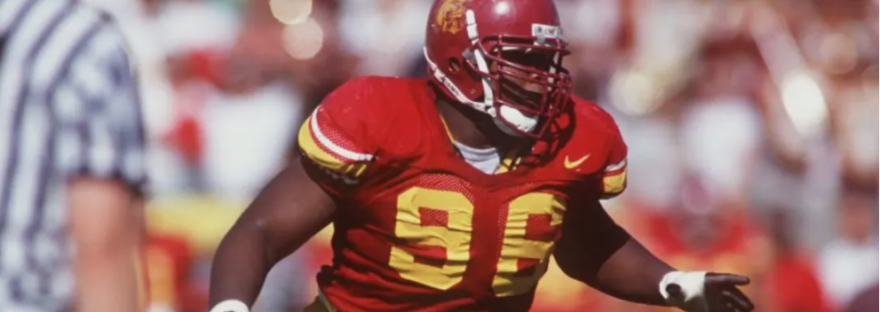
Darrell Russell, USC football defensive tackle (1994 to 1996)
Southern California map pinpoints:
Los Angeles
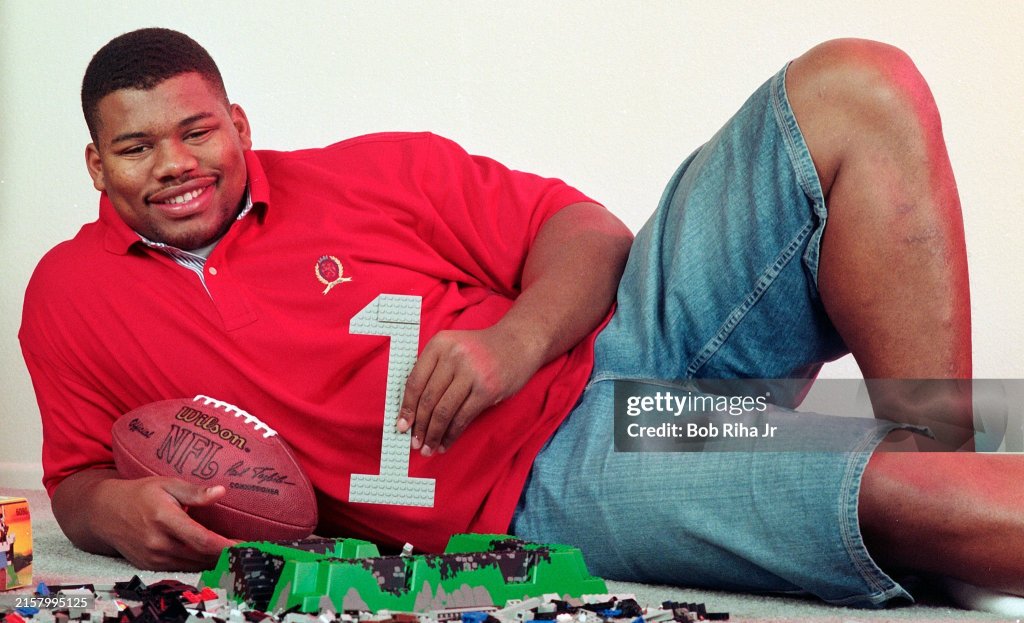
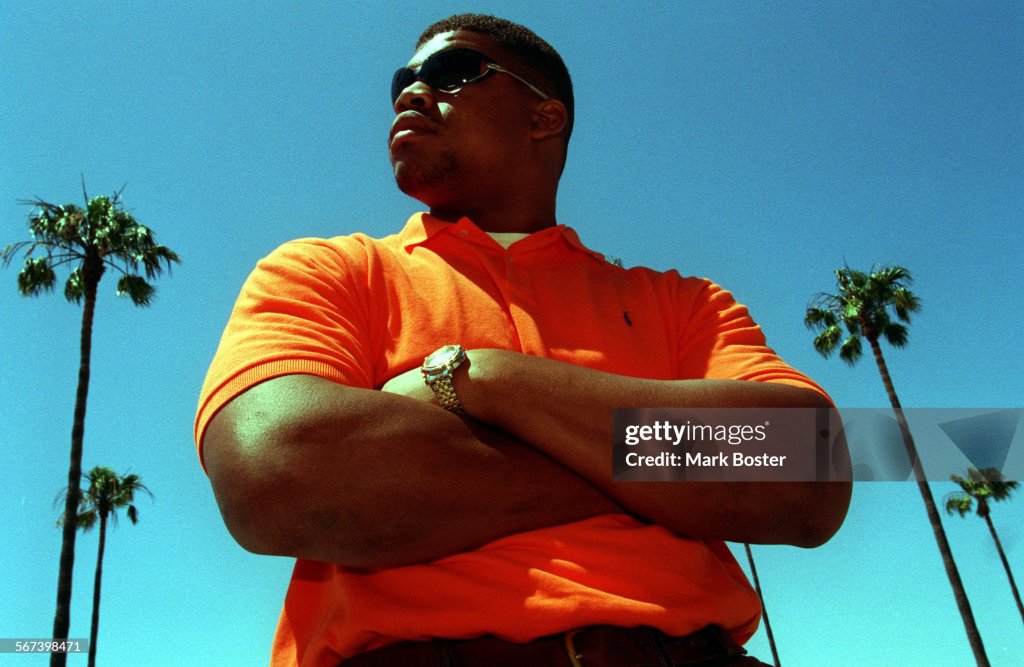
At 6-foot-5 and 313 pounds, Darrell Russell was a supreme, spectacular specimen.
A reporter visited the USC campus the fall of 1995 to properly size up the sophomore defensive tackle for a profile piece. Eventually, he and a USC official got out a tape measure.
Russell’s calves were measured at 32 inches. About the size of a normal man’s waist?
“I wear a 40 or 42 waist,” Russell explained when asked about how he finds a proper wardrobe, “but I can’t buy a pair of pants according to waist size –I can’t get them on over my thighs. Without baggy pants, I’d have to wear shorts all the time. … It’s a good thing for me the baggy-pants look is in, because without them I don’t know what I’d do.”
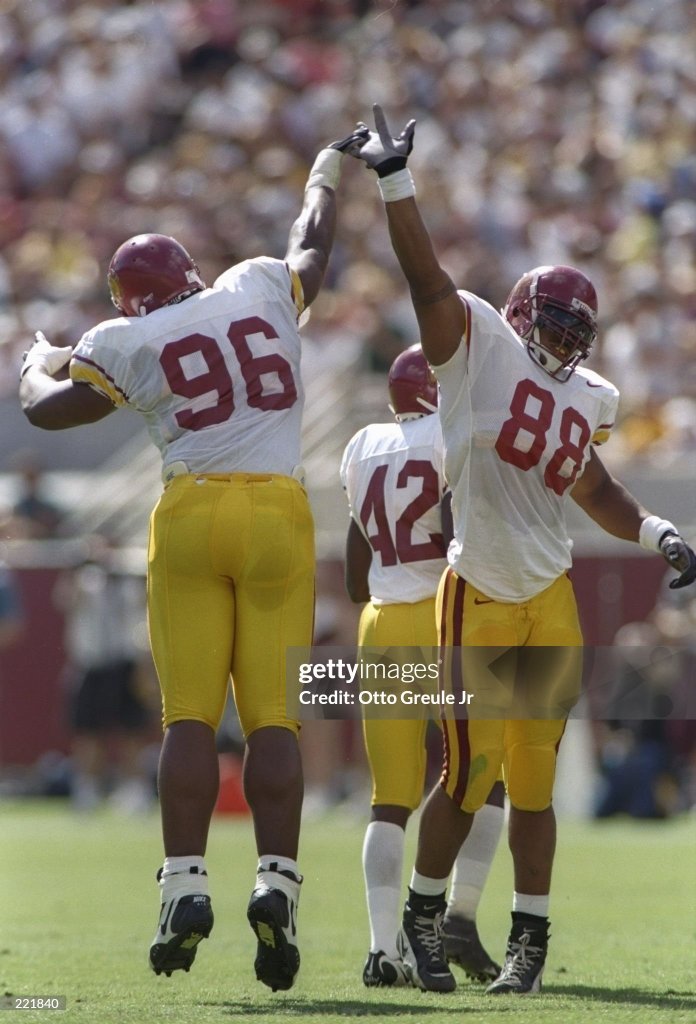
Eleanor Russell, Darrell’s mother, once told the New York Times that she had ”never imagined raising a child to be so big, and such an athlete. But I knew I was going to raise a child who was going to think for himself — and hopefully to provide for himself.”
As a USC freshman playing against Notre Dame, Russell’s five-tackle game led to defensive coordinator Keith Burns remarking: “That (game) should be Darrell’s personal standard. When he does that every Saturday, he’ll be not only the best I ever coached in college football but maybe the best I ever saw.”
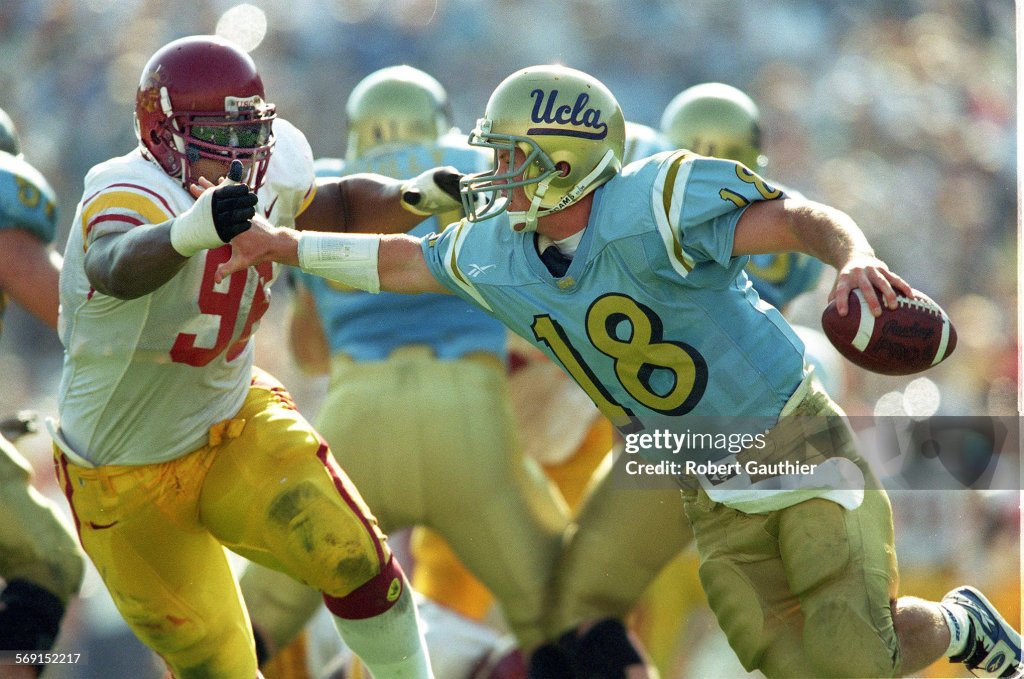
Nicknamed “Pookie,” the Pensacola, Fla., born and San Diego-raised Russell would win the Morris Trophy as the best lineman on the West Coast after recording 19 tackles for a loss during his junior year.
Twice named All-Pac-10 first team as a sophomore and junior, Russell ran the 40-yard dash in an astounding 4.8 seconds.
And then he ran right past his senior year and into the NFL.
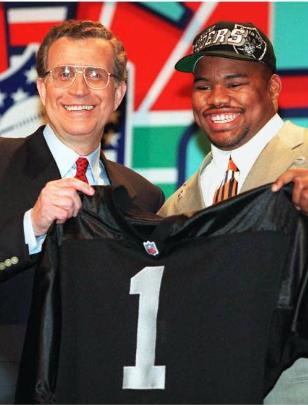
The Oakland Raiders took Russell second overall in the 1997 NFL Draft, right behind St. Louis’ No. 1 pick of eventual Hall of Fame offensive tackle Orlando Pace, and gave him a seven-year, $22 million contract, the richest rookie deal in league history. Speculation was the New York Jets would take Russell at No. 1, but the Jets eventually swapped places with St. Louis.
”He’s a very intelligent young man,” Gil Brandt, a consultant to the NFL and a former Dallas Cowboys personnel director who studies the draft prospects, told the New York Times on the 1997 NFL Draft day. ”And it’s amazing how quick he is for such a big man. He moves around like an adagio dancer.”
Said to be “the next Warren Sapp,” Russell made the Pro Bowl in 1998 as a 22-year-old, move from left defensive end to right defensive tackle in his second year. He had 10 sacks, three forced fumbles and 64 tackles. He was in the Pro Bowl again in ’99 — 9 ½ sacks, 15 tackles for losses among his 35 solo tackles and four pass deflections.
He was, as his agent, Leigh Steinberg said, “on his way to the Hall of Fame.”
At some point, Russell started a pattern of failing NFL drug tests. His lawyer said it was a result of “second-hand smoke” the first time.
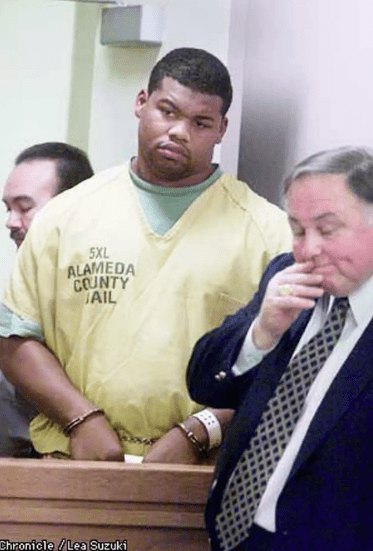
Russell eventually was suspended four games in 2001 for violating the league’s banned substance policy. He was suspended the entire 2002 season for another bad test.
“I just hope he can deal with it,” Oakland Raiders coach Jon Gruden told reporters in 2022. “But the bottom line, this is devastating for a young guy at the top of his profession to have to go through this.”
In March 2022, The San Francisco Chronicle quoted Willie Brown, the Raiders’ director of player development, as saying that Russell was hanging out with “the wrong crowd.”
“Darrell has been warned 957,000 times about certain things,” Brown told the newspaper. “Sometimes guys listen, but they don’t really listen until it’s too late.”
Michele Eggleton, Russell’s math and computer teacher in high school, was asked to see if she had any insight on what had been happening to him: “I think Darrell is a young man who is open game for predators. He didn’t grow up on the street, so he’s not street smart. He wants to be liked. And he’s not good at saying no.”
In August 2002, Russell was charged with driving under the influence of alcohol after his car was clocked at 60 mph in a 35-mph zone.
The Raiders released him in 2003, ending his time with them despite the fact he made 235 tackles with 28 ½ sacks in 75 games. Washington picked him up for eight games in ’03. More positive test results came. He was suspended indefinitely by the NFL.
Russell had seven league infractions by 2004 by the time he signed with Tampa Bay, which then released him as well when he had a third violation of the substance-abuse policy.
After he was reinstated, Russell had no more takers.
He tried to rehabilitate his career.
“You can’t get caught up in situations,” Russell addressed players at the NFL’s Rookie Symposium in the summer of 2005 in West Palm Beach, Fla. “You have to be careful who you hang with, places where you find yourself at.”
Darrell Russell’s father, Tony, was a Navy officer. He and Eleanor had been high school sweethearts in Matawan, N.J., and then moved the family to San Diego. Russell’s parents divorced when he was 5 and his mother remained a central force in his life.
Eleanor served as president of the Professional Football Players Mothers’ Association from 2003 to 2005.
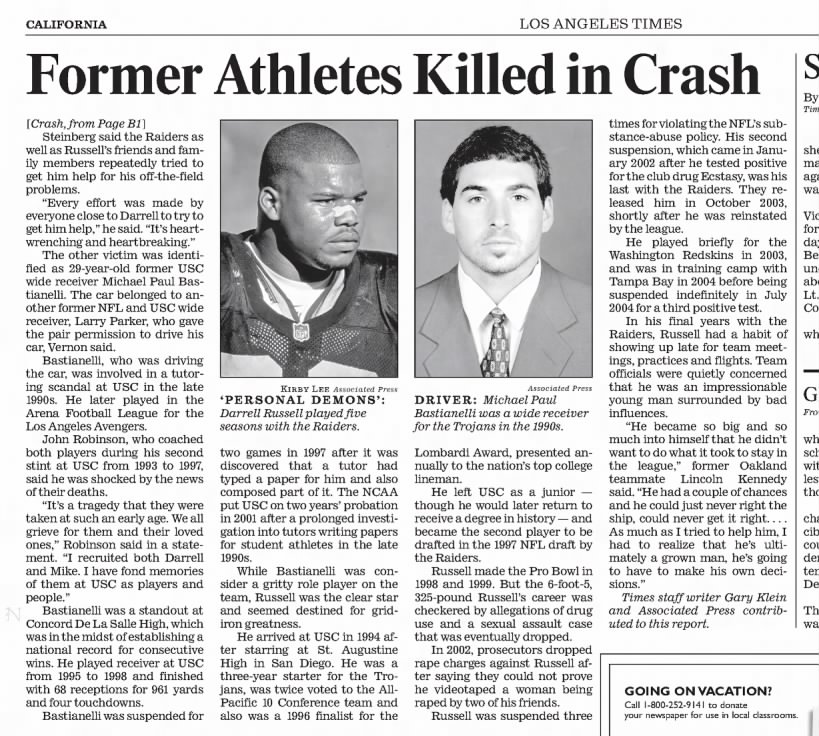
Ten days before Christmas, 2005, Russell’s life ended at age 29.
Police reports said that Russell, a passenger in a 2004 Pontiac Grand Prix driven by former USC teammate Mike Bastanelli, borrowed from another Trojan teammate, Larry Parker, did not survive after the car made an erratic lane change at about 100 miles per hour, hit two trees, a news stand, a fire hydrant, and a light pole on La Cienega Boulevard in the Pico-Robertson area. It then collided into the rear of an unoccupied MTA bus. The bus driver had to jump out of the way to avoid getting hit. Bastanelli, 29, also died.
It took 20 minutes to extract the two from the wreckage. Russell’s blood-alcohol level was nearly double the legal limit for drivers.
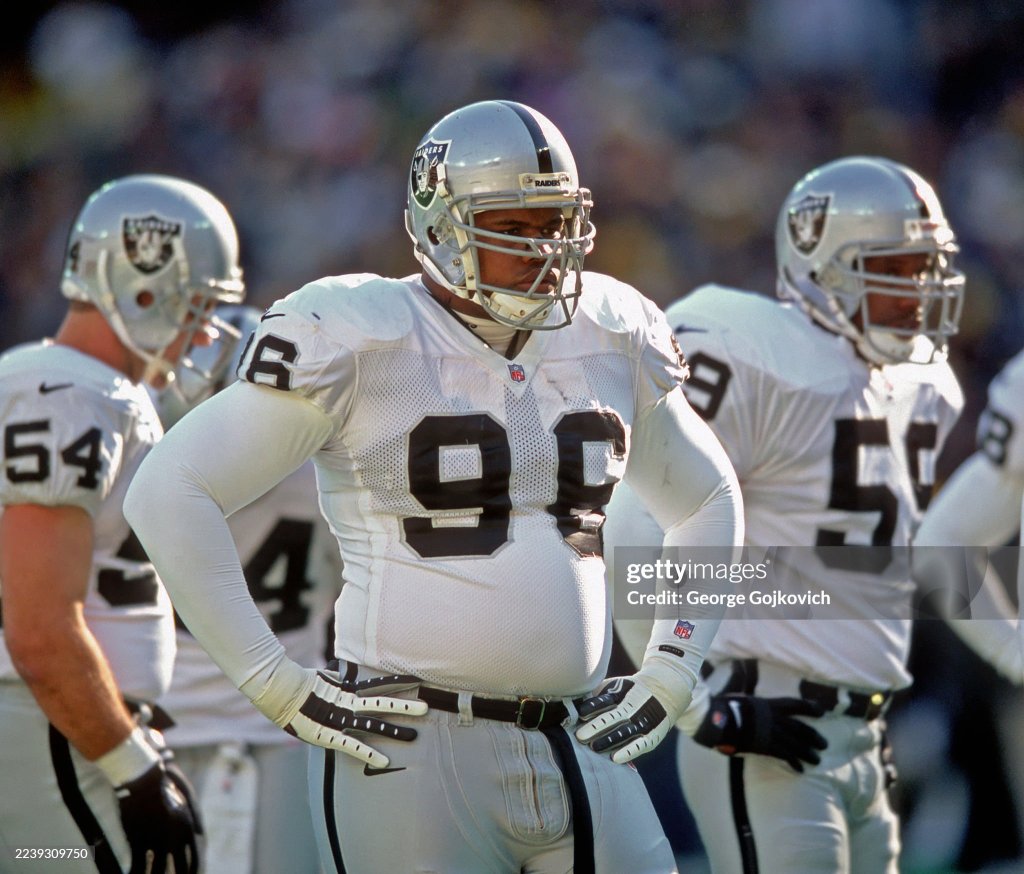
About two weeks after the accident, the New York Times’ Ira Berkow did a piece titled “Giving Advice, Then Ignoring It,” recounting how Russell had just been telling NFL rookies to beware of the things he had been entangled in: Alcohol, drugs, missed practices, missed team flights, arrests, suspensions. General naivety.
Justin Tuck, a defensive end drafted out of Notre Dame by the New York Giants in 2005, said he remembered Russell saying: “We can’t take things for granted. We have to be the same person we were before coming into the league. We can’t fall victim to fame and fortune, to being on a pedestal.”
Tuck, who ended up having an 11-year NFL career that included two Super Bowls and two All-Pro seasons, also said: “For sure, it was being at the wrong place at the wrong time. And you’re sorry that he didn’t take the advice that he gave us.”
Lincoln Kennedy, who made three Pro Bowls during an 11-year NFL career, was Russell’s teammate in Oakland for a time and grew up near him in San Diego. Kennedy told The Associated Press: “Darrell was a good guy, he really was. He was a big kid like me that had a big heart. He couldn’t say no to anybody. That’s what had a big deal with his demise, especially in the NFL, because he couldn’t let his friends go, from San Diego. He couldn’t let his past go. He always wanted to try to take care and do for other people. It ended up bringing him down. … The reason I’m so upset now is that I wish I could have done more to maybe prevent this.”
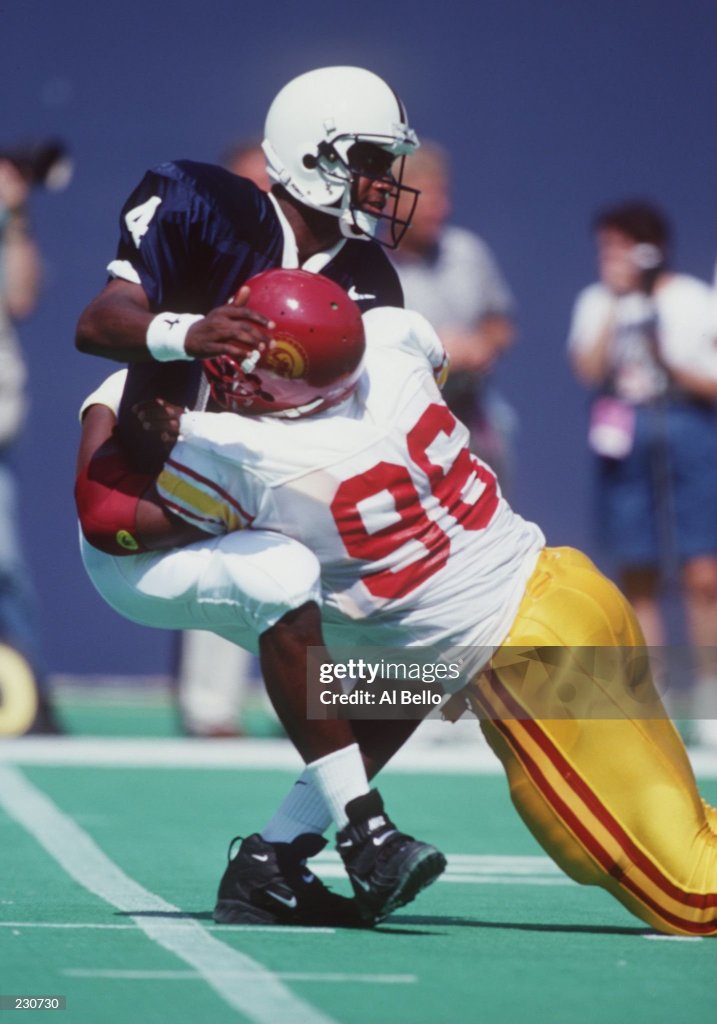
ReignOfTroy.com writer Michael Castillo tried to size up Russell’s life in a piece that landed on May 27, 2016 — which would have been Russell’s 40th birthday. He concluded:
“The Darrell Russel story isn’t the romanticized and triumphant account of athleticism and grace that everyone hoped for. And fair or not, his history with off-the-field issues stained his public image, robbing him of being a fallen hero.
“But that doesn’t mean his story isn’t worth telling.
“And it doesn’t mean that Russell hasn’t had an impact on the players who have come after him, including those very men he spoke to in 2005.
“ ‘The first thing most rookies do is watch,’ Tuck told the New York Daily News in 2013. ‘That’s exactly what I did when I came in. You try to mimic what [veterans] do. That’s the best way we can teach them.’
“You can bet Russell’s words were with him forever.
“They should be. He was right. That he was unable to live by those words doesn’t change that.”
Who else wore No. 96 in SoCal sports history?
Make a case for:
Lawrence Jackson, USC football defensive end (2004 to 2007):
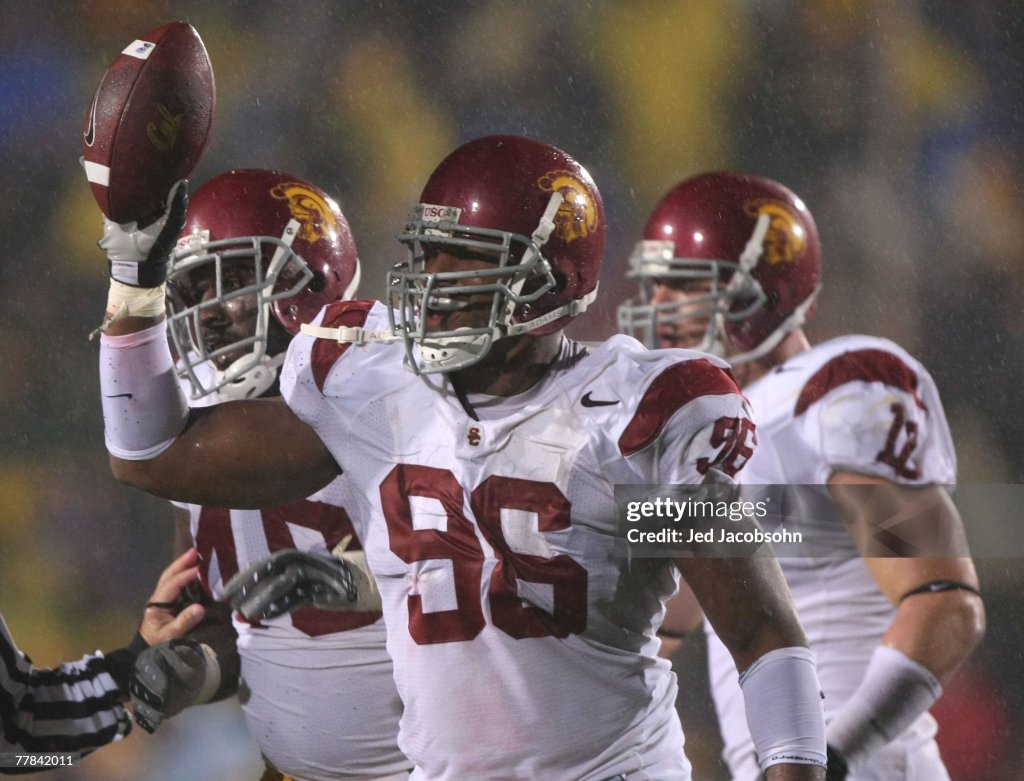
Best known: The 6-foot-5, 260-pounder out of Inglewood High had 57 sacks in his prep career, capped off by 11 as a senior among his 142 tackles, four fumble recoveries and two interceptions in 2002. A four-year starter at USC — and starting 51 of 52 games in his career — Jackson posted a team-best 10 sacks in 2005 as a sophomore after having six as a redshirt freshman the year before. He combined for 14 ½ sacks and 28 tackles for losses as a junior and senior. Jackson became a first-round pick by Seattle in the 2008 NFL draft and spent five years in the league.
Andrei Kuzmenko, Los Angeles Kings left wing (2024-25 to present): His first season with the Kings produced five goals in 12 assists and a plus-6 mark in just 22 games after coming over from stops in Calgary and Philadelphia during the ’24-’25 season. He burst onto the NHL scene at 26 with Vancouver scoring 39 goals with 35 assists for 74 points.
Neil Hope, Los Angeles Rams linebacker (1987): Wearing No. 54 with USC, the 6-foot-2, 225-pound linebacker out of Fairfax High in L.A. had 144 tackles during his senior year for the 1985 Rose Bowl champions. He signed with the USFL Los Angeles Express to play in the spring league of ’85 but ended up with the Denver Gold. The team played a Thursday night game against the Express in May of ’85, and there was some 1,500 at the Coliseum, despite an announced crowd of about twice that size, setting a record for the smallest attendance of a USFL game. “I never thought I’d play a game in the Coliseum in front of a crowd this small,” Hope said after the 27-20 win in what would be the Express’ final game at the facility. “It was hard getting up for the game, but we had a job to do.” He signed with the Rams for the 1987 season and made it into just three games, done with football by age 24.
Anyone else worth nominating?


1 thought on “No. 96: Darrell Russell”