

We’ve tried to build a better ark, in the absence of Beto Duran (who is on assignment this week) and give you two shorter shows that would normally be jam-packed into one hour-long extravaganza (as was Episode 7).
Here, too, are the notes worth noting: Continue reading “The Drill E8 Parts 1&2: A couple of 30-minute clips from this week on LaVar Ball, the Dodgers’ SportsNet LA reality, the NFL draft coverage and … raccoons? Plus a special Joe Torre interview and an Al Michaels shoutout”
Author: fartheroffthewall
Tom Hoffarth is a sports journalist in Los Angeles, born and raised (reared is the correct phrase, but it just sounds wrong) and specializing in the sports media business. A USC graduate from the School of Journalism (it still exists, somewhat) in 1984, he is also available for service at https://www.linkedin.com/in/tomhoffarth/
Day 25 of 30 baseball book reviews for 2018: You’ve still come a long way, Babe, and apparently we can’t get enough of how great thou art

The book: “Gehrig & the Babe: The Friendship and the Feud”
The author: Tony Castro
How to find it: Triumph Books, 304 pages, $25.95, released April 1
The links: At Amazon.com, and the publisher’s website.
 The reviews in 90-feet or less: A year ago, a kid from Simi Valley gave us all some strange insight on the Ruth-Gehrig dynamic.
Our first book of the 2017 reviews – “The Boy Who Knew Too Much: An Astounding True Story of a Young Boy’s Past-Life Memories” — was focused on Christian Haupt, an 8-year-old whose mom has come to believe he was re-incarnated as Gehrig.
It started with him, before age 4, telling her about how he didn’t get along with The Bambino. She didn’t know what he was talking about until she did some research and found out that, yes, that’s been written about. But how did her son even know all that?
So now coming up on 70 years since Babe Ruth’s passing, one might wonder if he, too has pulled some “Field of Dreams” deal risen from underneath his plaque in Yankee Stadium center field and suddenly come to life.
He is, at least, in another round of hard- and soft-bound literature.
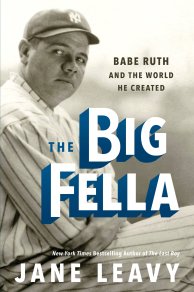 By the time October falls into place, Jane Leavy will be staking her reputation on another baseball bio epic called “The Big Fella: Babe Ruth and the World He Created,” and part of the blurb for it calls it “the definitive biography” of the man who “drafted the blueprint for modern athletic stardom.”
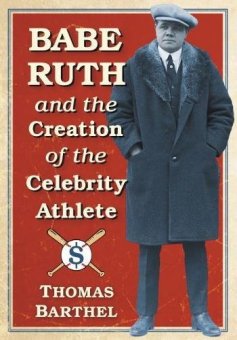 Spinning off that concept, there’s “Babe Ruth and the Creation of the Celebrity Athlete,” by Thomas Barthel, due out now in June. The author here wants to separate “exaggerated facts from clear falsehoods” and trace “Ruth’s ascendance as the first great media-created superstar and celebrity product endorser.”
 Around that same time, “The Age of Ruth and Landis: The Economics of Baseball during the Roaring Twenties,” by David George Surdam and Michael J. Haupert will also appear. It claims to cover a “tumultuous 1920s” guided by these two legends, as well as Rogers Hornsby, Ty Cobb, Walter Johnson, Tris Speaker and Eddie Collins, to where there was now “an exciting brand of livelier baseball, new stadiums, and overall stability.”
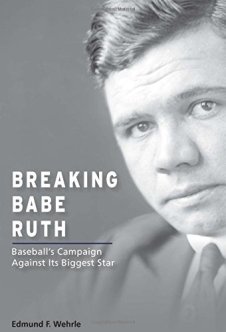 And then there’s “Breaking Babe Ruth: Baseball’s Campaign Against Its Biggest Star,” by Edmund F. Wehrle, for Sports and American Culture series, due out May 31. The author is said expose how Ruth was “an ambitious, independent operator, one not afraid to challenge baseball’s draconian labor system,” and this perspective will paint Ruth “more seriously and placing his life in fuller context (which is) is long overdue.”
That’s almost, but not quite, equal to the number of nicknames George Herman Ruth amassed in his 53 years on the planet.
To tie us down for now, we have this Castro book to digest, which can be just as fulfilling as a pile of hot dogs chased down with a vodka and tonic.
The L.A.-based former Herald Examiner columnist who already authored “Mickey Mantle: America’s Prodigal Son” and “DiMag & Mick: Sibling Rivals, Yankee Blood Brothers” decides that this Ruth-Gehrig relationship is worthy of a excavation.
Continue reading “Day 25 of 30 baseball book reviews for 2018: You’ve still come a long way, Babe, and apparently we can’t get enough of how great thou art”
Day 24 of 30 baseball book reviews for 2018: Don’t be too dense in getting a cerebral cortex around a baseball vortex
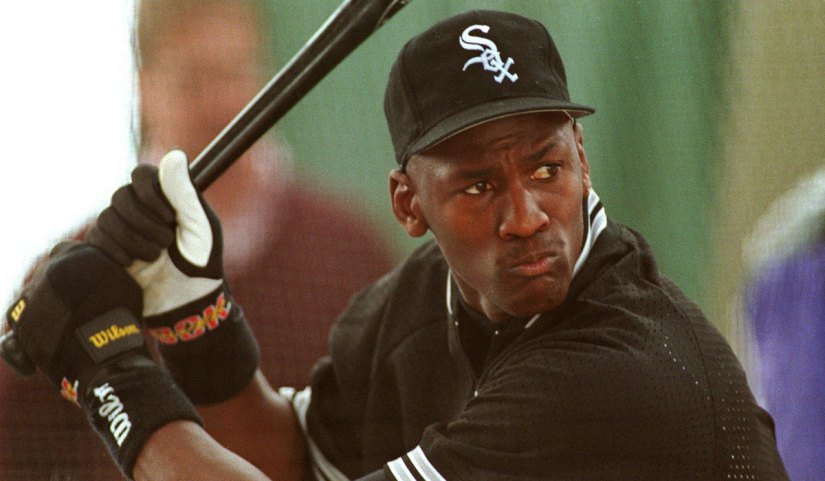
The book: “The Performance Cortex: Now Neuroscience Is Redefining Athletic Genius”
The author: Zach Schonbrun
How to find it: Dutton Books, 352 pages, $28, released April 17.
The links: At Amazon.com, at the publisher’s website.
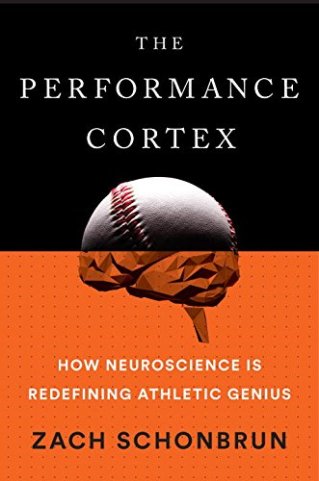 A review in 90-feet or less: It might be shelved under categories such as “medical books” or “sports psychology,” even “training and conditioning.” But when it shows up the baseball section – the cover illustration is a hint — it’s likely because this is the sport where the basis of this thinking and probing emanates, so don’t over think too much outside the batter’s box too much.
Or, as Schonbrun says in the introduction, his narrative remains “anchored by the baseball diamond, to that purest of athletic exchanges, when a batter stands at the plate awaiting a pitch…. It’s time to give those milli-seconds their due.”
We saw in Bob Tewksbury’s new book “Ninety Percent Mental” there is all sorts of ways the mind can be used in the baseball process. Here, we go to the real science of what appears to be more than just intuitive, thanks to the inquisitive approach by Schonbrun, a New York Times contributor since 2011 with a masters in journalism from Columbia.
 He logically explains that this is just baseball’s latest outside influence, following in the succession of orthopedists, psychologist, optometrists, strength coaches, nutritionists, sabermetrics, sleep doctors and yoga instructors.
He’s allowed to follow the journey of Jason Sherwin and Jordan Muraskin, who started a company called deCervo, which aims to be a neutral bystander in the measuring and improvement of cognitive performance.
There is a point in the book — perhaps early, but our brain is still processing it — when this all sounds like something best digested in an audio version. The written words on the pages can be very intimidating, like a college intro science elective for a dance major.
And then there’s another chapter? Does this really have a conclusion? It’s like a magazine story unraveled.
In our head, we hear the voice of famed neurobiologist Dr. Amy Farrah Fowler reciting the paragraphs to a point where even Sheldon Cooper’s impatience gets the best of him. Continue reading “Day 24 of 30 baseball book reviews for 2018: Don’t be too dense in getting a cerebral cortex around a baseball vortex”
Day 23 of 30 baseball book reviews for 2018: When MLB fashion follows form, here’s the book on the worst of it

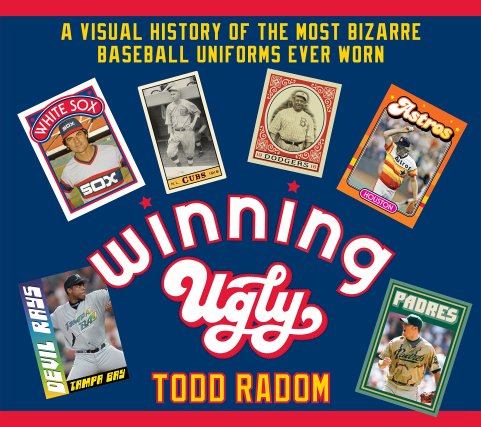
The book: “Winning Ugly: A Visual History of the Most Bizarre Baseball Uniforms Ever Worn”
The author: Todd Radom
How to find it: Sports Publishing, 176 pages, $24.95, due out May 15
The links: At Amazon.com, at the publisher’s website.
 A review in 90-feet or less: It was June 5, 1999. It turned out to be very a ugly Saturday afternoon.
Fox’s new ownership of the Dodgers was trying to mark its new-way-of-thinking territory. In L.A., that can be encouraged as progressive thinking.
But consider tradition before you tread forward.
The Dodgers-Angels Freeway Series meeting at Dodger Stadium was also a Fox national telecast. A perfect day to make a statement.
The Angels already were in their periwinkle blue pinstripe PJ and winged-A logo arrangement, the residue of their Disney takeover (1997-2001) and a desire to Mickey Mouse-up everything.
Referencing page 121 of “Winning Ugly,” Radom explains that “it actually could been worse. … The originally approved uniforms called for double pinstripes, rendered in periwinkle and navy, along with widely flared banded stripes around the shoulders that looked like something out of a dystopian science fiction movie.”
 In fact, back in 1997, Disney actually issued a dark blue Angels jersey with periwinkle sleeves for the Freeway Series meeting with the Dodgers (see page 120, in the chapter entitled “Diamond Duds.) It was so hated that they never did it again.
Now it was the Dodgers’ turn.
Here, in Chapter 7, entitled “When Good Teams Go Bad,” Random explains on pages 112-113 how the Dodgers’ model of consistency — “the classic blue ‘Dodgers’ script, kissed by red player numbers” — had been assaulted with a reverse-image dark blue top and piping, a white script and white borders around the numbers. Was this supposed to be their batting practice jerseys? Was someone pulling a prank? Fans were confused.
And then all heck broke loose.
A bizarre brawl broke out between the Dodgers’ Chan Ho Park and the Angels’ Tim Belcher, after Belcher fielded a bunt by Park and tagged him out, and Park decided to go all ninja on him.
Perhaps – and we’re just guessing here – neither player was crazy about the uniform they were wearing. This incident just brought it all to a head.
Continue reading “Day 23 of 30 baseball book reviews for 2018: When MLB fashion follows form, here’s the book on the worst of it”
Day 22 of 30 baseball book reviews for 2018: So then Lasorda says to Piazza … Aw, let’s just go eat
The book: “Baseball Italian Style: Great Stories Told by Italian American Major Leaguers from Crosetti to Piazza”
The author: Lawrence Baldassaro
How to find it: Sports Publishing, 292 pages, $24.99, released March 6.
The links: At Amazon.com, at the publisher’s website.
 A review in 90-feet or less: Mike Piazza says on page 204:
“My dad said he would be called ‘dago’ and ‘wop’ when he was a kid,” “and all the Irish kids would want to fight him, and he would try so hard to assimilate himself to be an American. Then when he grew up and started losing that ethnic identity, he would strive to be more Italian.
“I remember, this Italian Amerian group gave me the Brian Piccolo Award. At the banquet, I was giving a little bit of history of my family and I said I’m only half Italian, my mother is Slovak. There was this deafening silence over the crowd, and my dad said, ‘Why did you tell them that?’
“I said, ‘It’s your fault; you married a Slovak.’”
In what could have easily come off as something perpetuating stereotypes or cultural chest-bumping, Baldassaro manages in his assembling a collection of first-hand stories of more than 40 players, managers, umpires and a couple of GMs to dig a little deeper about each of their Italian roots, what it means to them and how it shaped their attitudes about life, kinship and how the game should be played.
 Baldassaro, a professor emeritus of Italian at the University of Wisconsin-Milwaukee, started this as a project related to his 2011 book, “Beyond DiMaggio: Italian Americans in Baseball,” and realized he had interviews amassed along the lines of Lawrence Ritter’s 1996 oral history project, “The Glory of Their Times.”
“Just to be clear: readers should not expect to find dreamy reveries of the timelessness and sociological significance of baseball,” Baldassaro writes in the introduction. “To be sure, there are, on occasion, nostalgic reminiscences of bygone days. But by and large, the narrators provide a dispassionate look into the game as they know it.”
And all seem to have a Joe DiMaggio worship-related story along the way.
The lineup is impressive.
For those with Southern California ties, there are the usual suspects from Joey Amalfitano to Barry Zito, with Tommy Lasorda, Mike Scioscia, Ned Colletti, Joe Torre, Jim Fergosi, Al Ferrara and Bobby Valentine thrown in.
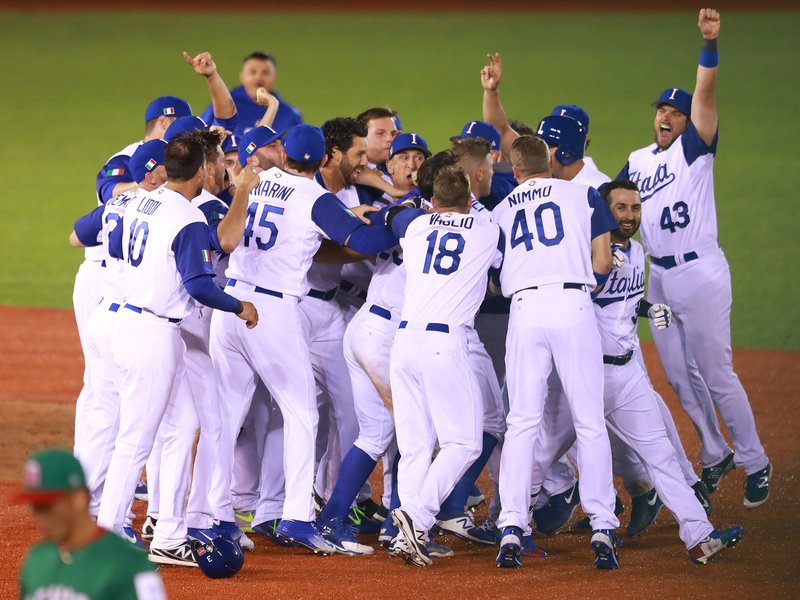
For those going back to the playing days of the 1930s – Frank Crosetti, Phil Cavarretta or Nino Bongiovanni – up until Anthony Rizzo or Joey Votto of modern day, you can read how the times changes through generations in how they identified and then perhaps never thought much else about their background when it came to the giant melting pot of baseball. To some, playing for Italy in the World Baseball Classic was the highlight of their professional career. That’s interesting considering how Lasorda explains things as he remembers them as a kid.
Continue reading “Day 22 of 30 baseball book reviews for 2018: So then Lasorda says to Piazza … Aw, let’s just go eat”
 Tom Hoffarth's The Drill: More Farther Off the Wall