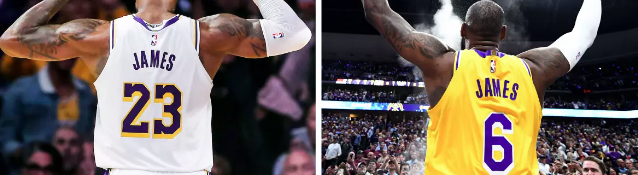
Nos. 6 and No. 23: Why LeBron James will likely never be linked to either number in SoCal sports history

This is the latest post for an ongoing media project — SoCal Sports History 101: The Prime Numbers from 00 to 99 that Uniformly, Uniquely and Unapologetically Reveal The Narrative of Our Region’s Athletic Heritage.  Pick a number and highlight an athlete — person, place or thing — most obviously connected to it by fame and fortune, someone who isn’t so obvious, and then take a deeper dive into the most interesting story tied to it. It’s a combination of star power, achievement, longevity, notoriety, and, above all, what makes that athlete so Southern California. Quirkiness and notoriety factor in. And it should open itself to more discussion and debate — which is what sports is best at doing.
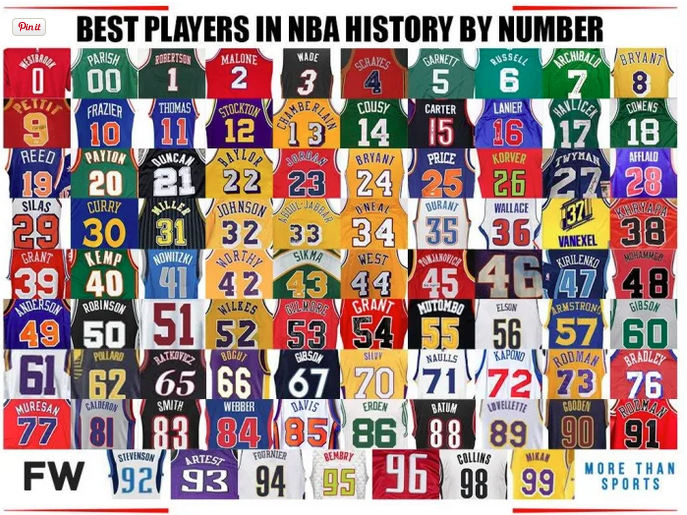

A quirky little exercise 2019 attempts to identify the greatest NBA players who wore each digit from 0 to 00 to 99.

Kobe Bryant has both No. 8 and No. 24. Dennis Rodman has claim to both No. 73 (with the Lakers) and No. 91 (with Chicago) because, let’s face it, who else wore them? And the NBA won’t allow No. 69 to be given to anyone.

Mostly note that LeBron James received neither No. 6 (it went to Bill Russell) nor No. 23 (it went to Michael Jordan). If only James had picked a more obscure number — like No. 40, the age he reached on Dec. 30, 2024, in the middle of his 22nd NBA season.

Call him King James, LBJ, Chosen One, Bron-Bron, The Little Emperor, The Akron Hammer, L-Train, Benjamin Buckets or Captain LeMerica. The 21-time All Star, 21-time All NBA, four-time regular season MVP, four-time NBA champion (on three different teams), four-time NBA Finals MVP (on three different teams), three-time All-Star Game MVP, four-time scoring champ, six-time All Defensive team, a member of the 75th NBA Anniversary team and — the icing on the cake, the ’23-’24 In-Season Tournament MVP — has some dashing numbers to consider over the breadth and depth of his pro career.

That career, by the way, makes him a professional for a longer period of time than the first 18 years when he wasn’t.

He has been officially listed as a 6-foot-9 and 250-pounds small forward, power forward, point guard, shooting guard and center on his career stats resume.

He is the only NBA player with more than 40,000 regular season points, more than 1,700 games consecutively in which he has scored a point (every game he’s ever played), more than 67,000 minutes logged.

His best scoring performance: 61 in 2014 for Cleveland (which scored 124 in an OT win). His Laker best point-production: 56 in 2022 at age 37.

Most rebounds in a game: 20 in 2024 at age 39 for the Lakers in an epic 2OT win at Golden State.

Most assists in a game: 19 in 2020 at age 35 for the Lakers.

He is the only NBA player with more than 30,000 points, 10,000 rebounds and 10,000 assists in the regular season.

He has played in 292 consecutive playoff games, never without an absence, and his team has won 41 of the 55 series he’s played in.

But really, what do numbers mean when sizing him up?

He’s not even sure.

Consider when James arrived in Los Angeles as a free agent starting with the 2018-19 season, after his second run with his hometown Cleveland Cavaliers, he continued wearing the No. 23 as a Laker.

For the 2019-20 season, James convinced his friend, Anthony Davis, to leave New Orleans and join him with the Lakers – with a promise he would shed No. 23 and give it to Davis, who had those digits since his rookie season in 2013, and even wore in is one year at Kentucky, as a tribute to his favorite player — James.

(The story goes: Davis, who grew up in Chicago, won a Black History Month trivia contest at Perspective Charter High School and with it came a $10 gift card. He used it to buy a book about LeBron James, the Cleveland Cavs player who wore No. 23, and inspired him to do the same. So Davis wasn’t wearing No. 23 for Michael Jordan).

James decided that giving up No. 23 to Davis meant he could slip back into No. 6, which he wore with the Miami Heat from 2011 to 2014 and helped them win a title. But the NBA wasn’t happy with that. Nike had a large supply of No. 23 James jerseys that would have become obsolete to buyers if that switch occurred. They said James and Davis did not give them enough notice before the season, so the league forced James to stick with No. 23. Davis, in response, chose No. 3. The idea stalled.

For the 2022-23 season, James did back shift to No. 6. But Davis stuck with No. 3. To confuse it even more, when Bill Russell died and the NBA honored him with having everyone wear a black circle “6” patch on their jersey, James was wearing No. 6 in two spots on the same jersey.

If that wasn’t waffling enough, James announced for the 2023-24 season, he would go back to No. 23, leaving No. 6 in deference to Russell.

For now.

What do the numbers 23 and/or 6 even mean to him?

When he passed Michael Jordan on the NBA list of most games with 30 or more points, James said he wore No. 23 because of Jordan. That started with James’ high school days at St. Vincent-St. Mary High in Cleveland from 1999-2000 to 2002-03 (although he wore No. 32 as a freshman before changing). The 32 carried over the first seven seasons with the Cleveland Cavaliers. During that stretch (2003-04 to 2009-10), his choices for the U.S. team in the Summer Olympics were No. 9 in 2004 (the 19 year old yielded to Dwayne Wade for No. 6) and then No. 6 in 2008 (James switched numbers with Wade). Joining Wade in Miami, James picked No. 6 again from 2011 to 2014, and also kept No. 6 on Team USA in 2012. Going back to Cleveland in from 2015 to 2018 got him back with No. 23. Then came the flip flopping of 23 and 6 in Los Angeles.

In 2023 he said the No. 6 reflects the birthday of his son Bronny (the 6th of October) as well as the birth month of his son Bryce (born in June). James has also pointed out to those mathematically challenged that two-times-three equals six.

There’s also the case, James said, where another one of his favorite players, Julius Erving, has worn Nos. 32 and 6 in his career in the ABA and then to the NBA.

Why do we now feel so much dumber?

Continue reading “Nos. 6 and No. 23: Why LeBron James will likely never be linked to either number in SoCal sports history”
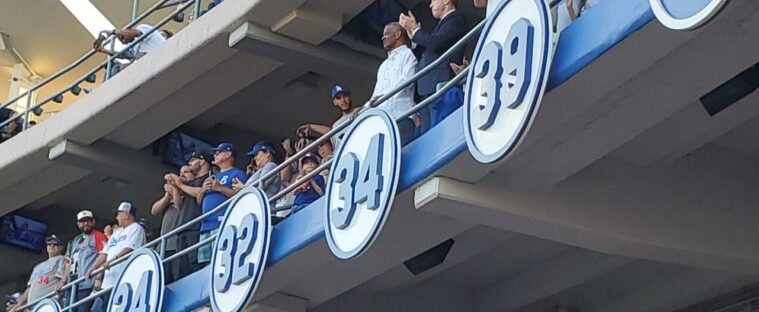
SoCal Sports History 101: The Prime Numbers from 00 to 99 that Uniformly, Uniquely and Unapologetically Explain Our Greater Los Angeles Athletic Heritage

Updated 12.10.25: Scroll to the end of this post and see the running list of people, places and things so far assigned to numbers 00 to 99.

What if we told you the history of Southern California sports in the Greater Los Angeles area can be explained in unique bios, stories and essays that are attached to the 101 different numbers worn on the front, back, or elsewhere on an athlete’s uniform?

Let’s say this covers, perhaps, the last 101 years.

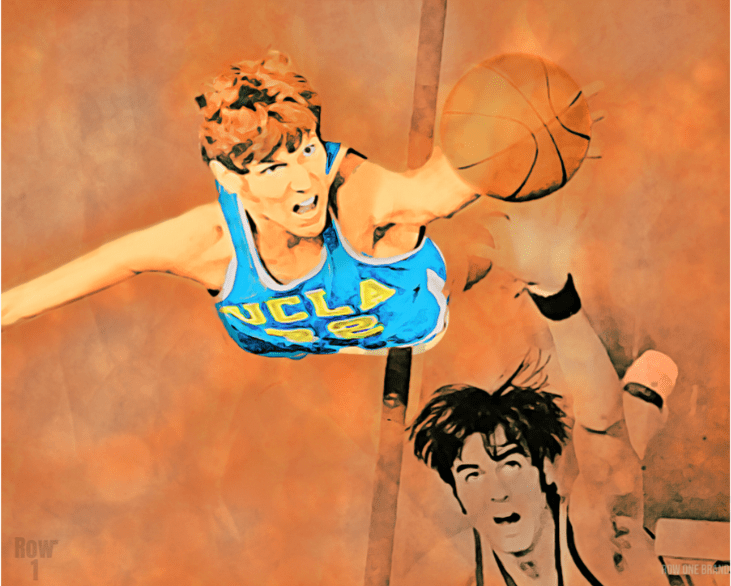
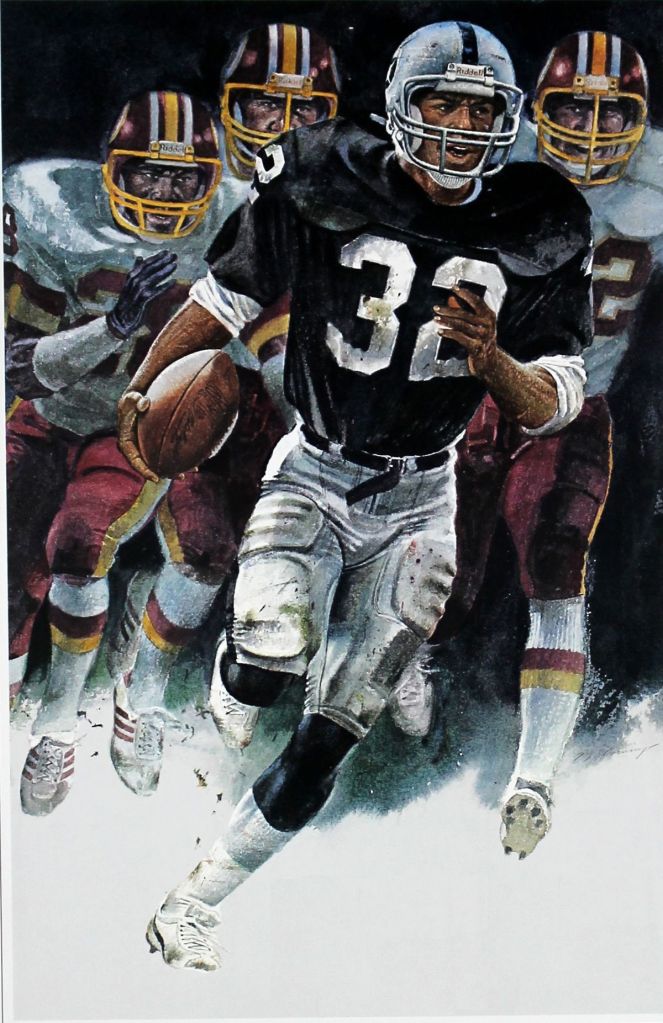
Take a jersey number like 32. So many who have worn it represent all the different aspects of SoCal history. Look here: Koufax, O.J., Magic, Walton, Marcus, Quickie.

Quick — who might generate the most compelling story for anyone who has worn No. 32?

It’s probably not anyone you might think, even if given 32 guesses.

This isn’t so much about who “owns” the number, or who wore it best. Those discussions over a few beers have their own amusement element and entertainment value. Ultimately, they come up to personal preference, nostalgic entrancement, and the first one of these athletes you may have encountered between the age of 6 and 11.

We will start by defining SoCal territory as what starts below the 35°45′ latitude line, stops short of our friends in San Diego, and unites the counties of Los Angeles, Orange, Riverside, San Bernardino, Ventura, San Luis Obispo and Santa Barbara as kissing cousins. All are freeway adjacent, used to traverse the landscape fluidly. Otherwise, this becomes unremittingly sized up as a misunderstood gaggle of scattershot suburbs, all in search of a cohesive landmass.

Sports helps shape its boundaries, and its communities and neighborhoods.

Los Angeles, by itself, one of the most mythologized cities in the world, blurring a public idea of the city that blends fact, fiction and Hollywood; desert, beach and snow-capped mountains; landslides, earthquakes and floods. We all have some identify from it, via the prism of a traffic jam, a yoga session or plastic surgery. From high-priced villas to a beleaguered homeless population that can’t be blamed for just wanting to enjoy a warm day on the sidewalk tent not far from a local outreach facility.

We weather this storm as we can.

Modified over the years and attributed most notably to Dorothy Park, Aldous Huxley, H.L. Menken or Alexander Woollcott — maybe even Snoop Dogg — SoCal is far more fascinating than 88 surburbs in search of city. Plant that idea in its fertile desert soil, often in sorely need of watering, and it takes root.

But it’s not all that watered down.

“Los Angeles is a city built upon amnesia and denial,” Tom Curren wrote for the Los Angeles Times in 2025, helping to introduce a multi-faceted project trying to predict the future success, or failure, of the region.

“Graded and paved, bought and sold, it bears little likeness to Tovaangar, the home for the first people who, for thousands of years, walked its valleys and chaparral-clad basins and paddled its broad shorelines.

“Eventually, they were overtaken, falling silent to the noisy ambitions of foreigners and settlers who set about transforming this vast floodplain with imported water and orchards and homes. Branding their creation paradise, they never questioned their improbable aspirations.

“Instead, they mythologized their works, borrowing from the past what was convenient and discarding the rest, so the picture of the Golden State in the early 20th century was romantic enough to persuade more and more Easterners to board the trains that crossed the deserts to arrive in this transformed pueblo.”

Sports fits mightily into this ambiguous narrative that has blossomed into folklore as a geographical punchline for those outside the civic dysfunction of it all and dispassionate for clarification.

Sports shaped the region’s history — from the 1932 Summer Olympics, to the 1984 Summer Olympics, to the 2028 Summer Olympics. To baseball’s World Series championship teams jammed into the football arena that would host the first Super Bowl, Coliseums and Forums and do-it-yourself home repair-sponsored mini stadiums.

“In an area larger than Rhode Island and Delaware combined, there are 88 municipalities, countless unincorporated areas, and almost 10 million residents, many of whom aren’t entirely sure what jurisdiction they’re in at any given moment,” Conor Friedersdorf once wrote for The Atlantic in 2011.

You be the judge.

Expand your idea of the boundaries we want to cover here. And figure in all its numerology.

Continue reading “SoCal Sports History 101: The Prime Numbers from 00 to 99 that Uniformly, Uniquely and Unapologetically Explain Our Greater Los Angeles Athletic Heritage”

The 2024 baseball book review: Roll the closing credits, peace, out

Wrapping up the latest version of the annual spring baseball book review series, here’s how we decided it best shakes out:

Top exit velo:

Day 28: “The Last of His Kind: Clayton Kershaw And the Burden of Greatness” by Andy McCullough, along with an array of baseball player bios.

Day 9: “Schoolboy: The Untold Journey of a Yankees Hero” by Waite Hoyt and Tim Manners

Day 25: “Baseball: The Movie” by Noal Gittel and “Mike Donlin: A Rough and Rowdy
Life from New York Baseball Idol to Stage and Screen” by Steve Steinberg and Lyle Spatz

Day 10: “Frank Chance’s Diamond: The Baseball Journalism of Ring Lardner” by Ron Rapoport

Day 6: “The Dodger Collection: Richard Kee Photographs” by Richard Kee

Day 18: “Under Jackie’s Shadow: Voices of Black Minor Leaguers Baseball Left Behind” by Mitchell Nathanson

Continue reading “The 2024 baseball book review: Roll the closing credits, peace, out”

Day 30 of 2024 baseball book reviews: Let’s -30- this thing in a somewhat eloquent way

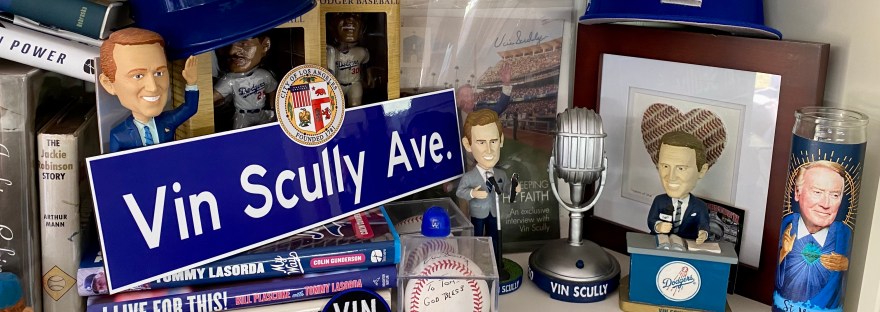
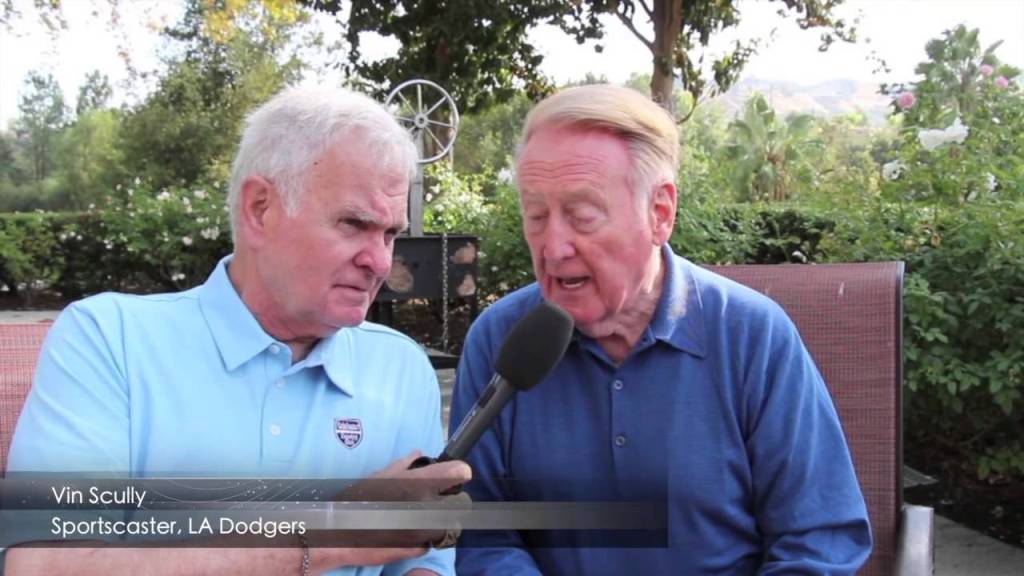
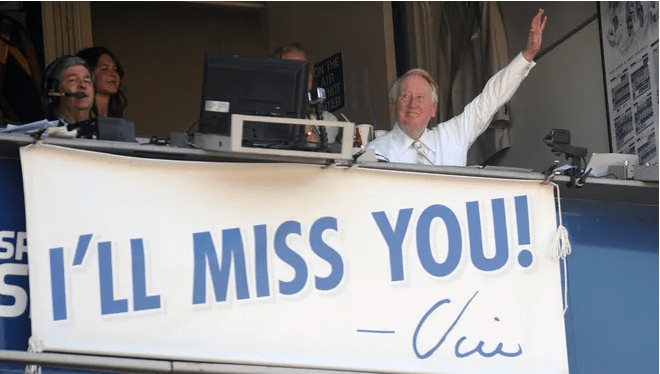
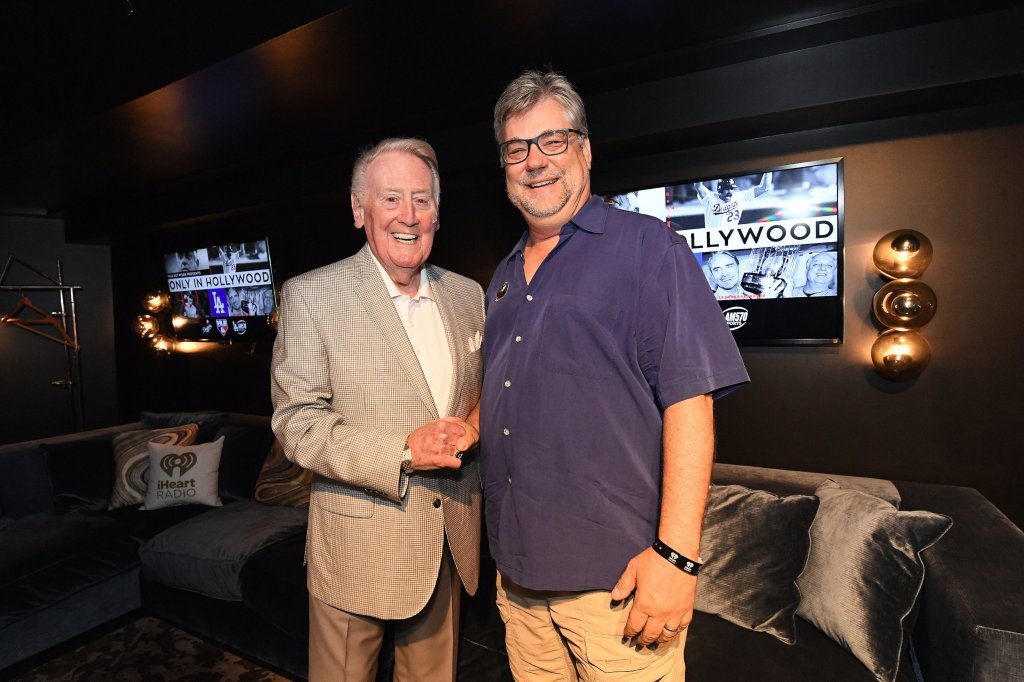
“Perfect Eloquence: An Appreciation of Vin Scully”

The author/editor: Tom Hoffarth
The forward: Ron Rapoport


The contributors:
Broadcasters — Bob Costas, Al Michaels, Jaime Jarrin, Joe Davis, Joe Buck, Jessica Mendoza, Ross Porter, Bob Miller, Ken Levine, Matt Vasgersian, Tom Leykis, Jim Hill, John Ireland, Ken Korach, Brian Wheeler, Mike Parker, Josh Suchon
Baseball execs — Bud Selig, Peter O’Malley, Derrick Hall, Josh Rawitch, Tim Mead, Ned Colletti, Fred Claire
Players in the media — Orel Hershiser, Steve Garvey, Eric Karros
TV executives/media cohorts — Andy Rosenberg, Jeff Proctor, Tom Villante, Boyd Robertson, Doug Mann, Ben Platt, John Olguin, Brent Shyer, Jon Weisman
Historians — David J. Halberstam, Paul Haddad
Journalists — Will Leitch, Patt Morrison, Chris Erskine, Dennis McCarthy, Steve Dilbeck, Jill Painter Lopez, Sammy Roth, Brian Golden, Lisa Nehus Saxon, Bill Dwyre, T.J. Simers, JP Hoornstra, Paul Vercammen, Pablo Kay
Academics — Joe Saltzman, Dan Durbin, Dale Marini, Michael Green
Religious — Fr. Willy Raymond, Tim Klosterman, Kevin O’Malley
Actors — Bryan Cranston and Harry Shearer
More admirers — Gil Hodges Jr., Ann Meyers Drysdale, umpire Bruce Froemming, agent Dennis Gilbert, cartoonist Kevin Fagan, longtime fan Emma Amaya

The publishing info: University of Nebraska Press; 288 pages; $34.95 (Canada: $47; U.K: £29.99); Released May 1, 2024

The links: The publishers website; at the Google book preview; at the authors website; at Bookshop.org; at Powells.com; at Vromans.com; at {pages: a bookstore};
At TheLastBookStoreLA; at Skylight Books; at Diesel: A Bookstore;
At BarnesAndNoble.com; at Amazon.com

The review in 90 feet or less

A friend asks: So you’re going to review your book, right? Along with all the other new baseball books for 2024?

This had to be a setup. What kind of a perverse, self-indulgent, ego-stoking exercise would that turn out to be?

Or …

What an opportunity to interview myself, ask some complex questions, get to the heart of everything. Let’s take this to another level of enlightenment, entertainment and information.

Or, chalk it up to over eagerness. No review as such. We’ve got plenty of them already to note below. Instead here’s my exclusive interview (and because I’m a Gemini, I’m confident this can work):

Author Q&A

Q: What’s the deal with being called the book’s “editor?” Does that mean you didn’t write anything?

A: You’re coming in hot. No need to start getting cranky from the start.

Continue reading “Day 30 of 2024 baseball book reviews: Let’s -30- this thing in a somewhat eloquent way”

Day 29 of 2024 baseball book reviews: Who upped the stakes for TV and the College World Series? Dedeaux and …. ?

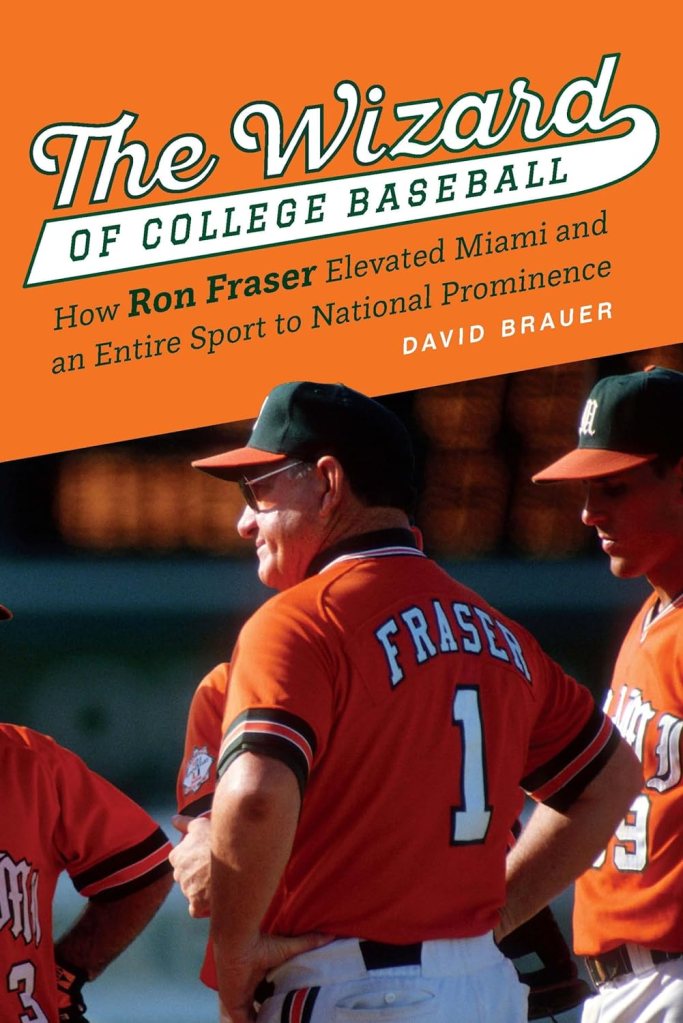
“The Wizard of College Baseball:
How Ron Fraser Elevated Miami and
an Entire Sport to National Prominence”

The author:
David Brauer

The publishing info:
University of Nebraska Press;
224 pages, $29.95
To be released June 1

The links:
The publishers website
The authors website
At Bookshop.org; at Powells.com; at Vromans.com; at TheLastBookStoreLA; at Skylight Books; at {pages: a bookstore}; at BarnesAndNoble.com; att Amazon.com

The review in 90 feet or less

USC’s Rod Dedeaux, left, and Miami’s Ron Fraser. Photo from University of Miami Libraries Digital Collection.

College baseball’s two late, great forces of nature — USC’s Rod Dedeaux and Miami’s Ron Fraser — couldn’t do much behind the scenes this year to will either the Trojans or the Gators into the 2024 NCAA baseball playoffs.

The brackets announced today will be minus two of the most dominant programs in the sport’s history, and are the ones who united the two coasts of the United States to join in the middle.

Or as close to Omaha, Nebraska, as possible.

Continue reading “Day 29 of 2024 baseball book reviews: Who upped the stakes for TV and the College World Series? Dedeaux and …. ?”