Day 8 of (at least) 30 baseball book reviews in 2021: Clubbing around with a stand-up guy trying to find a meaning of life

“Clubbie: A Minor League Baseball Memoir”

The author:
Greg Larson

The publishing info:
University of Nebraska Press
264 pages
$27.95
Released April 1, 2021

The links:
At the publisher’s website
At the author’s website

At Powells.com
At Vromans.com
At DTLA’s The Last Book Store
At PagesABookstore.com
At Amazon.com
At BarnesAndNoble.com
At Indiebound.org
At Bookshop.org

The review in 90 feet or less

Airing someone else’s dirty laundry can be a proven method for writers to sell books. And it sounds almost literally like what Greg Larson is trying to do here, as someone who has invested two soul-searching summers of minor-league baseball locker room shenanigans.

But that would be selling “Clubbie” far short. It’s his own life that becomes the examination through dealing with challenges he probably didn’t see coming.

Since Larson calls himself an author, editor and standup comedian living in Austin, Tex. — and offers himself up on his website as available for interviews, speaking engagements and bachelorette parties just by clicking his email link — he is teed up as someone who doesn’t necessarily take himself too seriously.

And seriously, if you can’t laugh at yourself, what’s the point?

Here, you don’t really have to read between the lines. This latest journey of baseball-as-life-metaphor doesn’t leave the reader with an overwhelming desire to laugh at someone else’s struggles despite the many humorous moments. Sympathy and empathy tug naturally instead. The real-life frustrations are transferred, as are the celebrations of those small moments of personal victory.

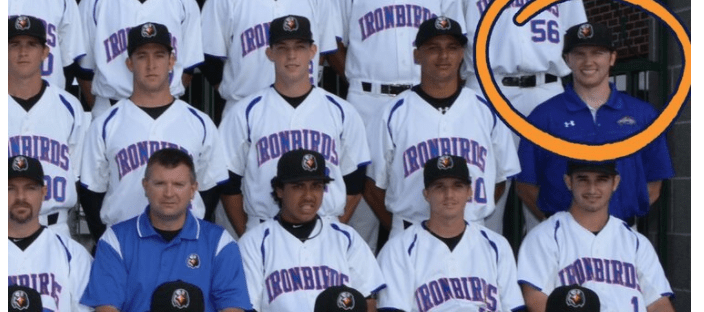
There’s also the sense that someone can be self-aware enough to realize that, sure, after getting crapped all over as the clubhouse attendant for the Aberdeen IronBirds of the short-season Single-A N.Y-Penn League, even spending one of those seasons living inside a storage room to save some cash, you can come out of that closeted experience on the othersize and realize it wasn’t all that crappy.

If this was a stage play, it would all center around the environment that supports this next-to-last level of the Baltimore Orioles farm system food chain, 25 miles northeast up I-95 from Camden Yards. The fact the team is owned by the Ripken family – most notably with Cal Ripken, Jr., as the front man, buying this in 2002 and moving them from Utica, N.Y. to his hometown and then having them play games at a place called Ripken Stadium — only adds more irony for the IronBirds’ method of operations.

The years are 2012 and ’13 – a lifetime ago for some of us. When owning a ’97 Cadillac Deville with an active “check engine” light ain’t a bad proposition. Nor was getting to pull on a uniform and shag balls to the delight of the other players once in awhile to break the monotony. Or sneaking out to take late-night batting practice. Share some beers with former big-leaguers and hear their life stories. Getting introduced to a couple thousand fans on opening day and jogging out to the third-base line along with the trainer to be part of a team of guys you likely won’t see or hear much about after all this is over.

Continue reading “Day 8 of (at least) 30 baseball book reviews in 2021: Clubbing around with a stand-up guy trying to find a meaning of life”
Day 7 of (at least) 30 baseball book reviews in 2021: Next up on ‘Gilmore Guys’: Hollywood horsehide and Bob Cobb’s salad days of invention

“Lights, Camera, Fastball:
How the Hollywood Stars Changed Baseball”

The author:
Dan Taylor

The publishing info:
Rowman & Littlefield
400 pages
$38
Released March 17, 2021

The links:
At the publisher’s website
At Amazon.com
At BarnesAndNoble.com
At Powells.com
At Vromans.com
At The Last Book Store in L.A.
At PagesABookstore.com
At Indiebound.org
At Bookshop.org

The review in 90 feet or less

Admit to the guilty pleasure in doing a little namedropping.

Especially when it comes to the stars of Hollywood, from the glamor years of the ‘30s, ‘40s and ’50s.

From Rugger Ardizoia to Guz Zernial. Frankie Kelleher, Irv Noren and Dick Stuart. Lefty O’Doul. Frenchy Uhalt. Pinky Woods. Carlos Bernier. Bobby Bragan, Jimmy Dykes. “Ugly” John Dickshot and his 33-game hitting streak. (He made it into an episode of “Mad About You” as we recalled last year).

Paul Pettit was the bonus baby from Narbonne High and ended up as one of our high school vice principals. We appreciated the story Kevin Baxter did on him for the L.A. Times in ’19, about a year before his passing in Sept. 2020.

Bill Mazeroski? Sure, enough, if only for a couple of months before going onto Cooperstown.

Root all you want for some others like Charlie Root and Babe Herman. But the biggest star of them all who maybe was more comfortable in a supporting role was Bob Cobb. No relation to Ty, but one who made a mean salad with blue cheese, bacon, chopped tomatoes …

How someone that inventive with a head of lettuce wouldn’t also be with a group of baseball players is a leap of faith we really hadn’t considered.

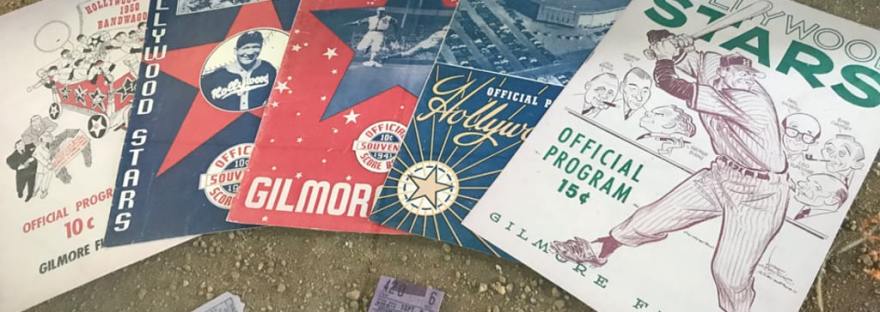
From a baseball prism, Cobb’s real salad days were running the Hollywood Stars of the Pacific Coast League, taking a team that was floundering in its previous version (playing no where near Hollywood, at Wrigley Field near the Coliseum) and bringing them back for a 20-year run that will be as part of old Hollywood as red carpets and beaming spotlights.

Bob Cobb and wife Gail Patrick with Gracie Allen and George Burns at a Hollywood Stars game.
The Sporting News Collection Archives (c. 1940).

The stories of the famous rebirth of the franchise run by the man with the most famous restaurants in Hollywood – The Brown Derby – have been told over the years by historians, players and those fans associated with that time and place that doesn’t exist any longer. It was taken off the menu upon the Dodgers’ arrival in Los Angeles for the 1958 big-league season.

Continue reading “Day 7 of (at least) 30 baseball book reviews in 2021: Next up on ‘Gilmore Guys’: Hollywood horsehide and Bob Cobb’s salad days of invention”

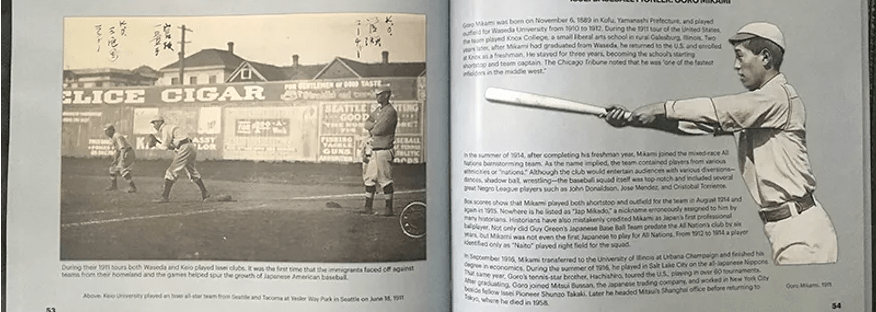
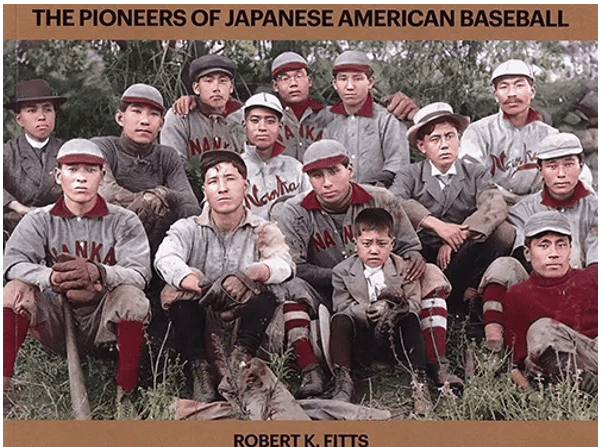
Day 6 of (at least) 30 baseball book reviews in 2021: It takes more than Wa to want to know more about the Japanese history

“The Pioneers of Japanese American Baseball”

The author: Rob Fitts
The publishing info: Self published, 70 pages, $19.99, Released Feb. 20, 2021
The links: At the publisher’s website


The review in 90 feet or less

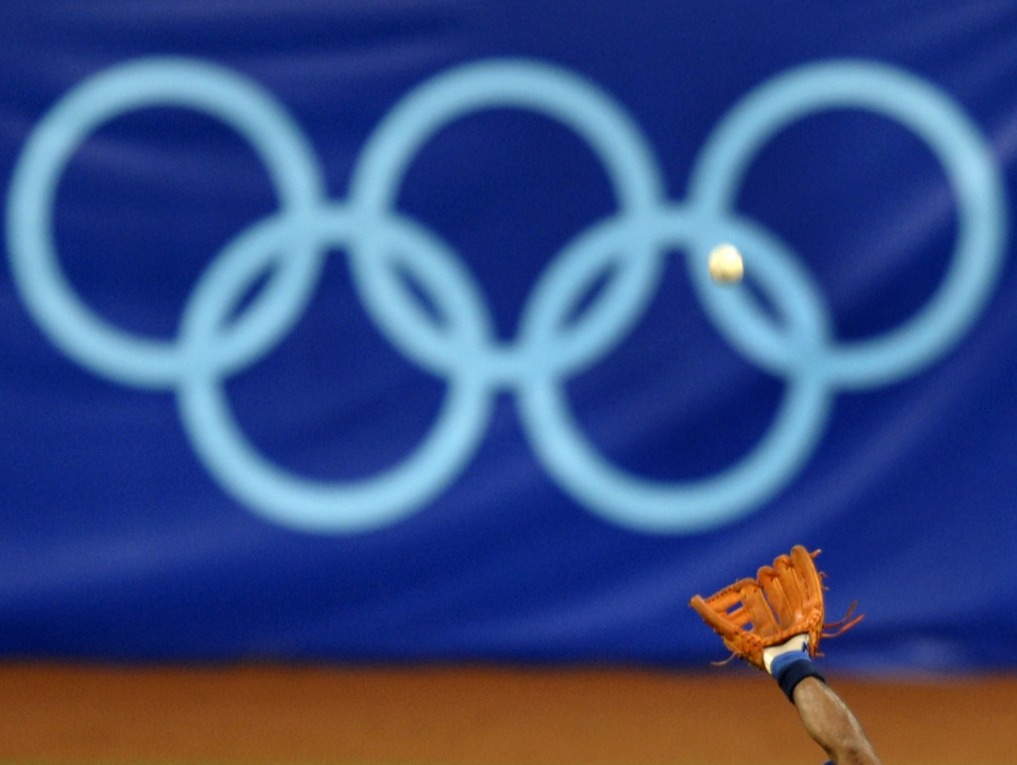
If not for Japan, baseball’s return as part of the Olympic movement might still be stagnant.

After an odd disappearance of 13 years, the sport returns to the Summer Games in Tokyo – already a year delayed because of the COVID-19 outbreak. And as restrictions remain to help prevent another spike in the virus, it has been determined that only those already living in Japan will be allowed to watch the six-nation tournament scheduled to start on July 23 and end on Aug. 5.

From where we sit (and often to so reading), the sport seems to be in good hands this turn as it hits another historical moment in its evolution.

From OlympicBaseball.wbsc.org.

On the official website for the 2021 Tokyo Games, baseball is explained as a game where “two teams of nine players aim to score the most runs by striking a ball and running round a sequence of bases to reach the home plate. The team with the most runs after nine innings of batting and fielding wins. The teams rotate between batting and fielding, with each session called an inning, and switch when the field team gets three opposition players out.”

Hit the “more” button – don’t you thought you owe it to yourself, having invested this much already? – and it continues: “The pitcher throws the ball from a mound toward the catcher which the batter attempts to hit and get around the bases to the home plate.”

Everything else is just gravy.

Baseball as the on-and-off Olympic sport over the years seems to be tied to whomever is the host country and wants to capitalize on its popularity. It launched at the 1904 Summer Games in St. Louis, then fell into demonstration mode for ’12, ’36, ’52, ’64 (in Tokyo), ’84 (in L.A.) and ’88 (South Korea, after Japan wanted to hold out). It was finally made its modern debut a medal event in Barcelona in 1992, with eight teams, and Cuba winning the gold (Japan the silver, the U.S. was fourth.) In ’96 in Atlanta, it was Cuba-Japan-U.S. The 2000 Games in Sydney, Australia is where Tommy Lasorda managed the gold-medal champions. It stuck in 2004 Athens (Cuba-Australia-Japan) and 2008 Bejing (South Korea-Cuba-U.S.) and then was dropped.

It’s back now, isn’t scheduled to be in the 2024 Games in Paris, and returns in 2028 in Los Angeles.

One shouldn’t have to educate the ninos of native Angelinos about how popular Japan baseball has been more than 100 years prior, especially in this city.

Continue reading “Day 6 of (at least) 30 baseball book reviews in 2021: It takes more than Wa to want to know more about the Japanese history”

Day 5 of 2021 baseball book reviews: What really happened to ‘Alexander the Great’ during the Great War?

“The Best Team Over There: The Untold Story of
Grover Cleveland Alexander and the Great War”

The author:
Jim Leeke

The publishing info:
University of Nebraska Press
280 pages
$29.95
Released March 1, 2021

The links:
At the publisher’s website
At Powells.com
At Vromans.com
At TheLastBookStore in LA.com
At Pages ABookstore.com
At Amazon.com
At BarnesAndNoble.com
At Bookshop.org
At Indiebound.org

The review in 90 feet or less

Imagine how upside down Los Angeles would be if there was this war building on the other side of the world and just as the baseball season started, Clayton Kershaw was plucked off the roster to put on another uniform and serve his country.

Imagine how the city of Chicago faced that dilemma when its future Hall of Fame pitcher Grover Cleveland Alexander, at age 31 — a year younger than Kershaw — found out he was among the many big-leaguers drafted to serve in World War I. He’d throw three games to start the 1918 season, then head to basic training in Kansas, then off to France with the other Doughboys.

It would be a story made for Hollywood. But not one well told.

There’s this horribly false impression we all shouldn’t have that Alexander, born in rural Nebraska and named after the 22nd president of the United States who held office at that time (and circled back to be the 24th president), looked an awful lot like Ronald Reagan, the actor who would become the 40th leader of the free world.

No more than Gary Cooper really looked a lot like Lou Gehrig, but that’s the lasting image thanks to the image makers of the time.


The 1952 Warner Brothers flick called “The Winning Team” soft-tosses Reagan, years after he played George Gipp in the Knute Rockne biopix, as what was assumed to be the lead role of Alexander – better known as Alex or Pete or Ol’ Pete. The title sequence declares this to be the “true story” of his life. IMDB.com graciously refers to it as “an average and generally somewhat interesting.” The 6.5-out-of-10 stars seems generous.

It’s as much a “baseball” movie as it tries to follow the “Pride of the Yankees” template to push it as a drama/romance. Doris Day, as Alexander’s wife, Aimee, is the true lead, but Reagan had to do a lot of heavy lifting with not only a better-than-average pitching motion but also many scenes to show the anguish and distraught circumstances of Alexander’s troubled existence. “Pride of The Yankees” landed about 10 years earlier. It also came out about 13 months after Gehrig’s early demise from ALS.

Continue reading “Day 5 of 2021 baseball book reviews: What really happened to ‘Alexander the Great’ during the Great War?”

Day 4 of (at least) 30 baseball book reviews in 2021: On top of Ol’ Smokey

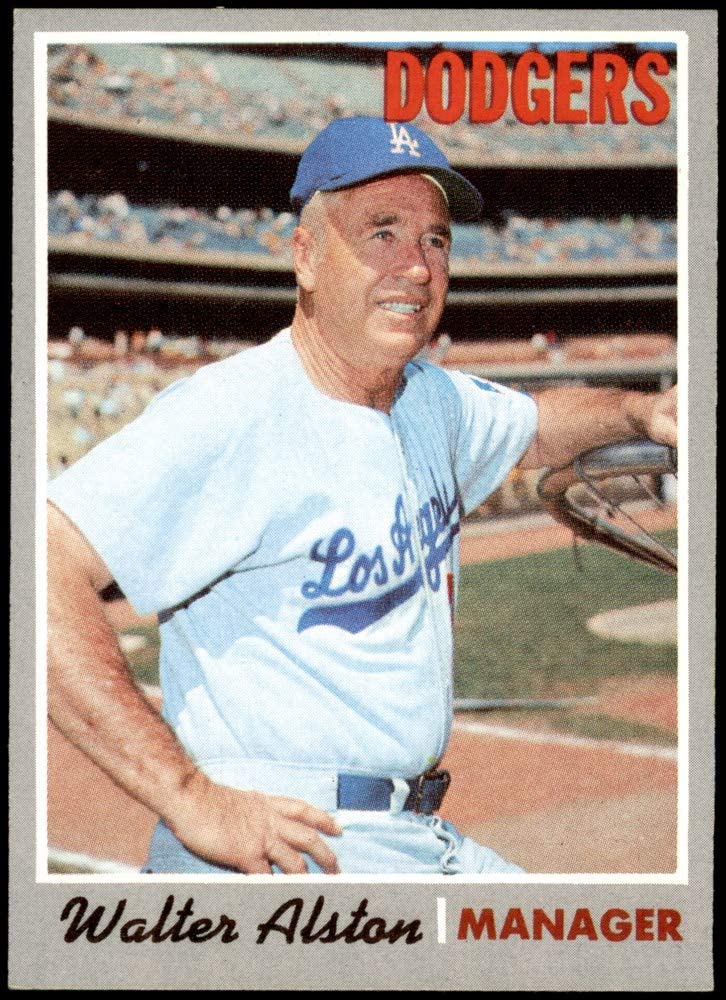
Walter Alston: The Rise of a Manager from
the Minors to the Baseball Hall of Fame”

The author:
Alan H. Levy

The publishing info:
McFarland
216 pages
$35
Released Feb. 12, 2021

The links:
At the publisher’s website
At Powells.com
At Vromans.com
At L.A.’s The Last BookStore
At PagesABookstore.com
At Amazon.com
At BarnesAndNoble.com
At Indiebound.org
At Bookshop.org

The review in 90 feet or less

In Tom Callahan’s glorious 2020 book, “Gods at Play: An Eyewitness Account of Great Moments” (W. W. Norton & Company, 304 pages, $26.95,” landing just before the 2002 MLB regular season finished), the sportswriter gracefully reflects on many of his experiences tied to baseball’s greatest moments and people.

Like a visit with Walter Alston.

The “famously colorless manager” of the Dodgers, as Callahan starts, “screeched up on a deafening motorcycle, handed me a stuffed pheasant fresh from the taxidermist, and said, ‘Hold onto this will you?’ … ‘Hop on.’ And we zoomed away.”

Alston was going to pull a prank on a friend – he would put this upholstered bird on a branch way up in a tree, coax a pal to blast it with his shotgun, and everyone would have a great laugh when it exploded. Weeb Eubank, best known as the coach of the New York Jets’ 1969 championship coach and a fellow graduate of the University of Miami at Ohio, was Alston’s accomplice.

How’s that for Midwest side-splitting humor?

When the writer and manager had time to talk, Alston told him: “Baseball is as simple or as complicated as you want it to be … Did you ever play catch with your father?”

“I did,” Callahan answers.

“When fathers and sons stop playing catch, baseball will no longer be our national pastime,” Alston replies.

Think about that.

As the conversation continues, it reminded us not so much about how Walter Emmons Alston of Venice, Ohio became the Dodgers’ Hall of Fame-certified manager starting at age 42 in 1954 and lasting through age 64 in 1976 – 2,040 wins in 23 seasons, a .558 winning percentage (third best of those with 2,000 wins), four World Series titles (’55, ’59, ’63 and ’65) and seven NL pennants.

He did all that on top of having just one official tantalizing MLB at-bat etched onto his permanent record.

This Moonlight Graham moment was a late 1936 September call-up with the St. Louis Cardinals, in the last few innings of the last game of the season. One at bat. A box score and summary exists.

He would spend 13 seasons in the Cardinals’ farm system, but for this moment, a 24-year-old Alston was a big boy, rushed into the game as a defensive replacement for future Hall of Famer Johnny Mize at first base in the eighth inning. That could have been it. But when Mize’s place in the lineup came around — two outs in the bottom of the ninth, tying run on — Mighty Alston struck out against the Cubs’ Lon Warneke, “The Arkansas Hummingbird.”

As Callahan recounts, it allowed Alston’s dad, Emmons, to eventually tell him: “You were a major leaguer, Walter. You are a major leaguer. And I’m proud of you.”

Stories like this bring us back to baseball. Books like this one by Levy, a professor of American history at Slippery Rock University in Pennsylvania, give us more excavation opportunities to learn more about those in the game we thought we already knew plenty.

In our collection of more than 200 Dodger-related books and bios, two autobiographies of Alston exist. One that he did with Jack Tobin just before his final season of 1976, “A Year At A Time,” was a reference to having a series of one-year contracts with Dodgers management. Ten years earlier, Alston did a book for Doubleday called “Alston and His Dodgers” with Si Burick.

Continue reading “Day 4 of (at least) 30 baseball book reviews in 2021: On top of Ol’ Smokey”