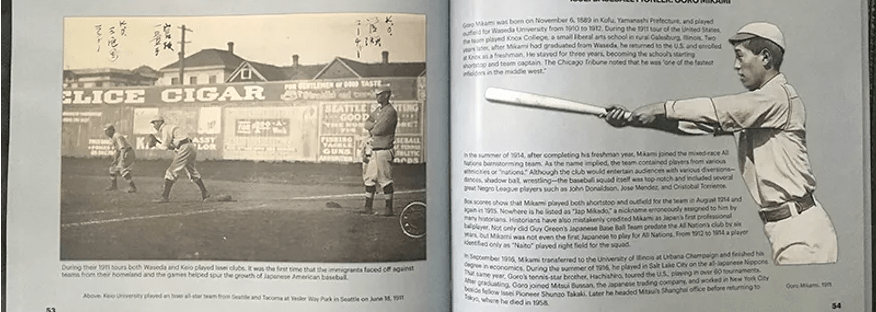
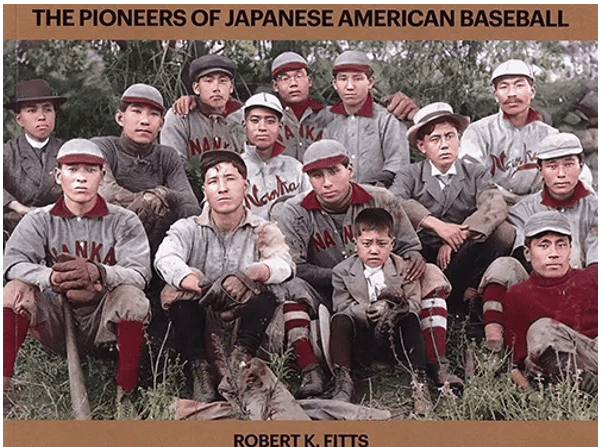
“The Pioneers of Japanese American Baseball”
The author: Rob Fitts
The publishing info: Self published, 70 pages, $19.99, Released Feb. 20, 2021
The links: At the publisher’s website
The review in 90 feet or less
If not for Japan, baseball’s return as part of the Olympic movement might still be stagnant.
After an odd disappearance of 13 years, the sport returns to the Summer Games in Tokyo – already a year delayed because of the COVID-19 outbreak. And as restrictions remain to help prevent another spike in the virus, it has been determined that only those already living in Japan will be allowed to watch the six-nation tournament scheduled to start on July 23 and end on Aug. 5.
From where we sit (and often to so reading), the sport seems to be in good hands this turn as it hits another historical moment in its evolution.
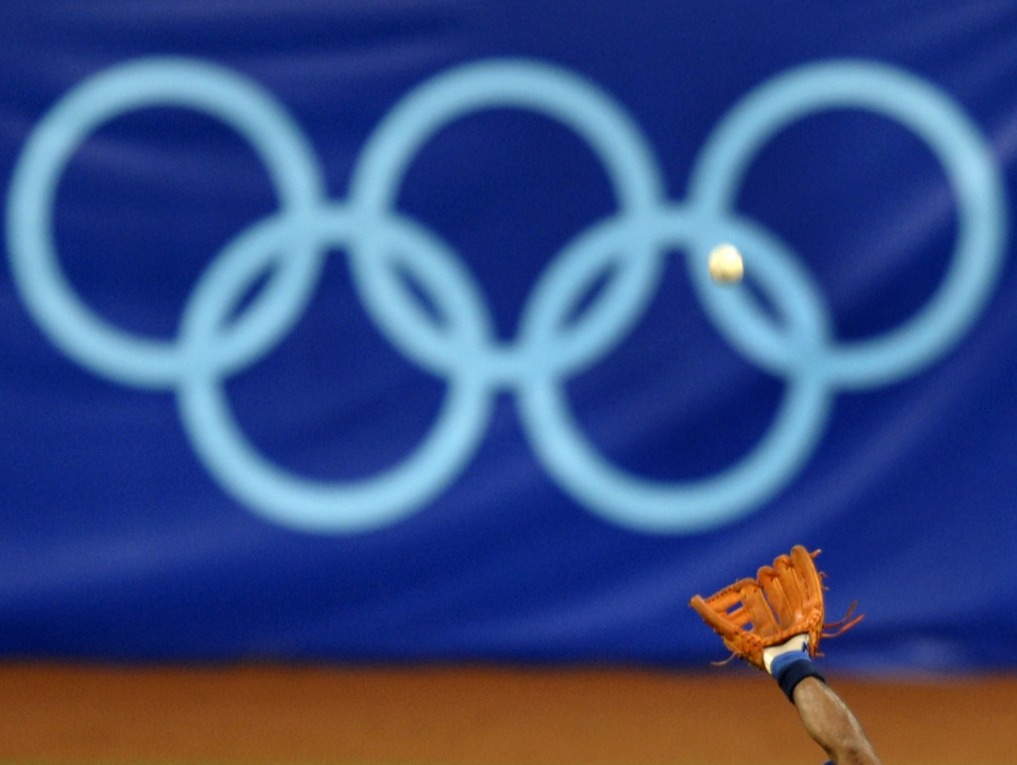
On the official website for the 2021 Tokyo Games, baseball is explained as a game where “two teams of nine players aim to score the most runs by striking a ball and running round a sequence of bases to reach the home plate. The team with the most runs after nine innings of batting and fielding wins. The teams rotate between batting and fielding, with each session called an inning, and switch when the field team gets three opposition players out.”
Hit the “more” button – don’t you thought you owe it to yourself, having invested this much already? – and it continues: “The pitcher throws the ball from a mound toward the catcher which the batter attempts to hit and get around the bases to the home plate.”
Everything else is just gravy.
Baseball as the on-and-off Olympic sport over the years seems to be tied to whomever is the host country and wants to capitalize on its popularity. It launched at the 1904 Summer Games in St. Louis, then fell into demonstration mode for ’12, ’36, ’52, ’64 (in Tokyo), ’84 (in L.A.) and ’88 (South Korea, after Japan wanted to hold out). It was finally made its modern debut a medal event in Barcelona in 1992, with eight teams, and Cuba winning the gold (Japan the silver, the U.S. was fourth.) In ’96 in Atlanta, it was Cuba-Japan-U.S. The 2000 Games in Sydney, Australia is where Tommy Lasorda managed the gold-medal champions. It stuck in 2004 Athens (Cuba-Australia-Japan) and 2008 Bejing (South Korea-Cuba-U.S.) and then was dropped.
It’s back now, isn’t scheduled to be in the 2024 Games in Paris, and returns in 2028 in Los Angeles.
One shouldn’t have to educate the ninos of native Angelinos about how popular Japan baseball has been more than 100 years prior, especially in this city.
Continue reading “Day 6 of (at least) 30 baseball book reviews in 2021: It takes more than Wa to want to know more about the Japanese history”