Blog

Nos. 74, 75, 76 and 85: Merlin Olsen, Deacon Jones, Rosey Grier and Lamar Lundy

This is the latest post for an ongoing media project — SoCal Sports History 101: The Prime Numbers from 00 to 99 that Uniformly, Uniquely and Unapologetically Reveal The Narrative of Our Region’s Athletic Heritage.  Pick a number and highlight an athlete — person, place or thing — most obviously connected to it by fame and fortune, someone who isn’t so obvious, and then take a deeper dive into the most interesting story tied to it. It’s a combination of star power, achievement, longevity, notoriety, and, above all, what makes that athlete so Southern California. Quirkiness and notoriety factor in. And it should open itself to more discussion and debate — which is what sports is best at doing.

The most obvious choices for No. 74:


= Kenley Jansen, Los Angeles Dodgers, Los Angeles Angels
= Merlin Olsen, Los Angeles Rams
= Ron Mix, USC and Los Angeles Chargers

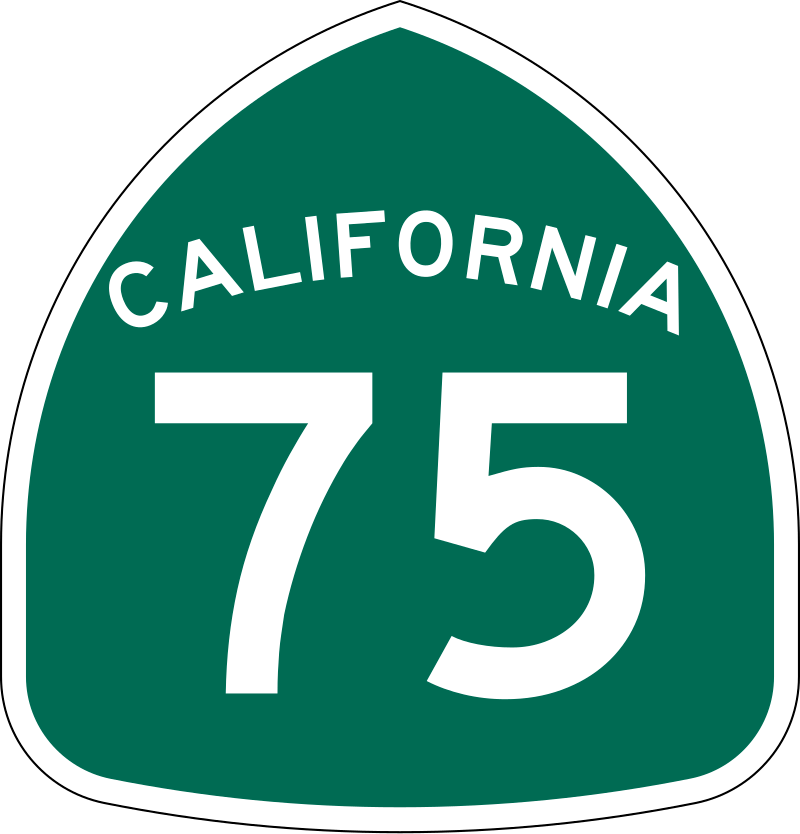
The most obvious choices for No. 75:

= Deacon Jones, Los Angeles Rams
= Howie Long, Los Angeles Raiders
=Irv Eatman, UCLA football
= Eddie Sheldrake, UCLA basketball

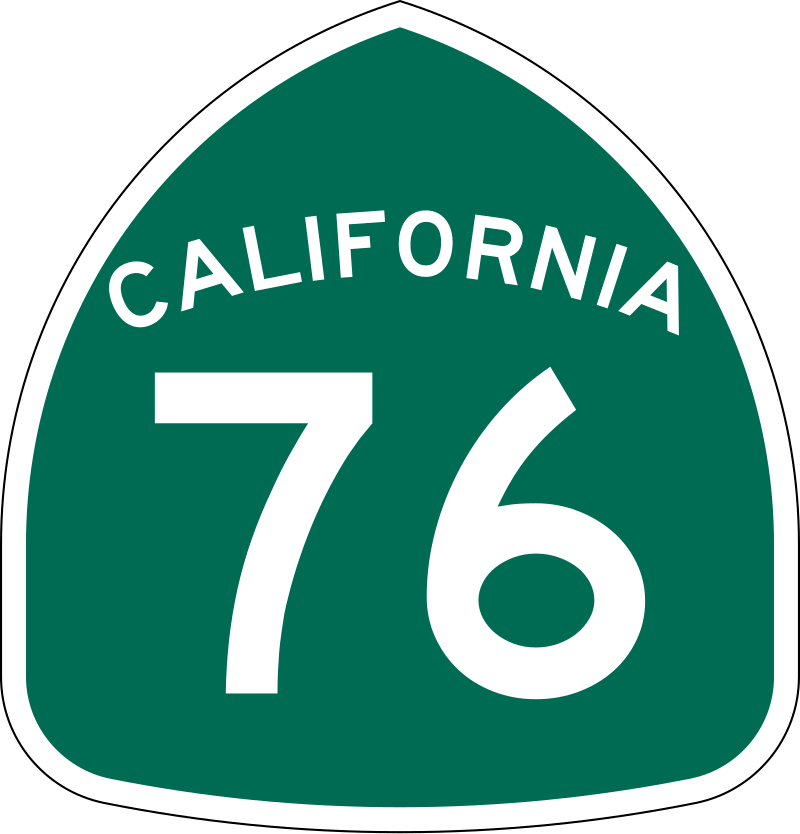
The most obvious choices for No. 76:

= Rosey Greer, Los Angeles Rams
= Marvin Powell, USC football
= Joe Alt, San Diego Chargers
= Al Lucas, Los Angeles Avengers

The most obvious choices for No. 85:

= Jack Youngblood, Los Angeles Rams
= Lamar Lundy, Los Angeles Rams
= Antonio Gates, Los Angeles Chargers
= Bob Chandler, Los Angeles Raiders
=Dokie Williams, UCLA football, Los Angeles Raiders

The most interesting stories for Nos. 74, 75, 76 and 85:
Merlin Olsen: Los Angeles Rams left defensive tackle (1962 to 1976)
Deacon Jones: Los Angeles Rams left defensive end (1961 to 1971)
Rosey Grier: Los Angeles Rams right defensive tackle (1963 to 1966)
Lamar Lundy: Los Angeles Rams right defensive end (1957 to 1969)
Southern California map pinpoints:
L.A. Coliseum, Chapman College, Hollywood


Alliteratively aligned, numerically united, and Hollywood certified.

The OG “Fearsome Foursome” LLC of Los Angeles Rams defensive linemen Lamar Lundy, Merlin Olsen, David “Deacon” Jones and Rosey Grier reigned controlled terror on the Coliseum turf together for just four seasons.

That in no way gives anyone permission to call them The Four Seasons.

Yet, during their harmonic convergence from 1963 to 1966, the Rams only won 22 of their 56 games. The sack-to-victory rate couldn’t override the issues on the Rams’ offensive line over that period putting enough points on the board.

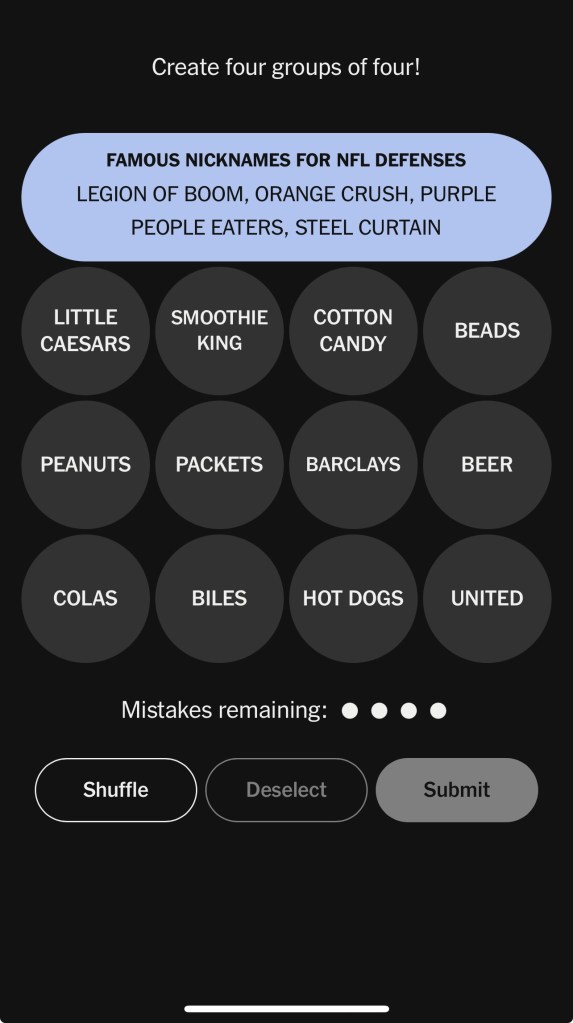
In the history of the NFL, there were other “Fearsome Foursome”-type groups tossed around in the prior collectives and there’s a Wikipedia page to vet it all out. In the pop culture of the 2020s, they may not even make it into the top five of nicknames when asked in an online quiz trying to highlight four groups of four.

From The Athletic’s Connection: Sports Edition via the New York Times from October, 2025.

Still, no other quartet brought it together on a football field, college or pro, as these men did. The when and where probably outranked the how and why.

“We taught the NFL the beauty of playing defense,” Jones told Sports Illustrated in a 2001 “Where are they now?” issue, seeming to again validate their longevity and ownership of the game. It was, of course, Jones, nicknaming himself as the Secretary of Defense, who coined the phrase “quarterback sack.”

As the Los Angeles Times’ Mal Florence explained it during a story about them in 1985, a generation after their departure: “If the Fearsome Foursome had lived in another time, they probably would have been part of a marauding army, sacking cities instead of quarterbacks. There was something majestic about those four distinct personalities … to popularize and set the standard for defensive linemen. They had size and range and were always on the attack. And they did it with flair and elan that were inimitable.”

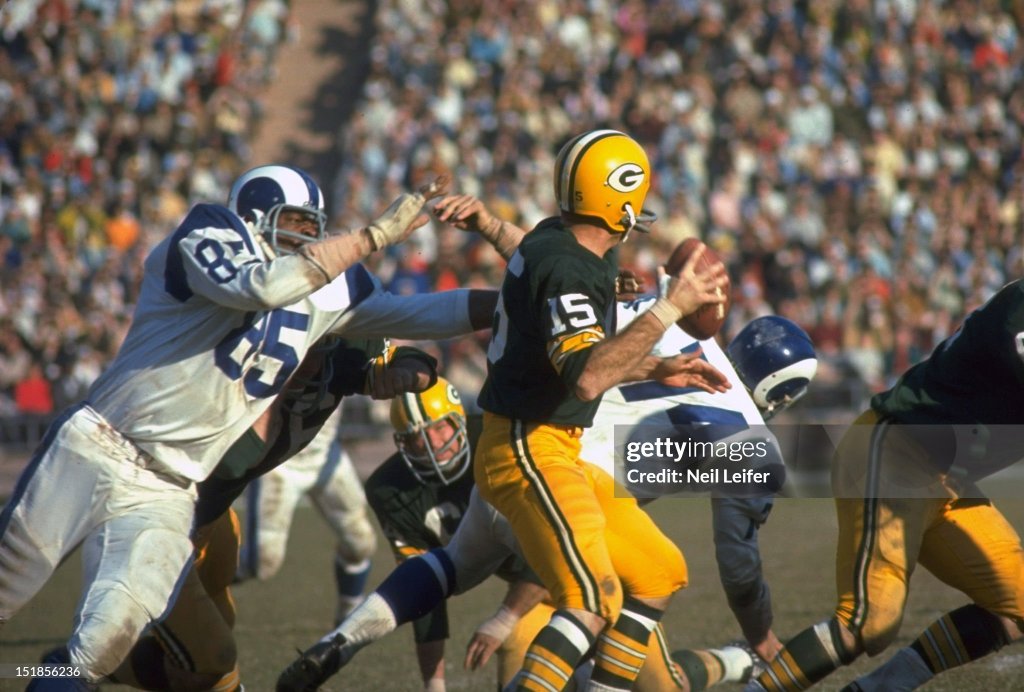
Lamar Lundy (85) moves in on Green Bay Packers quarterback Bart Starr (15)during a game at the L.A. Coliseum in December of 1967. (Photo by Neil Leifer /Sports Illustrated via Getty Images)

Sacks were not an officially recorded as an NFL statistic until 1982. Solo tackles and assisted tackles didn’t become logged in until 1994. Quarterback hits have only been recorded since 2006. So it’s a little more difficult to truly quantify the data on how these four might measure up statistically against modern-day players.

That all adds to their mystique. It wasn’t so much about those numbers. It was 74, 75, 76 and 85.

From the Los Angeles Public Library’s Herald Examiner Collection: Lundy, Grier, Olsen and Jones in 1966.
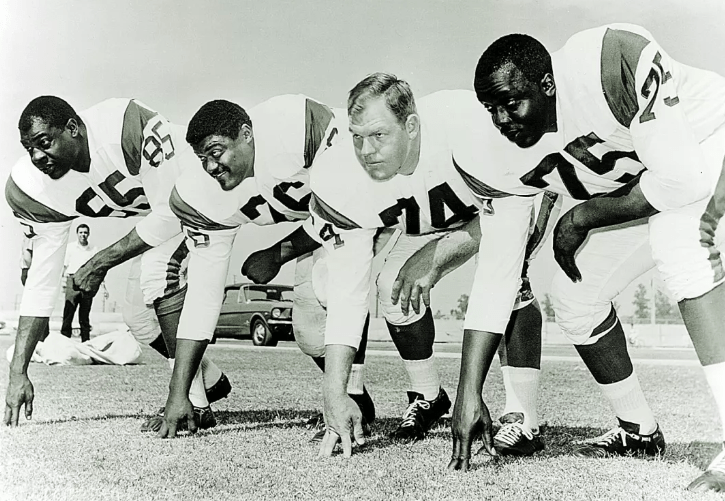
The classic 1965 shot of Lundy, Grier, Olsen and Jones, with a Mustang in the background, from the Los Angeles Rams’ files.
Continue reading “Nos. 74, 75, 76 and 85: Merlin Olsen, Deacon Jones, Rosey Grier and Lamar Lundy”

No. 27: Willie Crawford

This is the latest post for an ongoing media project — SoCal Sports History 101: The Prime Numbers from 00 to 99 that Uniformly, Uniquely and Unapologetically Reveal The Narrative of Our Region’s Athletic Heritage.  Pick a number and highlight an athlete — person, place or thing — most obviously connected to it by fame and fortune, someone who isn’t so obvious, and then take a deeper dive into the most interesting story tied to it. It’s a combination of star power, achievement, longevity, notoriety, and, above all, what makes that athlete so Southern California. Quirkiness and notoriety factor in. And it should open itself to more discussion and debate — which is what sports is best at doing.

The most obvious choices for No. 27:

= Mike Trout: Los Angeles Angels
= Vladimir Guerrero: Anaheim Angels/Los Angeles Angels of Anaheim
= Matt Kemp, Los Angeles Dodgers

The not-so-obvious choices for No. 27:

= Kevin Brown: Los Angeles Dodgers
= Theotis Brown: UCLA football
= Alec Martinez: Los Angeles Kings
= Jennie Finch: La Mirada High School softball

The most interesting story for No. 27:
Willie Crawford, Los Angeles Dodgers outfielder (1964 to 1975)
Southern California map pinpoints:
South Los Angeles, Dodger Stadium, Hollywood Hills


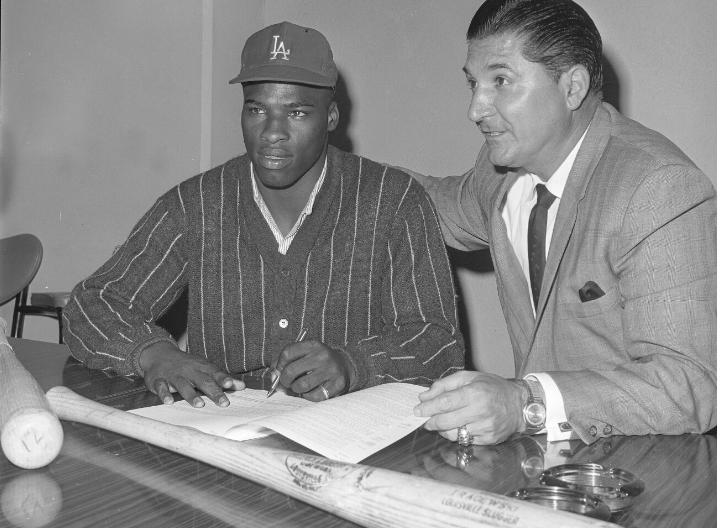
June 23, 1964: Willie Crawford, left, with Dodgers scouting director Al Campanis, signing his Bonus Baby contract. (UCLA digital archives)

In the summer of 1964, the Los Angeles Dodgers could not afford to lose the talents and potential of Willie Crawford. Especially since he was right in their backyard.

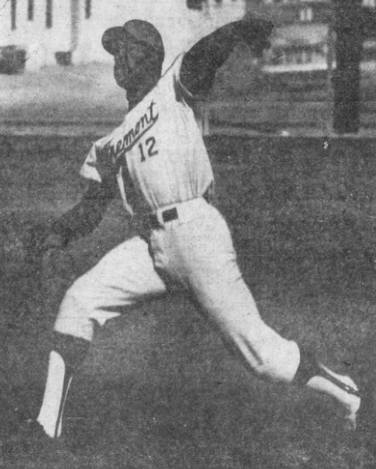
Willie Crawford wore No. 12 at Fremont High. This photo was on the front page of the Los Angeles Times sports section to announce his signing.

Despite coming off a World Series championship, the franchise may have been pitching rich but it was offensive poor. Imagine a local high-school phenom as the future centerpiece of their lineup. Heck, if the rival San Francisco Giants had a sweet-spot of their order with Willie Mays and Willie McCovey, L.A. could dream about the potential if its own Willie Davis and Willie Crawford.

Of course, it was an awful lot to ask of a 17-year-old from South Central L.A.’s Fremont High.

The catch was giving Crawford a $100,000 “bonus baby” status. It guaranteed him at least two seasons on the big-league roster, no matter how much learning was required to play at that MLB level.

It was somewhat of a crapshoot, based on “bonus baby” history, most often to the player’s determent. This would be the last year Major League Baseball allowed itself to continue this free-agent, Wild West signing frenzy and finally figure out how to implement a true draft.

The Dodgers couldn’t afford to let Crawford go elsewhere and were willing to take a shot, based on what they saw.

The motto of Fremont High is: “Find a path, or make one!” The school’s sports teams nickname is the Pathfinders.

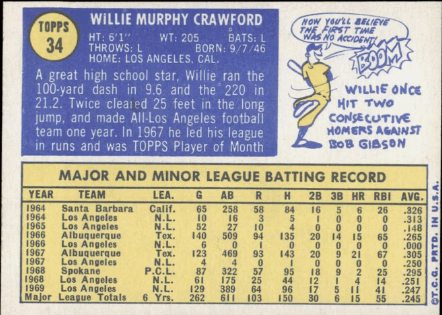
College recruiters beat a path to Crawford’s family home on 69th Street in L.A. long before his senior year at Fremont was over. Crawford gained attention as an All-City running back on the football team. On the track team, he clocked a 9.7 second 100-yard dash — or, it was 9.6 if you saw it on the back of his 1970 Topps baseball card, which also proclaimed he had a 21.2 second-mark in the 220, and twice cleared 25 feet in the long jump.

More to the Dodgers’ point, Crawford also hit .444 his senior year of baseball. Power, speed and a throwing arm. The whole five-tool package.

Dodgers scouting director Al Campanis’ report said of Crawford: “Thin waist, strong upper body, strong legs, unusual speed, graceful fielder, strong arm, good character (and ) hits with the power of Roberto Clemente and Tommy Davis at a similar age.” Campanis would know. He scouted and helped sign both for the Dodgers. The comparisons continued.

On the baseball fields of the high school on San Pedro Street between Florence and Manchester, “The Mont” had been creating a path to success under coach Phil Pote, who would go on to be one of the most heralded MLB scouts. His 1963 L.A. City championship team had future pro players Bob Watson, Bobby Tolan and Crawford. Brock Davis, another outfielder who went to Cal State L.A. and was signed by the Houston Colt 45s, also played with Crawford. The school had previously produced Hall of Famer Bobby Doerr, plus heralded manager Gene Mauch. It would later send Eric Davis, Chet Lemon, George Hendrick and Dan Ford to the MLB road.

Photo from the Facebook account of Willie Crawford’s daughter, Toi Crawford.

This was one year before there would be the first official MLB draft, so Crawford’s pursuit was just following a slippery slope toward a large roll of the dice by teams, and players, as he was free to sign with whomever he wished.

Two days after he graduated from high school, Crawford was sitting at his parents’ dining room table with Campanis, who was acting on what Dodgers scouts Tommy Lasorda and Kenny Meyers believed to be true — he was their guy. Sixteen of the 20 MLB teams were also making formal offers.

That included the Los Angeles Angels and owner Gene Autry, even though they had just paid 21-year-old outfielder Rick Reinhardt a record $205,000 bonus out of the University of Wisconsin and were about to give another $100,000 bonus to 18-year-old catcher Tom Egan from El Rancho High in Pico Riviera.

Then there was Kansas City Athletics’ owner Charlie Finley, who made a special trip to Crawford’s home to impress the family. Finley called Crawford “a Willie Mays with the speed of Willie Davis.” He gave the Crawford family an autographed photo of him to put on their wall.

Finley’s offer was a reported $200,000, plus the chance to start in center field right away for a team that would finish 1964 with a 57-105 record. The Dodgers were only offering half that, but the lure of a historic franchise that had moved to L.A. six years earlier and had already won two World Series titles. Crawford was also breaking new ground — no other African-American player right out of high school or college was even offered that large a signing bonus. Philadelphia signed Richie Allen for $70,000 in 1960. The Cleveland Indians gave Tommie Agee a $60,000 bonus in ’61.

Because Crawford said he wanted to stay on the West Coast, and he appreciated that Lasorda attended the funeral of his grandfather, the Dodgers got the signature on June 22, 1964.

The Dodgers were doing so knowing that they had to abide by the framework of the “Bonus Rule” — first implemented in 1947, then revived in 1952, as it declared that when a player received a large bonus that exceeded a certain amount, the signing team could send him to the minor leagues that season, but then had to keep him on the major league roster all of the following season.

In some ways, it tried to discourage bidding wars and punish a team that overspent. It often ended up punishing players who needed more time to adjust to pro ball and find their way in the minor leagues.

Continue reading “No. 27: Willie Crawford”

No. 22: Ila Borders

This is the latest post for an ongoing media project — SoCal Sports History 101: The Prime Numbers from 00 to 99 that Uniformly, Uniquely and Unapologetically Reveal The Narrative of Our Region’s Athletic Heritage.  Pick a number and highlight an athlete — person, place or thing — most obviously connected to it by fame and fortune, someone who isn’t so obvious, and then take a deeper dive into the most interesting story tied to it. It’s a combination of star power, achievement, longevity, notoriety, and, above all, what makes that athlete so Southern California. Quirkiness and notoriety factor in. And it should open itself to more discussion and debate — which is what sports is best at doing.

The most obvious choices for No. 22:

= Clayton Kershaw, Los Angeles Dodgers
= Elgin Baylor, Los Angeles Lakers
= Lynn Swann, USC football

The not-so-obvious choices for No. 22:
= Bo Jackson, California Angels
= Hugh McElhenny: L.A. Washington High football; Compton College football
= Brett Butler, Los Angeles Dodgers
= Bill Buckner, Los Angeles Dodgers
= Dick Bass, Los Angeles Rams
= Raymond Lewis, Verbum Dei High basketball
= Raymond Townsend: UCLA basketball

The most interesting story for No. 22:
= Ila Borders, Whittier Christian High baseball pitcher (1989 to 1993)
Southern California map pinpoints:
Downey, La Mirada, La Habra, Bellflower,  Costa Mesa, Whittier, Santa Ana, Long Beach


A camera crew from CBS’ “60 Minutes” chased down Ila Borders, and she was bordering on a panic attack.

The 23-year-old had become national news of sorts. It was 1998. She was about to become the first pitcher to start a game in a men’s professional baseball league, with the Duluth-Superior Dukes of the independent Northern League.

Her instincts were to push back on anything at this m0ment that could distract from her mental preparation.

In the prologue of her 2017 book, “Making My Pitch: A Woman’s Baseball Odyssey,” Borders explained how she had to retreat to the women’s restroom at the ballpark, jump into a stall and put her feet up so no one could detect she was there.

“I’m an athlete here to win,” she wrote. “Now get the hell out of my face. Would you tell a guy to smile? Growing up I heard about Don Drysdale, the Los Angeles Dodgers star right-hander of the 1950s and 1960s. I was crazy about Drysdale, who everyone said was the nicest guy around — except for the days he pitched. Then no one went near him. … I’ve been fighting for this since I was ten years old.”

By the time Mike Wallace had the chance to sit down with Borders, her family, friends, managers and teammates to do the story, Borders had a chance to explain.

“I’ve always had this fierce spirit to do what I want to do,” she said.

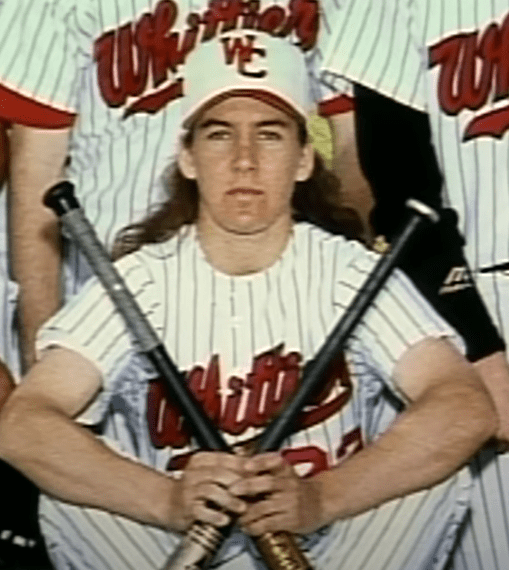
It want as far back to when she wore No. 22 for Whittier Christian High School in La Habra. Right about the time the movie “A League Of Their Own” had come out. There had been a template for women playing pro baseball, and Borders wanted in.

Continue reading “No. 22: Ila Borders”

No. 61: Jake Olson

This is the latest post for an ongoing media project — SoCal Sports History 101: The Prime Numbers from 00 to 99 that Uniformly, Uniquely and Unapologetically Reveal The Narrative of Our Region’s Athletic Heritage.  Pick a number and highlight an athlete — person, place or thing — most obviously connected to it by fame and fortune, someone who isn’t so obvious, and then take a deeper dive into the most interesting story tied to it. It’s a combination of star power, achievement, longevity, notoriety, and, above all, what makes that athlete so Southern California. Quirkiness and notoriety factor in. And it should open itself to more discussion and debate — which is what sports is best at doing.

The most obvious choices for No. 61:
= Chan Ho Park, Los Angeles Dodgers
= Rich Saul, Los Angeles Rams

The not-so-obvious choice for No. 61:
= Josh Beckett, Los Angeles Dodgers
= Bill Fisk, USC football

The most interesting story for No. 61:
Jake Olson, USC football long snapper (2015 to 2018)
Southern California map pinpoints:
Huntington Beach,  Orange, L.A. Coliseum


Long before he found his way onto the Coliseum turf with a huge smile on his face for the first time wearing a USC football jersey, the point person in executing an extra point, Jake Olson had already made his point.

The Trojans’ 2017 Labor Day weekend season opener against visiting underdog Western Michigan was tied 21-21 after three quarters and about to go sideways. Marvell Tell returned an interception 37 yards for a USC touchdown with 3:13 left in the game, and the fourth-ranked Trojans had some breathing room, up 17 points.

That’s when the 20-year-old Olson took a deep breath. USC head coach Clay Helton turned to the sideline and yelled his name: “Are you ready? Let’s get this done!”

The 6-foot-3, 225-pound redshirt sophomore took one more practice snap, launching the football between his legs with a rhythm and rote that, by this point, was pure and natural.

Olson put his right hand on the shoulder of teammate Wyatt Schmidt, and the two ran together more than 50 yards across the grass to where the line of scrimmage was at the peristyle end for the touchdown, and the game’s, punctuation mark. After the referee gave special instructions to both sides, he blew the whistle, Olson made the snap, the ball was placed by Schmidt, and the kick by freshman Chase McGrath was good. USC won 49-31.

“What a pressure player,” Helton said after the game. “Was that not a perfect snap?”

“It turned out to be a beautiful moment,” Olson said.

Former USC head coach Pete Carroll saw Olson go into the game and said he called Olson and said, “Hey Jakey! I’m so proud of you. I love you.”

If anyone by this point could see the good in all that happened, it was Olson.

Continue reading “No. 61: Jake Olson”

No. 48: Milt Smith

This is the latest post for an ongoing media project — SoCal Sports History 101: The Prime Numbers from 00 to 99 that Uniformly, Uniquely and Unapologetically Reveal The Narrative of Our Region’s Athletic Heritage.  Pick a number and highlight an athlete — person, place or thing — most obviously connected to it by fame and fortune, someone who isn’t so obvious, and then take a deeper dive into the most interesting story tied to it. It’s a combination of star power, achievement, longevity, notoriety, and, above all, what makes that athlete so Southern California. Quirkiness and notoriety factor in. And it should open itself to more discussion and debate — which is what sports is best at doing.

The most obvious choices for No. 48:
= Les Richter, Los Angeles Rams
= Ramon Martinez, Los Angeles Dodgers pitcher
= Dave Stewart, Los Angeles Dodgers pitcher
= Torii Hunter, Anaheim Angels outfielder

The not-so-obvious choices for No. 48:
= Lionel Washington, Los Angeles Raiders

The most interesting story for No. 48:
Milt Smith, UCLA football left end (1939 to 1943)
Southern California map pinpoints:
Redlands, Santa Ana, Westwood


Milt Smith, a 6-foot-3, 190 pound end, far right, is included in photo prior to UCLA’s 1943 New Year’s Day Rose Bowl appearance against Georgia as part of the Bruins’ first string linemen. Also included, from left: Burr Baldwin, Charles Fears, Al Sparlis, Jack Lecoulie, Bill Armstrong and Jack Finlay.

Watch what happens here, and tell us if we’re taking up too much time.

You’ve heard of the 1939 UCLA undefeated football team full of soon-to-be legendary figures?

Milton Bradley “Snuffy” Smith wasn’t one of them.

His name, after all, was Smith.

When the Redlands-born kid from Santa Ana High joined the Bruins roster as a freshman, the offense was already generated by the talents of Jackie Robinson, Kenny Washington and Woody Strode. The Gold Dust Trio.

As Strode moved on after the season to start a film career and try some local semi-pro football, the sophomore Smith was named as his replacement at left end by coach Babe Horrell. But Smith’s season ended with a broken leg in the third quarter of a game in the next-to-last game against Washington — the team’ s only win that season. Smith was still selected second team on the Associated Press and All-Pacific Coast Conference teams.

In 1941, with Bob Waterfield coming in as the new UCLA quarterback, Smith was one of his favorite receivers. He ended up as an honorable mention for the All-PCC team.

Continue reading “No. 48: Milt Smith”