Heavy sigh. The news shouldn’t have been a surprise at this point in baseball’s wobbly course of history.
More than 17 plaintiffs seek about $100 million. More scouts will likely join this class action suit. Especially those who believe they were wrongfully released from various MLB teams because of their age – not to mention perceived usefulness.
Analytics and technology have been gaining momentum as important amateur player assessment tools. The eyes don’t always have it any more from the physical scouts who do all the legwork, travel, take notes, cross check and then make their case. Budgets are tightened (even if more data shows teams are back to basically printing money) and the size of the draft has also reduced – it used to go as long as teams kept wanting to pick players.
As columnist Jim Alexander of the Southern California News Group recently asked about this situation: So what happens when you give your life to something and then find out it has no more use for you?
Coming from a newspaperman, that carries plenty of weight. And baggage. In a sense, scouts seem to be seen as essential to MLB teams as box scores are to newspapers. They take up too much space. There are other ways to get information. They have a use, but just not here.
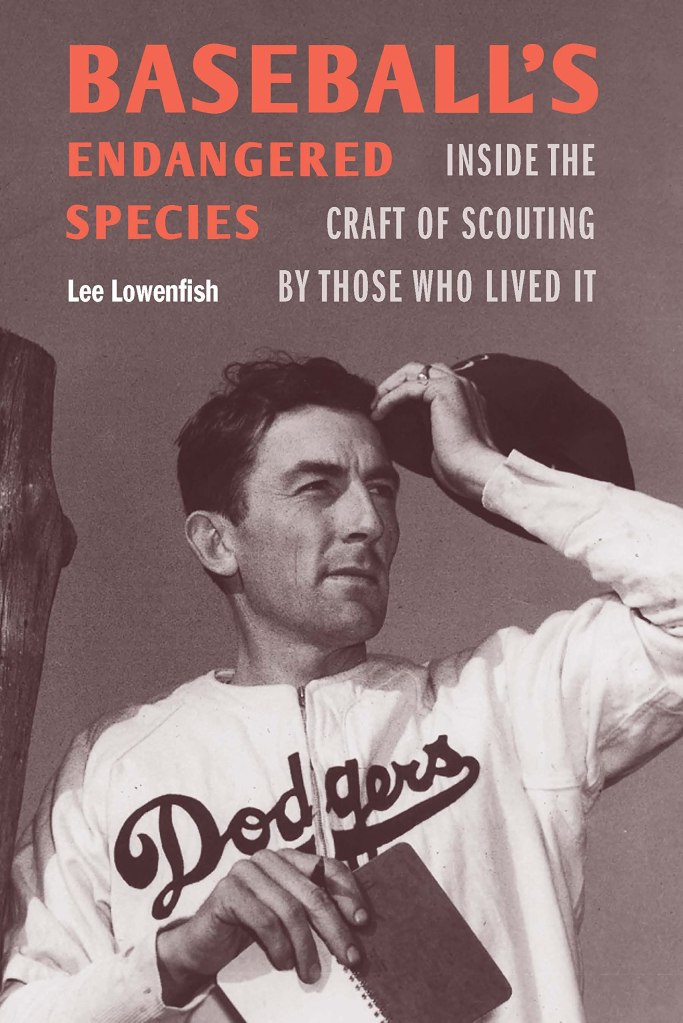
The timing of these two books can help us better understand the history scouts have created for a game that seems to be trying to push the pendulum too far the wrong way … to correct an error? Or exacerbate flawed logic?
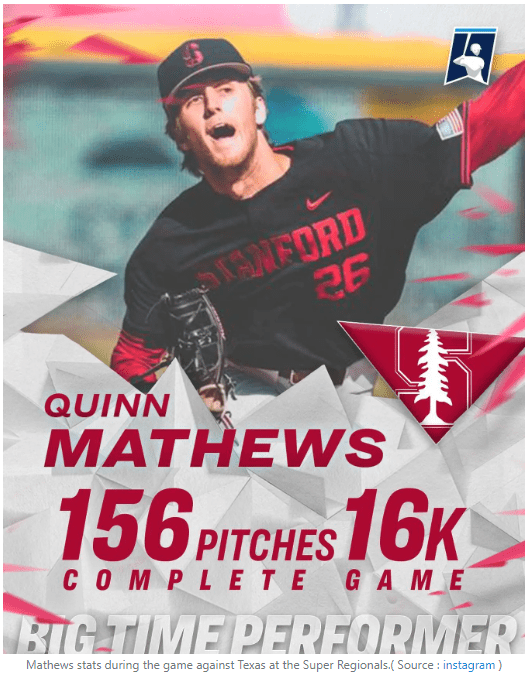
Stanford’s senior starting pitcher had been pushing the limits of baseball’s accepted norms — and perhaps some common sense – as his team advanced in the recent College World Series. It all had to do with those who were counting his pitches while his teammates were counting on him to carry them on his back.
During the regular season, the 6-foot-5 lefthander threw at least 100 pitches in 15 of his 16 starts. As the Cardinal faced an elimination game against Texas in the CWS super regional, Mathews was allowed to throw 156 pitches in an 8-3, complete-game victory, which included 16 strikeouts.
That added up him throwing more than 300 pitches during three appearances over a 10-day span.
“Before people pass judgment, they don’t know what we know,” answered Stanford coach David Esquer. “We took into account that he wasn’t cranking off a majority of sliders and fastballs. He was probably throwing a majority of changeups, and we thought that lowered the stress of the pitch count.”
It led to similar handwringing when Johns Hopkins University fifth-year senior pitcher Gabriel Romano threw 164 pitches during a complete-game win during an NCAA Division III tournament game last month. Author Keith Law was compelled to post this on Twitter, followed by Romano’s response:
Last game of my baseball career. As a 5th year grad student looking to send my team to a winner take all game I don’t think there is anything wrong with this. At the end of the day it was my call and can confirm my arm is doing just fine. https://t.co/vbPBlhOJna
An NCAA rule in place today states that if a pitcher goes more than 110 pitches in a game, he can’t return to the mound for three days afterward. The rules were all upheld here.
To complete the story on Mathews: The former Aliso Viejo High standout waited eight days after his regional win over Texas to go up against Tennessee in the College World Series. He lasted just 4 2/3 innings as No. 8 Stanford was eliminated by the Vols on June 19. Matthews threw 89 pitches and held Tennessee scoreless until they batted around on him in the fifth inning.
“Quinn’s bailed us out all year,” said Stanford reliever Drew Dowd of the Pac-12 pitcher of the year.
Mathews, a 2022 19th round draft pick by Tampa Bay before he decided to play one more year at Stanford, was scooped up by St. Louis in the fourth round of this 2023 draft, No. 122 overall.
The Washington Post’s Jesse Dougherty wrote a followup about the “layered debate” caused by pitch counts with college hurlers and it quoted Jimmy Buffi, who the Dodgers hired in 2015 because of his expertise in bio mechanical engineering and effects of arm injuries.
“When you sit behind a computer to write a paper about injury risk, injury risk is your number one priority,” said Buffi, who left the Dodgers in 2019 to start Reboot Motion, a sports science company that consults for teams around Major League Baseball. “But when I joined the Dodgers, it was like, ‘Oh, crap; winning is the number one priority.’ And I think about that often: There’s always a risk-reward trade-off when the ultimate goal is winning.”
Joe Posnanski also wrote last April about pitch counts: “I’ve started to fall in line more with people who think we focus too much on the number of pitches thrown and not enough on the velocity and effort of pitches thrown. You hear old-timers talk about it all the time, but how many times in a game did Tom Seaver or Bert Blyleven or Fergie Jenkins or Jim Palmer or Jack Morris or Steve Carlton or Greg Maddux or dozens of other big-inning pitchers really air it out?* How many times did they throw a baseball absolutely as hard as they could? Ten times a game? Once or twice a game? Never?”
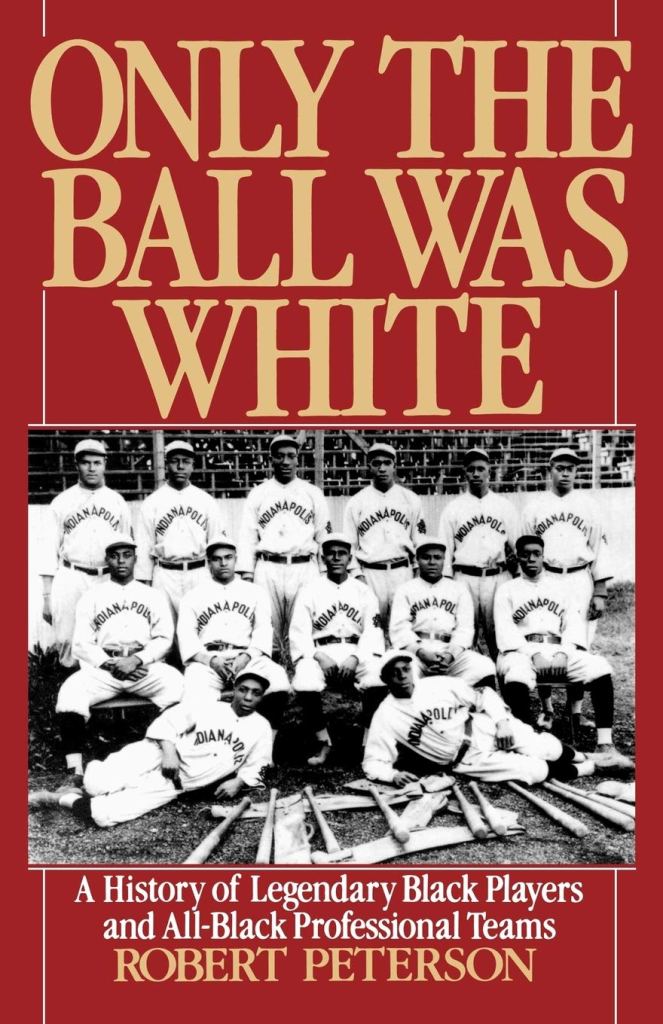
The blurb read: “When ‘Only the Ball Was White’ was first published in 1970, Satchel Paige had not yet been inducted into the Hall of Fame and there was a general ignorance even among sports enthusiasts of the rich tradition of the Negro Leagues. Few knew that during the 1930s and ’40s outstanding black teams were playing regularly in Yankee Stadium and Brooklyn’s Ebbets Field. And names like Cool Papa Bell, Rube Foster, Judy Johnson, Biz Mackey, and Buck Leonard would bring no flash of smiling recognition to the fan’s face, even though many of these men could easily have played alongside Ty Cobb, Walter Johnson, Hack Wilson, Lou Gehrig — and shattered their records in the process.
“Many baseball pundits now believe, for example, that had Josh Gibson played in the major leagues, he would have surpassed Babe Ruth’s 714 home runs before Hank Aaron had even hit his first. And the great Dizzy Dean acknowledged that the best pitcher he had ever seen was not Lefty Grove or Carl Hubbell, but rather ‘old Satchel Paige, that big lanky colored boy’.”
Between the time of the Civil War’s ending and the signing of Jackie Robinson by the Dodgers in 1947, there was stops and starts in baseball’s struggle, which mirrored the country’s struggle, in how to level the playing field, discard the Jim Crow blanket of laws stubbornly covering much of the country, acknowledge our imperfections, and be better people.
More than 50 years after that book’s release – which occurred less than 25 years after Robinson’s debut – we are still, in many disturbing and distressing ways, trying to teach those in our community to learn from history rather than repeat it.
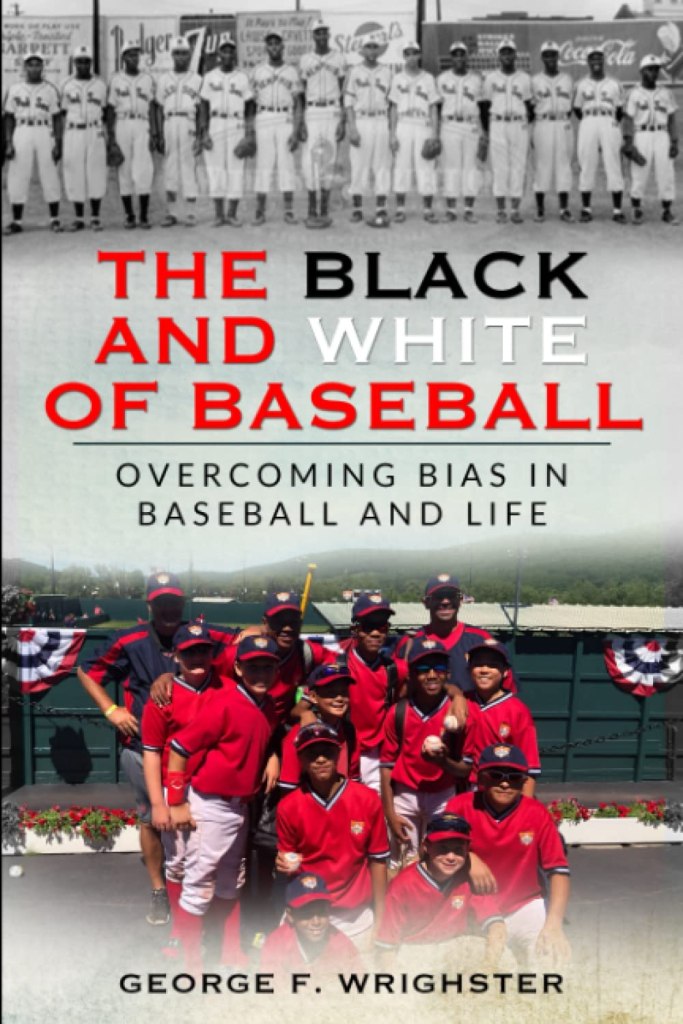
In the brief but powerful 11th chapter of George F. Wrighster’s new self-published book — the chapter is titled “Nigga” — he explains what he saw while watching his grandson one game playing shortstop, a runner on the other team pulled up at second base, and “everything went sideways.”
We offer a brief (as brief as we can muster) apology. We acknowledge most of our reviews in this series – not only this year, but in years past – have unraveled.
They can go long. Turbulently long, perhaps.
In our defense, we simply enjoy the reviewing and writing process. As well as the research, memory retrieval, and dot-connecting. But when you see the reviews linked in a social media post, and it says something like “estimated read time: 18 minutes,” who are we fooling?
Back when the Dodgers traveled with their own plane, if the season hit some turbulent spots, could a bumpy plane ride make it worse?
Perhaps. But here’s our argument: If we feel it’s compelling, interesting and entertaining, the reader, as a partner in this journey, can decide whether to quit or go forward. We have read plenty of long pieces in newspapers, magazines and — yes — baseball books that we stick with because we didn’t expect it to be something we couldn’t put down, or we find it runs out of steam and we’d wish an editor could have worked with the writer to shape it better.
We can’t Bill Simmons ourselves into self-importance. We used him as a reference of someone in the sports journalism world who seemed to make it OK to go beyond the traditional 800-word essay and insert himself far too much into the pounding-out-paragraphs process.
That said, consider this:
For what may end up as the largest book we review this year – in excess of 600 total pages, with about 600 reference books listed in nearly 30 pages of bibliography, along with 40-plus pages of notes – save whatever time you’d spend on our otherwise excessive glowing review and invest it into this epic undertaking.
It ain’t heavy lifting. It’s high heat. It’s history come alive and brilliant. You’ll end up far more educated than you anticipated.
Steve Gietschier, an Ohio State grad with a Masters and Ph.D. in history and once an archival consultant for The Sporting News, comes from a place where he taught American history, sport history and the history and culture of baseball at the liberal arts Lindenwood University in St. Charles, Missouri. He retired, as many did, in 2020. He edited the 2017 book “Replays, Rivalries and Rumbles: The Most Iconic Moments in American Sports,” which, if you ever saw the cover, you’d not forget it.
Here is your chance to audit Gietschier’s master class in what happened to baseball between the Great Depression and its expansion West.
Imagine sitting there among the students, with Gietschier at the lectern, reading aloud the very first line in the introduction: “This book is a scholarly work exploring the history of organized baseball during the middle of the twentieth century.”
Go on …
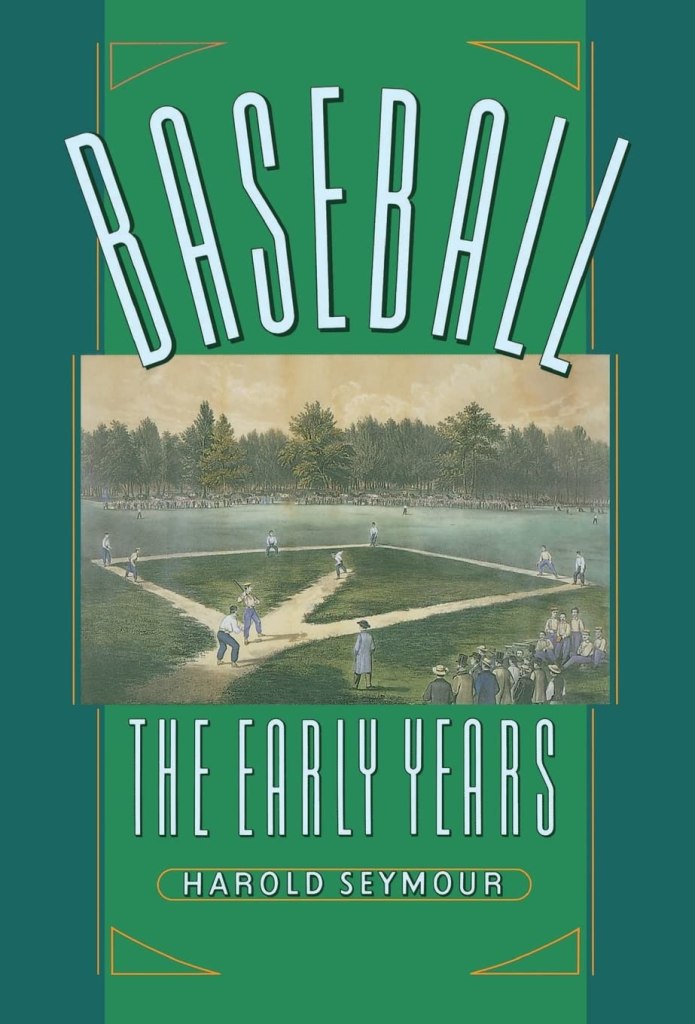
He credits the past work of Harold and Dorothy Seymour with “Baseball: The Early Years” in 1960 followed by “Baseball: The Golden Age” in 1971 and “Baseball: The People’s Game” in 1990. He acknowledges the massive work also done by his cohorts at the Society of American Baseball Research. He admits he is inspired that “the time has come for a new summing up,” examining the game from the depths of the Great Depression in the 1930s to the migration West at the end of the 1950s and early 1960s.
There are 14 chapters built around a particular figure in baseball that segues into the game’s history at that point. They go as follows:
The first of three expansive biographies on Connie Mack by Norman Macht
Chapter 1: Connie Mack / Baseball deals with the Great Depression.
Chapter 2: Branch Rickey / The farm system
Chapter 3: Kenesaw Mountain Landis / Survival of the minor leagues
Chapter 4: Ed Barrow / Building the New York Yankees
Chapter 5: Larry MacPhail / Night baseball arrives
Chapter 6: Hank Greenberg / Ethnicity in baseball, and its thriving on the radio
Chapter 7: Don Barnes / World War II launches
Chapter 8: Yogi Berra / Players in the armed forces return
Chapter 9: Tom Yawkey / Disruptions in the game
Chapter 10: Bill Veeck / The Pacific Coast League rises
Chapter 12: Ford Frick / Lawsuits and the rise of TV
Chapter 13: Henry Aaron / West Coast relocation
Chapter 14: Bill Shea / The Continental League idea
The 10th and 13th chapters may be most interesting to West Coast folk who’ve read various accounts on why baseball moved this direction, and what impact the PCL had on its decision. The title quote for Chapter 13 — “I have long desired to see California” — comes from Abraham Lincoln five weeks before his assassination. The nuggets of info from Chapter 14, meanwhile, include how Jack Kent Cooke, who’d eventually bring professional hockey to Los Angeles (and buy up the Los Angeles Lakers, the Forum, and the L.A. Daily News), was involved with trying to get Toronto a franchise in the upstart Continental Baseball League that never happened, but forced MLB expansion instead after the Dodgers and Giants fled New York for California.
Here’s the plan: Take each of the 14 chapters as a week’s worth of a semester-long course. There’ll be no quiz at the end. No thesis paper due. The only guarantee is you’ll be smarter.
There is also this disclaimer by Gietschier himself: “To be a baseball fan is, in a certain case, to be a student of baseball history. … But a historian striving to write with some degree of objectivity must attempt to keep the passion of the fan in check or even dismiss it. My first history professor, Carroll Quigley, told his Georgetown University freshmen that the historian’s job is twofold: To see things as they really were and to see that they could have been different. If this work approaches these two targets, it will have accomplished much.”
It does, and it did.
Just the gratification that you’ve completed one of the most industrious, entertaining and informative pieces of baseball history you’d ever want to ease back into an easy chair and enjoy.
Author Q&A
We were fortunate to connect via email with Steve Gietschier to see if we could extract more context on his project:
Q You write in the introduction that “the time has come for a new summing up” of the Midcentury years of baseball in the 1900s. What inspired you to take on this task?
A I first began thinking about a book like this when I met Dorothy Seymour Mills many years ago. She was the widow of Dr. Harold Seymour, and together they had written a trilogy of works that were general histories of baseball from its origins up until about 1930. I asked Dorothy what she would think if someone picked up the ball where she and her late husband had put it down, and she said that would be a wonderful idea. At the time, I was not thinking that I would write this book, but when I asked many friends in the baseball history community if they wanted to take on this task, they all said no and that I should do it. After talking to the late Dan Ross, then the director of the University of Nebraska Press, I decided to say yes. It was daunting, to say the least.
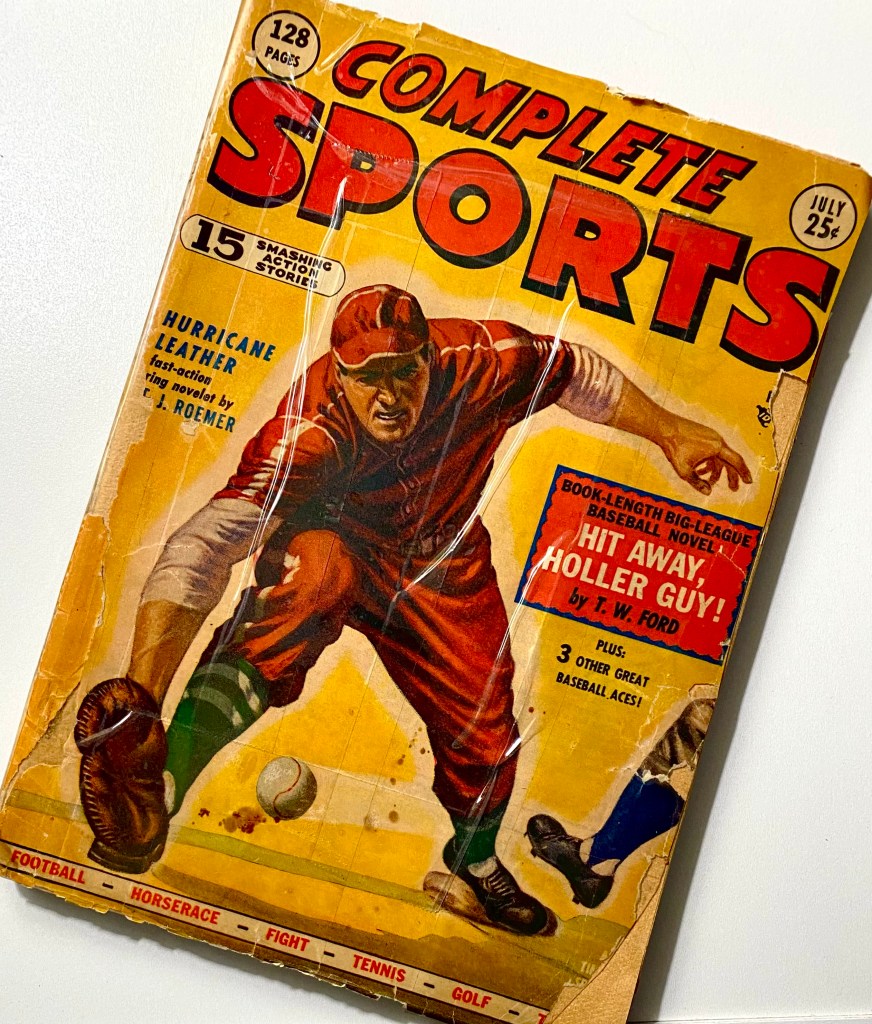
At our local favorite literary browsing spot, Dave’s Olde Book Shop in Redondo Beach, we found in the vintage/collectables section something called “Complete Sports” magazine. From July, 1948. Original price: 25 cents.
The cover lures us in to find a “book-length baseball novel” inside called “Hit Away Holler Guy!” by T.W. Ford. The artwork is fabulous from the brown musty pages of newsprint numbered 6 to 42. It becomes a full experiences for all the senses.
The premise, from the table of contents: “The new backstop was a real holler guy – but he would have to be the Angel Gabriel himself before he would wake up those eight dead men on the diamond!”
The magazine cover is all taped together. It is missing not only the back cover, but it ends with a torn page 129.
It is a piece of baseball history, held together by tape and staples and love.
Just like a real catcher could appreciate.
What does this tale published 75 years ago have to do with the essence of catchers having some secret powers? Can they really will people out of their graves back on the diamond? Is this some Field of Nightmares?
The demands on any Major League Baseball backup catcher might feel as if that includes being akin to a grave digger. Who really wants to do it? But, hey, we need it done, and you’re available. Isn’t this a path to dig one’s own hole into oblivion?
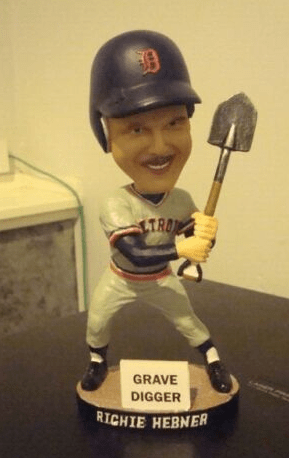
(First aside: We remember once finding out on the back of a Topps baseball card that the Pittsburgh Pirates’ Richie Hebner dug graves in the offseason. As a hobby? As we look for that card, check out the West Michigan White Caps minor league team (Hebner played for the Detroit Tigers for three seasons in the 1980s) as it once gave away a Hebner bobblehead about 10 years ago … it looks like this. The story goes that Hebner dug graves as part of his family business for more than 30 years. From his SABR.com bio: “He began earning $35 per grave in the off-season at home in Norwood, Massachusetts, working the nine Jewish cemeteries his father William supervised. Once, his dad criticized him for digging a grave too shallow. Hebner retorted, “I never saw one get up from it.”)
In scout parlance, the backup catcher is referenced as a “C2,” with a small No. 2. Like we’d see in a science class looking at a periodic table of elements.
Erik Kratz is the protagonist in this true-to-life assessment of his career as the “C2” no matter where he went – spending time on 14 MLB franchises during 19 seasons in organized pro baseball.
In every instance, Kratz becomes a vital part of the team’s chemistry and bonds with players, managers and bullpen throwers on a lot of important levels.
These dudes came to tonight's #NLCS game each wearing one of the @MLB jerseys worn by @ErikKratz31.
Kratz, who walked away after the 2020 season with the Yankees (his second tour), had one stop with the Angels, but don’t try to remember it – after the Houston Astros released him in May of 2016, the Angels picked him up and stored him away in Triple-A Salt Lake City, for 19 total at bats. Kratz may never know why they did that: To nurture an up-and-coming pitcher, perhaps.
Yes, like Crash Davis.
Because, at the time, the Angels had banked on 33-year-old Geovany Soto, the former Cubs All-Star, as their main catcher, but he only lasted 26 games because of injury. They pulled in 25-year-old Carlos Perez for 87 games, and 26-year-old Jett Bandy for 70 games. Juan Graterol got in for nine games as a backup. But Kratz never got a shot.
Erik Kratz, left, walks in with Tim Lincecum after warming up before a Salt Lake City Bees game for the Angels’ Triple-A affiliate. Photo by Tim Parsons / Tahoe Onstage
These 74-88 Angels needed all the help they could get, if only to warm up another arm. They ended up using 30 pitchers that season, from Al Alburquerque to Tim Lincecum, Jered Weaver to Huston Street and even one game from Andrew Heaney. Tyler Skaggs even threw 10 games.
As it turned out, the Angels became a bridge in Kratz making some odd history that season.
The Angels traded him to Pittsburgh in mid-June, and after a couple days in Triple-A, he came up and did something that no one in the game had since 1879. Topps baseball cards even put out a special limited edition tribute to him.
June 21, 2016: 1 inning, 0 runs, 2 hits, 1 strikeout, 5 batters faced. End result: San Francisco 15, Pittsburgh 4.
On June 21, the Pirates had Kratz throw an inning at the end of a blowout loss to save their bullpen against the San Francisco Giants. Kratz ended up with one inning of scoreless relief. He even struck out Brandon Belt on a 52-mph knuckleball.
A few months earlier, the Houston Astros had treated him with the same urgent need. He surrendered two runs and three hits in one inning “of work,” as the cliché goes in the broadcasting booth.
That made Kratz the first player in 140-some years to both pitch and catch for two different teams in the same season.
Cool enough, Kratz would end up as the Milwaukee Brewers’ starting catcher in five of their seven-game NL Championship Series games against the Dodgers in 2018 — and also pitch in three games for the team that season, one inning each. He also made two final appearances for the Yankees, in 2020, at age 40.
His career pitching line: 7 games, 7 innings, 5.14 ERA, 32 batters faced, one walk, three Ks.
Through the quick prose quotes of Kratz, channeled through seasoned sportswriter and author Tim Brown, who already has two New York Times’ bestsellers on the market in helping tell the stories of former MLB pitcher Rick Ankiel and Jim Abbott, the story flows from chapter to chapter in a way that’s as much enlightening as it is entertaining. As Brown says in the intro: “They are not merely backup catchers, but front-line people.”
Kratz won’t be known as the guy who had 881 MLB at bats and only had a -0.1 WAR. He’ll now be known as someone who channeled his Souderton Mennonite Church believes into someone who knew what the job entailed, and did it, to support his wife and three kids. It’s where he learned his resilience, team-over-individual mentality, endurance, wisdom, patience, common decency, focus and following his heart.
In a story that ran in the Sporting News in September of 2020, just before he walked away, the reporters noted that Kratz had teared up when talking about how what he’s been as a mentor to Hispanic teammates with the New York Yankees. That’s just the kind of guy he is, and Brown also documents it. Kratz could also likely see the end of his pro career at that moment. It all caught up with him.
Dodgers catcher A.J. Ellis doesn’t even get his own solo baseball card — he shares the photo of him with Clayton Kershaw. Which likely gives it more street value, right?
Brown manages to includes many recognizable names who’ve spent much of their career in that “C2” role – the Dodgers’ A.J. Ellis and Drew Butera (now an Angels’ bullpen coach), one-time Johnny Bench backup Bill Plummer and what it was like to spend his career behind a Hall of Famer never to get an inning in during all those playoff and championship runs, current Angels manager Phil Nevin (who converted to a backup catcher just to stay in the game at one point), plus Bobby Wilson, Jake Paul and even the poetry of Dodgers’ backup Austin Barnes stuffing the last ball used in the 2020 World Series into his back pocket for safe keeping after Julio Urias’ strike out. Rewards come far and few between, and the back up catcher must seize them when they happen.
There’s also a splendid discussion with former Angels manager Mike Scioscia (at one time, briefly the back up to Steve Yeager with the Dodgers) and the closed-door strategy sessions he put all Angels catchers through with his tutelage that only made them smarter and better at their position.
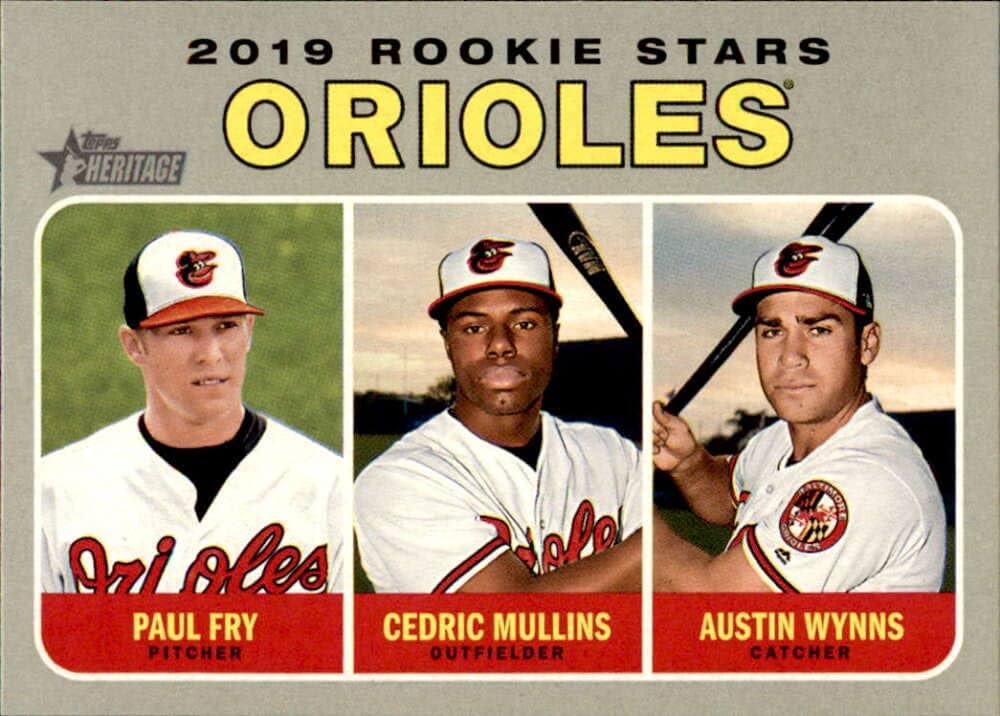
This books also makes us appreciate more what the Dodgers had for a brief time earlier this season in Austin Wynns.
The 32 year old was needed when Will Smith went out with a concussion. They designated him for assignment on May 1. Wynns got into six games, hit .154 but had an RBI double. The Dodgers were his third team in five seasons, including two stops in Baltimore and one in San Francisco. He has nine minor-league seasons logged already. Expect him to be on speed dial by any MLB team that finds itself up to their hips in alligators some day.
It can’t be an everyone Wynns-win situation for everyone. But it’s a necessary role.
They live the life, as Brown writes in the introduction, “with a grim sense of humor, a prorated paycheck and a handshake for understanding.” They are the “unlicensed therapists and hard-knock lifers whose careers wander off in unexpected directions, just like their fingers.”
“I always joke,” says Chris Gimenez, who had 10 seasons in the big leagues with six teams, “that backup catchers are three-quarters psychologist and one-quarter actual baseball player.”
Maybe someday Wynns gets into the MLB manager ranks, following Nevin, Bruce Bochy, Joe Madden, A.J. Hinch and David Ross. And he can write his own book.
It’s a smart move.
And if you're really, really nice to him he'll read it to you over the phone… We're pretty proud of our ode to Erik and all of those who work at the game and at life. I hope you give it a shot. https://t.co/ZA6VMhDEFl
We caught up with an email exchange with author Tim Brown, our former L.A. Daily News colleague who recently moved from many years in Southern California to South Carolina with his wife:
Q When in your sports writing career did you figure out that not only are the best baseball stories found in the corner of the locker room, but that the backup catchers were really the most front-line people?
A I think backup catchers are so good at reading people they recognized right away I was probably in need of some guidance. Major league clubhouses can be difficult, intimidating places, especially if you’re new to the job and aren’t finding a lot of friendly faces. So when somebody takes the time to help you through your dumb questions, educate you on the game, confide in you that he, too, sometimes feels unsure of himself, that resonates.
And, yes, maybe because those guys were in the literal corners of locker rooms, that there would be other players in the figurative corners, where big, strong athletes had all the doubts and vulnerabilities and life traumas of the cab driver who dropped me off in front of the stadium. I did a book with Jim Abbott. When he wasn’t pitching well and was feeling pressure from under performing, he would sit on the team bus, look out the window at the people in their cars and wonder what it would like to have a regular job. In those moments, he’d sometimes wish he were them. And he was a New York Yankee making millions of dollars.
These players, the famous ones whose names you know, they suffer the same insecurities the rest of us are hiding too. Or trying. As I thought about a book that might make the game feel real again, outside the analytical models, statistical tangles and revenue counts that now reach the tens of billions, I kept coming back to the backup catchers. Their honesty about themselves. Their fight to stay with it. The role they play in helping others live with those insecurities and turn them into competitive advantages. Hell, just a guy to share a beer with, who’s been there. Who lives with it every day.













 Tom Hoffarth's The Drill: More Farther Off the Wall