We didn’t go bananas when the email arrived May 17 informing us that we’d been aced out on getting in on any lottery tickets that would have provided access to the upcoming Savannah Bananas’ visit to the once-named Epicenter in Rancho Cucamonga for appearances on July 21 and 22.
It’s part of this year’s 33 cities in 22 states tour. The place holds about 6,500 and everything is sold.
Wait’ll next year, it advised.
There’s no appeal process. Pun intended.
In the meantime, we have read that if we try to go into the secondary market and secure a ticket from someone on the downlow who is considered to be a “booger eater,” which in banana slang must be something awful, then that makes us just as corrupt.
The New York Yankees are in Southern California this weekend, June 2-4, a Friday, Saturday and Sunday sleepover at Dodger Stadium, the later two date locked in for 4 p.m. starts on Fox and ESPN. Somehow neither Apple nor Yahoo nor Peacock nor Amazon was able to wrestle away the opener. This is way overdue. Their last interleague meeting: August of 2019. The Yankees wore all black uniforms. The Dodgers wore all white (except for pitchers, who had black hats, apparently so hitters could see the ball coming to home plate). It was “Players Weekend.” It was a chance to see players also wear nicknames on their back. It was overwhelmingly dreadful. It hasn’t come back since.
If being present and accounted for at any of these Clash of the Logos contests coming up is a burning desire, just realize it all comes with a steep cost. Just remember, the Yankees return to Anaheim from July 17-19 and tickets there may not be as L.A.-tiered atrocious for mid-week encounters, unless the Shohei Ohtani pitching-to-Aaron Judge matchup is somehow aligned, and then it’s easier to offload seats to drooling Yankees fans who will likely fill any available piece of real estate.
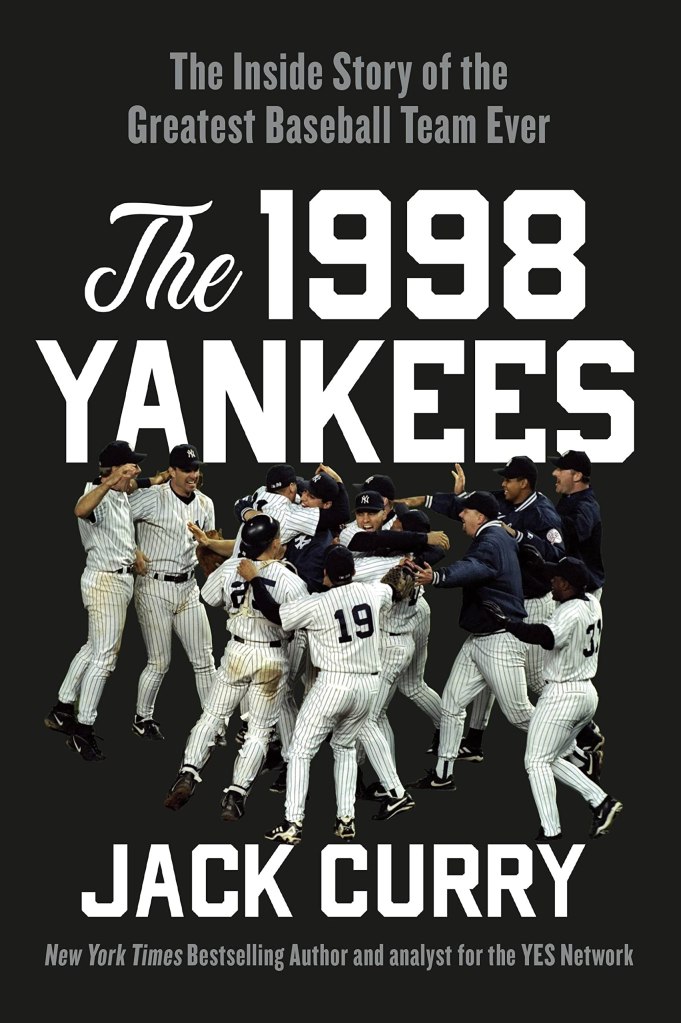
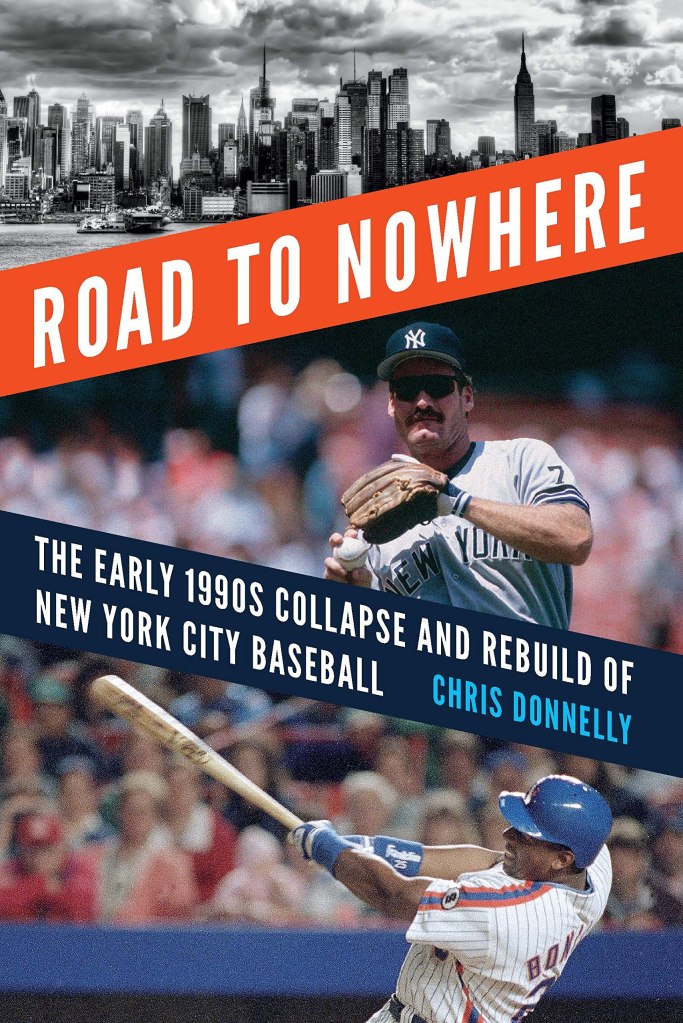
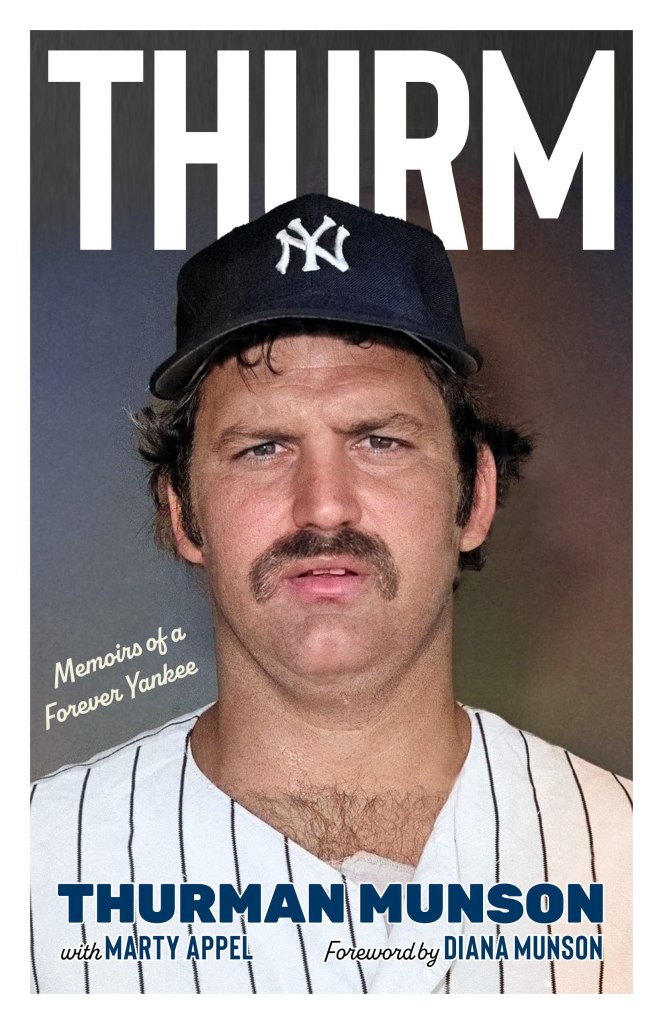
Next, consider yourself cautioned: It’s never over with New York Yankees-related books, year after year, publisher after publisher, narrative after narrative documented for some sort of fear that it will all be forgotten.
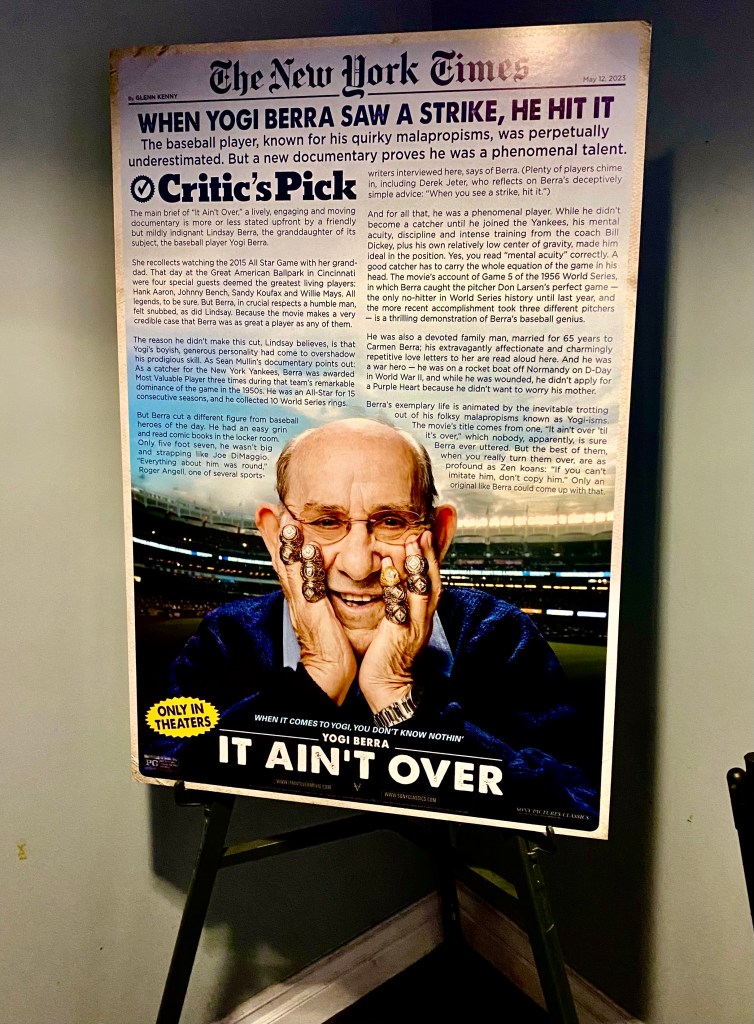
In line with that, but on somewhat of a tangent as we are warming up, heed one more Yankees media-related public service announcement: “It Ain’t Over,” the documentary in current theatrical circulation about the life and times of Yogi Berra.
It was created on the premise that Berra was “criminally overlooked his whole life, at every stage.”
That’s the quote attributed in the New York Times to the film’s director, Sean Mullin. Spoon-fed to him by the entire Berra family? If not, he has liked the taste of it, because he used it again in an interview posted by AwfulAnnouncing.com with the words “criminally overlooked his entire life” in the headline:
“I’ll be honest, when I first got that phone call about the documentary, I was like “Wait a second. He seems too perfect. Like, what’s the story? What’s the narrative gonna be? I don’t wanna do it just to do it.” You know so much work to make these films. But the deeper I drove into his back story, the more I started to find out that he was criminally overlooked his entire life from childhood to his deathbed essentially, and that’s a narrative we could build around, so I hopped on board.”
We’ll be honest (because, before we wrote that, we really were not): This is an hour-and-a-half heavily tilted argument rather than a loving biography hammering home the credentials of Berra’s 18-year MLB Hall of Fame career. For what purpose? The court of public opinion.
We’re not sure who in the world of baseball actually disputes Berra’s achievements on the field. Or his managerial successes. But the family now appears to believe a wrong needs to be corrected. So it’s time to change any narrative – one that the family refuses to acknowledge in the film that Yogi Berra himself helped create. Through books. Through his commercials (he once thought he was doing work for Amtrak, and it was actually Aflac). Through other media ventures that made him a nice retirement income.
The impetus of this project, which worked its way to Sony Pictures Classic, all seems to point to Lindsay Berra, Yogi’s oldest grandkid, who got her athletic supporter in a bunch while watching the opening to the 2015 MLB All-Star Game in Cincinnati on TV. As part of the pregame ceremony, there was an introduction of the “four greatest living players” in baseball history.
Out came Henry Aaron, Willie Mays, Sandy Koufax and Johnny Bench.
“Are you dead?” she says she asked her grandfather, sitting near by.
“Not yet,” he supposedly replied.
(Insert the famous Yogi quote here: “Always go to other people’s funerals otherwise they won’t come to yours.”)
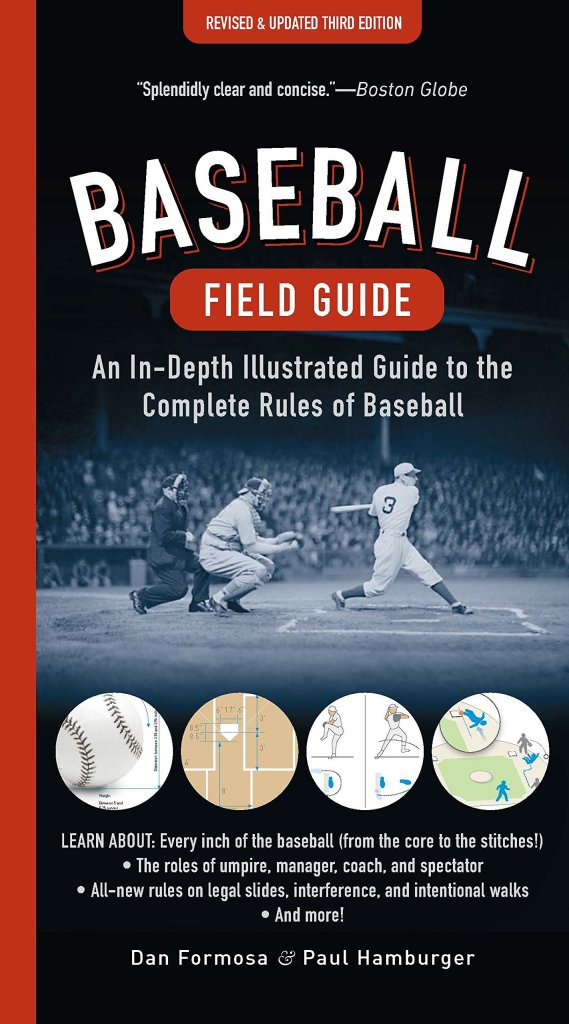
Without making a judgement call, far too much has transpired, and expired, since 2016, when the third edition of this 240-pager (highlighted in red) last landed. At least 16 pages worth, for starters. We reviewed that one here.
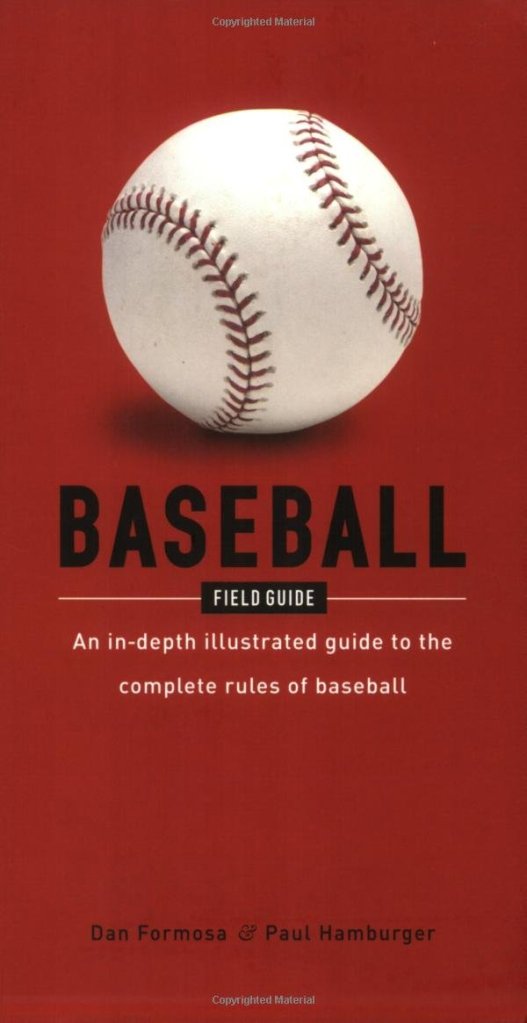
And that was already a nice upgrade from the original in 2006 (mostly all red on its cover). And that was in need of an update just two years later in 2008 (mostly in green).
For those on the color spectrum, this one’s trimmed in bold blue to stand out from the rest.
In what is presented in the cleanest of typeface, clearest of sans-serif fonts, crispest drawings and illustrations, on the highest-grade paper stock, not to mention a convenient size (9 inches tall, 5 inches wide and less than inch thick) to carry around – there’s something you don’t read every day about a ball-type book – it is, in essence, what you may expect from a field guide that otherwise instructs and enlightens and demystifies about subjects such as birds, wildlife flowers, restaurants or travel destinations.
And baseball, these days, might even cross over into any of those four topics, and more. (Right, Orioles fans?)
Page 1 of the instruction manual is even set aside for “Instruction: How to Use This Book,” with suggested entry points: Use it as quick reference, a more extended explanation of the Major League Baseball rule book, or, just read the whole thing and learn.
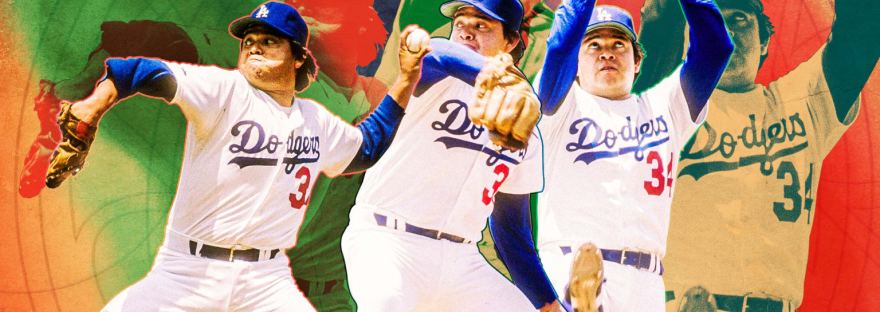
The screwball randomness of the Dodgers’ decades-late declaration that it will finally retire Fernando Valenzuela’s number 34 this coming August is … is ….
“It’s about damn time,” Los Angeles Times columnist Bill Plaschke wrote last February, as the team was patting itself on the back by making the announcement at their off-season Dodger FanFest gathering. That includes the irony that the announcement came issued on a piece of paper to the media “for immediate release.”
Immediately, we laughed.
“The single question I get asked more than any other is, ‘When are you going to retire Fernando Valenzuela’s number?’” team president and CEO Stan Kasten is quoted in the Plaschke piece. “The answer is, this year.”
Only 11 years after Kasten and his Guggenheim Baseball Management group leveraged a bidding-war purchase of the franchise, wrestling it away from Ballpark Frank McCourt.
At least they didn’t listen more to their marketing team wait until ’34 – as in 2034 – to get this done.
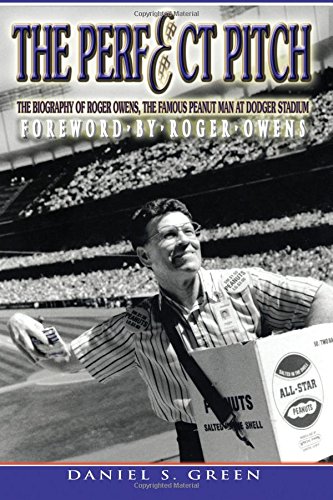
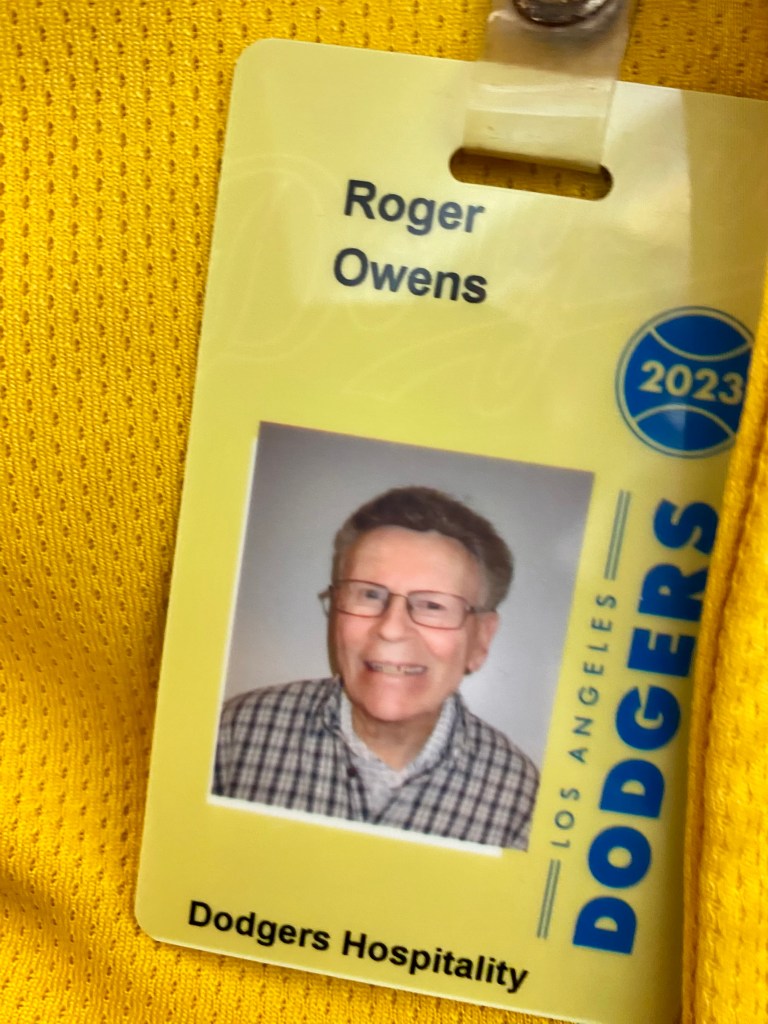
Roger Owens’ whereabouts inside Dodger Stadium on any given game may be as much a minor miracle as it is a logistical challenge. It remains one of our most logical pursuits whenever we get the nerve to navigate the traffic inside and out of the ballpark these days.
Why go to a game? One good reason: Check in on Roger Dodger. For love of the game.
Through any stadium entrance, get to the loge level and survey which odd-number aisles of the third-base side Owens may be traversing like some kind of garden maze. Get in his line of vision. Then sheepishly strike up a conversation, even if it causes him to pause from his duties as the iconic peanut vendor performing one of the city’s most noteworthy deeds of the day. For his satisfaction and employment, and for our entertainment experiences.
Owens has given us enough nifty insights into his career over many decades – specifically in 2008 when the Dodgers returned to the L.A. Coliseum to commemorate their 50th anniversary in the city by staging an exhibition game against the Red Sox, and then catching up prior to the Dodgers-Red Sox 2017 World Series. It finally led to local city government proclamations recognizing his impact on our lives.
He’s got his own Internet Movie Database resume — “Men In Tights” in 1993 came about because Mel Brooks knew his work and his role in a crowded gathering — he brought the joy. He’s made several appearance on “The Tonight Show With Johnny Carson” back in the day. We own a bobblehead — signed — created for him in his honor by a local company — and still not yet distributed at Dodger Stadium in a night that might honor him instead of some marginal relief pitcher.
Roger Owens, right, explains how life is going these days with me and my friend, Chuck, during the Dodgers’ first Sunday home game of the 2023 season.
What’s relevant in 2023 is that Owens is, among others, unnecessarily taking the brunt of the residual effects of baseball’s attempt to improve its overall commerce.
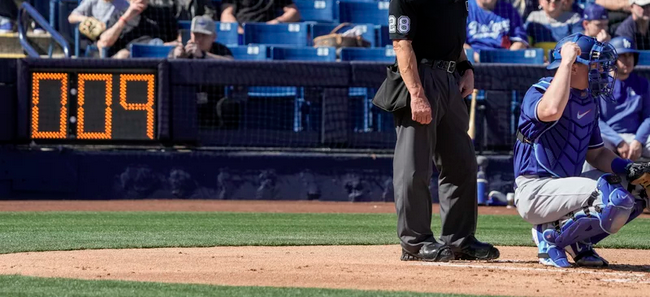
New rules extract so-called dead time and try to wrap up nine innings in less than three hours. Great. But it’s only natural that Owens (and other vendors) have less time to sell and generate income. They have to work quicker. That isn’t fair, or easy, for someone like Owens, who just turned 80 on Valentine’s Day and has to deal with arthritic ailments that naturally come from years of going up and down stairs, being in the sunshine as it affects the skin, and also having issues with his hearing. He’s also still wearing the surgical mask because he feels safer.
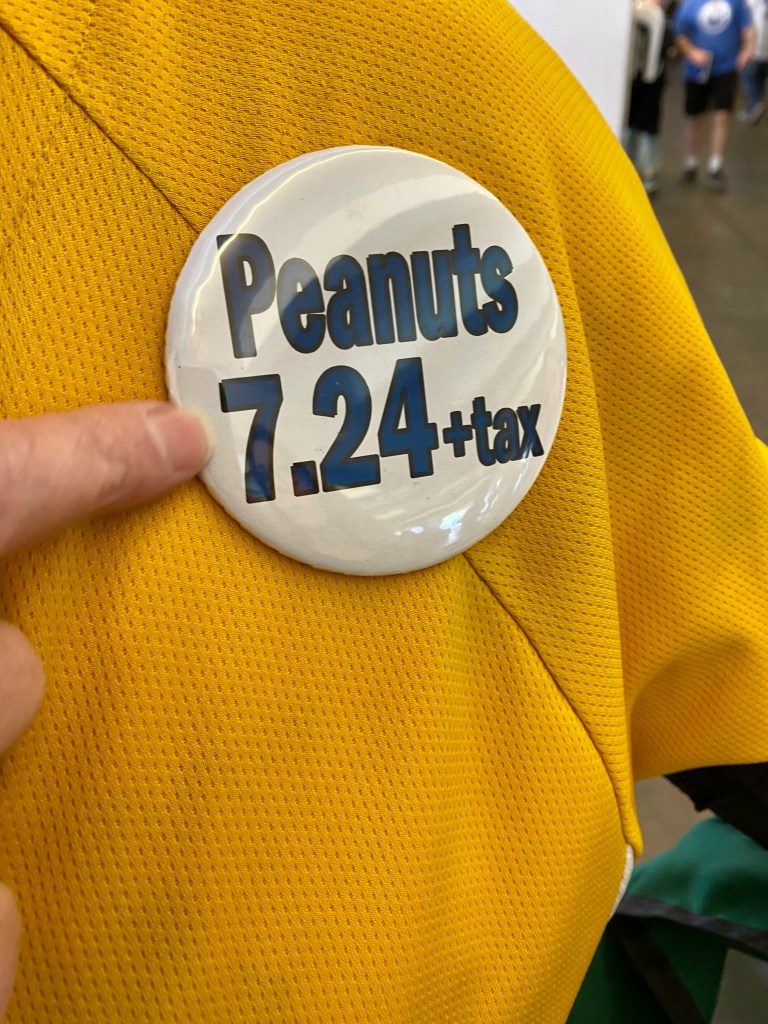
On top of that: A bag of peanuts has soared to close to $8 a bag with tax.
To ring up sales, Owens needs to lug around a portable credit card scanner – which often is faulty and has to be swapped out for another one. Tips are tougher to generate that way as well. That leads to a jam up of employees trying to replenish during the game.
Owens says he can only get through two cases of peanuts, which have 36 bags each, because of limitations, slower sales and all else that factors in.
This is all on top of a backward edict, still unresolved and unaddressed, that prevents him from tossing fans their bags of peanuts as he has done since the 1950s when he was a teenager at the Coliseum. Or else he’ll get in trouble. Obviously, a bag of nuts he tosses from 20 feet away, by way of a right arm going between his legs, around his back, or over his head, could really, really hurt someone, right? Especially those whose noses are pressed to their cellphones and aren’t paying attention.
All things considered, it would hardly seem to be worth the effort. But this is Roger Owens. Resilient. Persistent. Never shell-shocked by all these distractions. The last homestand, he even had a scary moment when he stumbled over a obstacle meant to keep people in line, went face-first onto the pavement, scratched his glasses, busted up his mouth and came out of it with a bruised left eye. But he came back to pitch after spending some time in the stadium infirmary.
Owens will always defy the odds and figure out how to do his circus-type work, no matter what clowns are running the show.







 Tom Hoffarth's The Drill: More Farther Off the Wall