Blog

Day 4 of 2023 baseball books: Fire the ball, and make someone look like a fool

“The Fireballer: A Novel”

The author:
Mark Stevens

The publishing info:
Lake Union Publishing/Amazon
415 pages, $16.99
Released January 1, 2023

The links:
The publishers website
The authors website
At Bookshop.org
At Indiebound.org
At Powells.com
At PagesABookstore.com
At BarnesAndNoble.com
At Amazon.com

The review in 90 feet or less

Vulture.com once pushed out a mind-blowing list called “All 340 Bruce Springsteen Songs, Ranked from Worst to Best.” It was updated in 2020 and, for our purposes, is still quite up to date.

Because coming in at No. 43, we’ve found “Glory Days,” from the 1984 “Born In the USA” album. Writer Caryn Rose’s assessment:

So there’s that nagging question: Why would Springsteen, who seems to know his baseball terminology, use the term “speedball” instead of “fastball”? It’s not a syllable thing that fits better in the lyrics, like Paul Simon admits he did with using “Joe DiMaggio” versus “Mickey Mantle” in his classic song “Mrs. Robinson,” right?

Baseball writer Joe Posnanski dove into this in a 2012 column, taking issue with “speedball” reference, and then throwing out: “I will say I have had numerous Springsteen experts explain why ‘speedball’ works better than ‘fastball’ in that particular case. I don’t really remember the reasons, which probably gets at the heart of how I feel about that argument, but I do remember they were adamant.”

Update: Posnanski wrote a piece on May 9 for his Substack home, “Shaking off the Speedball,” which is pleased to hear “speedball” has been updated to “spitball” in live 2023 concerts. We can all rejoice as much as we can while our dresses sway.

Posnanski circled back to that in 2021 during a discussion about another Springsteen lyric debate and added:

“I know there are extreme Boss fans who will try to defend the indefensible ‘He could throw that speedball by ya,’ by citing historical references of fastballs being called speedballs or by pointing out the musical superiority of the word ‘speedball’ to ‘fastball.’ But I cannot and will not go out on that creaky ledge with them. Speedball is wrong. Speedball is bad. Speedball is a lyrical catastrophe.”

To that point, Craig Calcaterra did a piece once for NBC Sports that defended Springsteen’s “speedball” because there’s a listing (or two) about it in Paul Dickson’s incredible “Baseball Dictionary,” spotting a reference to it used in 1918.

Some can do a deeper dive in newspaper websites and find things that back it up – this one about Bob Feller re-signing with the Cleveland Indians after he was discharged from the Navy. The headline above the story reads: “The Indians’ Speed-Ball Artist Returns.”

And for what it’s worth, the song, and its lyrics, are known well enough in baseball circles to have its own Baseball-Almanac.com post on the site’s poetry section.

If you’re wondering not, what, but who, the speedball pitcher was being referenced, we read how Springsteen was inspired to base the song on a friend of his who pitched during his time at  St. Rose of Lima High baseball team. Springsteen ran into him in a Jersey shore bar. They talked. A song emerged.

Maybe to that point, Seattle songwriter Mike Votava once presented a very sweet explanation to all this: Springsteen was annoyed with his friend talking baseball and wanted to mock him. That seems reasonable.

In the first four chapters of his new novel, Colorado-based mystery/non-fiction writer Mark Stevens tries a few different ways to emphasize why his book is called “The Fireballer,” trying to frame the abilities of Baltimore Orioles pitcher Frank Ryder and his own 110-miles-per-hour fastball/speedball/fireball:

“With each Ryder pitch, there is almost a need to laugh, partly at the spectacle of it all and partly at his own weird luck. On TV it’s like you’re watching a joke. It’s like every single pitch is a coked-up hologram video, the ball a subatomic particle, an unhittable blink of white nothing … If Frank Ryder’s pitching motion is double speed, the ball is triple speed and everything else moves to the beat of a regular world.”

Continue reading “Day 4 of 2023 baseball books: Fire the ball, and make someone look like a fool”
Day 3 of 2023 baseball books: You better not pout, Joe Kelly’s telling you why (in full mariachi jacket)

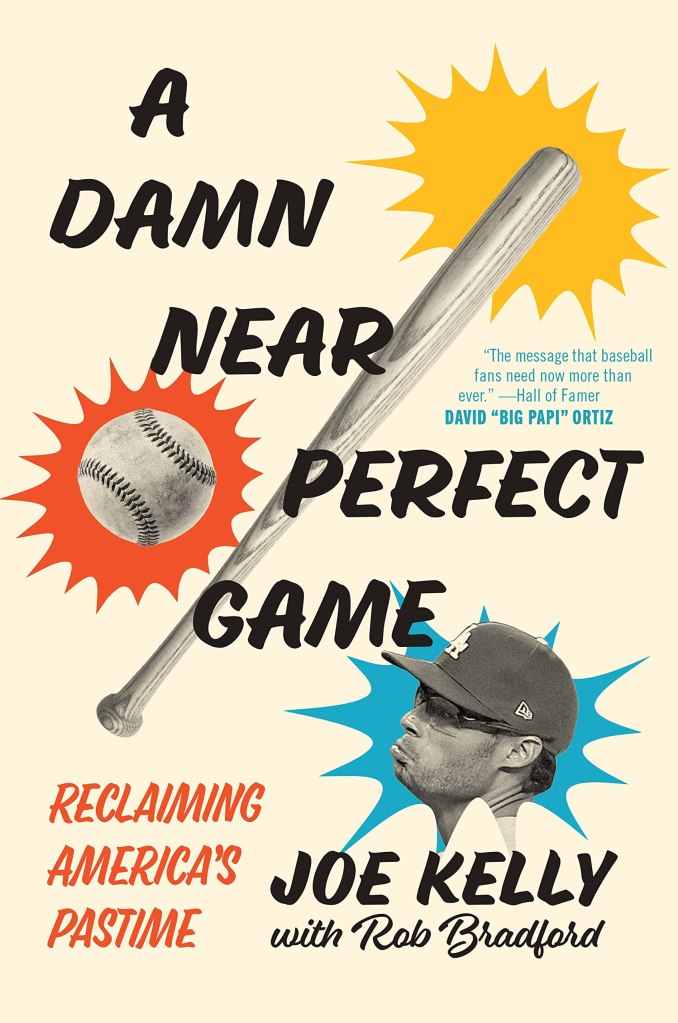
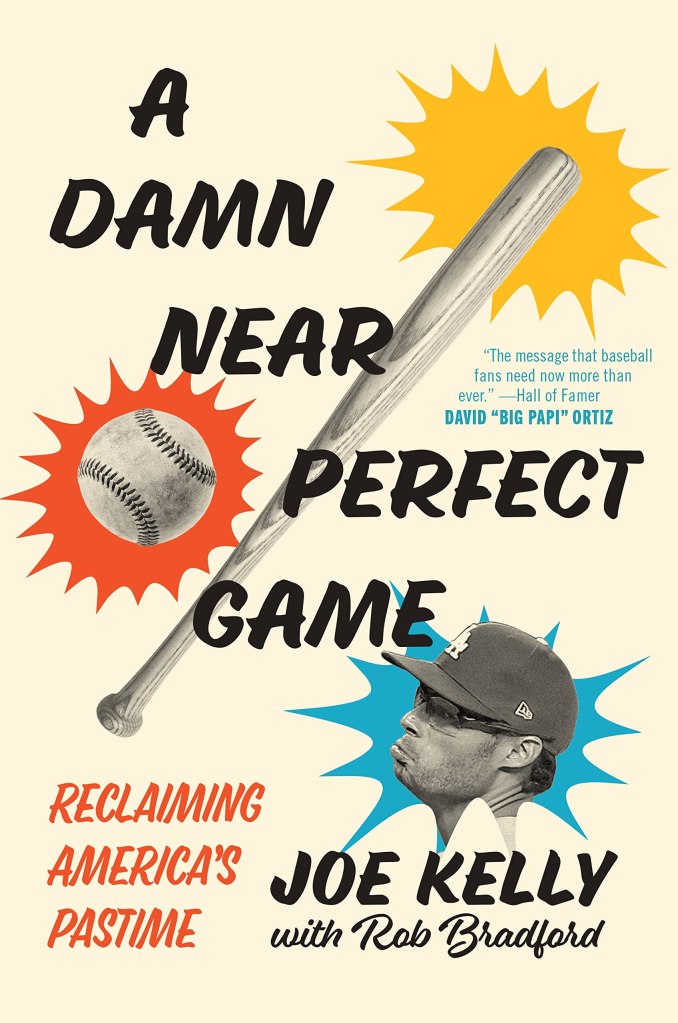
“A Damn Near Perfect Game:
Reclaiming America’s Pastime”

The author:
Joe Kelly
With Rob Bradford

The publishing info:
Diversion Books
288 pages; $28.99
Released Feb. 28, 2023

The links:
The publishers website
At Bookshop.org
At Indiebound.org
At Powells.com
At TheLastBookStoreLA
At BarnesAndNoble.com
At Amazon.com


The review in 90 feet or less

Back in the summer of 2019, when we seized space in the L.A. Times as part of a give-and-take of ideas and freelance paychecks, we thought we were doing a public service to Dodgers fans by helping them rid the nasty aftertaste of Joe Kelly.

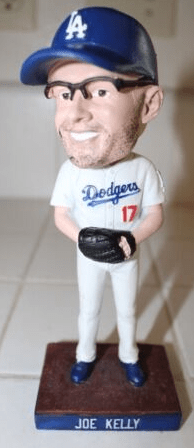
It was mid-June, and the Dodgers had an upcoming Joe Kelly Bobblehead Night giveaway.

Say it ain’t so, everyone.

Kelly had not only posted some awful numbers in his first year in L.A., but it was even more anguishing since he was fresh off helping the Red Sox beat the Dodgers in the ’18 World Series, and somehow earning a three-year, $25 million contract for his past performance. His 7.59 ERA, a 1-3 record and three blown saves in 22 appearances didn’t endear the 31-year-old from Corona High and UC Riverside.

There were many on social media advocating for fans, upon receiving the give-away trinket, to toss it in the trash. Or even worse. Even without considering that the face value of the ticket was increased as to make this “special” day have added value.

We recruited the opinion of Phil Sklar, CEO and co-founder of the National Bobblehead Hall of Fame in Milwaukee, to chime in.

“If Kelly turns things around and ends up helping the Dodgers win the World Series, I would expect this one to rise in value,” said Sklar. “If he doesn’t turn things around, I would expect to see a lot of them at garage sales or thrift stores in the L.A. area for very low prices. Hopefully, Dodgers fans won’t litter the field with bobbleheads, especially if he has a bad outing.”

By the end of the season, Kelly was 5-4, his ERA a bit more stable at 4.56 in 55 appearances (with 13 games finished) and one save and a career-best 10.9 strike outs per nine innings.

In 2020, Kelly and the Dodgers did claim the truncated World Series title. During the COVID downtime, he even threw a baseball through his house window and became an internet legend.

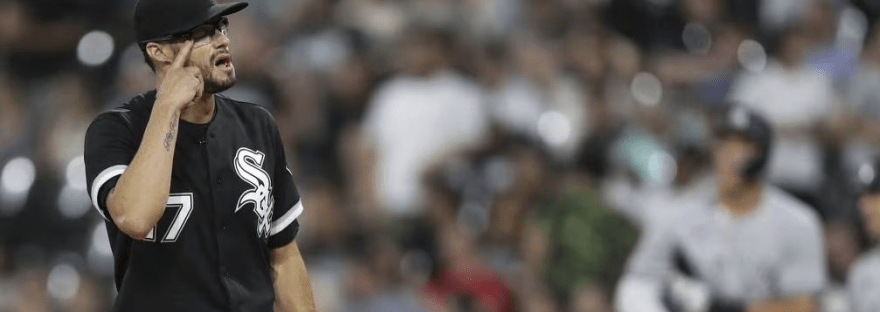
By 2021, Kelly endeared himself to Dodgers fans still upset about the Houston Astros’ cheating scandal by taunting the start shortstop Carlos Correa in a inning-ending staredown. Complete with pouty face.

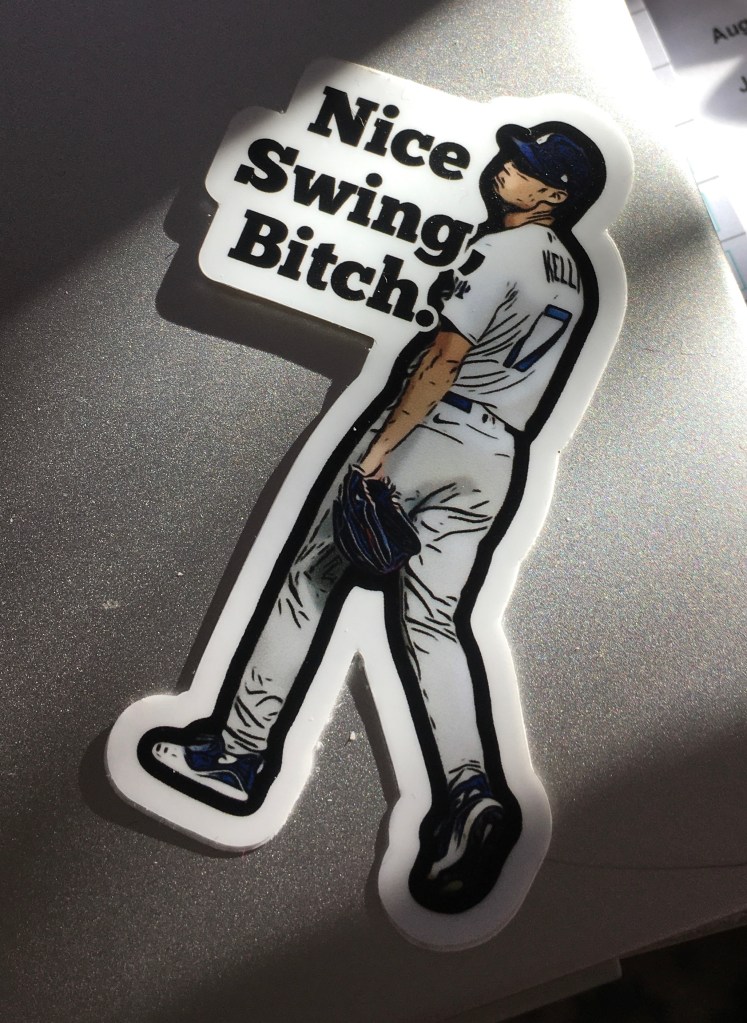
We found this image as a sticker in a local gift shop. We purchased it and stuck it on our skateboard.

It drew an eight-game suspension and a fine. And a fine-looking meme.

As well as a famous mural on the side of a building in Silverlake. Where fans can stop and check it out on the way to Dodger Stadium.

“Right now, he’s like the most popular guy in town,” said local radio sports-talk host Steve Mason, quoted in USA Today.

As in: How do you like my bobblehead now?

After Kelly’s performance, the pitcher’s Wikipedia page included this addition: “He is also the father of Carlos Correa.’’

Yet by the start of 2022, Kelly was free to leave. He did so, gravitating to the Chicago White Sox, where went 1-3 with 6.08 ERA in 43 games last season – with one start, and one save. He still holds a roster spot and, after the first few games of 2023, No. 17 took the loss on April Fool’s Day by giving up the go-ahead run to the Astros in the bottom of the seventh, and sports that 0-1 mark with a 9.00 ERA, unused since then.

But it was all during the delay in the 2022 season — another labor skirmish pushed back spring training and the start of the season — where Kelly was having angst as well.

He wrote up an essay that the Los Angeles Times published (was this some kind of payback?):

Continue reading “Day 3 of 2023 baseball books: You better not pout, Joe Kelly’s telling you why (in full mariachi jacket)”

Day 2 of 2023 baseball books: Where journalism begins

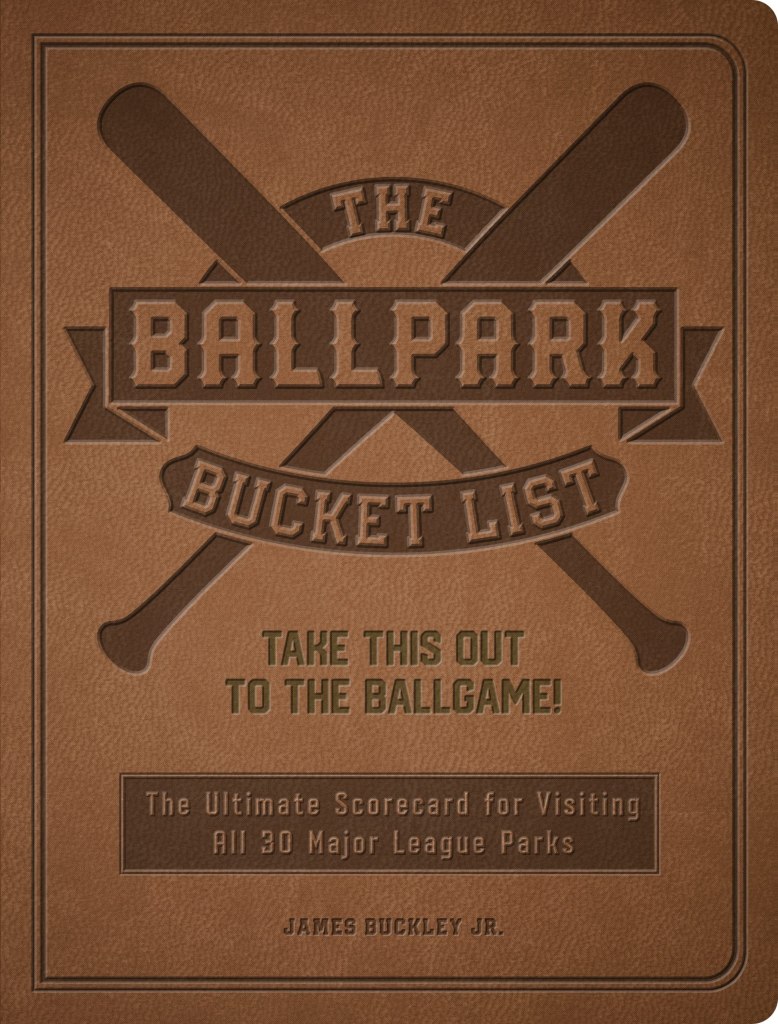
“The Ballpark Bucket List: The Ultimate Scorecard for Visiting All 30 Major League Parks”

The author:
James Buckley Jr.

The publishing info:
Quarto Publishing Group / Epic Ink
176 pages; $19.99
Released March 28, 2023

The links:
The publishers website
The authors website
At Bookshop.org
At Indiebound.org
At Powells.com
At BarnesAndNoble.com
At Amazon.com

The review in 90 feet or less

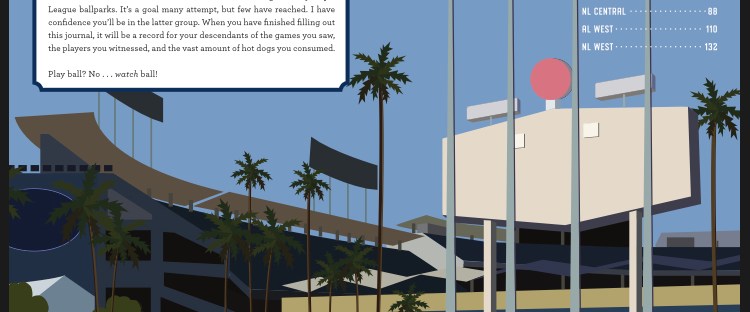
“As a West Coaster for more years than I want to admit, I’ve seen more games at Dodger Stadium than any other ballpark,” James Buckley Jr., who these days lives with his family in Santa Barbara, writes in the “Introduction: Why Do It?” when asking aloud why he crafted this easy-to-use, leather(ish) bound passport-sort-of journal that’s meant to be taken out to the ballgame, sniffed as if it was a new Rawling glove and actually used.

We can admit it: He’s already speaking our language.

Our first visit to Dodger Stadium for the 2023 comes this afternoon – a Dodgers-D’backs finale to the four-game season opening series.

This book is coming with.

We’d have to say we’ve made more purposeful excursions to Dodger Stadium – in the family station wagon, in the first-purchased beat up Mazda during college, in the family pickup truck with the kids strapped in, to the Toyota Rav that now parks in Chinatown and allows us a chance to walk the hill or take the shuttle — than the Forum, Staples Center/Crypto.Com Arena, the Coliseum, the Rose Bowl, the Hollywood Bowl, Musso & Frank, the Griffith Park Observatory, the Santa Monica Pier, the Getty Museum, Santa Anita Park and Disneyland combined. And all the incarnations of The Big A in Anaheimtown.

The plan is to take this book along, to see how useful it might be. But get the word out now about it now because, yes, even as we are coming up on our 62nd birthday, we think this is a cool deal.

Why not.

This is not just a place to doodle while day-dreaming of Darren Dreifort’s dreadful career arch.

Continue reading “Day 2 of 2023 baseball books: Where journalism begins”

Day 1 of 2023 baseball books: Fame, damn fame, and those damn statistics

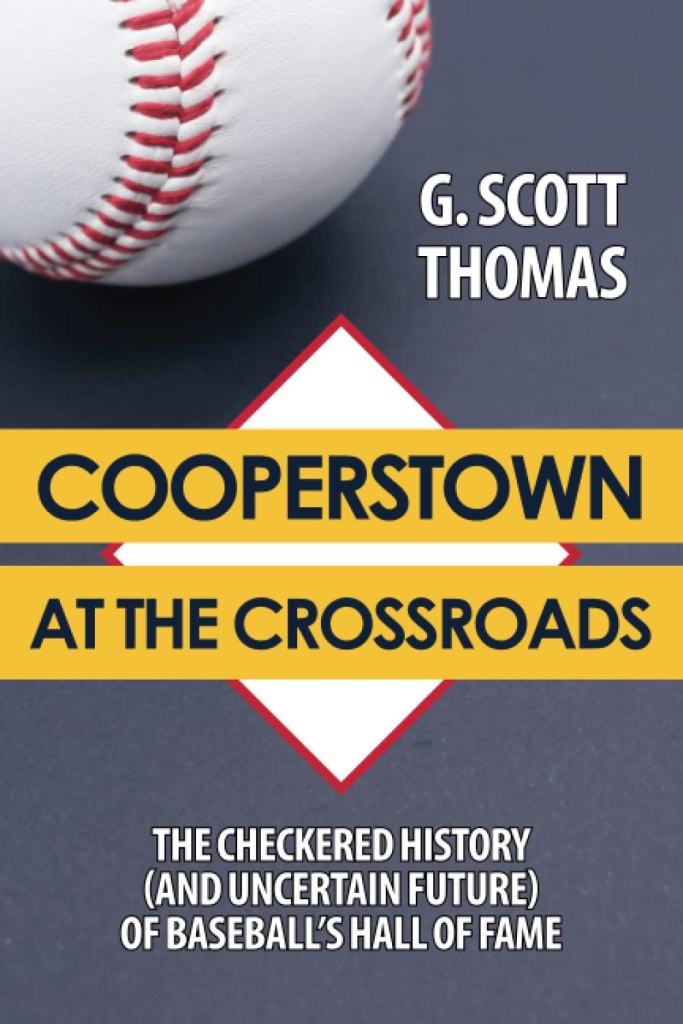
“Cooperstown at the Crossroads:
The Checkered History (and Uncertain Future) of Baseball’s Hall of Fame”

The author:
G. Scott Thomas

The publishing info:
Niawanda Books
416 pages
$22.99
Released in October, 2022

The links:
The publishers website
At Amazon.com


The review in 90 feet or less

Came across my dog-eared tobacco card of “Tungston Arm” O’Doyle, the great three-way player for the 1921 Akron Groomsmen. He could hit, pitch and … something else impossible at that point in time, but we forget. Maybe drive a car?

He was the Shohei Ohtani of his hey-day.

His name comes up once and awhile in situations like this:

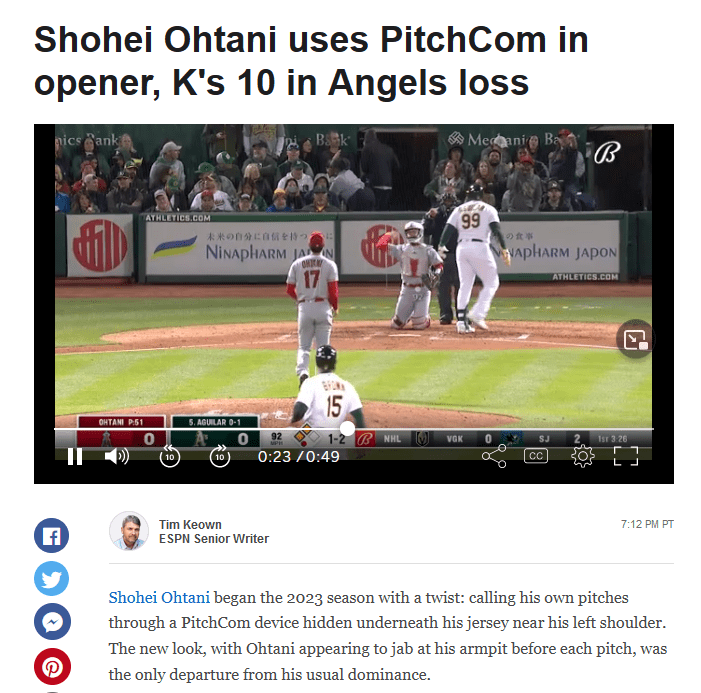
And if you saw what happened in the Angels’ 2023 season opener, it just keeps perpetuating: Ohtani calls his own pitches, strikes out 10 in six shutout innings, leaves with a 1-0 lead, goes back to DHing, and the Angels lose, 2-1, in Oakland.

With all the comparisons, you’d think by O’Doyle would be in the National Baseball Hall of Fame. But somehow he isn’t.

Crap, if Scott Rolen and Fred McGriff can get in, who else can’t?

(Pause for a nasty aftertaste on the pallet. Rinse. Repeat).

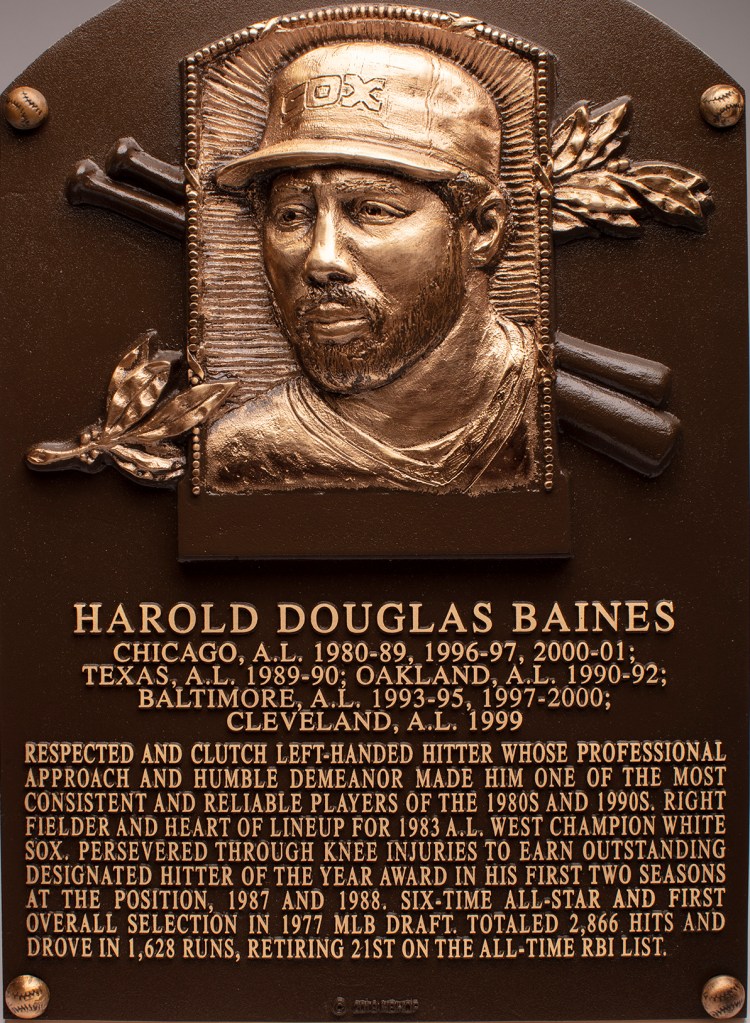
Even Harold Baines has to wonder: Are these two latest additions to the National Baseball Hall of Fame ultimately be the bane of our hardball-enjoyable existence?

When it was announced last Jan. 24 that Rolen rocked five extra votes to clear the 75 percent agreement barrier of the Baseball Writers Association of America and lay claim to someone having to do a search of the files to remember what he looked like so someone else could make him a plaque in Cooperstown — and now he’ll be able to join an induction ceremony this summer with special committee-elected McGriff as the only two who made it to the Class of 2023 — we wanted to turn off coverage on the MLB Channel and channel the thoughts of G. Scott Thomas.

There’s never been a better time, with better examples, to topple over the tables and just ask: What defines “fame” in baseball? And if Cooperstown real estate continues to come down in price, how did we not see the signs this housing of immortality market crash?

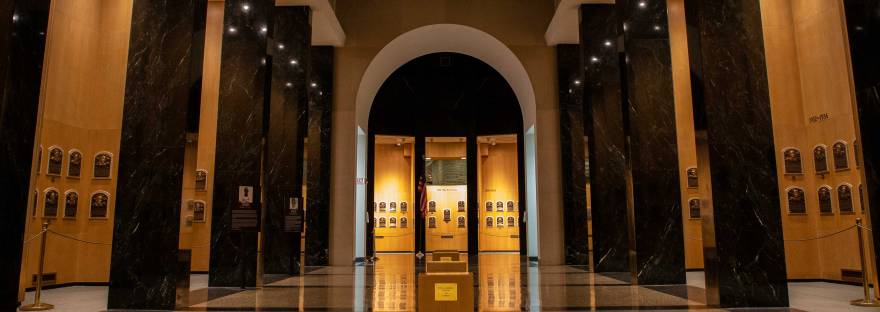
The place, while also acting as a cool museum, could be completely irrelevant as a functioning place to celebrate all that’s to gained by creating a home to honor the sport’s best of the best.

Not Rolen, McGriff, Baines, or a list we could compile right now but don’t want to waste the energy.

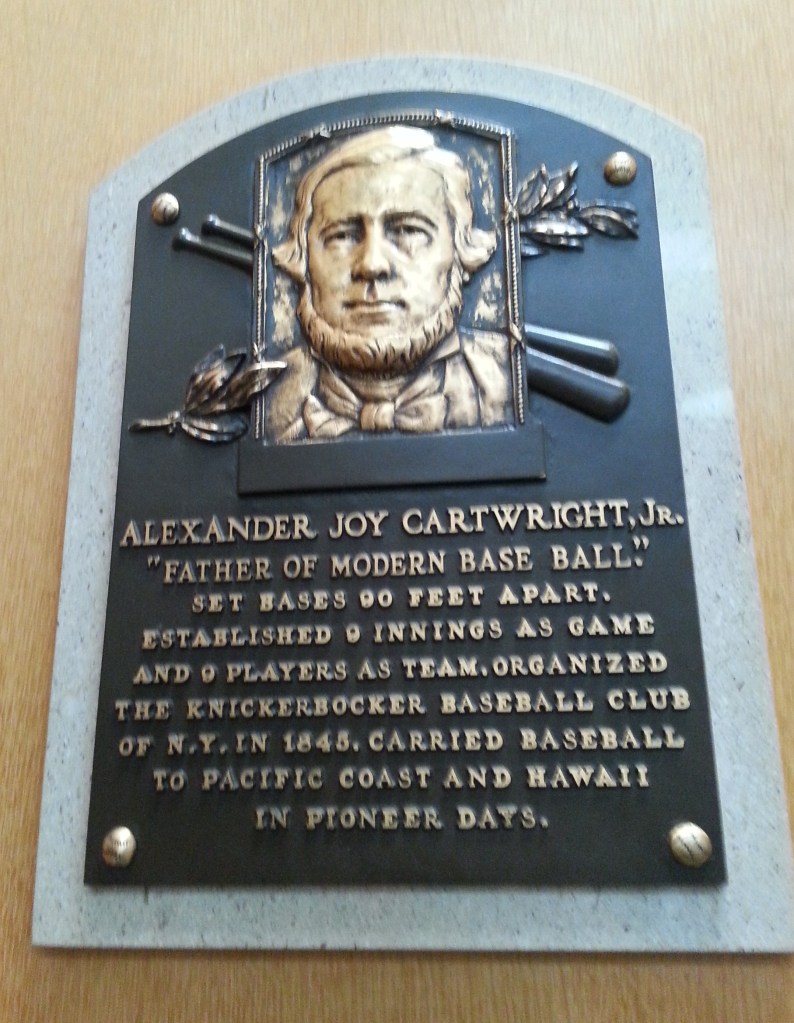
(OK, we give up: Add in there — Tony Perez, Bill Mazerowski, Jack Morris, Hoyt Wilhelm, Phil Rizzuto, Bert Blyleven, Herb Pennock, Tony Lazzeri, Bobby Wallace, Burleigh Grimes, Red Faber, Rick Ferrell, Joe Gordon, Red Ruffing, Rabbit Maranville, Roger Bresnahan, Freddie Lindstrom, Harry Hooper, Travis Jackson, Ray Schalk, Lloyd Waner, Rube Marquard, Jessie Haines, Chick Hafey, Ross Youngs, Jim Bottomley, Tommy McCarthy, Jesse Haines, George “High Pockets” Kelly, Nellie Fox, Travis Jackson, Dave Bancroft, and, more than likely, neither Joe Tinker, Johnny Evers nor Frank Chance. And especially Alexander Cartwright.)

But they’re there, and we aren’t endorsing prying them loose.

Face it: The Baseball Hall of Fame voting is broken if a player who got on just 10.2 percent of the ballots when he was first eligible in 2018 now all of the sudden achieve … fame? For not doing anything in the time being except being quiet? Because people who crunch numbers suddenly value his base running and defense? And there’s the embarrassment that another year goes by when, passing on the steroid-tainted talent, no one of real statue is available, go we compromise?

Thomas already has a plan in place. Read all about it.

Continue reading “Day 1 of 2023 baseball books: Fame, damn fame, and those damn statistics”

Time to intro the 2023 baseball book reviews, which time and time again we ask: Does it still need an introduction?

Time for the 2023 Major League Baseball season. It’s on the clock. Ready or not. Every second counts.

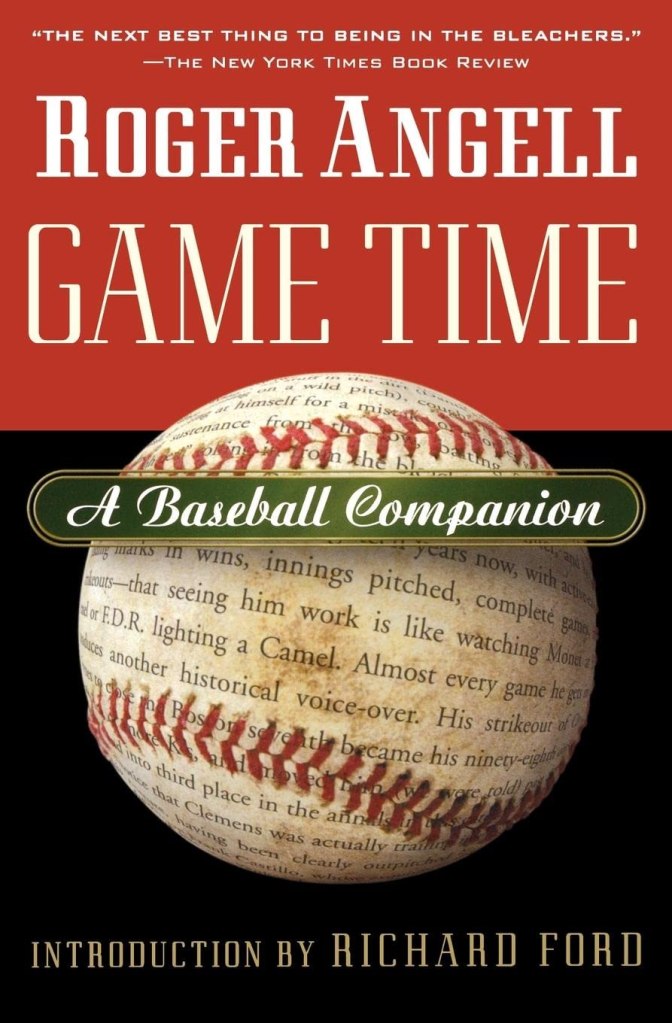
From 2003, Harcourt, 416 pages. It stands the test of time.

Time is all we heard about during the off season, into spring training, and leading up to this moment in, well, time.

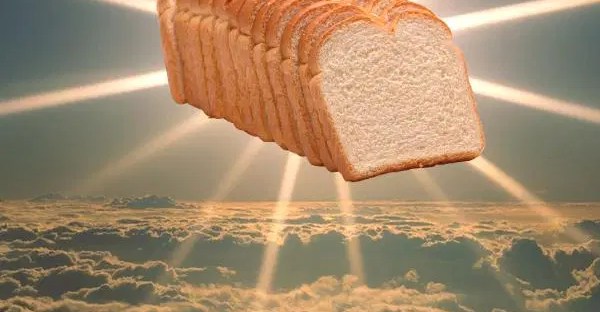
Amendments to some of the key rules are something that could be described as a) hand-wringing, as pointed out in a swell piece by Joe Posnanski in Esquire and followed up on his outstanding Substack blog posts, or b) compared to the way bread is sliced, as laid out by political commentator Scott Jennings.

(By the way: This nifty gif was part of a New York Times story that came with the headline: “Baseball’s Too Slow. Here’s How to Fix It.” From 2017. So last decade, man.)

It seems no matter how you cut, toast or butter it up, we’ve also got a time-stamp on this new edict that every team has to play every team for the first time, which adds more flight time for a lot of teams.

It leads us to wonder: Is there enough time any more to do this annual baseball book review project?

Our 2023 list is in well-enough order. Launching it and delivering on a consistent basis will have its own time-related challenges.

Among the books we’re looking forward to taking our time with dissecting:

= “Daybreak at Chavez Ravine: Fernandomania and the Remaking of the Los Angeles Dodgers,” by Erik Sherman (out officially on May 1)

= “A Damn Near Perfect Game: Reclaiming America’s Pastime,” by former Dodgers relief pitcher Joe Kelly (released last February)

= “Cooperstown at the Crossroads: The Checkered History (and Uncertain Future) of Baseball’s Hall of Fame,” by G. Thomas Scott (released last October)

= “The Tao of the Backup Catcher: Playing Baseball for the Love of the Game,” by Tim Brown (due in July)

This may also be the right time to announce (if you’ve made it this far) that we are deep into the process of writing our own book – a tribute to/appreciation of Vin Scully, and the life lessons he’s left us with. University of Nebraska Press has signed on. The target date is spring, 2024. More details to come.

Timing is everything. We’ve asked a few dozen people to contribute essays to this project, adding to our own prose. It’s hurry up and wait as the clock ticks.

Meantime, as we ponder why the Dodgers’ regular-season schedule includes playing the Diamondbacks of Arizona in eight of their first 10 games, we’ve also been reading up as a prep to this season:

== The usual breeze through Bill James’ 2023 Handbook (ACTA Publications, $32.95), which this time includes a farewell essay to Scully.

== Catching up on major titles that came out during the winter, that we didn’t feel like we had the time to add to this new spring, ’23 list, but missed a cutout for ’22. They include:
= “America’s Classic Ballparks: Celebrating Parks Past and Present,” by James Buckley (Becker & Mayer Books, 208 pages, released Sept., 2022)
= “28: A Photographic Tribute to Buster Posey,” by Brad Mangin (Harry N. Abrams Publishing, $28.99, released Aug., 2022, www.busterbook.com)
= “The Book of Joe: Trying Not to Suck at Baseball and Life,” by Joe Maddon and Tom Verducci (Twelve Publishing, $30, released Oct. 2022, with this excerpt; plus an exceptional Q&A by Kelly Candaele for his CapitalAndMain.com site)
= “The Grandest Stage: A History of the World Series,” by Tyler Kepner (Penguin Random House, $30, released Oct. 2022).

== Jayson Stark explains the “dramatic” ins and out of the new schedule in The Athletic.

== The L.A. Times’ Patt Morrison (one of our Scully book contributors) has a history lesson for Los Angeles baseball fans. Did you know: The first documented baseball game in town was a high school girls’ match, in 1874. So now you know. And you’ll learn more here than perhaps any Google search you ever attempt. Plus, see her post cards.

== A USA Today list of the 100 MLB names you need to know for 2023 (starting with Orioles infielder Gunnar Henderson at No. 1. The Dodgers have seven on this list — Miguel Vargas (No. 11), Ryan Pepiot (20), James Outman (26), Bobby Miller (43), Michael Grove (53), Michael Busch (63) and Gavin Stone (65). The Angels have one: Chase Silseth at No. 38.

== An ESPN list of the Top 100 players, ranked, in the game today (with two members of the Anaheim Angels of Los Angeles in the slots of Nos. 1 and 2 — and no others on the roster in the rest of the 98 spots; the current AL MVP is listed No. 3 behind these two AL players through no fault of their own abilities. Members of the Dodgers take spots at Nos. 5 and 9, as well as Nos. 46, 47, and 87)

== Ryan McGee, author of “Welcome to the Circus of Baseball: A Story of The Perfect Summer, at the Perfect Ballpark, at the Perfect Time,” which comes out next week (Doubleday, 272 pages, $29), posts his five best baseball bios for The Wall Street Journal and why:
= “Dodger Dogs to Fenway Franks,” by Bob Wood, 1988
= “The Teammates,” by David Halberstam, 2003
= “The Big Bam,” by Leigh Montville, 2006
= “Joe DiMaggio,” by Richard Ben Cramer, 2000
= “We Would Have Played Forever,” by Robert Gaunt, 1997
It’s more interesting to read the comments on pieces like this.

== The Milwaukee Journal Sentinel has its list of new baseball books.

== A review copy of a new book by former CNN and Washington Post political analyst Chris Cillizza called “Power Players: Sports, Politics and the American Presidency” (Twelve Publishing/Hachette, 320 pages, $30, coming out April 18), which seems to be equally embraced and accepted by CNN’s Jake Tapper and Don Lemon and ESPN’s Tony Kornheiser. It’s about presidents and the sports they played – which gets straight to George H.W. Bush’s ballplaying days at Yale (as well as White House horseshoes) and his son’s ownership of the Texas Rangers as well as participating in the most meaningful first-pitch ceremony after 9/11 at the 2001 World Series.

== It reminds us: We’ve been trying to land a review copy of “Sports and the American Presidency: From Theodore Roosevelt to Donald Trump (New Perspectives on the American Presidency),” edited by Adam Burns and Rivers Gambrell. It’s from Edinburg University Press, published in November, 2022, with a hardback (and ebook) markup price of $120. Must be an incredible shipping cost. There is some overlap with Cillizza’s assessment, but in this one, there seems to be more on how Bill Clinton tried to save baseball from the 1994-95 strike, Babe Ruth’s celebrity endorsements for the 1928 presidential campaign and Jackie Robinson’s odd alignments with various presidents in the 1960s and ‘70s. This book must be so well regarded that Amazon.com has a payment plan of $10 a month for 12 months to purchase it if you wish.

== Two more self-help books for the reader’s and writer’s soul: “Between The Listening and The Telling: How Stories Can Save Us,” by Mark Yaconelli, who has an Masters in Christian spirituality and a spiritual direction diploma from San Francisco Theological Seminary (Broadleaf Books/1517 Media, $24.99) and “I Never Thought Of It That Way: How to Have Fearlessly Curious Conversations in Dangerously Divided Times,” by Monica Guzman, a self-confessed liberal journalist who is the daughter of Mexican immigrants and Donald Trump supporters. It’s a guidebook on how to talk with people rather than about them in asking better questions and listening more intently.

Sooner or later, we’ll let the first review drop (we’ve powered through a few this winter to get traction) and see how the flow goes. So as Scully might say, pull up a chair with a reading lamp.