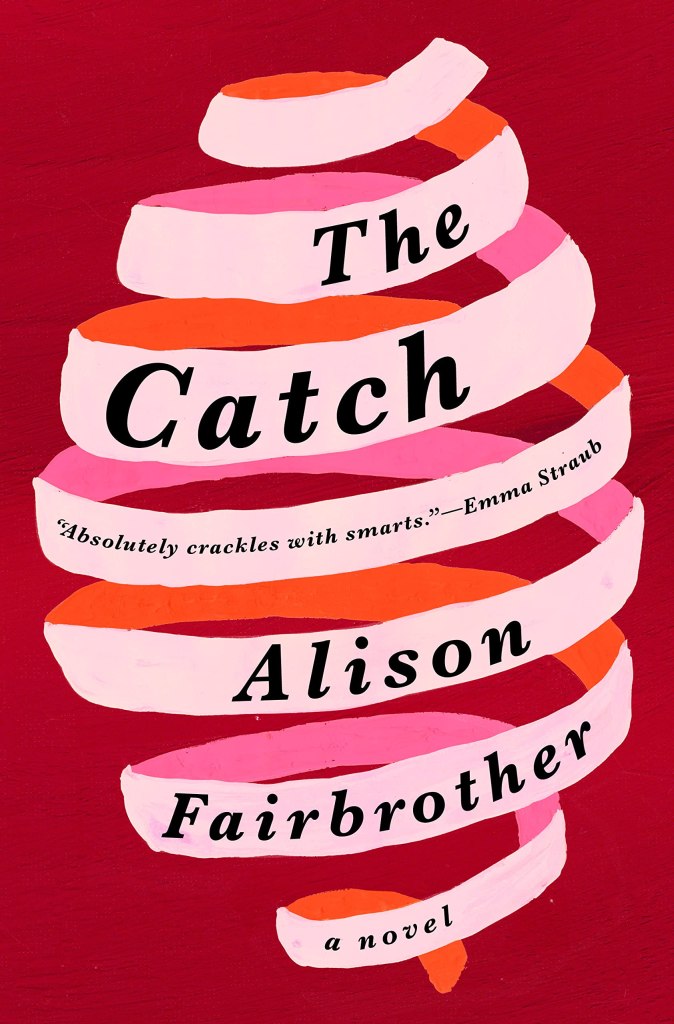
Given a chance to pick up a title that, by those who do such things, categorize it as both literary fiction as well as women’s fiction, we know this to be fact: We don’t often get the pleasure to read enough fiction. Especially baseball-related fiction. Maybe one title jumps out per season.
When something comes flying toward us, we take a most direct path to flag it down.
The New York Times gives this one some fair ground, we’re caught up in the synopsis:
Writers have forever used objects as a tool by which to tell their stories — Hawthorne’s letter, Maupassant’s necklace, Hammett’s falcon. … The literary object, at its most effective, is a powerful revealer of character — telling us about the people who possess it and those who covet it; those who are drawn to it and those who are repelled by it; those who deem it meaningless and those who endow it with outsize importance. In Alison Fairbrother’s warm and funnydebut novel, “The Catch,” the revelatory tools are a baseball and a tie rack. … The importance of the baseball is linked to James’s most famous poem, ‘The Catch.’ And in both the poem and the novel, the title’s meaning mutates as the truth about the baseball, and therefore her father, continues to unfold.”
You had us at baseball. And for some reason, something called a “lucky baseball.”
Where do we go from here? The main character, Ellie, has a 10-year-old step brother named Van who wears at Orioles cap and loves to “pour over our father’s baseball magazines.” The father, James, loved to gather his family around the holiday table (celebrating Thanksgiving in the summer when he had custody) and emotionally recite Lou Gehrig’s famous speech (with modified echo): “Today, I consider myself, the luckiest man on the face of the earth.”
And then we get to see the famous poem he wrote, “The Catch,” recited by the daughter at his funeral, which goes:
but, if time could kneel, as a catcher shifts to his knees when the pitch is wild For the summer we played in ruffled green grass, or indoors if the sky shivered with rain, Tossing the ball from end to end in dusty store aisles. Would the solid walls still echo with the hollow slaps of our hands to leather mitts, Or would I leave you there your arms outstretched as if to receive me.
Pause to ponder … Cool poem, eh?
The author, we’re also told — she actually wrote this poem as something include in the fiction work, right? — is an associate editor at Riverhead Books, an imprint of Penguin Random House (which publishes Meg Wolitzer, Elizabeth Gilbert and Brit Bennett), worked as a journalist in Washington, D.C., before getting her MFA at Stony Brook University. She lives in Brooklyn.
In her acknowledgements, she also mentions her late father’s name is James.
If that sounds familiar, it’s because the lead character is a journalist in Washington, D.C., and her deceased father is named James.
For what it’s worth, we’re 44.444 percent into Shohei Ohtani’s 2022 season. In just the last two games, we’ve been told again — warned, actually — that what we’re watching is nearly unimaginable on a Major League Baseball diamond. We still have a hard time believing it.
A night after a career-high eight RBIs, including the second of two three-run homers in the ninth sending the game into extra innings, Ohtani throws eight shutout innings and posts a career best 13 strikeouts, ending another Angels’ losing streak. After the first two Royals hitters connect on singles, Ohtani strikes out two of the next three and doesn’t allow a hit the rest of the way, with just one walk. He retires 16 in a row at one point and the last seven batters he faces, at one time touching 100 mph in the seventh inning. In the process, he’s the first since Babe Ruth to record 100 career home runs at the plate and 300 strikeouts on the mound.
Shohei Ohtani is the 1st MLB player with both an 8-RBI game and a 13-strikeout game in a career.
In between those games, there’s ESPN’s Olney on the air during a chat show warning that the Angels face a “looming crisis” ahead of Ohtani’s free agency at the end of the 2023 season – and the New York Mets with their GM Billy Eppler, who helped orchestrate Ohtani’s landing in Anaheim when he worked there, could be a favorite landing spot.
Let’s not panic or anything.
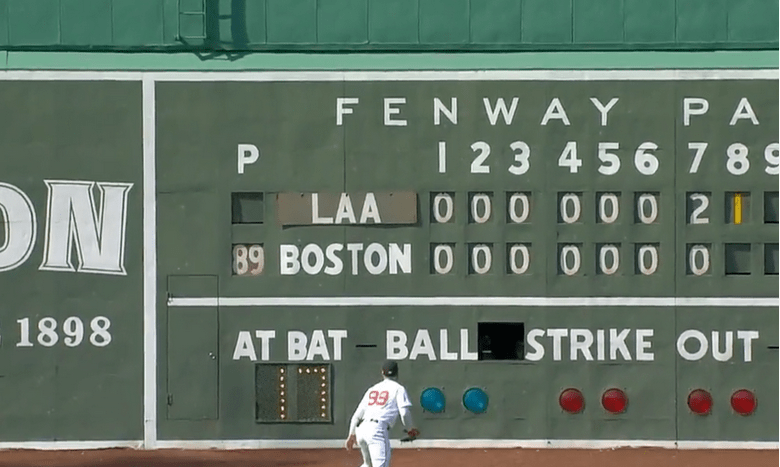
So already this season, we enjoyed this a story last May from The Athletic about how “One Moment at Fenway Perfectly Captured the Shohei Ohtani Experience,” most notably how he went out to the mound one inning to pitch against the Red Sox and forgot he still had his batting gloves in his back pocket. That was the game he struck out 11 with no walks in seven shutout innings of an eventual 8-0 win — and also hit a line drive so hard to the opposite field that he knocked his own No. 17 number of the pitcher’s slot in the manual scoreboard on the Green Monster. That’s the stuff of “The Natural.”
In early June, we had Ohtani ending the Angels’ franchise record-setting 14-game losing streak almost single-handedly – throwing seven one-run innings against Boston and hitting a well-timed home run to spark a 5-2 win.
Then on June 15, Ohtani, extending his hitting streak to 10 games, ropes a triple down the right field line with one out in the top of the ninth to break up a no-hit bid by the Dodgers’ Tyler Anderson. He then scores one pitch later to end the Dodgers’ shutout bid. It happened on the Dodgers’ Japanese Heritage Night with taiko drummers pounding in the distance. No matter how this publication in India seemed to mangle the translation of the story.
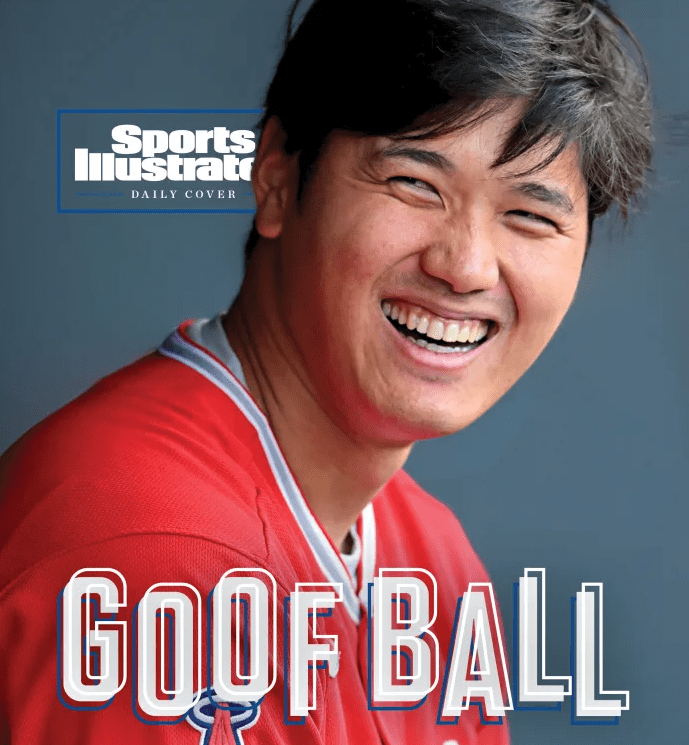
The current issue of Sports Illustrated even devotes six pages to his sense of humor. In “Goofball” (compared to the print edition that refers to it as “Funnyball”) writer Stephanie Apstein explains how that while “Ohtani’s English has improved, he still relies on (translator Ippei”) Mizuhara for nuance. But the language barrier is less imposing than it might seem, and besides, many gags require no interpretation: the weightless ball prank … his laughter — often directed at himself — is childlike and infectious.”
They said the same once upon a time about Fernando Valenzuela.
And this is all pre-2022 All-Star Game at Dodger Stadium. The drum keeps beating for Ohtani. Who wouldn’t just want to shake his hand, after shaking their head?
Shohei Ohtani thought the umpire just wanted to shake his hand when he was actually trying to do a substance check 😂😂😂
“I hope you don’t start taking that for granted. Like it’s old hat,” former Angels manager Joe Maddon once said about all this. “It’s just so unusual. It’s otherworldly, on this level of this game.”
Not to worry. We’ve also got 2021 to remind us what’s going on here.
So, once upon a time, Time magazine carried prime-time gravitas in the media world.
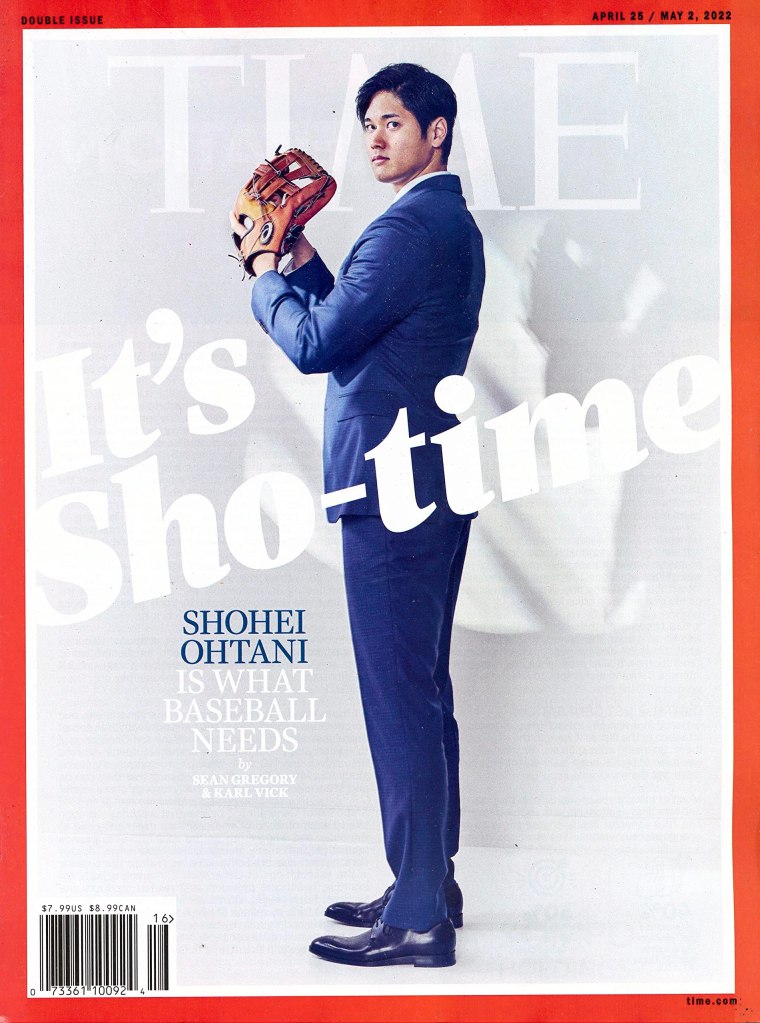
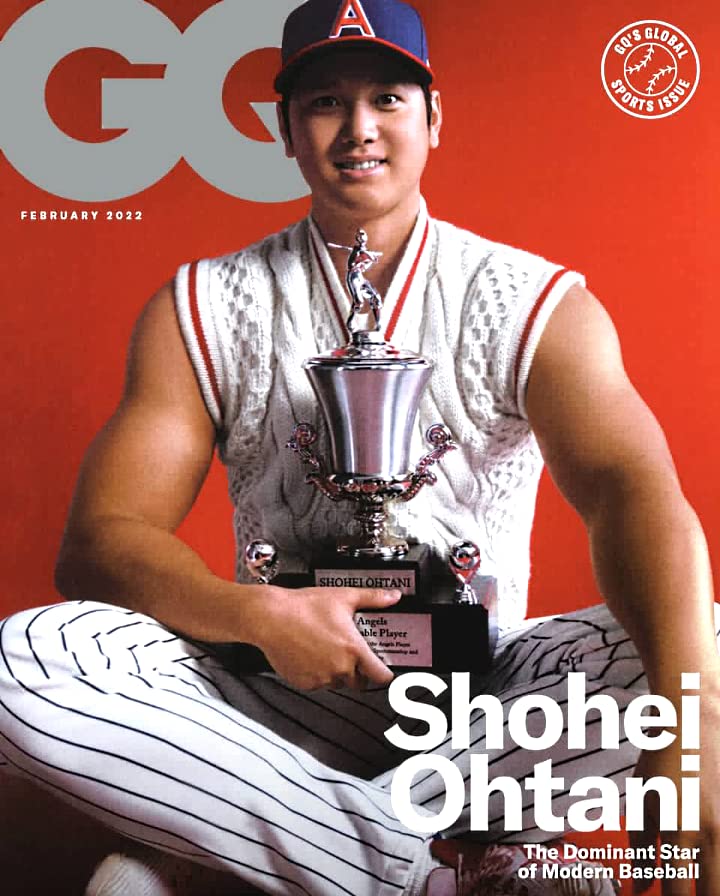
When it put Shohei Ohtani on its April 25/May 2, 2022 double issue cover, declaring he is “what baseball needs,” it definitely stood out — like something out of GQ.
Even trying to outdo the British GQ edition that already had him on the cover of its February 2022 issue, calling him “The Dominant Star of Modern Baseball.”
This Time magazine story with the “Sho-Time” screamer on the front also needed Ohtani’s image to carry the back end.
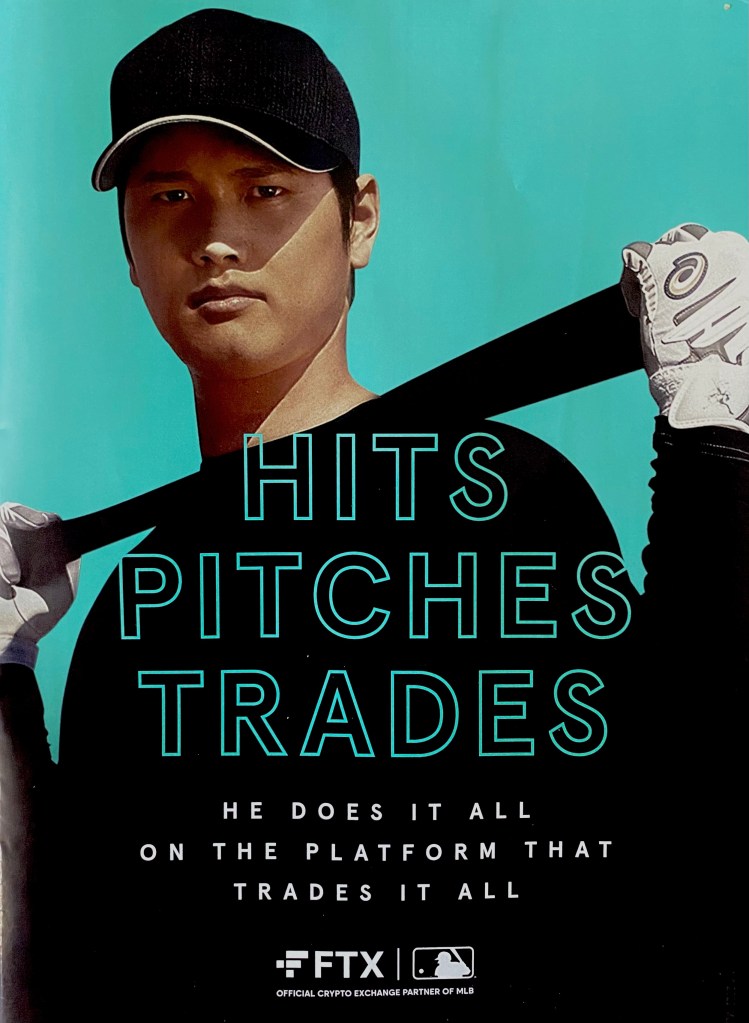
Inside the back cover, there is a full page glossy ad with Ohtani, in generic baseball apparel, promoting another aspect of his abilities. He hits, pitches and “trades .. he does it all” on the “official crypto exchange partner of MLB.”
Ohtani is currency these days. In dollars, yen, tickets, ratings, and whatever other stuff people are just making up.
It all makes dollars and sense based on what happened in The Year of Ohtani 2021. He performed as if he was as easy as playing in a video game. And he just continues to baffle and bedazzle.
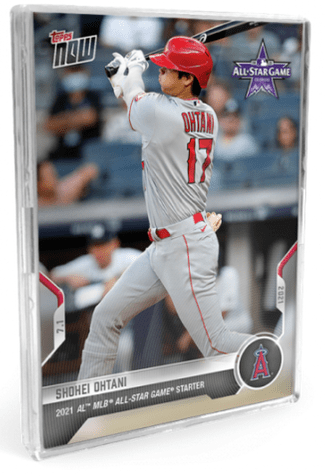
The 2021 American League MVP, the Commissioner’s Historic Achievement Award, the MLB Players Association Player of the Year honor, a Sliver Slugger award, and participating in the All-Star game as the starting pitcher and lead-off hitter a day after nearly winning the Home Run Hitting Contest are just among the things allowed to be placed on the display shelf at this point.
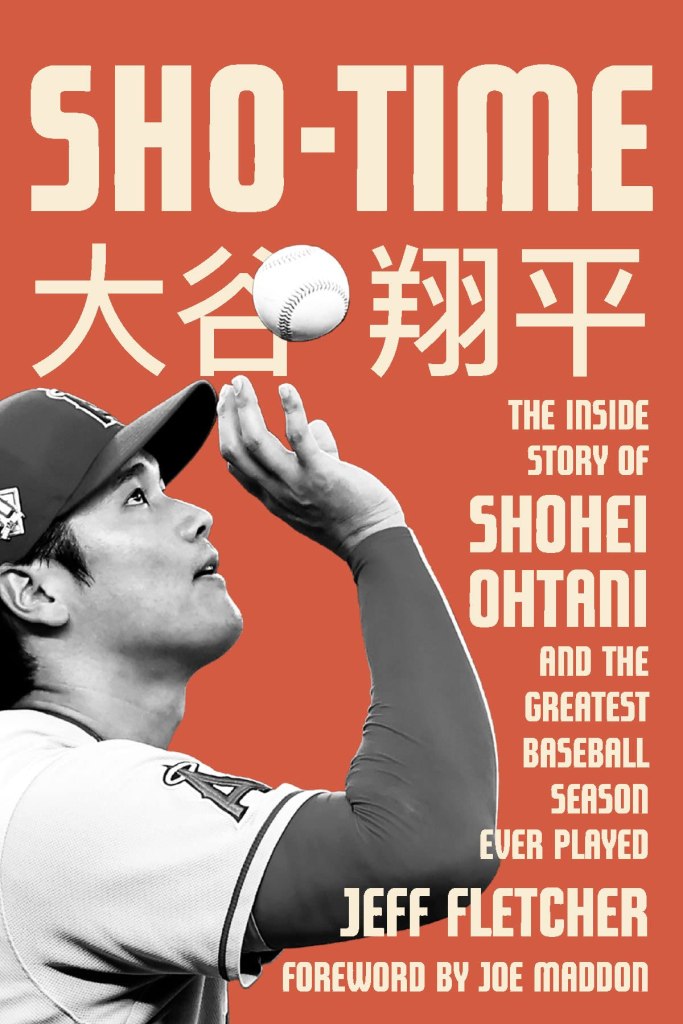
Here’s a book to go with it.
Shohei Ohtani received his AL MVP award tonight… along with every other baseball award possible it seems 🏆 pic.twitter.com/NvSH9cWcBo
Jeff Fletcher, who has been covering the Angels for the Southern California News Group the last 10 years and on the MLB beat since ‘97, had already started to write an Ohtani tome in 2018. But things derailed when Ohtani’s UCL issues flared up and his already brief MLB career could have been doomed. It was wait-and-see from there.
(Smart move. For what it’s worth: In November of 2018, Sports Publishing LLC tried to crank out a half-baked composite Ohtani bio, a skimpy 140 pages from previous reporters work. We weren’t that into the hype of it with our April, 2019 review.)
But after what Ohtani did a season ago, the project begged to be revived, and not just as a rehash mashup.
“My goal was to go beyond a surface-level description of what he did in that amazing season, providing the context that explained it,” Fletcher writes about why he pitched it all again.
To everyone’s benefit, he does that and then some.
If Chapters 10-through-15 ultimately provide all the nitty and gritty of that 2021 season — from spring training, the first half, the All-Star Game, the second half team collapse and the assessment of experts about what just happened — it’s the necessary chapters one through nine that thankfully take all this from its beginnings to where it all makes a lot more impact.
That’s all the important stuff of Ohtani’s time playing in Japan, the negotiations to get him with the Angels, his arrival and first spring training in ’18, a couple of surgery issues with his arm and knee, the challenges of ’19 and ’20 (including the death of his locker room neighbor Tyler Skaggs, who shared the same agent, Nez Balelo), and the successful rebuilding of his workouts and regime through the advanced technology available at the Driveline Baseball organization.
Congratulations to Shohei Ohtani on winning the 2021 AL MVP! You made history – and it was truly an honor to work together. https://t.co/XWVGDwt3Ex
We also get an historical sense of what other Japanese players did in American in previous careers amidst overhyping, which made Ohtani “the most fiercely pursued player to come on the international market in the history of baseball,” Fletcher writes.
The season before Ohtani’s ’21 breakout comes as he was more in tune with his body, what needed to be done, and about 100 years after “Babe Ruth stepped into former boxer Artie McGovern’s gym to get in shape with sprints and medicine ball throws and more, a concept that was just as cutting-edge at the time,” Fletcher reminds us.
New York #Yankees legend Babe Ruth puts on boxing gloves and playfully spars with his daughter Julia at Artie McGovern’s Gym, NYC (January 1933) I sure hope that spring training starts soon! #MLB#Baseball#Historypic.twitter.com/xn45YDwQHb
He also notes that the Angels “treated him like a fragile artifact for most of his first three seasons in the big leagues, and you couldn’t blame them … Even when Babe Ruth did it in 1918 and 1919 he said the physical demands were too great” as he transitioned from pitching to hitting. “Ohtani by contract came to the majors specifically to be a two-way layer and it was up to the Angels to ensure that he could handle the workload.”
If not now, then when?
Also keep in mind, in the less-than five full seasons, Ohtani has already had four managers and two general managers, so the disappointments he had in the two seasons prior landing on blackjack in ’21 can’t be discounted.
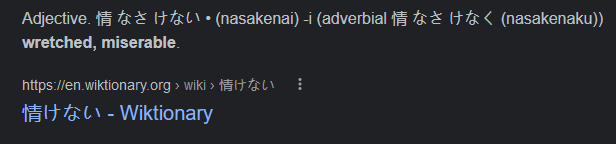
Those previous two seasons, Ohtani once said, were what he described as nasakenai, which translates to, among other things, “pathetic.”
Now, it’s the fourth game of the regular season, at Angel Stadium, with only 13,000-plus in attendance because of COVID restrictions, the Angels faced the Chicago White Sox in ESPN’s first prime time Sunday Night contest.
Within the first 15 minutes of the game, the 26-year-old Ohtani touched 100 mph on the speed gun from the mound and hit a ball 115 mph for a home run at the plate (that traveled some 450 miles). It was also the first time he pitched and hit in the same game.
“No one else in the big leagues accomplished both those milestones in the season,” Fletcher notes, also pointing out that only six percent of pitchers have reached 100 mph in ’21, and only five percent of hitters produced contact of 115.2 mph.
This, after Ohtani gave up seven runs in 2 1/3 innings with five walks in his final exhibition tune-up against the Dodgers a week earlier.
“Let’s stay out of his way, let him play baseball and see what happens,” said Maddon, whose job this season couldn’t even be saved by what Ohtani has been doing.
Non-spoiler alert: Even if the reader knows what happens next, next, next – the Angels suddenly have no room for Albert Pujols, the “reverse double-switch” game Ohtani played some right field after he was done pitching so he could stay in the lineup, a go-head homer with two out in the ninth at Boston in May, the whole Colorado All-Star game break-out moment – the content feels fresh and important.
Such as a reference to how baseball researcher Eric Fridén tracks a stat he called “reserve power,” which measures the way a pitcher’s velocity increased with the pressure of the situation. Ohtani’s average fastball in 2021 increased from 95.3 mph with no runners in scoring position to 96.8 mph with runners in scoring position. Fridén said he had been tracking the statistic since 2008, and by his measure Ohtani’s reserve power over the course of the 2021 season was surpassed by only future Hall of Famer Justin Verlander and reliever Andrew Miller. Miller had done it just once, and Verlander had done it for seven seasons.
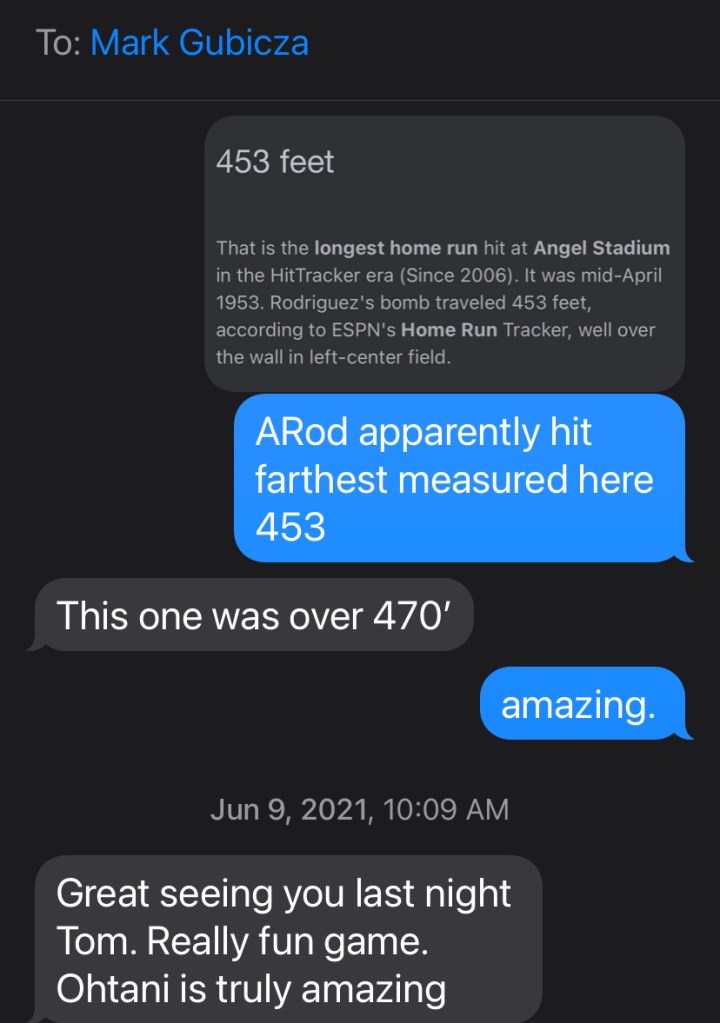
That is from June 8, 2021 — my 60th birthday – when I decided that COVID messiness or not, I wanted to go to Angel Stadium to see Ohtani play. He wasn’t pitching, but was the DH and would be batting second.
Just listen to the sound of the ball hitting the bat in his first-inning plate appearance:
On page 176, it is duly noted:
“The Angels faced the Kansas City Royals and former top prospect Kris Bubic … In the first inning, the twenty-three-year-old lefthander threw Ohtani a 2-and-2 changeup that ended up over the heart of the plate. Ohtani blasted it 470 feet — the longest homer of his career. The ball landed in the seats just a few feet from the fence alongside the green batter’s eye.
“ ‘That’s the farthest ball I think I’ve seen hit here,’ said Maddon, who had spent twelve years as a major league coach or manager with the Angels. ‘I’ve never seen one hit there before’.”
Nor had we.
We sent a text to Mark Gubicza in the Angels’ broadcast booth, and he texted back the same sentiments — which he said live on the team’s broadcast. And we recall seeing some majestic Reggie Jackson blasts in that facility, as well as one that Barry Bonds seemed to hit into no-where during Game 1 of the 2002 World Series.
We had seats on the top deck nearly behind home plate. It was like someone teeing up a golf ball and launching it toward the 57 Freeway, aiming at the Honda Center. The height was as impressive as the distance.
The official statistics of 2021 recorded that Ohtani hit 46 home runs (third-most in the MLB), had a .257 average (above the league average of .245), a .592 slugging percentage and .965 OPS (fifth in the majors). As a pitcher, he was 9-2 record, 3.18 ERA and 157 strikeouts in 130 1/3 innings. His WAR numbers — 4.1 pitching, seventh in the AL, plus 4.9 hitting — added to a 9.0, more than one better than the 7.8 by runner up and pitcher Zack Wheeler.
In Tokyo, a man reads an extra edition of a newspaper reporting Shohei Ohtani winning the AL MVP on Nov. 19, 2021 (Issei Kato/Reuters)
Along with touching on how tourism jumped in Anaheim with Ohtani’s arrival and all the other domino effects of his success, one of the elements that could have been perhaps covered with more detail is how the ’21 season played out with Ohtani in the media – a platform that couldn’t always get a handle on the best ways to frame him.
There was plenty of misplaced attention given to ESPN’s Stephen A. Smith mangling hot take about why Ohtani, on the eve of the All Star Game, might be bad for the game instead of good because he didn’t speak English in the media. As senior media writer Tom Jones said for Poynter.com: “He came off as the guy telling foreign players to ‘speak English’ if they wanted to be accepted and truly represent a sports league in the U.S. And that is simply unacceptable.”
The media was also more proactive in comparing Ohtani beyond Ruth — going as far as a FiveThirtyEight.com piece that shines a light on the exploits of the Negro League’s Bullet Rogan.
If any of this is mentioned, we must have missed it, but it provides another layer of where people are getting their most pertinent information and framing opinions.
#Angels record when Shohei Ohtani has 2 HR and 8 RBIs:
0-1
Record of all other teams in live-ball era when any player has 2+ HR and 8 RBIs:
All in all, among the media types who provide back cover blurbs to help give this book some juice — quick hits by the likes of the New York Times’ Tyler Kepner, The Athletic’s Ken Rosenthal and Jason Stark, ESPN’s Buster Olney and MLB Network and Angels broadcaster Matt Vasgersian — the one that rings most true with us is from Gubizca:
I thought I knew everything about Shohei Ohtani because I had seen all of his games and interviewed him for the first time in Tempe in 2018, but I didn’t quite know the extent of everything he did to redesign himself on the physical and mental side until after I read (this book). I really appreciated learning about Ohtani’s dedication to be the best, starting from his days in Japan. I realized how much it took for him to get to this point, to have the best year in baseball history.
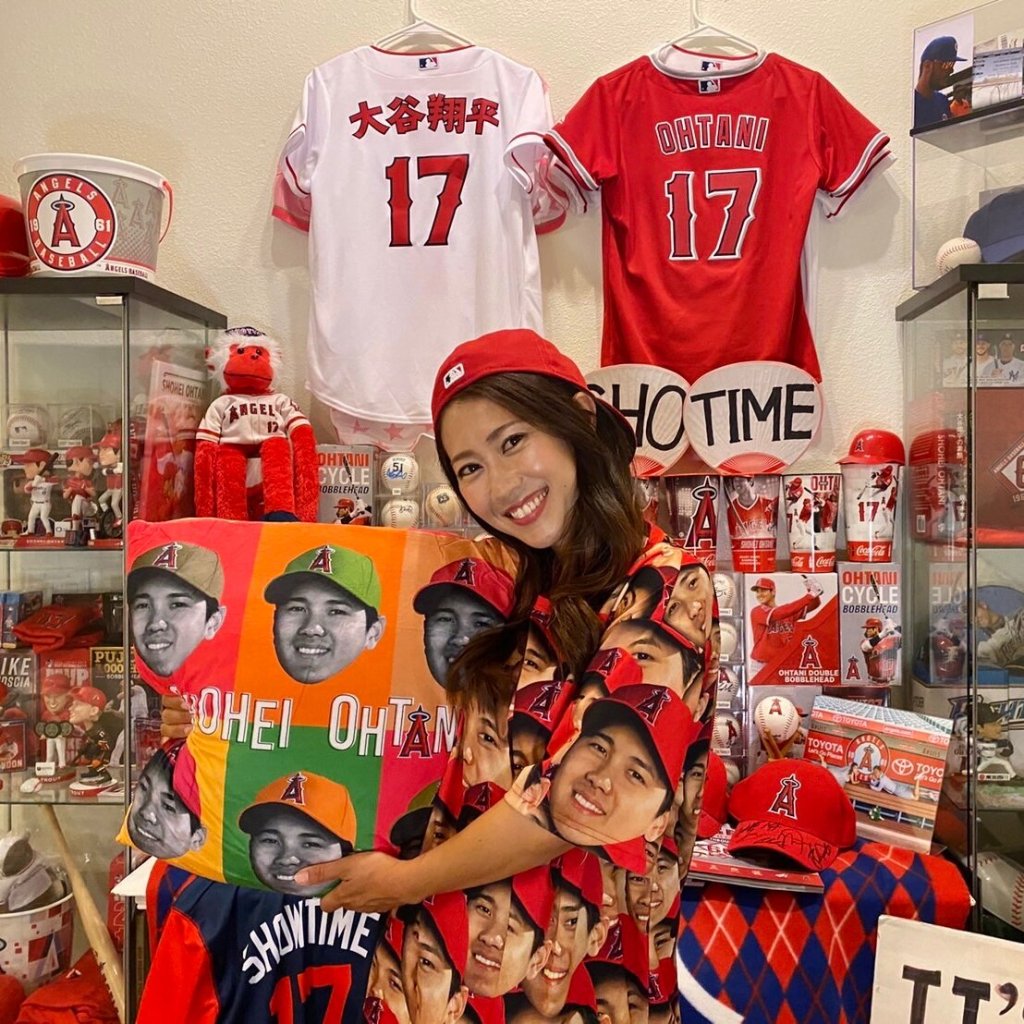
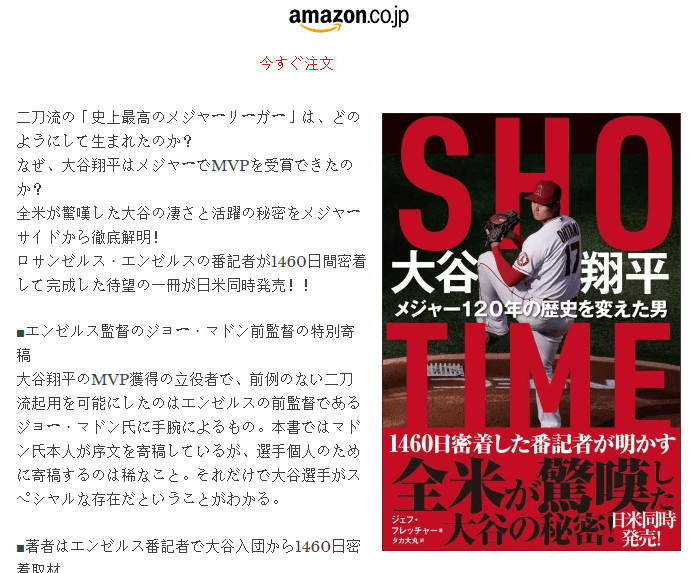
== For collectors: How the book looks promoted on Amazon Japan:
== Last January, a quick 32-page paperback on Ohtani as part of a sports bio project came out (Lerner Publications, $9.99) to attract the 7-to-11 age reader (second-to-fifth grade).
Using a Sharpie, protractor and some creativity allowed on an Auto Club fold-out map, the area to circle in Southern California that we’ve been calling the South Bay (as opposed to the one by the same name that also exists in Northern California) starts with anything in sweeping proximity of the Santa Monica Bay. Yet, you’re supposed to exclude the cities of Santa Monica, Venice and Marina del Rey, whose neighborhoods preferred to be more aligned with “The Westside.”
The coastline south of LAX and Westchester hits El Segundo, and the beaches of Manhattan, Hermosa and Redondo. The Palos Verdes peninsula juts out with Rolling Hills and San Pedro at the Port of L.A., which goes right up Wilmington, Carson and Gardena. It surrounds Torrance, Hawthorne, Lawndale, Lomita and Lennox, touching as far north as Inglewood. It can stretch East to Dominguez Hills and its Cal State campus, and it of course can wade into the Pacific Ocean to capture Catalina Island.
There are more than a dozen cities and boundaries of L.A. proper that claim it. And it’s baseball fertile, especially with youth teams, high schools and JCs.
The game’s royalty associated with the area starts with George and Ken Brett, George Foster, Garry Maddox, Mike Scott, Scott McGregor, Brian Harper, Jason Kendall and Alan Ashby. Dozens of MLB players are also connected to the area over the last 100 years.
Now’s as good a time as any to cast a bigger net when trying to record its history.
There’s the introduction to Raul “Bumble” Gonzales on the cover, in photo that appears to be hand-colored, highlighting the blue and white of his uniform of the Pan Pacific Fisheries.
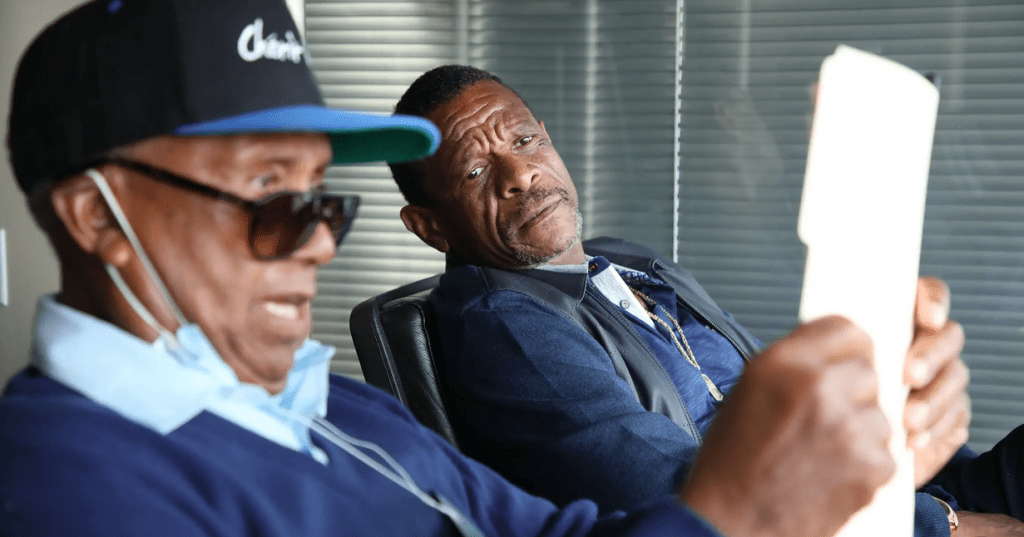
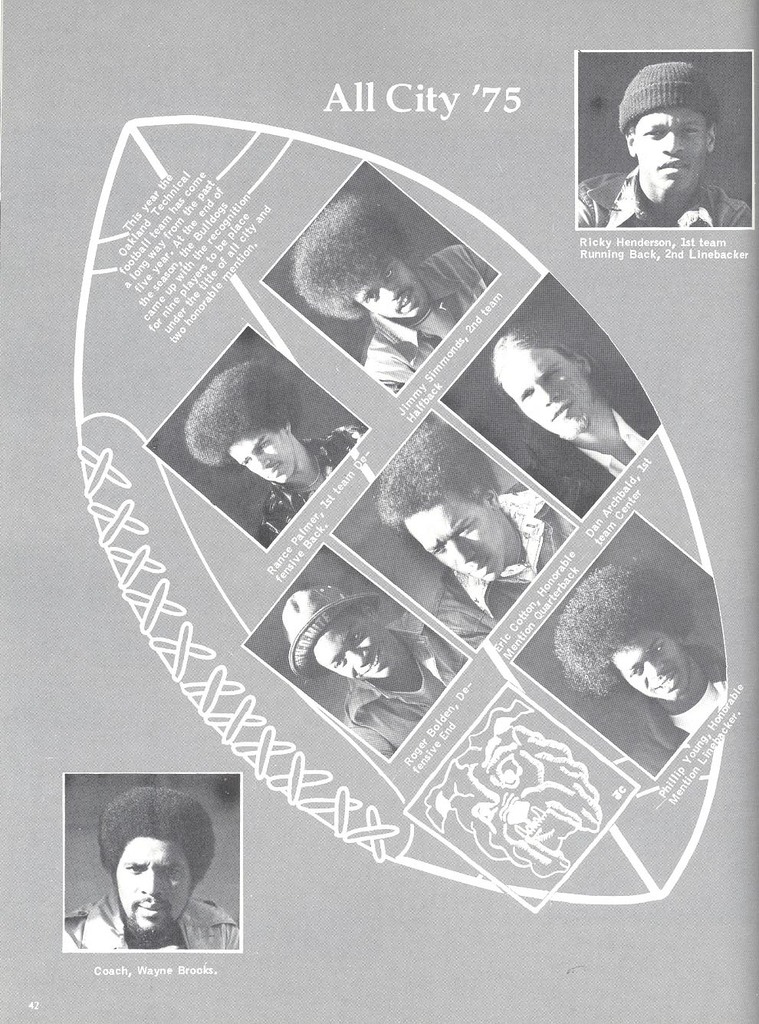
Rickey Henderson, right, looks over J.J. Guinn’s shoulder to see the scouting report Guinn wrote about him in 1976. Credit: .Jim Wilson/The New York Times
In July, 2021, the New York Times’ Alex Coffey dove into the relationship between Hall of Famer Rickey Henderson and the scout that signed and nurtured him, J.J. Guinn. The focus is on what Guinn saw of Henderson on one particular day:
“Guinn focused on his strengths: Henderson’s speed, athleticism and lateral range,” writes Coffee. “Where others saw impediments, Guinn saw possibility. …
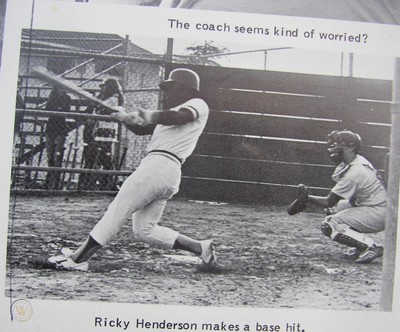
“Only two M.L.B. teams were present for an American Legion game at Bushrod Park on that day in 1976: the Athletics and the Los Angeles Dodgers. After Henderson struck out in his first two at-bats, the Dodgers scout stood up. ‘I’ve seen enough,’ Guinn recalled him saying. ‘I have a plane to catch.’
“Henderson homered in his next two at-bats and Guinn feverishly typed out a report to his scouting director. His advice: Sign Rickey Henderson ‘right away’.”
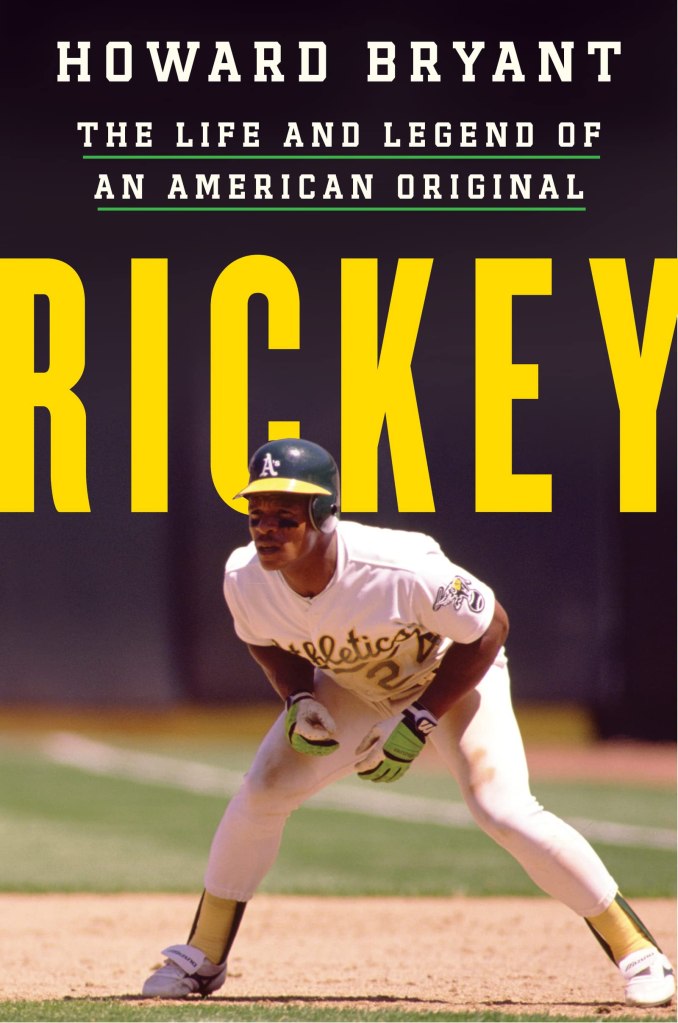
On page 34 of Howard Bryant’s book, now it can be retold with a few more pieces of info:
“The scouts who watched Rickey had no doubt they were watching a gifted athlete, but they were unconvinced about him as a baseball player. Doubt was baked into their DNA – scouts never missed a chance to emphasize what a player couldn’t do. Rarely did they see what a player was or what he could be. … So they were doubtful that 17-year-old Rickey would ever make it to the big leagues. Too many problems, they said.”
Yet this was an area that had not-too-far-back produced players like Curt Flood, Joe Morgan, Frank Robinson and Vada Pinson. As Bryant adds, “Oakland kids were defiant, wholly independent, creative outsiders with an irreverent style. Rickey’s generation was young, and they were imbued with the spirit of Oakland.”
Now it was Henderson, Gary Pettis, Claudell Washington, Dave Stewart, Von Joshua, Bip Roberts, Ruppert Jones, Glenn Burke … all-around athletes who might be lured to baseball for the right price and nurturing.
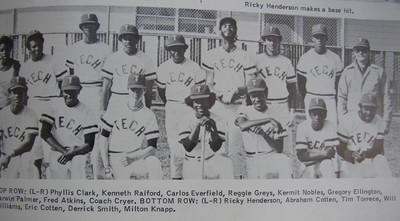
I just love posing this question to Oakland Technical High School, where the Pointer Sisters and Rickey would lose out to Clint Eastwood… https://t.co/eHXQBkorrc
The Dodgers had two full-time scouts in the area – Dick Hager and Dick Hanlan — who had been watching Stewart, an up-and-coming catcher (before he would be drafted by them and converted into a pitcher). This time, the franchise’s scouting director, Bill Brenzel, had come to watch Oakland Tech against Skyland (a high school game, not an American Legion contest?)
Brenzel was an Oakland guy, himself a player who grew up in the area 50 years earlier.
“He showed up, sat right down and waited for Rickey to show him what he had,” Bryant writes. “Brenzel introduced himself to J.J. Guinn, who was seated next to him. Guinn would recall that Brenzel’s countenance said it all: Important guy. With the Dodgers. The Dodgers always created a buzz.”
Henderson strikes out his first two times up.
“As Rickey walked back to the dugout, Brenzel was done. He was a performance scout, and Rickey hadn’t performed. Guinn would remember that, as Brenzel stood up, he heard the scout mutter something to the effect of ‘I’ve seen enough’ and ‘got a plane to catch.’ Then he left.
“And that is how J.J. Guinn and the Oakland A’s got the inside track on signing Rickey Henderson.”
Henderson homersin his next two at-bats, the second one longer than the first.
“ ‘If he’d have stayed,’ Jim Guinn recalled (referring to Brenzel), ‘Rickey would have been a Dodger.’”
Guinn watched Henderson for 20 games, 140 innings in all, yet still didn’t write up all that impressive scouting report. In the one done prior to the June 1976 draft – using the 2 to 8 scale, with 8 being outstanding — he gave Henderson’s running ability a 7 (present, and future), a 5 for baseball instincts and aggressiveness and a 3 for fielding and hitting ability. Guinn also compared him to a Cleon Jones because he threw left and batted right.
All in all, Guinn still recommended the A’s draft the local kid. As a pitcher. They did.
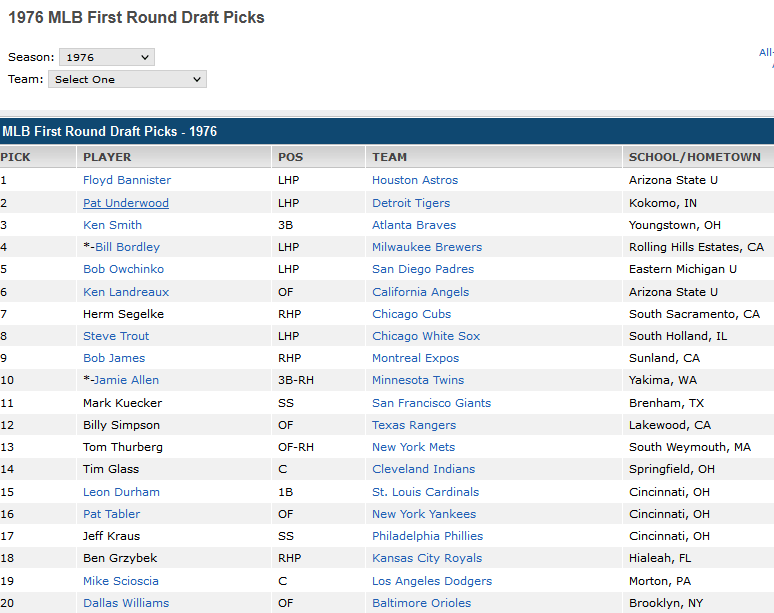
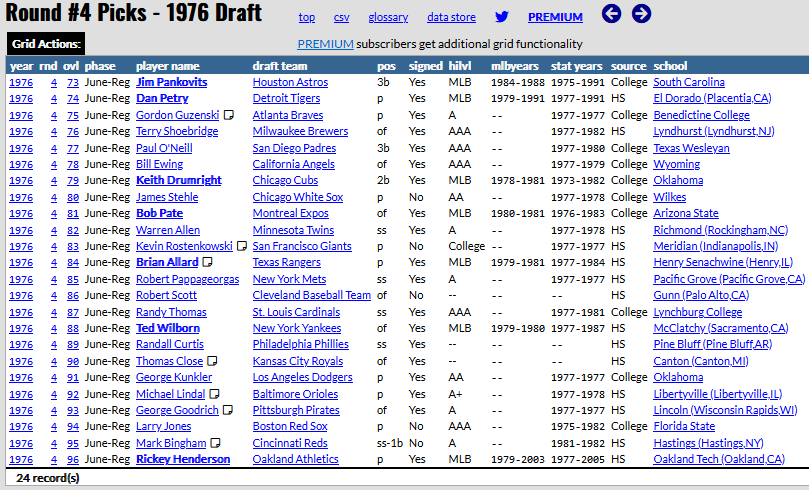
At the end of the fourth round, long after the Dodgers had already drafted catcher Mike Scioscia in the first round (who would play more games at that position in L.A. Dodgers history than anyone else), shortstop Don Ruzek in the second round, outfielder Max Venable in the third round (an eventual big-leaguer) and, six picks before Henderson, pitcher Marty Kunkler.
(Kunkler, listed by his formal first name of George below, was a 20th-round pick out of high school by the Dodgers in ’73. Then he went to college. He lasted two minor-league seasons in the Dodgers organization.)
For what it’s worth, Jack Morris went to the Tigers two picks later after Henderson, in the fifth round, and Ozzie Smith went to the Tigers and Wade Boggs went to the Red Sox in the seventh round. All Hall of Famers as well. The California Angels weren’t any more insightful, but at least were looking OK taking L.A. native Ken Landreaux in the first round out of Arizona State plus a couple others who got to the big-leagues without much fanfare.
Danielle Goldey and Meredith Kott went to a Dodgers game on Aug, 8, 2000, shared their affection with a passionate smooch whilst in their Dodger Stadium seats during a seventh inning celebration, and, soon enough, eight security people descended on them to show them the exit. Those complaining said kids ought not be watching this stuff.
Patt Morrison of the L.A. Times would write about it weeks later under the headline: “A Smooch Too Far.” Bill Plaschke also verified for the Times’ sports readers that this was in fact a French kiss, “but witnesses say it was nothing blatant or inappropriate.” Good thing we had impartial witnesses. Plaschke also had a quote from Goldey: “If we started disrobing, started feeling each other up, that would be inappropriate. We knew there were kids around. We know there are things you don’t do in public. My mother raised me to know right from wrong.”
(Morrison also noted that Goldey’s mother was in the real estate business and sold several Dodgers their homes over the years. Gotta know when to play that ‘Do you know who my mom is? card.)
The couple went to their lawyer, who talked to the Dodgers, who instead of trying to talk their way around it, went the extra yard. Then-team president Bob Graziano not only issued an organizational apology, but donated 5,000 tickets to gay-rights groups, and worked it out so that Sept. 6 would be the first Gay and Lesbian Night at Dodger Stadium, co-hosted by GLADD and the LA Gay & Lesbian Center. The couple got seats for that game behind home plate.
What’s now called the Dodgers’ Pride Night has evolved into a prideful moment on the promotion schedule – it happens this Friday when the Dodgers take on the New York Mets, followed by fireworks. We are starting national LGBT Pride Month that honors the 1969 Stonewall Uprising in Manhattan. It was established as a national event in 2000, and expanded by President Obama in ’11 to its current name.
The staff at Outsports.com – a sponsor of the event — reminds us that LGBTQ trailblazer Glenn Burke will be honored this time. Family members of the late Dodgers outfielder will throw out the first pitch. Last year, the Oakland A’s did the same honoring of Burke on their Pride Night.
This year, as a rainbow-colored “LA” logo will be etched on the ground behind the pitcher’s mound, players will wear jerseys with the Dodgers script logo decked out in coloring scheme that would make the 1980s Houston Astros envious.
On hand for pre-game ceremonies includes former Dodgers outfielder and MLB ambassador for inclusion Billy Bean, transgender MMA fighter Fallon Fox and Military Hero of the Game Lieutenant Belita Edwards. Somewhere, Dodgers co-owner Billie Jean King will have a presence.
“Glenn probably would have said, ‘Dang, about time!’” Davis said with exuberance and an easy chuckle last week. “He’d be grinning from ear to ear. He would be thrilled that he was thought about that much, really.”https://t.co/UXb5O4gPLY
The retired umpire who came out in 2014 as the first openly gay MLB umpire — also the first active male official to come out in MLB, the NFL, NBA or NHL — was present and accounted for in 2018 Pride Night to throw out the first pitch. That was a year after he retired following 33 MLB seasons and nearly 40 overall in pro baseball, as he knew it was for his better health after suffering frequent concussions over the years (he worked exactly 1,000 games behind home plate).
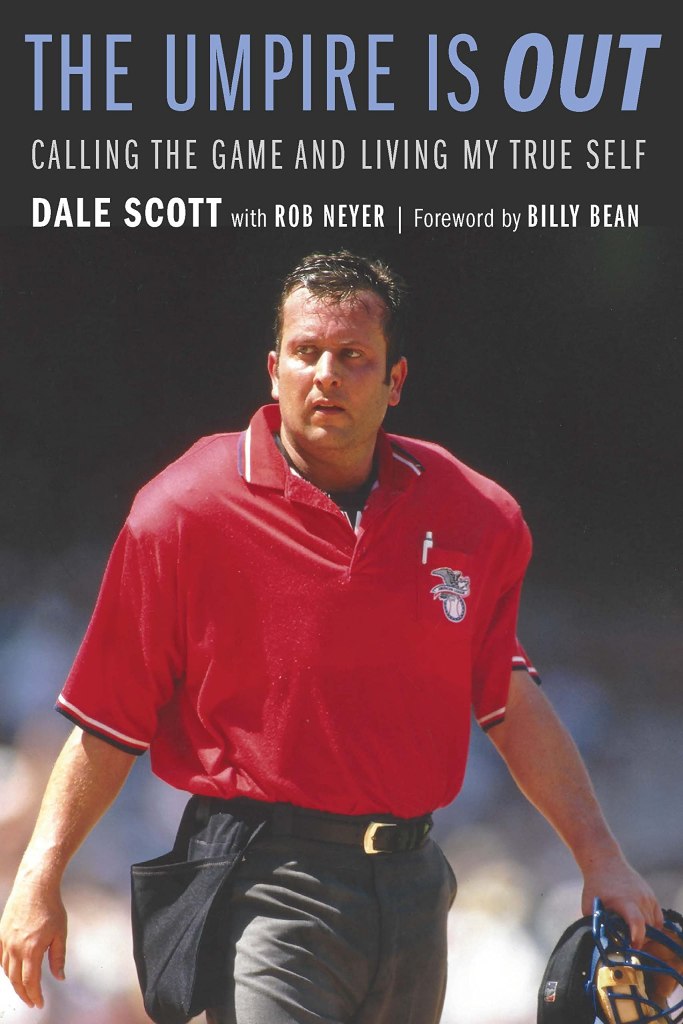
The Dodger Stadium inclusion of Scott, who turns 63 in August, lines up nicely with the release of a gratifying autobiography about his life and career that is one of the more enjoyable and poignant reads of this baseball season.
Dale Scott, center in Dodgers’ jersey, with MLB umpires (left) Todd Tichenor and Alan Porter, plus Bill Miller and Angel Hernandez (far right), as well as NBA referee Bill Kennedy (with rainbow NBA logo shirt) as Scott threw out the first pitch on Pride Night at Dodger Stadium on June 8, 2018. (Photo by Jayne Kamin-Oncea/Getty Images)
When sorting out a list of what to include in the annual book reviews, one thing that drew us toward investing in this came from a recent post on Outsports.com by Ken Schultz that included:“When I tell you that Scott’s autobiography made me legitimately laugh out loud numerous times in the first chapter alone, that in and of itself is one of the highest tributes I can give … One of the best things I can say about the book is that Scott and co-author Rob Neyer seamlessly transferred his honest and self-effacing voice to the page and made it look effortless. In reality, I know how hard that is to do and it goes a long way toward making the decades of baseball stories he tells that much more entertaining.”
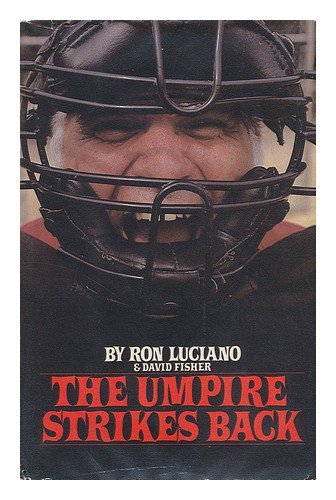
Over the last few decades, it feels as if there are three sorts of “umpire tells all” we’ve come across:
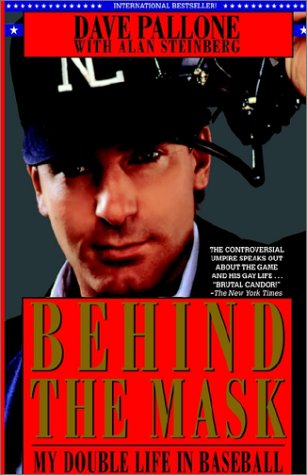
== Dave Pallone’s “Behind the Mask: My Double Life in Baseball,” which came out first in 1990, was updated in 2002, pulling a New York Times review excerpt: “The controversial umpire speaks out about the game and his gay life … brutal candor!” Pallone may have been the “first” gay umpire to talk about it, but it wasn’t by choice, more of being forced into it going back to how his counterparts resented him for crossing a picket line to umpire in the late ‘70s and then stay for a decade.
Scott, who has umpired in three World Series, six league championship series and 12 divisional series, goes an authentic route that combines three things: Self-deprecating humor, a seriousness about his work, and the current hot topic of LBGTQ.
In 2005, Scott is in the middle of a messy situation around the ejection of Angels pitcher Brendan Donnelly for using a foreign substance on his glove. Washington Nationals manager Frank Robinson, tipped off about Donnelly’s glove from one of his players who was a former Donnelly teammate, called for the inspection as Donnelly was taking his warmups. Angels manager Mike Scioscia tried to divert the ejection by having Donnelly change gloves before he actually threw his first official pitch. Scott, as the crew chief, takes us through how he no choice but to eject him, no matter how much Scioscia protested.
The story expands to how Scioscia came out the next inning to point out the Nationals’ pitcher had a glove with strings that were too long and could be a distraction. Scott had to agree, based on the rules, and took care of that.
Which led to some exchanges that Scott was nice enough to document:
Scioscia: “That’s fucking bush league, Frank! You’re better than that!” Robinson: “You’re a fucking cunt.”
(Scott later writes about the tension: “Because there was never much chance of someone actually getting hurt, we all sort of enjoyed that one.”)
And what was Scott’s eventual take-away from the whole thing?
Frank Robinson, left, is held back by Tim Tschida, center left, and Dale Scott holds back Mike Scioscia after Angels pitcher Brendan Donnelly was ejected for having a foreign substance in his glove on June 14, 2005. (Photo by Matt A. Brown / AP Photo / Orange County Register)
“The next day in the L.A. Times sports section, above the fold, I saw a photo of me and (umpire Tim Tschida trying to get between both managers. In this photo – and frankly the angle wasn’t doing either of us any favors – I looked like a walrus. I had so much fucking fat underneath my chin – or should I say, chins – that they seemed to be multiplying like guppies … the only thing I could hear in my mind was the Beatles, “I Am The Walrus.’”
(The photo isn’t included in the book. We tracked it down above).
So on one of his days off that summer, Scott found a plastic surgeon to undergo liposuction. Before Scott and his partner Mike Rausch went on a European vacation after the season, Scott also got a face lift. A few years later, he admits he got a Bosley hair transplant.
“So now, I can check off the ‘You’re So Vain’ and ‘stereotypical gay man’ boxes,” he writes to finish the chapter.
One more revealing moment about how Scott treasured his work comes when he discusses his involvement in the 2009 ALCS between the Angels and Yankees.
“The first three games, for our perspective anyway, were uneventful. The fourth game was a shithouse,” he writes.
In Game 4, the Angels tried to pick the Yankees’ Nick Swisher off second base. Scott calls him safe, then looks up at the video replay and realizes Swisher was really out. There is no video review/manager challenges then.
A few moments later, umpire Tim McClelland rules Swisher was out for leaving second base too early trying to tag up on a fly ball and go to third. The video board (and TV) replays again suggested McClelland erred, even if it, in effect, made up for the first blown call.
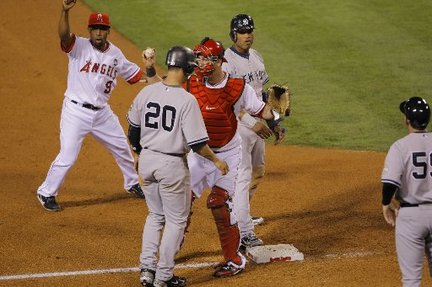
The Yankees’ Jorge Posada (20) is caught in a rundown between third and home, resulting in what should have been a double play for the Angels after he and Robinson Cano, right, were tagged out. (Photo: Barton Silverman/The New York Times) from a NYTimes score headlined “Umpiring Stumbles to the Fore” in 2009.
An inning later, the Yankees’ Jorge Posada is in a rundown between third and home, as teammate Robinson Cano also arrives at third. Both are on the same base. Both are confused and step off the base. Both are tagged.
Angels catcher Mike Napoli appears to tag out both Robinson Cano and Jorge Posada in the fifth inning, but only Posada is called out by third-base umpire Tim McClelland. (John Munson/The Newark Star-Ledger)
Writes Scott: “It should have been a double play, which was obvious to everyone watching on TV … but (McClelland) didn’t realize Cano was off the base when tagged and left him safe at third. I didn’t see Cano off the base when he was tagged, either, although I wasn’t looking for it. I was behind second base looking down the baseline toward third while keeping an eye on the batter-runner Swisher and if he was continuing on to second. Everything happened with a lot of moving parts. … The Yankees ended up winning 10-1, but all anyone wanted to talk about us was us.”
The next day, in Game 5, Clark had what he calls “a wacker” at first base — Johnny Damon is called out to end an inning. Replays showed Scott erred again. On the Fox broadcast, Joe Buck is talking now about all the blown calls in the series.
Writes Scott: “I’m not sure that anyone who has never umpired or officiated knows how low you feel when you miss a call, even moreso when it’s in a postseason or extremely important regular-season game. It haunts you, follows you, and can (unfairly) brand you not only for the rest of your career but well after you’ve left the field.”
He referred back to how he had made “10 nutcutter correct calls” in the 2001 World Series Game 3, but those are now “wiped out, forgotten with just one big miss. Fair? Not really. Inevitable? Unfortunately yes .. All of us know it’s part of the package when we sign up for this.”
That off season, three key umps – Marty Springstead, Rich Garcia and Jim McKean – were fired by MLB.
“We didn’t see it coming and we were not happy,” Scott explains. “It felt the moves were made out of spite.”
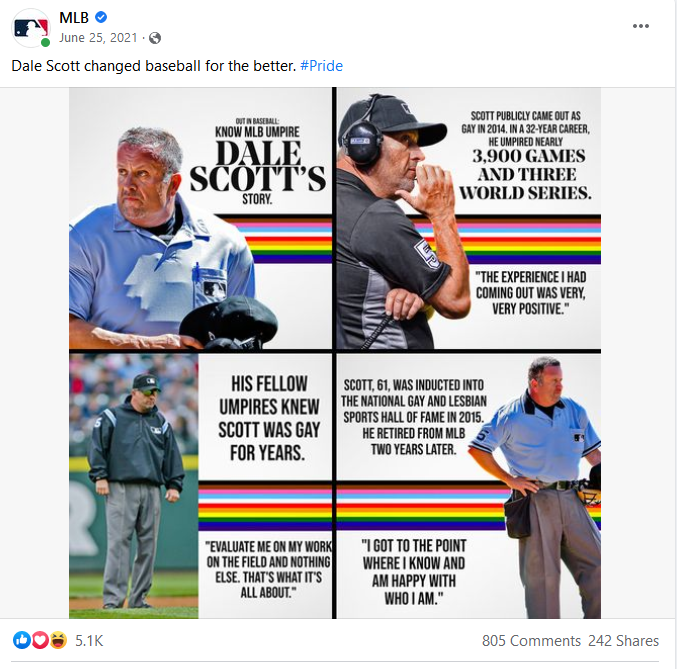
An MLB Facebook post in June, 2021.
Scott doesn’t mince words when he comes to how he felt about Jimmie Lee Solomon, the executive vice president of baseball operations, who made the decision, or the explanation by Rob Manfred, then the vice president of labor relations and human resources.
Just like an historic kiss, you can’t just give lip service to something or someone you feel has been wronged.
If we were going to Friday’s Dodgers-Mets game – or happened to be in his hometown of Portland when he and Neyer will appear at world-famous Powell’s for a signing on June 8 — we’d want to let him know how much we appreciated the education and entertainment, context and comedy, and true human feelings spread out along the way. Nothing sugar coated or trivialized. The importance of the umpire and how they feel about what they do needs to be told better, like this.
A late May blurb about the book in this New York Times roundup: “It’s a rare victory for the blue.” Agreed.
We’re also curiously appreciative of an appendix that includes five pages of every person he’s ejected in his career — his first in the MLB was the Angels’ Doug DeCinces in 1986 for arguing a called third strike. Plus a list of every umpire he’s ever worked with (partnered with Derryl Cousins and Joe Brinkman the most — 2,123 times, and interesting to see how he was with Augie Donatelli and Jocko Conlan more than 1,000 times, and Joe West just once).
What’s your book about? Eighty percent great baseball stories from a fascinating baseball guy, 20 percent a story nobody’s read before from a great person. Why this book? Why now? I got lucky, because Dale Scott’s story is just as unique now as it was seven years ago when he first took the field as an “out” MLB umpire. He’s still the only one who’s done that! In that respect his story remains as relevant now as then, especially considering that there is not a single out player in affiliated professional baseball, which remains both disheartening and inscrutable. Who had the biggest influence on this book? To some degree, the book simply continues a long lineage of umpire memoirs, all of which I’ve read (I think). At least subconsciously, all those books influenced my work. Also subconsciously, I hope a bit of Ed Linn rubbed off on me. His books with Bill Veeck and Leo Durocher are so great because you don’t feel you’re reading an Ed Linn book; you feel you’re hearing the voices of Veeck and Durocher, even though of course Linn must have done a great deal of work to shape not only the narratives, but the voices as well. If you’re reading Dale’s book and you suddenly think, “Oh, Rob must have written that” … then I’ve failed, at least in that particular spot. Whatever talent and work I might bring to this book, they should always be in service of Dale’s story and his voice.
== Scott talks to the MLB Network’s Hot Stove League crew with Matt Vasgersian and Harold Reynolds:
== An excerpt of the book published on Outsports.com focuses on a night in the late ‘90s when he joined other umpires at a bar in Tempe, Ariz., during spring training:
One of those nights, Derryl Cousins and I were sitting at a table off to the side. Out of the blue, Derryl said: “Scotty, I know you have a different lifestyle than most of us. I just want you to know I think you’re a great guy, and I would walk on the field with you any day. So it’s not an issue.”
Now my full defense mechanisms fired up immediately. For one thing, I’ve got no idea why this came up. So I just said, “I appreciate that, Derryl.” But I didn’t really admit to anything; I just took the compliment and moved on to something else. Later that spring, Rick Reed did the same thing, and I responded the same way, not really responding.
But if those guys knew? It seemed likely that just about everyone else did too.
In my first full season as a chief, in 2002, my crew was Jimmy Joyce, Jeff Nelson, and Ron Kulpa. But we all had single weeks off during the first month of the season. So our first game on the field together, as a complete crew, wasn’t until May 7. And our first opportunity for a crew dinner was May 18 in San Francisco. After our Saturday afternoon game, we went to Morton’s, one of our favorite hangouts.
After we’d ordered and the wine had been poured, Kulpa pipes up, “Okay, chief. Let’s talk about the elephant in the room. Dale, we know you’re gay. We don’t care. We want to be able to joke and bust balls this season without walking on eggshells.”
At that, Jimmy grabbed the wine bottle and tipped it up, making it look like he was guzzling it, while I’m pretty sure Jeff did a spit take across the table. I froze for a second and then smiled, not too surprised Ron would make a statement like that, since he basically has no filter.
I was actually happy about Ron putting it out there.
Dale Scott (left) and Michael Rausch (right) flank Palm Springs Mayor Steve Poughnet, who officiated their marriage in November 2013. (Photos courtesy of Dale Scott)

















 Tom Hoffarth's The Drill: More Farther Off the Wall