Blog

Day 11 of 2022 baseball books: Clown question bro? No, it’s all about the bozos

“I Am Not A Baseball Bozo: Honoring Good Players
who Played on Terrible Teams: 1920 to 1999”

The author:
Chris Williams

The publishing info:
Sunbury Press
148 pages
$14.95
Released Sept. 29, 2021

The links:
The publishers website
The authors website
At Bookshop.org
At Indiebound.org
At Amazon.com
At Powells.com
At Vromans.com
At TheLastBookStoreLA
At PagesABookstore.com


The review in 90 feet or less

This Dodgers die-cast version of the “MLB Bullpen Buggies” are selling for $11.99 on BigBadToyStore.com

Hear us out on this one: If the MLB timekeepers had a real hankering for speeding up games, and maybe could embrace the nostalgia of it all, it would encourage teams to bring back the modified golf carts that deliver relief pitchers from the bullpen to the mound between innings. Sponsored by Lyft.

The guy with the jacket draped over his arm still may feel a bit silly having someone drive him the distance of a short par-3 golf hole. Some teams tried to bring it back in recent years with little cooperation. And we keep hearing folks refer to the oversized baseball caps with wheels as “clown cars.” But that implies there’d be at least a dozen pitchers crammed in, and when the cart stopped, they’d all come tumbling out at some point, honking horns, doing cartwheels and having water shoot out of their lapel flower.

Or, Rodney Dangerfield might suddenly appear.

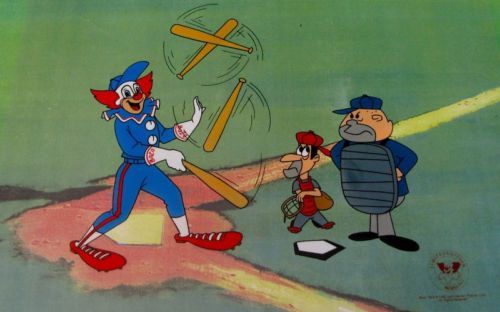
Baseball, it turns out, already has a nice history of clown-related players, Max Patkin aside. Official bozos, if you are to nickname them a such:

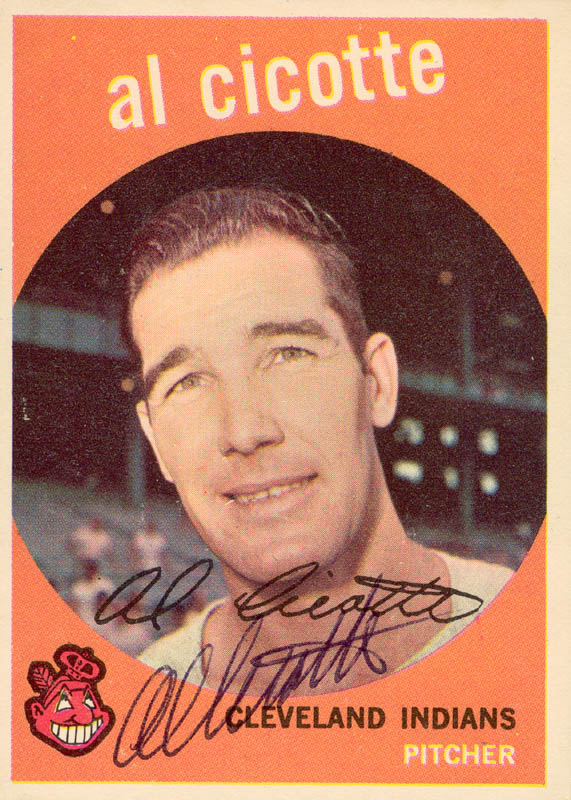
== Bozo Cicotte, at age 32, was an original member of the 1962 expansion Houston Colt .45’s. But that was the finish line of a career that started in American League champion 1957 New York Yankees as a 27-year-old rookie, then took him through the Washington Senators, Detroit Tigers, Cleveland Indians and St. Louis Cardinals for a career mark of 10-13 with a 4.36 ERA in 102 games.

Alva Warren Cicotte by name, the great-nephew of “Black Sox” player Eddie Ciocotte, also pulled off a crafty move in 1977, at the age of 48. In the insurance business after retiring, he signed a one-month deal with the Detroit Tigers that year so he’d be eligible for a Major League Baseball pension. He only lived five more years after that.

== Bozo Jackson pulled together a .354 lifetime average – 23 hits in 65 at bats – but played in only 17 games in four seasons spread over 12 years. Three games in ’33 for the Indianapolis ABC’s of the Negro National League, eight games in ‘38 for the Atlanta Black Crackers of the Negro American League, then three more games in ’43 for the Philadelphia Stars and the last three games in ’45 for the Homestead Grays, both of the Negro National League. The profile of the middle infielder on Seamheads.com also credits him with three games in ’44 for the Atlanta Black Crackers, then an Independent League team.

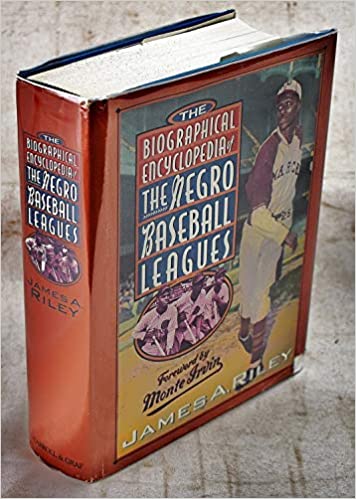
With the way records are kept now, combining Negro Leagues with other pro baseball major leagues, the Baseball-Reference.com site has determined Jackson was the 7,534th player in major league history. The site also notes his full names as James Jackson. Yet his Wikipedia page says it was Bert Jackson. Someday, we hope to see this discrepancy resolved. Maybe it is in 900-plus page version of The Biographical Encyclopedia of the Negro Leagues by James Riley (Carroll & Graf, 1994), one of the more-than 4,000 players from 1872 to 1950 who’ve been documented.

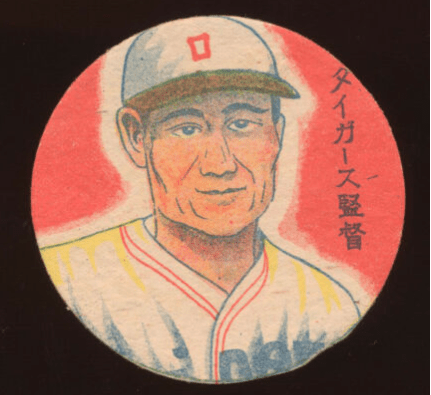
== Bozo Wakabayashi was inducted into the Japanese Baseball Hall of Fame in 1964 — the first Hawaiian honored. He was the MVP twice with the Hanshin Tigers of the war year 1940s. If you really did you homework and wanted someone far more comparable to the Angels’ Shohei Ohtani, consider Henry Tadashi Wakabayashi, a second generation Japanese American whose parents went to Hawaii from Hiroshima, is one of 48 Japanese players with 2,000 career hits and 200 victories on the mound.

Also a member of the Hawaii Sports Hall of Fame, Wakabayashi also has this intriguing sidenote: When the Osaka Tigers played their first season in 1936, jersey numbers were given out in alphabetical order. Wakabayashi was assigned number 4. He didn’t want it — the number because it is considered unlucky in Japan. He was given the first available number instead — 18. His success in the professional leagues made it a custom for a Japanese team’s ace pitcher to be given the number. Daisuke Matasuzaka was given number 18 when he joined the Seibu Lions from high school.

For many reasons, none of these Bozos made it into this collection of players that aims to honor those whose standout seasons on miserable franchises made them stand out like a bright red nose.

Williams, who grew up a Phillies fan in the late ‘60s and early ‘70s, clearly saw plenty of these examples.

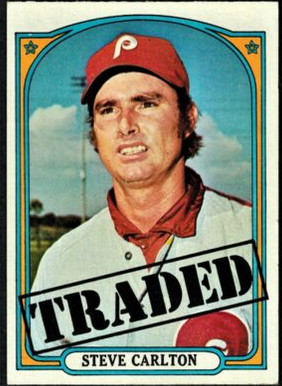
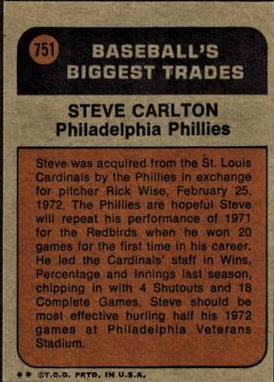
Most famously, future Hall of Fame pitcher Steve Carlton.

After his first seven seasons in St. Louis, Lefty was traded to Philadelphia for Rick Wise in 1972. That season, the 27-year-old Carlton won 27 games with a 1.97 ERA and 310 strikeouts in 41 starts and 346 innings pitched – each category leading the National League, as well as a 12.1 WAR. It got him a unanimous Cy Young Award vote and fifth place in the MVP balloting.

Pretty darn impressive for a ’72 Phillies that otherwise tested positive for awfulness, a 59-97 finish under two managers, one of which came out of the GM office to clean up the mess. They were last in the NL East, 37 ½ games behind the Pittsburgh Pirates.

Carlton’s 27-10 mark was the only one above .500 among 16 pitchers on a staff that had no one else with more than seven wins. The other starters posted win totals of 5, 4, 4 and 2 and lost a combined 48 games. Also, Carlton’s .197 batting average (23 hits, 117 at bats, and a home run in a game he defeated Pittsburgh, 2-0) wasn’t that far off the seasons posted by three of the eight regular position starters.

From our experience, this may be the most dominant performance by an MLB player on a team that had more noticeable cracks than the Liberty Bell.

Yet, it’s not included in this book.

According to Williams’ criteria, someone must be on a team that lost 100 or more games in a season, “for guys who played for the worst-of-the-worst.” Three more losses wouldn’t have made a difference on that ’72 Phillies team. There are other benchmarks that have to do with games played, innings pitched and the player “must have performed at a level noticeably higher, statistically, than his teammates during the year considered.”

Doing the math — carry the one, add an explanation point for astonishment — Carlton was responsible for nearly 50 percent of his team’s victories. He was the sixth pitcher at the time to win 20 or more games for a last-place team, reeling off 15 in a row at one point with eight total shutouts. No pitcher has won more games or thrown more complete games since Carlton did that year, and no pitcher has thrown more innings since ’73.

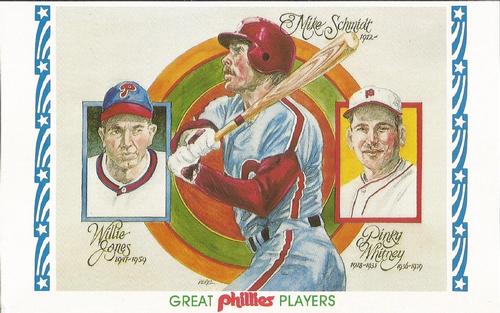
In all the years the Phillies/Quakers have existed as a National League franchise going back to 1883, they’ve lost 100 or more in 1961, ’45, every season between ’38 and ’42, ’36, ’30, ’28, ’27, ’23, ’21 and ’04. There were 26 additional seasons they lost 90 or more, most recently three straight years from 2015 to ’17. For those teams, we can raise and honor players such as Cy Williams, Cotton Tierney, Dutch Ulrich, Fresco Thompson, Pinky Whitney, Chuck Klein, Lefty O’Doul, Barney Friberg, Dolph Camilli, Kirby Higbe and Johnny Callison.

In 1972, during a strike-interrupted season where most teams only got in about 154 games played, only one team lost 100 or more – the Ted Williams-managed Texas Rangers, in the first year from moving away from Washington. Only a couple of their players are mentioned in the book for their average-at-best performances on that team. The next year, rookie Jeff Burroughs hit 30 homers and drove in 85 for the 105-loss Rangers, and was recognized.

Honk, honk.

Imagine if the Phillies played a full 162 — Carlton could have had a couple more starts in pursuit of 30 wins on a team that surely would have lost 100. We’re doing more math here and … still, it doesn’t add up.

Phillies reliever Mac Scarce explained it best: “Every fourth day we were the best team in baseball. Every other day we were the worst.”

How it goes in the scorebook

Surely, you jest. And don’t call me Shirley.

In our bookkeeping, the Carlton Oversight is a deal breaker as to how we embrace this project.

Love the concept, appreciate all the research that was put into it, enjoy the random asides and comic relief from this member of the Central Pennsylvania chapter of the Society for American Baseball Research. But it can be a tough sell to go on and on about the not-really-all-that-great single-season highlights of players from those Mets or Cubs teams of the 1960s or Padres teams of the 1970s – the worst teams we recall from our baseball upbringing.

Sure, point out Tom Seaver won the NL Rookie of the Year with a 16-win, 2.76 ERA season for the 101-loss ’67 Mets, or Nate Colbert did all kinds of damage for Padres’ teams that could never get up and running after their 1969 debut. And highlight some of those from decades past whose team didn’t allow them their proper due. Eventually, some made the Baseball Hall of Fame. It happens.

But at some point, this runs out of steam, and substance, and we can’t put our finger on just why.

Maybe another thing that bothers us is the fact Johnny Podres is on the cover in a Brooklyn Dodgers baseball card. In his 15 seasons between 1953 and ‘69, Podres never played on a team that lost more than 100 games except in his last year, with San Diego in their ’69 expansion year. A 5-6 record and 4.31 ERA in 17 games hardly deserves mention — and it doesn’t here. Did we miss something somewhere?

Trying not to burst any bubbles here, but maybe it’s another lesson about the perils of self-publishing. Editors and fact checkers are important not just for factual accuracy, but sounding boards to clean things up and secure reader credibility.

It’s a tough act to fill Bozo-sized shoes. If there is a sequel that involves teams from the year 2000 going forward, maybe we can see a revised assessment of things.

You can look it up: More to ponder

== The sports editor of The York Dispatch in York County, Pa., has a piece last June on Williams.

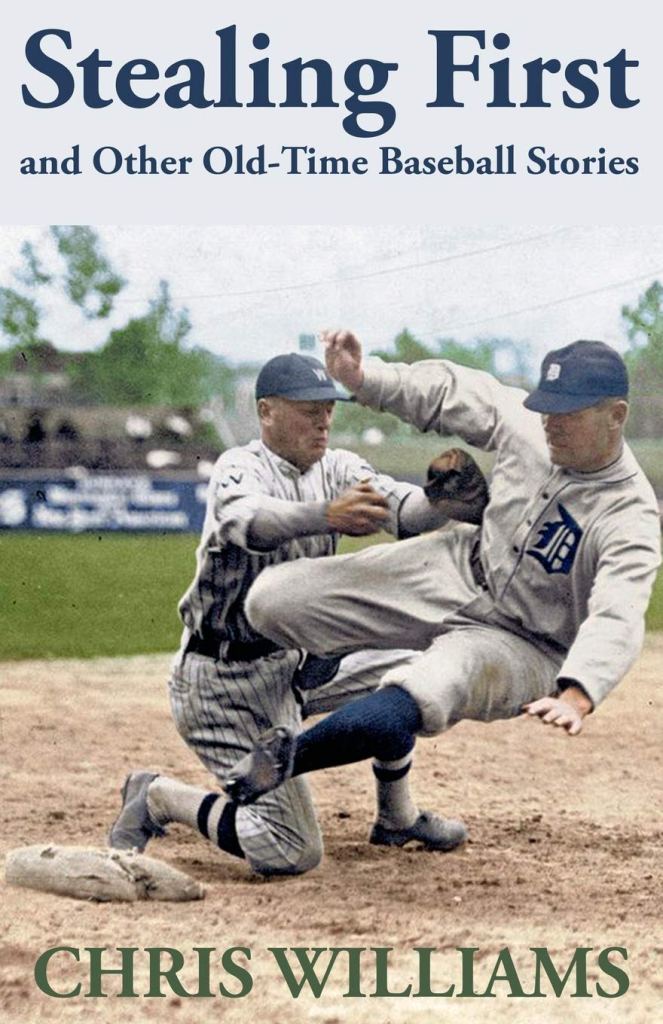
== Also from Williams: “Stealing First: And Other Old-Time Baseball Stories” (Sunbury Press, $14.95, Released in April, 2020)

== One more Bozo reference for the road: Trevor Bell, a first-round draft pick of the Angels in 2005 out of Crescenta Valley High, played three seasons for them from ’09 to ’11. He ended up in Cincinnati for one last fling as a 27-year-old. He may be best remembered as having a tattoo on his left arm of Bozo the Clown – because his grandfather, Bob Bell, played Bozo on WGN-TV in Chicago from 1960 through ‘84.

“He did it for 25 years straight — if I could play baseball for 25 years, that’d be incredible,” Trevor Bell once said. “It’d take him three-and-a-half hours to put his makeup on every day. He’d be up at 3:30 in the morning putting on his makeup and he did it for the kids, and that’s all he did it for. He did it to lighten kids’ days, it was something that was totally selfless. It’s a lost thing nowadays in the arts. It’s still lost in the arts. As far as acting, baseball, it’s keeping those things alive.”


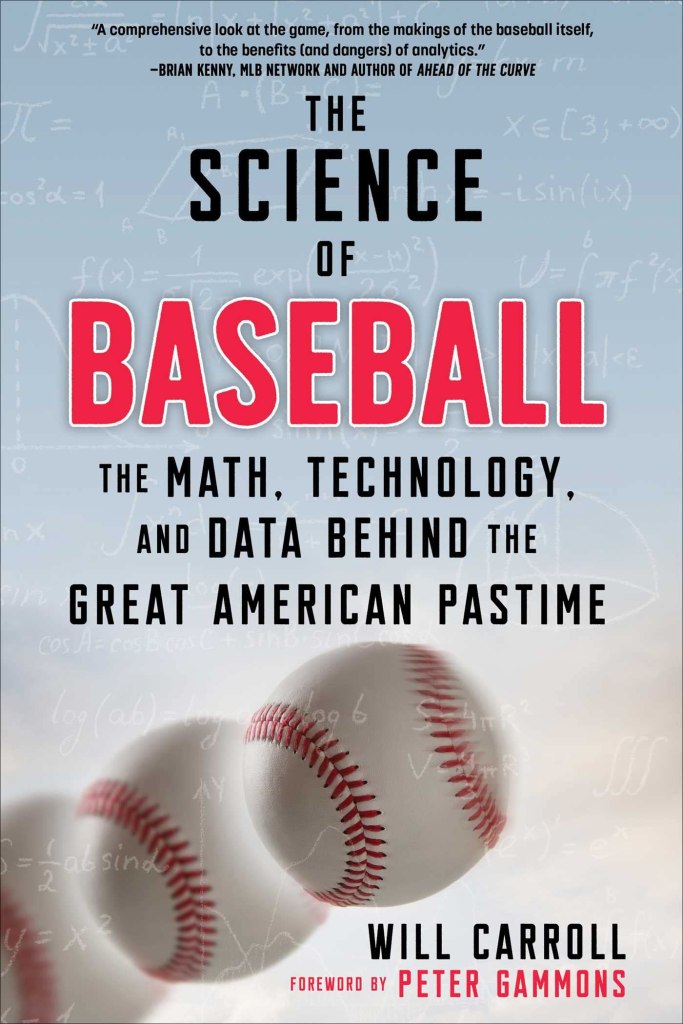
Day 10 of 2022 baseball books: Let’s not geek out — just do the math and follow the path of Professor Carroll

“The Science of Baseball: The Math, Technology
and Data Behind the Great America Pastime”

The author:
Will Carroll

The publishing info:
Skyhorse Publishing
188 pages
$14.99
Released March 15, 2022

The links:
The publishers website
At Bookshop.org
At Indiebound.org
At Powells.com
At Vromans.com
At TheLastBookStoreLA
At PagesABookstore.com
At Amazon.com
At BarnesAndNoble.com

The review in 90 feet or less

Ted Williams always seemed to us, especially in our young impressionable existence of Little League and high-school days, to be one of baseball’s greatest scientific minds. Long before he got his head around the theories that crossed over in the advancement of cryogenics.

Mostly from years as a fairly successful ball swatter (and perhaps, using that while gunning down enemy aircraft during Navy and Marine Corp missions), he was in a position to share his knowledge during what was only a four-year, hands-on instructional time as manager of the Washington Senators (and their first year moving to become the Texas Rangers) from ’69 to ’72, after he turned 50.

Yet in those 600-plus games, his teams were only above .500 in his first year (a fourth-place finish in the American League) and got progressively worse (a 100-loss season in the 154-game shortened year of ’72). As angry as he may have been, his record shows he was never ejected from a game.

In Dave Fleming’s piece for BillJamesOnline in 2008, investigating the theory that good players hardly made good managers, he wrote: “Ted Williams was probably the smartest hitter to ever play professional baseball. But as a manager for the Senators, Teddy would routinely get pissed off at his player’s inability to do things he did. Why couldn’t they see that pitch was four inches off the goddamn plate? How come they didn’t know a change-up was coming? You see where I’m going? Williams imagined that everyone had the capacity to judge ball from strike just like he did. He didn’t buy all that crap about his miracle eyesight. He thought, “Damnit, you just gotta work at it.””

In the sweet spot of those four years, Williams did a Sports Illustrated series with the great John Underwood. Call them the OG of TED talks.

They became two books for Simon & Schuster. The first was “My Turn At Bat: The Story of My Life” in June, 1969, reissued in 1988.

The second, “The Science of Hitting,” a 1971 color-coded classic that kids my age could actually visualize. If only our 10-year-old selves had any self-discipline or control of our growing limbs and necks to do anything productive with this information. We were no Tony Gwynn (although born within a year of each other), but growing up in Long Beach, he read it, and it worked for him.

The original “Science” can still be found through used-book store searches. On Amazon, nearly 1,500 reviews still have it carrying a five-star certification, particularly impressive in the pre-analytics, pre-video film review era. So many of the reviews today talk about how someone bought it for their grandson and saw the results work. An updated mass-market paperback version came out in 1982, but a more true-to-original reprint followed in ’86 and 2013 by Simon & Schuster/Touchtone.

In Underwood’s forward to the book, he explains Williams’ exit velocity to do this book was to a) expound on the difficult process why even the best fail seven out of 10 games, and b) point out the wrong things told for too many years.

Like …

The fact that it’s a slight upswing, not a downswing. The ball angles down, not straight up. You don’t need calculus to see it. It’s obvious. And it means the best way to hit it is to swing slightly up, not level or down. Meet it squarely along its path. They got that wrong for years, ever since Ty Cobb.”

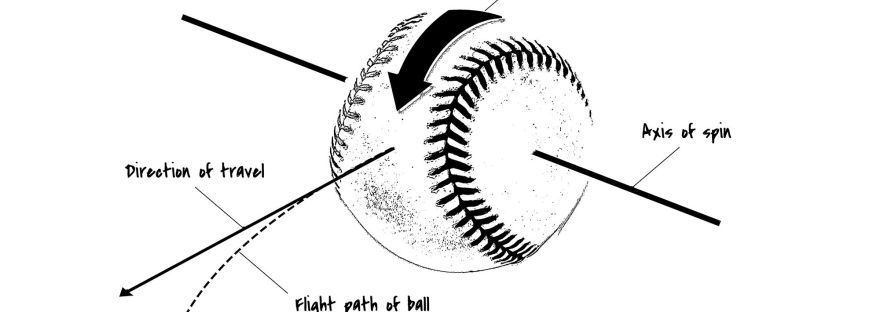
The collision of a ball on the bat lasts only about 1/1000th of a second, something we picked up from the 1994 HarperCollins book, “The Physics of Baseball,” by Robert K. Adair, a Sterling Professor of Physics at Yale. He also got into why a headwind of 10 mph could make a 400-foot homer into a 370-foot flyout, why a curveball won’t break more than 3 ½ inches despite what it looks like, and why a batted ball should never be able to travel farther than 545 feet because energy is generated from thighs and torso, and the arms and hands are just transferring that energy to the body’s “rotational and traverse motion to the bat … the hands and wrists (related to) the energy of the bat is almost negligible.” And, balls go farthest when “hit at a launching angle of about 35 degrees.”

It has been updated and put out several re-issues as late at 2002. That book came out, as we read, when baseball commissioner Bart Giamatti asked his friend, Adair, to advise him on the physics of baseball in 1987. It begat this book.

Adair, it’s been pointed out, isn’t really a “baseball guy.” Will Carroll most definitely is. We’re disappointed it’s taken us this long to realize that fact.

Continue reading “Day 10 of 2022 baseball books: Let’s not geek out — just do the math and follow the path of Professor Carroll”

Day 9 of 2022 baseball books: The Cannon Street Little League team of 1955, in “our darkest yet finest hour”

“Stolen Dreams: The 1955 Cannon Street All-Stars
And Little League Baseball’s Civil War”

The author:
Chris Lamb

The publishing info:
University of Nebraska Press
400 pages
$34.95
Released April 1, 2022

The links:
The publishers website
At Bookshop.org
At Indiebound.org
At Powells.com
At Vromans.com
At TheLastBookStoreLA
At PagesABookstore.com
At Amazon.com
At BarnesAndNoble.com

The review in 90 feet or less

Little League memories can make us feel less young and more reflective today.

== One of the things discovered in my parents’ attic among the hundreds of family mementos in boxes, bags and trunks was this jacket, for making the 1973 Aviation Little League All-Star team. It’s like finding a pair of Hang Ten board shorts of an OP T-shirt. Let’s see … ummmm. Nope, it doesn’t fit. But it fits in a box in my garage now. Not sure which Hall of Fame to donate it to from here.

It jogs wonderful memories of playing games against All-Star teams in the Southern California area of District 37 – over at Sportsman’s Park in Inglewood near the Forum, up by the oil wells in Ladera Heights, trips to Westchester and Compton. At the time, either all or almost all of those rosters were full of African-American kids, coaches and parents. Our entire league may have had only a couple non-white players. Winning districts meant advancing to area regional and state regional and eventually … broadening our perspective of where we lived, and who our neighbors were.

== Remember Mo’ne Davis? She wrote her memoir in 2015 called “Remember My Name: My Story from First Pitch to Game Changer” (HarperCollins, for kids 8-12 years). As a 13-year-old eighth-grader from South Philadelphia in the summer of ’14, she was the first girl to win a game pitching in the Little League World Series. She pitched a shutout along the way to the journey to Williamsport, Pa. On the cover of Sports Illustrated. Her jersey is in the Baseball Hall of Fame. Mark Hyman, assistant professor of sports management at George Washington University, told the New York Times: “She’s the most talked-about baseball player on earth right now.”

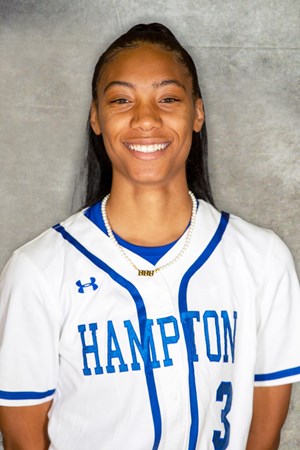
Wanna feel real old? This summer, she’ll turn 21. She’s in her second year, sitting out a season during the pandemic, playing middle infield on the historically black college Hampton University softball team, having played soccer, basketball and softball in high school.

Time lines may move on different trajectories for different memories, but they have one thing in common: A relentless among of inertia going forward, tripping up how much we want to reflect back on it.

Putting those two things in the context of this important new book that preserves the history of the 1955 Cannon Street All Stars of Charlottesville, South Carolina by Chris Lamb reveals a couple more points.

My own Little League window was less than 20 years after what those kids had to experience. I was born just about five years after that unacceptable moment in time, and grew up in an area of South L.A. near Normandie and 95th Street. White Flight after the Watts Riots was a reality.

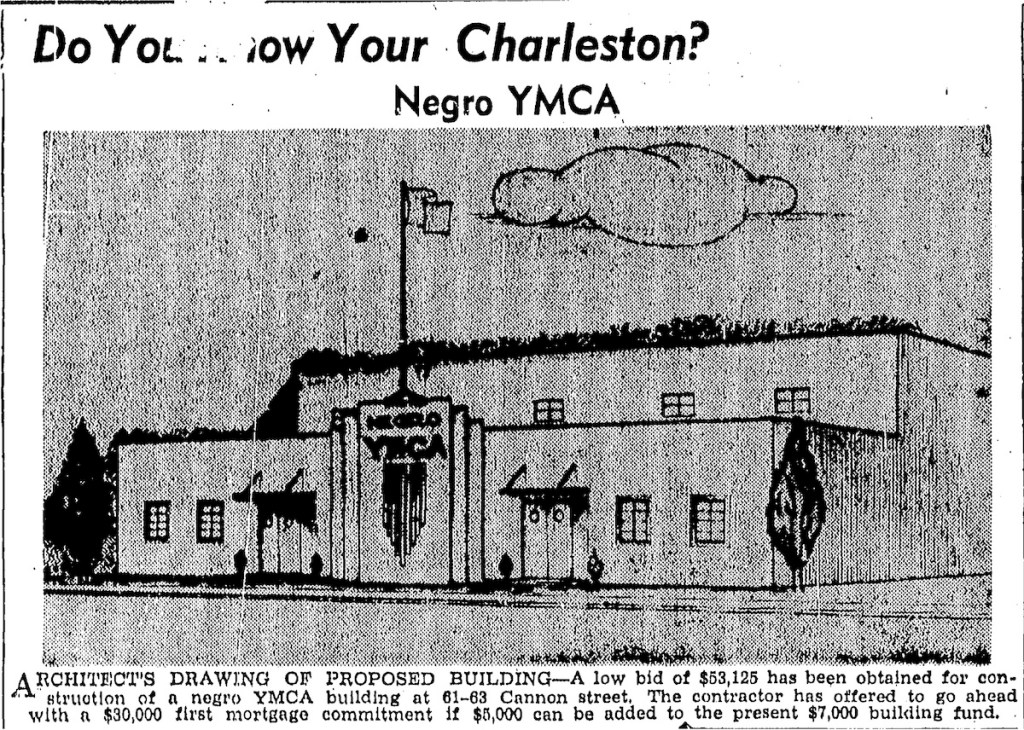
The Cannon Street YMCA All-Stars didn’t technically qualify to make it to the Little League World Series at Williamsport – they kept advancing by forfeit through their regional playoffs because all-white teams refused to play with them. They were about to go to Rome, Georgia for the next round that, had they won, would have qualified them for Williamsport. But that was derailed by officials, who instead gave them an invitation to come and watch and be introduced anyway to the crowd. Which began a chant, “Let them play.” Which also reminds us of another Little League moment — one of the “Bad News Bears” movies when they’re kicked off the field at the Astrodome and the crowd wouldn’t allow it.

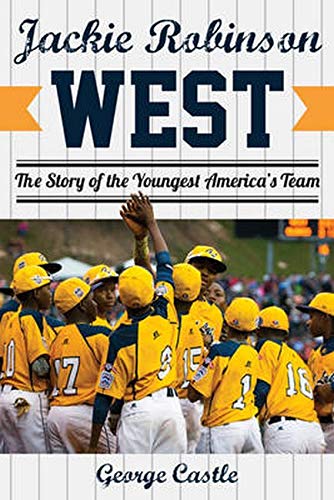
Think not just how Davis eight years ago dominated the national spotlight playing for the Taney Dragons of Philadelphia with a roster otherwise full of boys were also a mix of races and ethnicity. That year, the all-black Jackie Robinson West team from Chicago won the U.S. championship. They had a huge celebration in Chicago’s Millennium Park that August.

But eventually it had its title taken away and vacate wins in the international tournament months later when an investigation revealed to falsified boundaries to field ineligible players. George Castle covers the team story his 2016 book “Jackie Robinson West: The Triumph and Tragedy of America’s Favorite Little League Team,” but also has the story about the challenges and stereotypes about an inner-city Little League squad. Fraud charges against two coaches were dismissed in 2021 by Little League International but their championship wasn’t reinstated.

In today’s Little League world, all these things connect dots, points in history that reflect changing times.

In 1858, Taney Street came to being in Philadelphia. Some citizens are actively seeking the city to make a change.

In 2020, the Taney Youth Baseball Association changed its name to the Philadelphia Dragons Sports Association. Taney Street, where the organization resides, is widely believed to be named after Supreme Court Justice Roger Taney. He authored the major opinion in the 1857 Dred Scott Case that all blacks — slaves as well as free — were not and could never become citizens of the United States. The court also declared the 1820 Missouri Compromise unconstitutional, thus permitting slavery in all of the country’s territories.

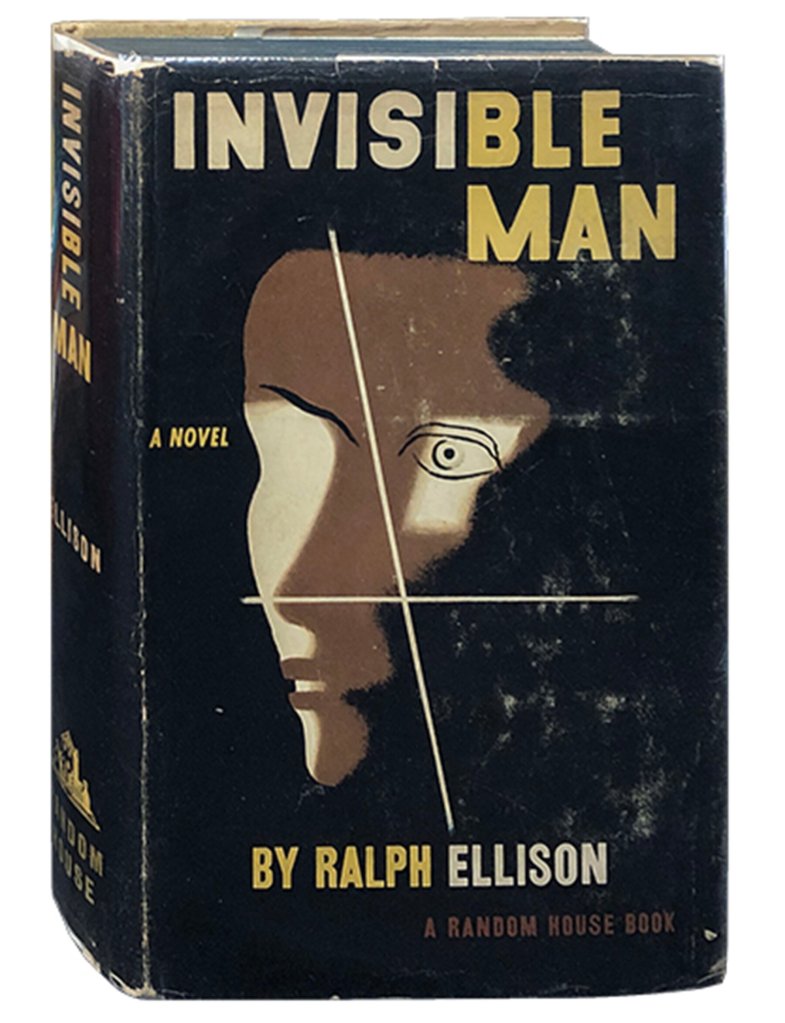
On page 116 of Lamb’s book about the Cannon Street team: “Whites in Charleston may have seen African Americans on the streets during the daytime hours or in the back of a bus or mowing the lawn or clipping the hedges of a white person’s home, but they were, as (writer and scholar) Ralph Ellison said, largely invisible. Ellison’s 1953 novel, ‘Invisible Man,’ told whites something they probably didn’t know and it told Blacks something most of them knew too well: Blacks were largely invisible to whites – unless whites saw them doing something they didn’t like.”

White baseball teams – read in: parents, administrators, district organizers – didn’t like how a black team got this far into a Little League tournament when it seemed to expand beyond the segregated boundaries that were created for it near the Cannon Street YMCA.

Again context: Brown v. Board of Education is in the news. In August, ’55, the Emmett Till lynching in Mississippi. Four months later, Rosa Parks is a household name, and the Montgomery Bus Boycotts are on.

Continue reading “Day 9 of 2022 baseball books: The Cannon Street Little League team of 1955, in “our darkest yet finest hour””

Day 8 of 2022 baseball books: Rebel, rebel, your plan is a mess with these diamond dogs

“Baseball Rebels: The Players, People and
Social Movements That Shook up The Game and Changed America”

The authors:
Peter Dreier
Robert Elias

The publishing info:
University of Nebraska Press
408 pages
$36.95
Released April 1, 2022

The links:
The publishers website
At Bookshop.org
At Indiebound.org
At Powells.com
At Vromans.com
At TheLastBookStoreLA
At PagesABookstore.com
At Amazon.com
At BarnesAndNoble.com


“Major League Rebels: Baseball Battles
Over Workers’ Rights and American Empire”

The authors:
Robert Elias
Peter Dreier

The publishing info:
Rowman & Littlefield
376 pages
$38
Released April 13, 2022

The links:
The publishers website
At Bookshop.org
At Indiebound.org
At Powells.com
At Vromans.com
At TheLastBookStoreLA
At PagesABookstore.com
At Amazon.com
At BarnesAndNoble.com

The reviews in 90 feet or less

Behold the rebellious brashness of Pete Rose, still hard at work to rehabilitate his misunderstood narrative.

Baseball’s all-time hits leader, who enjoys hitting up Cooperstown now and then to show his support (and sell autographs) during Baseball Hall of Fame’s induction weekend, is open to the possibility anyone gives him that he could, in fact, be a man ahead of his time.

Sure, he found non-existent loopholes in some archaic rules while managing his Cincinnati Reds when it came to placing wagers on his own team — but, listen, it was for a reason we couldn’t understand until now.

Recently given a place to talk by USA Today columnist Bob Nightengale about the state of today’s game – particularly its acceptance of gambling partners – Rose will now say: “I just came up at the wrong time. I was 30 years too early.”

Colorado’s Charlie Blackmon just landed the first active player endorsement deal with a bookmaker. If only Rose could get in on that action.

“Baseball has come to realize there’s a lot of money in the gambling industry,” Rose said, “and they can benefit by getting their fair share.”

Wanna bet he sees an angle where he can cash in from public outcry that hypocrisy knows no shame?

The other shame, as Rose may someday come to rant about: In two new books about the all-time rebellious people in baseball history, he only has cursory mentions in each. Two academics who’ve tried to raise the level of awareness over the 150-plus years of freedom fighters who have taken up arms against a game that refused to break their will has no room for someone like Pete Rose.

Continue reading “Day 8 of 2022 baseball books: Rebel, rebel, your plan is a mess with these diamond dogs”

Day 7 of 2022 baseball books: Where else on the planet would you rather be this Earth Day? Does Dyersville, Iowa sound too cornball?

“Is This Heaven? The Magic of the Field of Dreams”

The author:
Brett H. Mandel

The publishing info:
Globe Pequot/
Lyons Press/
Rowman & Littlefield
188 pages
$17.95
Released Nov. 9, 2020

The links:
The publishers website
The authors website
At Bookshop.org
At Indiebound.org
At Powells.com
At Vromans.com
At TheLastBookStoreLA
At PagesABookstore.com
At Amazon.com
At BarnesAndNoble.com


The review in 90 feet or less

Construction work was underway in September, 2019 for an 8,000-seat ballpark in Dyersville, Iowa, not far from the Field of Dreams movie site, that was to host the first Field of Dreams MLB game in 2020. It was postponed to August, ’21. (Charlie Grant/KCRG)

On Aug. 11 of this season, The MLB Field of Dreams Game is ready for its sequel. The Chicago Cubs meet the Cincinnati Reds amidst the cornstalks of the baseball diamond carved in Dyersville, Iowa.

Nostalgia, that powerful income producer, is pushing forward from the success of the Chicago White Sox-New York Yankees initial game complete with a Hollywood walk-off homer on that 8,000-seat specially created field last August – delayed a year because of the COVID pandemic. A lot of dirt had to be moved to get that second field built walking distance from the original movie set.

Wrote Tom Verducci in Sports Illustrated: “The setting was so perfect, the game so entertaining and the demand for tickets so great that the Field of Dreams game should become a tentpole game for the sport. Like Opening Day, the All-Star Game, Home Run Derby and the Hall of Fame inductions, the Field of Dreams game should give baseball another destination date on the calendar amid the sea of games over six long months.”

Indications are there’ll be an effort to have one of these events each year, so it’s best to know your history about this hallowed ground in America’s heartland, where redemption meets reconciliation and a a dirt-and-grass foundation for which this legend will grow for generations to come.

While this book was originally came out in hardback in 2002, translated to Japanese in 2003, then updated in paperback to come out in connection with this MLB game initiative in 2020, it’s one we’ve seemed to have lost in the shuffle of “new baseball books” as the stacks kept shifting, and revisions kept getting in the way.

It’s time for a short rewrite – recycling, as it may be also looked upon — that connects elements to how we want to appreciate baseball in the context of the 52nd edition of Earth Day. After recalling how for the 50th and 51st anniversary, we kind of dug a hole for ourselves in the backyard and crawled into it.

Continue reading “Day 7 of 2022 baseball books: Where else on the planet would you rather be this Earth Day? Does Dyersville, Iowa sound too cornball?”