
Blog

Day 6 of 2022 baseball books: All of the sudden, Sam McDowell has to tell his side of the story

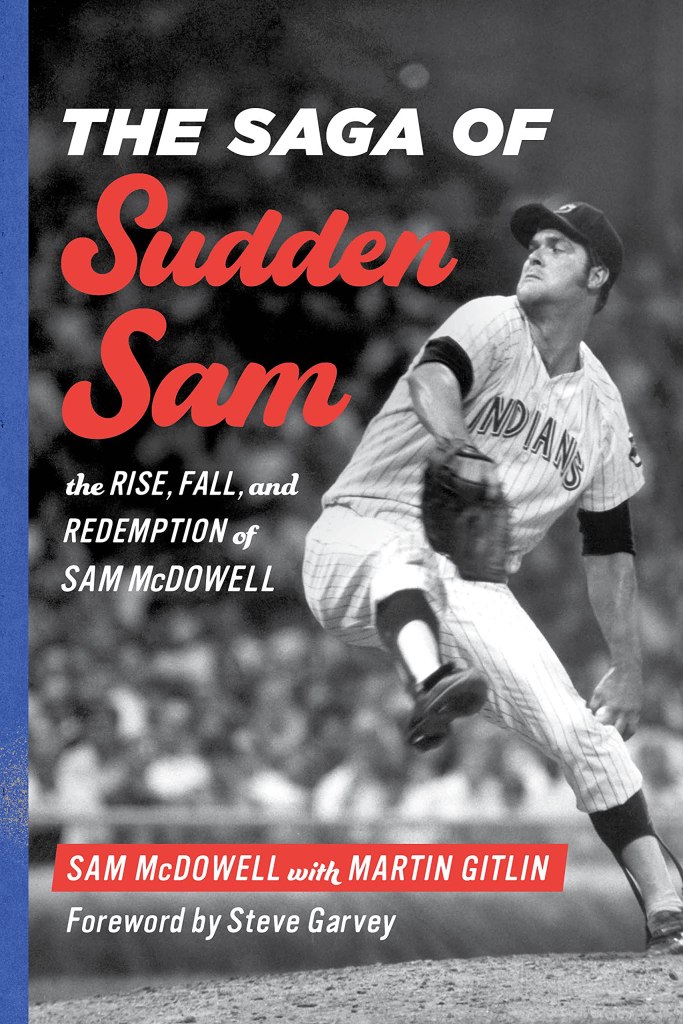
“The Saga of Sudden Sam: The Rise, Fall
and Redemption of Sam McDowell”

The author:
Sam McDowell
with Martin Gitlin

The publishing info:
Rowman & Littlefield Publishers
171 pages
$26.95
Released March 9, 2022

The links:
The publishers website
At Bookshop.org
At Indiebound.org
At Powells.com
At Vromans.com
At TheLastBookStoreLA
At PagesABookstore
At Amazon.com
At BarnesAndNoble

The review in 90 feet or less

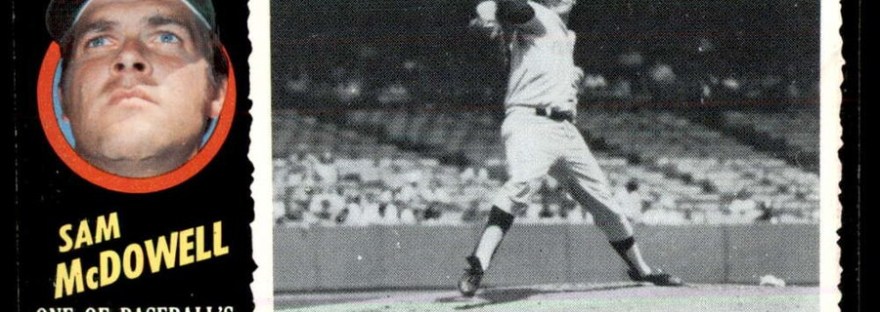
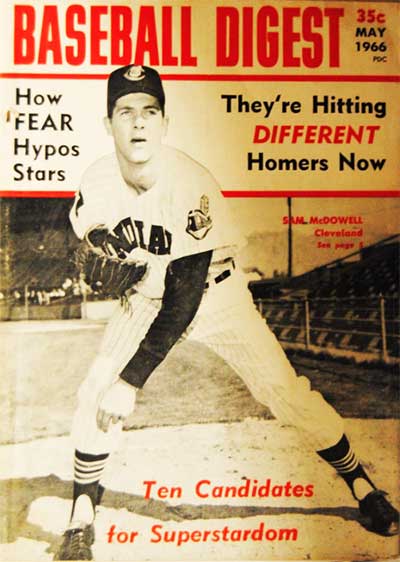
Coming up on his 80th birthday, Sam McDowell still knows how to keep a fan on the edge of his seat.

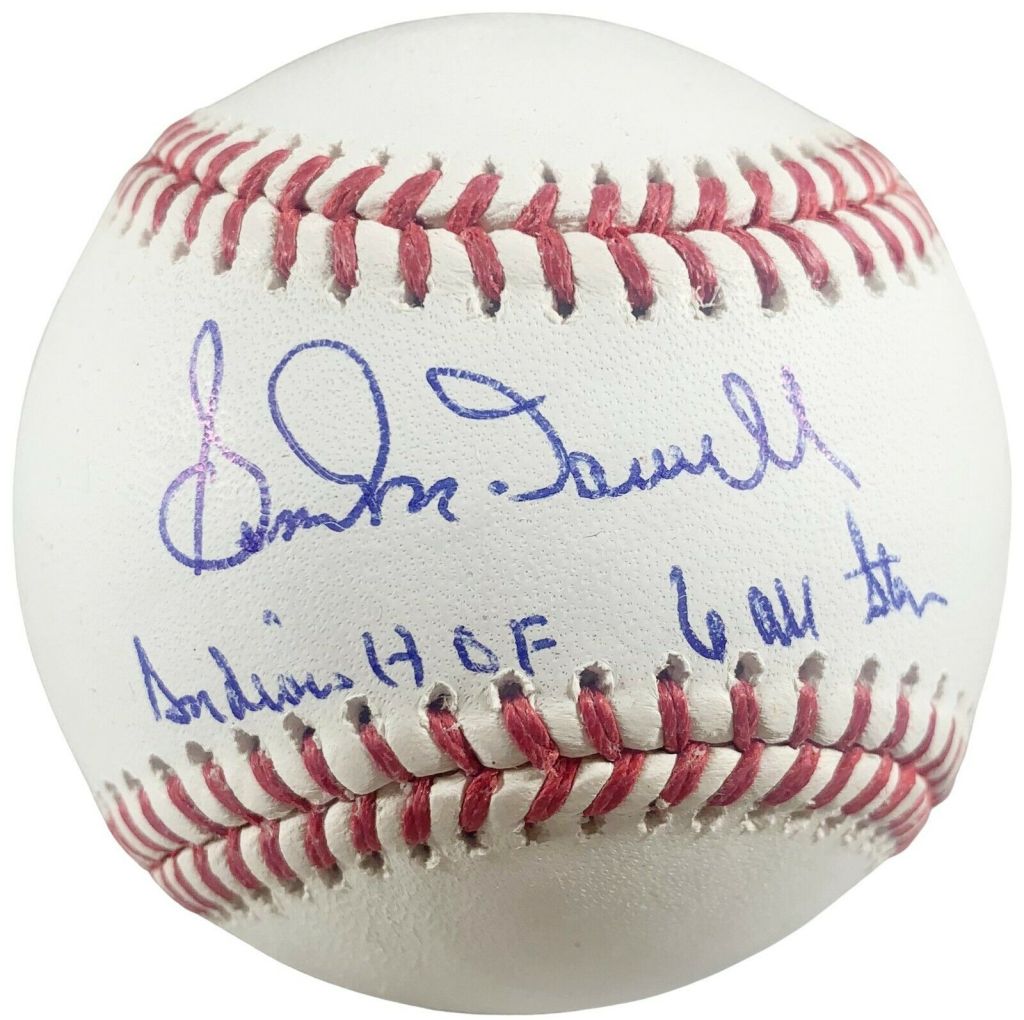
Sam McDowell was inducted in the Cleveland franchise Hall of Fame in 2006. In 2014, a list of the 100 greatest Cleveland players of all time listed him at No. 17.

The opening lines of the opening chapter of his one-and-only autobiography is about … spoiler alert … a suicide attempt. A loaded .38 revolver to his head. Trigger pulled. A dead shell in the chamber didn’t fire. He writes:

The retrospection began. I remember thinking that I could not even do this right.”

It’s the winter of 1963, and this 20-year-old kid from Pittsburgh who was supposed to be the next Sandy Koufax — a contemporary reference, but he’s also been measured up to Bob Feller, since we are talking Cleveland Indians (uh, Guardians) history — is trying to end the agony of expectations. He’s only been with this flailing franchise for three seasons, pasting together a 6-12 mark and an ERA around 5.00 through 40 appearances. His walk-to-strike out ratio is about 1-to-1.

Sounds like comparisons to Koufax at that age are pretty accurate.

But McDowell’s wife couldn’t take it anymore, all his emotional craziness and drinking that was coming with his struggle. She snatched up their young daughter and moved out. She had experience with relatives who had created a mess of their lives with booze and broads, and her husband’s flight pattern wasn’t comforting that this was going to end well.

In the end, as far as his pitching career went, McDowell would figure out how to become a 20-game winner seven seasons later, when he topped 300 innings pitched. The next season, the aura around that mystical 1968 time when so many pitchers dominated, he’d post a brilliant 1.81 ERA despite a 15-14 record. He’d make six American League All Star teams from 1965 through 1971, lead the league in strikeouts five times in six years stretch — as well as the league leader in wild pitches three times and in walks five times in that general window.

In the all-time Baseball Reference list of Starting Pitchers JAWS leaders, McDowell is at No. 144 (39.9). Ahead of Hall of Famers like Addie Joss, Satchel Paige, Jack Morris, Jack Chesbro, Lefty Gomez and Catfish Hunter.

But wearing out his time and finding himself traded to the San Francisco Giants in 1972 in exchange for future Hall of Famer Gaylord Perry, McDowell devolved into a long reliever with a reputation that would soon derail any sustainable time in the game, a period that would have allowed him to pad his career stats into those of all-time dominance categories.

Never appearing in a playoff game in his 15-year run that also included stops with the Yankees and, at last, his hometown Pirates, he was done by age 32. His strikeout rate of 8.86 per nine innings at the time was third all-time behind Nolan Ryan and Koufax at his conclusion.

Have a toast to a memorable career? Maybe not.

Continue reading “Day 6 of 2022 baseball books: All of the sudden, Sam McDowell has to tell his side of the story”

Day 5 of 2022 baseball books: Psssssst … Golenbock’s Golden Agers want to be remembered, too

“Whispers of the Gods:
Tales from Baseball’s Golden Age,
Told by the Men Who Played It”

The author:
Peter Golenbock

The publishing info:
Rowman & Littlefield
216 pages
$24.95
Released March 15, 2022

The links:
The publishers website
At Bookshop.org
At Indiebound.org
At Powells.com
At Vromans.com
At TheLastBookStoreLA
At PagesABookstore.com
At Amazon.com
At BarnesAndNoble.com

The review in 90 feet or less

Nostalgia tends to make us both remember and forget.

What we do recall, regardless of how accurate it may be, creates a fantastic illusion of making us young again. When we go back to look it up what we just said, searching for details we’ve possibly misremembered, we slump into feeling older.

So we try to get that nostalgic fuel ignited all over.

Misty water-colored memories are what makes baseball, more than any other sport, perhaps more than any other activity from birth to death, always tempting the fan’s nerve to tap into it – from playing catch with dad, your first pair of metal cleats, a Little League trophy, putting on the high school uni for the first time, coaching your son’s team …

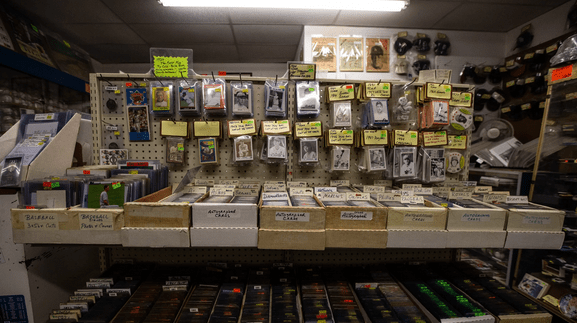
After 47 years in business, Baseball Nostalgia in Cooperstown, N.Y. , first on Main Street then in Doubleday Court, a three-minute walk from the Baseball Hall of Fame, decided to close on Dec. 31, 2021. It was a favorite stop of fans to sift through baseball cards and memorabilia.

Fandom is a reason why a story last month in the Toronto Globe and Mail as the lockout was still stuck in a rut seemed to hit a nerve because of the headline: “Baseball fans are mostly to blame for the MLB lockout.”

The reason is because, no matter how overlooked they are, fans keep the game alive, pushing aside any messiness that caused them to be irritated by lockouts, money matters and ownership greed, back to buying tickets, trinkets and taquitos in plastic helmets at the ballpark so they get back on track toward feeling a little better about their lives.

Laying out his premise, Cathal Kelly proclaimed: “Along with the owners and players, (MLB commissioner Rob) Manfred does understand one thing about the fans – that they are suckers. It is not just that games have become interminable, that money and numbers are coring the soul from baseball, that the worse a team is the more it costs to see it, or that MLB schedules the World Series as though its target audience is ‘avid bar-hoppers just getting home from the club.’  … people keep coming back. The 2020 pandemic season fully clued the owners in to how feckless their customers are … What do you do with an audience that undemanding? You start working them over a lot harder.”

The Great Distraction is back on TV, in the ballparks, highlighted in the media, avoiding all the consternation behind how it got there. We didn’t care for it as a distraction during the 2020-‘21-‘22 COVID pandemic, which is still a thing in our book, because of how it seemed to be a way to forget all the unnecessary death and mental health-related issues that were sending us in a spiral.

We were melancholy for how it, and life, used to be much easier to get our head and health around.

Part of what kept our sanity were books, like the golden nuggets mined from Golenbock’s files, that remind us of a different time.

The premise for “Whispers” by the prolific author of more than 60 books — the 1984 “Bums: An Oral History of the Brooklyn Dodgers” was a 464-page Casey Award winner for its efforts, and it was Golenbock who also helped Bobby Valentine with his autobiography just reviewed – was that he had a collection of recorded interviews for a variety of projects he had done.

Continue reading “Day 5 of 2022 baseball books: Psssssst … Golenbock’s Golden Agers want to be remembered, too”

Day 4 of 2022 baseball books: Break a leg — that fresh, highfalutin, always finagling, funny Valentine

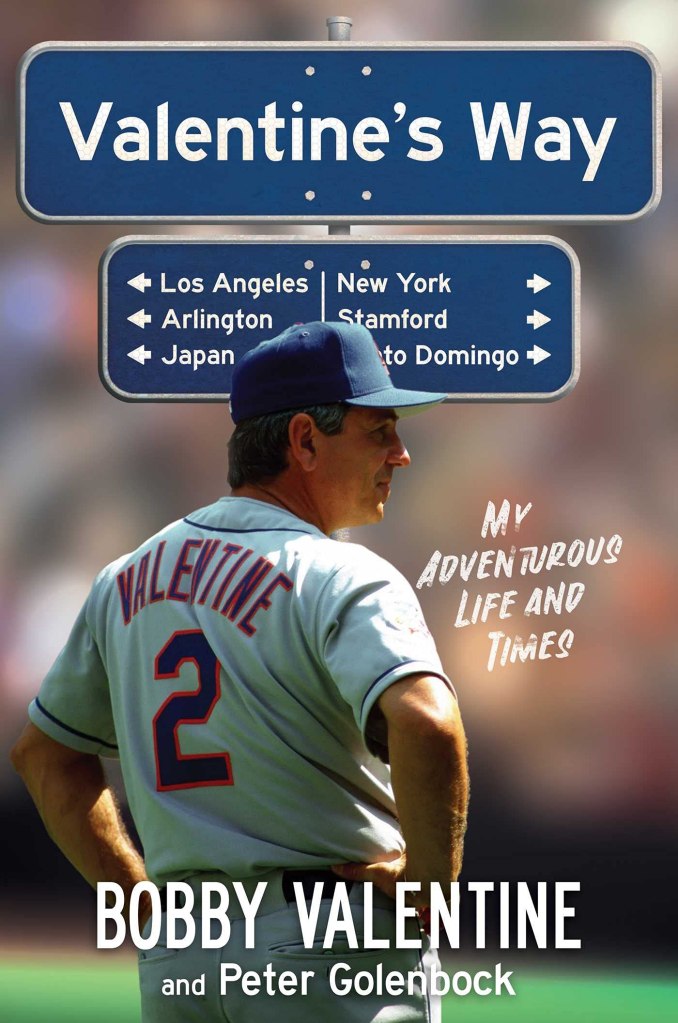
“Valentine’s Way: My Adventurous Life and Times”

The author:
Bobby Valentine
With Peter Golenbock

The publishing info:
Permuted Press
376 pages
$30
Released November, 30, 2021

The links:
The publishers website
The distributors website
At Bookshop.org
At Indiebound.org
At Powells.com
At Vromans.com
At TheLastBookStoreLA
At PagesABookstore.com
At Amazon.com
At BarnesAndNoble.com

The review in 90 feet or less

That white-haired, googly eyed meatball with the Howdy-Doody smile waltzing around on the Angels’ TV pre- and post-game shows these days?

Oh, it’s just Bobby Valentine. Keeping the audience awake. Being Bobby V.

About to turn 72 next month, Valentine reconnected to the franchise that basically allow his right leg to become disconnected and ruin much of his playing career potential has a somewhat odd feeling.

Or maybe it’s a calculated move on his part.

Maybe we missed it, but at some point already this season, he may have already told the story about the time in May of ’73, playing out of position in center field for the Angels, cutting across the outfield to chase down a long fly ball hit by Oakland’s Dick Green …

If you look at the Retrosheet.org box score and game description, it is handled this way:

ATHLETICS 2ND: Jackson tripled to right; Johnson struck out; Bando was called out on strikes; Fosse walked; Green homered [Jackson scored, Fosse scored]; BERRY REPLACED VALENTINE (PLAYING CF); North grounded out (third to first); Bobby Valentine left with unknown injury; 3 R, 2 H, 0 E, 0 LOB.  Athletics 3, Angels 0.

Bobby Valentine’s 1972 Topps card was taken of him playing for the Dodgers at Dodger Stadium. They painted red socks and red trim on his pants to make him look like a California Angel.

Hang in, it’s here in full detail of this autobio, starting on page 75, after he’s already poured out his angst about being traded away from Tommy Lasorda and the Dodgers in the winter of 1972, across the way to Orange County, in that package with Frank Robinson, Bill Singer and Bill Grabarkewitz so the Dodgers could have Andy Messersmith (and Valentine could finally get away from mean ol’ Walt Alston). The No. 5 overall pick in the June ’68 draft, one spot behind the Yankees’ Thurman Munson, ahead of Dodgers picks Bill Buckner (2nd round), Tom Paciorek (5th round), Joe Ferguson (8th round) and Doyle Alexander (9th round), later adding Steve Garvey and Ron Cey in the secondary phase, had such up-side and charisma, sideburns and all.

Now he’s doing Angels manager Bobby Winkles a favor, giving Ken Berry and Mickey Rivers a day off, two days after Nolan Ryan had thrown a no-hitter in Kansas City and benefited from Valentine’s play in center field.

As Valentine, who just turned 23 days earlier, describes tracking down Green’s fly ball, he’s moving from shallow right-center to deep left-center. Anaheim Stadium for some reason didn’t have a real wall to mark the playing field boundary.

I leapt to climb the fence to catch the ball. A green plastic tarp was stretched across the chain-linked fence at the Big A, and though I have never watched video of what happened, apparently my spike lodged into the canvas. Instead of my foot sliding down the canvas and my body taking the force of the collision, my leg and foot took the force of the collision and halfway between my leg and my foot, my tibia and fibula snapped. It felt as if the upper and lower parts of my leg were not connected. Vada Pinson, who was playing left field, came over to see if I was okay. ‘I broke my leg,’ I said. ‘Shoot me.’

From there, it’s a detailed explanation and something of an indictment about how the leg didn’t heal correctly. The Angels’ orthopedic surgeon at the time, Dr. Donald Ball (his family name is why the street near the stadium is called Ball Road) thought he could mend the tibia without surgery. Valentine said he turned down an offer from Dr. Robert Kerlan (no longer with the Angels) to handle the case.

Continue reading “Day 4 of 2022 baseball books: Break a leg — that fresh, highfalutin, always finagling, funny Valentine”

Day 3 of 2022 new baseball books: The persnickety guy who came before Vin Scully was pretty good, too

“Red Barber: The Life and Legacy
of A Broadcasting Legend”

The authors:
James Walker
Judith Hiltner

The publishing info:
University of Nebraska Press
544 pages
$36.95
Released April 1, 2022

The links:
The publishers website
At Bookshop.org
At Indiebound.org
At Powells.com
At Vromans.com
At TheLastBookStoreLA
At PagesABookstore.com
At Amazon.com
At BarnesAndNoble.com

The review in 90 feet or less

Seventy-two years ago on this day – April 18, 1950 – a fresh-faced 22-year-old red head from Fordham University named Vin Scully called the first Major League Baseball game of his career.

Pull up a chair. This could take a minute to put into context.

Those Dodgers of Brooklyn, coming off their second World Series appearance in three years, had a burgeoning Hall of Fame pedigree. Reigning NL MVP Jackie Robinson was hitting cleanup. Pee Wee Reese led off, Duke Snider hit third, Gil Hodges was sixth and Roy Campanella was incredibly No. 8. Don Newcombe was on the mound. They endured a 9-1 loss to Robin Roberts at Philadelphia’s Shibe Park on Opening Day to the soon-to-be-named Whiz Kids Phillies – the same team that would also outlast them on the last game of the season in a 10-inning thriller at Ebbets Field to win the National League pennant.

A couple of other future Hall of Fame voices were also there to chronicle it.

From Mark Langill’s Dodgers MLB.com blog in 2020 on the 70th anniversary of Vin Scully’s debut.

The start of Scully’s 67-year career working for the team was because of a need to fill an opening in the team’s WMGM radio booth — Ernie Harwell left to join the broadcasting team for the New York Giants, the franchise Scully grew up admiring, and perhaps the Dodgers were lucky Scully wasn’t experienced enough at the time to even be considered for that position paired with Russ Hodges.

Already on this Dodgers’ broadcast team was Connie Desmond, who Scully would later characterize as someone like a favorite uncle.

From The Sporting News archives, for auction by MearsOnlineAuctions.com

There was also Red Barber.

The then-42-year-old had been the original voice of the Dodgers 12 seasons earlier when they started doing games on WHN radio, teaming with Al Helfer in 1939. Barber recruited Scully, an intern at CBS Radio affiliate WTOP in Washington DC to cover a Maryland-Boston University football game in November, ’49, on the Fenway Park press box rooftop amidst horrible weather. Barber found he could become Scully’s mentor and taskmaster, calling him “a pretty appealing young green pea. You could tell this was a boy who had something on the ball.”

Barber who got Branch Rickey to sign off on hiring Scully just three years after Rickey made some history with Robinson.

At that point in time, the Dodgers were launching a new experiment doing games on New York’s WOR-TV. They needed more voices. Barber was ready to try this new visual experiment — he already had the historical footnote of being the broadcaster on the first televised baseball game in August of ’39.

As it turned out, Barber and Scully only overlapped four seasons. Barber was gone after a dispute with new team owner Walter O’Malley and went to work for the rival New York Yankees.

Scully endured, made the move to L.A., and the rest was …

A lengthy, definitive bio someday will be done on Scully – we continue to discount the book that historian Curt Smith slap-dashed together in 2010, without Scully’s cooperation or blessing, justifying it because Scully was a public figure whose career was of notable interest. No doubt. But Scully, who turned 93 last November, pushes back often when requests are made to do his life story. A public person, but a very private man.

Just like Barber.

And to tell Scully’s story, we need to first know Barber’s.

The foundation has been laid first by a publisher that has dedicated itself to encouraging and preserving baseball history at (almost) any cost, and now by a husband-and-wife team of academics, recently retired as professors at Saint Xavier University, and enough fans of the game to know where to start, find more untapped material to work with, and then take the leap of faith there would be an appreciative audience for this task that needed twice the size of a normal biography to tell it — plus 60 more when you throw in the footnotes, bibliography and index.

Continue reading “Day 3 of 2022 new baseball books: The persnickety guy who came before Vin Scully was pretty good, too”

Day 2 of 2022 baseball books: Breaking news — the Dodgers’ way to play baseball in ’22 doesn’t concern you

“How to Beat a Broken Game:
The Rise of the Dodgers in a League on the Brink”

The author:
Pedro Moura

The publishing info:
Public Affairs publishing
272 pages
$29
Released March 29, 2022

The links:
The publishers website
At Bookshop.org
At Indiebound.org
At Powells.com
At Vromans.com
At TheLastBookStoreLA.com
At PagesABookstore.com
At Amazon.com
At BarnesAndNoble.com

The review in 90 feet or less

Pardon the interruption, but when Tony Kornheiser and Michael Wilbon appeared on their daily ESPN chat show last Wednesday, it seemed as if just minutes had passed since the Dodgers’ Clayton Kershaw was pulled from his start at Minnesota amidst seven perfect innings of work. That is, 21 Twins up, 21 down. An efficient 80 pitches for those keeping track (27 swings, 17 misses). Thirteen Ks and no walks.

The debate was fresh and hot, not half-baked.

This is what’s wrong with baseball,” Wilbon declared. “There are people running baseball who just care about … innings pitched, number of pitches … that’s all they give a damn about. Baseball is 140-plus years old. And you meant to tell me … If I were Clayton Kershaw I would have stood there and said to (manager) Dave Roberts when he asked for the ball: ‘Naw, I’m not giving it to you. … What are you gonna do? You gonna slap me?’ …”

(Flashback to Max Scherzer/Dave Roberts, 2021 one-game NL wildcard playoffs.)

“Baseball is driven by these lunatic people who control the numbers from the front office,” Wilbon continued. “I find them loathsome. And they’re killing the game.”

Kornheiser counterpunched: Kershaw was likely OK with the decision, he had an elbow injury last year, missed the playoffs, came back to the Dodgers instead of going free agent to another team because of the opportunity for a World Series run, had a short spring training season, and it’s only the second week of the season.

Wilbon wasn’t having it.

“You know what numbers geek would do? He’d tell Jackie Robinson on April 15, 1947, ‘You know, you’ve had a couple at bats, why don’t you come on out so we can save you.’ … Baseball is ‘less than.’ They’ve turned it over to people who don’t give a damn about the game and its soul. These people are crushing the game. … They’re awful people, Tony. I hate what they’ve done to baseball.”

Kershaw’s post-game response to the media had some edge, but not what it could have been: “Blame it on the lockout. Blame it on my not picking up a ball for three months (during the off season). I knew going in that my pitch count wasn’t going to be 100. It’s a hard thing to do, to come out of a game when you’re doing that. We’re here to win. This was the right choice.”

L.A. Times columnist Bill Plaschke wrote that everything the Dodgers did in this scenario was “perfect.” Yet he also pointed out: “Critics of Roberts will angrily note the incredible stat that he has managed the only two pitchers in history to be pulled from a perfect game after seven innings — Rich Hill in 2016, and Kershaw on Wednesday. But while the decision on Hill was questionable — it was late in the season and Hill didn’t want to leave the mound — anybody who closely follows the Dodgers surely understands that the Kershaw decision was a no-brainer.”

And, for the record, let’s also not overlook the times Roberts was compelled to yank Ross Stripling from a no hitter after 7 1/3 innings and 100 pitches in his MLB debut (April of 2016 in San Francisco). He then removed Walker Buehler, in his third MLB starts, from a no-hitter after six innings in that odd rain-delayed game in Mexico against San Diego after 93 pitches (May of 2018).

This Kershaw scenario could be seen from a mile away while watching it unfold live on SportsNet LA. Like taking a mouthwatering cake out of the oven when it could still use another 10 minutes, then watching it collapse in on itself because some who wrote the recipe algorithm decided they knew better.

Just three pages into Pedro Moura’s new book — there’s a image of Kershaw on the cover, by the way — this preamble is etched:

Pedro Moura, the current national baseball writer for Fox Sports who covered the Dodgers for the L.A. Times, Orange County Register and The Athletic.

“Forty years ago, the people pioneering the study of sabermetrics, the use of statistical analysis to pursue truths about baseball, never expected their work would be one day be adopted by every one of Major League Baseball’s teams. … Whatever the measures are called (today), few, if any, teams use them more than the Dodgers. Through 2020, two dozen employees with multidisciplinary degrees worked out of a converted clubhouse at Dodger Stadium, ideating ways to quantify and predict success … The franchise has come to define this fractured era. … Every decision (baseball operations chief Andrew Friedman) made was governed by the guiding principle of optionality, a term co-opted from Wall Street, where he had his professional start. The idea is to render no decision absolutely necessary, to preserve as many possible choices as long as possible. It manifests in many ways, most notably in the Dodgers’ relative lack of desperation. Desperate teams make decisions they will regret. Because of Friedman’s patience and ownership’s resources, the Dodgers stand perpetually ready to seize on opportunities created by another team’s desperation.”

Nutshell, you’ve been cracked. And in the process, you’re fracking things up.

Continue reading “Day 2 of 2022 baseball books: Breaking news — the Dodgers’ way to play baseball in ’22 doesn’t concern you”