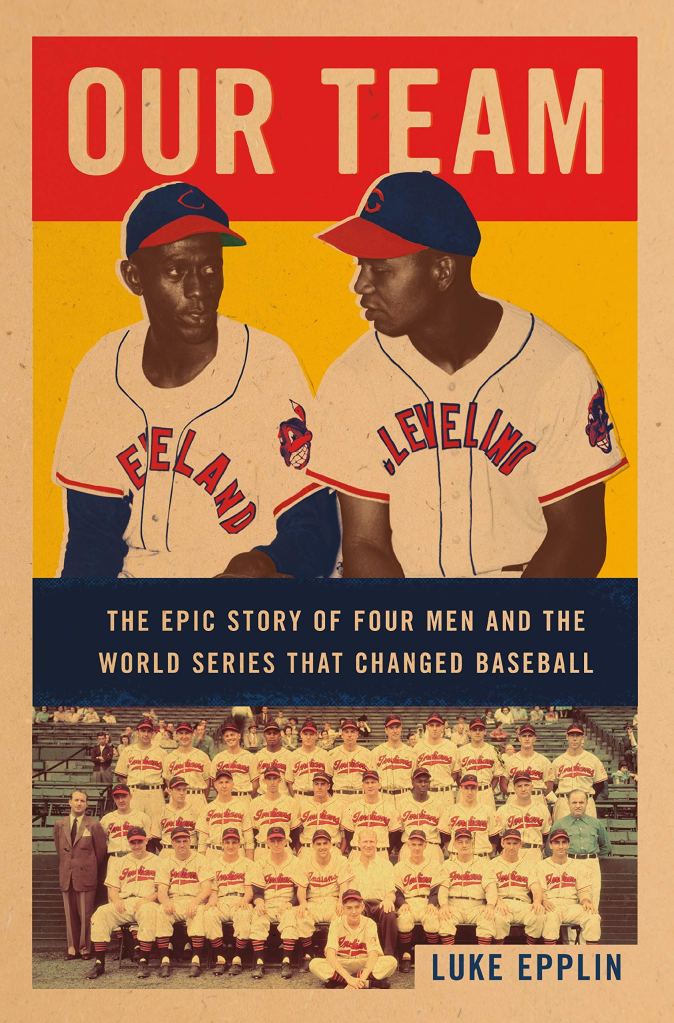
Jackie Robinson, 1947, Dodgers … The MLB’s first Black player, and the bigs’ first Rookie of the Year, helps propel his team to first in the National League. But they lose in seven games to the Yankees in the World Series, and their first (and only ) title in Brooklyn won’t come until eight years later.
We suspect you’ve got a pretty decent grasp of that piece of history.
Larry Doby, 1947, Indians … The MLB’s second Black player, and first in the American League, arriving about three months after Robinson tests the waters, doesn’t make quite the statistical splash — just 29 games, 32 at bats, a .156 average — and Cleveland manages a fourth-place finish in the junior circuit.
Then comes 1948.
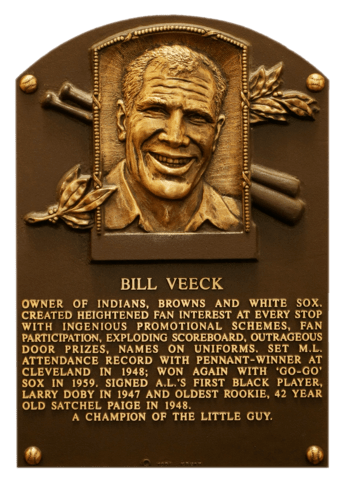
Owner Bill Veeck ups his game, adding Satchel Paige onto his staff to join up with Bob Feller. Magic happens in a city where, just a few years later, a local R&B radio disc jockey will coin the phrase “rock-n-roll” and introduce the profound licks of Black-influenced music to be embraced by his white listeners.
Doesn’t that seem like a much more entertaining story to tell after all these years?
Before Cleveland rocked, Cleveland rocked the boat with its own fab four.
Picture this: A photo book of Babe Ruth. Big and glossy. Nothing real in depth. Highlights of his career and all that sort of stuff.
Instant seller? Depends on who’s buying. But if “Yankees” is in the title …
Today in 1927, Babe Ruth contracts syphilis in the morning, beats it with his will power by 1:00 pm, eats 14 hot dogs and gets the shits, then cranks two homers that night to impress a prostitute. pic.twitter.com/9BZZ9z2BgG
A tweet we came across the other day kind of sold us (again) on the idea that if all you had was a picture of the Bambino with some text-adjacent real estate, someone will glob onto it in hopes of gleaning new information. It can be a fatal attraction.
Or, an opportunity for Babe to have some good, clean fun:
Nice to see Babe Ruth wasn't above making the same joke we've all made at one time or another. pic.twitter.com/0sV7apvx9K
Actually, today is annual Babe Ruth History Day according to those who establish these sort of thing. We were not aware of it until we were in a Ruth photo excavation process of our own to see if photos in this new collection were as un-rare as they appear to be. Had we been more perceptive in our perusal of “The Great Bambino,” we would have seen on page 149 the story about how baseball commissioner Happy Chandler declared April 27, 1947 as “Babe Ruth Day,” as it was obvious Ruth wasn’t going to live much longer with cancer. Ruth appeared that day at Yankee Stadium to be celebrated before 60,000 fans — but it’s not the famous photo you may recall of him standing at home plate with his No. 3 pinstripes and his former teammates lined up along first base. That was June 13, 1948, two months before he died at age 53. That photo is on pages 146-147.
So even if there’s no real official Ruth anniversary of note, no historical feat to celebrate, why not hold this publication up as the latest example of his staying power?
It also brings up the idea: What if someone was to put a book together of all the images produced of Ruth over the years that were created just to sell another book.
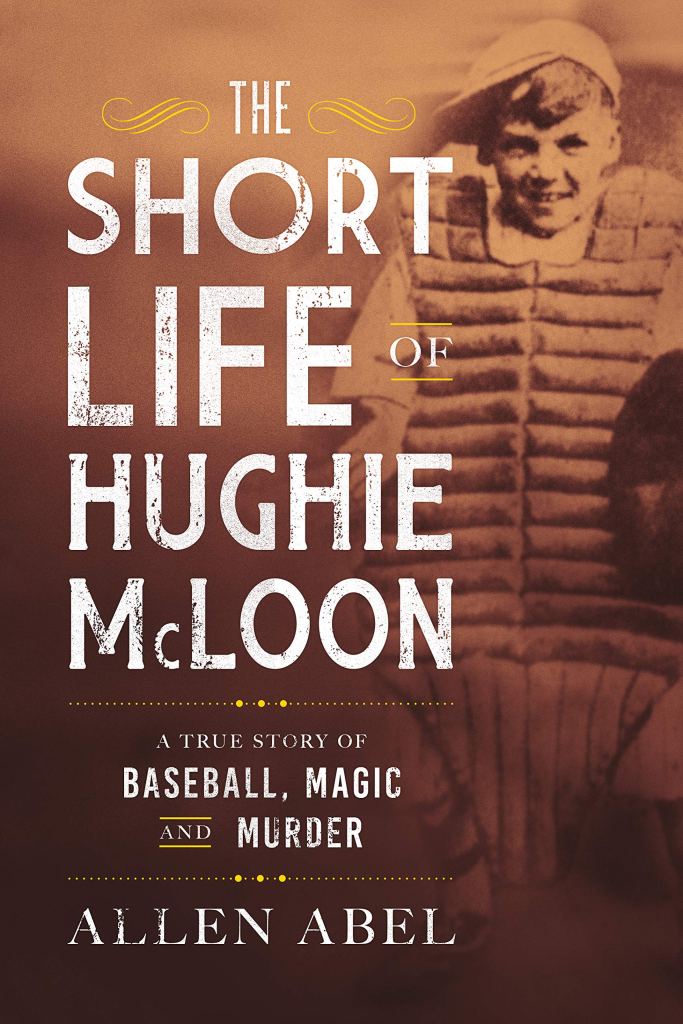
In much the same way our last review, “The Best Little Baseball Town in the World,” was about “a story that reads more like fiction than nonfiction,” the cover blurb atop “The Short Life of Hughie McLoon: A True Story of Baseball, Magic and Murder” has this declaration by former Sports Illustrated scribe Michael Farber: “This could be a great work of fiction. The damndest thing is it’s all fact.”
Fact it, it’s as accurate as one can glean from a gaggle of Philadelphia newspapers in the roarin’ ’20s.
So here’s the front-page scoop as we’re told:
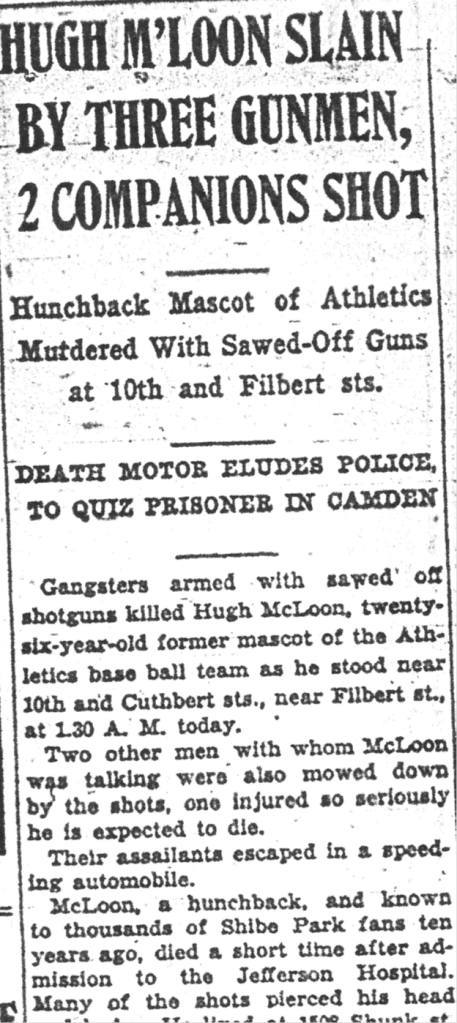
Hughie McLoon, who grew to just 50 inches tall and only 80 pounds because of a spine injury suffered when he fell off a seesaw at age 3, was once the team mascot for Connie Mack’s hapless Philadelphia Athletics at a time when major-league teams were not only eager but sought out boys who had deformities to come aboard in hopes of giving them good luck.
“I tol’ him I’d bring him luck an’ I did!” McLoon is once quoted as saying he told Mack.
That depends on what your definition of luck might be. The Athletics, who would end up losing 117 games (out of 154) in 1916, decided to bring in McLoon during a stretch when the team, playing 23 in a row at home at Shibe Park, had already lost 11 straight, 15 of 16 and 26 of 28. When McLoon joined, they lost the first game of a double header against the St. Louis Browns, but somehow won the second game, 3-0.
One of the takeaways from this book is that, as messed up as that sounds, having cripples invited to hang around with a team as a bat boy, or simply as a mascot, was all too common. Abel explains on page 5:
The genesis lies in humanity’s deepest superstitions, our yearning to bring a sense of control to lives riddled with uncertainty. Stir our unyielding, if ridiculous, faith in fairies, charms and totems together with our competing feelings of pity, curiosity and revulsion for the disabled and deformed, then combine them with the maddening difficulty of hitting a speeding, spinning sphere with a hickory bat, and the product is Hughie McLoon. … Hughie discovered to be the luckiest, you first had to be unlucky. Then you had to convince the gods of the diamond that the crucible of your own suffering rendered you a guardian against ill fortune.”
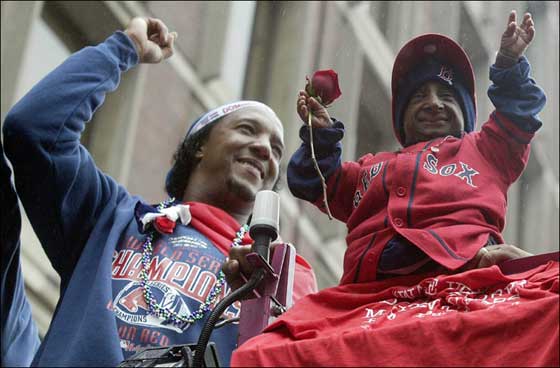
(We need only to think back to the Boston Red Sox’s run to their 2004 championship, and Pedro Martinez’s infatuation with tiny Dominican actor Nelson de la Rosa, carried around as the team’s “good luck charm.” De la Rosa’s death at age 38 less than two years later merited an obit in the New York Times.)
McLoon actually replaced another cripple and was following the line of those living a “charmed” MLB life such as Ulysses Harrison, Louis Van Zelst, Charlie Faust, Eddie Naughton and Eddie Bennett. While McLoon was connected to this version of the Athletics that were often then called the “Pathetics” from July of 1916 through 1918, they were trying to recapture something from their recent run as a three-time World Series champions, yet they never really pulled out of that pre-World War I skid.
There’s always a decent chance one might judge the decision to further investigate a book by the blurb on its back cover. Try this one on for size:
“(It) tells the fun, quirky story of Crowley, Louisiana, in the fifties, a story that reads more like fiction than nonfiction. To start, the Crowley Millers’ biggest star was Conklyn Meriwether, a slugger who became infamous after he retired when he killed his in-laws with an axe. Their former manager turned out to be a con man, dying in jail while awaiting trial on embezzlement chargers. The 1951 team was torn to pieces after their young center fielder was struck and killed by lightning – during a game. But aside from the tragedy and turmoil, the Crowley Millers played some great baseball.”
It’s all accurate, for sure. A story that must be told, actually, and a reminder that sometimes truth is more compelling than things that could be made up. But in a way, while that is a lot of what’s going on here and setting the tone for the adventure, it doesn’t fully capture the essence of what Los Angeles-born Gaylon White has actually done here with his latest deep dive into the history of minor-league baseball.
We won’t suggest the reader jumps to the final chapter — after White lays out all the details about the team and this effort to get pro baseball into the community only to have it disappear after a few short years.
But if only for this exercise, consider how White comes to cover the rebirth of historic Miller Stadium, and the pride of the community. This is a ballpark, White notes, located near the railroad tracks used by the rice mills. It earned the nickname of “Rice Capital of American” in this southern Louisiana city just east of Lafayette. It’s a place, they say, where “Life Is Rice and Easy.”
Photo by Gaylon White.
Back in the day, White continues, fans parked along the track, but in the middle of the games the public address announcer would call out the license numbers of cars that had to be moved for a train to pass through.
The town had a population of about 12,500, and they’d sometimes get 7,000 attending games there.
About 20-plus years ago, the ballpark was restored and upgraded as it fell apart from neglect.
From the April, 1952 Crowley Post-Signal.
Richard Pizzolato, known around town as Coach Pizz, said he was at the field one day in 1998, when a man in a heavy Brooklyn accent asked: “Is this Miller Stadium?”
Coach Pizz confirmed it was. In his own Southern drawl, he added: “It’s great to have you back Mr. Scivoletti.”
Mike Scivoletti, a shortstop for the Millers in their glory years of 1952-to-’53, was the visitor, and he was shocked to be recognized.
“How do you know who I am?” asked Sciovletti.
“You were my hero when you played here,” Coach Pizz said.
Pause for one of those “Field of Dreams” crying moments.
At a confounding time when Major League Baseball has decided to compromise its future by streamlining its minor-league organization and eliminating more cities and small towns from the pride of having a pro team, White has fortuitously seized a moment to recall a franchise that once existed, then vanished, and merits just two generic paragraphs on a Wikipedia entry.
Here’s the Millers, and their trenchant story during the 1950s when the city decided to build a ballpark and then hope a team would come. They did, and then came the post-WWII Class C version of the Evangeline League.
The league’s name itself is a thing of literary beauty. It’s the epic poem by Henry Wadsworth Longfellow called “Evangeline: A Tale of Acadie,” which focuses on Acadian farmers, descendants of a group of French-speaking settlers who migrated from coastal France in the late sixteenth century to establish a French colony called Acadia in Canada and parts of what is now the state of Maine. Forced out by the British, many resettled in southern Louisiana. They are now more popularly known as Cajuns.
Kiki Hernandez hit a fly ball that barely went over the Green Monster for a lead-off homer and did a dance at home plate with teammate Alex Verdugo, later saw Verdugo hit a solo homer, and the Boston Red Sox used 10 Ks from Nathan Eovaldi to secure an 11-4 victory over the Chicago White Sox on Patriots’ Day this morning/afternoon at Fenway Park, which was not followed by the running of the Boston Marathon. It must also be noted that White Sox Hall of Fame manager Tony LaRussa used two position players to soft toss off the mound to get through the seventh and eighth innings just to get it over with. The paying fans must feel they got extra value. Just brutal.
Happy #PatriotsDay, Boston! If you’re taking time today to reflect on our nation’s history, we recommend masking up and exploring the @TheFreedomTrail.
Time will tell if this is a pivotal point in this season for the 11-6 Red Sox, leading the AL East with the help of the three aforementioned former Dodgers. They are just 5-5 at home and don’t have their first of 19 against the New York Yankees until — seriously? — June 4.
Every Patriots Day I remember the time two undercover cops handcuffed me and dragged me into Fenway Park while I was looking for tickets to the @redsox game for me and @bdaly22. They thought I was illegally selling tickets. I wasn't. One of them said, "Tell it to the judge."
Time, context and a whole lot of forgiveness is also an well-cured formula that works over and over again when determining when it is most prudent to revisit an important moment in history.
Sports, in particular. Baseball, to be specific. Otherwise, too many open wounds and emotional trauma can affect judgment.
In the 35 years since the 1986 MLB season climaxed with a New York Mets-Boston Red Sox World Series – the 95-win Red Sox were on the cusp of their first title in centuries, but it rolled away from them to allow the Mets to claim it instead – much has happened.
One of those things was in spring 2016, when Eric Sherman produced “Kings of Queens: Life Beyond Baseball with the ’86 Mets” (Berkley Books, 352 pages, $29), it was with a rather simplistic but purposeful approach – it’s 30 years later, let’s go out and visit about a dozen members of that team that had the most compelling lives, see how they’re doing and talk about that magical time. Sherman had already done a book with Mookie Wilson a couple years earlier, and had his blessings for this project as well.
Then it was off to track down and interview Dwight Gooden, Darryl Strawberry, Lenny Dykstra, Kevin Mitchell, Ed Hearn, Doug Sisk, Wally Backman, Keith Hernandez, Bob Ojeda, Danny Heep, Howard Johnson, Rafael Santana … and include a chapter on the late Gary Carter, by talking to his wife and teammates.
Once that was done, it kinda begged the question: What about the other team that didn’t win it, but had a quite magical year all to their own – from Roger Clemens’ 20-strike out game, to the incredible ALCS against the Angels, and now, one strike away from claiming their first title since 1918 … it didn’t happen.
A perfect entry point was Sherman attending a live public appearance featuring Wilson with the Red Sox’s Bill Buckner – the two key figures in the Game 6 little roller up along first – and how they’d decided to talk about that moment for those who still cared for their insight.
For all the right reasons, Buckner was the starting point in Sherman’s next quest to do for the Red Sox in what he did for the Mets – find 14 key players to tap into their memory banks and what perspective they’ve gained.