


The New Baseball Bible:
Notes, Nuggets, Lists and Legends From
Our National Pastime
The author: Dan Schlossberg
Publishing info: Sports Publishing/Skyhorse, 465 pages, $19.99, released March 17
Links: At the publisher’s website (which still only lists the 2017 edition); at Amazon.com; at BarnesAndNoble.com; at Powells.com; at Target; at Indiebound.org; at the author’s website
The review in 90 feet or less
Bibles should be thumped in higher regards at this moment in time. Because they can serve a higher purpose. Right-side up, especially, with favorite passages recited in order to help put things into perspective.
 In the beginning, Dan Schlossberg created a lot of this.
It may seem like night and day since he proclaimed “The Baseball Book of Why” in 1984. Or even “The Baseball Almanac: Big Bodacious Book of Baseball” of 2004 for Triumph Books, followed by “Baseball Gold: Mining Nuggets from Our National Pastime” in 2007 and Baseball Bits: Little-Known Stories, Facts, and Trivia from the Dugout to the Outfield” in 2008. There are many others in between for the former Associated Press sports editor from New Jersey, a regular writer for Street & Smith’s Official Baseball Yearbook, Sports Collectors Digest, The Sporting News and official World Series programs. His resume includes more than three dozen books.
For this particular book of numbers, facts and stories that’s about as large as old Sears catalogue (with a typeface that still reminds us one, along with the muddied black-and-white photos), the lineage goes back to “The Baseball Catalog” of 1980 (and a millennium edition in 2000) from Jonathan David Publishers. This is now the third version of “The New Baseball Bible,” which Sports Publishing took over with a version in 2002, and last updated it in 2017 before the latest refresh.
So, what’s new?
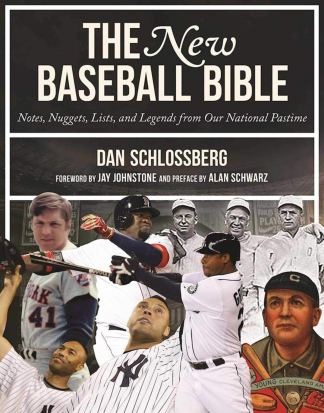 Comparing this one to three years ago – which we can, having both editions here in front of us – the cover tweaks include noting that Schlossberg is now identified as a “former AP sportswriter” (he now can be found contributing to Forbes.com), the forward is now by official MLB historian John Thorn (versus former Dodger Jay Johnstone) and the preface comes from former MLB umpire Al Clark (instead of writer Alan Schwarz). The cover collage also adds Mike Trout as the main figure in the center, replacing Ken Griffey Jr., while Hank Aaron and Eddie Matthews are added (and a group of three old-timers we’d be hard pressed to identify are left off).
And a yellow coloring of the book title instead of white.
Improvement overall already.
Ramping up from 408 pages to 467, the most notable additions:
== Aside from chapters on Beginnings of Baseball, How Some Rules Apply, Umpires, Playing the Game, Equipment, Ballparks, The Game, Famous Faces, Managers, The Brass (commissioners and owners), Trades, The Supporting Cast (stadium announcers, organists, vendors, etc.), The Media, Big Moments, The Language of Baseball, Superstitions and Other Traditions, Spring Training, Other Leagues and Other Lands, Fans, The Expansion Eras and A New Century, there are three additional chapters: Cooperstown (all things related to the Hall of Fame), After 108 years (the Cubs’ 2016 title) and Turbulent Times (labor pains, Astros’ scandals and a change in how offense is played).
The most poignant addition of having Thorn do the new forward and talk about for all the baseball history he has written, Schlossberg has been more than a kindred spirit, matching him publication for publication going back to the mid 1970s. It’s akin to watching the Beatles/Paul McCartney and the Beach Boys/Brian Wilson look and admire each other and then have it inspire their next pieces of work.
“For all these years, Dan and I have been friends rather than rivals, belonging to a mutual admiration society, population: two,” says Thorn, who later adds that the only book he can ever compare “The Baseball Bible” series to “as a foundation of wit and wisdom” is Jim Bouton’s “Ball Four.” Continue reading “Extra inning baseball book reviews for 2020: A bible that still carries weight, especially when held right-side up”
 The author: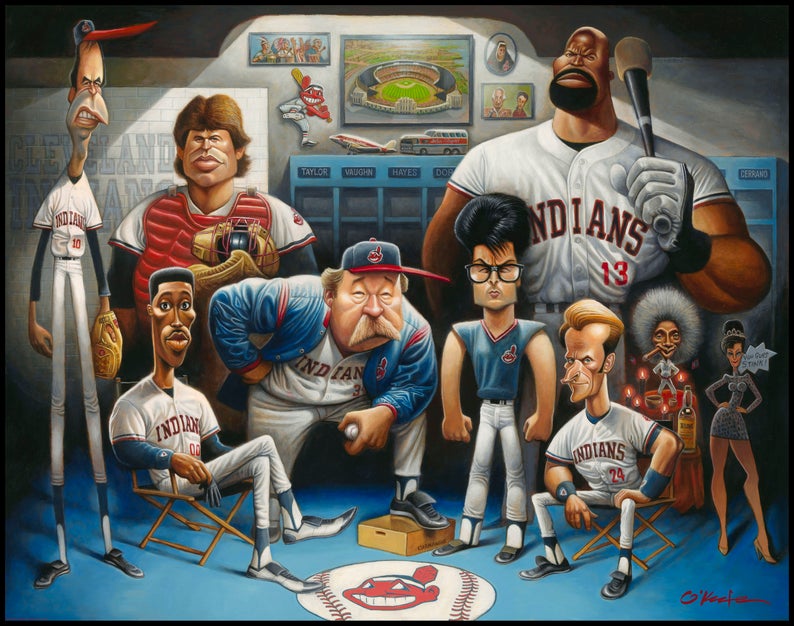
 In the movie, the guys rallied together. In real life, not so much. (Oh, and here’s also 10 “wild” facts about the movie, thanks to the late, great

 After the fact,
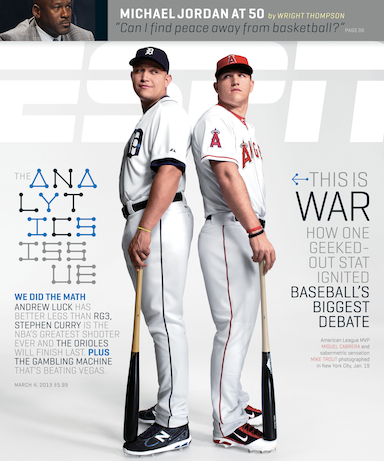
 That would be, in order presented here for purposeful reasons: OBP, SLG, OPS, RC, ISO, wOBA, wRC+, BsR, ERA+, WHIP, GSs, FIP, DRS, UZR, Diff, SRS, DER, WP, MN, BABIP, xBA, xSLG, xwOBA and WPA.

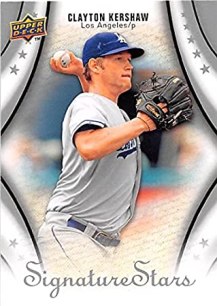 In Kershaw, you relent on the chance he’ll develop into an elite hurler.
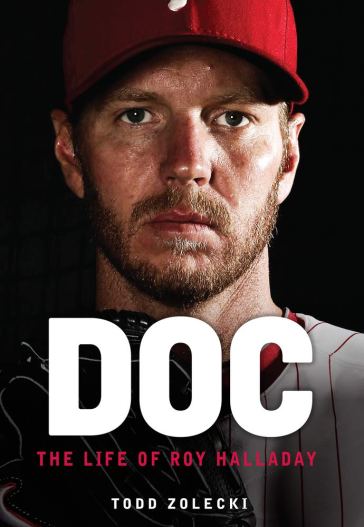
 That 2009 season would be Halladay’s 13th and final one in Toronto, a franchise dumping salary and going no where. In his age 32 season, he would be nearing 150 career wins and continue to annually lead the AL in complete games, innings pitched and expending energy on a team that couldn’t make the playoffs.
 In the 2009 offseason, Halladay ended up getting traded to Philadelphia, for Travis d’Arnaud, Kyle Drabek and Michael Taylor. The Phillies had playoff momentum and wanted to keep it as some key players were leaving.
 Tom Hoffarth's The Drill: More Farther Off the Wall