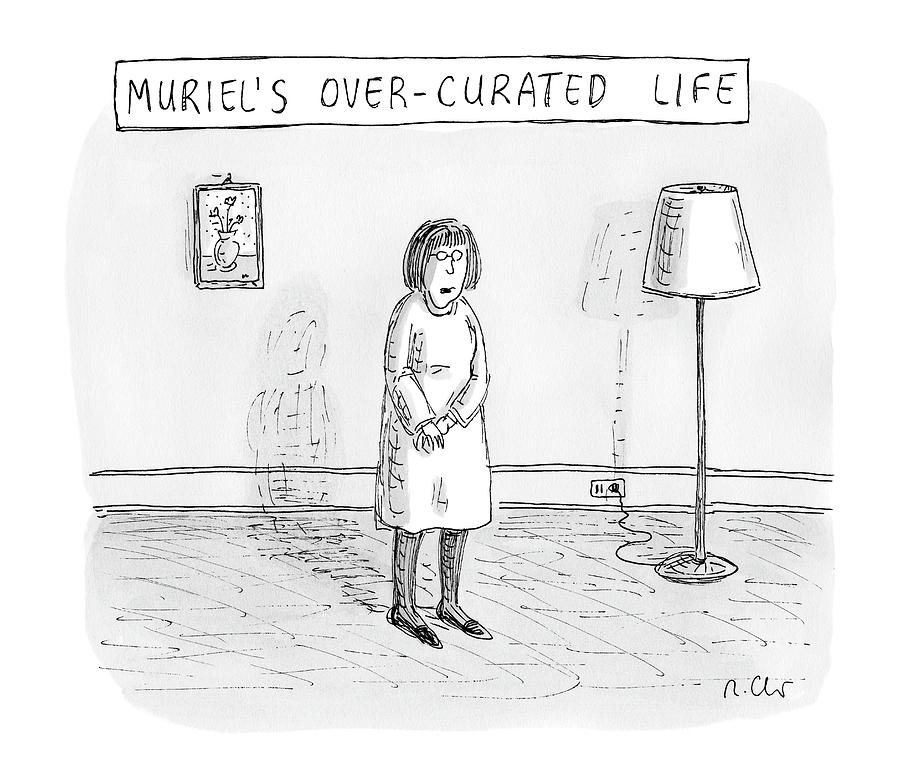
In a 2015 piece for Forbes.com, writer Steven Rosenbaum invites distressed readers to “embrace your Curated Life,” calling it a conscious shift from being controlled by “the speed of social connectedness to being in control.”
The suggested plan of attack: 1. Take a personal “rhythm” inventory: Introvert or extrovert? Morning person or night owl? Multi-tasker or “fierce focus”? 2. Right Size your tools to your life. Delete two thirds of your phone aps. Anything that causes distractions. 3. Filter your friends. Don’t unfriend, just dial them back. 4. Get offline – and explore Real World Experiences. 5. Realize you are what you Tweet and Eat.
The sideways look we have at this moment: If we had been offline, we’d likely never have discovered this story. Google the reference: Sword; double-edged.
Rosenbaum concludes: “We’re living in a time of digital abundance, which is wonderful. It promises to give us a new way to explore, connect, share, and learn. But it needs to be harnessed to make your life better, otherwise it threatens to turn is into hamsters in a wheel of information. So, embrace The Curated Life, and share with me the tools and techniques you’ve found that give you the ability to engage meaningfully in the world around you. I’d like to hear what works for you.”
Hand me the talking stick.
Our tools for occasional survival in a rough-and-tumble world first often us to silencing the phone, TV and desktop module, going through the stacks of books we’ve collected over the years, grabbing one for the moment, find a shaded spot outside or a spot on the nearby beachfront, a few hours of solitude, and simply disappearing.
During that recent process, the exercise pointing us toward the best way to a curated world of Yankees and Red Sox history was met with some resistance.
If the thought was it might make our lives better, worse or indifferent, the reality is it didn’t bring any more pleasure, disdain or lack of interest, but at least we added to our understanding. But really, our thought the whole time was wondering if that hamster does, at the end of the day, find some joy and fulfillment on an apparatus we have come to represent despair and being stuck.
The MLB master schedule calls for another three-game series between these two titans in Boston this weekend — first on the MLB Network, then over to, the Fox Network on Saturday, then capping it off with the ESPN Sunday Night Baseball Fun Bunch, where Alex Rodriguez gets to hang out with Derek Jeter and cross promote all they can on the ESPN2 feed.
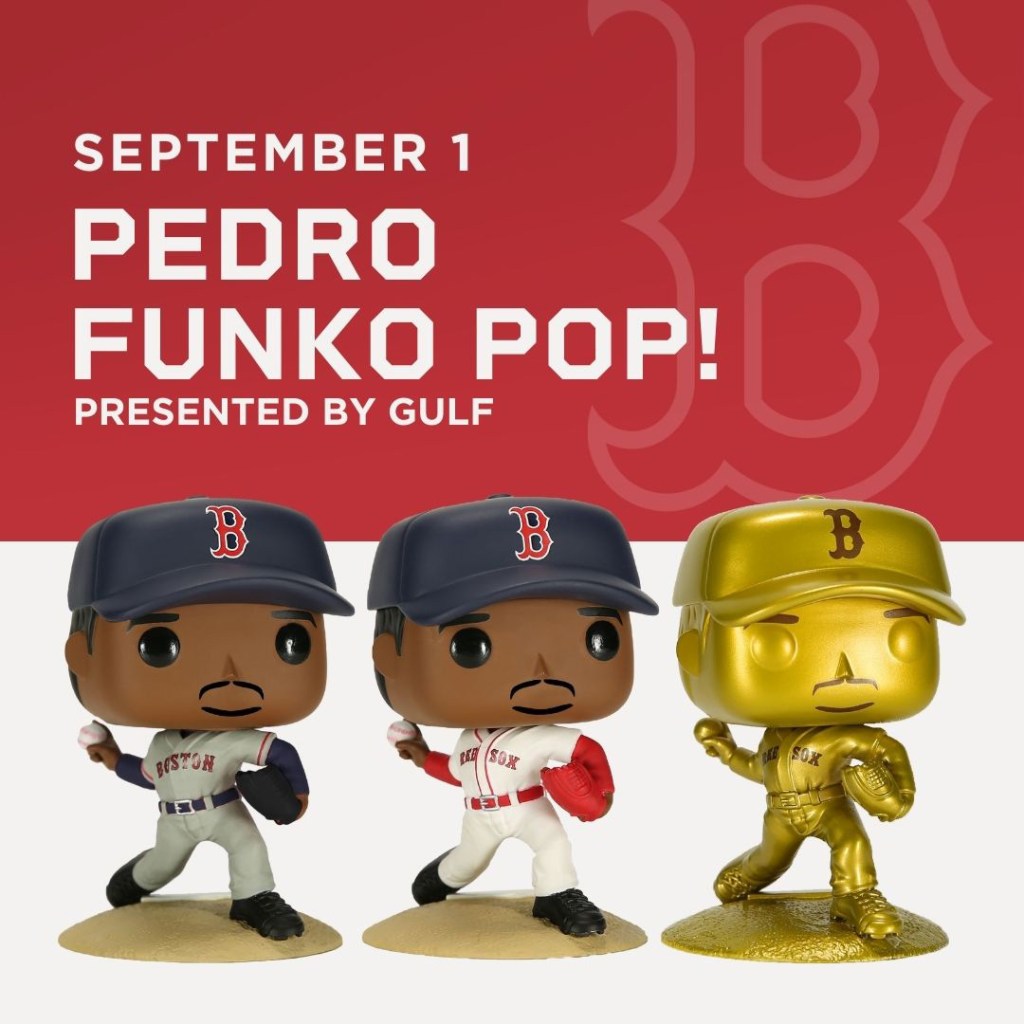
These are not the dates on the schedule where the Red Sox’s Marketing Department has to beg ticket-buyers with a Nathan Evaldi “Light Up” Gnome, a Xander Bogaerts Arm Sleeve or a Pedro Martinez Funko POP! promotion (those are actual giveaways that have or will take place this month and next at Fenway Park).
We don’t quite have BST-NYY Rival Fatigue. But we do honor history. The media tells us, for good reason, the Yankees-Red Sox will remain a very important and compelling part of this season, as they were in the beginning, are now and forever shall be. Amen.
Next year, there’s a step back to where a new CBA rule makes the MLB calender tilt to make sure every team plays every team at some point — a “balanced schedule,” with more inter-league contests. That means teams play five fewer games against division opponents, and that space goes to playing at least one series against every team in the other league. Teams will also continue to play their “rival” inter-league team four times, twice at each ballpark.
Does that mean, instead of 19 Red Sox-Yankees meetings, it’ll shrink to … gasp … only 14?
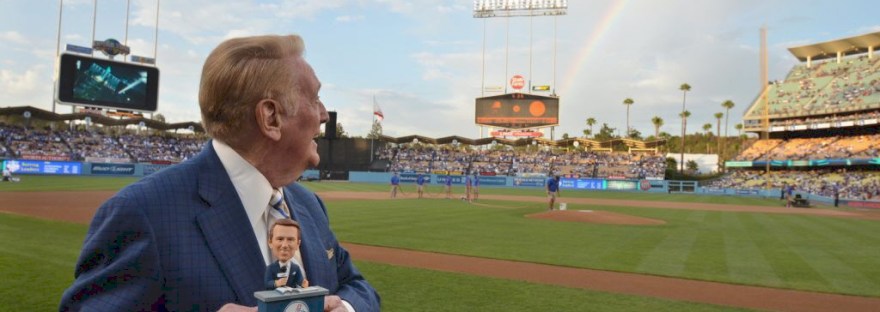
Vin Scully took the pen in his left hand and arched his wrist so that he could shepherd his cursive signature, careful not to smudge.
He paused to explain how he would purposefully sign the “sweet spot” of the baseball – that horizontal swatch of horsehide uninterrupted by the stitches. That is a prime piece of real estate, as much for its aesthetic beauty as it is providing space below to continue writing.
He did that because, below his signature, he could add a little something more and actually personalize a message — “TO TOM – GOD BLESS” in all capital letters.
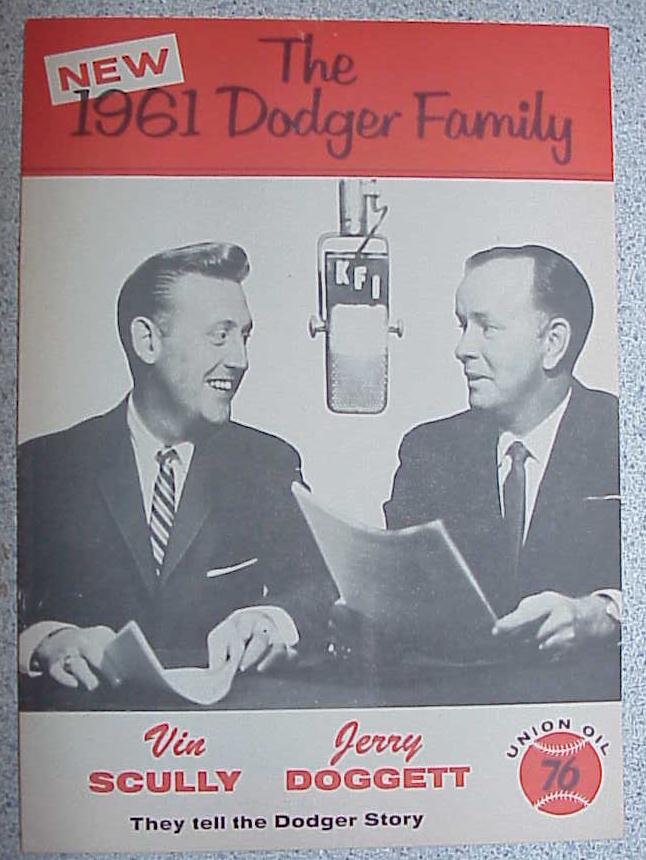
A Union Oil souvenir. From 1961 – the year we were born.
That ball sits in an alcove on my home office shelf, in what over the years almost has become the Shrine of Scully, the Reliquary of the Bard, to house relics such as bobbleheads and bobble-microphones, a terracotta piece of stone from his original Hollywood Walk of Fame star, books and signs and and remembrances of special importance.
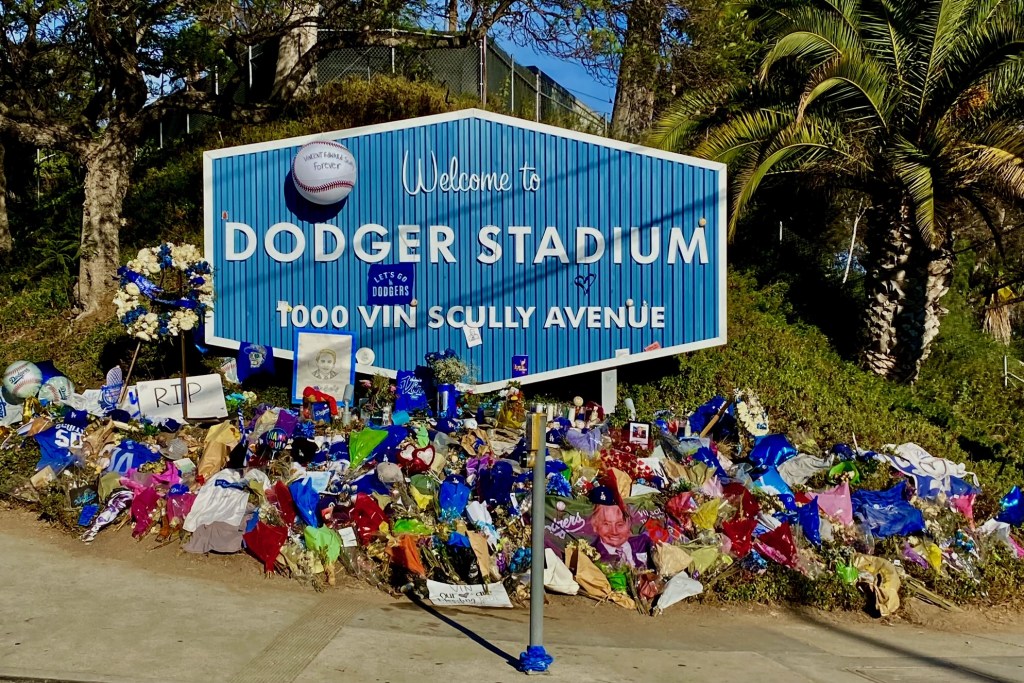
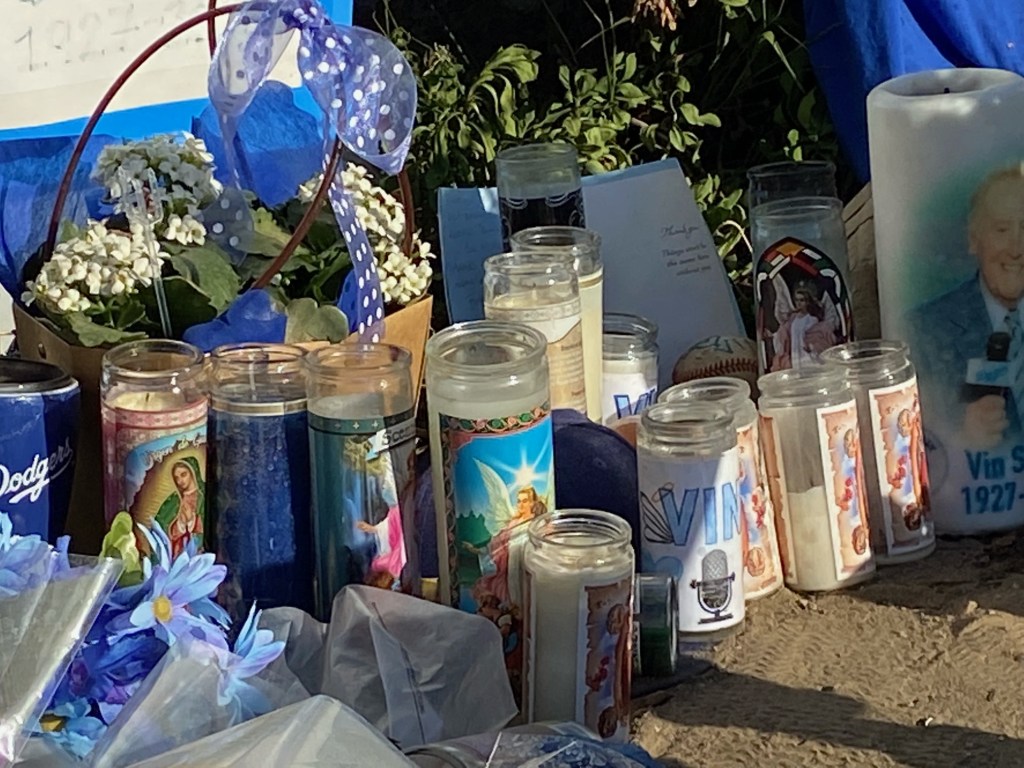
A lit candle and the new black VIN player sleeve patch has been there since his passing on Aug. 2, and it continued through his funeral Mass said Monday at St. Jude The Apostle Catholic Church in Westlake Village.
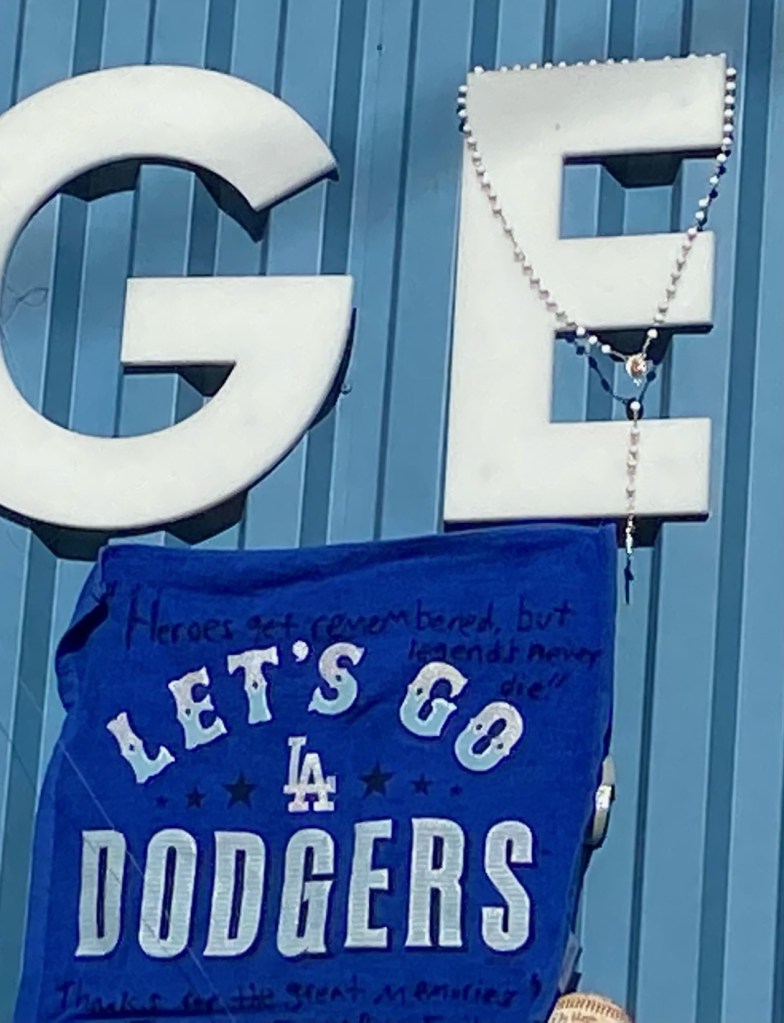
Just as the Sunset Blvd. entrance to Dodger Stadium has had its own public shrine assembled with various religious artifacts — we captured some of them after our latest visit — we need a place to honor and remember:
So there we were on the steps outside our church following last Sunday’s Mass, and an innocent question came from a friend:
What would it take to get Vin Scully canonized by the Catholic Church?
Progress through the season to date, starting on April 15:
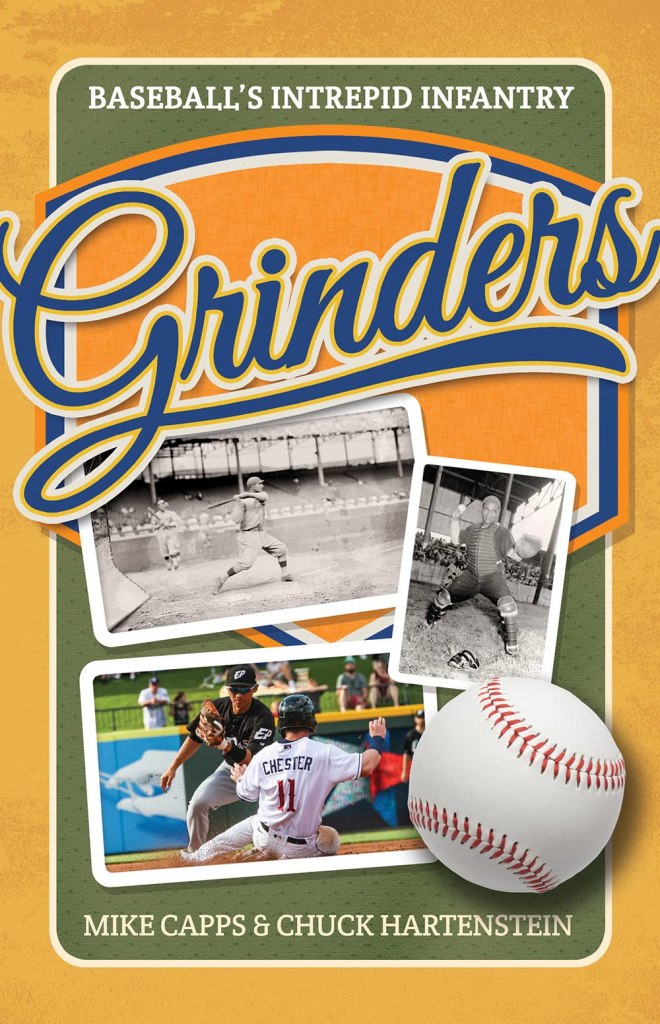
Day 40: “Grinders: Baseball’s Intrepid Infantry,” by Mike Capps and Chuck Harenstein for Stoney Creek Publishing. We get to re-remember the career of Brian Downing and his impact thanks to the 15 pages featuring him in this book pulled together by two grinders themselves. Because of its nature, baseball is a sport that needs grinders almost more than it needs its marque talent that make things look so easy. It’s a reflection on life, if you want to get metaphysical about all this. Those who grind stay in the game. Those who have the talent, face adversity and fall back, won’t survive. Thank you, grinders, for the inspiration. You intrepid bastards.
Day 39: “Our Game Too: Influential Figures and Milestones in Canadian Baseball” edited by Andrew North, with Len Levin, Bill Nowlin and Carl Riechers for the Society of American Baseball Research and The Centre for Canadian Baseball Research. As SABR 50 converges this weekend in Baltimore, note these famous Canadian connections: Brother Matthias, who found the incorrigible George Herman Ruth at the St. Mary’s Industrial Training School, was born as Martin Leo Boutilier on Cape Breton Island in Nova Scotia in 1872. And Joseph Lannin, who owned the Boston Red Sox and brought Ruth to the team, was a native of Quebec, also orphaned and, according to legend, walked all the way to Boston. Also mentioned: “Canadian Minor League Baseball: A History Since World War II,” by Jon T. Stott.
Day 38: “The Lineup: Ten Books That Changed Baseball” by Paul Aron for McFarland. Monumentally meaningful, necessary and relevant. A Top 10 list for the ages. A compendium like this will never lose its charm, even 100 years from now when someone else exorcises this exercise and must admit – this original 10 has to be the foundation. So what have you got lately? In a far deeper dive than most lists of “best” baseball books, this takes a much longer pause to ponder, absorb the research and appreciate all the dots connected. We’re grateful to have stumbled onto Paul Aron.
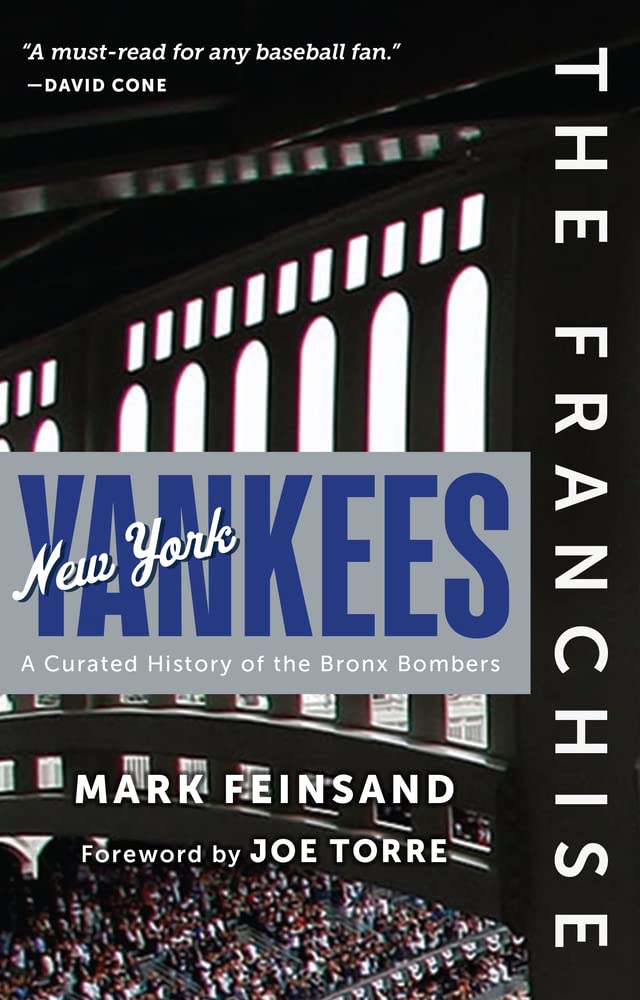
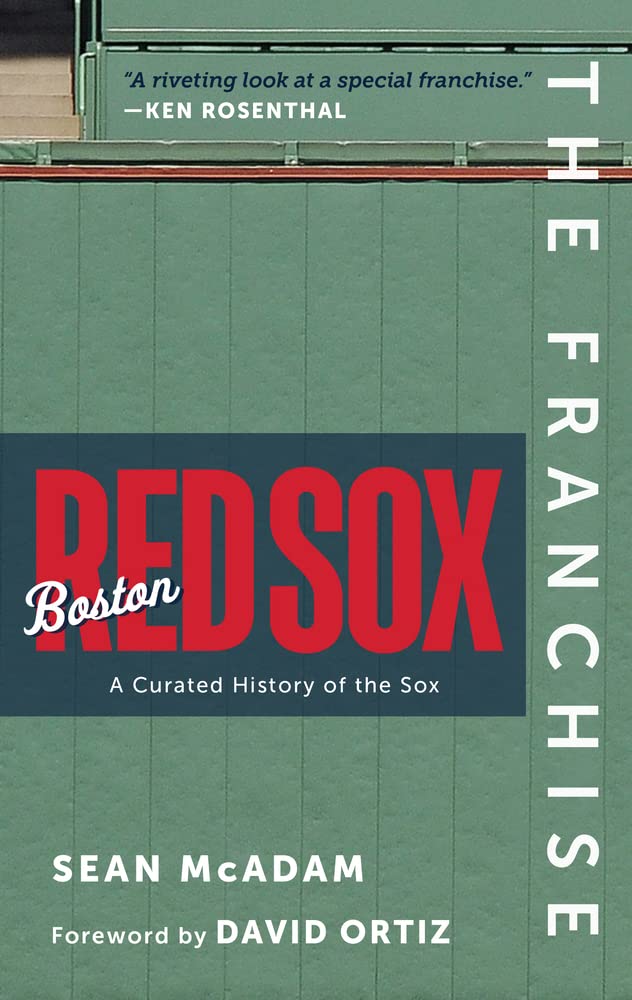
Day 37:“The Franchise: New York Yankees: A Curated History of the Bronx Bombers” by Mark Feinsand and “The Franchise: Boston Red Sox: A Curated History of the Sox” by Sean McAdam, both for Triumph Books.
The publisher has a new deep-fried method to find another way to sell another box of Cracker Jacks — present an historical summation in a tight and breezy format, picking an author – curator — who has some sort of tie/experience to the franchise, and maybe summarize it without the aid of photos, hyperlinks or other forms of distraction.This would be a challenge even to the likes of John Updike, David Halberstam or Larry “Bud” Mellman.The fanatics of those teams will have to decide if the writing and research carries out the mission. Because visually, it’s not likely going to win over younger fans.Also mentioned here: “Dodgers! An Informal History from Flatbush to Chavez Ravine,” by Jim Alexander.
Day 36: “Beauty at Short: Dave Bancroft, the Most Unlikely Hall of Famer and His Wild Times in Baseball’s First Century,” by Tom Alesia for Grissom Books. Plotline: A journalist discovers this guy’s plot at a local cemetery in northwestern Wisconsin. What’s the deal? A book fittingly about as quick a read as Bancroft’s fame. A tribute to whip-clean research and storytelling — and not all bios about Hall of Fame players need to be 400-plus pages, $40 and with dozens of footnotes, bibliographies, indexes and a bursting appendicitis. Also mentioned here: “Covey: A Stone’s Throw from a Coal Mine to the Hall of Fame,” by Harry J. Dietz Jr. on Stan Coveleski.
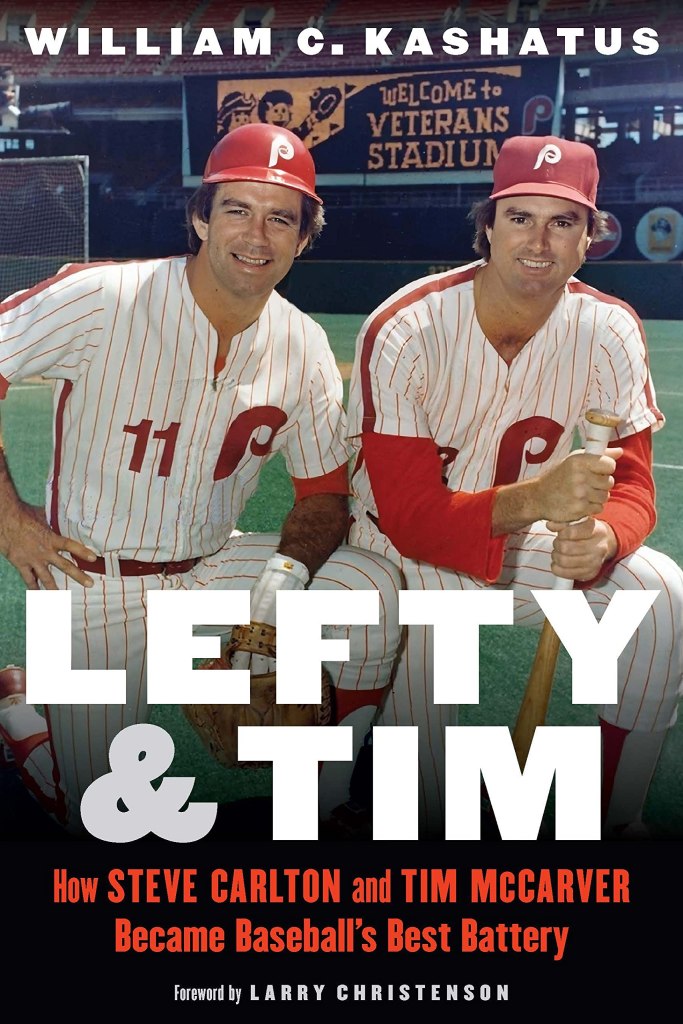
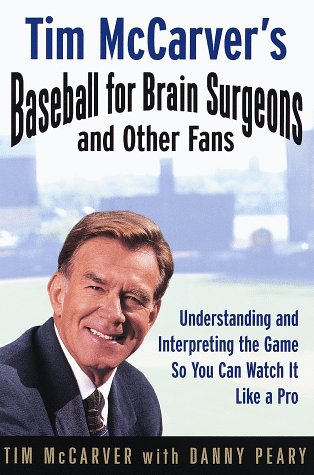
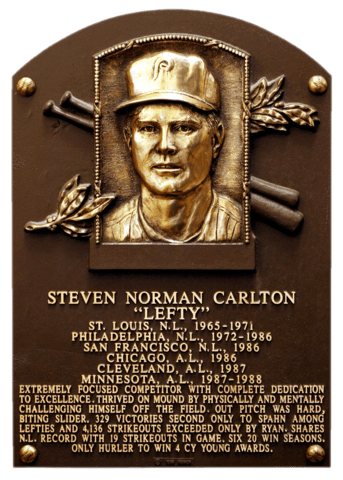
Day 35: “Lefty and Tim: How Steve Carlton and Tim McCarver Became Baseball’s Best Battery,” by William C. Kashatus for University of Nebraska Books. If, as the title suggests, this was ‘baseball’s best battery,’ it is probably with some noted context. But we’ll give them that. Even if there aren’t a lot of new revelations that one might anticipate — especially without Carlton submitting to interviews — it’s serves as a nice reminder, and a historic placeholder, as to what we’re seeing again with Adam Wainwright and Yadier Molina closing in on the all-time record for a starting pitcher-catcher combo, and already have the record for wins together.
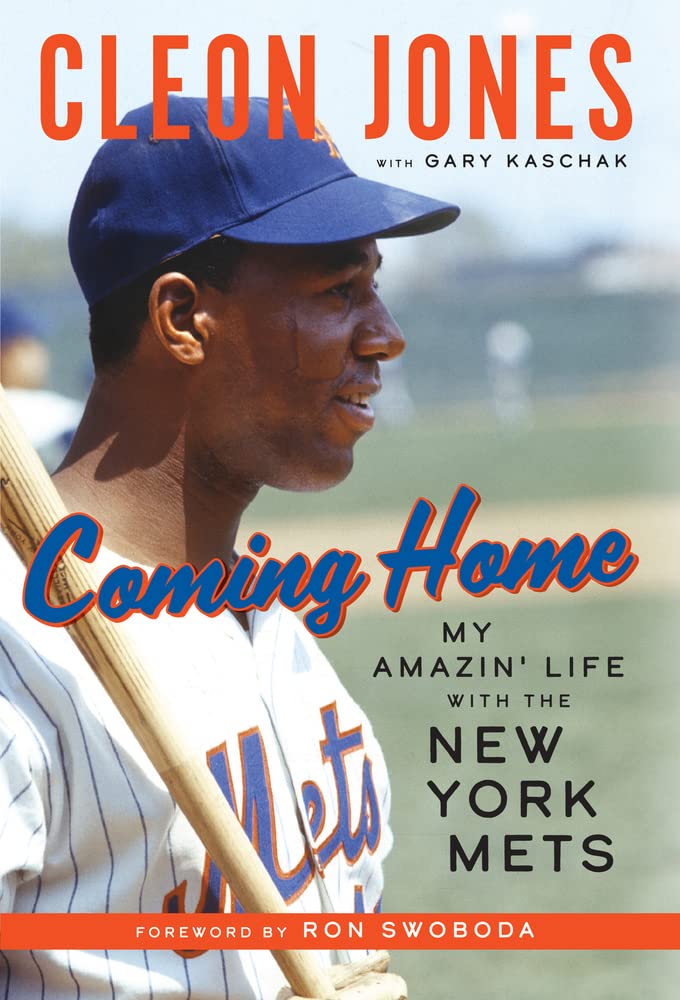
Day 34: “Coming Home: My Amazin’ Life with the New York Mets,” by Cleon Jones (with Gary Kaschak) and “Willie Horton 23: Detroit’s Own Willie The Wonder, The Tigers’ First Black Great,” by Willie Horton (with Kevin Allen), both for Triumph Books.
At a time we are mourning the loss of many great Black players from the ’50s, ’60s and ’70s, these two are not only very much alive, but have something more to say about their legacies in a sincere and sweet way that reminds us of their dignity, honor and professionalism, emerging from communities not of upper-middle-class travelings teams, but from the streets and schools of hard knocks. It’s fitting their latest bios come out from the same publisher as both men are about to turn 80 years old and could use an authentic refresh about what they accomplished.
Day 33:“Democracy at the Ballpark: Sport, Spectatorship, and Politics,” by Thomas David Bunting for SUNY Press. Today, democracy and baseball seem in some kind of peril, maybe unsure of where their compass points, not trusting whose making decisions that seem counterintuitive to the best interest of their constituents/fans. That seems like a ripe starting point for this renewed discussion, in a very academic yet accessible way. Bunting can swing away with his historical context and current angst and reach conclusions. The only book you may find with an index that lists French philosopher “Ranciere, Jacques” next to “Robinson, Jackie.”
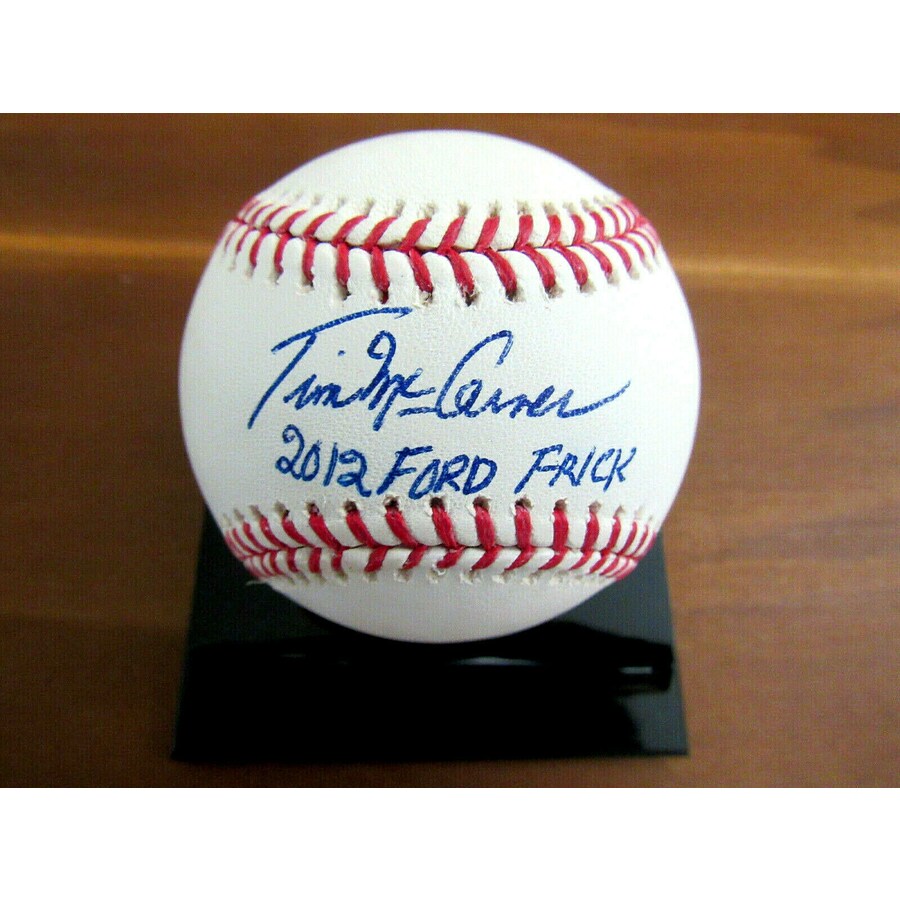
Day 32: “Good as Gold: My Eight Decades in Baseball” by Jim Kaat (with Douglas Lyons) for Triumph Books. A fitting calling card for “Kitty” Kaat to have with him in Cooperstown this weekend. He already had the credibility as an observer of the game decades ago. But since his last biography/essays in 2002, things have changed much — but not his approach of candor and honesty. Consider this an important and viable refresh with much more circumstances to examine. Another thing to consider: Why can’t he be the first to voted into the Baseball Hall of Fame as a player and then win the Ford C. Frick Award for his broadcasting work? Who can make this happen?Also mentioned here: “Baseball’s Memories and Dreams: Reflections on the National Pastime from the Baseball Hall of Fame,” by the BBHOF.
Day 31:“Intentional Balk: Baseball’s Thin Line Between Innovation and Cheating” by Dan Levitt and Mark Armour for Clyde Hill Publishing. These SABR stalwarts and unimpeachable historians aren’t demanding a call to action that pushes current commissioner Rob Manfred to do a better job cleaning up the sport from its cheating past, present and likely future. If you’re looking for a revolutionary chapter after chapter of essays damning the game and throwing intense shade on those who’ve failed to do something about it, that’s not the point. Instead, it’s something much more entertaining, educational and enlightening.
Day 30: “Feeling a Draft: Baseball Scouting And The first 50 Years of the Amateur Player Draft” by Fred Day and Ray McKenna for iUniverse. We dedicate this post to the memory of Mike Brito, the Dodgers’ Cuban superscout who perhaps single-handedy changed the landscape of the franchise’s ability to secure Mexican and Cuban players of high regard and higher fan attachment. This Bill Plaschke appreciation column reflects that. And to George Genevese, the Southern California superscout who saw the stars out of those others loverlooked.
Day 29: “Charlie Murphy: The Iconoclastic Showman Behind the Chicago Cubs” by Jason Cannon for University of Nebraska Press. This gentleman with the bowler capon the cover has been labeled as, in no particular order: Impetuous, lucky, sharp, lovable and loathable. Full of brash, bluster and hustle with explosions of creativity. Act first, apologize later. In this bio, there’s nothing to apologize for. We’re sorry we didn’t know about Murph sooner. Now if this “small plump man, quick of wit, brilliant in repartee, quick of temper” has a movie made of him, who’s the the lead actor? We imagine Zach Galifianakis.
Day 28: “The Church of Baseball: The Making of ‘Bull Durham’: Home Runs, Bad Calls, Crazy Fights, Big Swings and a Hit” by Ron Shelton for Knopf. Shelton is preaching to the choir here. We are in full communion, no matter what higher being you might leave in the hands of your past, current and afterlife. Shelton manages to spare little on each page. There is more concentrated information about the film, the industry, and the foibles of human nature you’d expect. It will only enrich our experience the next 50 times we find it during channel surfing and can’t turn away.Also mentioned here: “The Baseball Film: A Cultural and Transmedia History,” by Aaron Baker; “Bush League Blues,” by Mike Floyd and “The Encyclopedia of Minor League Baseball: A Complete Record of Teams, Leagues, and Seasons: 1876-2019,” by Lloyd Johnson and Miles Wolff.
Day 27: “Last Time Out: Big League Farewells of Baseball’s Greats” by John Nogowski for Lyons Press. This concept is a tricky one. It’s difficult to find a lot of “I did it my way” moments. The nature of the game is more moments of defeat and showing humility, if you can handle it. There’s not a whole lot either building suspense or giving away a sad parting-gifts account of the grand finale. “I think it was Bart Giamatti who said the game was designed to break your heart,” Nogowski says. “So to show the finest players the game has had, many of them being literally brought down to earth for the first time in their lives, to me was immersive, fascinating and compelling.”
Day 26: “Pee Wee Reese: The Life of a Brooklyn Dodger” by Glen Sparks for McFarland and “Baseball’s Greatest What If: The Story and Tragedy of Pistol Pete Reiser” by Dan Joseph for Sunbury Press.
So what’s the deal with Harold Peter Henry “Pee Wee” Reese and Harold Patrick “Pistol Pete” Reiser? Reese played for 16 years and made 10 All-Star teams. Reiser barely got through 10 years, won a batting title and was in three All Star games. Neither book is knock-your-blue-socks-off when it comes to prose. But of the two, Joseph seems to have much intriguing story narrative to sift through — and it earned him 2022 SABR recognition for best research work on the Brooklyn Dodgers.With time comes not just rapid technology but added context as well to see what players today might be relatable in their journey and bring the older ones back to some relevance.Also mentioned here: “Game Won: How the Greatest Home Run Ever Hit Sparked the 1988 Dodgers to Game 1 Victory and an Improbable World Series Title,” by Stephen K. Wagner; “100 Things Dodgers Fans Should Know & Do Before They Die: 2020 World Series Edition,” by Jon Weisman, and “Farewell to Flatbush: The 1957 Brooklyn Dodgers,” by Ronnie Joyner.
Day 25:“In Scoring Position: 40 Years of A Baseball Love Affair” by Bob Ryan and Bill Chuck for Triumph. IBB for the Impressive, Bigly Brainstorm. E for Execution. And a backward K, because you’re killing us here. We have SAC’d enough. Such a splendid idea. It speaks to how a baseball scorebook can also become like a personal diary. If you’re a fanatical Red Sox follower, or a fan of old-timey Ryan and can tolerate a lot of rambling (see “Horn, Around The”), you’ve got a chance to jog the memory and likely head to a Goggle search for more details.
Day 24:“The Baseball Talmud: The Definitive Position by Position Ranking of Baseball’s Chosen Players” an updated version by Howard Megdal for Triumph. Before we get into the frolic, it is poignant to note how Megdal writes in his introduction why this project remains important at a time when there is a rise in hate crimes, bomb threats and horrible verbiage still against Jews. ‘Celebrating Jewish excellence in baseball is not a difficult thing to do … It is a supremely Jewish thing to do, too: Finding joy in the argument, in the discussion of statistical evidence and sense memory and arcane topics, in cultural pride.’ Here’s a mensch who doesn’t mince words. Hear, hear.Also mentioned here: “Hebrew Hammer: A Biography of Al Rosen, All Star Third Baseman,” by Joseph Wancho.
Day 23:“The Catch: A Novel,” by Alison Fairbrother for Random House. You had us at baseball. And for some reason, something called a “lucky baseball.” … Definitely best suited for a younger woman with all sorts of life and abandonment issues … We try to roll with it as far as need be to find out – why is this baseball so special? We didn’t. Explaining the book to my wife as I handed it to her to see if she was interested in reading it, she asked for a summary. I gave it to her. She asked further: So who ended up with the baseball? I admitted that half way through I found I had lost interest in that story line, flipped to the back, started skimming paragraphs backwards, saw how it ended, smiled, and was done.
Day 22: “Sho-Time: The Inside Story of Shohei Ohtani and the Greatest Baseball Season Ever Played” by Jeff Fletcher for Diversion. Fletcher had already started to write an Ohtani tome in 2018. But things derailed when Ohtani’s UCL issues flared up and his already brief MLB career could have been doomed. But after what Ohtani did a season ago, it was time to pick up the project, and not just as a rehash mashup.“My goal was to go beyond a surface-level description of what he did in that amazing season, providing the context that explained it,” Fletcher writes about why he pitched it all again. To everyone’s benefit, he does that and then some.
Day 21: “Mexican American Baseball in the South Bay” edited by Richard A. Santillan and Ron Gonzales. The latest edition of the Latino Baseball History Project at Cal State San Bernardino appears to be the most prolific, an oversized book that dwarfs the projects printed previously by the Arcadia Publishing Company/Image of Baseball over the last 10-plus years. The editors also call this book “a forward-looking game-changer” for the series, with a “wealthier narrative” that also incorporates the cultural and community roots. It has emerged from an hiatus during the COVID-19 shutdown with a renewed look on the commitment to documenting the game from its Mexican-American prism.
Day 20: “Rickey: The Life and Legend of an American Original,” by Howard Bryant for Mariner Books/HarperCollins. On page 407 of the index, we come upon “Henderson, Rickey, character traits. There are topics logged: “charisma,” “ego,” “forgetting names,” “as hot dog,” “intelligence,” “love of gambling,” and ” ‘Rickey being Rickey’.” But we’ve been instructed not to get too absorbed with much of that, because Bryant is almost as much the headliner for this piece as Henderson. Bryant speaks from a depth of experience, research and a need to mythbust.
Day 19:“The Umpire Is Out: Calling the Game and Living My True Self,” by Dale Scott with Rob Neyer for University of Nebraska Press. “Scott’s appearance at the Dodgers’ upcoming Pride Night lines up nicely with the release of a gratifying autobiography about his life and career that is one of the more enjoyable and poignant reads of this baseball season. We much we appreciate the education and entertainment, context and comedy, and true human feelings spread out along the way.”Also mentioned here: “Unbelievable! The Life Journey of Art Williams, Baseball’s First Black National League Umpire,” by Dr. Audie Williams.
Day 18:“Playing Through the Pain: Ken Caminiti and The Steroids Confession That Changed Baseball Forever” by Dan Good for Abrams. “Some books you can’t put down. They might be best finished cover-to-cover in one sitting. Then there are these. You need to nudge yourself into starting it, and remind yourself it’s OK to set aside for a moment. Re-read to make sure it’s clear. Give it another rest. And don’t do it before you go to bed. You’ll be too restless. You won’t sleep well. Take it from our experience. Good isn’t asking us to do what he hasn’t already done for the greater angst: Look at this player, this man, this husband and dad, for what he did, who he was, and what legacy he left the game. Honest to goodness. It is worth the journey. It isn’t easy, but it’s good for the soul. Thank you, Dan. We feel your pain.”
Day 17:“Swing And A Hit: Nine Innings of What Baseball Taught Me,” by Paul O’Neill with Jack Curry, for Grand Central Publishing. “We’re supposed to, what, buy this one, read it and ponder the wisdom it imparts? Because … ? Because, he’ll forever be known as a Yankee Great, with a capital ‘Why’ and an understated ‘Gee.’ … And you’re still in the media of NY spotlight, so you’re entitled to impart whatever you can be paid for.”Also mentioned here: “Lore of the Bambino: 100 Great Babe Ruth Stories,” by Jonathan Weeks; “The Ultimate New York Yankees Time Machine Book,” by Martin Gitlin.
Day 16:“The Real Hank Aaron: An Intimate Look at the Life and Legacy of the Home Run King,” by Terence Moore for Triumph Books. In a lineup of books already done by and about Aaron, documenting all that happened from various angles and perspectives, we embrace as well Moore’s Hall of Fame-worthy contribution adding another layer of introspection. It’s a personal touchstone we’re grateful he decided to share.Also mentioned here: “Athlete Activists: Sports Stars Who Changed the Game,” by Stephanie Ready and Morris Katz.
Day 15:“Grassroots Baseball: Route 66,” photos by Jean Fruth, with Jeff Idelson, Mike Veeck, Johnny Bench, Jim Thome, George Brett and more. A photo spread that executes and excites, having a narrative fleshed out by the photographer who experiences the trip and conveys it with visual artistry. It makes it personal, professional and prolific. Get your kicks with this picture-perfect portfolio that captures more than the essence of the game and its long and winding journey. Bring your best baseball friend, and don’t forget Winona.
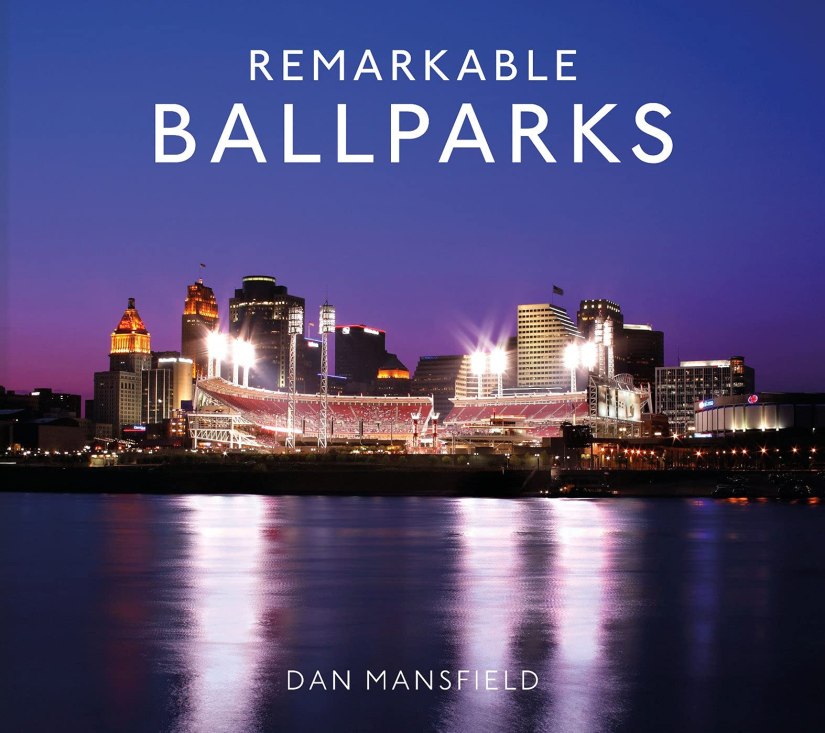
Day 14: “Remarkable Ballparks” by Dan Mansfield for Pavilion Books. (With 67 ballparks included), there are only 24 of the 30 MLB parks … That leaves more stunning vistas of ballparks we often don’t get to see in Japan or South Korea (three each), Mexico and Cubs (two each) and one in Germany, the Dominican Republic, Taiwan and China. For those, the book serves a heartwarming and globally significant purpose.
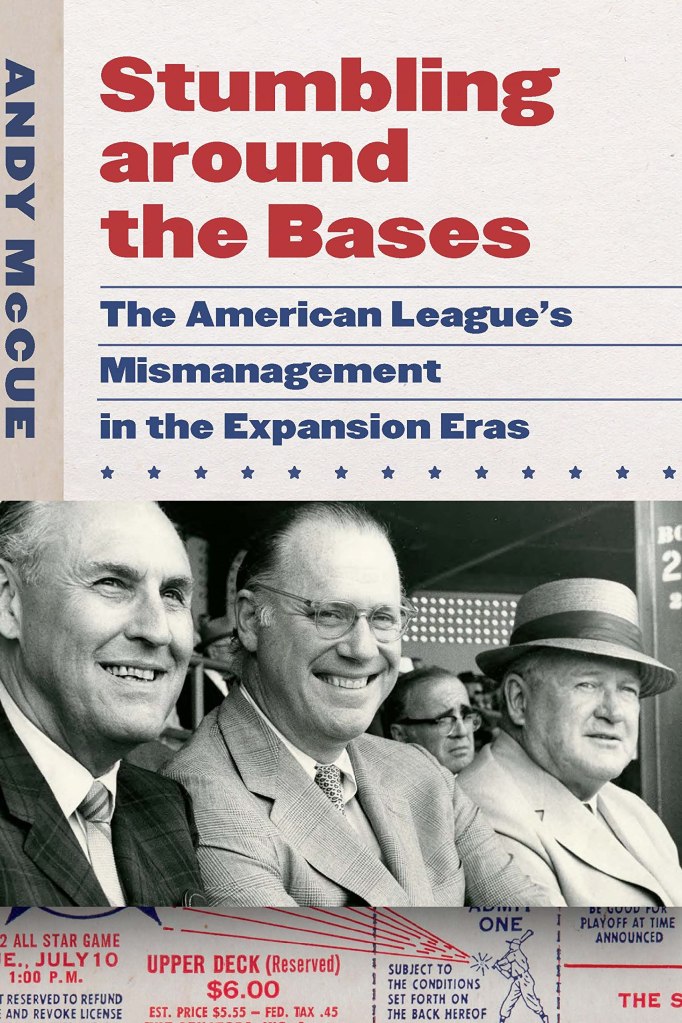
Day 13: “Stumbling Around the Bases: The American League’s Mismanagement in the Expansion Eras” by Andy McCue for University of Nebraska Press, and “A Brand New Ballgame: Branch Rickey, Bill Veeck, Walter O’Malley and the Transformation of Baseball, 1945-1962” by G. Scott Thomas for McFarland.
If we adjust our compass for more encompassing MLB movement in the future, will it learn from its past? For those who love to reconstruct baseball history, wonder what would have happened if some things fell differently, and why franchises ended up here, there and everywhere except when logic came in play, here are two more viable entries to pour through and try to reconnect the dippin’ dots of days gone by.Bill Veeck, enjoyably, is all over it in both editions.
Day 12: “Classic Baseball: Timeless Tales, Immortal Moments” by John Rosengren for Rowman & Littlefield. It’s logical to seek out Rosengren’s new collection of baseball-related pieces he has written over the years for a worthy Father’s Day gift this June … But may we also suggest it’s a nice thing for mom to settle in with on Mother’s Day and enjoy it all, too. So here’s to you, mom. And, yes, dad can read it too. But you first.
Day 11:“I Am Not A Baseball Bozo: Honoring Good Players who Played on Terrible Teams: 1920 to 1999,” by Chris Williams for Sunbury Press. Love the concept, appreciate the fun cover and all the research that was put into it, enjoy the random asides and comic relief from this member of the Central Pennsylvania chapter of the Society for American Baseball Research. … But at some point, this runs out of steam, and substance, and we can’t put our finger on just why. …
Day 10:“The Science of Baseball: The Math, Technology and Data Behind the Great America Pastime” by Will Carroll for Skyhorse Publishing. Carroll may not only know what a slide rule is for, but he’ll cut to the chase as to the benefits of the revised “Utley Slide Rule” when it comes to protecting the game’s stars from a change of further injuring themselves. Stay healthy, everyone.
Day 9: “Stolen Dreams: The 1955 Cannon Street All-Stars And Little League Baseball’s Civil War” by Chris Lamb for University of Nebraska Press. A big-league reminder about how the game reflects and can magnify a cultural wound.One of the few authors best positioned to do this book is Lamb.
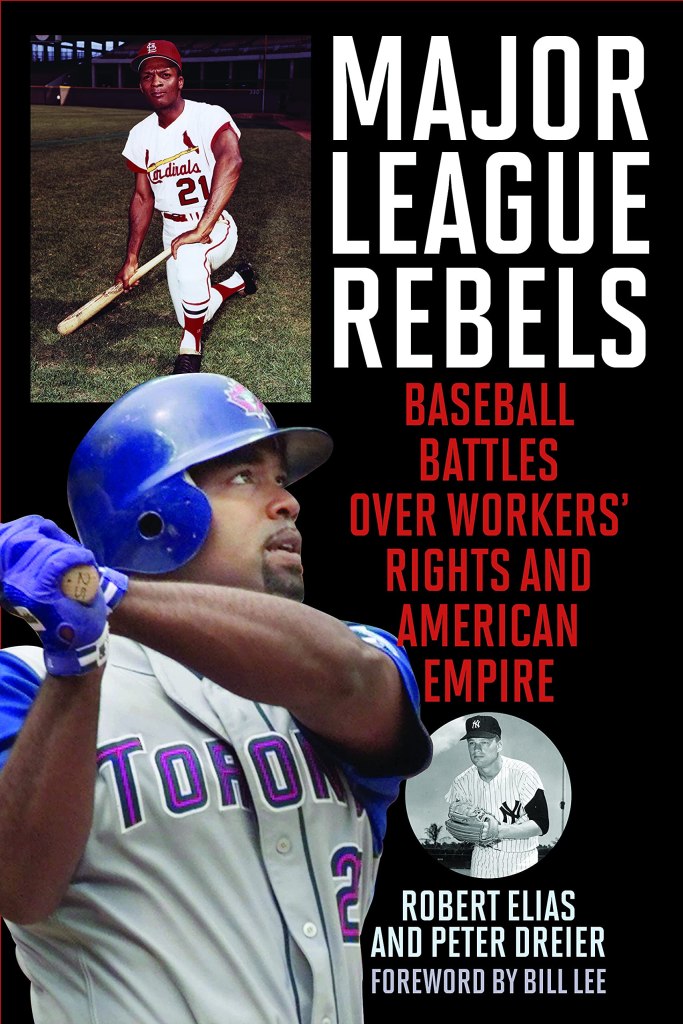
Day 8:“Baseball Rebels: The Players, People and Social Movements That Shook up The Game and Changed America” and “Major League Rebels: Baseball Battles Over Workers’ Rights and American Empire,” both by Pete Dreier and Robert Elias, for University of Nebraska Press and Rowman & Littlefield.
Is there irony in how, rather than an act of rebellion, we see one of conformity and convenience to find two publishers willing to carry their material on overlapping topics and expecting someone to pay $80 for the complete set? Any way to get a coupon toward 50 percent off the purchase of the second one once you prove purchase of the first?
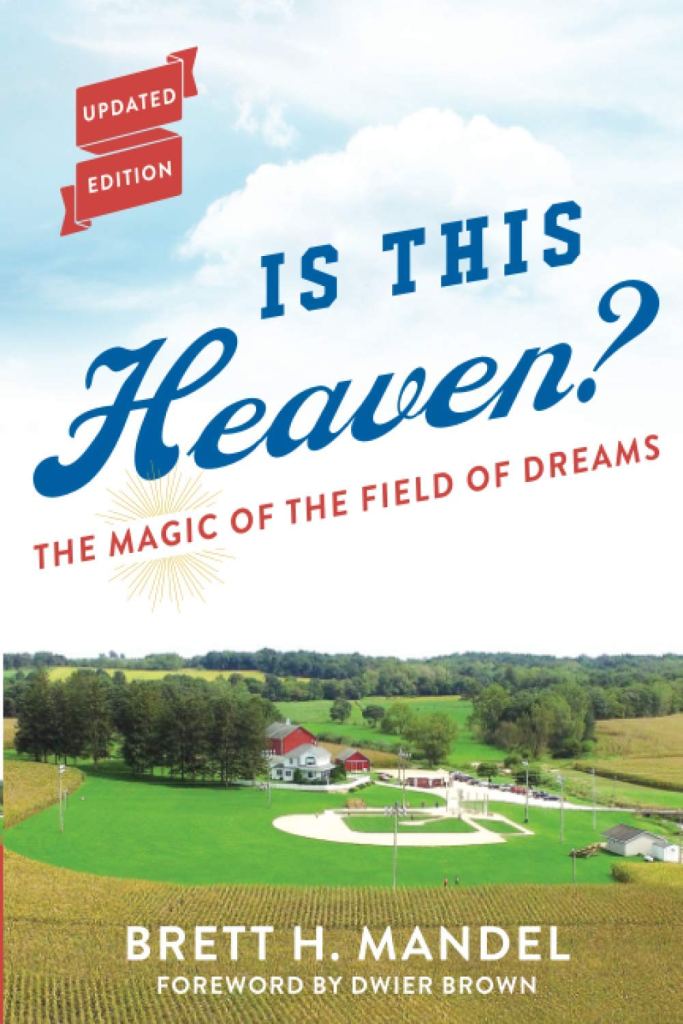
Day 7: “Is This Heaven? The Magic of the Field of Dreams” by Brett H. Mandel for Globe Pequot/Lyons Press/Rowman & Littlefield. Where else on the planet would you rather be this Earth Day? Does Dyersville, Iowa sound too cornball?Someone had to dig up some dirt about how this whole Field of Dreams thing went from Hollywood movie set to stand-alone tourist attraction.
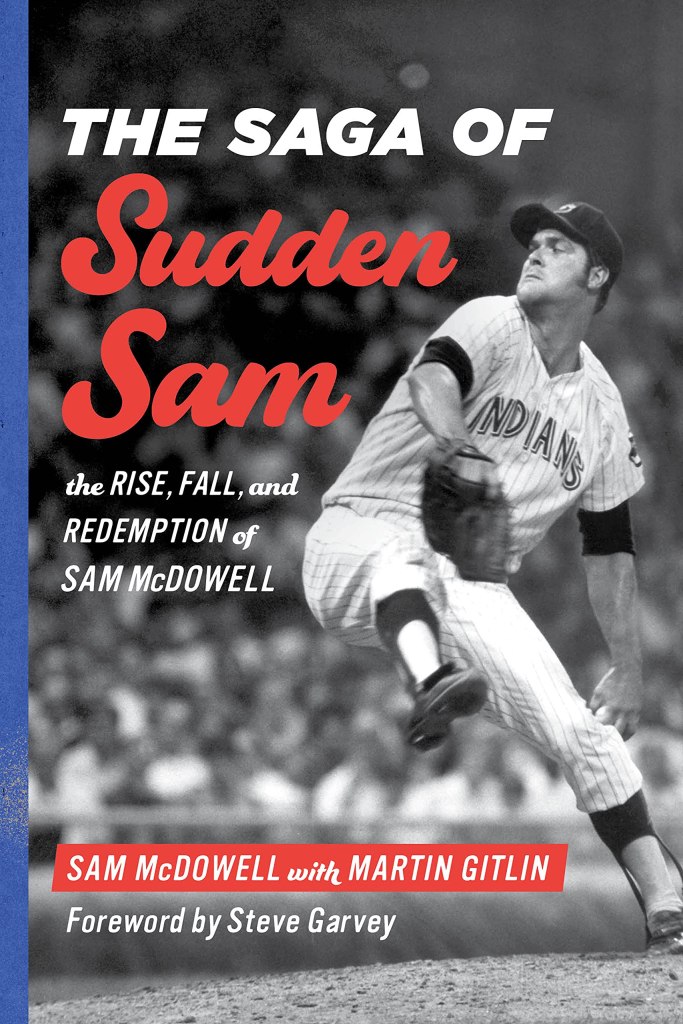
Day 6:“The Saga of Sudden Sam: The Rise, Fall and Redemption of Sam McDowell” by Sam McDowell with Martin Gitlin for Rowman & Littlefield. They call these things cautionary tales. They are better reads when you sense there will be a positive outcome. As this appears to be.
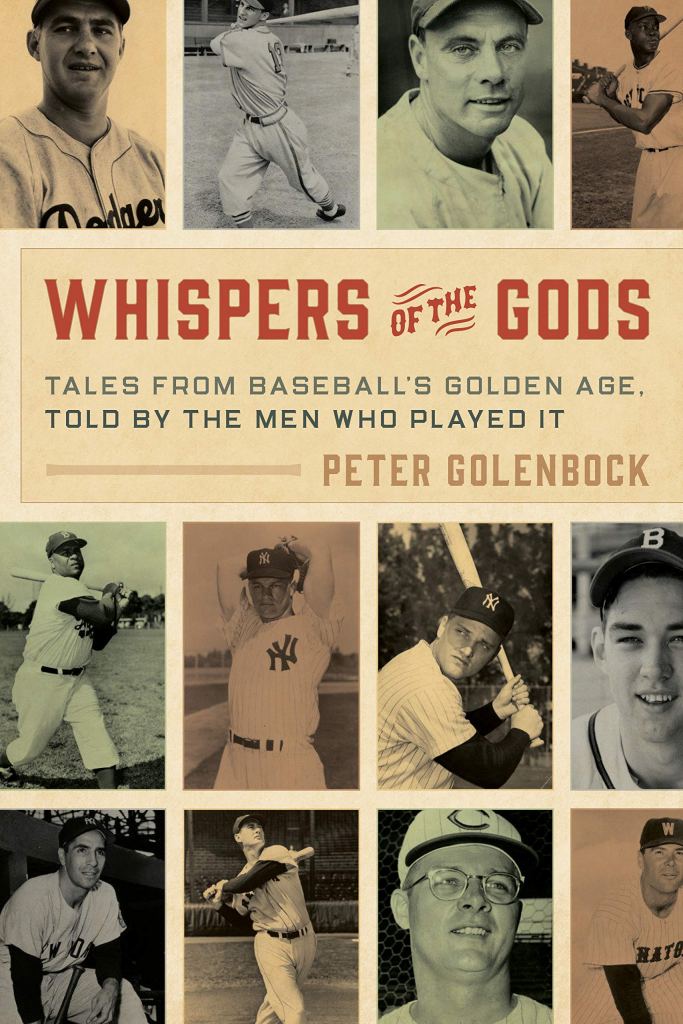
Day 5: “Whispers of the Gods: Tales from Baseball’s Golden Age, Told by the Men Who Played It” by Peter Golenbock for Rowman & Littlefield. Two chapters alone on Jim Bouton? We’re in. If only we could hear the audio instead of just read the stenography. And talk it up now with your dad to make sure he’s good for this as his upcoming Father’s Day gift, lest there be any doubts he fits the demographics of this.
Day 4:“Valentine’s Way: My Adventurous Life and Times” by Bobby Valentine with Peter Golenbock for Permuted Press. It not be an accident that a publishing company that touts itself as one that has pushed out “hundreds of works as an industry-leading independent publisher of sci-fi, fantasy, post-apocalyptic and horror fiction, as well as pop-culture and historical non-fiction” has taken this one on. The official list of genres on their website also include coloring books, military non-fiction, supernatural, paranormal romance, zombie, thriller, humor, reference books and dystopian. Valentine’s tome surely permeates many permutations as well as checks a lot of boxes for them.
Day 3:“Red Barber: The Life and Legacy of A Broadcasting Legend” by James Walker and Judith Hiltner for University of Nebraska Press. To someday tell the story of Vin Scully, we need first know Barber’s. Barber, like Scully, made his baseball listening audience more intelligent. So does this book. Forever we are thankful for both, as this monumental effort makes us feel even more enlightened. Still, Barber valued the concise nature of telling a story. It’s an awful huge ask to get a reader to commit to this dense, expansive documentation of his life, no matter how much information can be excavated by today’s modern methods.
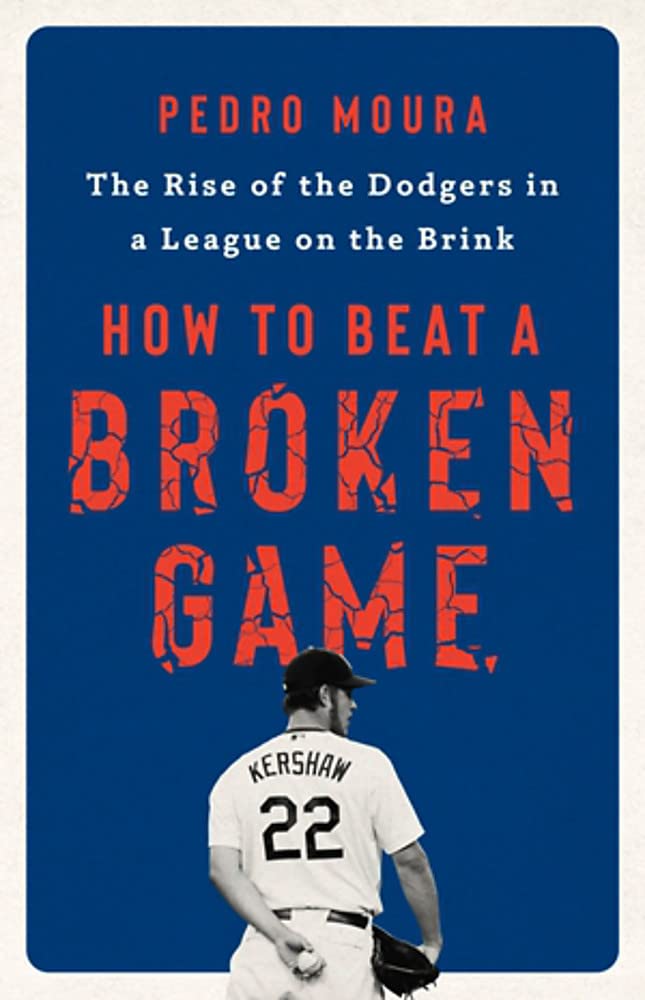
Day 2: “How to Beat a Broken Game: The Rise of the Dodgers in a League on the Brink” by Pedro Moura for Public Affairs Publishing. You may not find a more important explanation about how the game got here and where it could be going next, based on how the Dodgers want to set an example. It can be something one will reference back to years from now when trying to explain why most have lost any sense of loyalty. A typical “three outcome” AB now a days ends up with either a walk, strike out or home run. Moura’s book adds that rare consequence when someone hits a pitch off the opposing team’s “opener” into the exaggerated shift and finds wild success simply by putting the ball truthfully into play and benefiting from the consequences.
Day 1:“True: The Four Seasons of Jackie Robinson” by Kostya Kennedy for St. Martin’s Press. On Jackie Robinson Day, one can’t ignore this 75th anniversary, and another opportunity to open up the lens for scholarly interpretations, public reflection and, of course, some shared profits along the way. Thankfully, it is with a regal prose and elegance storytelling that Kennedy comes up with a new framework for interpreting Robinson’s impact and legacy.Also mentioned here:
“Not an Easy Tale to Tell: Jackie Robinson on the Page, Stage and Screen,” edited by Ralph Carhart for Society of American Baseball Research; “Before Brooklyn: The Unsung Heroes Who Helped Break Baseball’s Color Barrier,” by Ted Reinstein, and “Strength for the Fight: The Life and Faith of Jackie Robinson,” by Gary Scott Smith.
And, for openers: What got us through the winter pandemic of ’22: “The Baseball 100,”by Joe Posnanski. An 880-page volume released last September that took what he once posted on The Athletic. Longer than Homer’s “The Odyssey” but no where near JRR Tolkien’s “The Lord of the Rings,” it made it into book form and Spitball Magazine, the literary baseball publication, gave this its CASEY Award for top baseball book of 2021. It has more than 900 five-star ratings on Amazon for good reason.
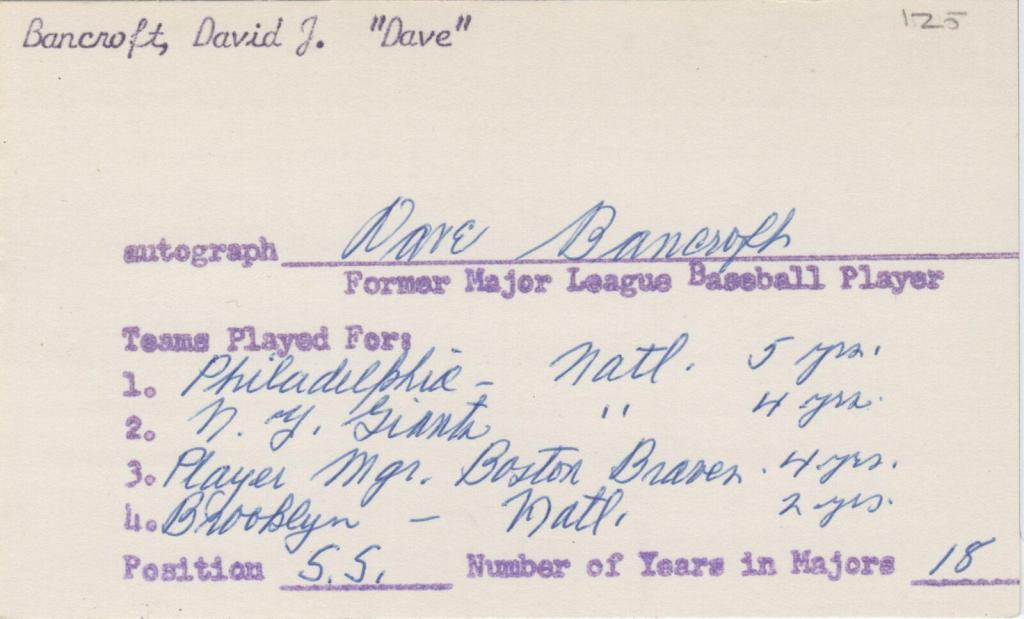
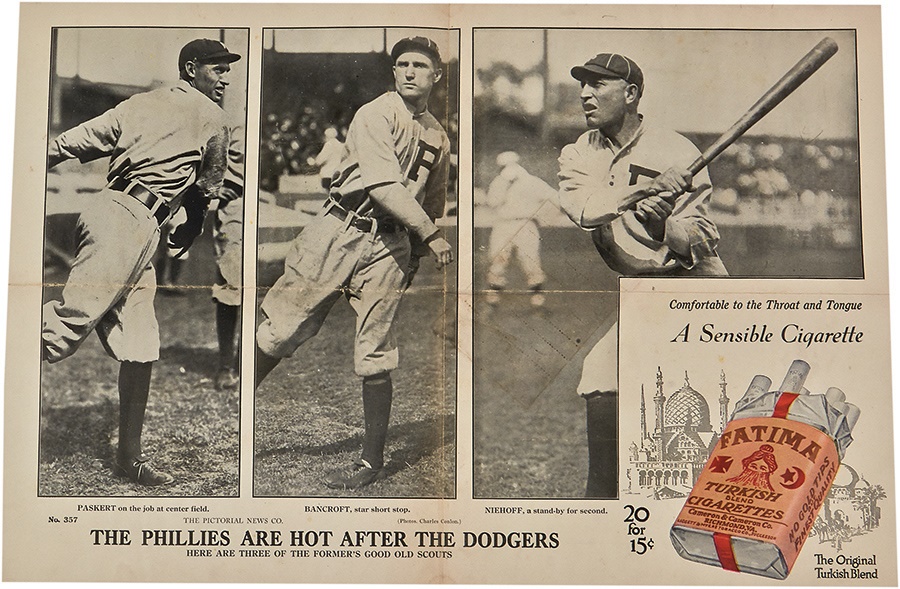
“Dave Bancroft should not be in the Baseball Hall of Fame.”
Wait, is he?
Apparently so. And he’s part of the Dodgers’ team history.
We are to assume (since it was never revealed) at least nine of 12 on a special veterans committee decided it to be in 1971. This was after 15 years of voting by the Baseball Writers of America, from 1937-39, then ’46, then ’48-’60, the most he generated was 16.2 percent of a needed 75 percent.
He found out via a phone call from a reporter in Jan., 1971. Bancroft died about a year later at age 81.
So why are we even discussing this?
Because a journalist, Tom Alesia, with dozens of years as a reporter an editor at small daily papers in Wisconsin and Illinois, was off on a vacation in Superior, Wisconsin in 2011, and looking for something to do.
Plotline: He finds this guy’s plot and talks his family into visiting the local cemetery, finds his headstone, right next to his wife, and can’t believe there was no reference to his baseball career of Hall status.
“That piqued my curiosity,” Alesia writes in the preface of this nifty little tome. “Who was Dave Bancroft? And, ahem, what was he doing alongside the sport’s greatest in Cooperstown? And so began a labor of love … It has been a pure joy.”
Alesia pulled together from all sorts of references how Bancroft, a 5-foot-9 and 160-pounder from Sioux City, Iowa, was:
= In a 16-year career, part of three World Championship New York Giants over five season and as part of the “Million-Dollar Infield” with Frank Frisch, George Kelly and Heine Groh.
= A defensive specialist so unproductive at the plate he became a novelty “turnaround hitter” (as a switch-hitter was called them),
= Holds the longest-standing single-season record for non-error fielding chances by a shortstop (984 in 1922),
= Had the nickname “Beauty” right there on his plaque.
= Was the player-manager of the Boston Braves from 1924-27,
= Came to Brooklyn at age 37 and 38 to play for Wilbert Robinson’s Robins and starts pushing for the DH (or, something called “ten-man baseball” with a “permanent pinch hitter”) ….
Wait, why are we giving this all away …
And wait, he’s not even in the Phillies’ Franchise Hall of Fame? But it’s in Cooperstown … They’ve retired nine numbers, but not his? (OK, did he even have one?)
If that first line in the opening chapter isn’t enough to make you hunt this thing down, you’ve lost a sense of adventure. We won’t spoil it for you. Just go after it. We’ll wait. …
How it goes in the scorebook
If Bancroft is “the most unlikely Hall of Famers,” then this book is one of the more unlikely additions to this series.
The beauty of this is how it became one of those organic finds, not just for the subject matter, but for acknowledging the book’s existence.
Alesia, whose previous book in 2021 is titled “When Garth Became Elvis: A Country Music Writer’s Journey with the Stars, 1985-2010,” simply reached out though a message on the website that he had this book, it’s already prompted two museum exhibits, two historical markers in Bancroft’s hometown, and somehow had an extended run on Amazon’s top-selling baseball book list.
Chasing @hbryant42 and Rickey today. I’m exhausted. Finish Rickey like I did; you’ll love it! Then go to number 2, Beauty at Short, my book. RT, Howard? ❤️⚾️🙏 pic.twitter.com/b1lcV31gh7
Something like this didn’t slip off our radar. It was never on it.
It happens.
So all we can say is: A book fittingly about as quick a read as Bancroft’s fame, exists, in whip-clean storytelling that is a tribute to the fact not all bios about Hall of Fame players need to be in excess of 400 pages, cost $40 and include dozens of footnotes, bibliographies, indexes and a bursting appendicitis.
== While we’re on the subject of rather obscure Baseball Hall of Famers: “Covey: A Stone’s Throw from a Coal Mine to the Hall of Fame,” by Harry J. Dietz Jr. (Sunsbury Press, 218 pages, $19.95, released Aug. 1, 2022). The blurb: “Stanley Coveleski, born in the Coal Region town of Shamokin, Pennsylvania in 1889, was the eighth child of Polish immigrants and went to work as a breaker boy when he was 12. But he escaped the 12-hour work days in the mines by throwing stones at a can tied to a tree — his own crash course in how to pitch a baseball. Years later, he was one of the best pitchers in Major League Baseball. In a season marked by personal and team tragedy — the death of his wife and his teammate Ray Chapman, who is the only player to die as a result of being hit by a pitch — Covey pitched three complete-game victories in the Cleveland Indians’ 1920 World Series championship. Covey, one of 17 pitchers still allowed to throw a spitball after it being outlawed before the 1921 season, was elected to the National Baseball Hall of Fame in 1969.” He was a five-time 20-game winner, led the AL twice in ERA, once in strikeouts and once in games started.
== Bancroft’s Hall of Fame bio includes: “He retired with a .279 average, 2,004 hits, 320 doubles and 1,048 runs scored. In the field, Bancroft led all NL shortstops in putouts four times, assists three times and fielding percentage twice. His 4.623 career putouts at shortstop rank third on the all-time list.”
== The Milwaukee Journal-Sentinel included it last March as one of the 11 baseball books to read in 2022: “One of the Baseball Hall of Fame’s lesser-known denizens, even though he ranks above baseball legends like Phil Rizzuto and Maury Wills in wins above replacement (WAR). Alesia, who lives in Madison, repairs that error with this well-researched biography.”
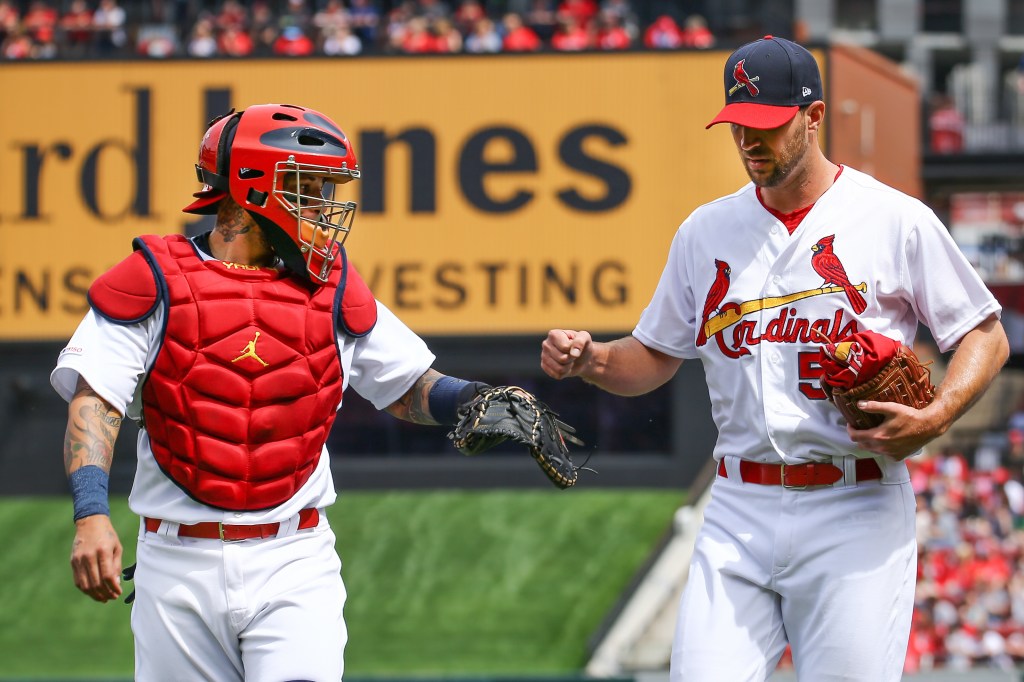
St. Louis Cardinals catcher Yadier Molina and starting pitcher Adam Wainwright prior to the game between the Cardinals and San Diego Padres on April 7, 2019 at Bush Stadium (Photo: Jimmy Simmons/Icon Sportswire via Getty Images)
UPDATED: Aug. 7, 2022:
Can two 40-something Major League Baseball players keep dancing together long enough before October to make history without hurting themselves too much before retirement benefits kick in?
With two months are left in this 2022 MLB season, St. Louis Cardinals pitcher Adam Wainwright and catcher Yadier Molina are apt to catch and surpass the record for most games started together as a battery.
They had been stuck on 316 since mid-June – and tied for second place all-time on the list – as Molina was been trying to come back from a swollen right knee to reunite with Wainwright and see what’s left to accomplish.
Molina returned to active duty Tuesday for the beginning of a three-game series at home against the Chicago Cubs – where Wainwright was the scheduled starter. In the Cardinals’ 6-0 win that night, Wainwright pitched seven spotless innings with Molina and they made their 317th career start as batterymates, passing the Boston/Milwaukee Braves duo of Warren Spahn and Del Crandall for sole possession of second place in major league history since 1901. Molina also caught his 153rd career shutout, second only to Yogi Berra (173) in MLB history.
That was also their 204th win as a battery. On May 15, they passed the Spahn-Crandall record with 203.
Sunday, in a 12-9 win over the Yankees where Wainwright had no decision, the two made it together 318 times. They are closing in on the all-time mark of 324 by the Detroit Tigers’ Mickey Lolich and Bill Freehan (1963-to-’75).
Wainwright, who turns 41 later this month, and Molina, who hit 40 last month, have a 15-year run going back to 2007.
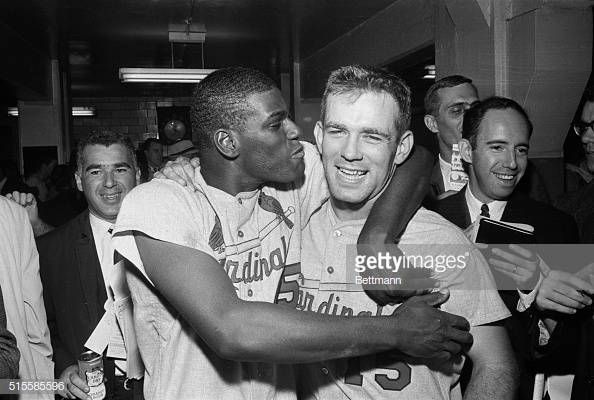
In the Cardinals’ self-proclaimed glorious franchise history, Wainwright and Molina have already surpassed what had been considered to be the franchise’s most high-profile pitcher-catcher combo — Bob Gibson and Tim McCarver, who were together for 197 starts and which we assume adds in what they did in the 1964, ’67 and ’68 World Series.
To drive that point home, Gibson and McCarver were part of the team’s opening pitch ceremony for the team’s first home game on April, 2018, moments before the battery of Wainwright and Molina started No. 238 together.
After the astro-dust settles, does all this ruckus make Wainwright and Molina the greatest battery of all time, once they have the top marks for appearances and wins?
Does Gibson-McCarver have a say in this?
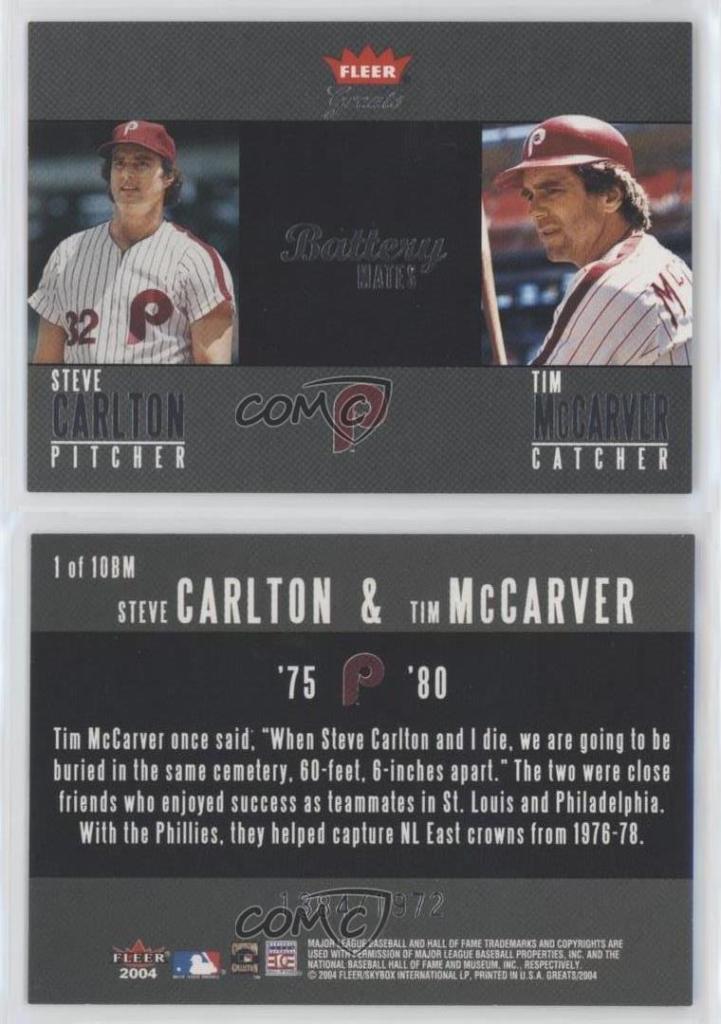
Or, what’s all the fuss about Steve Carlton and Tim McCarver?
When Steve and I die, we are going to be buried 60-feet 6-inches apart. -Tim McCarver who caught Steve Carlton pic.twitter.com/h7WNZFBVpx
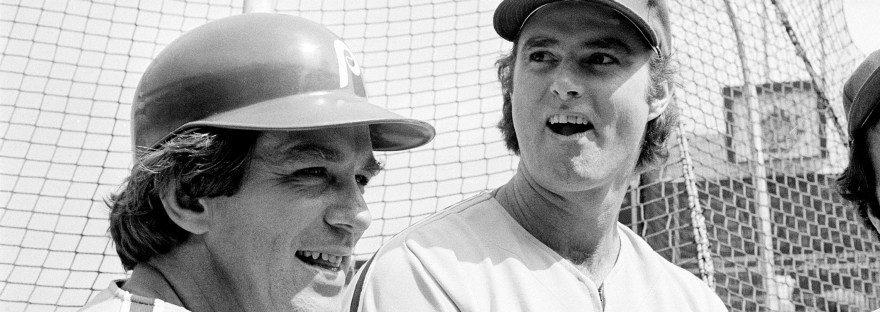
Here’s the catch: For at least four seasons – 1976 through ’79 – there’s little to dispute that Carlton-McCarver formed the top tag team in baseball while members of the Philadelphia Phillies, reviving a relationship they started in some 10 years earlier in St. Louis. All the appendix charts, graphics and research at the end of this 350-page dual bio seem to secure that claim.
This came at a time when pitchers were getting more notoriety for having a particular catcher team up with them. In this case, the revival was necessary, Carlton thought, after he was dealt from the Cards to the Phillies and wasn’t having much of a connection with All-Star catcher Bob Boone. McCarver, added back to the Phillies roster as a backup, ended up catching 32 of Carlton’s 35 games, and all was well again.
So if, as the title suggests, this was “baseball’s best battery,” it is probably with some context. But we’ll give them that. Because, from ’76-to’79, McCarver caught 128 of Carlton’s 140 starts, including 90 in a row. Carlton posted a 48-26 record over that time and came back to Cy Young form, securing a spot in the Hall of Fame, and giving McCarver plenty of credibility as he began to start a Hall of Fame-quality broadcasting career, where he set many more longevity records.
For the record, McCarver caught 228 of Carlton’s 709 career starts, putting them No. 17 on the all-time list, and the only pair who did it with more than one team. That’s got to count for something. A bio? Why not.
But it didn’t start all that excellent.
Chapter 2 of this new book recalls their introduction:
“Steve Carlton made his first appearance for the St. Louis Cardinals in a 1965 spring training game at Al Lang Field in St. Petersburg, Florida. The lean rookie has rocketed through the Redbirds’ farm system … now he was ready to prove that he belonged in the Majors. “Carlton went four innings, surrendering two runs on five hits. It was hardly an impressive performance. But he refused to accept blame for the poor showing. Afterward in the Cardinals’ locker room he approached his catcher, Tim McCarver, while he was shaving. ” ‘Hey,’ began the brazen young hurler. ‘You gotta call for more breaking pitches when we’re behind in the count.’ “McCarver couldn’t believe that a rookie had the gall to tell him how to call a game. He was, after all, a veteran and the club’s regular catcher. Just five months earlier, he hit .478 in the World Series and smacked a three-run homer in Game Five to help the Cards clinch the championship against the storied New York Yankees … ” ‘You son-of-a-bitch!’ McCarver exploded. ‘Who the hell do you think you are, telling me that? You’ve got a lot of guts. What credentials do you have?”
The stage was set: Can two men share a baseball field without driving each other crazy?
Kinda sounds like McCarver in a future confrontation with Deion Sanders, doesn’t it?
From that initial meeting, Carlton, 20 years old and already aloof, walked away. McCarver, 24 years old and garrulous as well as hard-nosed and far wiser,, later went back and apologized. He understood the value of a pitcher-catcher relationship.
“The rookie brushed him off again. Looking the veteran catcher straight in the eye, Carlton said: ‘I wasn’t listening anyway.’ “
That said, and what would go unsaid, it seems pretty amazing decades later, a book could come of it for historical, and some hysterical, context.
How it goes in the scorebook
1-2 output. Without so much the 1 we would hope for.
For this dual biography of this battery, noted Philly based historian William C. Kashatus (author of more than 20 books, including “Jackie and Campy: The Untold Story of Their Rocky Relationship“) was able to get McCarver to talk for three extended interviews.
Carlton abstained. Some things don’t change.
Even with former teammate Larry Christensen (who wrote the forward) trying to intervene.
Even if there aren’t a lot of new revelations that one might anticipate — especially without Carlton submitting to new chatty interviews — it’s serves as a nice reminder, and a historic placeholder, as to what we’re seeing again with the Wainwright-Molina achievement.
Catch it, if you can.
By the way, as much as Carlton benefitted from McCarver, the opposite seemed to be true.
In a 2017 story for MLB.com about the Carlton-McCarver pairing, Larry Shenk writes that “while McCarver spurred Carlton, Lefty seemed to spur Tim’s bat. For his Phillies career, McCarver hit .272, with 26 homers and 168 RBIs. While catching Carlton: .306, 10 homers and 66 RBIs.”
== The current list of all-time battery mates in MLB history, for those curious, includes the Dodgers’ Don Drysdale and John Roseboro (283 games, fifth all-time, from 1957-to-’67) and the Dodgers’ Fernando Valenzuela with Mike Scioscia (239, 13th all time, from 1981-to-’90). The combo of Sandy Koufax and Roseboro made it to 208 appearances (21st all time, from ’57 through ’66).
== In Joe Posnanski’s “Baseball 100” list, Carlton is slotted in at No. 63. Posnanski reminds us how Carlton went from the Cardinals to the Phillies for Rick Wise in a deal that it seemed no one wanted to make but too many contract issues on both sides forced the issue.
Posnanski writes: “You probably know that Tim McCarver eventually became Carlton’s personal catcher. But what you might not know is that he was also Wise’s catcher. So when the Wise-Carlton trade was made, reporters flocked to McCarver to see what he thought. McCarver first made it clear that he thought they were exactly the same as pitchers.
“They’re so comparable,” he said, “that you have to start looking to the finer points like how they field their position. When you have to start looking to things like their personalities, things like that, you know they’re awfully close.”
He then broke it down, pitch by pitch, and actually gave the edge to Wise for his fastball and his slider. Think about that: Steve Carlton had one of the greatest left-handed fastballs in baseball history, and he had the greatest slider in baseball history, righty or lefty, but when Carlton came to Philadelphia, McCarver gave the edge on both pitches to Wise.
But McCarver wasn’t crazy. See, by 1972, Carlton stopped throwing what would become the greatest slider ever. He had picked up that slider in Japan after the 1968 season while trying to figure out a way to get out the legendary Japanese slugger Sadaharu Oh. The first two times they faced each other, Oh homered. So Carlton tried the slider he had been playing around with. Oh buckled. “I knew I had something,” Carlton told Sports Illustrated.
But he junked it in at some point in 1970. Why? Some thought it was because the Cardinals felt like it put too much strain on his arm. Some thought it was because he lost confidence in it. In any case, McCarver had it right that Carlton had given up on the slider.
But as soon as he got to Philadelphia, he began to throw it again. And barely a month later, reporters went back to McCarver to ask about Carlton. Suddenly, McCarver sang a very different tune.
“Pound for pound, I think Steve probably throws harder than anybody else in the league,” he said just five weeks after saying that Wise had a better fastball. “He was zipping that slider. When he has that working well, nobody is going to touch him.”
Then Posnanski got into Carlton and his silent treatment to the media:
“By 1979, it became known across the sports world that Carlton was the guy who didn’t talk to the press. He was mocked repeatedly for it. And? From 1980 to 1983, he won two Cy Young Awards, could have won a third, won his 300th game and passed Walter Johnson to become the all-time strikeout king. (Nolan Ryan would take that title back later.) He later said not talking to the press cleared his mind and allowed him to become the pitcher he was meant to be.
In later years, it became pretty clear that Carlton was smart to not talk to the media because there were all kinds of bats flying around in his attic. In 1994, after he was elected to the Hall of Fame, he did a series of interviews, including a long interview in his home in Durango, Colo., with Pat Jordan. The result was an astonishing portrait of racism, homophobia, fear, nonsense and anti-semitism. A few lines probably will suffice:
He believes that the last eight U.S. presidents have been guilty of treason … that the AIDS virus was created at a secret Maryland biological warfare laboratory “to get rid of gays and blacks, and now they have a strain of the virus that can live 10 days in the air or on a plate of food, because you know who most of the waiters are,” and finally, that most of the mass murderers in this country who open fire indiscriminately in fast-food restaurants “are hypnotized to kill those people and then themselves immediately afterwards,” as in the movie The Manchurian Candidate. He blinks once, twice, and says, “Who hypnotizes them? They do!”
Carlton quickly released a statement saying the entire article was untrue and suggested that Jordan “became so disoriented (in the thin air of his hometown of Durango) that he lost his grasp on truth and decency.”
Pat Jordan, as only he can, grumped back: “Steve is the most fearful man I’ve ever met.”





























 Tom Hoffarth's The Drill: More Farther Off the Wall