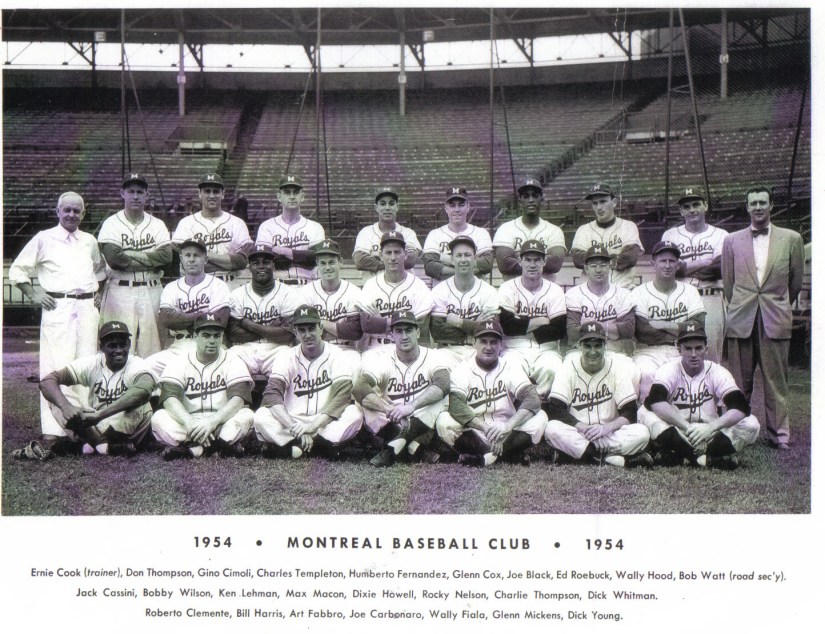
A Dodgers’ 1954 team photo of the Montreal Royals includes Roberto Clemente (bottom left), and the reason for his inclusion on this team instead of the Dodgers’ Major League club in Brooklyn is the subject of one of the 50 contributions to this new SABR 50th anniversary book.
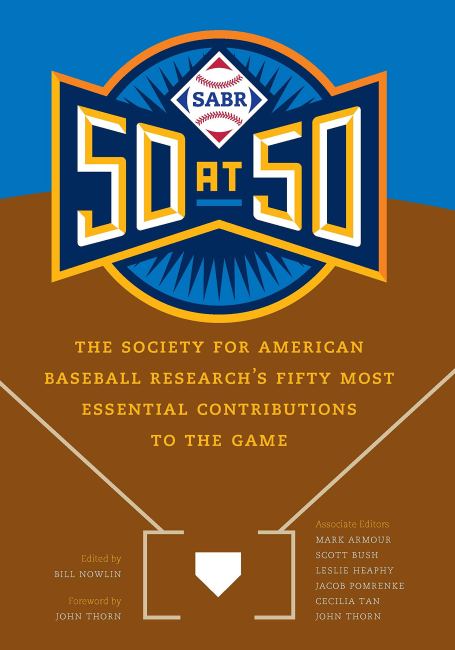
SABR 50 at 50
The Society for American Baseball Research’s Fifth Most Essential Contributions to the Game
What 50 things did we learn about the Society of American Baseball Research from this book put together by one well respected editor, six associate editors, 51 contributors, 53 photos, 57 tables and a deceiving light three pounds later?
It’s more like 50 times 500. Divided by many filters and opinions.
When SABR was first conceived by a group of 16 people who convened in Cooperstown, N.Y. in August, 1971, we had already seen the first real push toward how to harness more accessible statistics provided by the launch of the Baseball Encyclopedia in the summer of 1969.
With that book’s 50th anniversary celebrated in 2019 with those still around to enjoy the recognition – as we described in this Los Angeles Times story a year ago and posted on the SABR site and which we expanded on TheDrillLA.com – it was inevitable that SABR get its golden anniversary party as well with something that may not even be enough to satisfy a true seam head.
In a story published in June, 2013, the New York Daily News mapped out how many “extra miles” Mets PR man Jay Horwitz had to travel to help new pitcher Zach Wheeler get acclimated with the team and prep him for how to deal with the New York media.
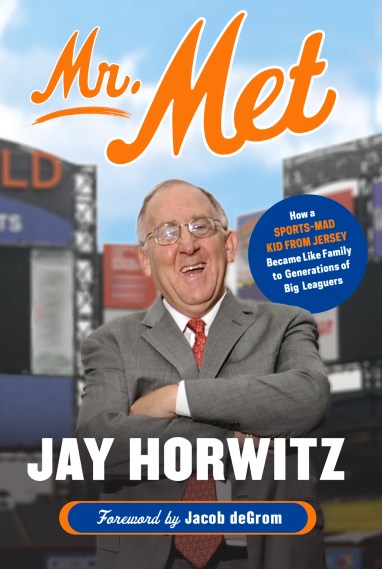
Mr. Met:
How a Sports-Mad Kid from Jersey Became Like Family to Generations of Big Leaguers
A few years back, Jeff Pearlman wrote a profile on New York Mets public relations man Jay Horwitz for the Wall Street Journal — this is spring training, 2011 — that began poetically:
Mets vice-president of media relations Jay Horwitz is, self admittedly, ‘a little bit of a schlump.’ He’s wrinkled, he’s baggy, he’s disheveled. His glasses are slightly crooked. His head is a little bit large for his shoulders. He talks with a thick New York accent. He’s lost or broken at least 10 Blackberries over the last few years, including two that plopped into the toilet.
A piece in the New York Post in 2009, when Horwitz was celebrating his 30th season, included this from writer Filip Bondi:
He is 63, a lovable, frazzled soul among young millionaires from very different cultures. He could be the father to these players, and talks like their proud, protective grandpa. … Everybody is a saint, or at least a mensch. … The stories he can tell . . . and the ones he must censor just a bit, because after all that is his business.
Another piece on Horwitz in the New York Post in 2018, includes these quotes from then-Mets captain David Wright: “You naturally think of players or managers when you think of Mets history, but in my opinion he’s right up there on that Mount Rushmore of the organization.” Team co-GM Omar Minaya adds: “I don’t want to say he’s Mr. Met, but he’s as close to Mr. Met as possible.”
In 40 years as the New York Mets’ PR man, Horwitz served a purpose. He could have revived the rules of Dodgeball — Dodge, Duck, Dip, Dive and Dodge — by adding Damage Control and Divert Attention. Even when the team was winning World Series titles in 1986 or NL pennants in 2000 and 2015.
Public relations, after all, is about relationships. He knew the process, the deadlines, the marketing side to how everything was interrelated.
We had a dream the other night about Mickey Mantle.
It was more a flashback, to a trip that a friend of mine and I took a few years back. We did a start-to-finish, Chicago-to-L.A. trek on what is still left of Route 66. Not quite halfway through, after starting the day in Carthage, Mo., we hit the part of the journey that sliced through Kansas and dipped into Oklahoma. Not far into the Sooner State did we hit a bend and come upon the water tower of Commerce.
It’s the hometown of Mickey Mantle, aka The Commerce Comet.
His high school was just off the main road. A statue of him, right behind Mickey Mantle Baseball Field.
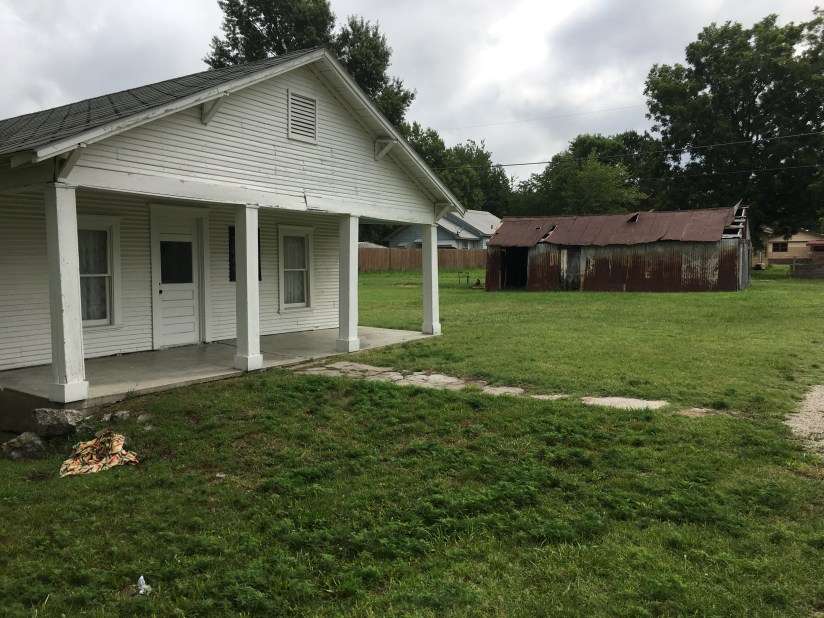
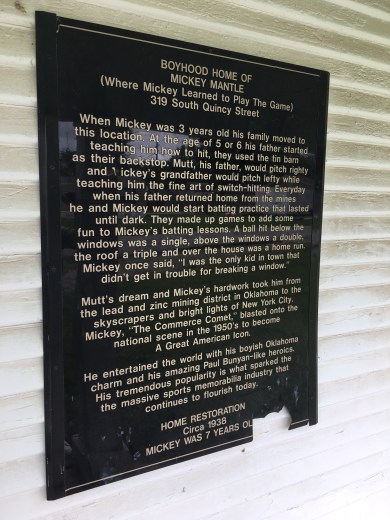
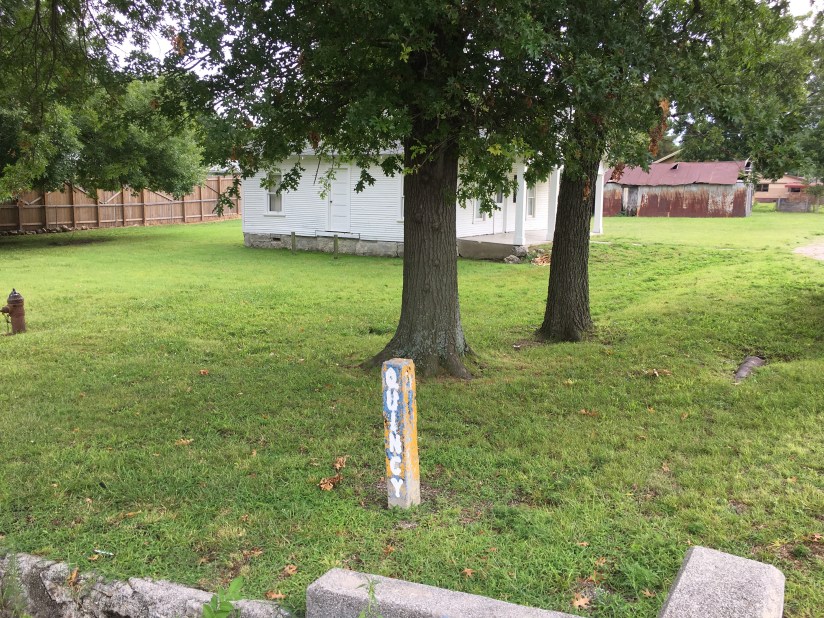
With a Google search, we went just a few blocks away to the home — a sign posted on the front of it looked no worse for wear and confirmed we hit pay dirt in this unexpected discovery.
It also confirmed the story of “Mutt’s dream.”
Across the yard was a tin-covered shed.
Anyone home? Didn’t seem so. A wasp’s nest was formed in one of the window sills.
After paying our respects, it was time to move on. But we felt the need to have a piece of this to take home with us. We found a small branch of a tree on the property. That was enough.
Our own Wonderboy.
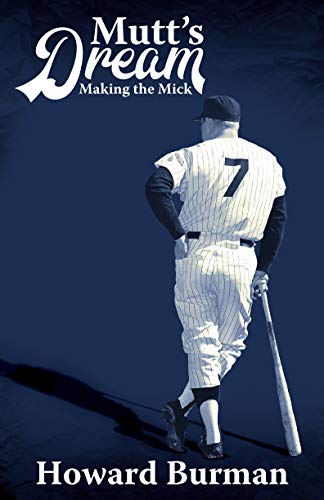
To have been on the property on a quiet summer day allows one to listen to the wind blow, the leaves rustle, the ghosts swirl. It provides something of a surreal context when we now come to an immersion of this book by Howard Burman.
Burman notes in his acknowledgements that there are “quite a number of books about Mickey. Most concentrate on his Major League Baseball career. Some delve into his public life after he left the game. Not a great deal has been written about the years before he became a professional. There are snippets here and there in various books, including some written (or ghosted) by Mickey himself, including “The Education of A Baseball Player: The Mickey Mantle Story,” as told to Ben Epstein (in 1967, a year before Mantle’s retirement), and “Mickey Mantle: The American Dream Comes to Life,” co-authored by Lewis Early (in 1996, shortly after Mantle’s death at 63). John G. Hall’s “Mickey Mantle Before the Glory” was a valuable resource for this book.”
All those may provide a foundation here for Burman, a Brooklyn native who eventually would get into theater production and chair the department at Cal State University Long Beach. But the sincere beauty of how this book is constructed as a theatrical production feels so real that Burman also has to clarify in here that the dialogue is “word-for-word accurate as recorded” in most parts, and other parts “invented but it is always consistent with the reality of the situation.”
That adds a deeper humanity far richer than simply reproducing facts and newspaper accounts that and gives clarity to more than just a “based on a true story” attempt.
In the first two chapters, Burman establishes the life and struggles of Elven “Mutt” Mantle in the dustbowl of Oklahoma, at the dawn of The Great Depression. A fan of the somewhat nearby St. Louis Cardinals that he can reach through radio broadcasts, Mutt is a bigger fan of Philadelphia Athletics’ hard-nosed catcher Mickey Cochran.
The 18-year-old Mutt is courting Lovell, eight years older than him and the sister of a girl he’d been dating. She’s also divorced and with two kids.
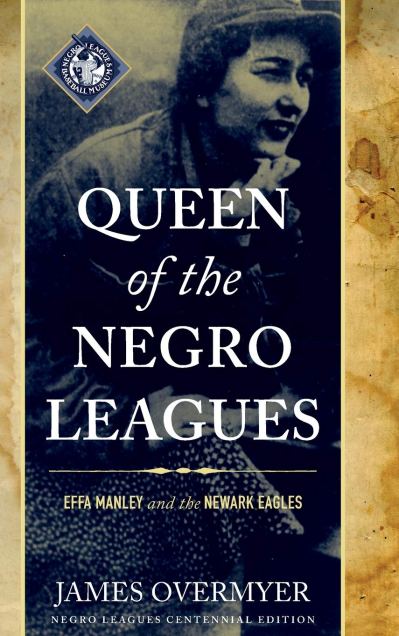
Claire Smith, a recent recipient of The Baseball Writers Association of America’s J.G. Taylor Spink Award for her contributions to baseball writing as a reporter and columnist, did a piece on Effa Manley for TheUndefeated.com this month that began:
“If you look deep into the history of the Baseball Hall of Fame, you will find one club owner enshrined who would fit seamlessly into the worldwide cultural revolution that is 2020.
“Effa Manley co-owned the Newark Eagles of the Negro National League with her husband, Abe, and her words and deeds from more than 80 years ago would be just as relevant today.
“We’ve marveled as millions in nascent rainbow coalitions have found their voices, sparked by the killing of George Floyd, a Black man, by police in Minneapolis. The footage of a policeman’s knee bearing down on Floyd’s neck caused revulsion throughout the world.
“In this year of celebrating 100 years since the first Negro League game, I can’t help but wonder if Manley is somewhere asking what took the world so long to catch up with her. She lived Black Lives Matter before it was a mantra and a movement.”
As Smith pointed out: In 1939, Manley had vendors at New Jersey’s Ruppert Stadium sell buttons that read “Stop Lynching” for a buck a piece, and the funds went to support legislation in Congress aimed at making the federal government address lynching. That claimed about 6,500 Black lives between 1865 and 1950, according to the Equal Justice Initiative in Alabama.
“Lynching remains a federal conversation in 2020,” Smith adds. “In June, Kamala Harris, the only Black woman in the U.S. Senate, was among three to sponsor legislation to finally make lynching a federal hate crime.
“Manley’s fight eight decades ago was before a suddenly ‘woke’ sports world acknowledged the often deadly dangers of living while Black in America.”
The 2006 inductee into Cooperstown for how she keep the Negro Leagues vibrant, and progressive, can be a useful reference these days when one wonders what current MLB ownership are awake to what’s happening in the world.


 Burman notes in his acknowledgements that there are “quite a number of books about Mickey. Most concentrate on his Major League Baseball career. Some delve into his public life after he left the game. Not a great deal has been written about the years before he became a professional. There are snippets here and there in various books, including some written (or ghosted) by Mickey himself, including “
 Tom Hoffarth's The Drill: More Farther Off the Wall