


This is the latest post for an ongoing media project — SoCal Sports History 101: The Prime Numbers from 00 to 99 that Uniformly, Uniquely and Unapologetically Reveal The Narrative of Our Region’s Athletic Heritage. Pick a number and highlight an athlete — person, place or thing — most obviously connected to it by fame and fortune, someone who isn’t so obvious, and then take a deeper dive into the most interesting story tied to it. It’s a combination of star power, achievement, longevity, notoriety, and, above all, what makes that athlete so Southern California. Quirkiness and notoriety factor in. And it should open itself to more discussion and debate — which is what sports is best at doing.

The most obvious choices for No. 88:
= Tim Rossovich, USC football
= Phil Nevin, Los Angeles Angels manager
= Billy Don Jackson, UCLA football
= Preston Dennard, Los Angeles Rams
The most interesting story for No. 88:
Billy Don Jackson, UCLA defensive lineman/linebacker (1977 to 1979)
Southern California map pinpoints:
Westwood, L.A. Coliseum, Los Angeles Superior Court

All these years later, do you have a better read on what happened to Billy Don Jackson at UCLA in the late 1970s? Even now, it might be wise to review all the evidence.
A heralded high school recruit from football-rich Texas who stepped right in as a freshman starter on Terry Donahue’s UCLA squad, Jackson was voted by his teammates to receive the N.N. Sugarman Perpetual Trophy. It represents the player who exhibited the best spirit and scholarship.
Jackson won that twice. The second time was after his junior season, even after Donahue decided he had to punish him for missing classes with a four-game suspension at the end of the season, sending him to the scout team and effectively ending his college career.
There is also the Jackson who, once he was disengaged from Westwood, stood in Santa Monica Superior Court and heard a judge brand him as a “functional illiterate” during a testy sentencing hearing. Jackson had pleaded no contest to involuntary manslaughter in a botched drug deal.
“This young man cannot even read ‘see Spot run’,” the judge, Charles Woodmansee, continued in his diatribe.
“My God,” added prosecutor Marsh Goldstein, “they brought this kid to one of the top universities in the country and it takes a court order for him to properly to learn to read and write. … Billy Don Jackson is himself a victim — a victim of the shoddy system we call intercollegiate athletes. Hopefully somebody in college sports will learn something from this tragedy.”
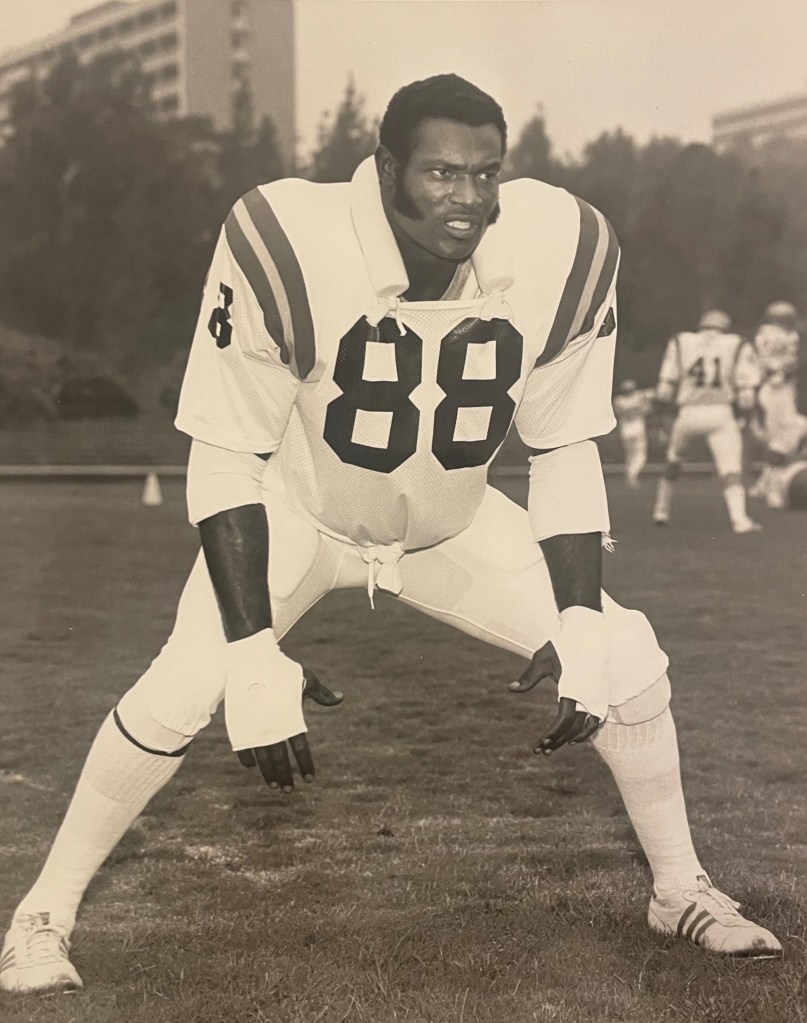
Jackson became the humiliating yardstick for everything perceived wrong with college sports and a winning-at-all-costs approach. How someone could spend that long at a major university masquerading as a so-called “student-athlete” was a huge red flag.
UCLA took it as a gut punch. College sports took it as a wake up call, beyond simple damage control.
The truth was, and still is, that Jackson had a pronounced reading disability, similar to dyslexia, that was supposed to be addressed by UCLA’s academic department through tutoring and individual attention. It didn’t happen. Who’s at fault?
The collateral damage is that Jackson would be referenced time and again by those outraged about the exploitation of Black athletics at the expense of an education, setting off a sizeable ripple effect for overdue reform.
“The one consistent exception to the negative images presented of Blacks in the media has been the black male athlete,” UC Berkeley sociologist Harry Edwards said in a 1982 L.A. Times story that particularly used the Jackson case as the cautionary tale. “The message, though subtle, is clear: If you are Black and want respect, justice and equality of opportunity and reward from white America, become an outstanding athlete.”
But it really wasn’t that simple for Jackson, despite what may still linger in the court of public opinion.
The context

Sporting a name that sounded like a country western crooner, Billy Don Jackson was born Jan. 29, 1959 and, though trying circumstances, grew into a highly-sought after, 6-foot-4, 280-pound athlete from Sherman High, about an hour’s drive north of Dallas and not far from the Oklahoma border.
Right in the glare of “Friday Night Lights” in Texas football.
Jackson’s college recruitment drew attention unto itself. Bear Bryant at Alabama and Barry Switzer at Oklahoma came calling. Representatives from all the Texas schools urged him to stay home with all sorts of incentive plans. When Jackson played in the 45th Texas High School Coaches Association North-South game in Dallas, it looked like Southern Methodist had the inside track.
To talk to him meant a physical visit to see his mother, Annie. The two lived with his grandmother in a federal subsided $27-a-month upstairs apartment in a housing project. They had no home telephone. Jackson’s parents divorced when he was 3 and he supported his family working full-time in the summer and part time during school.
“He’s only 17 but he’s probably twice that old,” said his high school coach Ed Hunt in 1977 during that recruiting process. “The things he’s going through right now are easy for him compared to what he’s been through. He’s had times when he’s had to worry about feeding his family.”
Jackson came into all with eyes wide open, as a wire service story reported on how he was processing all the sales pitches.
“These guys won’t tell you they’ll give you a car; they’ll be real subtle,” Jackson said. “A couple of them said they’d take care of my homework, give me a tutor, whatever. Make sure I don’t have to go to class, things like that. That ain’t the life for me. Those schools are out of the running. I don’t give them a second look. My father taught me to appreciate a hard day’s work.”
UCLA, trying to recruit more out-of-state talent after Donahue’s first season as a head coach in Westwood, had someone who Jackson could trust. Billie Matthews, a former quarterback at Southern University who coached high school ball in his native Houston, came to UCLA from Kansas in 1971 with head coach Pepper Rodgers and coached defensive backs for one season before concentrating on the running back position. He spoke Jackson’s language.
Aside from bringing Jackson into L.A. on a trip to show off the sunny weather on a day it had been snowing and dreary in his home town, he had a sit down lunch with then-Los Angeles mayor Tom Bradley, a UCLA alum.
Continue reading “No. 88: Billy Don Jackson” Tom Hoffarth's The Drill: More Farther Off the Wall