No. 24: Kobe Bryant

This is the latest post for an ongoing media project — SoCal Sports History 101: The Prime Numbers from 00 to 99 that Uniformly, Uniquely and Unapologetically Reveal The Narrative of Our Region’s Athletic Heritage.  Pick a number and highlight an athlete — person, place or thing — most obviously connected to it by fame and fortune, someone who isn’t so obvious, and then take a deeper dive into the most interesting story tied to it. It’s a combination of star power, achievement, longevity, notoriety, and, above all, what makes that athlete so Southern California. Quirkiness and notoriety factor in. And it should open itself to more discussion and debate — which is what sports is best at doing.

The most obvious choices for No. 24:
= Kobe Bryant: Los Angeles Lakers
= Walter Alston: Los Angeles Dodgers
= Freeman McNeil: UCLA football
= Dwayne Polee,Manual Arts High basketball

The not-so-obvious choices for No. 24:
= Marion Morrison: USC football

The most interesting story for No. 24:
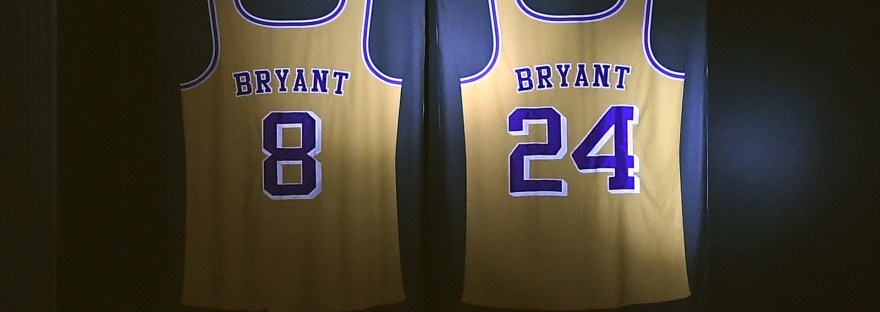
Kobe Bryant: Los Angeles Lakers guard (2006-07 to 2015-16), also wearing No. 8 (1996-97 to 2005-06)
Southern California map pinpoints:
Long Beach, Los Angeles (Staples Center), Newport Beach, Thousand Oaks


This image has an empty alt attribute; its file name is img_4491.jpg
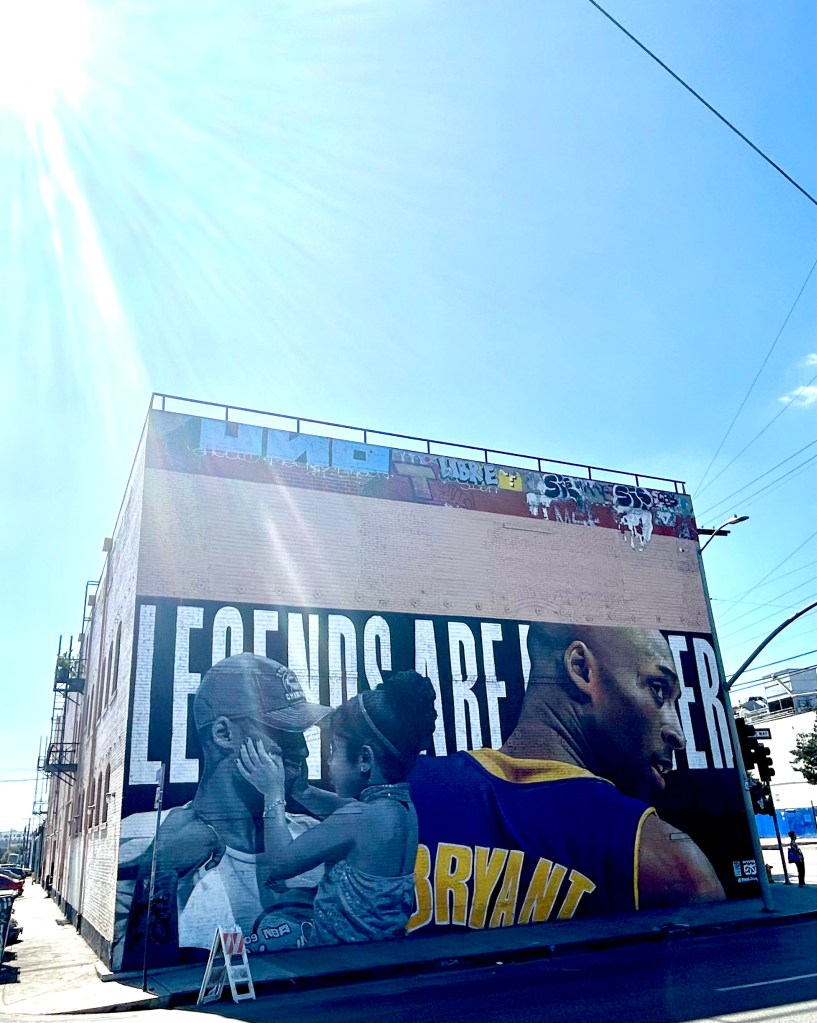
A sun-splashed mural of Kobe and Gianna Bryant on 4th Street in the Little Tokyo/Boyle Heights neighborhood of Los Angeles, between Alameda and Seaton.

Momba murals, we have come to calling them. Brilliantly splashed across the sides of hotels, restaurants, pawn shops and abandoned warehouses.
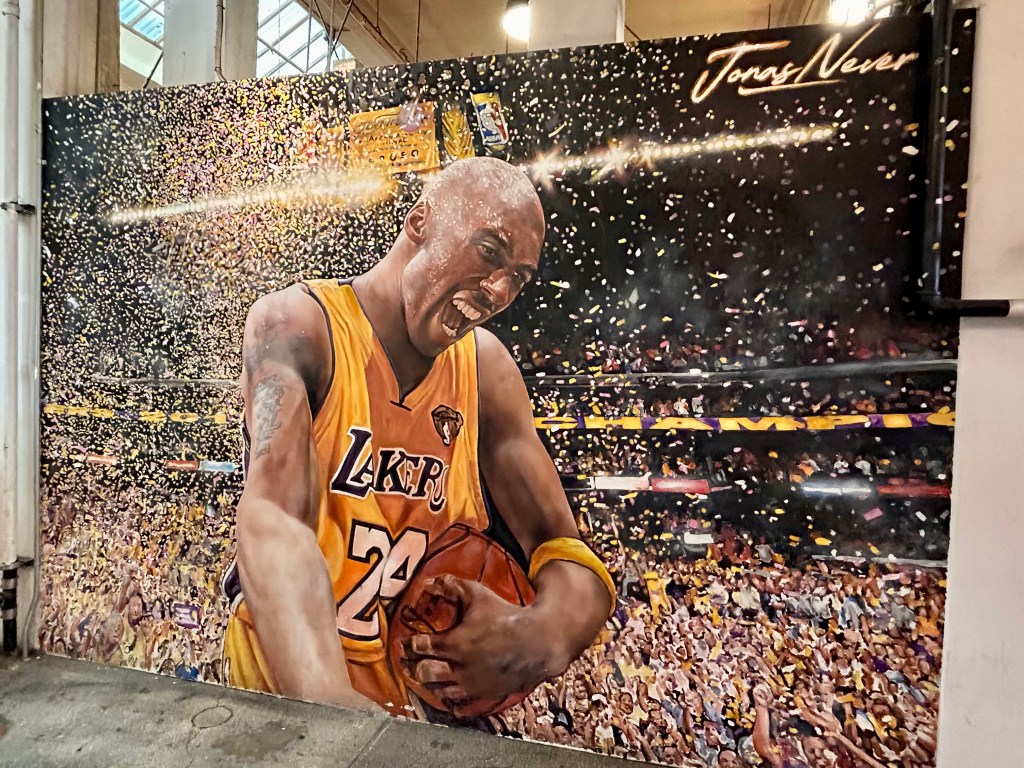
They provide varied interpretation and a longing for artists inspired to creatively honor Kobe Bryant and his daughter, Gianna. They have become as much as the city’s fabric and context as much as a place to reflect and ponder “what if” as well as what was.
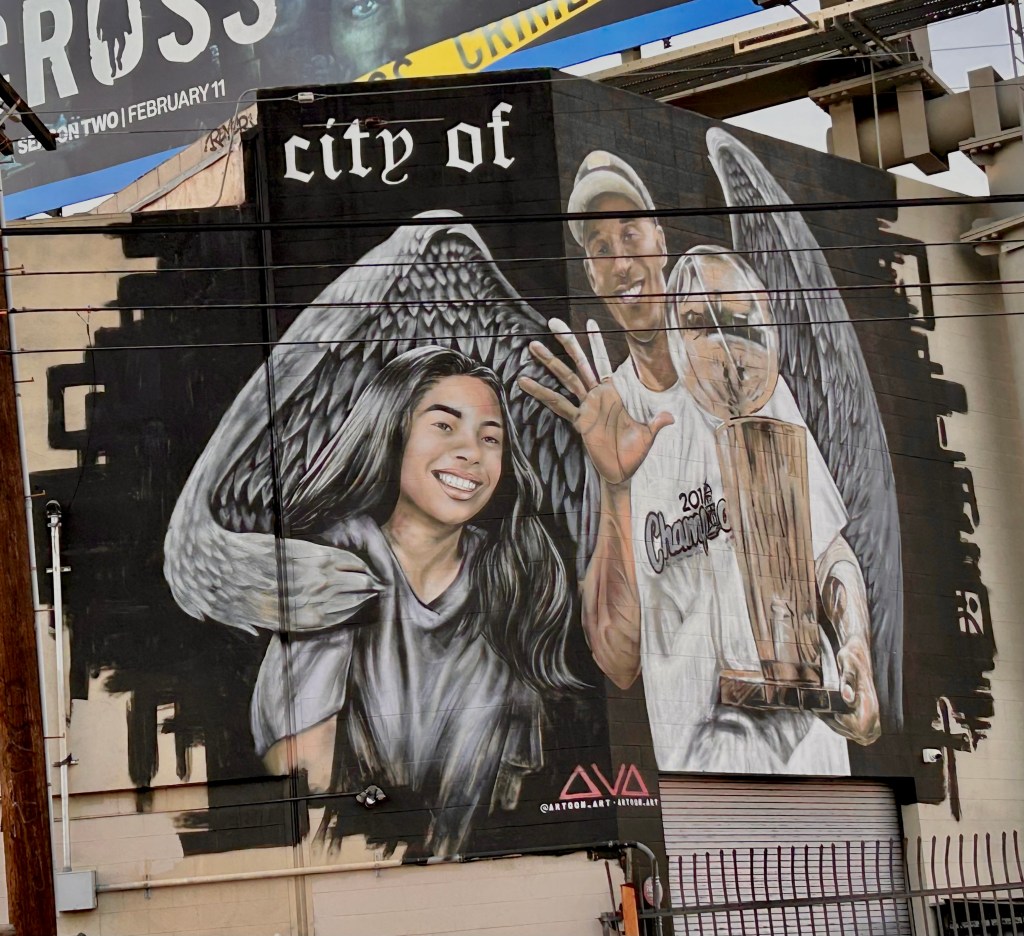
They are at best coping mechanism for those who designed them an expression of grief mixed with tribute. They should be numbered and catalogued as if part of a unique SoCal art gallery.

This image has an empty alt attribute; its file name is img_4639-1.jpg
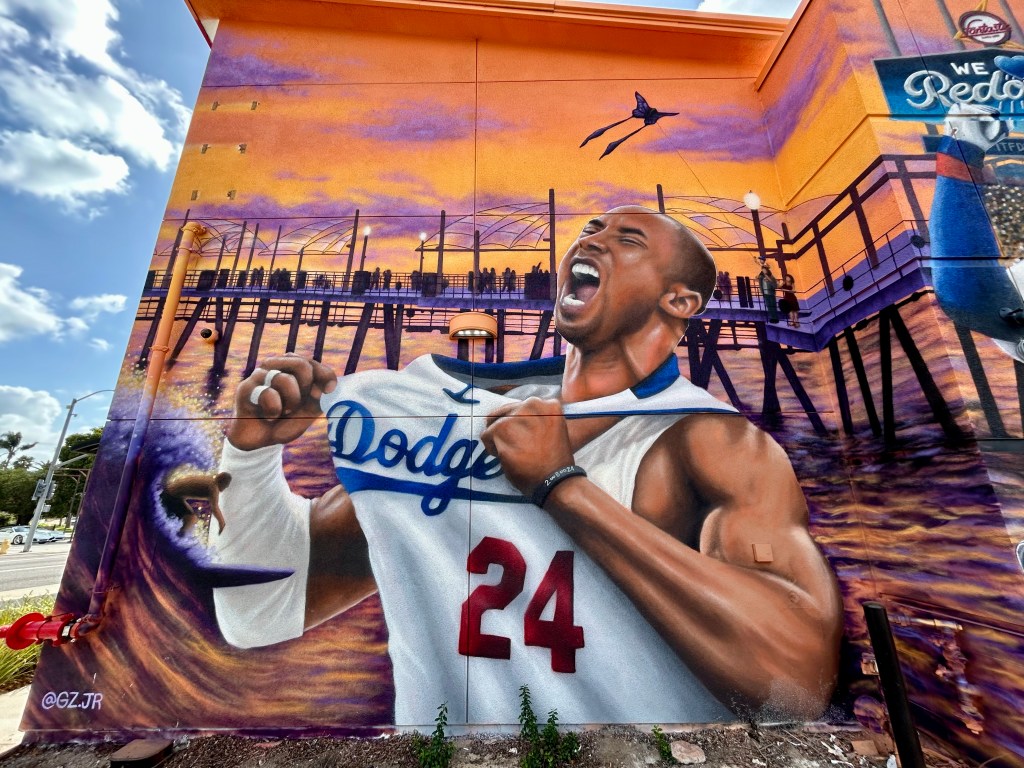
A mural of Kobe Bryant wearing a Dodgers’ No. 24 uniform as part of a larger mural with Dodgers players at a drive-through hamburger stand in Redondo Beach on Pacific Coast Highway includes Bryant wearing a black wristband that honor the numbers 2, 8 and 24.

Websites dedicated to these works claim, as one says, to finding nearly 350 renditions just in the greater Los Angeles area.

There are more than 450 in the U.S.

Another 175 are around the globe.

The L.A. Times has tried to post the best of them, including updates with works that have lately popped up on Venice Beach.

Continue reading “No. 24: Kobe Bryant”
No. 52: Keith Wilkes / Jamaal Wilkes

This is the latest post for an ongoing media project — SoCal Sports History 101: The Prime Numbers from 00 to 99 that Uniformly, Uniquely and Unapologetically Reveal The Narrative of Our Region’s Athletic Heritage.  Pick a number and highlight an athlete — person, place or thing — most obviously connected to it by fame and fortune, someone who isn’t so obvious, and then take a deeper dive into the most interesting story tied to it. It’s a combination of star power, achievement, longevity, notoriety, and, above all, what makes that athlete so Southern California. Quirkiness and notoriety factor in. And it should open itself to more discussion and debate — which is what sports is best at doing.

The most obvious choices for No. 52:
= Keith Wilkes: UCLA basketball
= Jamaal Wilkes: Los Angeles Lakers/Clippers
Marv Goux: USC football
Jack Del Rio: USC football
= Khalil Mack: Los Angeles Chargers

The not-so-obvious choices for No. 52:
Happy Hairston: Los Angeles Lakers
Burr Baldwin: Los Angeles Dons
= Eddie Piatkowski: Los Anglees Clippers

The most interesting story for No. 52:
Keith Wilkes: UCLA basketball forward (1971-72 to 1973-74)
Jamaal Wilkes: Los Angeles Lakers forward (1977-78 to 1984-85); Los Angeles Clippers forward (1985-86)
Southern California map pinpoints:
= Santa Barbara; Westwood (UCLA); Inglewood (Forum)


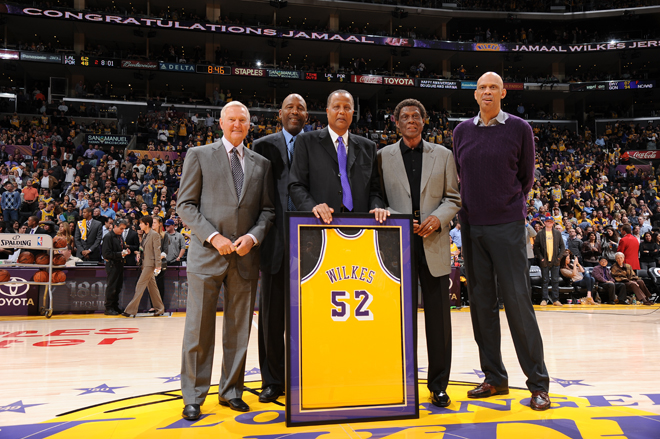
Jerry West, James Worthy, Jamaal Wilkes, Elgin Baylor, and Kareem Abdul-Jabbar pose during the jersey retirement ceremony of Jamaal Wilkes at Staples Center on December 28, 2012 (Photo by Andrew D. Bernstein/NBAE via Getty Images)

Before he was Jamaal, he was Keith. And before that, Jackie.

Before he was smooth as “Silk,” he was a little corny as  “Cornbread.”

Two weeks before Keith Wilkes’ UCLA No. 52 was retired at Pauley Pavilion in January 2013, Jamaal Wilkes’ Lakers’ No. 52 was put up on the wall at Crypto.com Arena in December of 2012. Somehow, the No. 52 he wore for the Clippers in the waning days before his retirement from the NBA isn’t worthy of retirement also.

It was 18 years before he was inducted into Springfield’s Basketball Hall of Fame in 2012 that he was already in Westwood’s UCLA Athletic Hall of Fame.

Most all of it, the deadly results of aside-winding shot that looked as if he was flyfishing made Lakers broadcaster Chick Hearn used to call it another “20-foot layup.”

Continue reading “No. 52: Keith Wilkes / Jamaal Wilkes”

No. 33: Lew Alcindor / Kareem Abdul-Jabbar

This is the latest post for an ongoing media project — SoCal Sports History 101: The Prime Numbers from 00 to 99 that Uniformly, Uniquely and Unapologetically Reveal The Narrative of Our Region’s Athletic Heritage.  Pick a number and highlight an athlete — person, place or thing — most obviously connected to it by fame and fortune, someone who isn’t so obvious, and then take a deeper dive into the most interesting story tied to it. It’s a combination of star power, achievement, longevity, notoriety, and, above all, what makes that athlete so Southern California. Quirkiness and notoriety factor in. And it should open itself to more discussion and debate — which is what sports is best at doing.

The most obvious choices for No. 33:

= Lew Alcindor: UCLA basketball
= Kareem Abdul-Jabbar: Los Angeles Lakers
Marcus Allen: USC football
Kermit Alexander: UCLA football
Willie Naulls: UCLA basketball
Marty McSorley: Los Angeles Kings

The not-so-obvious choices for No. 33:
= Karim Abdul-Jabbar: UCLA football
= Lisa Leslie: Morningside High and UCLA basketball
Charles White: Los Angeles Rams
Ollie Matson: Los Angeles Rams
Eddie Murray: Los Angeles Dodgers/California Angels
= Hot Rod Hundley: Los Angeles Lakers

The most interesting story for No. 33:
Lew Alcindor: UCLA basketball center (1966-67 to 1968-69)
Kareem Abdul-Jabbar: Los Angeles Lakers center (1975-76 to 1988-89)

Southern California map pinpoints:
Westwood (UCLA); Los Angeles (Sports Arena); Inglewood (Forum)


Thirty-three years after his NBA retirement, Kareem Abdul-Jabbar unfolded himself from a court side seat at the Los Angeles Lakers’ Crypto.com Arena, adjusted the black Adidas jacket he was wearing with the words “Captain 33” stitched on the front, and walked over to an area where he was supposed to wait near center court until he was needed.

The 75-year-old had made it to Feb. 7, 2023 in an upright position — nothing guaranteed in a life that saw him battle leukemia as well as a recent diagnosis of atrial fibrillation. The all-time regular-season points total of 38,387 that Abdul-Jabbar amassed during 20 record-breaking seasons in the NBA, the last 14 of them as the Lakers’ center and captain, had just been eclipsed by LeBron James, a current Lakers’ employee.

After the rush of embracing teammates, friends and family on the other side of the court, James made his way over to Abdul-Jabbar, who patiently watched, and waited. He knew this drill.

Continue reading “No. 33: Lew Alcindor / Kareem Abdul-Jabbar”

No. 9: Lisa Leslie

This is the latest post for an ongoing media project — SoCal Sports History 101: The Prime Numbers from 00 to 99 that Uniformly, Uniquely and Unapologetically Reveal The Narrative of Our Region’s Athletic Heritage.  Pick a number and highlight an athlete — person, place or thing — most obviously connected to it by fame and fortune, someone who isn’t so obvious, and then take a deeper dive into the most interesting story tied to it. It’s a combination of star power, achievement, longevity, notoriety, and, above all, what makes that athlete so Southern California. Quirkiness and notoriety factor in. And it should open itself to more discussion and debate — which is what sports is best at doing.

The most obvious choices for No. 9:
Lisa Leslie: Los Angeles Sparks
Paul Kariya:  Mighty Ducks of Anaheim
Matthew Stafford: Los Angeles Rams
= Nick Van Exel: Los Angeles Lakers
Bernie Nicholls: Los Angeles Kings
= Zlatan Ibrahimovic: Los Angeles Galaxy
= Wally Moon: Los Angeles Dodgers

The not-so-obvious choices for No. 9:
Marquis Lee: USC football
= Juju Smith-Schuster: USC football
= Damon Allen: Cal State Fullerton football
= Bryce Young: Mater Dei High football
= Mickey Hatcher: Los Angeles Dodgers
= Adrian Kempe: Los Angeles Kings

The most interesting story for No. 9:
Lisa Leslie: Los Angeles Sparks (1997 to 2009) via Morningside High and USC
Southern California map pinpoints:
Inglewood (Morningside High); downtown Los Angeles (USC, Staples Center)


Lisa Leslie never felt entitled wearing No. 9.

But it would have been quite bold, and actually very cool looking back on it now, had she requested that now-retired number she wore for 12 years on her purple-and-gold Los Angeles Sparks jersey been represented in Roman numerals.

“I’ve called myself a Title IX baby — I’ve been called a lot of things — (but) to be one of the first children of Title IX, an amazing piece of legislation, has really changed my life and the path I’ve gone down,” she told us once.

The three-time WNBA MVP, eight-time All Star, three-time All Star MVP, eight-time All-WNBA first team member (and four time second-team member) and two-time WNBA Defensive Player of the Year to go with two WNBA championship as a representative of the Sparks was born on July 7, 1972 — just two weeks after the bill leveling the playing field for boys and girls sports was signed into law, and six days after it took effect.

Blessed with height and athletic skills is one thing. But timing is important as well.

The 37 words that reshaped the landscape of higher education go as: “No person in the United States shall, on the basis of sex, be excluded from participation in, be denied the benefits of, or be subjected to discrimination under any education program or activity receiving Federal financial assistance.”

It goes back to how the 14th Amendment of the Constitution and its Equal Protection Clause was draw up and ratified in 1868 in the post-Civil War era.

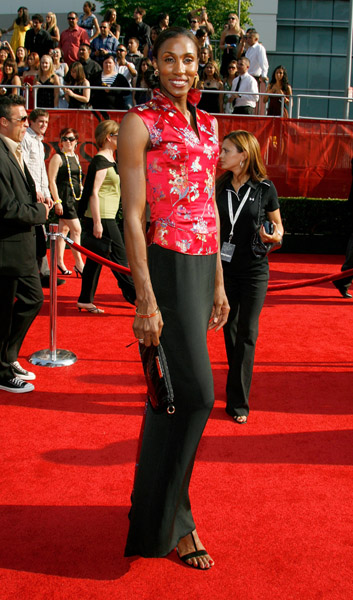
Lisa Leslie at the 2008 ESPY Awards at the Nokia Theater in L.A. Live in 2008.

Leslie said in the ninth grade during a civics classes at Morningside High in Inglewood, she read about Title IX in a textbook.

“When I was reading all this in ninth grade, I finally got it — sports are bigger than me,” she told us. “To me, that was my responsibility. Maybe it was the fact I had a really good history teacher. It changed my life.

“I remember feeling like, ‘Wow, if this didn’t exist, we couldn’t play?’ It was shocking. I’d only been into sports a few years at that point, starting with the seventh grade. I guess it made me realize how much of a privilege it was.

“But you know what – it’s almost like girls are brainwashed because we are made to feel as if: `You better be thankful that you can play’ and `This is a privilege, you don’t always get to do this.’ We believed it!

“That got me so much on track to focus on school – if you don’t get your grades up, you can’t play.”

Continue reading “No. 9: Lisa Leslie”