


This is the latest post for an ongoing media project — SoCal Sports History 101: The Prime Numbers from 00 to 99 that Uniformly, Uniquely and Unapologetically Reveal The Narrative of Our Region’s Athletic Heritage. Pick a number and highlight an athlete — person, place or thing — most obviously connected to it by fame and fortune, someone who isn’t so obvious, and then take a deeper dive into the most interesting story tied to it. It’s a combination of star power, achievement, longevity, notoriety, and, above all, what makes that athlete so Southern California. Quirkiness and notoriety factor in. And it should open itself to more discussion and debate — which is what sports is best at doing.
The most obvious choices for No. 42:

= James Worthy, Los Angeles Lakers
= Ronnie Lott, USC football
= Ricky Bell, USC football
= Walt Hazzard, UCLA basketball
= Don MacLean, UCLA basketball
The not-so-obvious choices for No. 42:
= Connie Hawkins, Los Angeles Lakers
= Kevin Love, UCLA basketball
= Lucius Allen, UCLA basketball and Los Angeles Lakers
= CR Roberts, USC football
The most interesting story for No. 42:
Tom Selleck, USC basketball forward (1965-66 to 1966-67) via Grant High of Van Nuys and L.A. Valley College
Southern California map pinpoints:
Sherman Oaks, Van Nuys, Los Angeles (Sports Arena), Hollywood
The 42 preamble
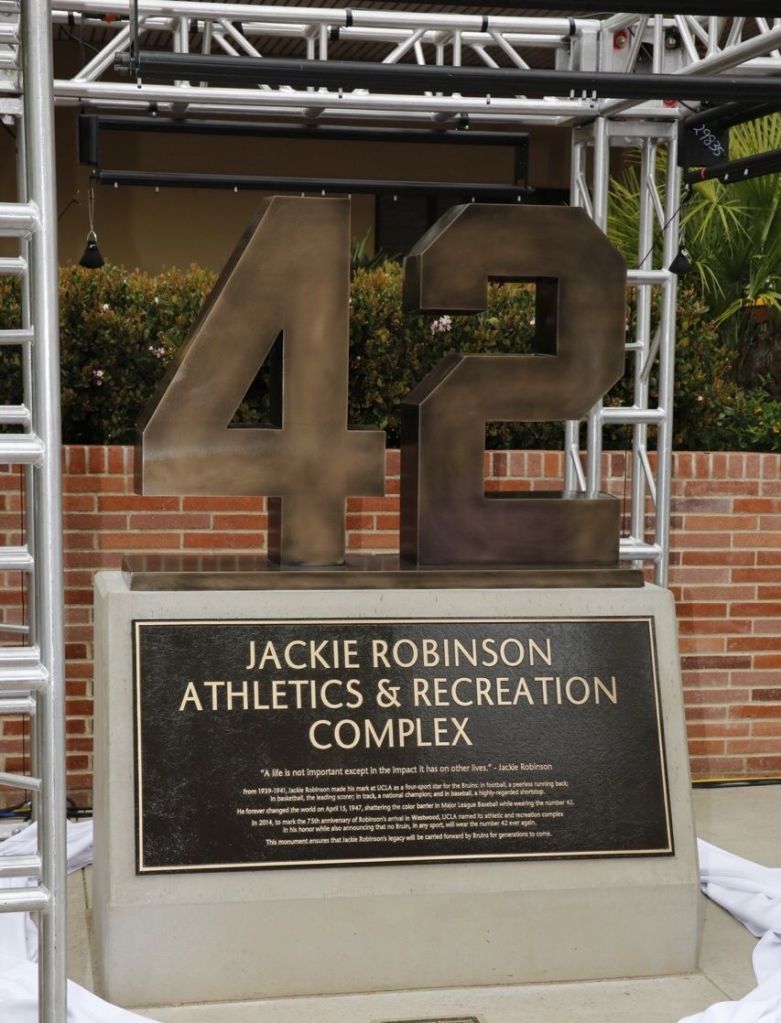
In November of 2014, UCLA announced it would retire the No. 42 across all its men’s and women’s sports teams. It was following up what Major League Baseball did 17 years earlier, this time to honor one of its most noteworthy alums, Jack Robinson.
UCLA may have also been nudged by another local university for the concept of this kind of number retirement. In February of ’14, Cal State Northridge’s athletic department retired the No. 58 among all its sports programs to mark the year — 1958 — when the school opened.
Conveniently, the timing for UCLA’s declaration marked the 75th anniversary of Robinson’s arrival as a student-athlete on the campus.
After two years at Pasadena City College, Robinson, out of Muir Technical High, went to Westwood in February of 1939 on an athletic scholarship. He departed in the spring of 1941, a few units short of a degree and with no graduation. The story goes that Robinson needed to make some income to help his family in Pasadena. He would soon go into the military.
But Robinson sure did put a spotlight on the university. He was the first four-sport letterman in UCLA history – football (1939 and 1940), basketball (1940 and 1941), track and field (1940) and even a little baseball (1940).
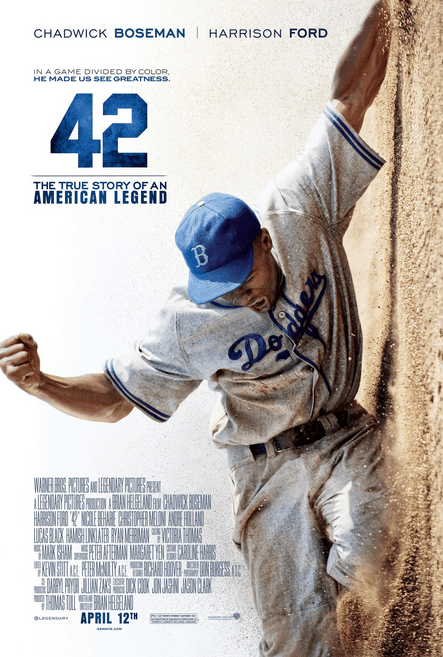
Even more convenient was UCLA announcement’s was just after the success of the 2013 film, “42.”
The late actor Chadwick Bozeman played Robinson on his journey through Pasadena to UCLA, to the Dodgers’ Triple-A Montreal Royals, before it was decided he was equipped to join the Brooklyn Dodgers and wear that number 42.
The fact that Robinson never wore No. 42 at UCLA in any sport seems to be beside the point. UCLA’s accounting department acknowledges that as it finds places in almost every athletic platform to make sure a “42” is branded somewhere.
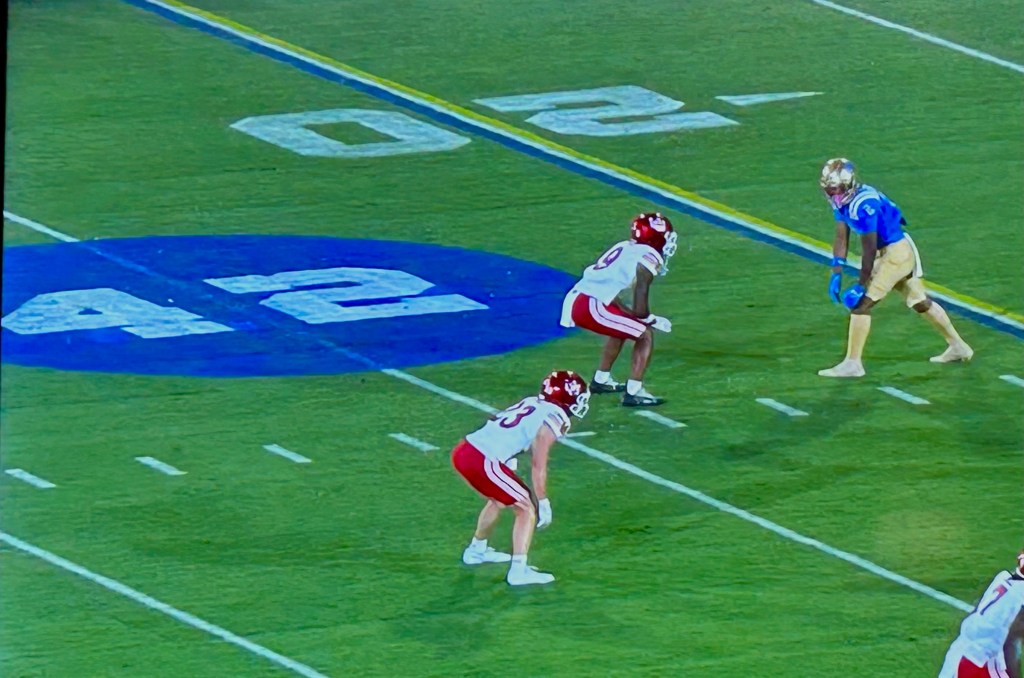
“Jackie Robinson established a standard of excellence to which people the world over should aspire,” said athletic director Dan Guerrero, a former UCLA baseball player, during the announcement. “We want to ensure that his is a legacy to be upheld and carried forward by Bruins for generations to come. While he wore several numbers at UCLA, Jackie Robinson made the number 42 as iconic as the man himself. For that very reason, no Bruin will be issued the number 42 — in any sport — ever again.”
For UCLA basketball, he was No. 18. For UCLA football, he was famously No. 28. What he wore playing baseball, the Bruin statkeepers still aren’t sure.
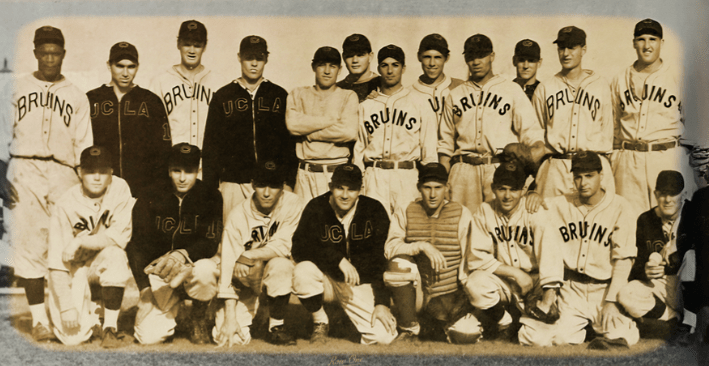
We had sought out UCLA’s sports information department for more info, but it can’t find any evidence he even wore a baseball number. The Dodgers and the Baseball Hall of Fame’s research department in Cooperstown, N.Y., didn’t produce anything. Neither did a dig through the Amateur Athletic Foundation nor the Pasadena City library archives. Employees at the Jackie Robinson Foundation finally were asked to quiz Rachel Robinson about it. She replied: I don’t know.
For now, it remains an iconic, and ironic, mystery. Which seems pretty twisted in itself.
There also seems to be no magical story behind why Robinson wore 42, other than it’s what the Dodgers gave him to wear.
In Triple-A, Robinson wore No. 10. During his days with the Kansas City Monarchs of the Negro Leagues, various accounts have him wearing Nos. 5, 8 and 23.
Ken Griffey Jr. is probably most responsible for making No. 42 more ubiquitous. When then–MLB Commissioner Bud Selig retired No. 42 for all of baseball on April 15, 1997 — 50 years after Robinson’s MLB debut — Griffey, then with the Seattle Mariners, asked that his uniform number be flipped from 24 to 42 for that day. It was.
By 2004, the league started an annual Jackie Robinson Day. In 2007, Griffey, then with the Cincinnati Reds, asked Selig if he could wear 42 again for the special occasion. Selig got the OK from Rachel Robinson — and the offer was made to any MLB player who wanted to make that number change as well. Then it became a thing.
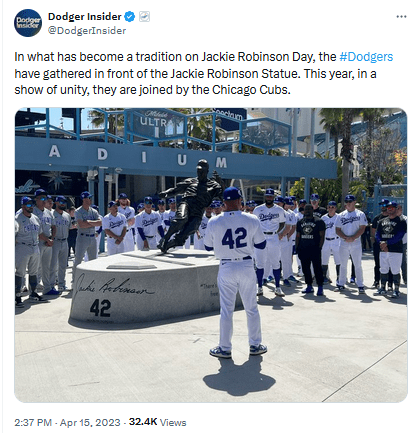
We might come up with 42 reasons why Robinson didn’t become our prime focus for No. 42, but the primary reason is that No. 42 is far more acrimonious with Robinson’s Brooklyn Dodgers career. He didn’t come with the team when it moved to Los Angeles. Robinson retired in 1957 before the Dodgers could trade him to the rival Giants.
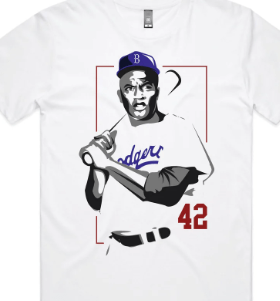
A company named PASADENA CLSC (pronounced Classic), was started in 2019 by graphic designer Dennis Robinson, the grandson of Jack’s brother, Mack, to celebrate his great uncle’s legacy as well as celebrate the community’s history. By some accounts, Robinson would not have been comfortable with this “42” branding opportunity by MLB. Especially as it seems “42” has become a selling point when put on all sorts of hats, clothes, jackets, socks … It’s easily identifiable with a man, a cause and a statement of one’s social justice beliefs. The MLB duly notes that with its own product line.
We consider Robinson’s greatest impact in Southern California sports history when he wore No. 28 playing football.
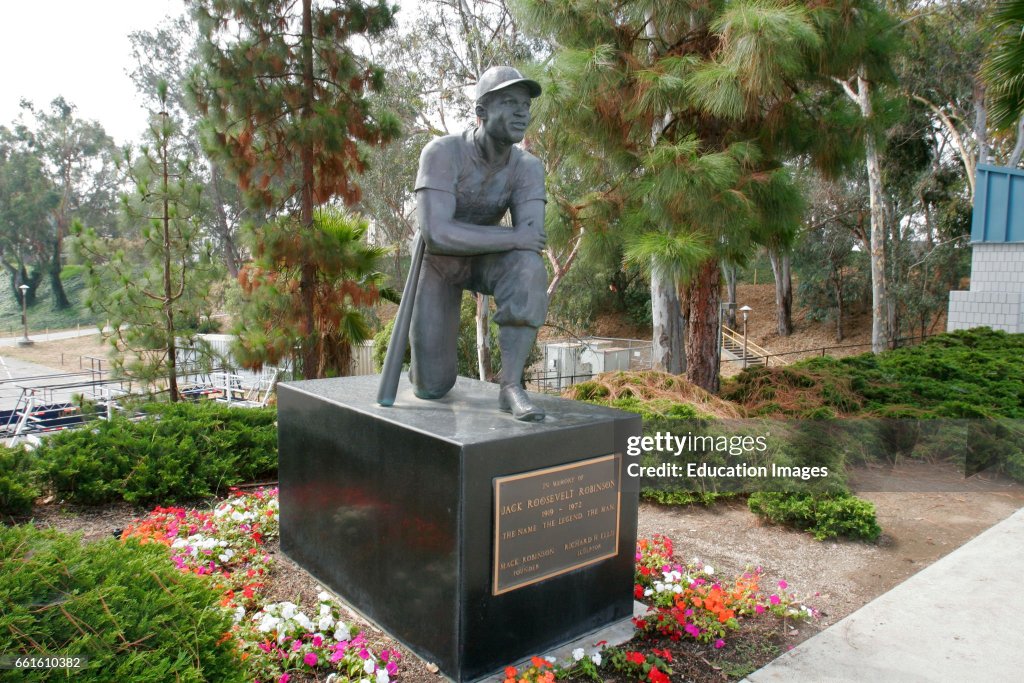
In 2017, when the Dodgers unveiled a statue honoring Robinson outside of Dodger Stadium, Vin Scully, as the master of ceremonies, told several stories about his relationship with Robinson, going back to Scully’s first year broadcasting Dodgers games in Brooklyn in 1950. Scully punctuated that speech with this “Jackie Robinson Day” celebration on April 15:
“All across the country, in every major-league ballpark, every player will be wearing 42. And what does the 42 means? It doesn’t mean that (the players) are all equal. … but the one thing they share in carrying 42 is the fact that the man who wore it gave them the one thing that no one at the time could have ever done. He gave them equality. And he gave them opportunity. Those were the two things many of those people never had to hold in their hearts when they first began to play. So, yes, 42 is a great number, it means a lot for a great man, but it is a tremendous number when you think of a man who wore it with such dignity, with such pride, and with such great discipline.”

So there’s that …
Anyone else able to explain how the number 42 seems to be somehow attached as the “Answer to the Ultimate Question of Life, the Universe, and Everything”?
In Douglas Adams’ late ’70s/early ’80s comedy/science fiction book series, “The Hitchhiker’s Guide to the Galaxy,” No. 42 is the simple answer that comes up after a super computer called “Deep Thought” spends 7 ½ billion years of calculation pondering that the aforementioned question. Or was it a real question. The creators did not actually know what the “Ultimate Question” was, rendering the answer 42 even more confusing.
Adams, when asked, said he simply picked that answer because it was an ordinary, small number.
How so? What does it all mean? Was he a Jack Robinson fan?
Sit with that awhile and see where the universe takes you.
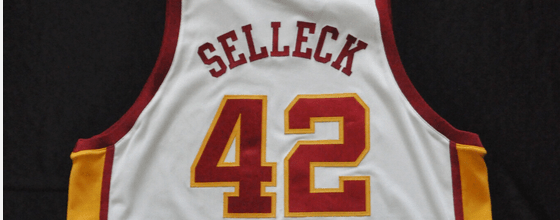
No. 42: Tom Selleck
You never know when a low dose of a early-morning TV chat show might actually clarify some urban Hollywood legend and lead to some legitimate record-keeping.
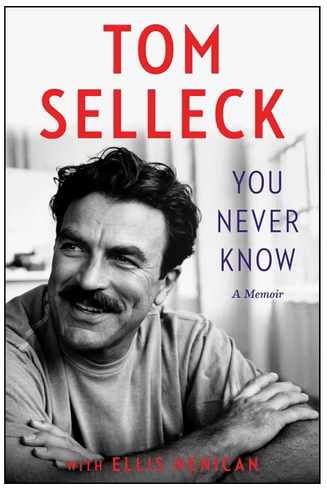
In May of 2024, Tom Selleck climbed up in the high-back chair as a guest on “Live with Kelly and Mark,” taking questions about how he went from a USC basketball player to a Hollywood actor based on his newly released memoir, “You Never Know.” The nattering ABC coffee klatch visit was also a place to get nostalgic for the end of his participation in the long-running CBS series “Blue Bloods.”
“You wanted to be — and I did not realize this — a professional athlete!?” co-host Kelly Rippa piped up as she boosted herself up in her seat.
Selleck shrugged.
“Well, it was kind of a fantasy,” he said sheepishly. “(At first) it was baseball, then I got a little burned out, and by the time I got to ‘SC, I thought it was basketball …”
“You got a scholarship, in fact!” Kelly interjected.
“No,” Selleck answered, almost apologetic. “I was a walk on. Basically my real job was riding the pine at USC … I earned a scholarship my last semester.”
Continue reading “No. 42: Tom Selleck” Tom Hoffarth's The Drill: More Farther Off the Wall