

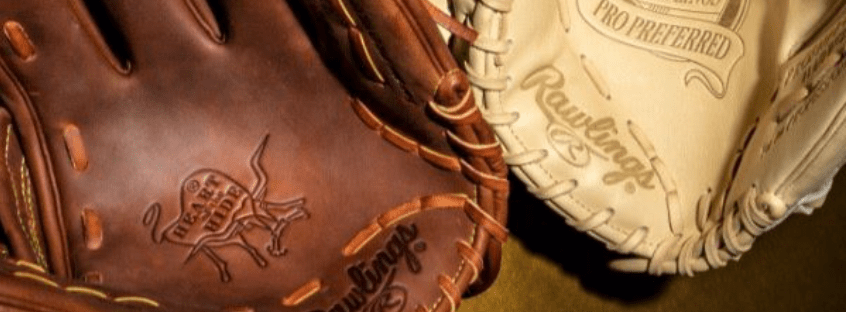
“The Finest in the Field®:
A History of Baseball Through 50 Iconic Gloves”

The author: Ed Wheatley (forward by Johnny Bench)
The details: Rizzoli USA Publishing, 272 pages, $45, released March 24, ‘26
The links: The company website, publishers website and Bookshop.org
A review in 90 feet or less
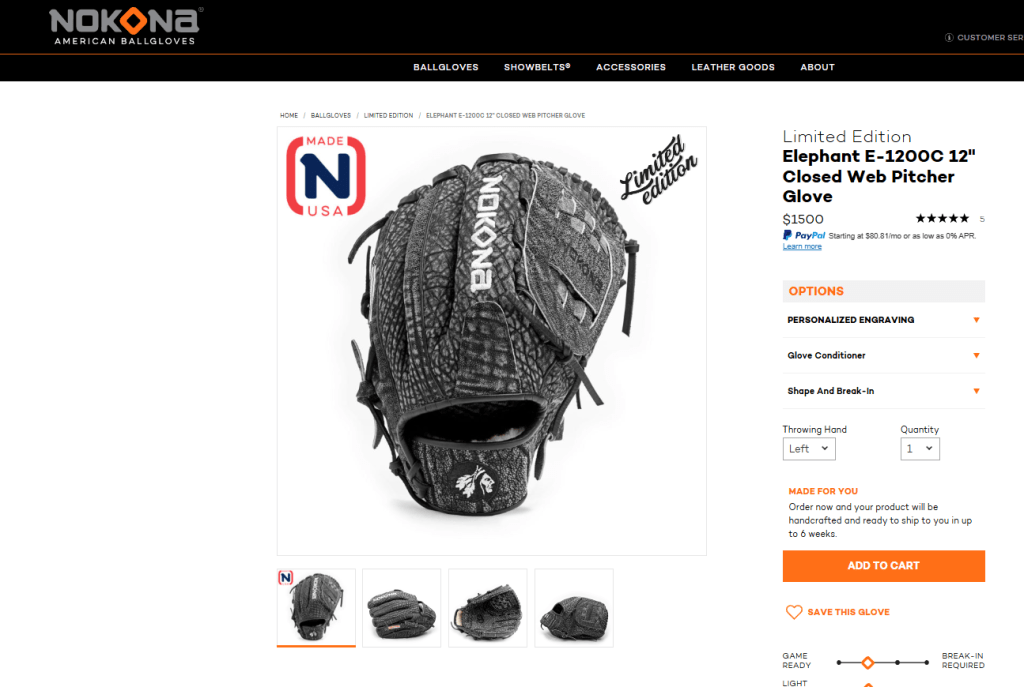
A baseball glove company from the tiny town of Nokona, Texas appears to legally sell something it calls the Elephant E-1200C 12” Closed Web Pitcher Glove.
It’s made of actual elephant.
Oh, now you’re all ears.
In the product details, it notes: “All skins have CITES tags, meaning they were harvested in an approved program and comply with the Convention on International Trade of Endangered Species (CITES).”
Yes, your glove was “harvested” with oversight from … check the citing.
It also explains: “Elephant leather is one of the most durable materials used in our baseball gloves. Its dense fibers resist stretching and tearing, which allows the glove to maintain its structure season after season. Over time it breaks in beautifully, developing a unique patina while staying strong—making it a glove that can last for many years of play. Instead of Elephant leather wearing out, the glove gradually softens while maintaining its structural strength, giving it a broken-in feel without losing its shape.”
A “patina” is, by definition, a gloss or sheen as a result of aging.
So, we’re calling this “elephant leather”? Something often used in that part of the country for boots and belts, pool cues and holsters.
Asking price on the glove: $1,500. Personal engraving, add $80. Glove conditioner, add $20. If you want them to shape and break it in, add another $50. At least it’s made in the U.S. No tariffs, no problems.
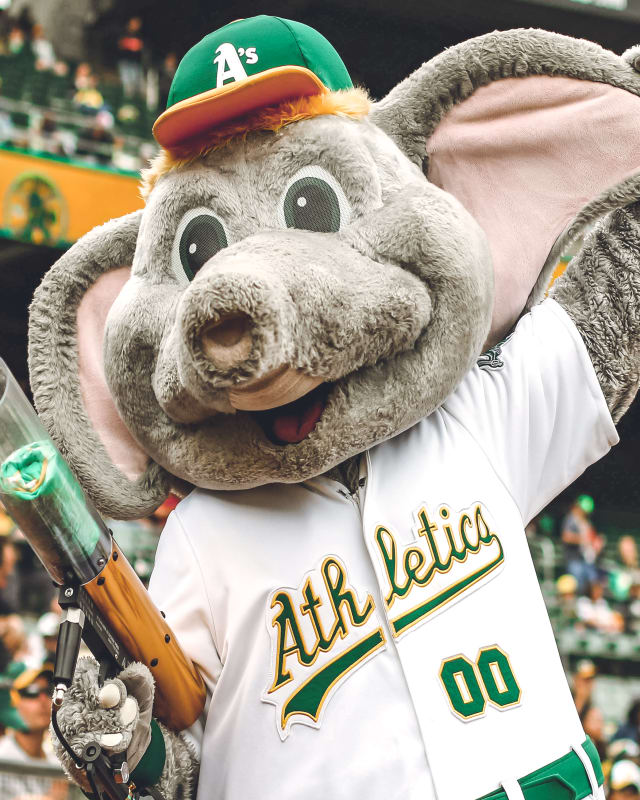
It is probably not suitable for leaving in the trunk of your car. Please don’t tell the kids who have a relationship with the Athletics’ current mascot. And where are all the cows hiding in Texas these days?
It feels like decades since we last purchased a new baseball glove, so excuse our queasiness finding out that not only things other than a steer’s pelt are being used for corralling a stitched-up ball, but there are also a confusing number of companies cranking them out.
A well-oiled machine like Rawlings would never venture out past the pasture that has made for its fortunes and worship faux idols to appease the finicky masses, right?
Dick around at Dick’s Sporting Goods these days — are there any other chain sporting good stores left to shake us down? – and find a composition of mitts from companies from Akedema and All Star to Zett, with Emery, Gloveworks, Jax, Marucci, Miken, Mizuno, Nike, Shoeless Joe, Stinger, SSK, Under Armor and Vinci in between. All looking for that extra edge when up against the grandads of a Rawlings, or its otherwise chief rival Wilson and MacGregor. BaseballGloves.com lists more than 40 glove companies, including L.A.-based Buckler, Soto in Signal Hill and 44 Pro in Poway.
And don’t overlook the new-ish New Balance A2KSO17 model that Shohei Ohtani has during mound visits these days (with an assist from Wilson). According to those who offer such a glove on eBay.com, the production run was limited to 50 and they run for $15,000. Go ahead and add it to your watchlist.
At the reputable website called JustBallGloves.com, its list of the top-rated models for 2026 include a Nokona Alpha. Our elephant hunters. It has bulled its way into the top-tier mix with the Wilson A2000 and A2K, Rawlings Heart of the Hide and REV1X, All-Star Pro Elite and the Easton Professional Collection.
In regards to the Rawlings models, JustBallGloves accentuates how the soft, deer-tanned cowhide is still used for the palm lining to go with its pro-grade lacing. It also says: “When you see the snorting bull in the palm of a baseball glove, you know right away that you’re looking at a Rawlings Heart of the Hide.“
The site has a Rawlings Heart of the Hide Yadier Molina catcher’s mitt for $350. Its also has a Croc Skin model (it’s really steer hide) that can go for $330. The Pro Preferred REV1X series with lighter, tighter grain kip leather, can go beyond $400. Something more for a Little Leaguer? Expect to pay up to $100.
They all, of course, now come in an array of rainbow of colors. Far beyond tan, brown, dark brown, and really dark brown.
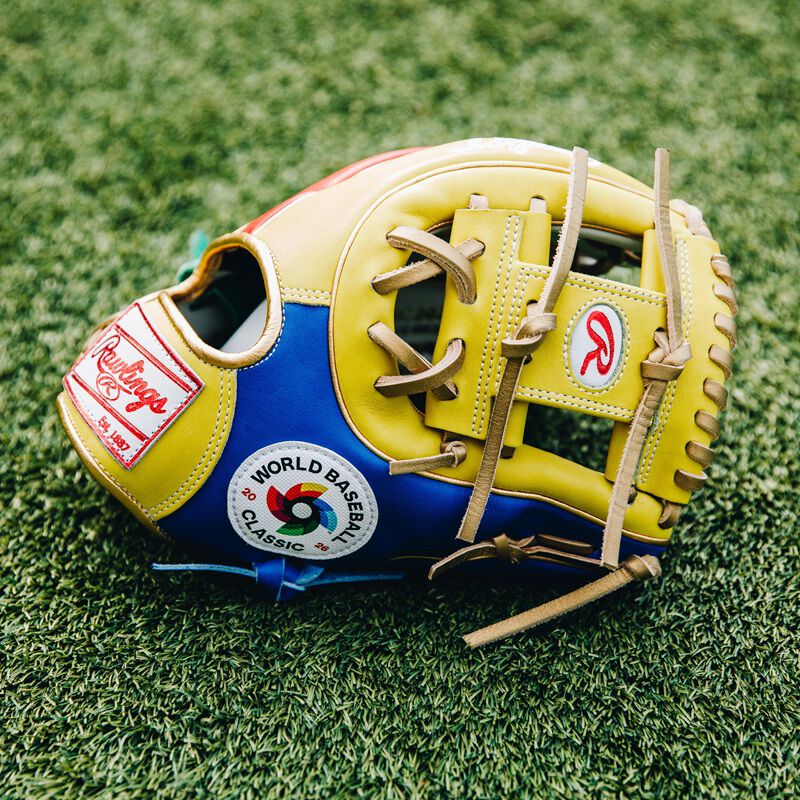
When George Rawlings secured a patent for a padded glove/oversized winter mitten in 1885 that he claimed was “intended especially for the use of base-ball players and cricketers … for the prevention of the bruising of the hands when catching the ball,” it was a way to acknowledge that the game he saw being played in his hometown of St. Louis area was barreling up beyond its bare-hand stage of existence. The forward-thinking drawings he created for the patent actually came two years before the sporting goods company he created with his brother Alfred and named after themselves.
By 1957, Rawlings had the first Gold Glove Awards for the top defensive players in Major League Baseball. In 2011, it introduced the Platinum Glove Award, first through fan voting and later through sabermetric analysis.
In 2018, when the Rawlings company was bought for $395 million by MLB Properties along with the Marina del Rey-based Seidler Equity Partners — the group of brothers who are nephews of former Dodgers owner Peter O’Malley and control ownership of the San Diego Padres — it was investment in a brand that carried value amidst competition. Two years later, Rawlings/Seidler bought up the popular Van Nuys- based Easton brand to increase Rawlings’ offerings in bats and apparel.
So much so that last year, a 14,000-square-feet, two-story Rawlings Experience flagship store was opened in St. Louis just to prove its point.
The store, no doubt, will carry this coffee-table sized book, which has to be larger than a typical MLB second-baseman’s glove. It’s 3-pound arrival isn’t so much a self-congratulatory glove bump boasting about its legacy and survival amidst a jungle of competitors.
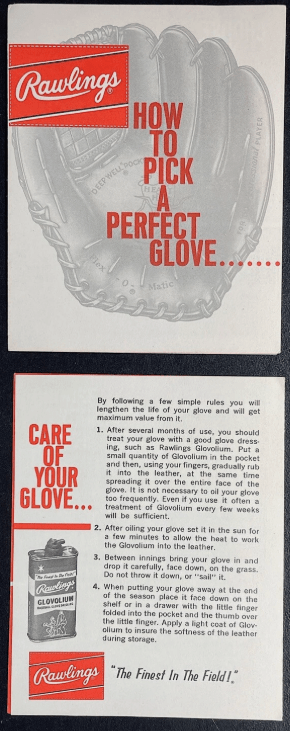
Recruiting the services of Rizzoli Publishing in New York to produce something akin to a Taschen art book, the contents also allow it to be more a clever dive into the company archives to extract marketing materials it used to both educate and pitch the quality of its product to kids, mostly through the endorsement of MLB player name recognition.
Except, when it came to Bill Doak.
Continue reading “Day 2 of 2026 baseball book reviews: Smell the glove, feel the love” Tom Hoffarth's The Drill: More Farther Off the Wall