
“Penguin Power: Dodger Blue, Hollywood Lights and
My One-in-a-Million Big League Journey”
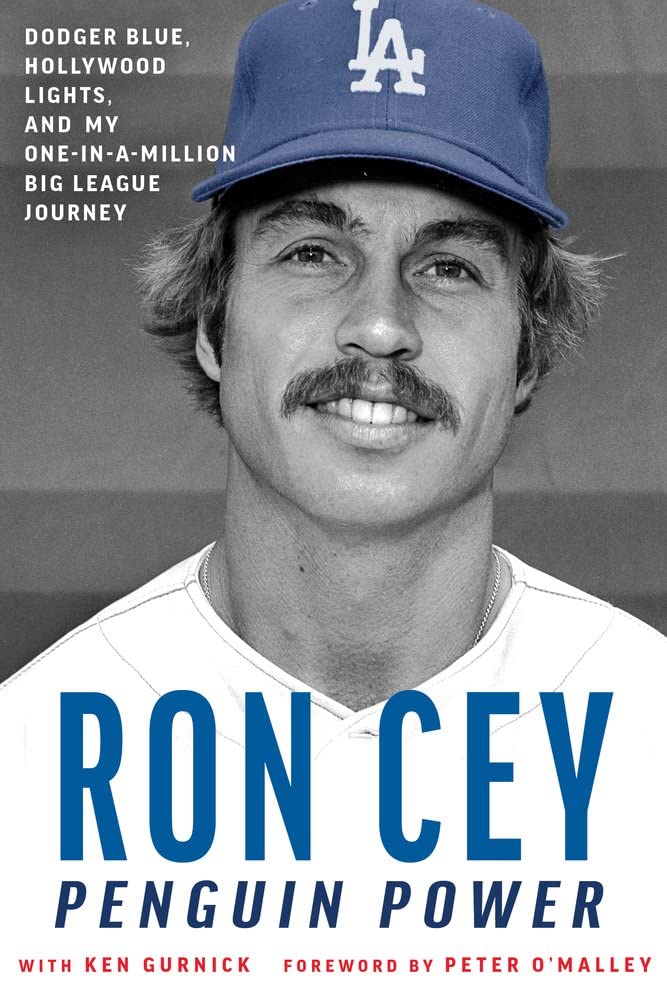
The author:
Ron Cey
With Ken Gurnick
The publishing info:
Triumph Books
256 pages; $30
To be released June 13, 2023
The links:
The publishers website
At Bookshop.org
At Powells.com
At Vromans.com
At TheLastBookStoreLA
At Skylight Books
At Diesel Books
At BarnesAndNoble.com
At Amazon.com
The review in 90 feet or less
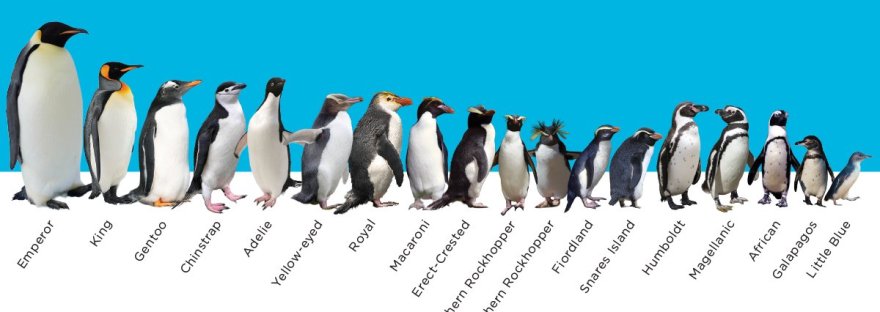
Penguins may not have been an endangered species at the time we were trying to figure out the world in the ‘60s and ‘70s. But you weren’t given much of a choice to figure out where you supposed to best nest.
It was all pretty black and white, actually.
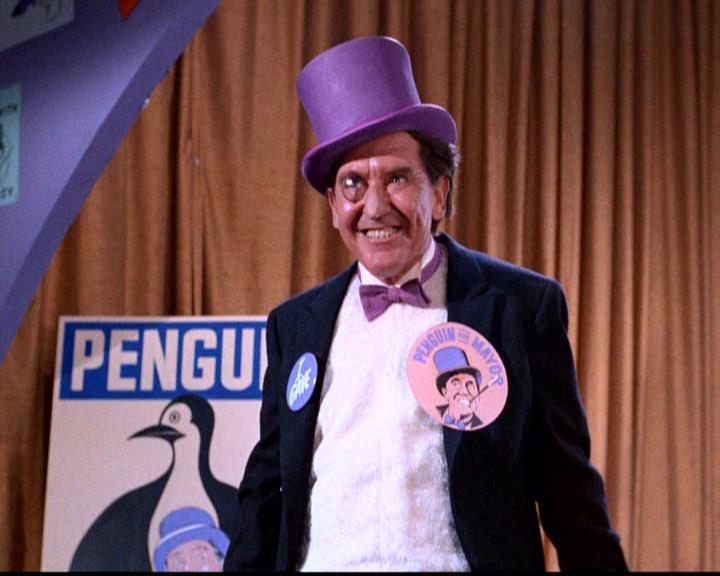
Over there, the super-villainous, mastermind mobster character from the TV “Batman” series. Burgess Meredith in a fat suit as the “Gentleman of Crime” with the purple top hat (we had no idea with our black-and-white TV), sporting a monocle, smoking a cigarette from a long-stem holder, and wielding an umbrella that became a weapon of deception (or even a helicopter so he could escape harm). He did it while making this weird quacking noise — maybe from the emphysema he was developing putting away packs of Lucky Strikes. This version of “The Penguin” was not to be trusted while he ran the devious Iceberg Lounge nightclub.
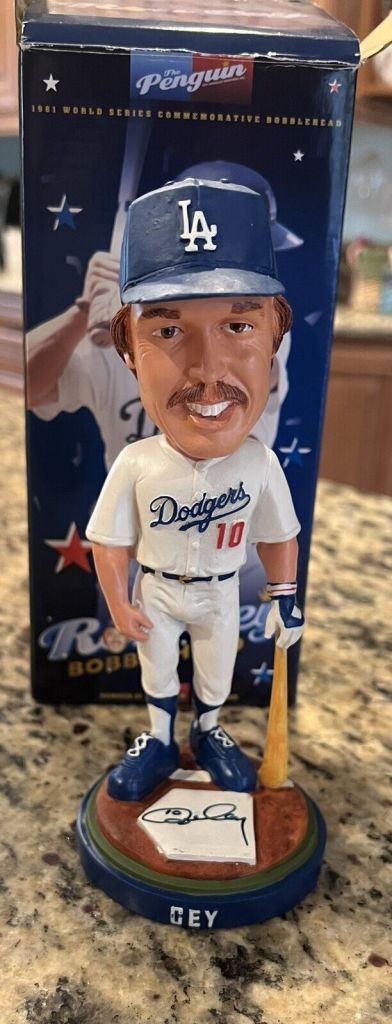
Then there was Ron Cey. A polar opposite.
Cey did nothing villainous to unseat Steve Garvey as the Los Angeles Dodgers’ hot-corner hot shot. At a time when the franchise was creating its personality and a model of success in the early 1970s, Cey and Garvey were on different sides of the baseball spectrum (and infield) but meant to be joyful teammates.
If Garvey stood for all that was good and pure about baseball and life, Cey wasn’t necessarily on the other end, but he just knew to keep his head down, do his job, and success would come. For everyone’s betterment, Garvey was taken off third and moved to first base (by Garvey’s act of deceit, it appears), Cey anchored third, Davey Lopes and Bill Russell moved from the outfield to play second base and shortstop respectively, Bill Buckner went to left field, Bobby Valentine was unceremoniously taken out of the picture, and a long-running unscripted L.A.-based dynasty began.
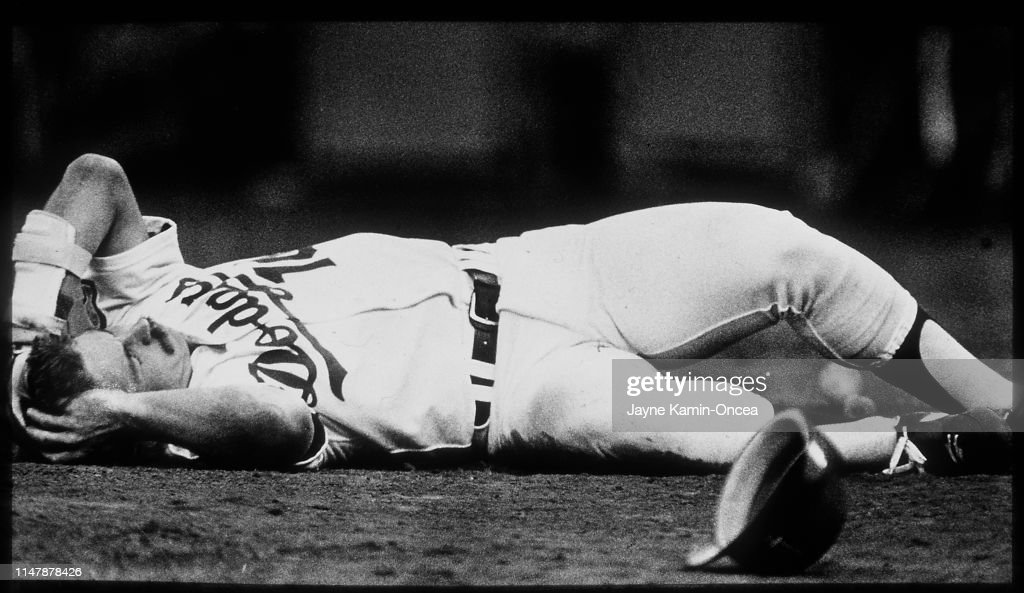
If there was any good-vs.-evil script, it came to a head in Game 5 of the 1981 World Series. The Hated Yankees, and their flame-throwing relief pitcher nicknamed “Goose,” plunked Penguin with a fastball in the eighth inning of that contest, perhaps taking him out of the decision-making process in a disturbing fashion. Cey went to the hospital, wasn’t feeling quite right, and two nights later, in Gotham City, he returned with two hits as the Dodgers clinched the World Series in Game 6.
(And if you’re not sure about Rich Gossage and his evil ways …)
Throughout his career, and beyond, Cey has been accessible, honest, fair and thoughtful. He took ownership of things he could help fix and was a true team leader. All of that comes across in this book that allows him to be in the present and talk about all aspects of his playing and personal career, a narrative helped shape from longtime Dodgers’ beat-writer (now retired) Ken Gurnick.
However …
The guy who wore No. 10 with the Dodgers from 1971 to 1982 has inspired 10 questions we wish to pursue, some of which are explained in these pages:
1 With the way MLB careers are re-evaluated through an analytics refresh and social media campaigns, and with more than 35 years after his retirement to throw another cup of Yahtzee dice on the table, would he have a legitimate shot at having whatever veterans’ committee is picked to do it find him worthy of induction in the National Baseball Hall of Fame in Cooperstown?
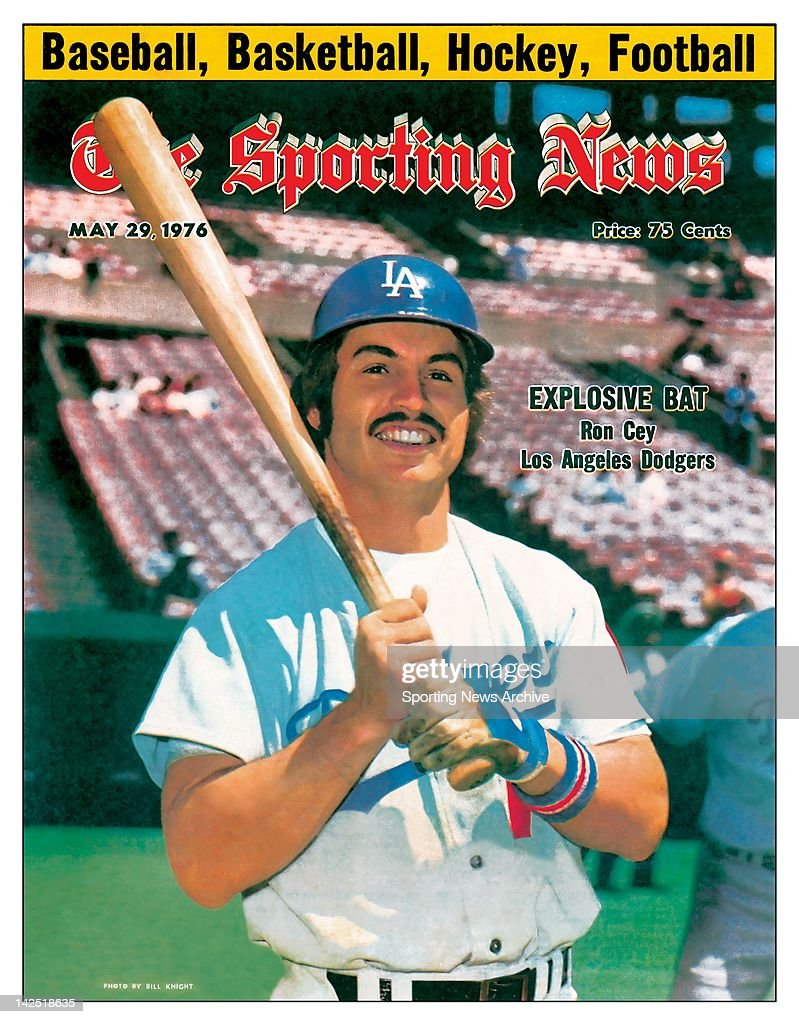
Perhaps.
It’s rather insulting when you look at it now that a six-time NL All Star only got 1.9 percent of the votes from the Baseball Writers Association of American in his first year of eligibility of 1993. That took him off the ballot going forward. Also in ’93, in his first year of eligibility, Garvey got 41.6 percent of the vote.
In his book, Cey spends Chapter 8 contemplating “Where Do I Rank?” The facts remain: There are only 17 third basemen in the Baseball Hall of Fame – Scott Rolen, by some glorious fluke of filling a void and saving the Hall some embarrassment of having no one to honor, will somehow will make it 18 this summer. Soon enough, another former Dodger, Adrian Beltre will be the 19th.
Cey doesn’t have any ideas of becoming No. 20. But …
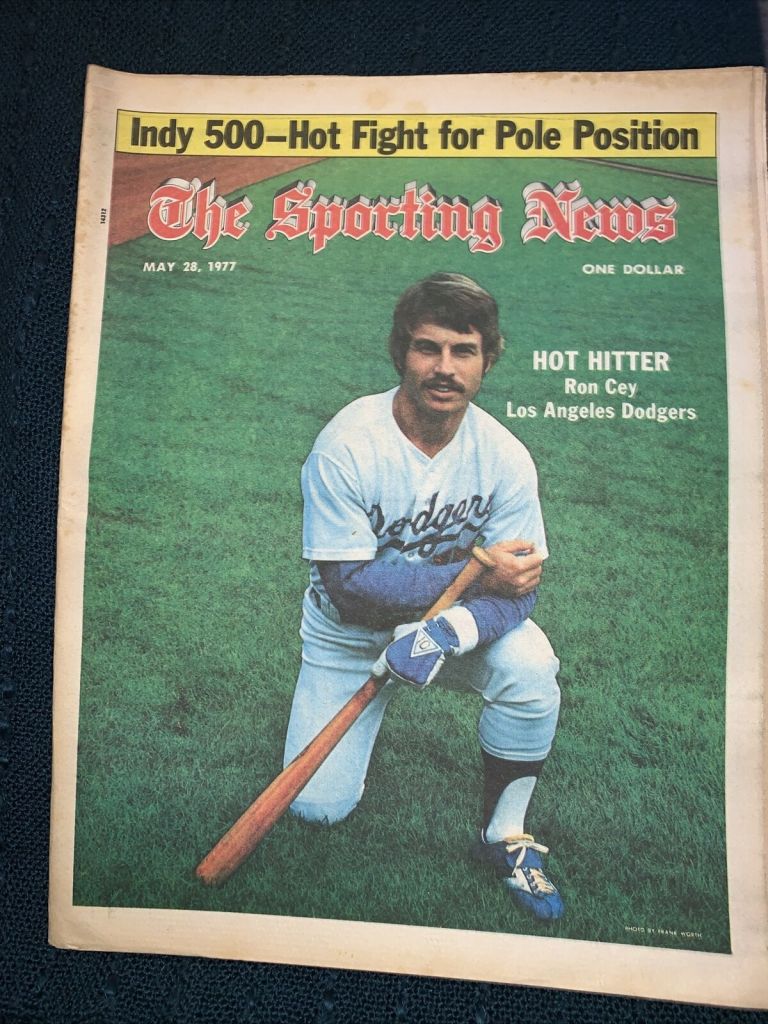
“I was not a Hall of Fame player,” Cey says on page 113. “I’m not the 1 percent. I’m the 2 percent and I don’t feel bad about that.”
Retroactive, he can take pride in that his career WAR (53.8) is the greatest of any player who came out of that esteemed 1968 MLB draft (he was a third round pick in the June secondary phase). We looked it up. That group includes Thurman Munson (46.1), Garvey (38.0), Cecil Cooper (36.0), Burt Hooton (35.5), Doyle Alexander (35.0), Chris Speier (30.6), Gary Matthews (30.4), Ben Olgivie (26.4), Greg Luzinski (26.3), Ken Forsch (26.0), Bob Forsch (24.6), Oscar Gamble (22.9), Bill Lee (22.0), Joe Ferguson (21.0), Steve Stone (17.0) and his pal, Bill Buckner (15.0). It’s just that we never used it back then to validate proclamations. And, none of them are in the Hall, either.
He interesting he’s able to point out that one of his contemporaries, Ted Simmons, an eight-time All Star, got only 3.7 percent of the vote in 1994, his first year of Hall of Fame eligibility. That took him off future ballots. But the catcher — another position that’s under-represented in the Hall — ended up voted in by the Hall by the Veterans Committee in 2020.
Perhaps Cey is due for some sort of oversight review.
2 Should he be consider the all-time No. 1 third baseman in the Dodgers’ franchise history?
Yes. Definitely. Polls seem to bear that out even after the recent L.A. run of Justin Turner, plus the time spent at third by Adrian Beltre and Pedro Guerrero, as well as having more time to consider Cey’s career up against anyone before the 1970s.
3 Does Cey merit inclusion in this relatively new Legends of Dodgers Baseball fraternity?
4 Should Cey have his No. 10 retired by the Dodgers?
Absolutely, and why not? More on that later.
5 Should Cey have been named the Most Valuable Player of the 1974 All-Star Game (instead of Steve Garvey)?
A case can be made by those on a much higher pay grade.
In his book, Cey points out how in that annual exhibition, played that year at Three Rivers Stadium in Pittsburgh, he was the starting third baseman ahead of future Hall of Famer Mike Schmidt, drove in the first run of the game with a double in the bottom of the second, and helped the NL take the lead in the bottom of the fourth with a run-scoring ground out. As Cey came out of the game and was sitting around with Henry Aaron, Pete Rose, Johnny Bench and Joe Morgan waiting for the 7-2 NL verdict to become official, Cey says that Aaron asked who they thought would be the game’s MVP. Rose said: “Well, he’s sitting right next to you.”
Meaning Cey.
Aaron congratulated him and told him to get his uniform back on so they could interview him after the game.
They convinced me,” said Cey. But then he saw on the TV the award went to Garvey – who played all nine innings (because his backup, Tony Perez, was injured), got a couple hits, and made for a far better story because he had been voted into the game by the fans as a write-in after his name was left off the punch ballot.
“I’ll admit I was disappointed,” Cey writes. “It’s only human nature. That kind of honor can change a guy’s career.”
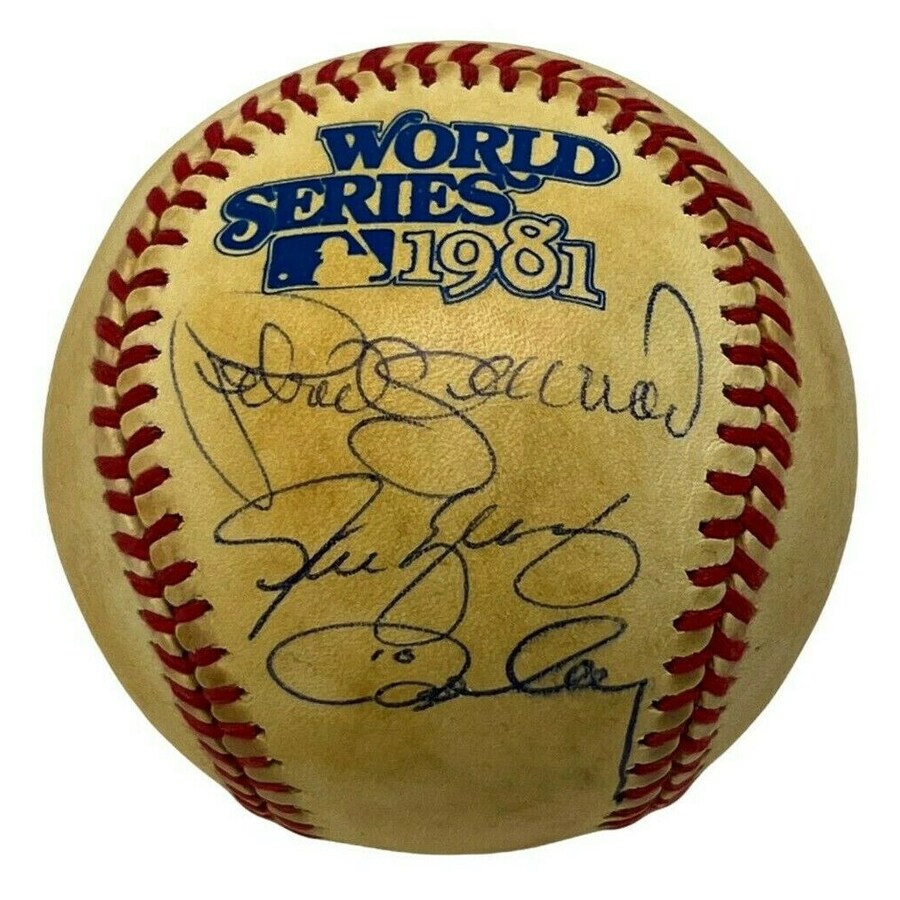
6 Should Cey have been the sole winner of the 1981 World Series MVP award instead of sharing it with teammates Pedro Guerrero and Steve Yeager?
It was a pretty stacked lineup for offense that year, with Cincinnati’s George Foster winning the NL MVP with a league-best 52 homers, 149 RBIs, .631 slugging percentage, 1.013 OPS and 124 runs. Dodgers teammates Reggie Smith (a league-best .427 on-base percentage to go with a 1.003 OPS) and Steve Garvey (33 HRs, 115 RBIs, .297 average) finished fourth and sixth. Eighth seems about right for Cey, who hit just .241 and had a 3.5 WAR, yet finished above Mike Schmidt, who had 38 homers, 101 RBIs and was 10th in the voting with a league-best 8.9 WAR. (Of course, these WAR numbers are retroactive and weren’t even a consideration for voters then).
Cey says he is still fine sharing it and making it more a “team” recognition, but …
His two-out, three-run homer in the first inning of Game 3 at Dodger Stadium, right after Steve Garvey struck out, gave Fernando Valenzuela enough breathing room for a complete-game victory, and it changed the entire tone for the Dodgers, who had been down, two games to none at the point after two losses in New York. Cey also made a great play on a Bobby Mercer bunt with two on and no-one out in the eighth inning to turn a double play and take the momentum away from a Yankees’ late rally.
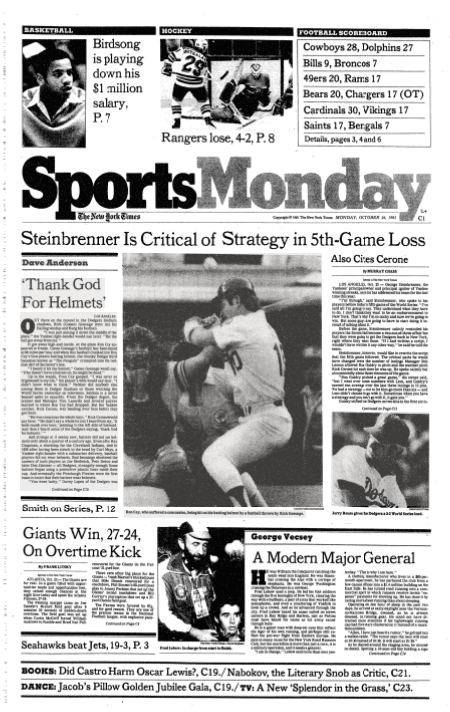
But considering how he came back from a scary beaning against Gossage in the Game 5 win, with the late-afternoon shadows creeping over home plate, it was somewhat heroic how he rejoined the team in New York, was fortunate there was a rainout, and came back for the Game 6 clincher by hitting a first- and fifth-inning single and came out in the sixth inning because of dizziness. He wasn’t there on the field to rush in and embrace Steve Howe and Steve Garvey when the game was won and the series clinched, and photos were taken of the celebration for historical purposes. It would have been pretty nice just to hand Cey the honors by himself.
For those who don’t remember all that, here’s a 2017 piece by Jeff Pearlman for The Athletic. And here’s what the New York Times looked like Oct. 26, 1981, with Dave Anderson’s column reading: “Thank God For Helmets.”
7 In his most productive offensive season of 1977 – a career-high 30 homes, a career-high 110 RBIs for the NL champion Dodgers – should Cey have been higher than just eighth in the MVP voting?
It was a pretty stacked lineup for offense that year, with Cincinnati’s George Foster winning the NL MVP with a league-best 52 homers, 149 RBIs, .631 slugging percentage, 1.013 OPS and 124 runs. Dodgers teammates Reggie Smith (a league-best .427 on-base percentage to go with a 1.003 OPS) and Steve Garvey (33 HRs, 115 RBIs, .297 average) finished fourth and sixth. Eighth seems about right for Cey, who hit just .241 and had a 3.5 WAR, yet finished above Mike Schmidt, who had 38 homers, 101 RBIs and was 10th in the voting with a league-best 8.9 WAR. (Of course, these WAR numbers are retroactive and weren’t even a consideration for voters then).
8 Should Cey have been given stronger consideration for the 1984 NL MVP after hitting 25 homers with a team-best 97 RBIs for a Chicago Cubs team that went to the National League Championship Series?
Most definitely. Somehow, he was only 17th in the total voting that year. His teammate, Ryne Sandberg, won it with a league-best 8.6 WAR. Cey actually had five teammates finish higher in the voting than him — Rick Sutcliffe, fourth (he did win the Cy Young Award unanimously, going 16-1 in 20 games after a 4-5 start in 15 games in Cleveland); Gary Matthews, fifth; Jody Davis, 10th; Leon Durham, 12th.
9 Would Cey be standing here today as the Los Angeles Dodgers’ all-time home run leader had he played his entire 17 years with the team instead of the last five with the Cubs and A’s?
It sure seems that way, had he been allowed to stick around.
Cey had 228 homers during his 12 seasons in L.A. (which factors in late-September call-ups in ’71 and ’72, when he did hit one homer during that period. That time seemed to solidify him as the starter in ’73 where he finished sixth in Rookie of the Year voting). If you think of him hitting 228 in 10 full seasons – an average of about 22 a year, with a high of 30 in ’77, and just 13 in that strike-interrupted year of ’81 – consider he added nearly 100 more from ’83 to ’86 with the Cubs in his age 35 to 38 seasons, and four more with Oakland in ’87 at age 39. That’s 316 total.
His 228 in Los Angeles – again, we’re just talking the time in L.A. – is only 42 behind what Eric Karros had (270 from 1991 to 2002). Karros had all 270 from his Rookie of the Year season of ’92 through ’02, which gave him an average of about 25 a year for that stretch. His best years were 34 in ’96, 32 in ’95 and 31 in ’97 and ’00. He tapped out with 284 total after hitting 12 with the Cubs in ’03 and two in Oakland in ’04 during his age 35 and 36 seasons. Karros has been able to hold the distinction of being the greatest L.A. Dodgers home-run hitter for the last 20 years. It might have (could have) been different.
And No. 10: Is there anything to possibly gain by writing a book?
Yes. There’s always value in coming out with a book and redefining a narrative. And that’s what it feels like the situation we have here. Especially when current data and measuring tools are used that were not in place back then.
And to be honest and fair, Cey shouldn’t need to brush off his resume.
Whatever recent-bias discussion comes up about who is the team’s all-time third baseman, Cey doesn’t need arbitration. Whatever measure one wants to manipulate, Cey has it over all what Turner did in his seven years of wearing No. 10 from 2015 to 2021, or Adrian Beltre did in his seven years from 1998 to 2003. Or by whatever they tried to do with Pedro Guerrero at the position (which led to Cey getting traded). It just depends sometimes on who you ask and when. The poll above asks who is “greatest.” The one below asks who was “best.” See, two different results.
Here is his chance to verify that, for those who still try to speak with some voracity about how the game has been played the last few decades. It’s also a chance to recognize the record-setting infield that started on June 23, 1973 and lasted 8 1/2 seasons — the Dodgers have a pre-game ceremony to honor the 50th anniversary on that day.
He’s in the Dodgers’ franchise Top 10 in WAR. In 1973, he gave the franchise stability at a position that had been a revolving door since their move to L.A. in 1958.
(It’s also interesting to consider how when Cey had his first trip up with the Dodgers, should-be Hall of Famer Dick Allen was giving Hall of Fame manager Walter Alston all sorts of headaches as the team’s third baseman, and 48-year-old future Hall of Famer Hoyt Wilhelm was in the Dodgers’ bullpen. When Cey was let go in Oakland as a DH in 1987 at 39, he actually shared that spot with future Hall of Famer Reggie Jackson, then 41, who came back to the Bay Area to retire, and 22-year-old Jose Canseco and 23-year-old Mark McGwire were up and coming talent with the A’s for future Hall of Fame manager Tony LaRussa. Imagine if Cey could have hung in one year more and played against the Dodgers in the ’88 World Series).
Cey remains 10th all time in Dodgers franchise RBIs. His defense was stellar. He set an MLB record with 29 RBIs in the month of April, 1977 in 20 games (while hitting .425). Only 14 others in MLB history played more career games at third base, and only 11 more had more assists.
From 1977 to 1981, when the Dodgers made it to three World Series trips, Cey delivered more homers (122) than Garvey (118) or Dusty Baker (102).
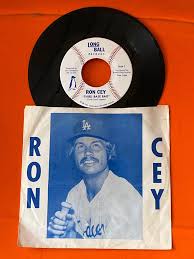
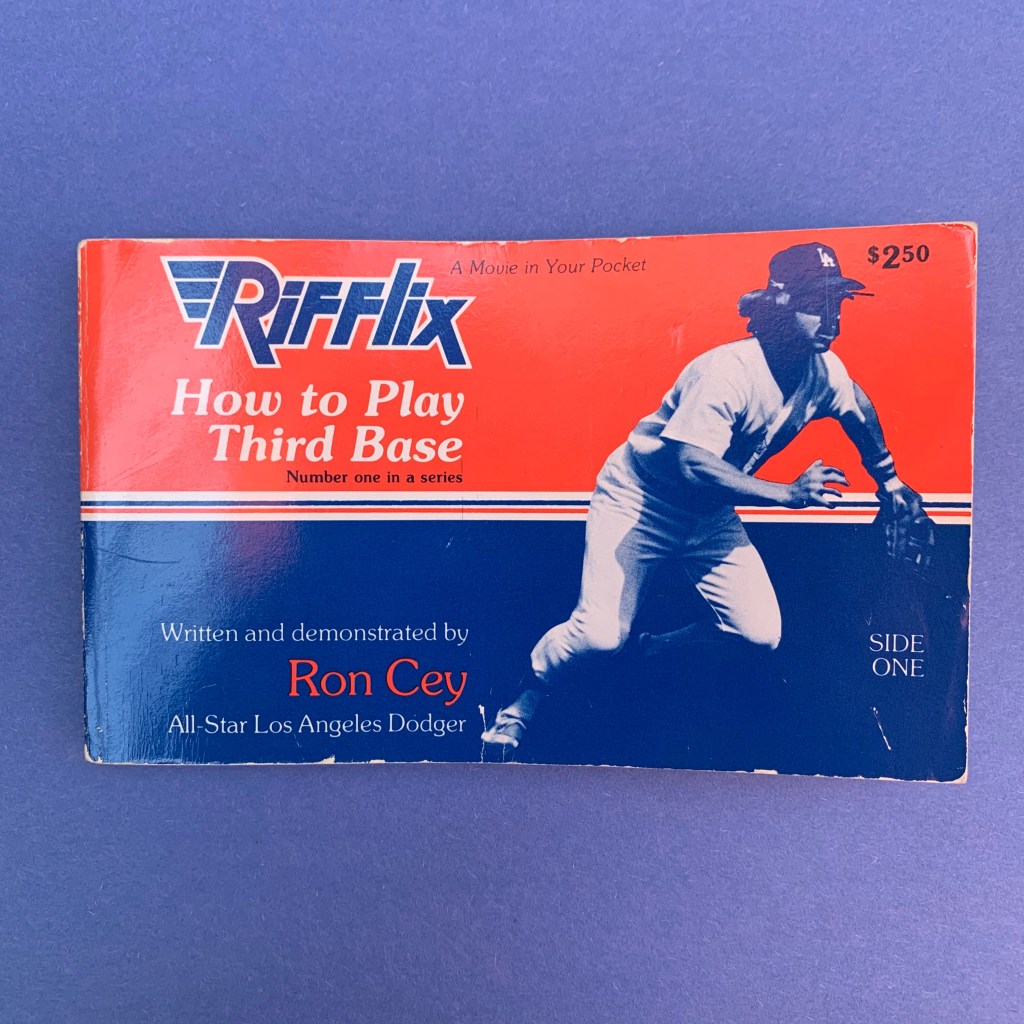
And no one else had the courage to record a 45 rpm record, singing the song “Playing the Third Base Bag,” either. (Get your copy of it before it disintegrates). Talk about setting records that won’t be broken.
As for the answers to questions 3 and 4 above:
The current Legends of Dodgers Baseball fraternity – basically those who just missed getting into the Baseball Hall of Fame, but were very close and deserve recognition – consist of Garvey, Fernando Valenzuela, Maury Wills, Don Newcomb, Kirk Gibson, Manny Mota and, later this season, Orel Hershier.
If Cey isn’t included during the 2024 season, especially after this presentation, it would be disappointing on many levels.
How about we say that Cey goes in with Bill Russell (the franchise’s all-time game played leader), Willie Davis and Eric Karros. Eventually, there should be Eric Gagne, Ramon Martinez, Steve Yeager, Davey Lopes, Matt Kemp, Gary Sheffield, Shawn Green, Mike Scioscia, Kenley Jansen and Pedro Guerrero.
And even then we still don’t know what to do with Mike Piazza and Adrian Beltre.
If Cey’s No. 10 isn’t retired, at least keep it out of circulation, as it is at the moment (after Justin Turner left, with that pine tar stain on the back of it). For some reason, the Dodgers gave No. 10 to Dave Anderson after Cey left, and since then it’s been worn by Sheffield, Hideo Nomo, Juan Samuel and Tony Gwynn Jr. When Gurnick did a piece for MLB.com about the greatest Dodgers to wear each uniform number — taking Claude Osteen at No. 23, for example, over Karros or Gibson — he of course had Cey as No. 10, and quantified it with this: “Reliable, tough, consistent, productive, clutch, durable.”
Here are 10 more things we learned about Cey from this book we may have thought we knew but really didn’t until he put the words to ink:
1) Washington State baseball coach Chuck Brayton gave him the nickname “Penguin,” not Dodgers manager Tommy Lasorda. “It wasn’t Lasorda, no matter how often he tried to take credit for it,” Cey writes on page 24. His one season at WSU was enough to get him into the school’s Hall of Fame as well as the State of Washington and Pierce County Sports Hall of Fame.
2) Bill Bucker was his best friend in the game, going back to their minor-league days, yet they only had four years together with the Dodgers and two more with the Cubs. Cey devotes an entire chapter to Buckner, and spends much of it relishing in the episode of “Curb Your Enthusiasm” where Larry David made Buckner a hero in season 8.
3) Cey never got along with Dodgers legend Duke Snider, who insisted that Billy Cox was the franchise’s all-time best third baseman.
4) Cey was drafted by the New York Mets out of high school, but by going to Washington State, he could avoid the Vietnam draft, so he passed taking any offer from them, went back into the MLB draft, and got picked by the Dodgers in 1968.
5) He hit .261 (1,868 hits in 7,162 at bats) during his 2,073 regular-season games spanning 17 years. He hit .261 (42 hits in 161 at bats) during his 45 games over five post-season series (1974, ’77, ’78 and ‘81 NLCS and World Series and ’84 NLCS).
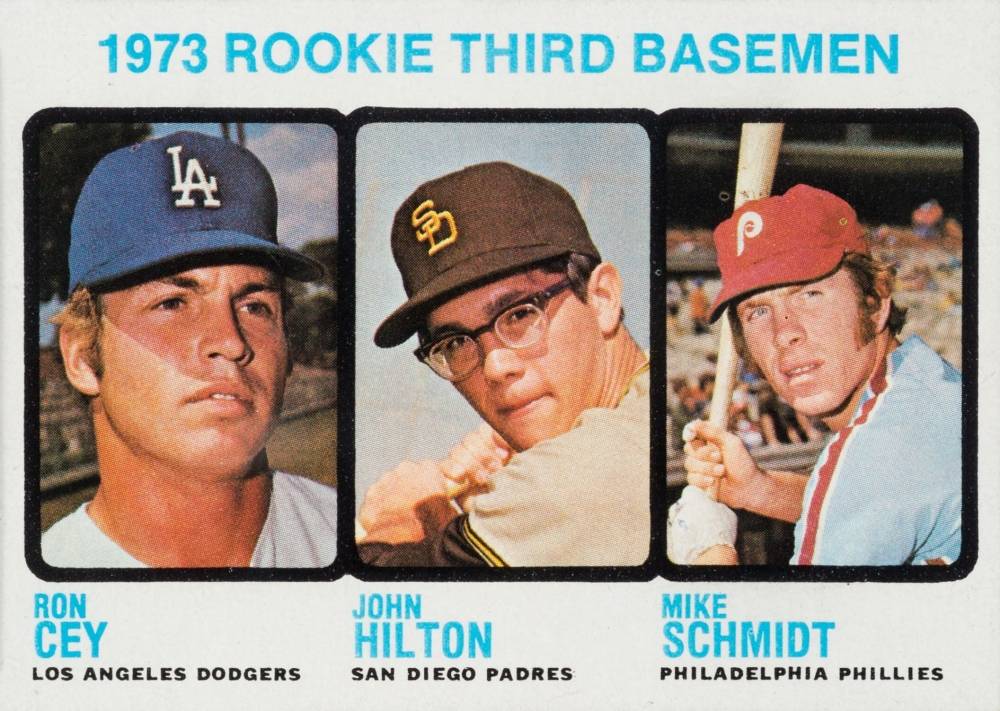
6) It’s no wonder he was never a real fan of Dodgers GM Al Campanis, who he says “screwed me over” by not bringing up to the majors in 1972 despite telling him “the job was mine to lose” in spring training (page 36).
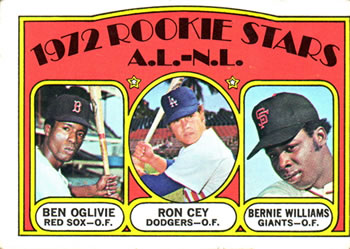
As a result, Cey had two Topps rookie cards — one of them far more valuable then the previous one. The first implies he wasn’t going to be a third baseman. Really, in the outfield?
Cey later was the first Dodger to take the team to salary arbitration in 1975, and won his case. They argued over $9,000. He was asking for $60,000, then came down to $56,000. That’s what he got. The team offered $47,000 and then upped it to $50,000, which he turned down, and Campanis told him: “Okay, but you’re going to lose (arbitration).” His two highest paydays were $1.45 million in ’85 and ’86 with the Cubs. So there. (For that matter, Cey wasn’t a real fan of teammate Don Sutton, who “considered himself ‘The Man’ and he kind of demanded preferential treatment.” (page 104)
7) Cey’s favorite player of all time: Willie Mays. Of course. Cey loved the “Say Hey” kid.
8) The Dodgers picked USC slugger Bill Seinsoth in that fabled 1968 draft, but he went back to school, and the Dodgers took him again in ’69 in the first round. “I played with Seinsoth at Bakersfield that year and I believe he would have been the first baseman of our record-setting infield because he was a natural first baseman and left-handed hitter. After our season was over, Seinsoth offered to drive me back to Los Angeles, but our schedules weren’t in synch, and I found another ride. I never saw him again.” Seinsoth died in a car accident on that trip to L.A.
9) Cey believes if, early on, he batted fourth and Steve Garvey batted fifth, the Dodgers would have been even more successful in the 1970s – because Cey’s ability to take more pitches, and draw more walks, which would have allowed Davey Lopes to steal even more bases.
10) The two players sent by Chicago to L.A. for Cey prior to the 1983 season — pitcher Vance Lovelace and outfielder Dan Cataline – never made it to the Dodgers. Lovelace was traded to the Angels in ’85 and pitched in 4 2/3 innings in nine total MLB games. He quit after 14 minor-league seasons in 1998 at age 34. Cataline didn’t make it above Double-A San Antonio before leaving the game at age 24 in ’86.
That’s enough to make one grab their head in pain asking: Say, hey, why again did you trade Cey?
How it goes in the scorebook
A high 5.
As triumphant as this may be, how did this not end up published by Penguin Press?
Let’s not worry about that. Drink up.
You can look it up: More to ponder
== Cey has yet to be added to the SABR bio project. But maybe that’ll happen sooner than later now.
== Cey has an interview with Jon Weisman at DodgerThoughts.com, shows up at KCRW-FM, and appears on MLB Network’s “High Heat.”
== Did you know Cey has a podcast? Neither did we. It’s here. A nice place to talk about the book, for sure.
== The website WhenItWasAGame.org has a wallet made out of a Ron Cey model Wilson glove. For $145. Any way to get that for him as a Father’s Day gift?
== Why was Ron Cey and Moon Martin sharing a spot in the Dodgers dugout in the late 1970s? We have no idea either. Ask Wally Moon.


Excellent review and analysis. Does he mention doing commercials for Howard’s in the book?
On Tue, Jun 6, 2023 at 9:14 AM Tom Hoffarth’s The Drill: More Farther Off
LikeLike