

“Field of Magic: Baseball’s Superstitions,
Curses and Taboos”
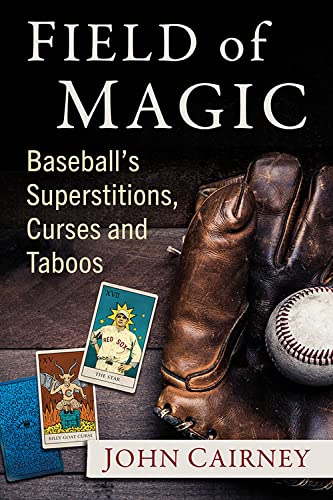
The author:
John Cairney
The publishing info:
McFarland
215 pages; $29.95
Released January 20, 2023
The links:
The publishers website
The authors website
At Bookshop.org
At Powells.com
At Vromans.com
At TheLastBookStoreLA
At Skylight Books
At Diesel Books
At PagesABookstore.com
At BarnesAndNoble.com
At Amazon.com
The review in 90 feet or less
In October, 1981, a column in the Boston Herald American by a Chicago writer named Ron Berler sold us a story that claimed “it is utterly impossible for a team with three or more ex-Cubs to win the World Series.” Call is ECF for short. There is no little blue pill solution for it.
Berler’s theory noted a pattern he observed since 1945, which had been the last time the Cubs were in the World Series. He found 13 teams with at least three ex-Cubs on their roster that made it to the Fall Classic over that 36-year period. And 12 of them lost. He was probably also painfully aware that Cubs’ history was all about having to shoulder such things as cursed billy goats and inopportune black cats.
By Berler’s theory, at the time it came out, the Dodgers’ eventual winning the World Series in ‘81 was only logical – the Yankees actually had five ex-Cubs on their roster at the time. The Dodgers had only two – Burt Hooton and Rick Monday. Soon after, they would dispatch Davey Lopes, Ron Cey and Jay Johnstone to the Cubs – the essence of being sent out to pasture.
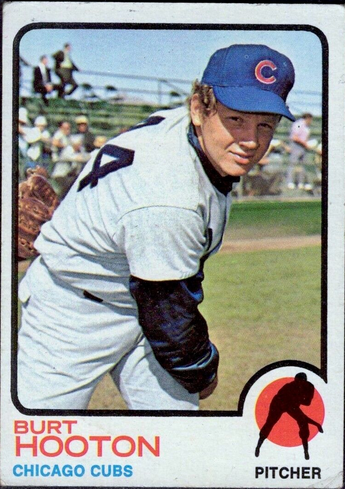
But it also explained how the Dodgers’ ’77 and ’78 World Series losses to the Yankees.
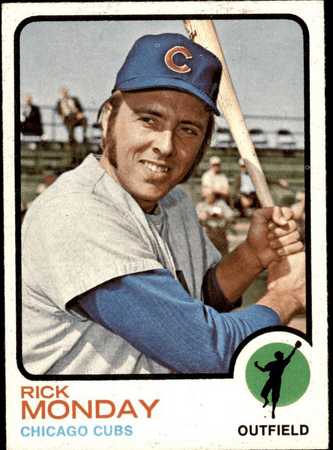
In ’77, their ex-Cubs contingent was just Hooton (who spent ’71 to ’75 with Chicago) until the Dodgers added Monday and relief pitcher Mike Garman (’76) in a deal for Bill Bucker and Ivan de Jesus.

In ’78, Berler noted that the Dodgers rid themselves of Garman but replaced him with outfielder Billy North, who came via Oakland in that odd Glenn Burke deal but had Cubs’ DNA in him from ’71 and ’72.
Actually, Garman was still with the Dodgers when North arrived and they overlapped three days before Garman was traded to Montreal in late May for a two young arms.
Berler can also explain how the ’66 Dodgers were humiliated by Baltimore a year after defeating Minnesota for the title. In ’65, they had just Jim Brewer and Lou Johnson as their ex-Cubs. In ’66, they added outfielder Wes Covington and made it three. Not a good move.
At last, the 2001 Arizona Diamondbacks, which included former Cubs star Mark Grace, won the World Series against the Yankees. It caused Grace, who had spent the previous 13 seasons in Chicago, to declare: “We beat the ex-Cub Factor.” Also on those D’backs were ex-Cubs outfielder Luis Gonzalez (who had the Game 7 game-winning hit off Mariano Riviera) and relief pitcher Miguel Batista.
When the Cubs won the 2016 World Series, they used 45 players during that season. Just seven years later, all of them are gone except pitcher Kyle Hendricks (who led the ’16 Cubs, and the NL, with a 2.13 ERA). One of those ex-Cubs is outfielder Jason Heyward, added to the 2023 Dodgers to go with ex-Cubs Shelby Miller (who pitched two innings for the Cubs in ’21) and Trace Thompson (35 at bats for the Cubs in ’21).
It behooves these Dodgers to release one of those three immediately. We kinda know which one. Leave no trace of why this decision is necessary.
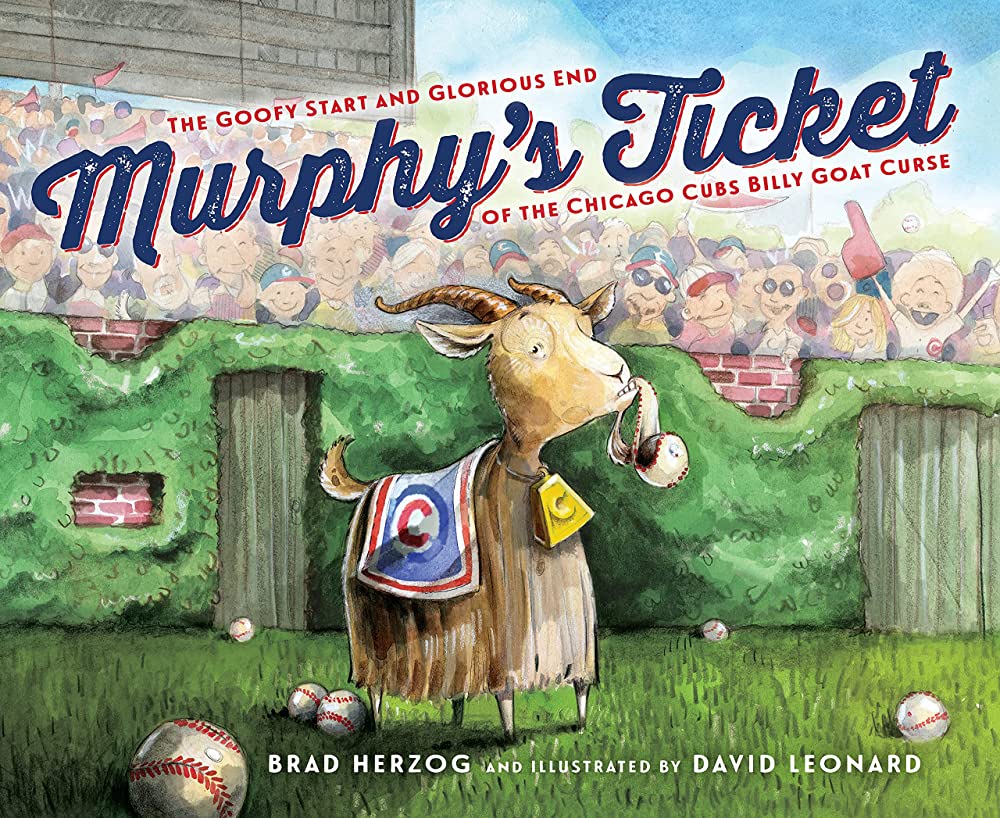
The Curse of the Ex-Cubs has its own Wikipedia post, which also points out there are some who believe in an Ex-Expos Curse as well as an Ex-Mariners Curse.
Also on Wikipedia: The Curse of the Bill Goat (another Chicago favorite), the Curse of the Bambino (attributed to the Boston Red Sox before they won in 2004, and then again proved it by winning in ’07, ’13 and ‘18), the Curse of the Black Sox, the Curse of Rocky Colavito, the Curse of Coogan’s Bluff, the Curse of Billy Penn and even the Curse of the Colonel.
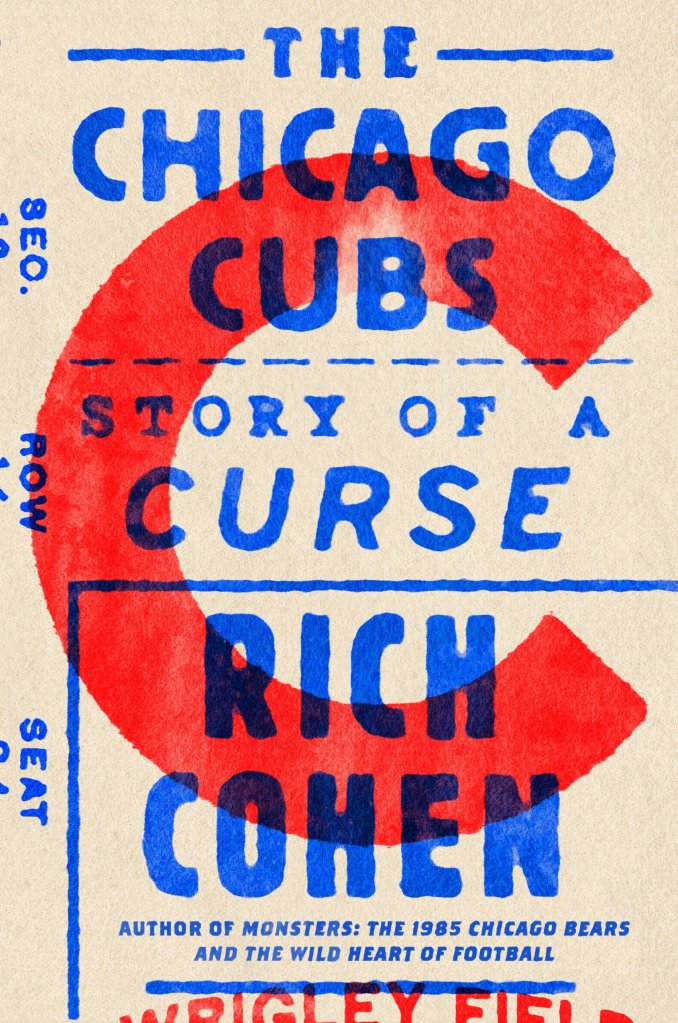
There seems to be a lot to curse about. Some is even captured in a book released in October of 2017 called “The Chicago Cubs: Story of A Curse,” by Rich Cohen, capitalizing on the Cubs’ most recent title.
We’ve encountered plenty of reading material over the years that straddled the fence of quirkiness/happenstance or something that’s a flat-out unexplainable. Most was pretty light-hearted and focused on making lists come to life.
In 1991, Mike Blake put out “The Incomplete Book of Baseball Superstitions, Rituals and Oddities.” Incomplete is accurate. Ken Leiker’s “Jinxed: Baseball’s Superstitions from Around the Major Leagues” in 2005 was a bit more complete.
George Gmelich is another interesting gent.
Gmelich, a former Detroit Tigers prospect who never got out of the minor leagues between 1965 to 1970 and then went to Stanford and UC Santa Barbara to study sociology, wrote a piece in ’78 called “Baseball Magic” for a publication called Human Nature (also published here in the Washington Post). It was followed it up in ’92 with Elysian Fields Quarterly and a piece titled “Superstition and Ritual in American Baseball.” His theory has been that those considered modern-day players have a tendency to be like a Trobriand fisherman of the 1920s and ‘30s who employed magic as a way to sway chance into their favor.
When the plan to start reading this latest missive about rituals, fetishes, curses and taboos came up – the names of the first four chapters that author, sociologist and social psychologist John Cairney picked to cover, somewhat based on Gmlech’s theories that they all are some form of magic – we noted how it said he would explore things related to social science, religious studies, SABRmetrics.
We didn’t want to jinx anything and go straight to the fifth and final chapter titled “Has Science Killed Superstition?”
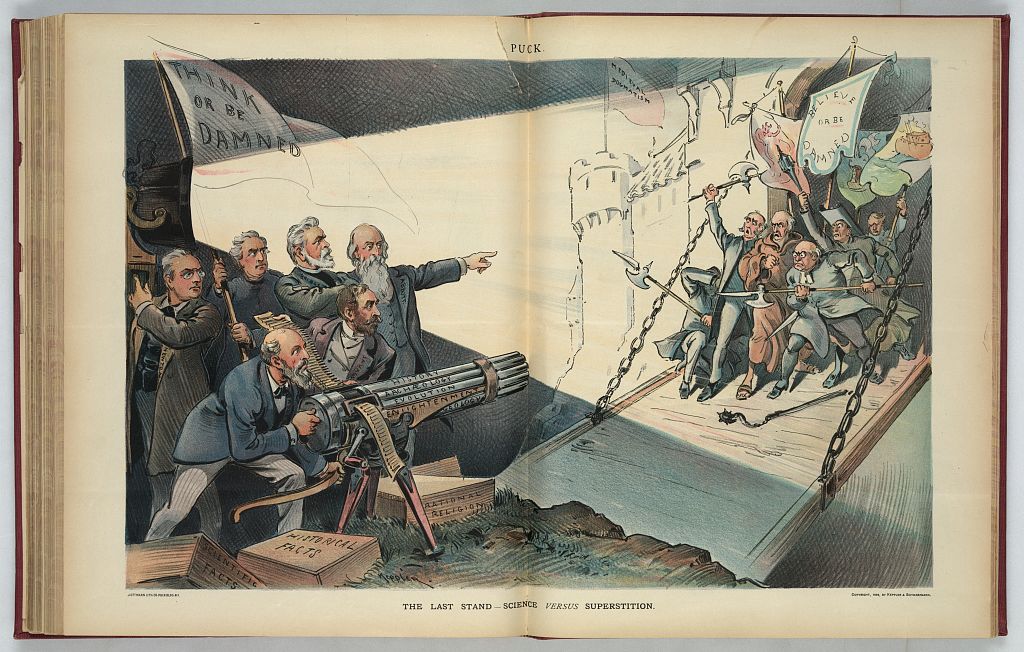
Sounds like it’s become a murder mystery all of the sudden.
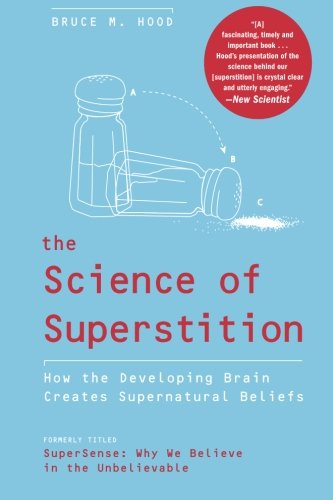
We took that leap of faith anyway. Then we realized this was anything but a light read.
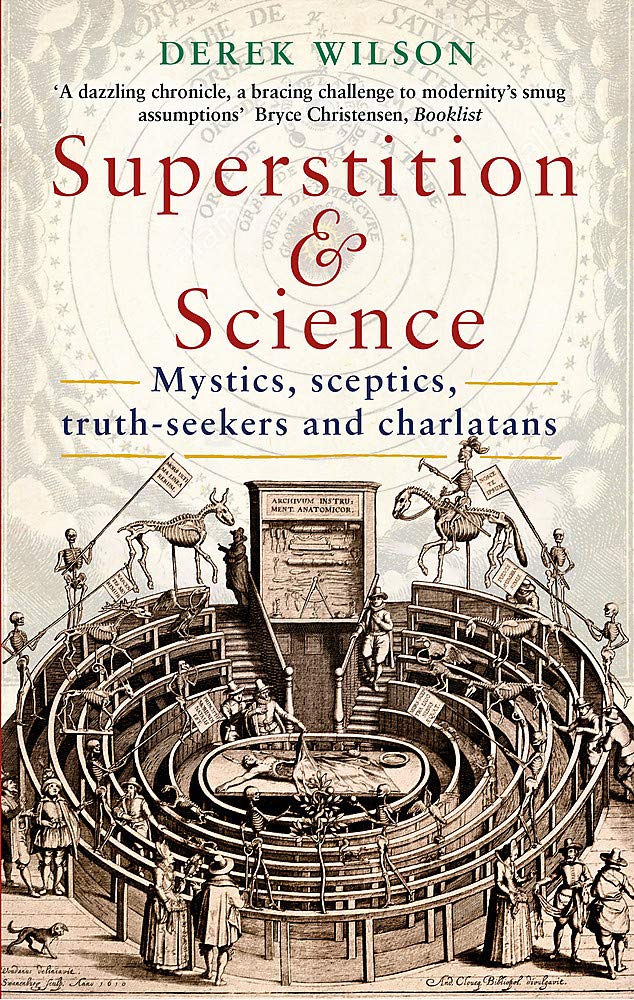
It’s far more about trying to quantify what in fact is supernatural, how some things can be explained away, and if players are any smarter these days and less influenced by things that maybe generations before them would allow to mess with their heads.
This is where B.F. Skinner meets Don Zimmer with a dash of A.J. Hinch and a Tommy Lasorda pep talk.
The more you think about things, the more you can over-think it, right? That’s baseball, a thinking person’s game. Timeless and slower moving, until they decided it needed a clock. Ritualistic.
Tame the Jobu and skip to Chapter 5.
Again, has science killed superstition?
“I believe … that it has not,” writes Cairney, a professor and the head of Human Movement and Nutrition Sciences at the University of Queensland in Brisbane Australia and a member of the Society for American Baseball Research. “While science may have shed light on superstitious practices in the game and helped us to understand them, superstition remains a feature of modern-day sport.”
So, there you go. Pass the placebo, a whole list of ibids and some a few grams of Schadenfreude. We’ve just disproved the theory that none of this matters. It still does.
How it goes in the scorebook
Pretty heady stuff for things you like to think are just circumstantial.
If you can plow through all the academics of it, there’s some fun to be had. Unfortunately, not enough fun, and too many high-falootin’ overthinkin.’
One of the reviews on the publishers website: “An excellent review of the subject and related literature” — George Gmelch, professor of anthropology, University of San Francisco and Union College.
You can look it up: More to ponder
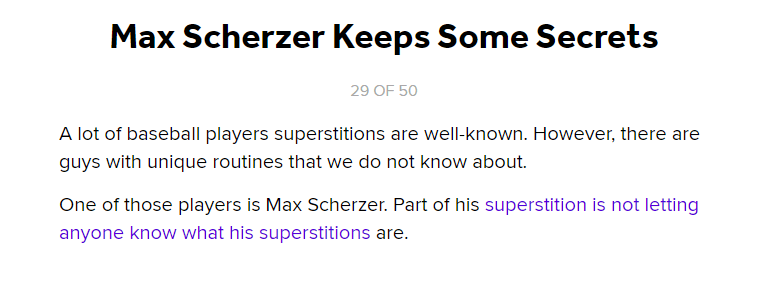
== The 2012 list in the Bleacher Report of the “50 Weirdest All-Time Superstitions” includes this:

 Tom Hoffarth's The Drill: More Farther Off the Wall
1 thought on “Day 16 of 2023 baseball books: When you believe in things you don’t understand then you suffer … superstition ain’t the way”