

“Why We Love Baseball: A History in 50 Moments”
The author:
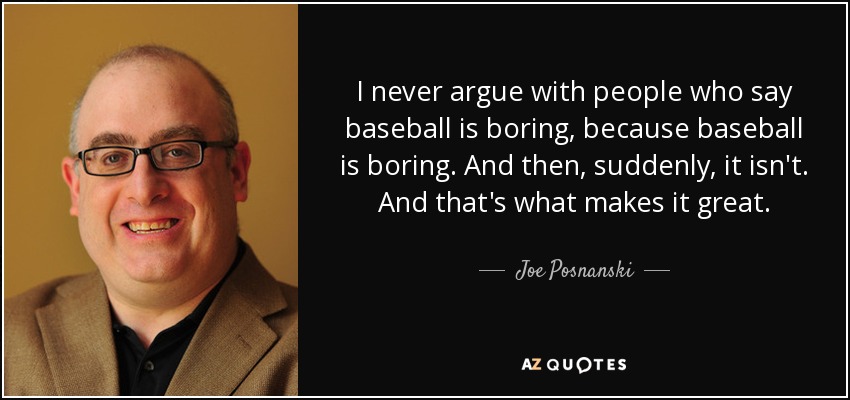
Joe Posnanski
The publishing info:
Dutton Books/Penguin
400 pages; $29
To be released Sept. 5, 2023
The links:
The publishers website
The authors website
At Bookshop.org
At Powells.com
At Vromans.com
At TheLastBookStoreLA
At Skylight Books
At Diesel Books
At PagesABookstore.com
At BarnesAndNoble.com
At Amazon.com
The review in 90 feet or less
We’ve become somewhat addicted to the daily grind of cold-brew coffee and the hot mess that is the “Immaculate Grid.”
God help us, and please keep Jesus Alou waiting in the wings.

It matriculated this summer over to Baseball-Reference.com, and we became more intrigued when the New York Times explained last July it was the “hottest thing in baseball.”
Hotter than Freddie Freeman?
Our participation was an attempt to cultivate more an appreciation for baseball and its history, and our connection to it all.
Results vary.
The exercise insists on coming up with a player from MLB history – and the Baseball-Reference.com databank has more than 23,000 legit to pick from — that satisfies the horizontal and vertical intersection of the three categories. A team logo, a statistical achievement, an award or honor. Nothing yet about handlebar mustaches or wife swapping.
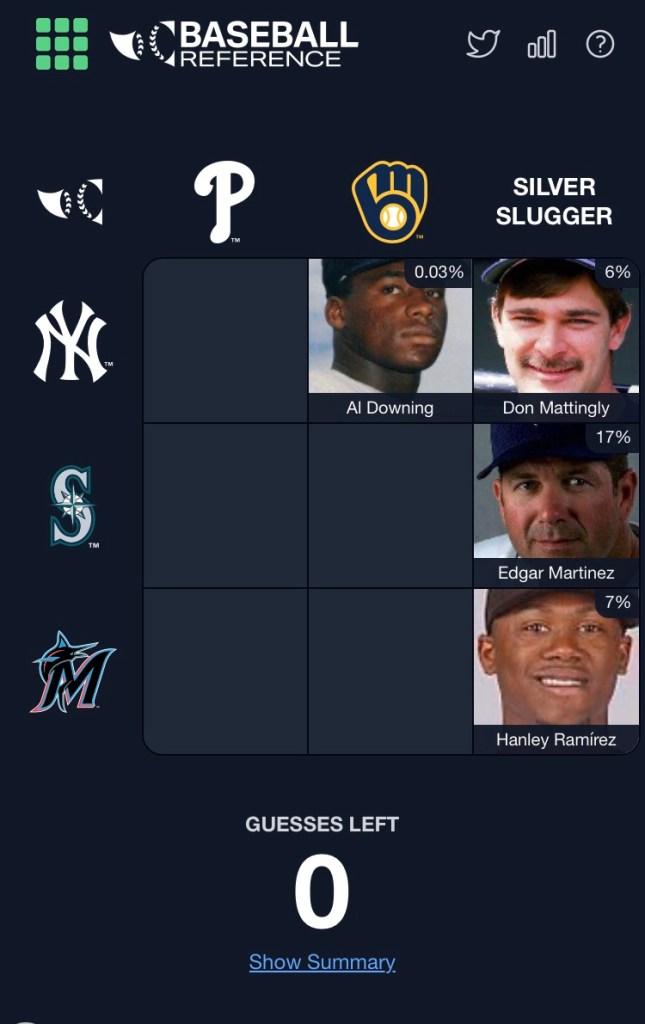
Nine open squares. No margin for error. It’s bound to knock you on your axis.

This challenge of one’s faulty memory (go ahead and cheat a little only if you must to confirm Tom Seaver really did play for both the White Sox and Red Sox) draws its name from the rare feat of when a pitcher records three straight strike outs to complete an inning with the minimum of nine pitches. Its active Wikipedia page notes that it has happened 114 times in MLB history. Far more rare than a no-hitter (322 since 1876). A bit more common than a perfect game (24).
Sandy Koufax, with four no-hitters and one perfect game, also lays claim to three immaculate innings. Because of course he did. Yet that only ties him with Chris Sale and Max Scherzer, who continue to pitch in an era where batters aren’t embarrassed by taking called strikes if the pitch isn’t near their analytic hot zone.
Short sidetrack: “Immaculate Inning” is a term used in baseball for only the last 20-something years. So when rookie reliever Sloppy Thurston of the Chicago White Sox did it against the Philadelphia Athletics in the top of the 12th inning on Aug. 22, 1923 – whiffing the Nos. 1, 2 and 3 hitters in the lineup, Beauty McGowan, Chick Galloway and Sammy Hale – it’s likely no one even thought twice about it. In the 13th, Thurston got a little sloppy and gave up a go-ahead single to Frank Welch, so he was squeezed with the loss at Comiskey Park, 3-2.
The more we do this gridstuff, the more we’ve realized our brain doesn’t think of baseball history in this way. It most often leaves us twisted and tormented, feeling inadequate and we didn’t pay attention enough during Fantasy League drafts.
The Immaculate Grid is not a chapter Joe Posnanski chooses to include in this new book.
Perhaps it someday will be considered another way to sweet on baseball and its mystical ways. It probably came along too for this publication deadline, but we doubt he’d be apt to include it in a future update, based on what he has written about it on his daily Substack column, JoeBlogs.
On his July 27 post, he lamented:
“Some days I love IG. Some days, when I’m getting a terrible headache trying to think about who played for the Rockies or Rays, I kind of hate it. Sometimes my strategy is just to pick the most obvious players and get through. Some days I try to go as obscure as I can go and shoot for the lowest rarity score. I feel way too much pressure playing it. Who needs that?”
Many of us do, apparently.
A rarity score, FWIW, is taking this to the next level of brain cramping. It’s what the Baseball Mensa shoots for – pulling a player’s name from a dark hole who fits the answer in the most obscure way possible. For example, to satisfy the category of someone who once played for the Dodgers and Angels, the most common choices might be … let’s say … (think real hard) …
Albert Pujols … Andy Messersmith … Don Sutton … Fernando Valenzuela … Bill Singer …Frank Robinson … Tommy John .. .Zack Greinke … Hoyt Wilhelm …
Baseball-Reference.com can actually aggregate its data and pull up a list. Which means, if you cheat and look at it, you can lower your rarity score by instead picking …
Jack Fimple … Barry Lyons … Jim Leyritz … Shea Hillenbrand … Noah Syndergaard!
It seems to be why the New York Times’ Tyler Kepner, who can’t get enough satisfaction having two books on the game still be among the most popular buys in recent years, posts his results daily on Twitter. It’s not so much to boast about how he really came up with another low rarity score again. It seems to show that, if you really want to work at it, this thing can be harnessed … for good?

You’d think at some point, our SABR friend Jon Leonoudakis might even figure out a way to incorporate this game part of his BasebALZ program, to use baseball’s history and help those with fading memory and forms of dementia reconnect. The SABR friends are standing by.
Maybe … just maybe.
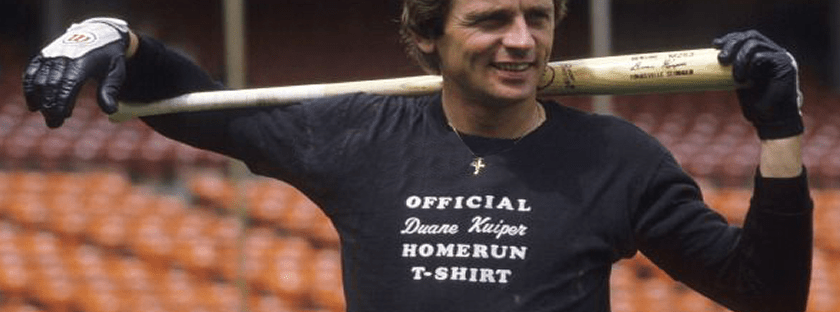
If there is a way for Posnanski to keep at it with the Immaculate Grid, our hope is there will be more love and appreciation, and he will figure out a way to pass it onto us. Maybe the key for him will be that one moment when there’s the intersection of “C” for Cleveland and “SF” for San Francisco, and Posnanski assuredly drops in the name Duane Kuiper.
If Posnanski’s focus on this book project is baseball magic, Kuiper is a cool example in the lead off spot of his 50 moments.
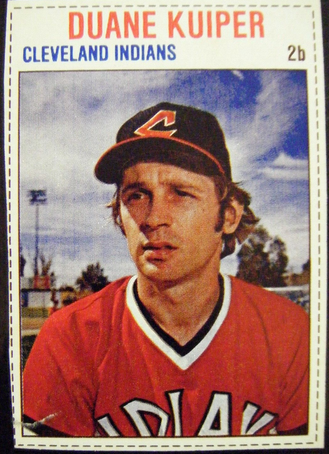
Posnanski lays out the story of how as a 10-year-old in the summer of ’77 in Cleveland, “Kuip” was his hero, a grind-it-out second baseman for the hometown team (whose nickname we apparently we aren’t allowed to mention any longer) who inspired Posnanski to hold down the keystone sack for his own youth baseball team.
Posnanski says he’s lying on the beige carpeting of his family living room learning against the speaker of the “enormous Zenith music console my parents had bought on payments … it looked like a coffin,” and heard Cleveland broadcasters Herb Score and Joe Tait, who “sounded like they might be trapped inside,” call Kuiper’s home run hit off the White Sox’s Steve Stone.
“It’s gone! Duane Kuiper has just hit his first Major League home run! How about that!”
“Hey,” Herb adds, “look at Duane running those bases!”
“Oh, is he one happy ballplayer!” Tait adds.
As it turned out, that was the one and only home run Kuiper hit in 3,754 plate appearances over nine MLB seasons. That’s the major-league record for most career at-bats with exactly one home run in the live-ball era (1920 to present day).
Posnanski writes on page 28 — and you can almost see him narrate this as if he the adult voice of Ralphie in “A Christmas Story”:
“My friends, almost all of them, had childhood baseball heroes who were better players than my Duane Kuiper. “They idolized Tom Seaver and George Brett and Reggie Jackson and Wade Boggs and Frank Thomas and players like that. I wouldn’t trade my hero for all of them put together.
“Why do I love baseball? I’m going to go and swing my Duane Kuiper bat and think about it.”
There’s your heart strings pulled. No bypass necessary.
Posnanski had us at “Kuip,” now the beloved broadcaster for the San Francisco Giants since 1986 (minus one season, ’93, when he worked for the expansion Rockies).
Reading up more about Kuiper – because, with a book like this, it inspires further research — we’re amused just by his Wikipedia post at how he was once drafted by the Yankees out of high school as well as the Seattle Pilots, White Sox, Reds and Red Sox while in college, but passed on them as well. Cleveland took him in the first round of the ’72 January Secondary amateur draft. He hit six homers in the minor leagues. Kuiper grounded into a double play in his first MLB at-bat in September, ’74.
And as for that home run Stone allowed to Kuiper: There’s a story that Stone said he wasn’t warmed up yet for the game, which started 12 minutes earlier than he was told. Kuiper’s response: He was loose enough to strike out the first batter of the game before he got to me.
That’s the magic trick Posnanski accomplishes. He tells a story. You go looking for more sugar to sprinkle on it.
You become the rabbit he pulls out of the baseball cap.
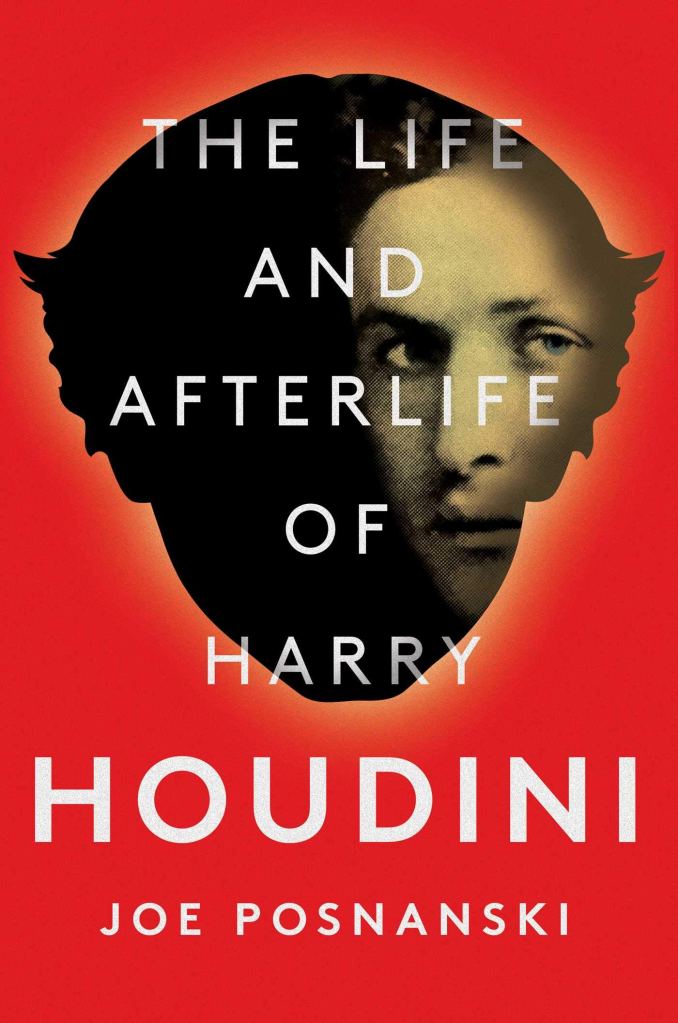
It’s no wonder one of the books Posnanski authored is on “The Life and Afterlife of Harry Houdini” in 2019, with a cover that doesn’t look all too different from this latest.
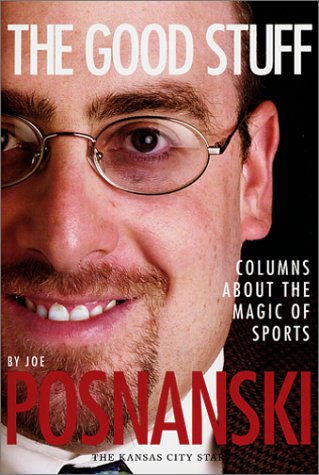
And he already tried out some of his magic with “The Good Stuff: Columns About the Magic Of Sports” when he was with the Kansas City Star in 2001 and they couldn’t fit his entire face on the cover.
If not for Posnanski writing this collection of essays on baseball’s brilliance bewitchment, and even some slight of hand, there likely wouldn’t be a book. Or a loyal readership waiting to scoop it up.
Posnanski has endeared himself to baseball fans as an infectious, joyous but realistic writer about the game over the years. His daily JoeBlogs column on Substack is a stream of consciousness maybe best framed as creative rumination as well as supplementing it with incredible statistical data and context. The mind wanders, and the numbers catch up with it to verify and supplement.
Because he nails us with Kuiper, we start thinking of our own childhood connections. The baseball cards we had (and still do) that gave us visual verification these guys existed, along with statistical evidence of their abilities (along with their height, weight, age, hometown and, in some cases, if they had to take years off for military service in the 1960s).
The book embodies both the Average Joe fan – we suspect the baseball gods did not do that by accident – as well as the historian who can pull a reference at the right place at the right time to make a point, as if he was a contestant on Sports Jeopardy!
(Another side note: Because of Posnanski’s insistence, we doubt we’ll ever fall back on that argument – well, Koufax only had six great seasons and he made the Hall of Fame. Statically, that may be accurate, but there’s so much more to that we can’t apply to arguments when trying to determine of someone else deserves more Cooperstown consideration.)
Months before it came out, the book was already ranked on Amazon as the No. 1 new release in the topic of “Sociology of Sports.”
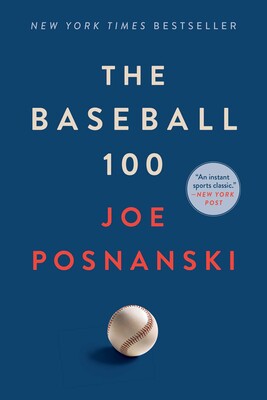
It doesn’t really need to measure society’s gravitation to baseball. We already experienced much of that in Posnanski’s fun-and-fast read for his most recent book, “Baseball 100” as we looked forward to that release after the 2021 list and prior to the 2022 reviews.
This time, Posnanski gets to the heart of the matter: The things that matter.
The 50 entry points for this book are a variety of essays. Including the introduction.
“We know all the reasons some do not love baseball,” he admits. “It’s a slow game with lots of meetings, lots of standing around, lots of aimless jogging on and off the field. … Baseball has no slam dunks, no breakaways, and little violence. There is no goal and no goal line, no basket, and no finish line. …”
So far, he’s listed things that we’re all very OK with.
Posnanski adds that this is a book he wishes was in the library around the corner from his house when he was a kid.
“This is a book of forever moments … There have been baseball moment countdowns before … this ranking is a bit less tidy. There are important moments … and consequential and dramatic and game-changing … but there are also moments that are none of these. Some are silly. Some are virtually unknown. That’s what I’m going for here.”
Box, and box score, checked.
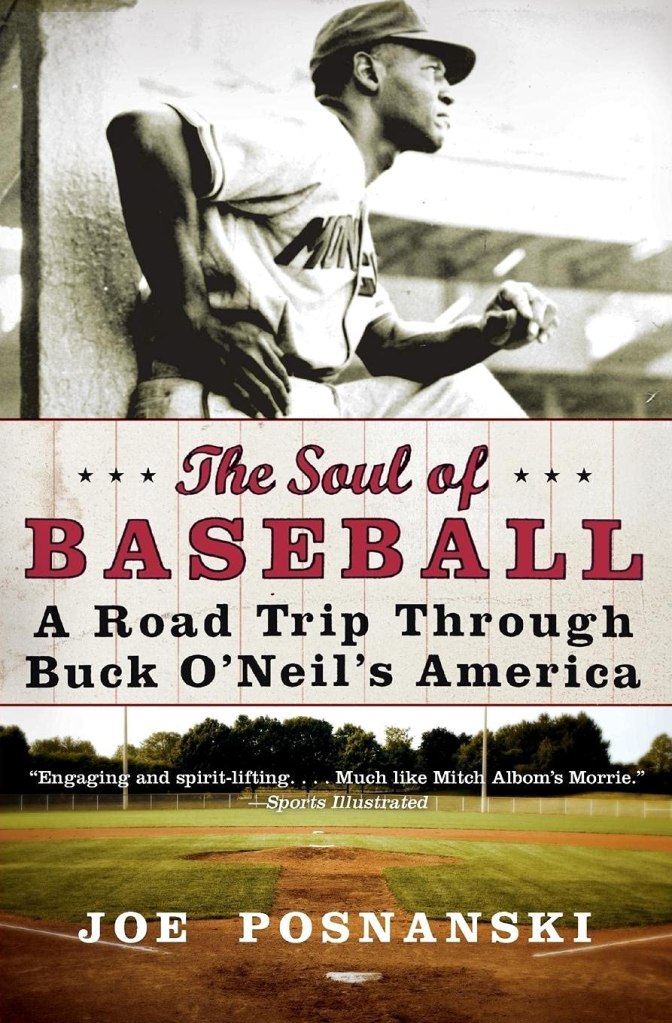
The chapters seem to mine the essence of his 2007 book, “The Soul of Baseball: A Road Trip Through Buck O’Neil’s America,” and touch on more on stories he recounts about unlikely home runs, trick plays, meltdowns, pitching oddities and all that kind of territory.
There’s an entire chapter on Shohei Ohtani (No. 34), leading off on how he struck out Mike Trout to end last March’s World Baseball Classic.
“Ohtani is simply unlike any player in the history of baseball,” Posnanski writes, as we were hoping for a new way to frame the Japanese star’s talents. “What can you say? That man, Shohei, is a nightly miracle.”
He’s darn-near immaculate, if given a chance (which the grid won’t do: you can only use a person once a game):
(Note: Posnanski continues to try to figure out the best way to describe Ohtani in other publications, preparing for his book rewrite):
The Kirk Gibson 1988 World Series Game 1 homer is definitely magical enough to include, but mostly from how the general public took it in, via the calls of Joe Buck on radio and Vin Scully on TV.
Posnanski even goes to the extent to allow a friend to write a chapter – Michael Schur, the creator of “Parks and Recreation” and “The Good Place,” riffs on pinch runner Dave Roberts’ steal of second base for the Red Sox in the bottom of the ninth in Game 4 of the 2004 American League Championship Series against Mariano Rivera and the New York Yankees.
(The Nike spikes Roberts wore in that game are in the Baseball Hall of Fame. So he’s got that going for him).

Posnanski’s book forces our synapse to reconnect with our first glove (the Willie Montanez outfielder Rawlings model) and the crunch of the first pair of metal spikes used for Pony League games.
There’s the that moment when our first Dodgers baseball card popped out of the machine near the drug store after we cranked a nickel into the slot and twisted left – reliever Al McBean, 1970, Topps card No. 641, with “Los Angeles” across his chest, and the MLB 100th anniversary logo on the sleeve.
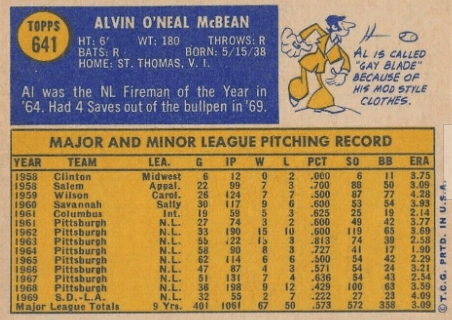
(Interesting how the back says he was the NL Fireman of the Year in 1964 with Pittsburgh, but the stats don’t include how many saves he had accumulated. And we have to admit, looking at the back of the card just now, we never noticed that cartoon says McBean was known as “Gay Blade” because of his choice in clothing … Ahem …)
All those “forever moments,” yanking on nostalgic yearnings.
Sold.
How it goes in the scorebook
Say it’s so, Joe. He’s done it again. Immaculately accurate.
Why do we love baseball? That’s not a question the title her presents. It assumes we already do.
We consume this as something we want to love, we do love, and then we ponder why.
And Posnanski is the Sherpa on the journey. Trust him.
If also forced us to think: If we were to take on a project like this, how might we frame it?
We could be bent on a title that was more like: “Why We Still Love Baseball Despite … (Fill in the Blank).”
But that defeats the premise.
Maybe it’s because we are still reeling from the demise of the newspaper business. You can love it. It doesn’t mean it will love you back. So you still figure out how to love it no matter what sort of dysfunctional sets of parameters it may keep throwing at you.
Pitch clocks and all.
Speaking of pitch clocks: “The pitch clock is a travesty (and) the Catholic Church must learn from baseball’s mistake.”
That’s a whole other issue, a whole other book, a whole other religious-based narrative that needs some faith healing.
You can look it up: More to ponder
== Posnanski’s book tour includes (so far) its only stop in Southern California at Chevaliers in Larchmont on Sept 12 at 6 p.m., which was moved to The Ebell of Los Angeles (743 S. Lucerne Blvd just S. of Wilshire in the Wilshire Park area). It appears one will come later next spring in Rancho Mirage. The tour starts with the book’s release and, as one can see by those who’ll be with him at various stops, it has a very credible following of supporters.

== Something we discovered on our bookshelf from a few years back: The Sporting News did a special commemorative issue in 2015 called “The Game We Love: The Sporting News and 125 Years of Baseball.” It still seems this 188-page gem that includes lists such as “The 50 Greatest Players” and “10 Greatest Announcers” and “10 Greatest Nicknames” is available for purchase as something to file away next to this new book on the shelf.
Our favorite list in the book: “10 Most Underrated Accomplishments,” by Ryan Fagan. It includes:
= Greg Maddox throwing 21 straight seasons of at least 194 innings (1988 at age 22, third season, through 2008, age 42, his final season split between the Padres and Dodgers; giving him a career of 5,008 1/3 innings pitched)
= Willie Mays leads the NL in stolen base percentage five times (starting in 1955 at age 24, when he was 24 for 28, and ending in 1971, when he was 40, stealing 23 of 26). He was also in the Top 10 of stolen base percentage 11 times. The Baseball-Reference.com page also shows he ranked No. 1 in the Power-Speed # category eight times, he was in the Top 10 some 14 times, and he’s third all time (447.93) behind Barry Bonds (613.90) and Rickey Henderson (490.41). This is a Bill James stat that goes as follows: 2x (home runs x stolen bases) divided by (home runs + stolen bases. The Dodgers’ Mookie Betts is currently No. 102 all time with a 200.31.
= Nellie Fox never strikes out more than 18 times a season. From 1947 to 1965 with the Philadelphia A’s, Chicago White Sox and Houston Astros. He and his huge wad of tobacco wedged in his left cheek led the league in at bats per strikeout 12 times. In 10,351 plate appearances he struck out 216 times. Reggie Jackson is the all-time leader with 2,597 strike outs in 11,418 plate appearances — or 12 times as many whiffs as Fox, who did it while leading the league in ABs five times.
= Bartolo Colon once threw 38 consecutive strikes. On April 18, 2012, he did it for Oakland against the Anaheim Angels at Angel Stadium. Colon was 39 years old, seven seasons removed from his Cy Young campaign with the Angels in 2005 (21-8, 3.48 ERA). It started in the bottom of the fifth against Maicer Izturis and ended in the eighth inning against Bobby Abreu. Here is the Retrosheet.org boxscore that documents his 6-0 win as he threw eight innings, struck out five and walked no one. In the description of the game it also notes the 38 straight strikes accomplishment.
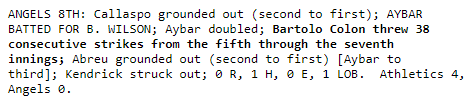
Maybe more impressive to us about him as we look at his career stats: He made the All Star game four times with four different teams — Cleveland and 1998 at age 25, the Angels in ’05 at age 32, Oakland in ’13 at age 40 and the New York Mets in ’16 at age 43, pitching 21 seasons until he was 45 with Texas.
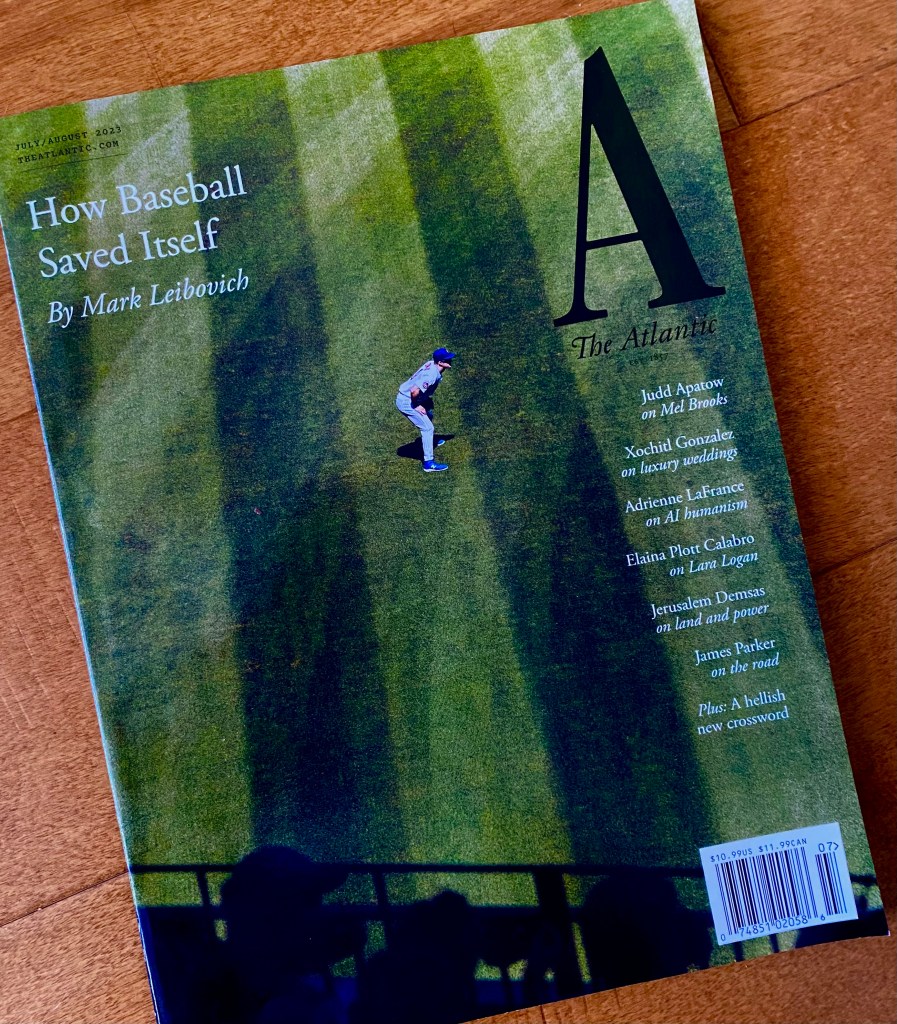
== While we’re on the subject of celebrating baseball: The Atlantic had this cover on its July/August print edition, along with this story to explain how the game’s post-“Moneyball” era is finally making sense.
Finally: Can we offer a few final thoughts, and maybe even a solution, about this “Immaculate Grid” thing before moving on until the end of the 2023 MLB season, as we finish off our annual list of book reviews?
We were at an Angels game once and sitting behind us was a young couple. The girl continued to ask the guy question after question about what they were watching.
Boy: “So far, the pitcher hasn’t given up any hits.”
Girl: “Is that a perfect game?”
Boy: “A perfect game is when the pitcher strikes out everyone for the whole game and doesn’t give up a hit.”
It took all our strength not to turn around and offer a clarification. But the more we thought about it, maybe he was right. Maybe we’ve bastardized the phrase “perfect game” for a no-hitter that only is amplified by the fact no one got on base, and all 27 men were retired.
What if a pitcher really did strike out 27 in a row and go the distance? How would that be best described?
What could be more perfect — even immaculate — than that?
If he only threw 27 pitches, of course. Nine immaculate innings in a row.

Maybe it’s come to this for us: A true magic moment, something most divine as well as immaculate, will happen in this Baseball-Reference.com world when we find a space for the nine guys we have listed on a piece of paper that we keep nearby.
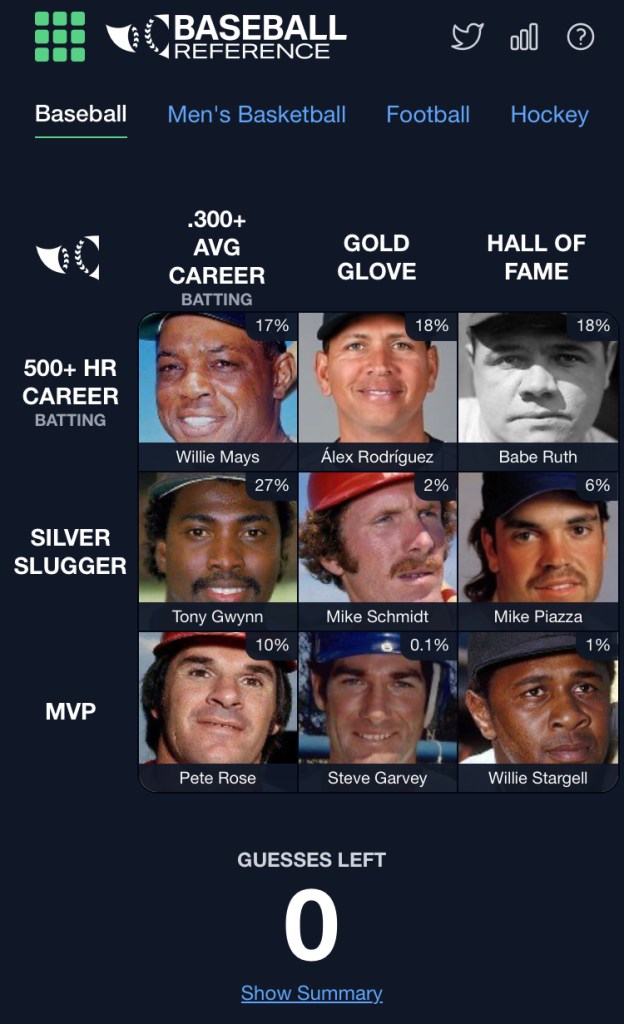
That’s our new strategy, and maybe it’s a result of Posnanski’s chapter on Kuiper.
Make the game fun again. Use our own rules.
Make sure we’re having fun trying to put this puzzle together with parts we actually enjoy.
So after we come around to doing this game each morning, following the New York Times’ Wordle and the Washington Post’s Keyword, we approach it in a way to see if we can achieve our idealistic I9 with trying to wedge in one of these 10:
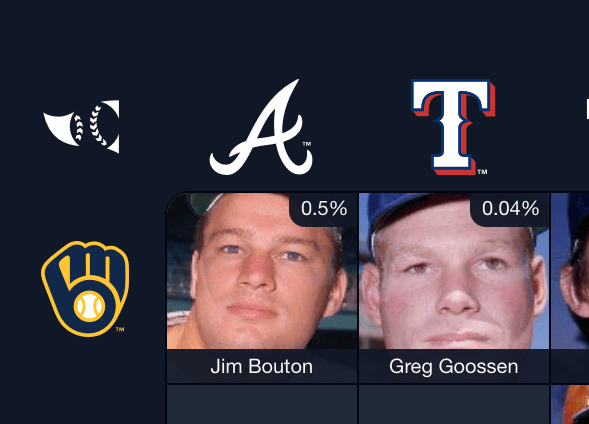
Jim Bouton: Yankees, Pilots/Brewers, Astros, Braves. 1x All Star. 1x 20-game winner. Two wins in two starts in the 1964 World Series vs. St. Louis with a 1.56 ERA in 17 IP. Wrote best baseball book of all time.
Greg Goossen: Mets, Pilots/Brewers, Senators/Rangers. (Also signed with White Sox but never played). Hit .309 for Seattle in 1969 (which is now important to note). Once traded for Curt Flood.
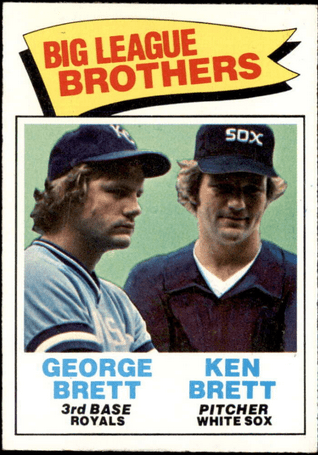
George Brett: Royals; Hall of Famer with 3,000 hits, 13x All Star, MVP, 3 batting titles (in three different decades), Gold Glove; Silver Slugger, a .300 lifetime average. Number 5 retired. On my 10th birthday, picked by the Royals (as a SS from El Segundo High) in the second round of the 1971 draft, 29th overall. (The next pick, by Philadelphia, was Mike Schmidt, SS, Ohio University. In the 42nd round, pick No. 776, was Keith Hernandez, 1B, by St. Louis).
Ken Brett: Red Sox, Brewers, Phillies, Pirates, Yankees, White Sox, Angels, Twins, Dodgers, Royals. One All Star game in ’74. Should have had a Silver Slugger.
Bobby Valentine: Dodgers, Angels, Padres, Mets, Mariners.
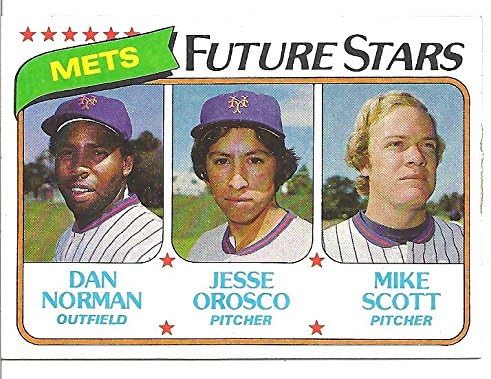
Mike Scott: Mets, Astros; Cy Young; 3x All Star, 20-win season; ERA title; 300 strike out season. No. 33 retired by Astros.
Eric Karros: Dodgers, Cubs, A’s; Rookie of Year. Had one .300 season (.304 in 1999, with career-best 34 HRs and 112 RBIs). 5x 30-plus homer and 100-plus RBI seasons.No All Star appearances? True. 284 career HRs.
Steve Garvey: Dodgers, Padres; MVP; 200-hit season; Gold Glove. Holds NL record for 1,207 consecutive games played. No Silver Slugger. No Hall of Fame. One team retired his number. Not the one you’d guess.
Jack McDowell: White Sox, Yankees, Indians, Angels. Cy Young. 20-game winner. 3x All Star. Record of 0-4 with 8.72 in four post-season games. Batted five times in his career, never striking out.
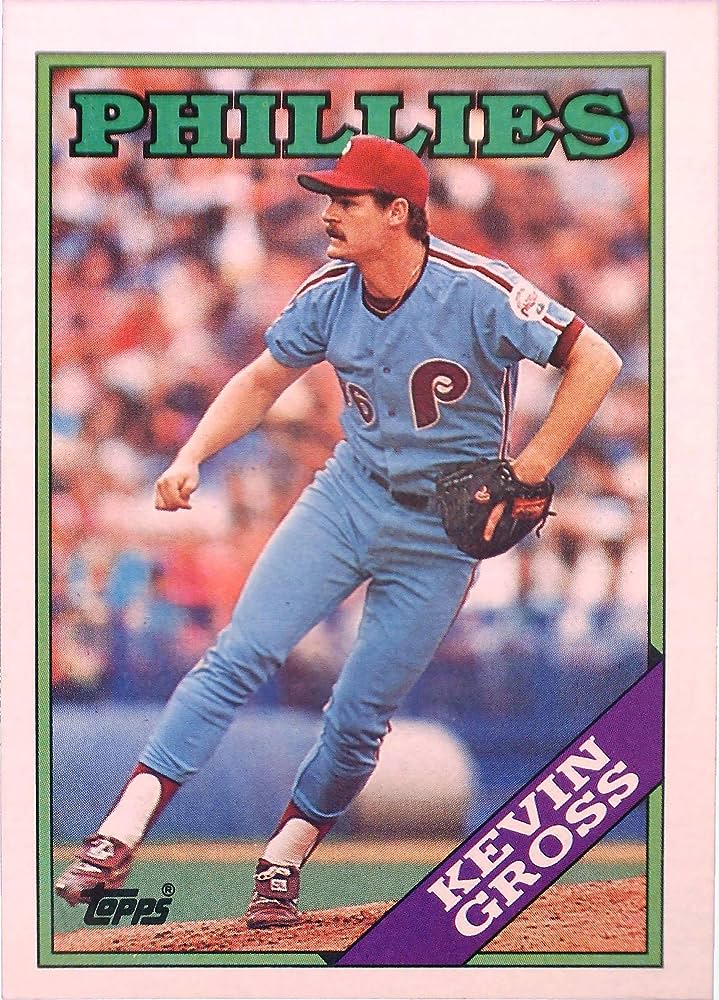
Kevin Gross: Phillies, Expos/Nationals, Dodgers, Rangers, Angels. 1x All Star (1988 with Phillies, despite a 12-14 season). Threw one no hitter (1992 vs. Giants w/ Dodgers). Never won 20. No GG, SS. Would have pitched the first night game in Wrigley Field history on 8-8-88 for the visiting Phillies, but the game was rained out. It all has to do with sharing the same exact birth date, in hospitals not too far apart (he was in Downey, I was in L.A.)
All those are players we either connected with as a kid, or came to know them during our professional career and found a new respect for their talents and friendships.
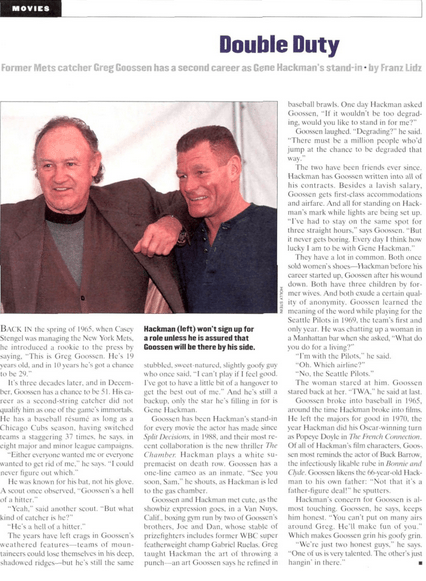
The most bittersweet relationship we’ve ever forged with a former big-leaguer is Goossen.
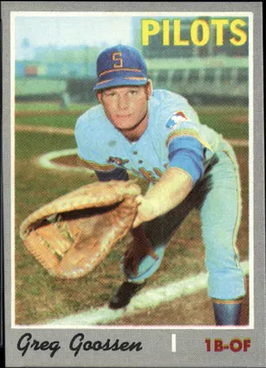
We got to know him doing a 40th anniversary retrospective on the 1969 Seattle Pilots, where he played and was a teammate of Jim Bouton, getting plenty of ink in “Ball Four.”
The one time we went to a Dodgers’ game together, we sat in really nice field-level seats. A mid-week day game. It lasted about two innings. He had enough and wanted to go home. The game wasn’t that enjoyable for him to watch any more. He had enough of it.
He died two years later on the day he was to be inducted into his high school’s Hall of Fame.
Goossen was a Dodgers draft pick out of Notre Dame High in Sherman Oaks, snatched up by the New York Mets less than a year later to play for Casey Stengel, traded to the Seattle Pilots for their one year of existence, sold to the Washington Senators to play for manager Ted Williams by the new Milwaukee Brewers, and then traded after that 1970 season to Philadelphia in a deal that included Curt Flood – a year after Flood refused to be included in a multi-player trade from St. Louis to Philadelphia in October, 1969. Flood eventually did honor that trade to the Senators, in 1971 after sitting out a year, and played 13 games before quitting.
Then he fell into another sweet gig.RIP.
If for whatever reason those nine above didn’t plug a hole, we keep these ready in reserve:
Orel Hershiser: Dodgers, Indians, Giants, Mets; Cy Young, 20-win season; ERA title; Gold Glove, 3x All Star. 1988 World Series MVP. Silver Slugger (one season .300-plus hitting). 200 wins, 2,000 strike outs. Holds MLB record for 59 consecutive scoreless innings. Appeared as a pinch hitter six times. No. 55 not yet retired by Dodgers.
Mark Gubicza: Royals, Angels. Signed as a free agent with the Dodgers in 1998 but didn’t make the team. 1x 20-game winner. 2x All Star. In his HOF similarity scores, he’s comparable to Dick Ruthen, Mike Krukow, Mike Boddicker, Floyd Bannister, Mike Witt and Ron Darling. That’s pretty darn decent.
Randy Johnson: Expos, Mariners, Astros, Diamondbacks, Yankees, Giants. Hall of Fame. 300 wins. 4,000 strikeouts (4,875 in 4,135 IP), 5 Cy Young Awards (four in a row), 5x 300-plus strike out seasons, 10x All Star. 2001 WS MVP. 4x ERA title. Two no-hitters (one perfect game, at age 40). 2002 NL triple crown. One career HR hit. No. 51 retired by Arizona.
Jerry Reuss: Cardinals, Astros, Pirates, Dodgers, Reds, Angels, White Sox, Brewers. 2x All Star. Played in four decades.
Todd Zeile: Cardinals, Cubs, Phillies, Orioles, Dodgers, Marlins, Rangers, Mets, Rockies, Yankees, Expos. No All Stars appearance. Never had .300 season. (Led league in errors by a third baseman in ’91, ’97, ’99 and ’02).
Fernando Valenzuela: Dodgers, Angels, Padres, Phillies, Cardinals, Orioles. (Also once signed withe Tigers, but never played with them). 6x All Star. Cy Young. Rookie of the Year. Silver Slugger. Gold Glove. 20-win season. Hit .304 in 1990 (21 for 69). Hit 3 HRs in 1984.
And then, these are also also kind of cool to plug in as needed:
Bo Jackson: Royals, White Sox, Angels. 1x All Star. 1989 AS MVP. 141 career HRs in 694 games. 0-for-10 in postseason with six strike outs in 1993. Missed entire 1992 MLB season with NFL-related injury (hip replacement surgery). 1993 AL Comeback Player of the Year. One 30 HR season. One 100 RBI season. Two 20-stolen base seasons. Heisman Trophy (1985). 18 NFL rushing touchdowns (1987 to 1990).
Deion Sanders: Yankees, Braves, Reds, Giants (spanning 1989 to 2001 ,age 21-31, skipping 1996, ’97 and ’99 to focus on NFL). Hit .300-plus one season (.304, 1992, Atlanta, with NL-best 14 triples). No AS. No GG. No SSlugger. Signed by Blue Jays in 2001 but never made it. Still, “a real man,” according to Tim McCarver.
Mike Piazza: Dodgers, Marlins, Mets, Padres, A’s. Hall of Fame; Rookie of Year; 12x All Star, 10x .300 seasons, 10x Silver Slugger; .300 career hitter. 400-plus HRs. 2x 40 HR seasons. No MVP or Gold Glove. 10x seasons allowed most stolen bases by a catcher and 1,400 in 1,823 attempts during his career (12th all time). No. 31 retired by NY Mets.
Pete Rose: Reds, Expos, Phillies; 4,000 hits, 15x seasons with .300-plus average. Rookie of the Year, MVP, 17x All Star. 2x Gold Glove, 3x NL batting title. 1 Silver Slugger. 1975 World Series MVP. Only one 20 stolen base season. 10x seasons with more triples than home runs. No Hall of Fame. No. 14 retired by Cincinnati.
Edwin Jackson: His 14 employers from 2003-19 is the most ever if you want someone who can fulfill the need of someone who played for the Dodgers, Devil Rays, Tigers, Diamondbacks, White Sox, Cardinals, Nationals, Cubs, Braves, Marlins, Padres, Orioles, Athletics and Blue Jays. Led NL with 18 losses in 2013. 1x All Star (Detroit, 2009).
Rich Hill: His 13 teams go from the Cubs, Orioles, Red Sox, Indians, Angels, Yankees, Athletics, Dodgers, Twins, Rays, Mets, Pirates and, now, Padres (not including the fact he was in the Cardinals’ and Nationals’ organization but only in the minor leagues).
John Paciorek: The wildcard. Most famous for, as an 18-year-old, going 3-for-3 in his one-and-only appearance for the Houston Colt .45s in 1963. A perfect game? The 1.000 OBP and .200 OPS comes with two walks. Because of a new adjustment in the BaseballReference.com software as of Aug. 3, Paciorek and his 1.000 average can be used as an answer (most likely, only for Houston player and a player who hit over .300 in a season, or lifetime) because it removed the stipulation that the player had to qualify for a battle title with enough at bats.
The Baseball-Reference.com projects over a 162-game season, he would go 486-for-486 with 648 runs scored. And 486 RBIs with no HRs.
(Update: On Aug. 30, 2023, we were able to plug this in — and still fail to come up with more than five names the rest of the way:)

We should also keep Larry Yount: One game for the Astros as a 21-year-old in 1971. Injured during his warmups. His 162-game projected average: 68 games, 0 IP.
And if only we could get Steve Dalkowski into this game …

 Tom Hoffarth's The Drill: More Farther Off the Wall
2 thoughts on “Day 30 of 2023 baseball books: ‘Why we love Joe Posnanski’ should be the real title … or along those immaculate lines of thinking”