

This post is part of a media project called SoCal Sports History 101: The Prime Numbers from 00 to 99 that Uniformly, Uniquely and Unapologetically Reveal The Narrative of Our Region’s Athletic Heritage. Pick a number, and consider the list of athletes attached to it. Who wore it best? Or, what’s the most compelling story linked to it? Any person, place or thing is in play with Southern California connections. Star power, transformational achievement, longevity, notoriety and quirkiness all factor in. Whatever leads to a lively discussion and interpretation.
The most obvious choices for No. 17:
Shohei Ohtani: Los Angeles Angels and Los Angeles Dodgers
Bill Kilmer: UCLA football
Phillip Rivers: Los Angeles Chargers
The not-so-obvious choices for No. 17:
Carl Erskine: Los Angeles Dodgers
Jari Kurri: Los Angeles Kings and Mighty Ducks of Anaheim
Jeremy Lin: Los Angeles Lakers
The most interesting story for No. 17:
Shohei Ohtani: Los Angeles Angels pitcher/designated hitter/outfielder (2018 to 2023); Los Angeles Dodgers pitcher/designated hitter (2024 to present)
Southern California map pinpoints:
Anaheim, Los Angeles (Dodger Stadium)
Reference books on the subject:
“Sho-Time: The Inside Story of Shohei Ohtani and the Greatest Baseball Season Ever Played,” by Jeff Fletcher, 2022
“L.A. Story: Shohei Ohtani, The Los Angeles Dodgers, and a Season for the Ages,” by Bill Plunkett, 2025
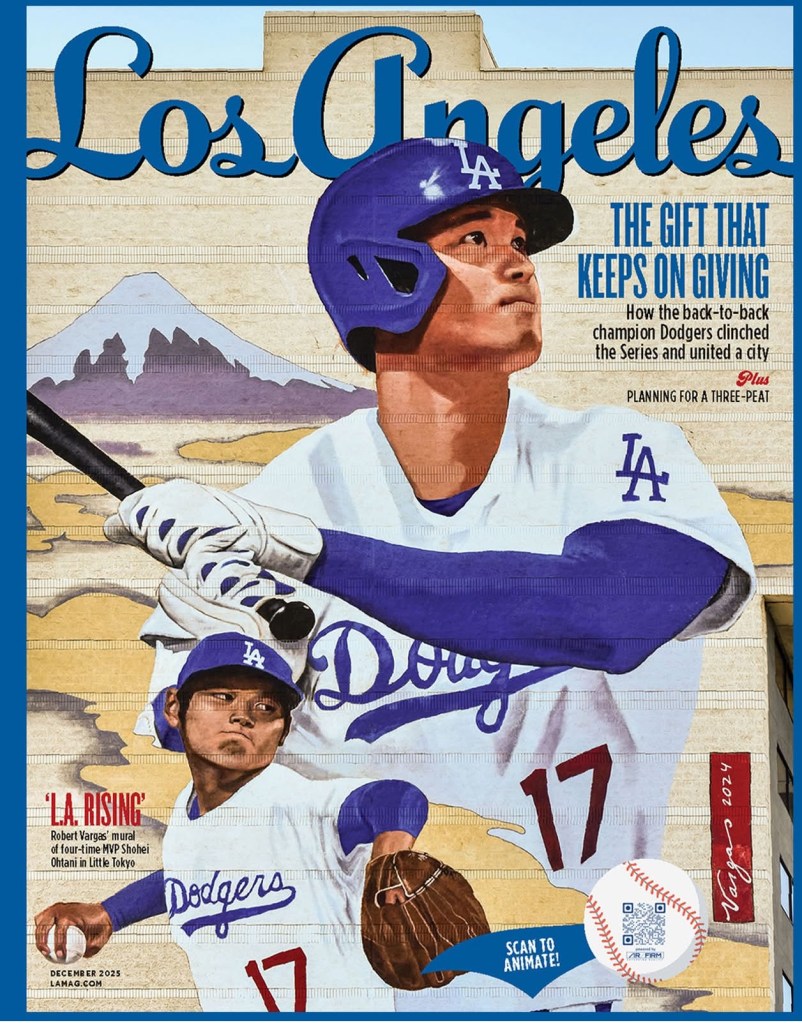
Everything, everywhere all at once, Shohei Ohtani made himself the pre-season favorite to win any Major League Most Valuable Player trophy merely by deciding which league he wanted to play for. Or more specifically, which Los Angeles team.
The best way to capture this hitting-and-pitching phenomenon may be with an English-created adjective that has yet to find a Japanese-translatable character. Yet.
In a June 2025 Substack post, former MLB player-turned-media analyst Doug Glanville seized on what he felt was a true measurement of the seismic things worth documenting for future generations:

“I landed on ‘Ohtanic’ … ‘When Shohei Ohtani does something that only Shohei Ohtani can do.’ ” Glanville explained. “Circular? Yes. True? Also yes. … He exists in this strange stasis. Maybe like the Last Action Hero or Batman — super, but without superpowers. Ohtani does not need smoke and mirrors. He is right there, in the open. And that is the point. …
“He embodies a kind of limitless greatness, rooted in craft, powered by discipline, and entirely human. And still, that does not quite capture the essence of who he is and what he does.”
Glanville came up with this word nearly four years after Ohtani made the AL All-Star team as a member of the Los Angeles Angels. He was named both as a hitter and pitcher. He batted leadoff as the DH and started on the mound, credited with the victory in the final box score. But that’s a mere exhibition.
“Ohtanic” came nine months after Ohtani had a game in Miami for the Los Angeles Dodgers that resulted in him going 6-for-6 with three homers, 10 RBIs and two stolen bases, he reached the 50 HR mark as well as the 50 SB mark for the season. The game also clinched the NL West title for the Dodgers. Had he also pitched in that game, consider the superlatives added in.
Joe Posnanski wrote on Sept. 20, ’24: Did Shohei Ohtani just have the greatest game in baseball history? … Let’s instead call it the most amazing game in baseball history. Let’s instead call Ohtani the most amazing player in baseball history. All the great players in baseball history, Ruth and Mays and Aaron and Bonds and Gehrig and Clemente and Pujols and Bench and Ichiro and Charleston and Mantle and Morgan and Griffey and Gibson and Trout and on and on… and we’ve never seen anyone like Shohei Ohtani.
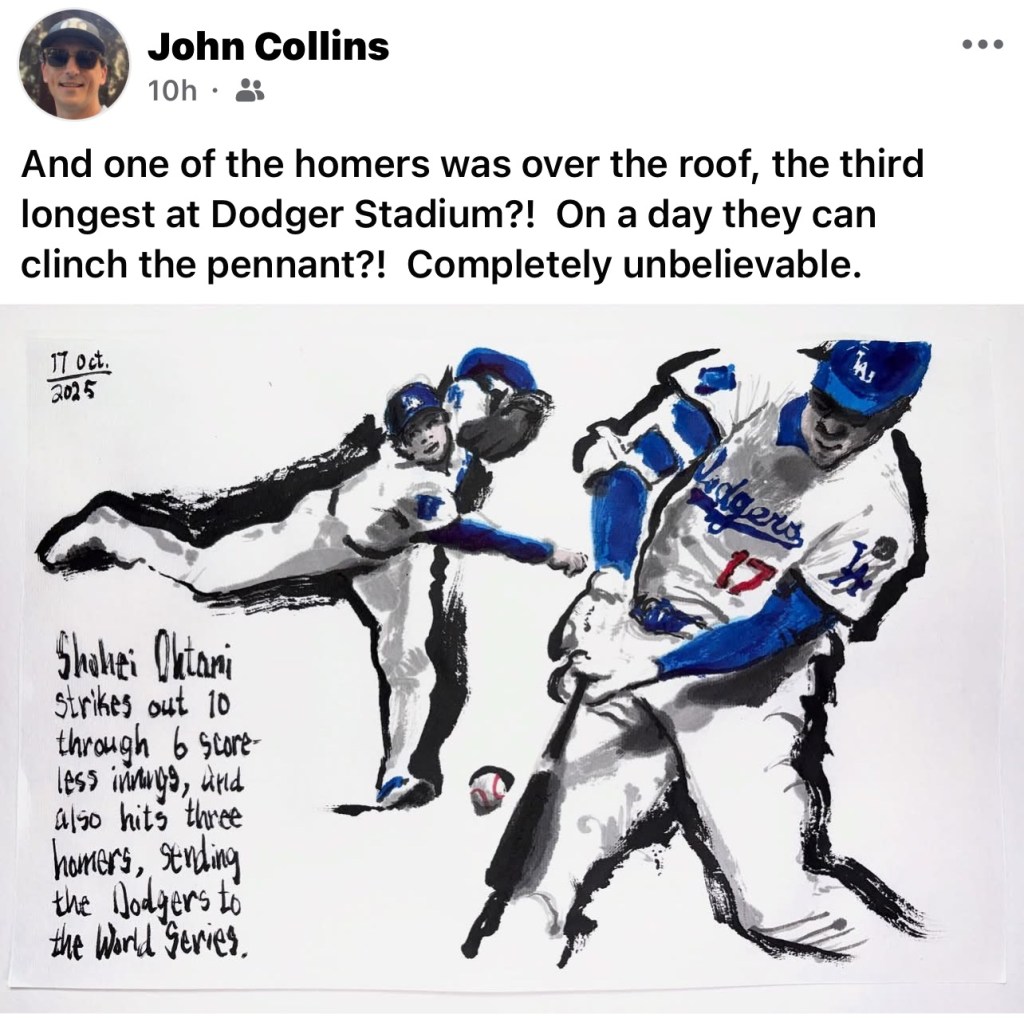
Then, on Oct. 16, 2025, during Game 4 of the National League Championship Series at Dodger Stadium, this happened:

Add to that Ohtani, as the starting pitcher, went into the seventh inning and 100 pitches (66 strikes) before coming out. He was credited with throwing six shutout innings and striking out 10 Milwaukee Brewers hitters. As the DH — effectively, hitting for himself — Ohtani rocked solo homers in the first, fourth and seventh innings, off three different pitchers. The last one went over the right-field pavilion roof and was listed at 469 feet, one of the greatest hit in the stadium’s history. It wasn’t even the longest he ever hit.
Sportswriters, historians and pop culture hyperbolic hyperbolists may have essentially squeezed all available digital thesaurus in landing on his status of “The Unicorn” or “GOAT of MLB history.” Still, we’re circling back to “Ohtanic.”
Like Titanic, only a larger disaster if it ever submerges into the depths of our memories as something too good to believe.
The Washington Post’s Chelea James wrote of that playoff performance: “This was Beethoven at a piano. This was Shakespeare with a quill. This was Michael Jordan in the Finals. This was Tiger Woods in Sunday red. This was too good to be true with no reason to doubt it. This is the beginning of every baseball conversation and the end of every debate: Shohei Ohtani is the best baseball player who has ever played the game … Friday night, (he) was Mona Lisa.”
Jayson Stark, writing for The Athletic/The New York Times under the headline “Ohtani, the Greatest Shoh on Earth, just had the greatest game in baseball history” declared: “A man named Ohtani had the single greatest game any human has ever had on a baseball field … assuming that term,’human,’ even describes him.” New Yorker writer Louisa Thomas checked in with: “It was the greatest performance by the greatest player in history.”
To punctuate if further, Peter Wehner wrote in the Atlantic under “A Truly Awesome Performance: “Ohtani’s performance shouldn’t be of interest just to sports fans. His triumph offers all of us a ray of hope at a troubled time. … Enjoy Shohei Ohtani while you can. He embodies athletic excellence, which will bring you joy, and moral excellence, which will bring you hope. We could benefit from some of both these days.”
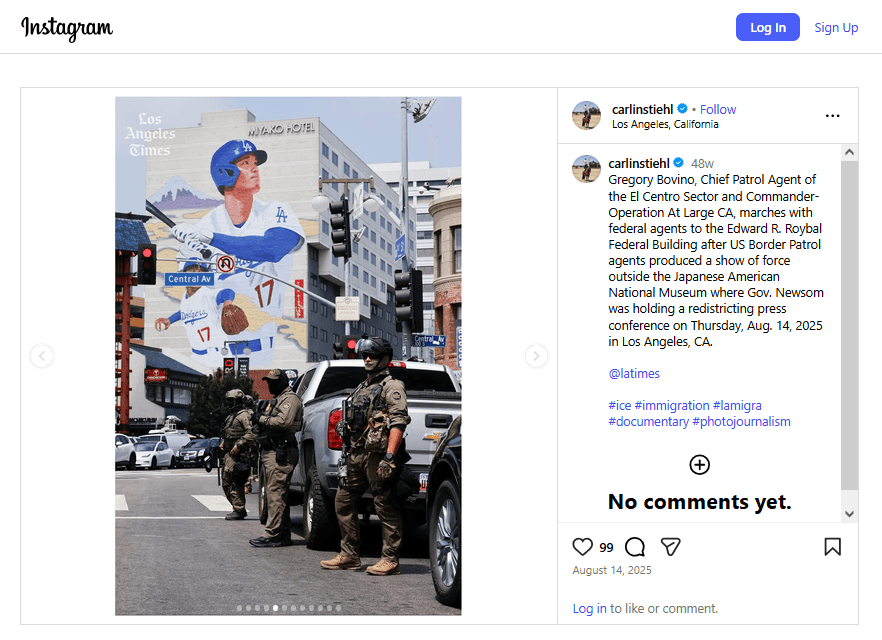
That was written just months after ICE raids in Los Angeles, including the Little Tokyo area of DTLW, brought to light photos such as this:
If Ohtani came perhaps at the right time in our existence, in one stream of thought, there was another idea more philosophically obtuse that Michael Weinreb reflected on with his “Throwbacks: A Newsletter About Sports History and Culture,” under the headlined: “Ohtani Is a Hero for the AI Age“:
“I began to wonder if Ohtani’s performance will wind up meaning much of anything at all outside of baseball itself. And I wondered if — through no real fault of his own — Shohei Ohtani could wind up becoming the avatar of an empty cultural age. … He is everything and he is nothing. And you might argue, in an era where everyday life in America feels increasingly detached from reality, he is the quintessential hero of our age.”
That seemed to almost morph into a fictional (?) story that appeared in the Onion days earlier headlined: “Teammates Unnerved As Interpreter Begins Referring To Ohtani As ‘The Host’,” suggesting Ohtani was taking on demi-god status.
Breath deep and meditate on more iterations of adulation:
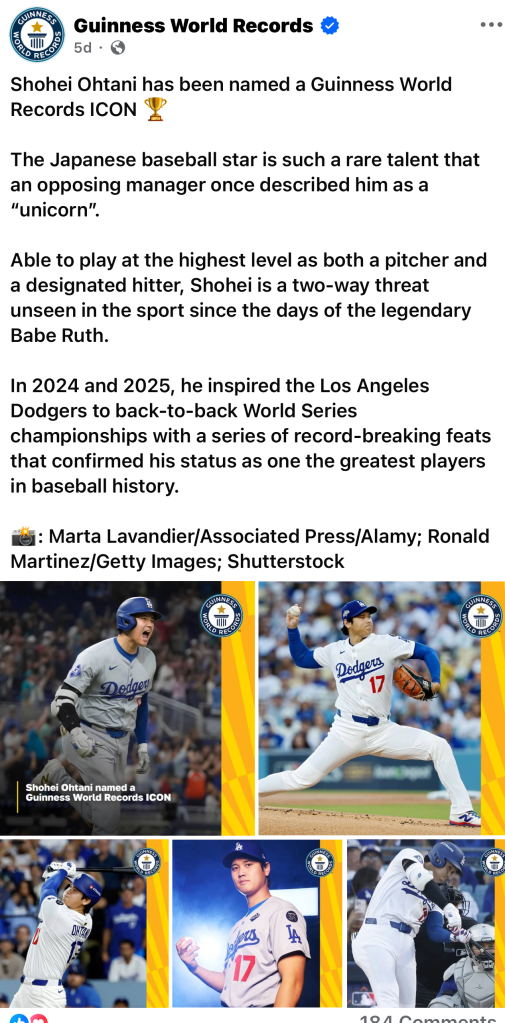

Above is an excerpt of the New York Times’ list of the “67 Most Stylish People of 2025,” for the way he turned “a hand gesture originally featured in a Japanese cosmetics commercial into something of a craze” as he ran around the bases after a homer.
In January of 2026, he was declared the world’s most marketable athlete based on making about $100 million in revenue just from endorsements. Then he became a childen’s author for the fun of it.
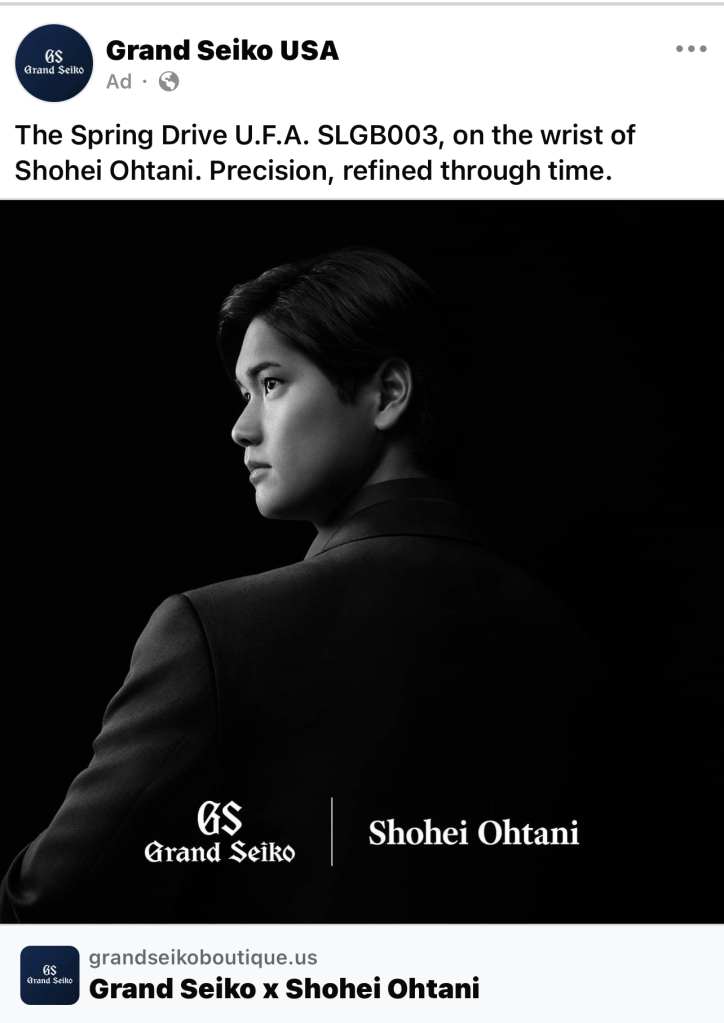
Where do we find a true origin story amidst all the Ohtani gaga?
Christmas came early for the Los Angeles Dodgers in 2023, and the cross-town Los Angeles Angels were left with nothing more than a lump of coal. If only it was something more like Gerrit Cole if they could have pried him away from the New York Yankees in a deadline trade that would have sent Ohtani to the Big Apple for a different kind of curtain call.
Not only did Ohtani come gift-wrapped courtesy of the Angels, but it took the Dodgers a creative way to set up a 10-year, $700 million deal with much of it craftily deferred so it wouldn’t prevent them from building a heftier team around him. He most expensive gesture and pivotal moment in Southern California professional baseball created the most distinct example of the big business intersection of sports and entertainment.
That’s just no-sham, no-shame, global Sho-business.
In the past, a welcome-to-L.A./SoCal gala fetted for the likes of Wayne Gretzky, LeBron James, Shaquille O’Neal, or David Beckham had their own fanfare. But Ohtani was just changing addresses that involved a carpool lane on the SoCal freeway. He put in six seasons in Orange County. Now it was time for DTLA. There was no need for re-introductions, but the Dodgers did so anyway at a press conference set specifically in the afternoon at Dodger Stadium on Dec. 14, 2023 so that it was prime morning viewing in Japan the next day.
A 2017 piece on CBS’ “60 Minutes” explained to all U.S. viewers what was happening in Japan when Ohtani was 22 and trying to figure out his next move.
Earlier, Dylan Hernandez of the Los Angeles Times went to Japan as well to write about how “Japanese baseball star Shohei Ohtani could be double threat in big leagues.” The story started: “SAPPORO, Japan — The best player on the baseball team pitches and bats fourth. Not on a Little League team. Not on a high school team. On a professional team that plays at this country’s highest level. Shohei Ohtani has the kind of extraordinary talent that could change the sport. He’s done it here, and he soon could do it in the major leagues, all the while maintaining the innocence of a boy playing a kids’ game despite the scrutiny and pressure he faces as Japan’s most-popular athlete.”
When he showed up at Dodger Stadium a week before Christmas, Ohtani said through then-interpreter Ippei Mizuhara: “I am very humbled and happy to see all of you guys here … I was told that it was only media today, so I was not expecting this.”
Dodgers broadcaster Joe Davis interjected: “It actually is only media.”
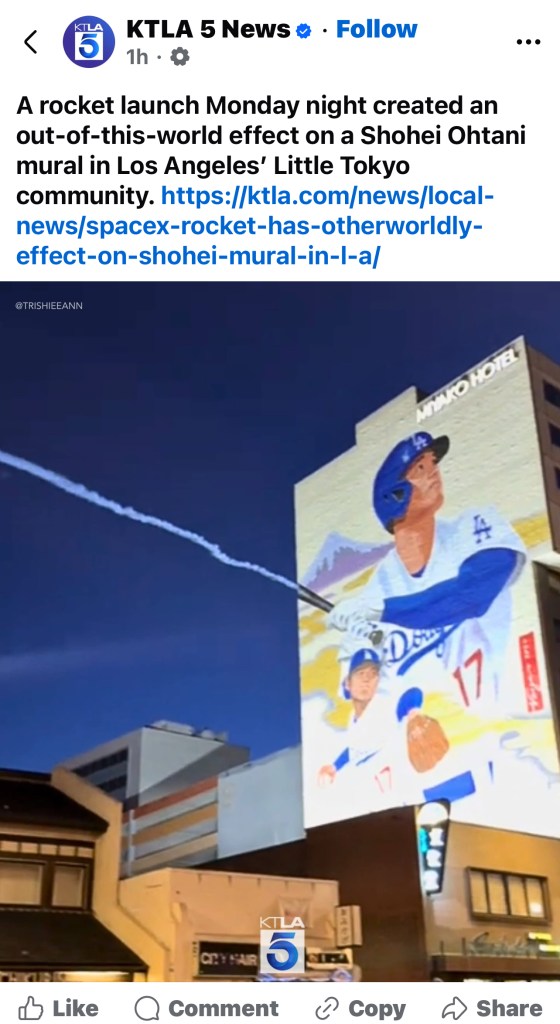
When the Dodgers flexed their financial muscle to sign Ohtani, there was the expected blowback that some felt this would hurt the future of baseball. The team was also exposing a pathway to a financially safe future for other stars to someday circumvent the norms and might want to move into someday.
Ohtani’s 6.6 million Instagram followers learned of his decision first. It led to one writer referring to this as covering “baseball’s first superstar of the digital era.“
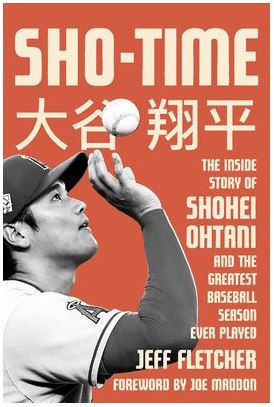
The Shohei Ohtani Experience in Anaheim when he arrived in 2018 was clarified by Jeff Fletcher’s 2022 book, “Sho-Time: The Inside Story of Shohei Ohtani and the Greatest Baseball Season Ever Played.”
It has since been updated by Bill Plunkett’s 2025 book, “L.A. Story: Shohei Ohtani, The Los Angeles Dodgers, and a Season for the Ages,” about the ’24 season.

Fletcher’s book eventually was updated visually in ’25 to have its original red-tinted cover converted to a Dodger blue and his image Photoshopped to give him a Dodgers’ cap and shoulder patch.
When baseball endured a COVID push to keep playing amidst the unknowns of 2020, Ohtani kept our attention undivided. We might have thought several times as if we experienced some pandemic visual mirage affected by this virus we could not fully explain.
Both GQ and Time magazine made Ohtani a cover story leading into the 2022 season. Time’s cover subhead said he “is what baseball needs.”

The story inside headlined “Mr. Everything” went on to explain: “Baseball’s savior has the body of a Marvel super-hero and plays with the joy of a child. In practice, when Ohtani laughs muffing a grounder, what carries across the infield could be the giggle of a cartoon mouse.”

On the back cover of that Time issue, Ohtani posed in a full-page ad for FTX, the “official crypto exchange partner of the MLB,” with the headline: “Hits, Pitches, Trades: He Does It All on the Platform That Trades it All.” By November of that year, the company went bankrupt. Somehow, Ohtani came away without any association to that relationship.
The things Ohtani accomplished with the Angels in 2023 were even more incredible than what he did in 2022, which seemed rather impossible. As Jayson Stark noted in The Athletic, Ohtani was not only doing legendary things, but he has created another legend — Tungsten Arm O’Doyle — someone who didn’t even exist.
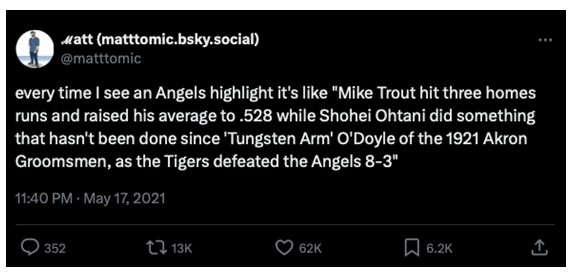
Stark started making a list of the just-stupid things Ohtani did in ’23 — again, no matter what it was, it was usually punctuated with “and the Angels lost, (fill in the score).” The clincher was July 27 in Detroit — he threw a one-hit complete-game shutout in the opener against the Tigers, then hit two homers in his first two at bats of the second game as a DH before coming out a bit dehydrated.
It was the stuff of a video-game avatar.
“Who the heck does this? Who the heck has ever done this?” wrote Stark. “The answer, according to the Elias Sports Bureau (via MLB.com’s resident Ohtani historian, Sarah Langs): That would be nobody, of course. … That’s out of the Marvel Superhero League.”
Whenever Ohtani performed in Anaheim, Japanese women came to games to watch dressed in full kimonos. Men came with specially-made Ohtani shirts. Kids were in the Angels Team Store asking for almost anything Ohtani-related.
In September of that season, on a hot muggy day, we were in attendance and watched in awe as Ohtani played both games of a doubleheader at Angel Stadium against Cincinnati.
He started on the mound in the opener, set the Reds down in order, then pounded a two-run homer in the bottom of the first. He came out in the second with an elbow issue — big trouble. He came back in the second game as the DH, hit a double and stayed in despite a diagnosis of another torn ACL.
He wouldn’t pitch the rest of that season, and the Dodgers knew as much that the 2024 season with the Dodgers would only be as a hitter.
Unless he was game on something more super human.
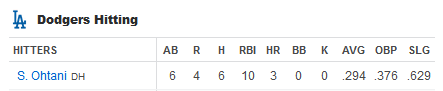
The first time Ohtani did something complete ridiculous in a Dodger uniform, he reached the milestones of 40 homers and 40 stolen bases for the season by capping of a win with a walk-off grand slam.
A month later, during a preposterous 20-3 Dodgers win, Ohtani had his 6-for-6 day as the leadoff DH. He could have hit for the cycle as well but was thrown out trying to stretch a double into a triple in the third inning after having already singled and doubled in the two previous at bats. He also would have had 11 RBIs, but a runner scored on a wild pitch before he hit his 50th homer of the season in the eighth inning.

“He changed history with a one-day rampage — September 19, 2024,” said Joe Davis on the SportsNet LA broadcast.
There were just 15,000 at the Marlins’ home field but it sounded like 50,000, and Ohtani had to make a curtain call.
Davis earlier noted this was the same ballpark where, in March of 2023, Ohtani came into Japan’s World Series Baseball Class title game as a relief pitcher, struck out then-Angels teammate Mike Trout, and gave his county the championship over the United States.
“A guy who has made a career out of breaking the limits and bending baseball to his will has once again done something that nobody thought anyone would ever do,” said Davis. “He has continued to defy … to reframe what’s possible in this game. …
“You’re Shohei Ohtani and none of the rules apply to you. First season in a Dodgers uniform unlike nothing we’ve ever seen.

“Go to Dodger Stadium and look at the impact his presence has had. It is a wall of ’17’ jerseys. It’s often non-stop tours, tourists from Japan, Japanese people from the states, they’ve hired Japanese-speaking tour guides just to cater that new part of the fan base he’s brought in.”
Of all the records Ohtani either tied or broke in 2024 during his 54-homer, 59-stolen base season just a DH, more was to come once he decided he could pitch again.
It was 21 months after he walked off the mound at Angel Stadium with the torn ACL — the second of his career — when on June 16, 2025, Ohtani decided that as he was continuing his rehab, he might as well do it live against MLB batters in games that counted in the regular season. With 28 pitches, he pitched the first inning against San Diego at Dodger Stadium, giving up two hits and a run. His fastball reached 100.2. When he bounded off the mound toward the home dugout, a batboy assigned to him was ready to attach his body armor for him to go up and lead off the bottom of the first as the Dodgers’ DH. Ohtani declined water offered by Yoshinobu Yamamoto. He wiped sweat from his face with a towel provided by coach Bob Geren. He then struck out. But who even considers doing that? In the Dodgers’ 6-3 win, Ohtani went 2-for-3 with a single and a double and drove in two runs.
The other news that fell on that day: Ippei Mizuhara, Ohtani’s former friend and interpreter, surrendered to a federal prison in Pennsylvania to start a nearly five-year prison sentence for bank and tax fraud after he stole nearly $17 million from Ohtani. Those two would continue to be the ying-yang of any Ohtani success.

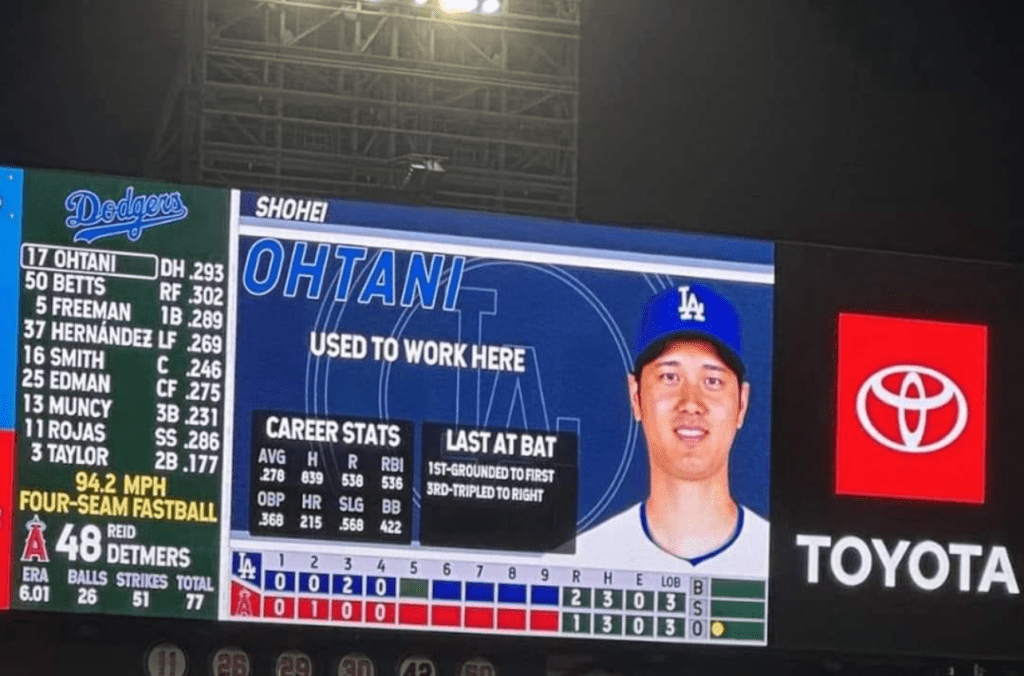
By that point, Ohtani was locked in as the Dodgers’ win and the Angels’ loss. The Angels even allowed the reality to penetrate their digital soul when the Dodgers came to Anaheim with him in their lineup:
Among the “17 Questions About Shohei Ohtani’s Extremely Large, Extremely Strange Contract” that Ben Lindberg wrote about in The Ringer, the one that caught our attention most was:
Because Ohtani’s contract is set up this way, he and his agent, Nez Balelo, can claim to have landed the biggest contract ever awarded to an athlete. Ohtani isn’t the type to brag publicly, but maybe being both the best player in his sport and the highest-paid player in any sport brings him some measure of satisfaction, even if it’s sort of a mirage. (A really lucrative mirage, admittedly.) Lionel Messi’s $674 million contract with FC Barcelona called for him to make $674 million over only four years, with at most modest deferrals. But 700 is bigger than 674, so on Wikipedia’s list of the largest sports contracts, Ohtani’s is on top…..
And …
Does this deal make Ohtani less likable? Your mileage may vary, but not in my mind. If anything, it’s admirable that he’s putting his money where his mouth is when it comes to wanting to win.
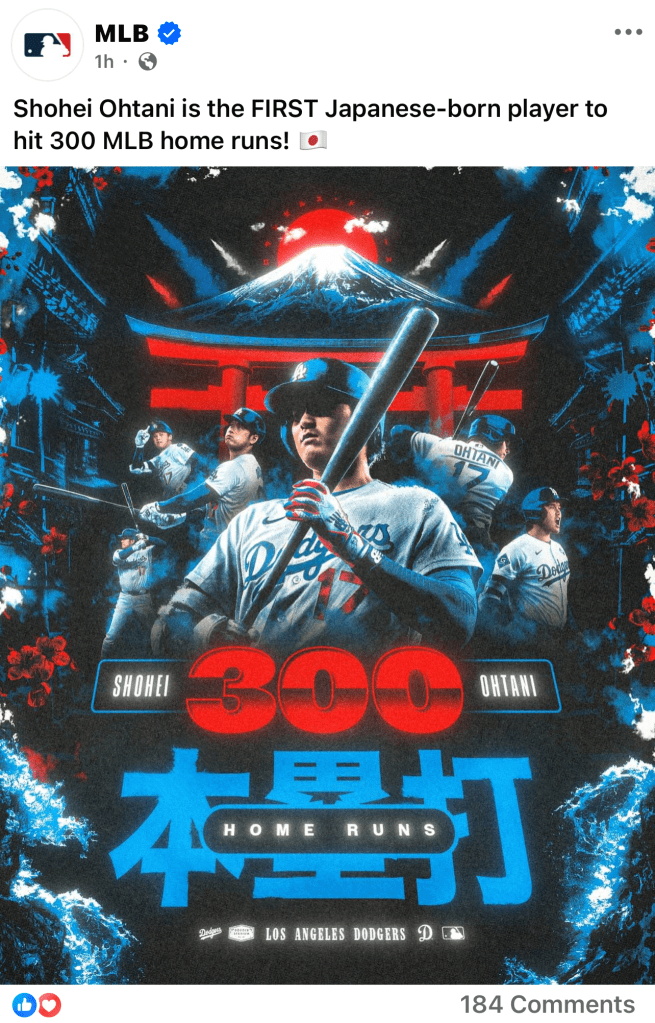
Posnanski, who included an entire chapter on Ohtani in his 2023 book, “Why We Love Baseball: A History in 50 Moments,” had this takeaway on his Substack page about Ohtani’s Dodgers signing:
Shohei Ohtani refused to tell the press his dog’s name before he signed (with the Dodgers). This led some to speculate that he had named the dog after the team he was planning to sign with. Thursday, he put on his Dodgers’ uniform publicly for the first time, answered questions, and, yes, divulged the name of his dog. Shohei Ohtani’s dog is named “Decoy.” This proves, as if we didn’t already know, that while the rest of us are playing checkers, Shohei Ohtani is playing Chess960.
In July of 2024, ESPN posted the Top 100 pro athletes of the 21st Century. Ohtani was listed as No. 62, but with this disclaimer: When ESPN runs the sequel to this exercise in 2050, Ohtani is the likeliest candidate from baseball to rate worthy of the top 10. His first seven years in MLB have been transcendent. What before him was taken as fact — that nobody can hit and pitch at a high enough level to warrant doing both — is now null.”

For the time being, how might baseball historians size up what we are trying to get our heads around?
Is Ohani more “Ruthian” than Babe Ruth was trying to be “Ohtanic?”
“When people reach for a comp, based on Ohtani’s two-way skills, maybe it’s Ruth, but maybe it isn’t a true comp,” Bob Costas said as he took viewers comparison shopping during NBC’s coverage of a 2026 Dodgers-Yankees game at Yankee Stadium.
A graphic showed Ruth’s best pitching season as 1916: 1.75 ERA, 323.2 innings and 23 complete games. Ohtani’s best pitching season, so far, was 2022 with the Angels: 2.33 ERA, 166 innings, 0 complete games. As for hitting, there’s Ruth’s 1921 season of 59 homers, 168 RBIs and a 1.356 OPS, up against Ohtani’s 2024 season of 54 homers, 130 RBIs and a 1.036 OPS — as well as 51 stolen bases.
Their best two-way seasons: Ruth in 1918 (2.22 ERA, .300 average, 11 homes) and 1919 (2.97 ERA, .322 average, 29 homers to lead the league) versus Ohtani in 2022 (2.33 ERA, .273 average, 34 homers) and 2023 (3.14 ERA, .304 average, 44 homers). As for 2025, where Ohtani has made it clear that winning an NL Cy Young Award is on his list of goals, he has so far posted 22 homers and 60 RBIs from the leadoff DH spot with a .290 average and .938 OPS in 91 games, up against 14 starts on the mound, an 8-2 record with a stellar 1.79 ERA, including 95 Ks in 85.2 innings. But he is battling a left-knee issue that could limit his mound work until the post-season, if at all.
“If we consider this apples to apples, Ohtani has the edge if you’re talking about a two-way player,” said Costas. “There is no comparable player in the history of baseball. But if you want to talk about Ruth’s best seasons, just from the numbers as a pitcher with the Red Sox in 1914, ’15 and ’16, those numbers are better than Ohtani’s (as well as ’17). If you want to talk about his best hitting season, pick one — 1927, 1921, that’s better than Ohtani’s best season (as a hitter) which is probably 2024 when he didn’t pitch.
“So it’s really a false argument. So why have I wasted all this time? Given the differences in the circumstances in which they have done this, it’s really a reach. Ruth didn’t do it simultaneously as long on the same levels as Ohtani, but there was a time when he was arguably baseball’s best pitcher, and he ushered in the lively ball era. He was the Bambino and now Ohtani is unique in his own way.”
Career stats to date: Ohtani has a 47-22 mark in 114 mound starts with a 2.83 ERA in 614 innings and 765 strike outs. Opponents are hitting .199 against him. He has one complete game — a shutout. In the post-season, he’s 2-1 with a 4.43 ERA in four starts, all in 2025, with 28 Ks in 20.1 innings. Ruth on the mound went 94-46 in the regular season (1914 to 1919) with a 2.28 ERA in 147 starts (and 107 complete games, leading the AL with 35 in 1917). In the post season, he was 3-0 in the 1916 and ’18 World Series, three complete games and an 0.87 ERA covering 31 innings. In ’16 and ’18, he was 1-for-10 with a triple and three RBIs. He would later hit 15 homers over his nine-time World Series career (with seven titles) and hit .326 with an MLB-record 1.214 OPS.
How ‘bound them apples?
With more time to sort out even more Ohtanic comps, once he’s done on the mound and just becomes a DH — another thing Ruth never got to consider.
How many new babes were officially named George Herman in the Dirty ’30s of the Depression? Maybe that’s the tie breaker.
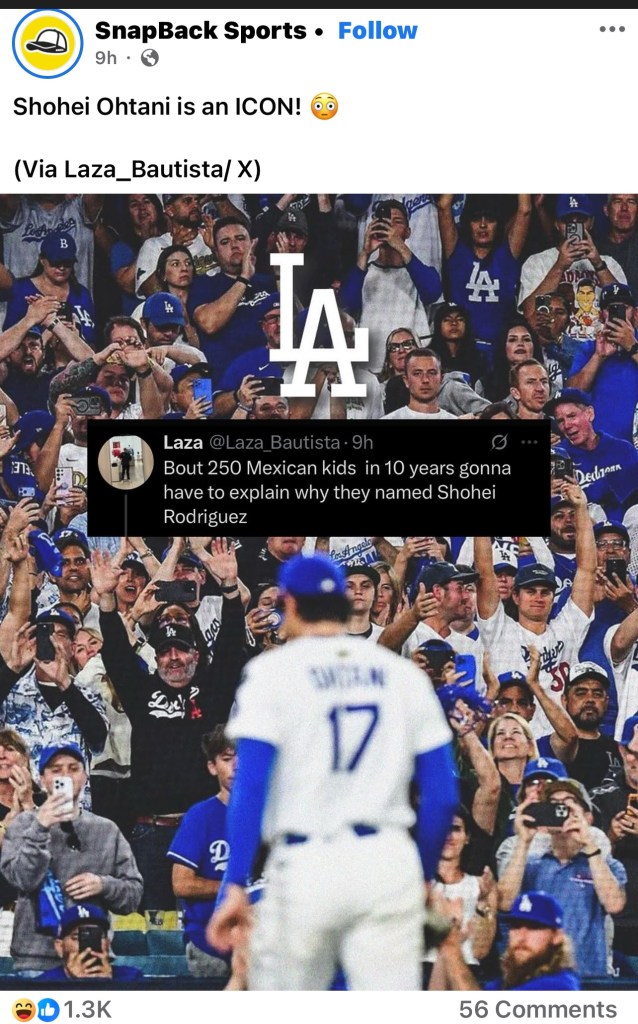
By the numbers:
== The Dodgers knew that since Ohtani wore No. 17 with the Angels, the 17th of every month in Japan had been known as Ohtani Day. Ohtani had worn No. 16 for Japan during the 2023 World Baseball Classic. When he came up as an 18-year-old for the Hokkaido Nippon-Ham Fighters, he was given No. 11, previously worn by Yu Darvish.
When he signed with the Angels, No. 11 was already retired for Jim Fregosi. Many Japanese pitchers had taken to wearing No. 16, made popular by Hideo Nomo when he first came up, as well as No. 18.
Ohtani had his own world to create with No. 17 when he started out hitting .285 with 22 HRs, 66 RBIs and 10 stolen bases as well as posting a 4-2 record on the mound with a 3.31 ERA and 63 Ks.
Who else wore No. 17 in SoCal sports history?
Make a case for:
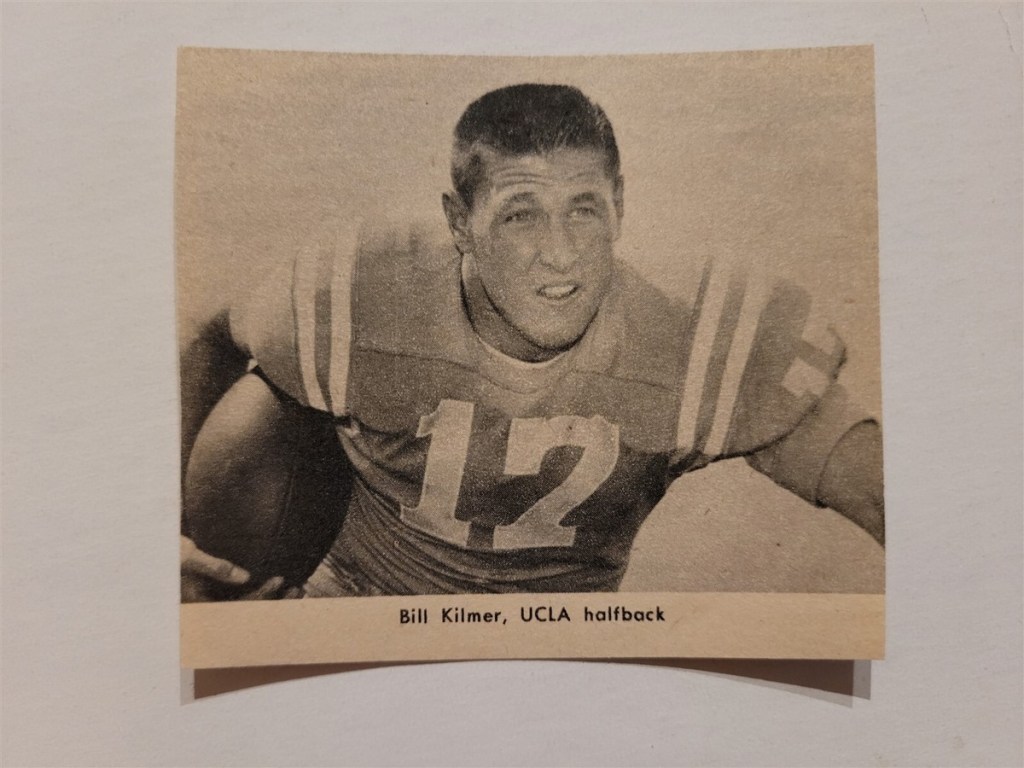
Billy Kilmer, UCLA tailback (1958 to 1960):
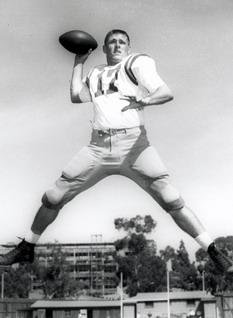
Best known: The Pacific Coast Conference player of the year and fifth in the Heisman voting as a senior, honoring his ability to lead the Bruins’ Single-Wing offense,Kilmer was charter member of the school’s Athletic Hall of Fame in 1984 and inducted in the College Football Hall in 1999. Out of Citrus High of Azusa, Kilmer spent his first year at Citrus JC and transferred to UCLA in ’58. In that ’60 football season, he was involved in 163 rushing plays, threw 129 passes and punted 35 times, leading the nation in total offense (1,869 yards) and punting average (42.3). He also lasted 18 years as an NFL quarterback with San Francisco, New Orleans and Washington.
Not well remembered: Kilmer played on the UCLA basketball team under John Wooden as a junior guard in 1959-60, getting into six games and scoring nine points for a team that went 14-12 and included sophomore Gary Cunningham as one of its top scorers.
Phillip Rivers, Los Angeles Chargers quarterback (2017 to 2019):
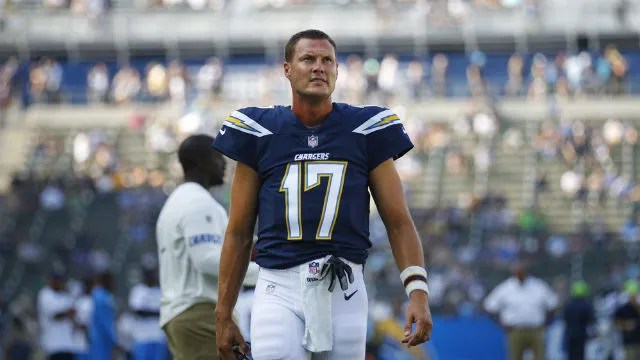
Best known: His three Chargers seasons in L.A. (two as a Pro Bowl participant) came after his first 13 in San Diego. In 228 games is tops for the franchise, and he is the career leader with a 205 AV (Approximate Value), throwing for 59,271 yards (4,908 completes out of 7,591 attempts), 397 touchdowns (against 198 interceptions) and 2,917 first downs. Once he emerged as the No. 1 QB in his third season, he had 224 straight starts with the Chargers over a 14-season span. Rivers retired fifth all-time in NFL passing yards and touchdowns, most by a quarterback who never made a Super Bowl appearance.
Not well known: Rivers says he wore number 17 jersey since the ninth grade to honor of his father, Steve, who wore the same number in high school.
Jari Kurri, Los Angeles Kings right winger (1991-92 to 1995-96); Mighty Ducks of Anaheim right winger (1996-97):
The Hall of Famer from Finland who teamed with Wayne Gretzky to win four Stanley Cups together in Edmonton (and then added another in 1990), soon enough followed No. 99 to Los Angeles via a three-way trade and had 108 goals and 185 assists in five seasons. He was traded to the New York Rangers with Marty McSorley during the 1996 season to rejoin Gretzky. Overall, Gretzky assisted on 364 of Kurri’ss 601 career goals. The Ducks took him on for one season where he played all 82 games and had 13 goals and 23 assists. “The Hockey 100” book from 2026 lists Kurri as No. 39 all time by the time he finished.
Carl Erskine, Los Angeles Dodgers pitcher (1958 to 1959):
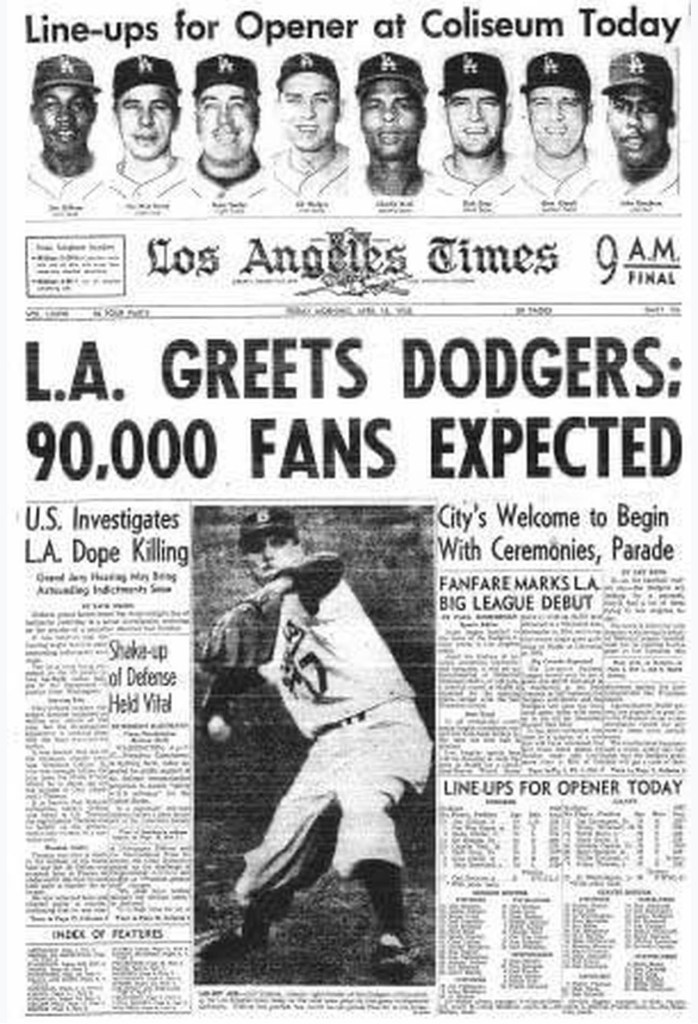
Best known: The Dodgers’ starting pitcher in their first game in Los Angeles at the Coliseum, Erskine was around long enough to spend the last two of his 12 MLB seasons in L.A. The fan favorite wasn’t there long enough to play in the ’59 World Series, having pitched for the Dodgers in the ’49, ’52, ’53, ’55 and ’56 Fall Classics. In ’59, he lasted 10 games (three starts in 23 innings to begin the season). His L.A. stats: 4-7 in 41 games with an ERA around 6.00 when he was done at age 32, after having posted 20- and 18-win seasons in Brooklyn starting in 1948. He died at age 97 in 2024.
Roy Smalley III, USC baseball shortstop (1972 to 1973):

The Westchester High standout was on two Trojan national title teams and named to the College World Series 1970s All-Decade team. First-team All-American in ’73 by the American Baseball Coaches’ Association and the The Sporting News, while also twice earning first-team All-Pac 8 he finished his two-year Trojan career with a batting average of .297, tallying 68 RBIs, 101 hits and 10 home runs. Smalley had MLB pedigree: His father was a former MLB shortstop and his mom’s brother was long-time manager Gene Mauch. Smalley was drafted four times by MLB teams between 1970 and 1973, but chose not to sign until the January 1974 amateur draft, where he was the No. 1 overall pick. He played 13 MLB seasons and was an All Star with Minnesota in 1979. He was inducted into the College Baseball Hall of Fame in 2013.
Erny Pinckert, USC football haflback (1929 to 1932):
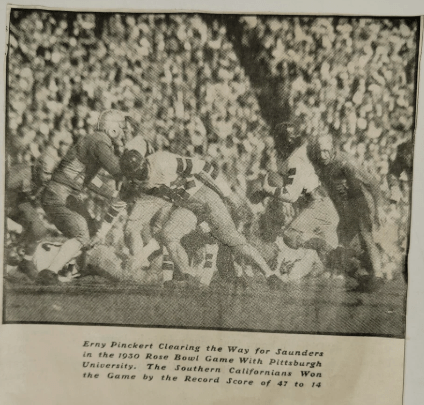
MVP of the 1932 Rose Bowl and a 1957 inductee to the College Football Hall of Fame, Pinckert came out of San Bernardino High and went on to be one of coach Howard Jones’ most productive of the Thundering Herd. In the 1930 Rose Bowl, Pinckert caught a touchdown pass during a 47-14 win over Pitt. In the ’32 New Year’s Day game, he pulled a pair of double reverses that produced touchdown runs of 30 and 27 yards in a 21-12 win over Tulane, clinching a national championship for the Trojans. In that game, Pinkert also saved a touchdown on defense when he pulled down Tulane halfback Wop Glover on a 59-yard run. Pinkert was first-team All-American in ’30 and ’31. Pinkert is also said to have been one of the models for the campus Tommy Trojan statue.
Mike Battle, USC football safety/kick returner (1966 to 1968): Born in South Gate and a standout at Lawndale High, Battle’s junior season on a national title team saw him lead the nation with five interceptions as a corner, safety and rover. Playing in three Rose Bowls, Battle played on teams that finished 26-6-1 in his career. He led the NCAA in punt returns in ’67 and holds the school record for 608 career punt return yards as well as having more than 1,000 yards in all returns, with three touchdowns. Dwight Chapin of the Los Angeles Times described the 6-foot-1, 167 pounder: “On the field, even in full football gear, Battle looks somewhat like a flamingo running for cover from a marauding lion. But only until the lion gets to him. Then the flamingo attacks.” The two-time All-American was drafted by the New York Jets and joined the team after its Super Bowl III win. He died at 78 on March 11, 2025.
Rick Fox, Los Angeles Lakers forward (1997-98 to 2003-04): On the court, he averaged 12.2 points a game in 82 starts with the Lakers, coming over after his first six seasons in Boston. He also scored 20 points in the 2001 NBA Finals clinching game against Philadelphia. He was introduced to future wife Vanessa Williams by then girlfriend Tyra Banks. Of the court, Ulrich Alexander Fox was more known for TV shows like “Shameless,” “Oz” and “Greenleaf,” plus films like “Eddie,” and “He Got Game.”
Andrew Bynum, Los Angeles Lakers center (2005-06 to 2011-12): A 2012 All Star at age 24 (18.7 points and 11.8 rebounds a game) who was on two title teams, Bynum came in as an 18-year-old from high school in New Jersey as the 10th overall pick in ’05. The fact he missed the entire 2012-13 season with a knee injury was indicative of his career arch.
Have you heard this story:
Alex Johnson, California Angels outfielder (1970 to 1971):

The first and so-far only Angel to win an AL batting title landed on .3289 in 1970 when he got two hits on the final day of the season to edge past Carl Yastrzemski’ss .3286. Johnson, who went into the final game of the season trailing Yastrzemski by .002 points, capped a 2-for-3 day by beating out a high chopper to Chicago White Sox third baseman Bill Melton for a infield single, the last of his 202 hits that year.

A season later, Johnson was fined, benched and eventually suspended for not running out ground balls or demonstrating lazy play in the outfield, according to his exceptional SABR.com bio. One time, AJ claimed close friend and teammate Chico Ruiz pulled a guy on him in the Angels clubhouse. “If Chico did anything wrong,” one Angel player was said to have commented, “it was that he didn’t pull the trigger.” MLBPA executive director Marvin Miller tried to file a grievance on behalf of Johnson after a suspension, but Johnson only defended his actions and said he wasn’t “in the spirit to play properly” because the whole team was “indifferent toward playing together.” Miller’s best defense was to file a grievance based on Johnson being “emotionally disabled.” Johnson ended up playing for eight teams in a 13-year MLB career. In 1990, the Los Angeles Times’ Chris Foster caught up with Johnson at his mother’s home in Detroit. “I lost all my enthusiasm for the game,” said Johnson, 47 at the time. “I saw so much negativism with the Angels, that I couldn’t help but lose it. I never got the enthusiasm back.” Johnson died at 72 in 2015.
Joe Kelly, Los Angeles Dodgers relief pitcher (2019-2011, 2023-2024)
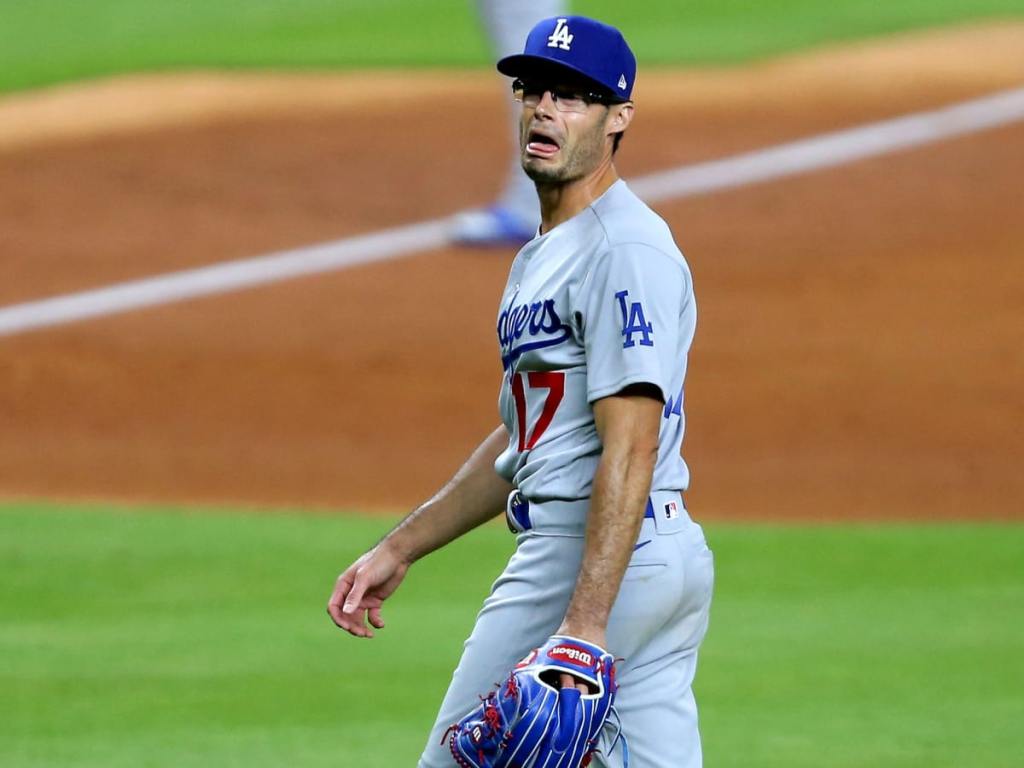
Lots of cute stories about how Kelly relinquished this number to Ohtani and took No. 99 for 2024, thanks to his wife’s social media campaign (she apparently was justly rewarded as well). Still, there was a time when Dodgers fans were rebelling against seeing this Anaheim native out Corona High and UC Riverside come into a game wearing his No. 17:

Hank Aguirre, Los Angeles Dodgers pitcher (1968): Aguirre circled back to his native L.A. to play one season for the Dodgers — 25 games in relief with a 0.69 ERA despite a 1-2 record. Born in Azusa, Aguirre worked long hours in his family’s tortilla factory in San Gabriel as he went to Mark Keppel High in Alhambra and then East L.A. College. The highlight of a 16-season MLB career was in 1962 with Detroit — an AL-best 2.21 ERA with a 16-8 record and 7.4 WAR, playing in both All Star games that year and picking up MVP votes. After his baseball career, Aguirre created a factory in Detroit called Mexican Industries, giving work to immigrants, and was named U.S. Hispanic Chamber of Commerce Businessman of the year in 1987. He died of cancer at 63 in 1994 and is buried at San Gabriel Mission — remembered far more in the community as a compassionate job creator than for his time in the big leagues.
Jeremy Lin, Los Angeles Lakers guard (2014-15): For his one-and-only venture in L.A. (74 games, 30 starts, 11.2 points and 4.6 assists a game), he reclaimed the digits that he made famous when “Linsanity” broke out with the New York Knicks — which was really 35 games — 25 as a starter — during the 2011-12 season. Lin has said the numbers mean: No. 1 to represent himself, and No. 7 to represent God. He also wore No. 17 in his final NBA season with Toronto (2018-19), going with No. 7 as a rookie at Golden State, then with Houston, Charlotte, Brooklyn and Atlanta for a total of just 480 games. (FYI: He wore No. 4 at Harvard).
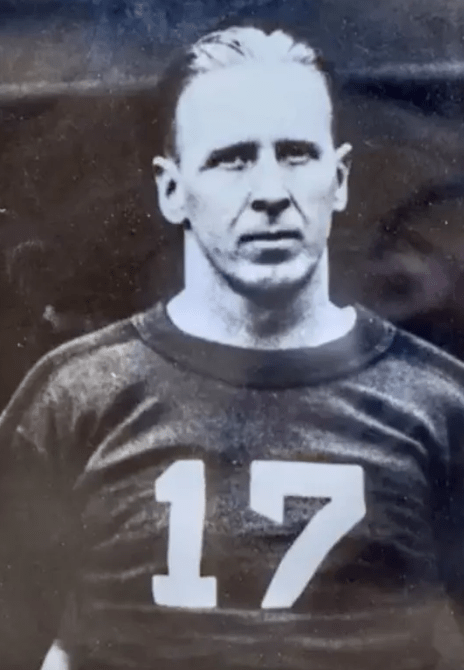
Red Badgro, USC football offensive and defensive lineman (1923 to 1926): He came from Orillia, Washington on a basketball scholarship, and he was also more of a baseball player, but took up football when he arrived at USC. As an end, he was United Press first-team and on the 1926 All-Pacific Coast team. He was also an All-Pacific Coast Conference member as a forward on the basketball team, and he hit .352 and was All-California on the Trojans’ baseball team. A member of the Pro Football Hall of Fame since 1981 for his nine seasons (1927 to 1936) with the New York Yankees, New York Giants and Brooklyn Dodgers (those were all three pro football teams as well as baseball), he was a three-time All-Pro and scored the first touchdown in the first NFL Championship Game for the 1934 Giants. He also played pro baseball for six years, including two with the St. Louis Browns (1929-30).
We also have:

Baker Mayfield, Los Angeles Rams quarterback (2022)
Davante Adams, Los Angeles Rams receiver (2024 to present)
Brett Hundley, UCLA quarterback (2012 to 2014)
Darrin Erstad, California Angels/Anaheim Angels/Los Angeles Angels of Anaheim center fielder (1996 to 2006)
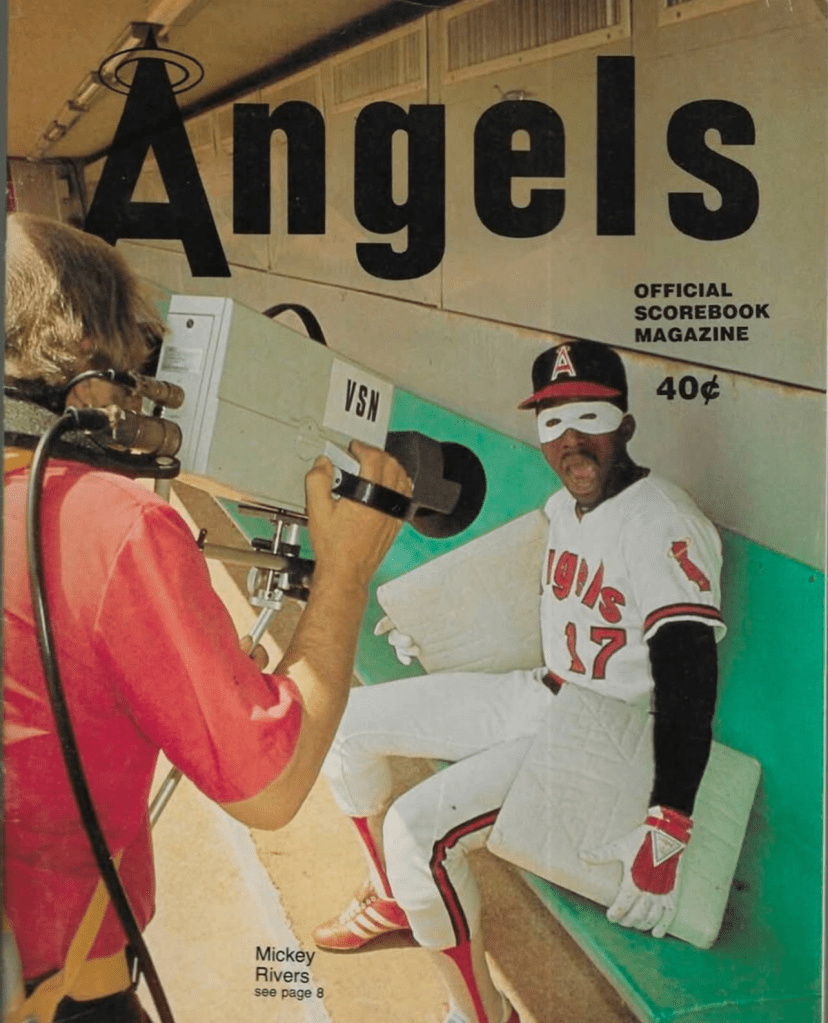
Mickey Rivers, California Angels center fielder (1973 to 1975, also No. 3 and No. 5 in 1971 and ’72)
Jim Bunning, Los Angeles Dodgers pitcher (1969)
Roger McDowell, Los Angeles Dodgers relief pitcher (1993 to 1994; also No. 31 in 1991-92)
A.J. Ellis, Los Angeles Dodgers catcher (2008 to 2016)
Tom Paciorek, Los Angeles Dodgers outfielder (1971 to 1975; also No. 53 in 1970)
Roy Smalley, USC baseball shortstop (1972-1973)
Dustin Penner, Anaheim Ducks left wing (2006-07 and 2013-14, also No. 76 with Mighty Ducks of Anaheim in 2005-06 and No. 25 with Los Angeles Kings in 2010-11 to 2012-13)
Ryan Kesler, Anaheim Mighty Ducks center (2014-15 to 2018-19)
Bill “Cowboy” Flett, Los Angeles Kings defenseman (1967-68 to 1971-72)
Ilya Kovalchuk, Los Angeles Kings winder (2018-19 to 2019-20)
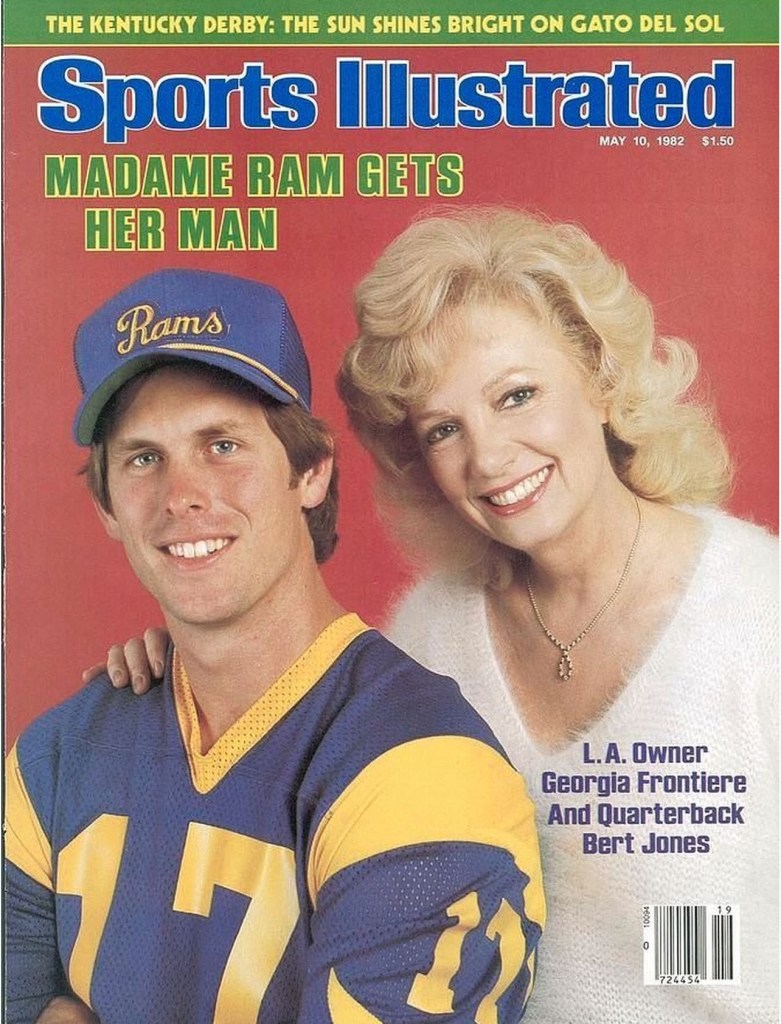
Bert Jones, Los Angeles Rams quarterback (1982)
Anyone else worth nominating?


3 thoughts on “No. 17: Shohei Ohtani”