


This is the latest post for an ongoing media project — SoCal Sports History 101: The Prime Numbers from 00 to 99 that Uniformly, Uniquely and Unapologetically Reveal The Narrative of Our Region’s Athletic Heritage. Pick a number and highlight an athlete — person, place or thing — most obviously connected to it by fame and fortune, someone who isn’t so obvious, and then take a deeper dive into the most interesting story tied to it. It’s a combination of star power, achievement, longevity, notoriety, and, above all, what makes that athlete so Southern California. Quirkiness and notoriety factor in. And it should open itself to more discussion and debate — which is what sports is best at doing.
The most obvious choices for No. 9:

= Lisa Leslie: Los Angeles Sparks
= Paul Kariya: Mighty Ducks of Anaheim
= Matthew Stafford: Los Angeles Rams
= Nick Van Exel: Los Angeles Lakers
= Bernie Nicholls: Los Angeles Kings
= Zlatan Ibrahimovic: Los Angeles Galaxy
= Wally Moon: Los Angeles Dodgers
The not-so-obvious choices for No. 9:

= Marquis Lee: USC football
= Juju Smith-Schuster: USC football
= Damon Allen: Cal State Fullerton football
= Bryce Young: Mater Dei High football
= Mickey Hatcher: Los Angeles Dodgers
= Adrian Kempe: Los Angeles Kings
The most interesting story for No. 9:
Lisa Leslie: Los Angeles Sparks (1997 to 2009) via USC and Morningside High
Southern California map pinpoints:
Inglewood, downtown Los Angeles (USC, Staples Center)

Lisa Leslie says she never felt entitled wearing No. 9.
But it would have been quite bold, and actually very cool looking back on it now, had she requested that now-retired number she wore for 12 years on her purple-and-gold Los Angeles Sparks jersey been represented in Roman numerals.
“I’ve called myself a Title IX baby — I’ve been called a lot of things — (but) to be one of the first children of Title IX, an amazing piece of legislation, has really changed my life and the path I’ve gone down,” she told us once.
The three-time WNBA MVP, eight-time All Star, three-time All Star MVP, eight-time All-WNBA first team member (and four time second-team member) and two-time WNBA Defensive Player of the Year to go with two WNBA championship as a representative of the Sparks was born on July 7, 1972 — just two weeks after the bill leveling the playing field for boys and girls sports was signed into law, and six days after it took effect.
Blessed with height and athletic skills is one thing. But timing is important as well.
The 37 words that reshaped the landscape of higher education go as: “No person in the United States shall, on the basis of sex, be excluded from participation in, be denied the benefits of, or be subjected to discrimination under any education program or activity receiving Federal financial assistance.”
It goes back to how the 14th Amendment of the Constitution and its Equal Protection Clause was draw up and ratified in 1868 in the post-Civil War era.
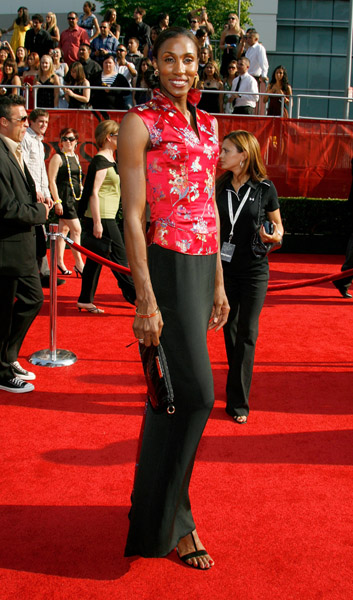
Leslie said in the ninth grade during a civics classes at Morningside High in Inglewood, she read about Title IX in a textbook.
“When I was reading all this in ninth grade, I finally got it — sports are bigger than me,” she told us. “To me, that was my responsibility. Maybe it was the fact I had a really good history teacher. It changed my life.
“I remember feeling like, ‘Wow, if this didn’t exist, we couldn’t play?’ It was shocking. I’d only been into sports a few years at that point, starting with the seventh grade. I guess it made me realize how much of a privilege it was.
“But you know what – it’s almost like girls are brainwashed because we are made to feel as if: `You better be thankful that you can play’ and `This is a privilege, you don’t always get to do this.’ We believed it!
“That got me so much on track to focus on school – if you don’t get your grades up, you can’t play.”
She likely felt more empowered by it during her days representing the United States on four Olympic gold-medal basketball teams.
We’re all still learning how Title IX has shaken out on the sports landscape. But Leslie remains a powerful force in playing it forward.

Lisa Leslie’s birth in Gardena in the summer of 1972 was also just a few months after the Lakers had brought home their first NBA championship. Not too far from what would be her high school.
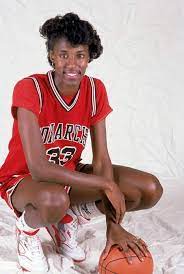
Starting in 1986, Leslie wore No. 33 at Morningside High in Inglewood — a four-year starter who also competing in volleyball and a state qualifier in the 400-meters and high jump in track and field. The basketball highlight (or perhaps lowlight depending on the reaction) was when she score 101 points playing just the first two quarters of a game on Feb. 7, 1990 against South Torrance High.
Hitting 37 of 56 shots and converting 27 of 35 free throws, Leslie said she approached the opposing coach and asked if it would be OK if she just scored three more baskets in the second half, and she’d sit down. That would have allowed her to break Riverside Poly star Cheryl Miller’s record of 105 points (in a 179-15 win) in 1982.
The six-player South Torrance team talked it over and said they weren’t coming out for the second half — they only had four players left as two of them fouled out trying to guard Leslie, then a 6-foot-5 senior who would be the recipient of the Dial Award to the top high school female athlete in the nation and lead her team to a state title averaging 27 points and 15 rebounds a contest.
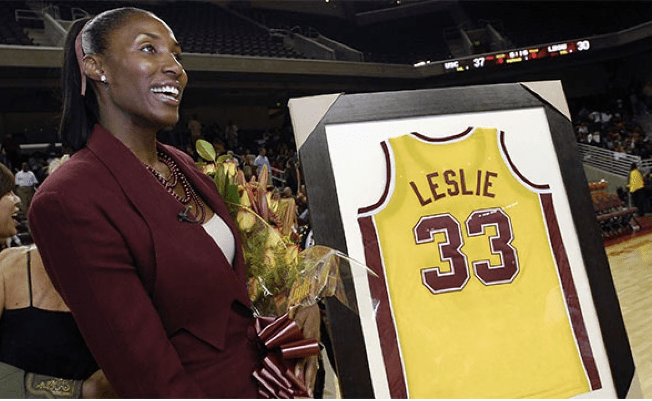
Starting in 1990, Leslie kept the No. 33 at USC. The highlight in a career where she was the first Pac-10 four-time All-Conference player was collecting the Naismith College Player of the Year and Honda Sports Award in 1994. The Trojans were 89-31 during her run. Cheryl Miller was her USC coach during her senior season.
In October of 2025, in honor of the 50th anniversary of the women’s basketball poll, The Associated Press assembled a list of the greatest players since the first poll in 1976. Leslie was included on the all-time second team.
Between the time of her last college game and her first professional contest, Leslie was named to the 1996 U.S. Women’s Olympic basketball team. The numbering system of the uniforms are 1-to-15. Leslie settled on No. 9.

No. 33 was actually available to her for the first Los Angeles Sparks roster assembled with the WNBA launch of 1997, but she stuck with No. 9, after the gold-medal winning performance at the Summer Games in Atlanta.
She was a 24-year-old, sweet-shooting lefthander ready to plant new seeds in a business proposition that had several stops and starts in the past trying to uphold the ability of female basketball players to show their skills and have relevant competition.
She may be known as the first female to dunk in a pro game. So be it. Leslie has more history as an influencer due to her three WNBA All MVPs in a four-year span (1999, 2001, 2002), the WNBA Finals MVP in 2001 and ’02, and the league regular-season MVP honors in ’04 and ’06.
When she retired at age 36 after the Sparks were eliminated from the WNBA playoffs in the Western Conference finals, she held the league standards for points (6,263) and rebounds (3,307). In 2021, ESPN ranked her No. 5 on the list of greatest WNBA players of all time.
The legacy

The recipient of the 2001 Sportswoman of the Year from the Women’s Sports Foundation told us during an extended Q&A in 2014 that it was “sad to think of where I’d be without sports – not just success on the court, but the person I’ve become, from competition, getting through hard times, when things don’t go your way, getting along with other people, it’s made me a much better person — a good person.
This was 40th anniversary celebration of Title IX. She was pausing from running drills at the Lisa Leslie Basketball Academy inside the Westwood Recreation Center not far from the UCLA campus. Some 40 kids a session, aged 8 to 17, were participating.
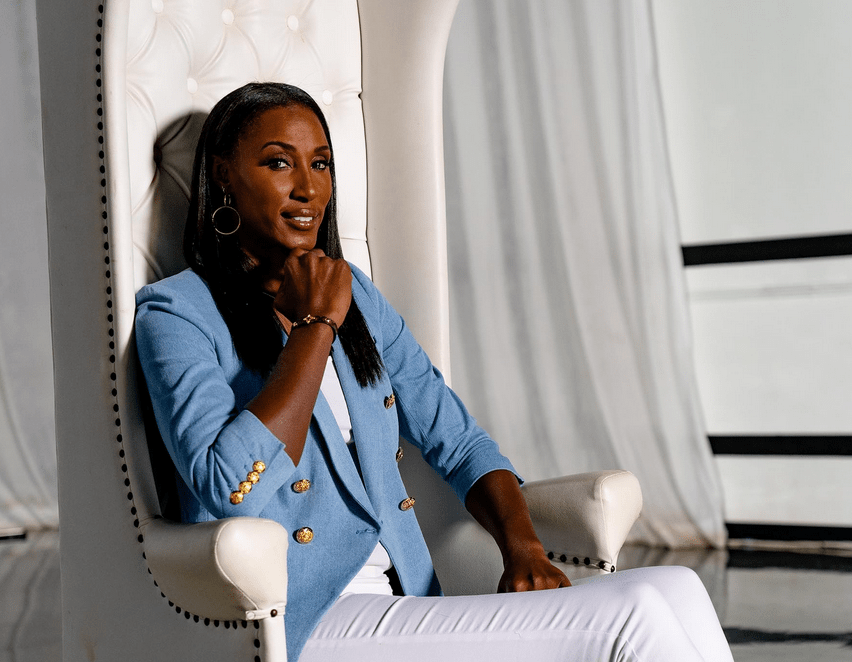
Leslie can still tell the stories about growing up with a single mom who supported her three children with her own truck driving business. Her father, Walter, had played pro basketball and left the family when her mother, Christine, was four months pregnant with her. She can talk about how as a Christian, married and with two daughters (both in ’07 and ’10, during her WNBA career), she remains dedicated to making a difference.
“Our kids sit and listen to speakers on various topics,” she said about her basketball academy students. “For example, last week we had a representative with New York Life for the kids to see how to take care of money. You show them how you can have four jars. You can put some money in this one to pay tithing, or whatever people believe in. Another jar is for saving. Another jar is what you use now. And the fourth jar is for a donation. We try to bring it to life about you can’t just live for today. You have to think about your future.
“Even when I retired at 36, when you’re a kid, that sounds ancient, but the concept of savings was great for them. They asked a lot of great questions. We asked them: Is a credit card money? And some would scream: Yes! Uh, no. Is a check book money? And they’d scream: Yes! Uh, no. Does the check book mean you have money? Uh, no. I’ve covered topics like teamwork, togetherness, family. So this is a great history lesson.”

In 2014, ESPN included her in the top five of the most influential female athletes of the last 40 years of Title IX. If another poll had been taken during Title IX’s 50th year, she should have still been there.
(For the record: When USC created and posted a “Title IX: 50 Years of Progress” media presentation, Leslie was somehow missing from its “Trailblazers” telling their path to success. There’s a missed opportunity.)
(Also for the record: (Want to see something sweet? Have a read of this “My Hero” essay a young girl once wrote about Leslie and the WNBA posted it).
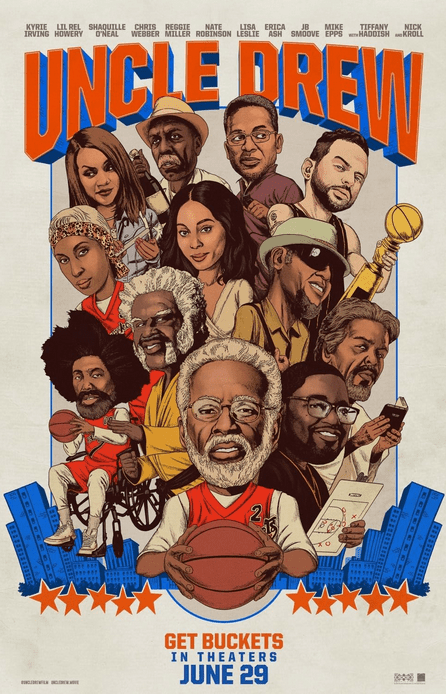
Aside from playing, Leslie fashioned herself as a fashion model, trying to do work as an actress (see: “Uncle Drew”), playing herself in some TV series (including subjecting herself to “The Apprentice” in 2017) and having an accomplished career as a broadcaster, using her degree in communications. She wrote a book, “Don’t Let the Lipstick Fool You” in 2008, one year before her WNBA retirement, and updated in 2009.
In 2011, she even became a part of the Sparks (a share later sold to Magic Johnson). Since 2018, the NCAA gives out the Lisa Leslie Award to the most outstanding center in women’s basketball.
The NBA’s Orlando Magic hired her as a studio analyst, and she became involved with the BIG3 three-on-three league — coaching a team to the league title in 2019.
“I felt like every opportunity, it’s my moment to be a role model, to spread the word, to win over men,” she said in 2014. “ It’s always going up a hill for us, and the men are always at the top, up there playing, taking it seriously, but then they blow it off, spend their money, do drugs sometimes, get in trouble …
“I’m not a feminist – although I’m not sure what that word even means, I have to look it up – but in some ways, we as women have to have this dichotomy of ‘be feminine’ and ‘represent the sport,’ but ‘don’t get in trouble’ and ‘don’t go too far.’

“I think about this: For all I’ve done in sports, if I did something that’s really crazy – something like cussing someone out or slapping someone and it gets all over YouTube – I’d get more publicity than I’ve ever got in my whole (sports) career.
“We’re just nervous about the opportunities that we have, and thankful at the same time. I do feel like I’m a torch carrier. And when you’re carrying that torch, you’ve got to stand up straight. Keep your head up high. Do the right things.”
Leslie’s name came up during the 2024 Summer Olympics in Paris — as the men’s team was dominating its competition. U.S. player Kevin Durant, during the preliminary rounds, was told that his four Olympic Games point total of 483 was second only to Leslie’s 488 points.
She said she didn’t even know that when it came up.
At this point in time, the right thing would be those who run things at current Crypto.com Arena to get their own act together and have a bronze representation of her outside the entry.

It might just seem like that would be just another thing to add to the clutter of an already overzealous tribute project.
But think of this way: Leslie, who had her Sparks No. 9 retired in 2010, and was inducted into the Naismith Basketball Hall of Fame as well as the Women’s Basketball Hall of Fame in 2015, would be the first female to have herself among the likes of Jerry West, Elgin Baylor, Oscar de la Hoya, Luc Robitaille or the cast of others.
Let us know what we can do to help. It’s only been about a decade since she’s had both those career-topping accomplishments.
And more than likely, a statue would be something for young girls to look up to. Even to measure up to. Quite literally.
The punchline
Season 1, episode 3 of the 2026 reboot of the ABC comedy “Scrubs” includes a scene where Turk celebrates the arrival of a new robotic medical contraption that he has called “Lisa” … in honor of Leslie … because … :
Who else wore No. 9 in SoCal sports history?
Make a case for:
Paul Kariya, Mighty Ducks of Anaheim left wing (1994-95 to 2002-03):

Best known: The Ducks’ No. 4 overall pick in the 1993 draft, after winning the Hobey Baker Award as a freshman at the University of Maine, Kariya was the Anaheimer’s Mighty Mouse. Especially after coming back from a brutal hit by New Jersey’s Scott Stevens in Game 6 of the Stanley Cup Final, staggering back to the bench, and coming back that period to slap home a goal past Martin Broudeur to force a Game 7. After helping Canada to an Olympic gold in 2002 (as well as a silver in ’94), he pushed the Ducks into the cusp of a title with 12 points in 21 games including a triple-OT game winning goal in Game 1 of the Western Conference quarterfinals against Detroit. But then they let him go.
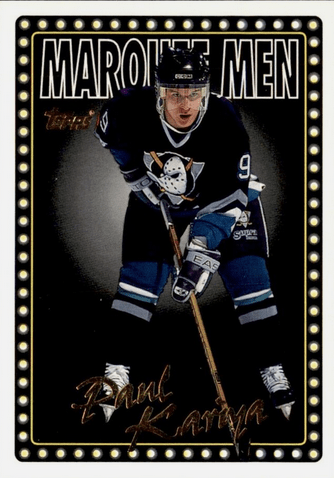
Kariya should have been their franchise’s Pavel Bure or Eric Lindros. The expansion team was just a year old when it drafted him as a 20-year-old and gave him Gordie Howe’s No. 9. A 50-goal scorer in his second year when he was paired up with Teemu Selanne, Kariya led the league in game-winning goals and total shots in his third season, and by ’98-99, he had a whopping 429 shots (leading to 39 goals), and was second in the Hart Trophy/MVP voting behind a goalie, Detroit’s Dominik Hasek. The team’s captain was allowed to be a free agent, going to Nashville, retiring six years later. First team All Rookie in ’94-95 and third in Calder voting. First-team NHL All Star three times, and second team twice, with two Lady Byng honors. In his 606 games for the Ducks, he scored exactly 300 goals and had 369 assists with a plus-52 rating. Yet it was all the concussions eventually that did him in.
Not well remembered: After Kariya’s departure, Bobby Ryan was given No. 9 to wear from 2009 to 2013 before it was retired as Kariya was inducted into the Hockey Hall of Fame in 2017, along with Selanne.
Matthew Stafford, Los Angeles Rams quarterback (2021 to present):
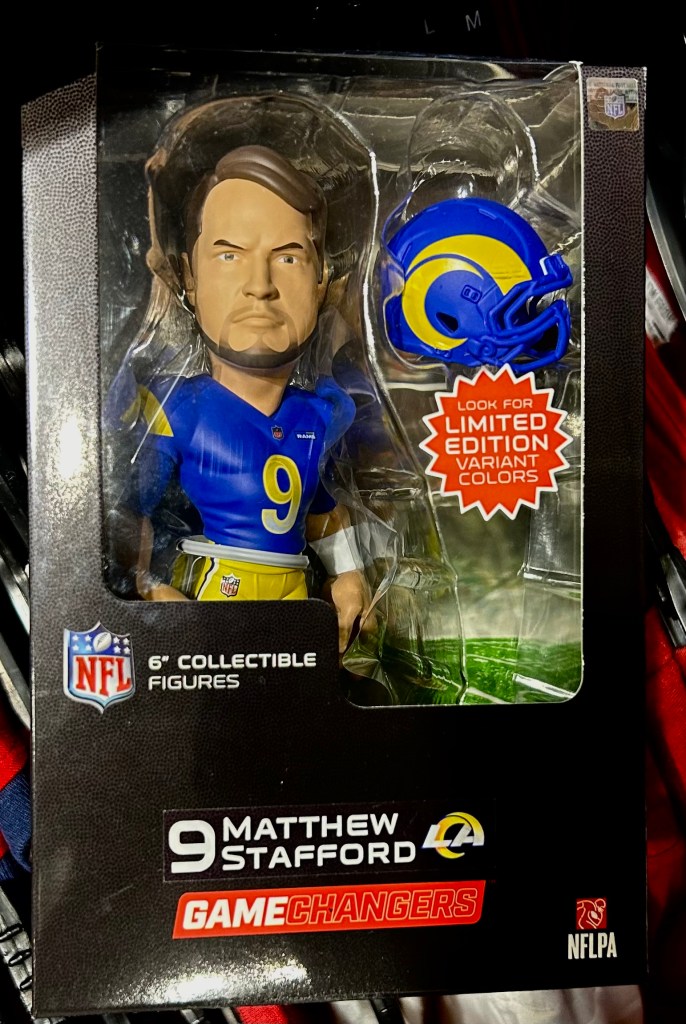
Best known: After his first 12 years in Detroit, Stafford agreed to a trade with the Rams, swapped out for Jared Goff as the QB of choice. It worked. Stafford’s first year in L.A. ended with the Rams winning a Super Bowl, on their home field, as Stafford threw for 4,886 yards and tied a career best with 41 touchdowns (as well as leading the league with 17 interceptions). For the 2025 season, Stafford earned his first MVP Award, setting a career-high with 46 touchdowns against just eight interceptions in 17 games, amounting to 4,707 yards and a 109.2 passer rating. He was also named to his third Pro Bowl as the Rams won 12 games and fell short in the NFC playoffs. In between, injuries slowed Stafford down. He played in just nine games and had only three wins in 2022. He led the Rams back to the playoffs again in ’23 before losing in the NFC semifinal. At Detroit. Against Goff.
Bernie Nicholls, Los Angeles Kings center (1981-82 to 1989-90):
Best known: The Pumpernickel Kid — yes, we know the spelling is different from his actual last name, but it had to do with him pumping his fist after scoring — posted 150 points in the ’88-’89 season. Seventy of them were goals (second in the league to Mario Lemieux). His 80 assists were only second-best on the Kings that season to Wayne Gretzky’s 114.

Maybe that’s why he included Gretzky in his 2022 autobiography: “Bernie Nichols: From Flood Lights to Bright Lights,” and had Gretzky do the forward. The 27-year-old who made three All Star teams as a King was traded to the New York Rangers in January of ’90 and actually spent more years away from L.A. (eight) than in it (five). The trade was something apparently orchestrated by team owner Bruce McNall, who thought the team needed to toughen up. So in came Tony Granato and Tomas Sandstrom.

Not well known: For all Nicholls was able to achieve in L.A., the one story he loved to tell The Hockey News: “I may be the only player in golf who Tiger (Woods) hasn’t beaten. At Big Canyon in Newport Beach, (a few friends and I) were just getting ready to tee off. John Hamilton said, ‘Do you see who is on the driving range?’ It was Tiger Woods. He was only 18. We asked him to play. And he jumped in my cart. And played with me, Mark Hardy and Jimmy Fox. That day he shot 73. I shot 71. When I see him now, we talk, he still remembers playing. I got the scorecard and want him to sign it.”
Nick Van Exel, Los Angeles Lakers guard (1993-94 to 1996-97):

Best known: “Nick Van Smack” was the nickname radio host Jim Rome tagged on him as the low-end, second-round pick out of Cincinnati with the lethal left-handed shot joined the team in the same season as Magic Johnson was named the head coach. Averaging 14.9 points in five seasons, Van Exel excelled as one of four Lakers to make the 1998 NBA All-Star team, but he was then sent away to Denver before the Lakers added on Shaquille O’Neal and Kobe Bryant, getting Ty Lue in return. Van Exel still holds some folk hero status with Lakers fans — in 2017, Lakers guard Kyle Kuzma arrived to a game at Staples Center wearing a Van Exel jersey he had unearthed at a second-hand store.

Marquis Lee, USC football receiver (2011 to 2013):
Best known: Fourth in the ’12 Heisman voting as a sophomore, the Serra High of Gardena grad born in Long Beach actually was pulled out of a gang life and started playing football at Morningside High in Inglewood as he was living in a foster home. Lee caught 118 passes for 1,721 yards and 14 touchdowns in ’12, earning the Biletnikoff Award as the nation’s top receiver, the Pac-12 Offensive Player of the Year and receiving All-American honors. He started that season setting a Pac-12 record against Arizona with 345 yards receiving. The next week, he had 251 return yards against Oregon — another conference mark. After playing 11 games as a junior, he left for the NFL as USC’s all-time receiving yards leader (3,655), which made No. 9 available for …

JuJu Smith-Schuster, USC football wide receiver (2014 to 2016):
Best known: The Long Beach Poly star once just simply named John Smith when he was lured to USC by coach Steve Sarkisian, and then had 724 yards and five TDs as a freshman. Smith doubled those totals in ’15. In his junior season, he had three TD receptions in the ’17 Rose Bowl win over Penn State and decided to go pro. His 3,092 yards ranked third all-time on USC’s receiving list as of 2024.
Nico Iamaleava, UCLA football quarterback (2025):
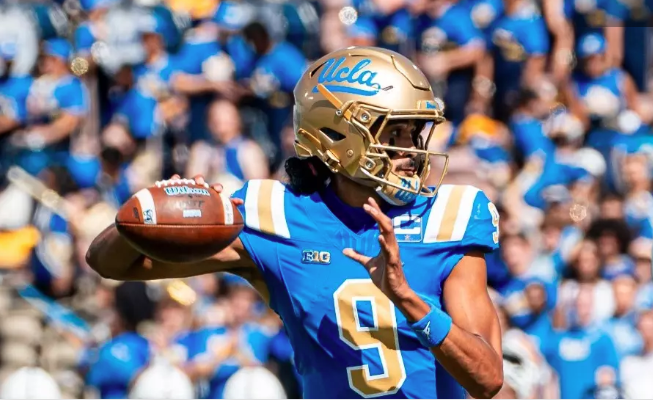
Best known: After spending his first two years classified as a freshman at Tennessee, and subjected to scrutiny after taking a rumored $8 million massive NIL deal, the 6-foot-6 standout from Warren High of Downey (who once transferred to Long Beach Poly but then backed out) returned to Southern California to resume his college career. He gave up the No. 8 he wore in high school and with the Vols since UCLA had retired it for Troy Aikman and took No. 9 instead — saying he would proud wear it to represent his seven siblings and two parents whom he credited for his humble nature. Iamaleva completed 208 of 323 passes for 1,928 yards and 13 touchdowns with seven interceptions in 2025, but more impressively led UCLA in rushing yards (505), carries (112) and rushing touchdowns (4), accounting for 17 of the Bruins’ 24 touchdowns.
Bryce Young, Mater Dei High School quarterback (2018 to 2020): The third Heisman winner from the Orange County high school for what he did at the University of Alabama, Young was the school’s all-time best, said head coach Bruce Rollinson. “So much has been documented and written about this young man,” Rollinson said at Young’s Signing Day ceremony. “It’s all justified and it’s all true. His high school career is really just one long highlight reel. His legacy as a Mater Dei quarterback will become legendary. … The University of Alabama will get our greatest quarterback in school history.” Mater Dei was 26-2 over Young’s junior and senior seasons as he threw for 8,374 yards and 97 touchdowns versus 12 picks. Young also rushed for 643 yards and 14 touchdowns. Young led Mater Dei to a Division 1 Southern Section and state title in 2018, which resulted in a national No. 1 ranking at the end of the season.
Damon Allen, Cal State Fullerton quarterback (1981 to 1984):
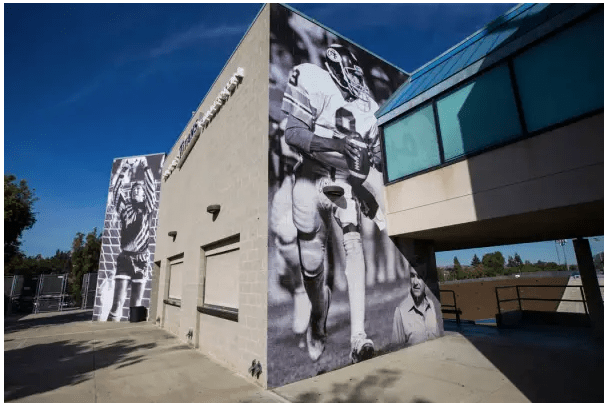
Best known: The younger brother of USC’s Heisman Trophy winning running back Marcus Allen, Damon Allen’s senior season with the Titans saw him throw for 2,469 yards, 20 touchdowns with just three interceptions in 12 PCAA games. He set an NCAA record by having just three interceptions in more than 300 attempts. As a pitcher on the Titans’ baseball team, he was part of their 1984 College Baseball World Series team. Allen’s great claim to fame, while also wearing No. 9, was playing 23 years in the Canadian Football League from 1985 to 2007 and establishing himself as its all-time leading passer with 72,381 yards, as well as the CFL’s third all-time leading rusher with 11,920 yards (only 323 behind Marcus Allen’s NFL career total). He won four Grey Cups with three different teams and was the CFL’s MVP at age 42.
Have you heard this story:

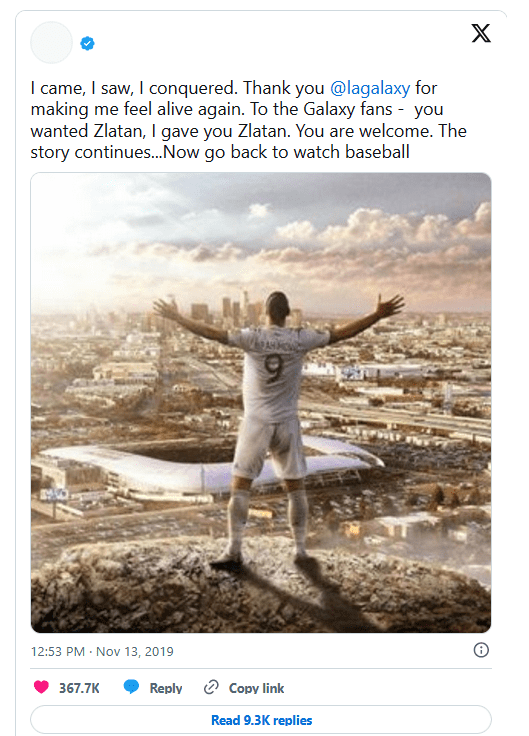
Zlatan Ibrahimovic, Los Angeles Galaxy striker (2018 to 2019):
After 19 seasons in some of the world’s most recognizable leagues and teams, and following two years with Manchester United of the Premier League, the 36-year-old man bun found a way to make himself relevant again.The Los Angeles Times announced his signing under the all-caps headline: “He’s Hard to Ignore.” In that same newspaper section, Ibrahimovic took out a full page ad that had the words: “Dear Los Angeles, You’re Welcome,” with his signature above the No. 9. Asked if L.A. was big enough to handle his personality, the Swede responded: “If it’s not, I’ll make it bigger … After being in Europe, winning 33 trophies, playing in the best teams in the world, playing with the best players in the world, I wanted to come to the US and play my game there. I wanted people to enjoy my game there and to win. And I chose the Galaxy to do that.”
His Galaxy debut may be hard for anyone to ever top in our world of kickball. Arriving from England on a Thursday, he came off the bench in the 71st minute of a Saturday game against new rival LAFC, with the home team Galaxy trailing 3-1. Six minutes into, and the Galaxy now down 3-2, Ibrahimovic launched a ridiculous 40-foot shot into the net to tie it up. In the first minute of stoppage time, he nodded a header in to win the contest. The jet-lagged Zlatan added to his self-prophetic lore.
“They were saying, ‘We want Zlatlan, we want Zlatan’,” he said after the game. “So I gave them Zlatan.” His 52 goals in 56 MLS matches for the Galaxy were just as remarkable. But it wasn’t to last very long. “Zlatan … Must Be Appreciated Before He’s Gone” was how an L.A. Times headline read in July of ’19, after he led the Galaxy to a 3-2 win over LAFC in the fourth cross-town match. Ibrahimovic scored all three goals. “Here I am like a Ferrari among Fiats,” he exclaimed before going back to Europe when his contract ended. He posted in Twitter after the Galaxy lost to LAFC in the conference semifinal playoffs. “I came, I saw I conquered,” he wrote on Twitter. “You wanted Zlatan, I gave you Zlatan. You are welcome … now go back to watch baseball.” In the 2025 book, “The Soccer 100: The Story of the Greatest Players in History,” Ibrahimovic was ranked No. 65, highlighted by the fact he scored more than 550 goals in his career, “many of them outstanding” for Ajax (2001 to ’04), Juventus (2004 to ’06), Inter Milas (2006 to ’09), Barcelona (2009 to ’11), AC Milan (2010-11, 2011-12, 2020-23) and Paris Saint-Germain (2012 to ’16) all while he was on the Swedish national team from 2001 to ’23.
Wally Moon, Los Angeles Dodgers outfielder/first baseman (1959 to 1965):

Moon Doggie altered the direction of Dodgers history. Twice. The first was as a St. Louis Cardinal. The 1954 NL Rookie of the Year was the leadoff man in a Thursday afternoon game on May 5, 1955 — 5/5/55 — at Ebbets Field against the Dodgers. Brooklyn pitcher Tommy Lasorda had the starting assignment. He walked Moon. Lasorda then threw three wild pitches (tying an MLB record), as Moon went to second and third on the first two and made a dash for home on the third. There was a collision at the plate. Lasorda blocked the plate with the throw he took from Roy Campanella. Moon slid in and ripped open Lasorda’s knee. Lasorda finished the inning but before he could go back out for the second inning, teammates Don Newcombe and Russ Meyer took him into the clubhouse, Clem Labine came in to relieve him, and Lasorda, after three more relief appearances, would never get a start again. He was bumped from the roster so they could make room for bonus baby Sandy Koufax. The Dodgers went on to win their one and only World Series in Brooklyn.

“If my attempted hustle that day in Brooklyn helped launch one of baseball’s most successful and colorful managerial careers, so be it,” Moon wrote in his 2010 autobiography “Moon Shots: Reflections of a Baseball Life.” “I’m happy I could move Tommy’s career to bigger and better things.”
Moon was traded to the Dodgers after the team’s first year in L.A. and would make both NL All Star teams during the ’59 season, also the Dodgers’ next World Series title. As he hit .304 and was fourth in NL MVP voting, Moon became more popular for the 19 home runs — called “Moon Shots” by Dodgers broadcaster Vin Scully for the way the left-handed hitter managed to go the opposite way over the short left-field wall at the L.A. Coliseum (251 feet down the line and 42 feet high). In Moon’s 2018 New York Times obituary, a quote from Moon credited Scully with creating the description, a reflection of how the U.S. was in a space race with the Russians. Former Cardinals teammate Stan Musial suggested he turn his swing inside out to attack it — leading to a league-best 11 triples. All in all, 39 of his 47 home runs with the Dodgers from ’59 to ’61 were delivered at the Coliseum. Moon also won a Gold Glove in ’60 and led the NL with a .434 on base percentage while hitting .328 in ’61. The team’s move to Dodger Stadium in ’62 defused his super powers in a pitcher’s ballpark, even if he contributed to their ’63 and ’65 World Series title teams.
Mickey Hatcher, Los Angeles Dodgers outfielder/third baseman (1987 to 1990): He wore No. 44 during his first stint with the team in 1979 and ’80, but circling back for his last four seasons as part of the “Stunt Men,” including the heroics he had in the 1988 World Series hitting .368 with a 1.178 OPS with two homers made him all the more legendary and lovable as an outfielder, infielder, pinch hitter and one-off pitcher.
We also have:
Greg Brock, Los Angeles Dodgers first baseman (1983 to 1986). He wore No. 47 in 1982 and No. 17 for part of ’83.
Al “The Bull” Ferrara, Los Angeles Dodgers infielder (1966 to 1968). Also wore No. 20 from 1963 to ’65.
Dee Gordon, Los Angeles Dodgers infielder (2011 to 2014)
Pat Powers, USC men’s volleyball outside hitter (1978 to 1980)
Paula Weishoff, USC women’s volleyball middle blocker (1980)
Jim Spencer, California Angels first baseman (1968 to 1973)
Adrian Kempe, Los Angeles Kings left wing (2017-18 to present). He also wore No. 39 (2016-17).
Mike Richards, Los Angeles Kings center (2011-12 to 2014-15)
Diego Rossi, LAFC forward (2018 to 2022)
Cristian “Chico” Arango, LAFC forward (2022)
Kedon Slovis, USC quarterback (2019 to 2021)
Rajon Rondo, Los Angeles Lakers guard (2018-19 to 2019-20)
Anyone else worth nominating?

 Tom Hoffarth's The Drill: More Farther Off the Wall
3 thoughts on “No. 9: Lisa Leslie”