
This post is part of a media project called SoCal Sports History 101: The Prime Numbers from 00 to 99 that Uniformly, Uniquely and Unapologetically Reveal The Narrative of Our Region’s Athletic Heritage. Pick a number, and consider the list of athletes attached to it. Who wore it best? Or, what’s the most compelling story linked to it? Any person, place or thing is in play with Southern California connections. Star power, transformational achievement, longevity, notoriety and quirkiness all factor in. Whatever leads to a lively discussion and interpretation.
The most obvious choices for No. 26:
Jon Arnett: USC football; Los Angeles Rams
DeShaun Foster: UCLA football
Chase Utley: Los Angeles Dodgers
Slava Voynov: Los Angeles Kings
The not-so-obvious choices for No. 26:
Kirk Altenberg: UCLA football
Willie Brown: USC football; Los Angeles Rams
Wendell Tyler: Los Angeles Rams
The most interesting story for No. 26:
Gene Autry: Los Angeles Angels inaugural owner (1961 to 1998)
Southern California map pinpoints:
Hollywood, Anaheim, Palm Springs
Reference books on the subject:
“Back in the Saddle Again,” by Gene Autry with Mickey Herskowitz, 1978
“Public Cowboy No. 1: The Life and Times of Gene Autry” by Holly George-Warren, 2007
“New Deal Cowboy: Gene Autry and Public Diplomacy,” by Michael Duchemin, 2016
“The Gene Autry Series,” by Bob Hamilton, W.H. Hutchinson, Snowden Miller, Cole Fannin and Lewis W. Patten, 1944 to 1957
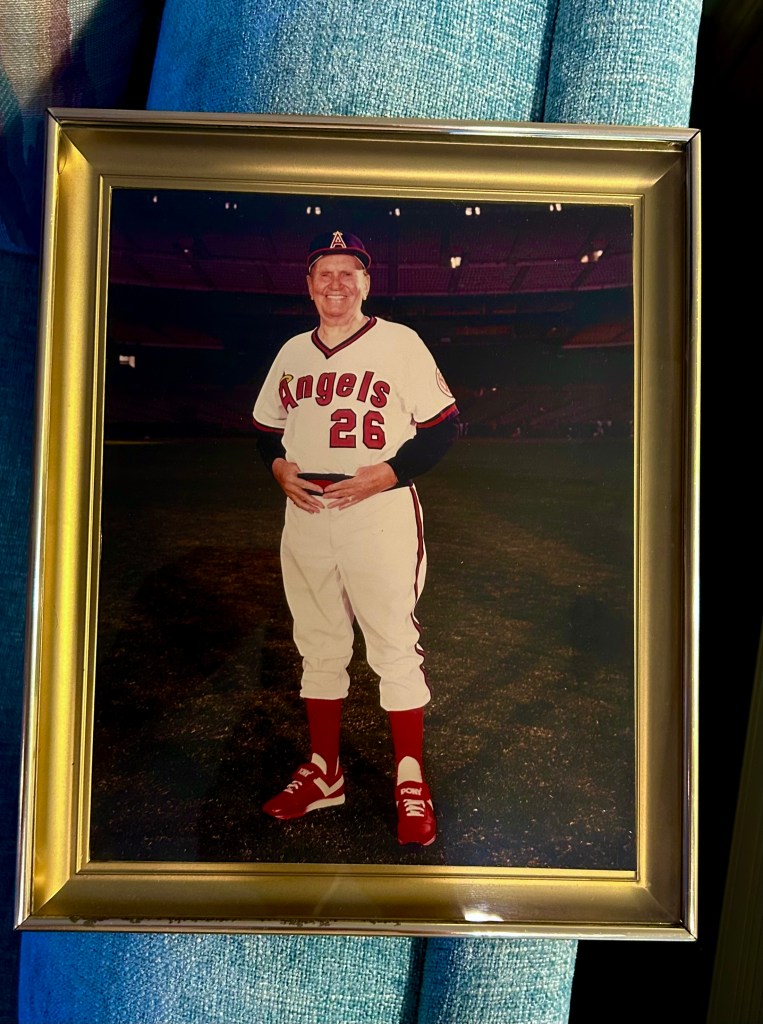
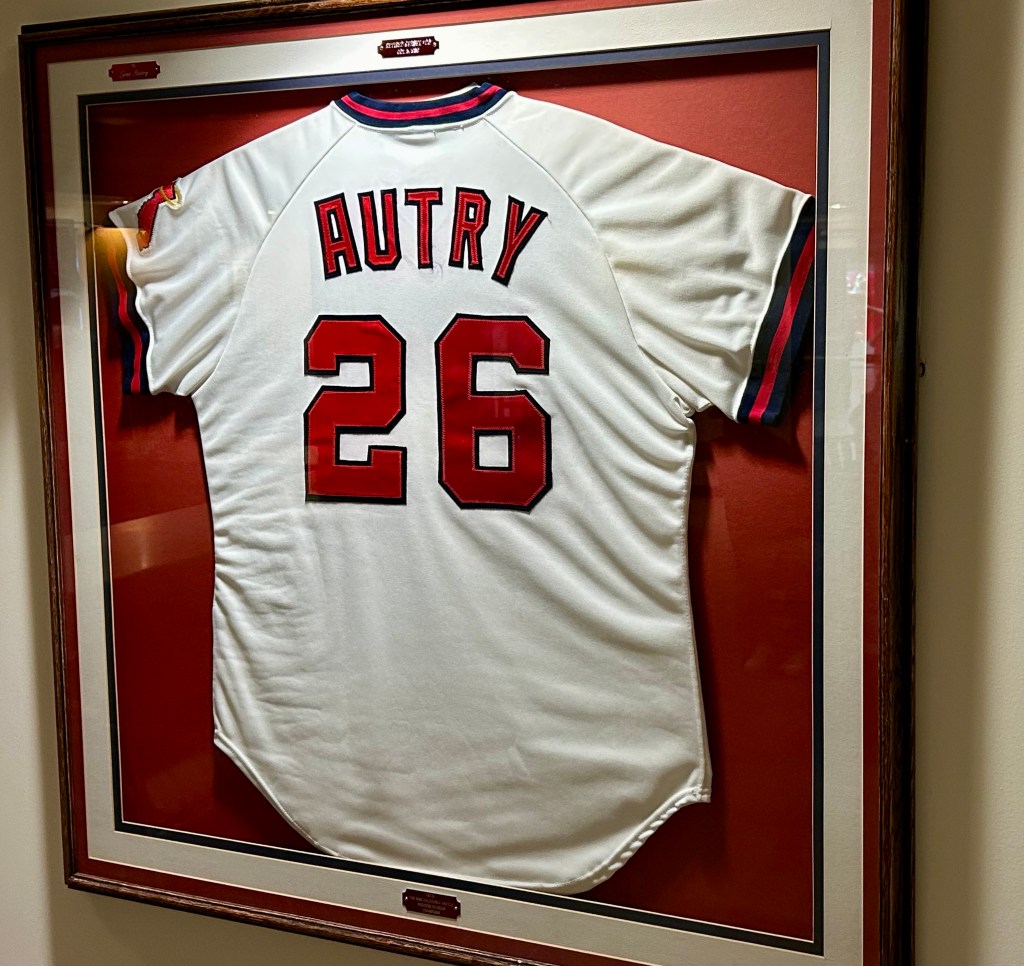
Somehow, in the chain of command involving the Los Angeles/California/Anaheim Angels franchise, there’s a No. 26 jersey handing in Gene Autry’s wardrobe closet that belongs to him.
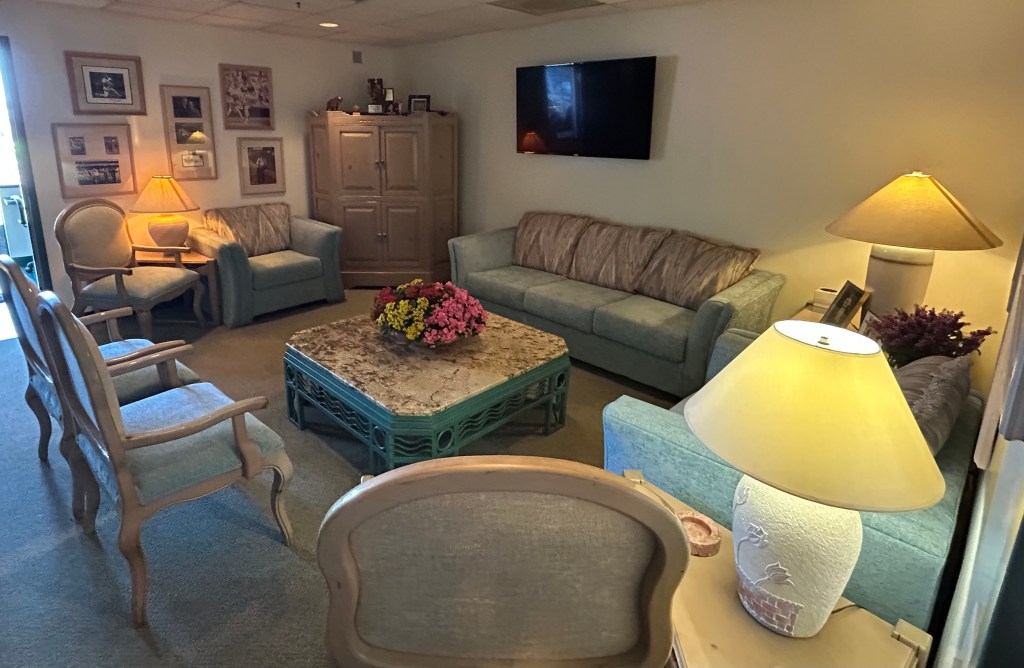
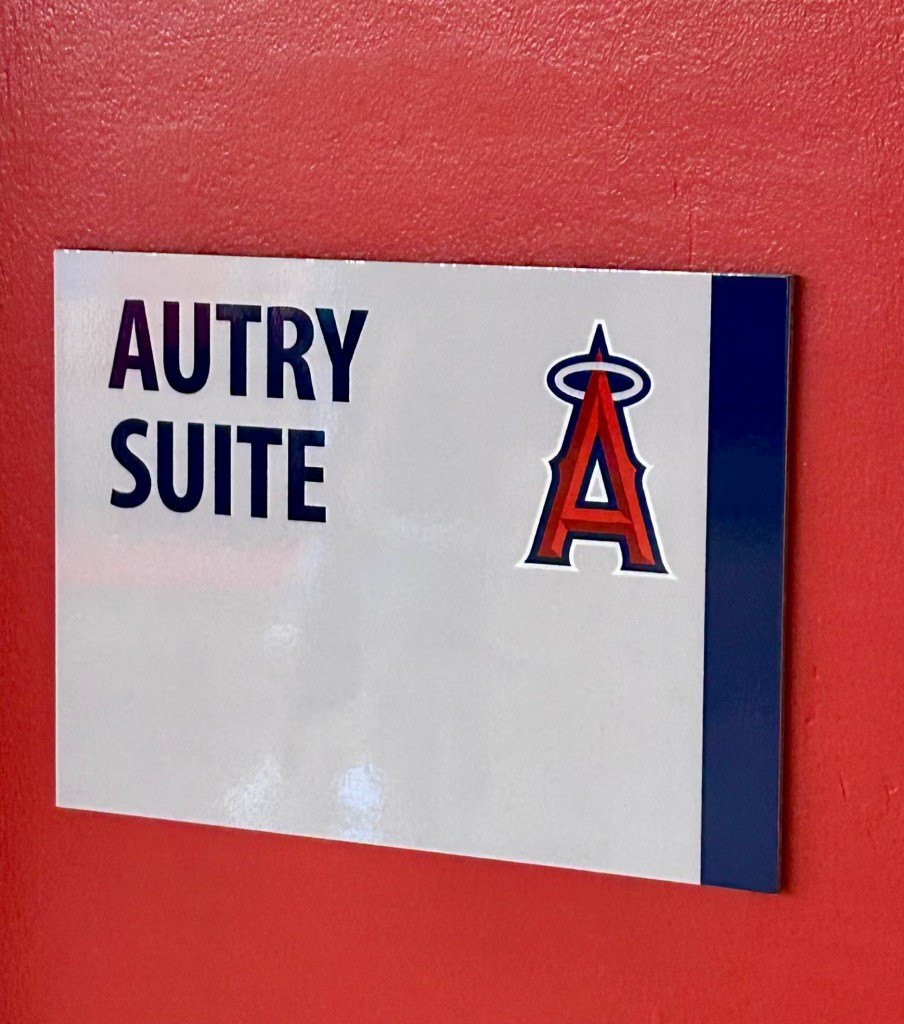
More prominent, it’s framed on the wall in what is still preserved at Angel Stadium as the Autry Suite. In 2026, it was still there, spotlighted, more than 26 years after his passing?
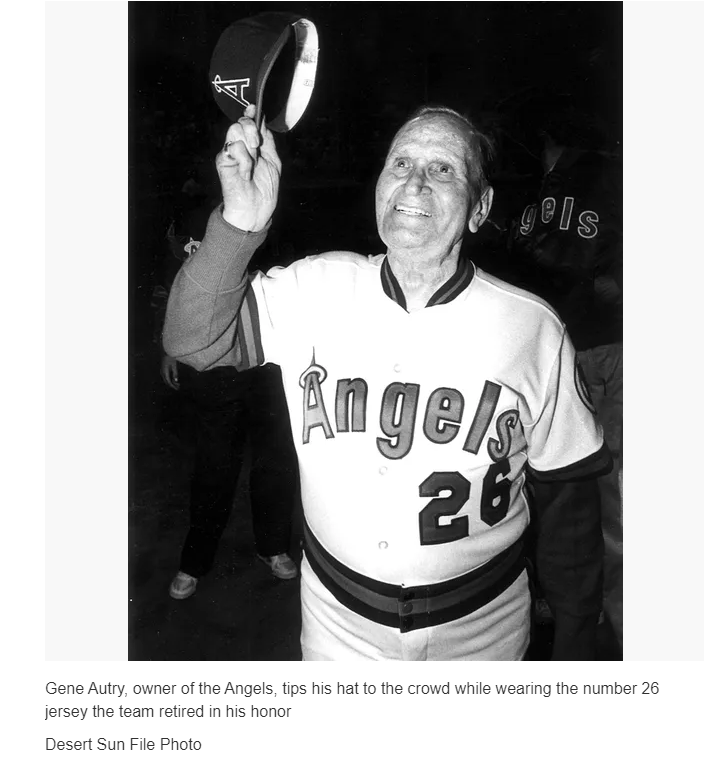
On the last day of the 1982 season, Oct. 3, after the Angels clinched the AL West title with a 93-69 mark, Autry was called out at the end of a pre-game ceremony.

The Angels’ roster at the time was dotted with highly-paid free agent acquisitions: Reggie Jackson, Rod Carew, Bobby Grich, Fred Lynn, Don Baylor, Doug DeCinces and Bob Boone. It also had Ken Forsch, Bruce Kison, and, for some reason, 41-year-old Luis Tiant available to pitch. All prime benefactors of Gene-Gene the ATM Machine.
A few had been around to be part of the 1979 team that won the AL West but lost out in their first real opportunity to go to the World Series, losing to eventual champion Baltimore in the playoffs. The Angel teams in between — 65-95, last place in ’80; 51-59, fifth place in the strike-interrupted season of ’81 — were miserable underachievers.
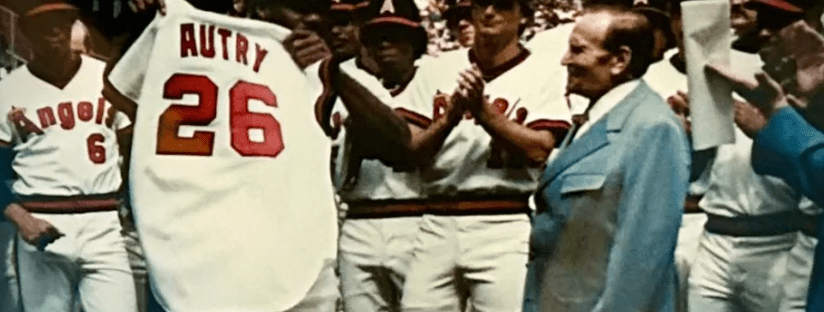
After a presentation where DeCinces was given the Owner’s Trophy as team MVP and Brian Downing was voted Most Inspirational, Autry was about to leave the field when the entire team then came out of the dugout. Baylor carried with a No. 26 Autry jersey.
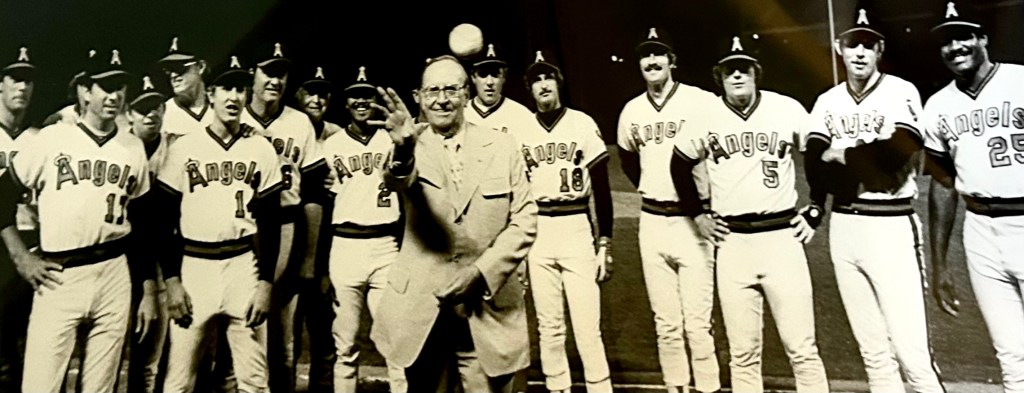
That was the first uniform number retired by the franchise. It was taken off the back of injured pitcher Bill Travers, another free-agent bust, who wasn’t around to protest.
It seems sweet in a way the then-75 year old Autry pulled on the pull-over jersey and hitched up the sansabelt slacks to fill his latest role. Maybe it would have been more appropriate to give No. 61 — the year the team was created.
By that point, Autry was already a Hollywood success story, all dressed up as a cowboy, with real stirrups. Not the nylon baseball type.
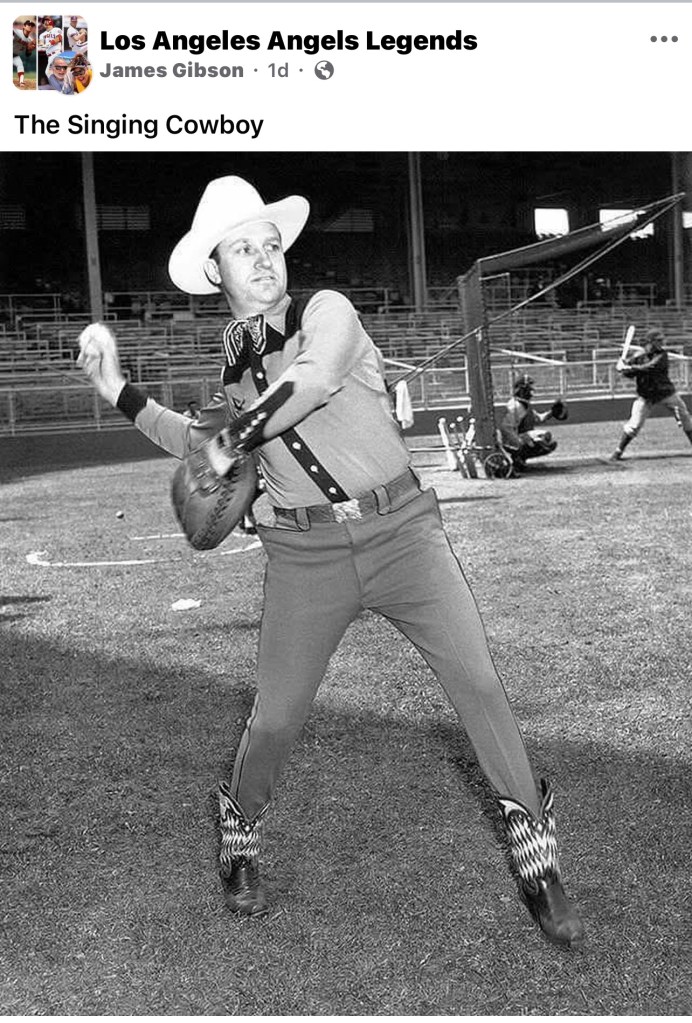
That’s the visual we’d rather keep.
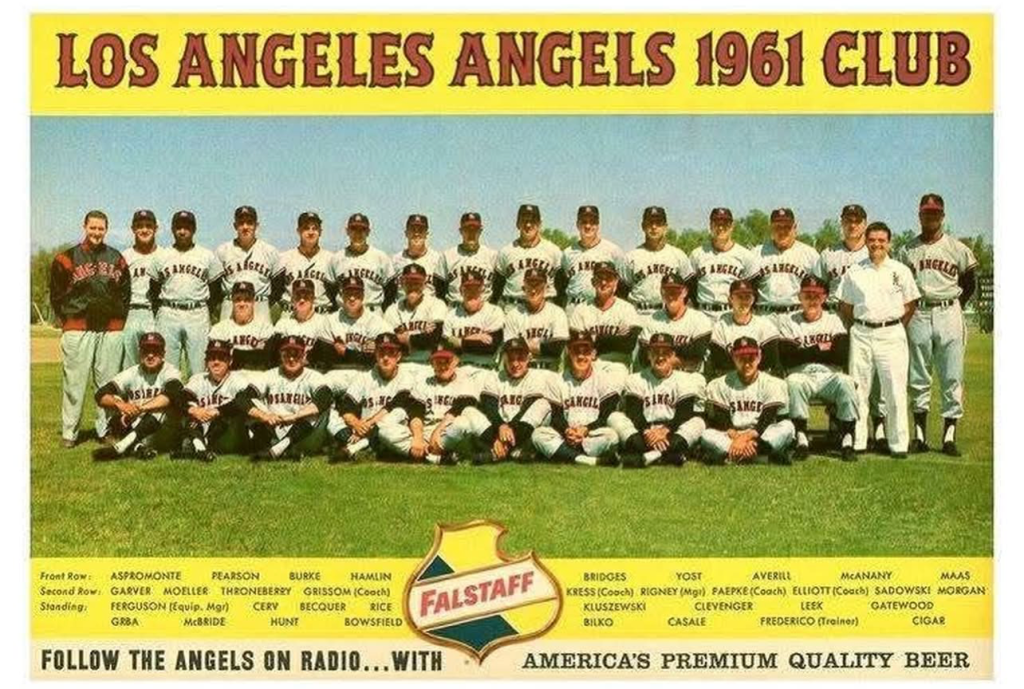
In Autry’s nifty biography for the Society of American Baseball Research, writer Warren Corbett starts:
Gene Autry was the kind of man who paid the bills for old friends in their old age, rode in the front seat beside his chauffeur, and showed up in the bar of his resort hotel to lead guests in a sing-along. During his heyday as a singing cowboy, his fans ranged from the obvious — Johnny Cash and Willie Nelson — to the improbable — Franklin D. Roosevelt and Ringo Starr. Thirty years after he quit performing, his theme song, “Back in the Saddle Again,” returned to the pop charts on the movie soundtrack for Sleepless in Seattle.
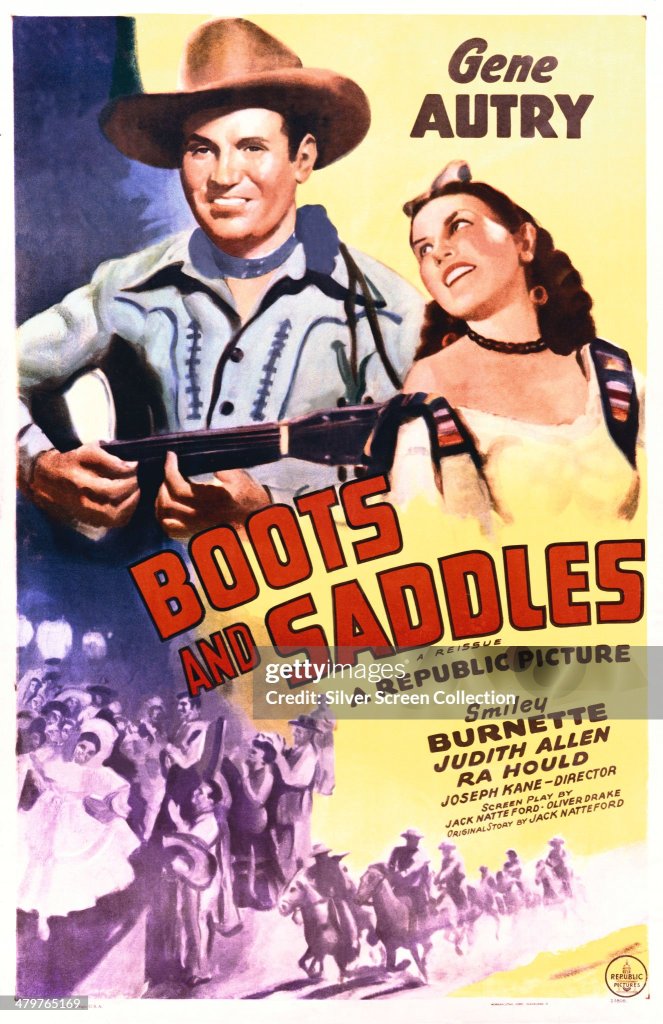
If Southern California ever wished for its own bonafide Tinsletown owner, a rags-to-riches story to brag about, Autry fit the bill as the first, and the biggest, to ride into town with pistols blazing.
Orvon Grover Autry, the twanger from Tioga, Texas whose family moved to Ravia, Oklahoma as he worked as a laborer on the railroads, played baseball well enough in American Legion and semi-pro ball that he once had a tryout with the St. Louis Cardinals. It didn’t pan out.
So he tried movies, radio and TV. That worked.
The first of the “singing cowboys” in the 1930s and ‘40s said he was inspired by the image of Will Rogers. Autry saw horsing around on sound stages and making “Rudolph the Red Nose Reindeer” a household name made him the riches that often landed him on the Forbes’ annual list of the 400 wealthiest Americans.
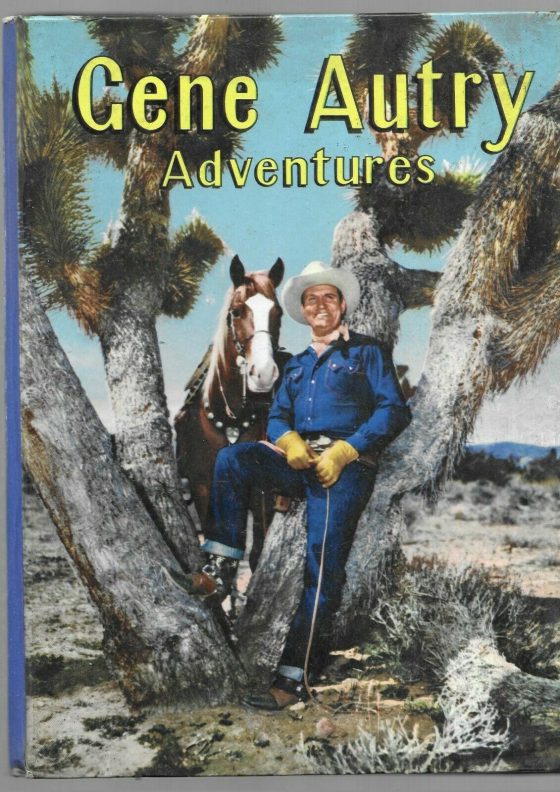
“Before James Brown and Elvis Presley, I think Gene Autry was the hardest-working man in show business,” said Holly George-Warren, telling NPR’s “Fresh Air” in an interview about the book she wrote on Autry called, “Public Cowboy No. 1.”
Autry’s first taste of baseball team ownership was being part of the Hollywood Stars of the Pacific Coast League, during its second iteration in 1938. A team by that name had played their games at L.A.’s Wrigley Field from 1926 to ’35 before moving and, as in Hollywood, finding a replacement for a sequel can work out.
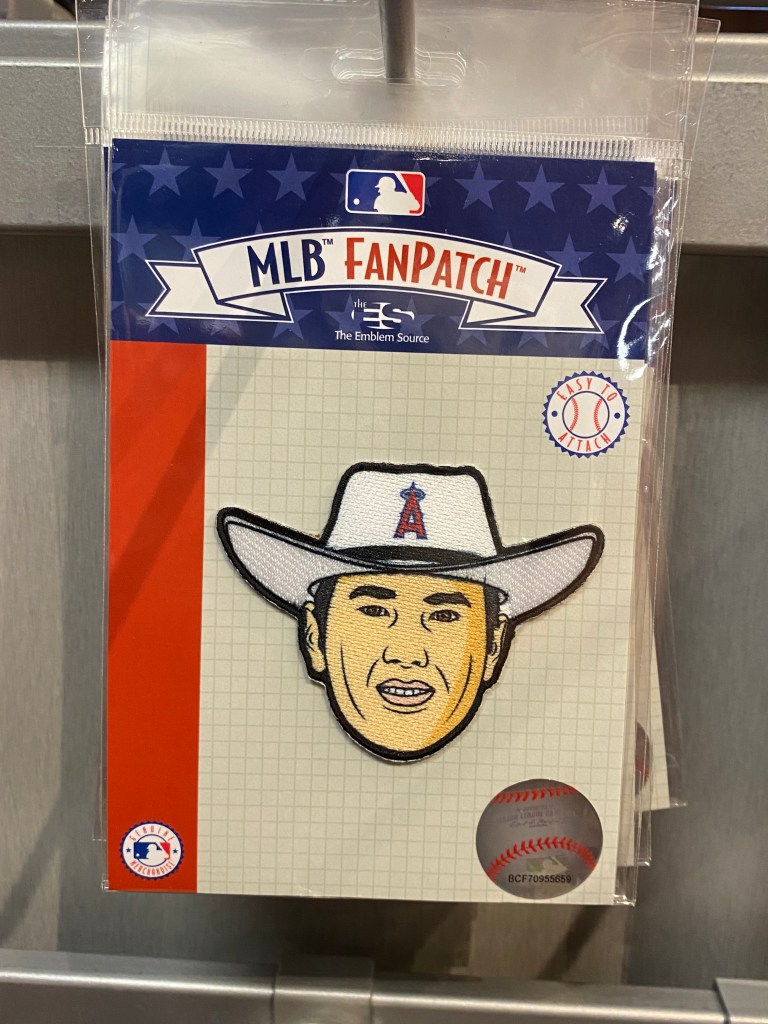
The minor league team in Vernon was sold to attorney Victor Ford Collins and Bob Cobb, owner of the Brown Derby restaurant. They formed the Hollywood Baseball Association, created Gilmore Field in the Fairfax District, and lured a bunch of high-profile stars as noteworthy co-owners and stock holders. Aside from Autry, there was Gary Cooper, Bing Crosby, Cecil B. DeMille, Barbara Stanwick, George Raft, plus George Burns and Gracie Allen.
“No one was permitted to invest any big money,” according to the Los Angeles Times. The team was instead “a civic thing … a Chamber of Commerce activity on the part of a group of people who want their little corner of the world to be better than all other corners.”
Autry’s business in the acting and singing world would be reinvested in radio and TV, starting a production company, and buying oil wells and hotels to create diversity.
When the Dodgers moved from Brooklyn to L.A. in 1958, Autry’s primary goal was to sign them up with his KMPC-AM (710) station for the radio broadcast rights. That worked. The problem came when Dodgers owner Walter O’Malley couldn’t get the station’s signal at his vacation home in Lake Arrowhead. O’Malley switched to 50,000-watt juggernaut KFI-AM (640). Autry was singing the blues.
Right about that time, the American League decided it was ready to expand. In 1960, former MLB star Hank Greenberg seemed to have a team ownership locked up for a second L.A. team, which left Autry again vying for those radio rights. When the Greenberg team’s deal fell through — O’Malley demanded steep rights fees to the Southern California region — Autry was recruited to inquire if he was prepared to step in and pay the ransom.
Autry’s show business sidekick Pat Buttram once reportedly told him at the time: “Hell, Gene, on the sports page, a man can live forever. On the sports page, you never die.”
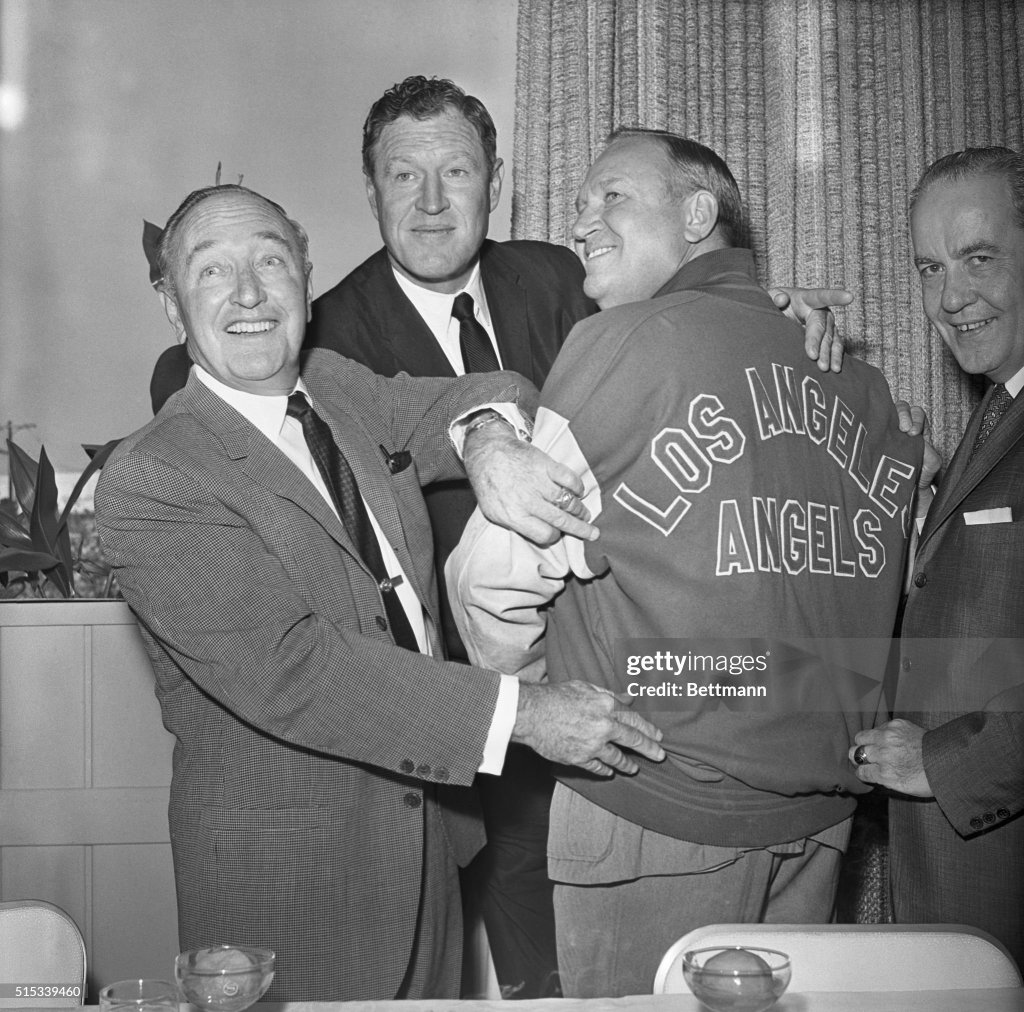
Autry not only did the deal, but he made sure Los Angeles had the Angels brand back, abandoned a few years earlier when the Pacific Coast League ceased operation upon the Dodgers’ arrival, but having been a Southern California institution for decades.
A silver halo was sewed on top of the team’s caps. The franchise was back at Wrigley Field in Los Angeles — if only for a season. After the Dodgers has been renting space a few blocks away at the Coliseum, it created Dodger Stadium in 1962 and invited Autry’s team as co-tenants. The Angels would refer to the place not as Dodger Stadium but as Chavez Ravine.
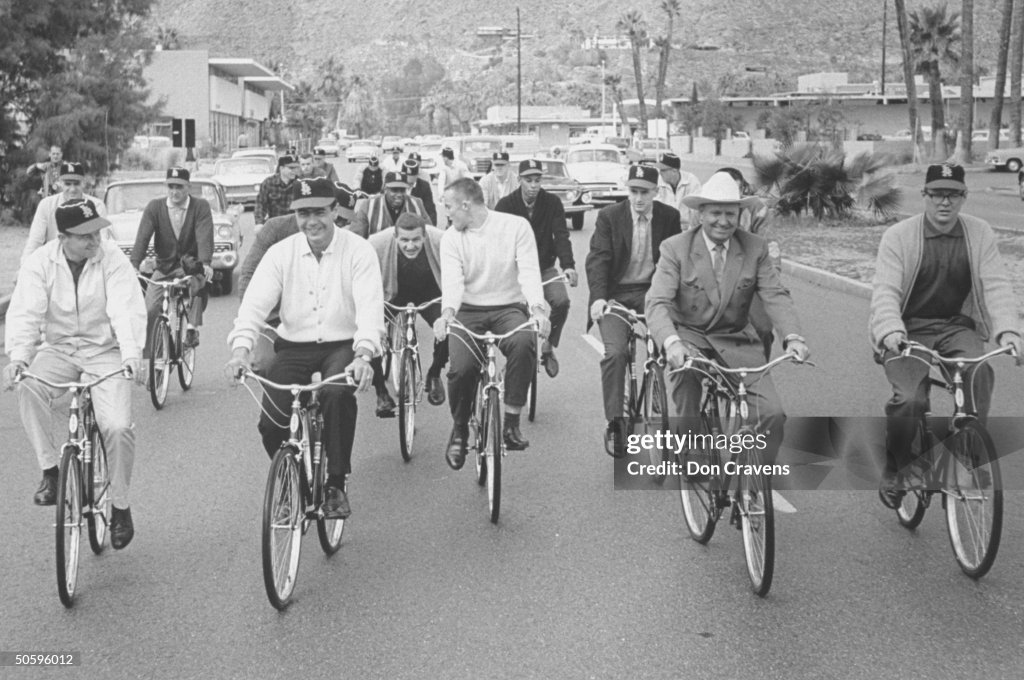
While the Dodgers kept their spring training base in Vero Beach, Fla., Autry found it more efficient for his Angels to set up his off-season home base in Palm Springs, which would appeal to the local fans, and they could play exhibition games with other MLB teams in Arizona.
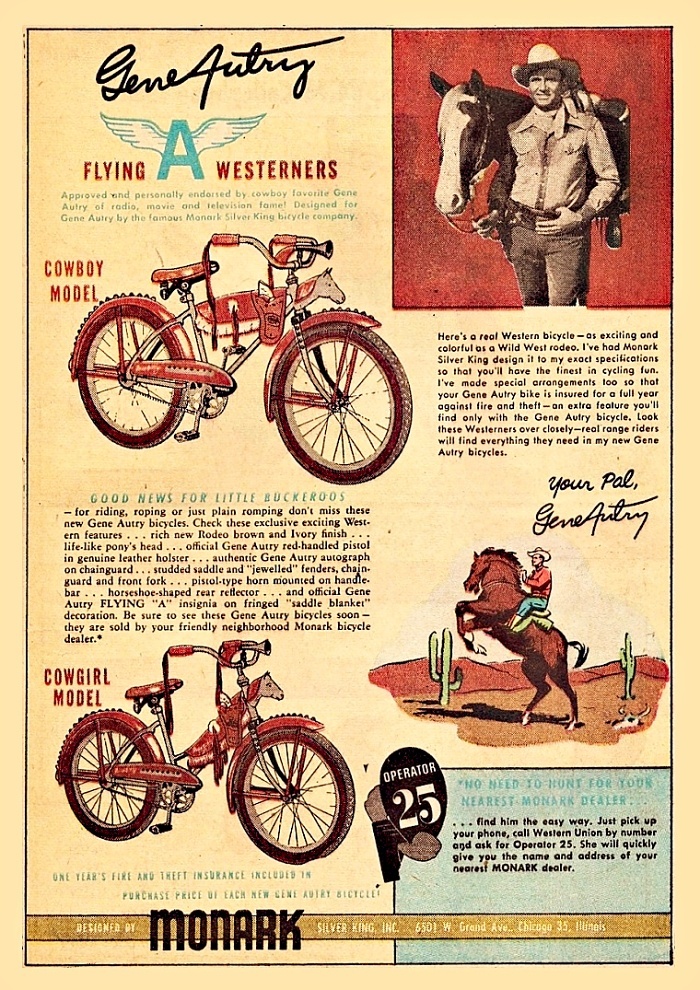
Photos were made famous of Autry leading the team on bicycles from his team hotel to the ballpark to attract attention. It wasn’t a stretch for Autry, who once sold bikes named after him with a replica of a horse on it, calling it “a real Western bicycle.”
Jim Fregosi, a 19-year-old rookie in 1961 who would become a six-time All Star through 1971, became Autry’s first favorite player. It made some sense that when Fregosi was traded to New York for Nolan Ryan and two other Mets, Autry had a new favorite.
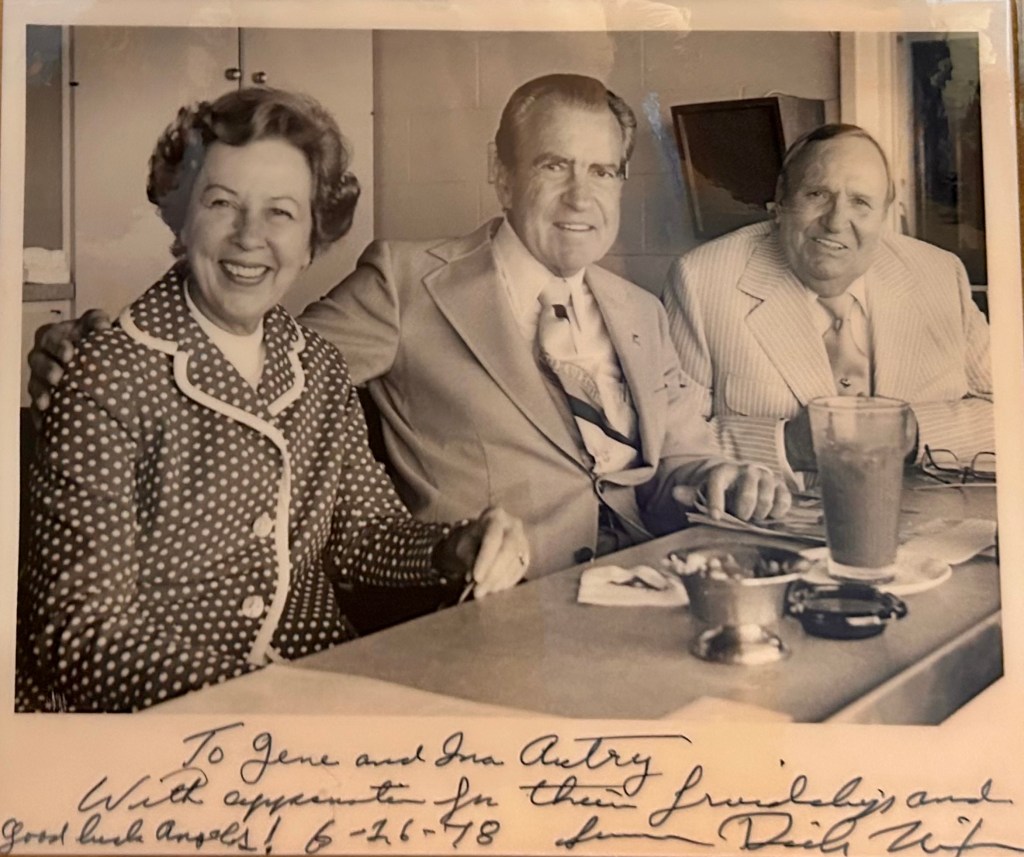
That is, when he wasn’t favoring Orange County native Richard Nixon between the time he was vice president of the United State, a California gubernatorial candidate and eventual U.S. president in 1968. Autry also gave Nixon a soft landing spot to distract himself post-Watergate resignation life.
As for this Orange County idea ….
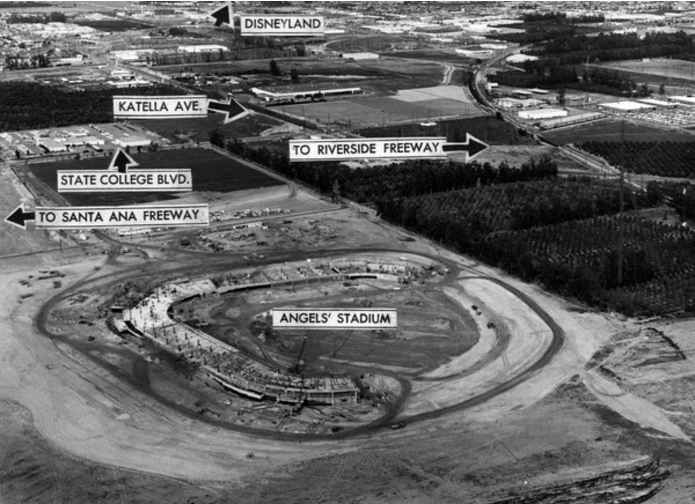
On August 30, 1964, Autry joined other dignitaries to put a golden shovel into a plot of land off State College Boulevard in Anaheim, committed to the creation of Anaheim Stadium some 40 miles south of downtown L.A. He had been courted as well by Long Beach, but wasn’t as sold there as he was on this O.C. idea.
A row of eucalyptus trees towered above the three wooden stakes marking the future location of home plate. The city of Anaheim lured the team to come with a 35-year lease and a new fan base.
Also present was Walt Disney, and his cast of Disneyland characters, who made their own commitment to the city of orange groves when he created his theme park 10 years earlier.
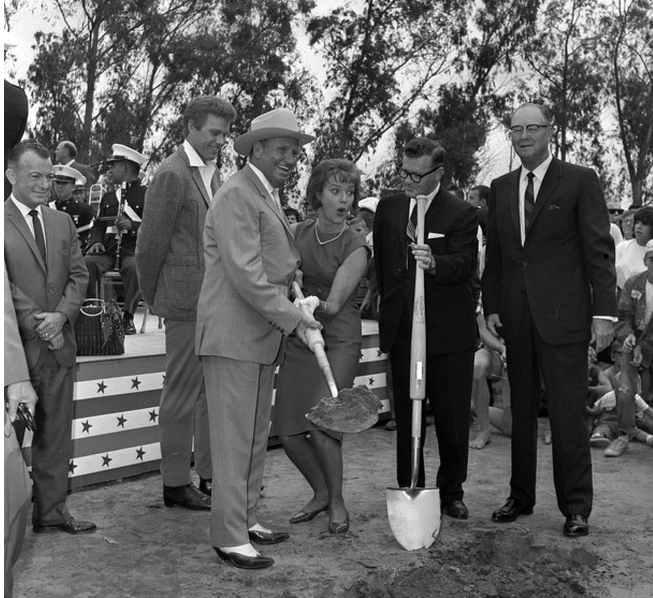
Autry and Disney were golf pals at Lakeside Country Club in Toluca Lake. They saw business opportunities in pooling together their interests. Disneyland characters were often seen at Anaheim Stadium in the concession stands and working the concourse areas as greeters. Autry could even envision a time when Disney himself owned the Angels.
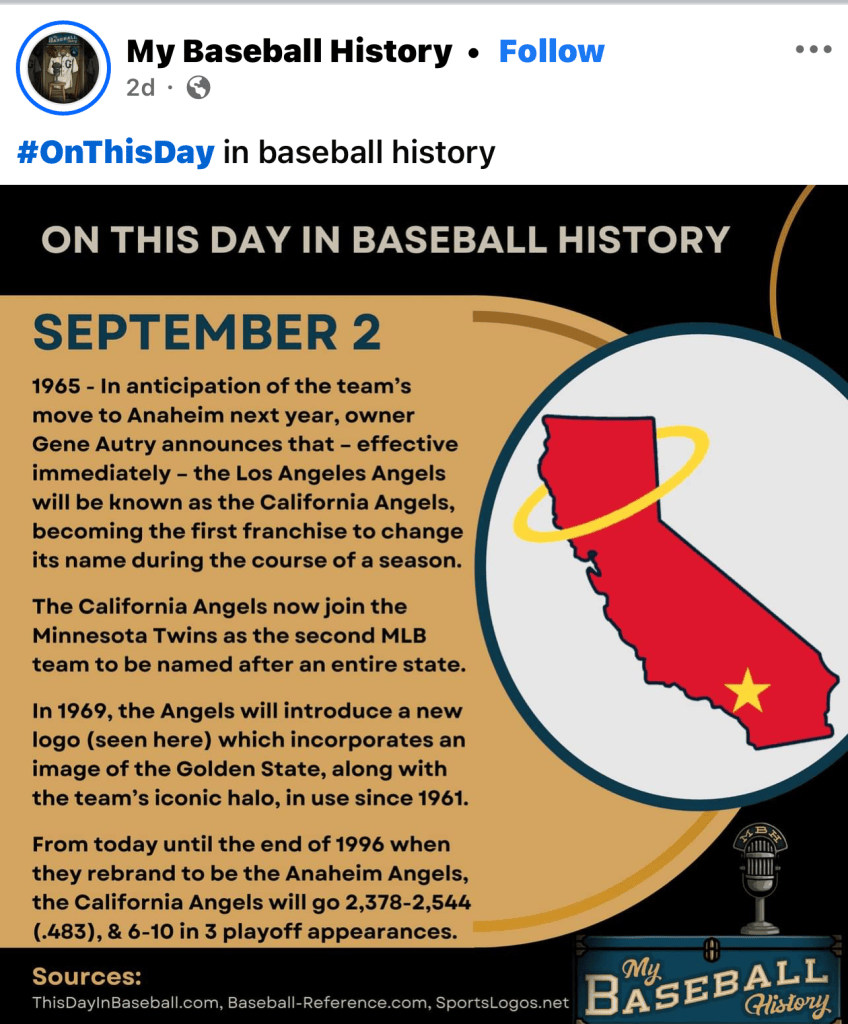
In separating himself from the O’Malley baseball world, Autry eventually discarded the “Los Angeles” nameplate in 1965 and called his team the California Angels as they were ready to move to their new digs (they also considered the names Southern California Angels and Orange County Angels. Why not think big?
It made some sense as the construction of Interstate 5 was not just making it easier to get from Los Angeles to Orange County, but it was up and down the coast a major travel artery, branching off into the many suburbs.
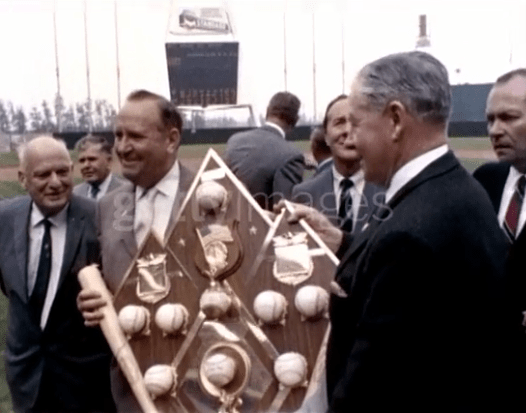
The “LA” hats with halos were changed to “CA” logos.
The Anaheim surroundings gave Autry his own place to stretch, and his business relationship with Disney gave the two many ways to promote each other’s entertainment world. The Angels would famously have a Disneyland Day as a Sunday promotion — buy a ticket to a day game, use it for entrance to Disneyland that night. Although Disney died at 65 in 1966, Autry sold a 25 percent stake in the franchise to The Walt Disney Company in 1995, noting his happiness that his friend’s namesake company was guiding the team.
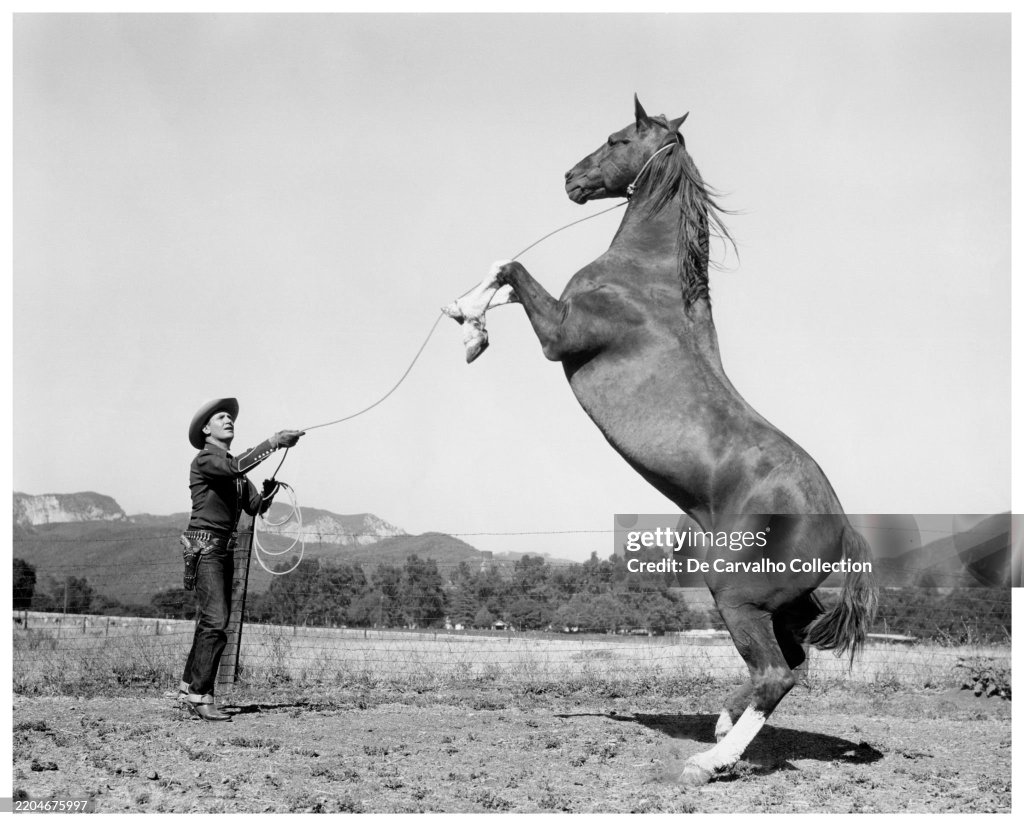
Autry may have famously ridden a movie horse named Champion, but his spending could never trigger the team getting through into some October radiance. His 36-year ownership run sired no World Series wins, just brief hopeful moments of a title run in 1978, ’81 and ’86.
Steadied by a cane he carried around that was made from a bull’s pizzle, Autry kept the title of vice president of the American League for 15 years, from 1983 until his death in October of 1998. He attended his final Angels game only 10 days before he died.
The team was relinquishing to Autry’s second wife, Jackie, who was once his banker but according to most scuttlebutt, she was also Gene’s daughter, 30 years younger, born out of wedlock. She was conveniently available to arrange for a nuptial and keep the assets in the family after Autry’s first wife, Ina Mae, died in 1980 after 48 years of marriage.
It can be an incestuous business indeed. The resemblance between Gene and Jackie becomes more prominent in later years.
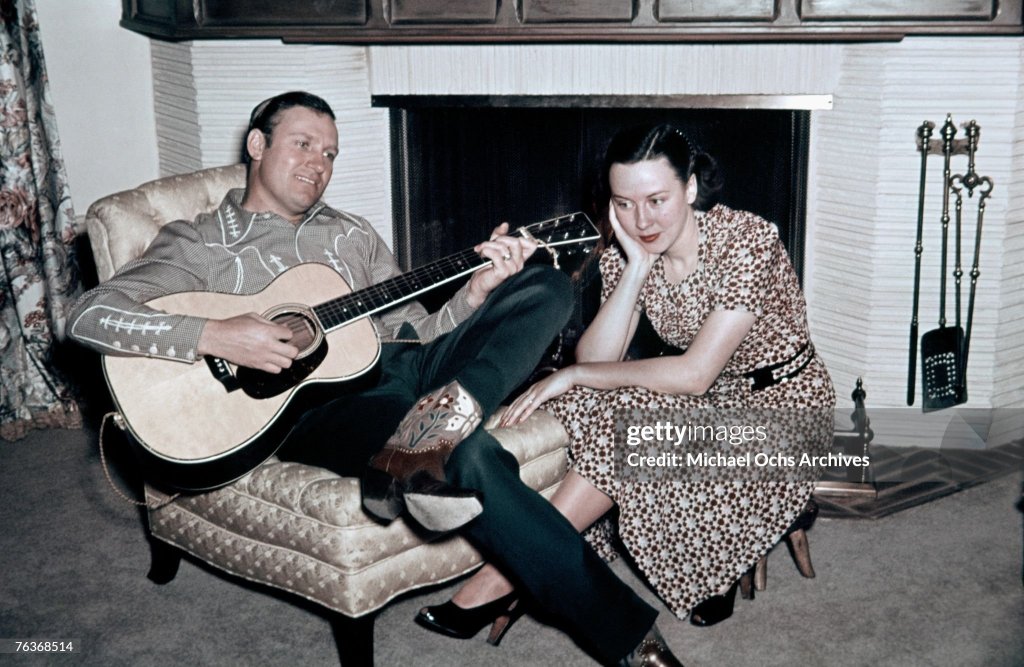
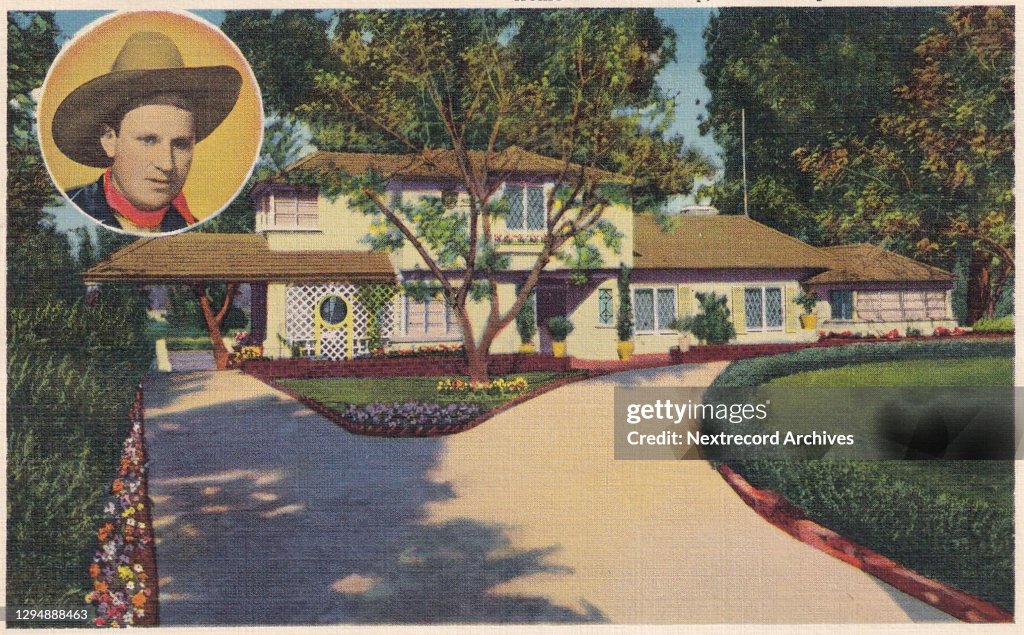
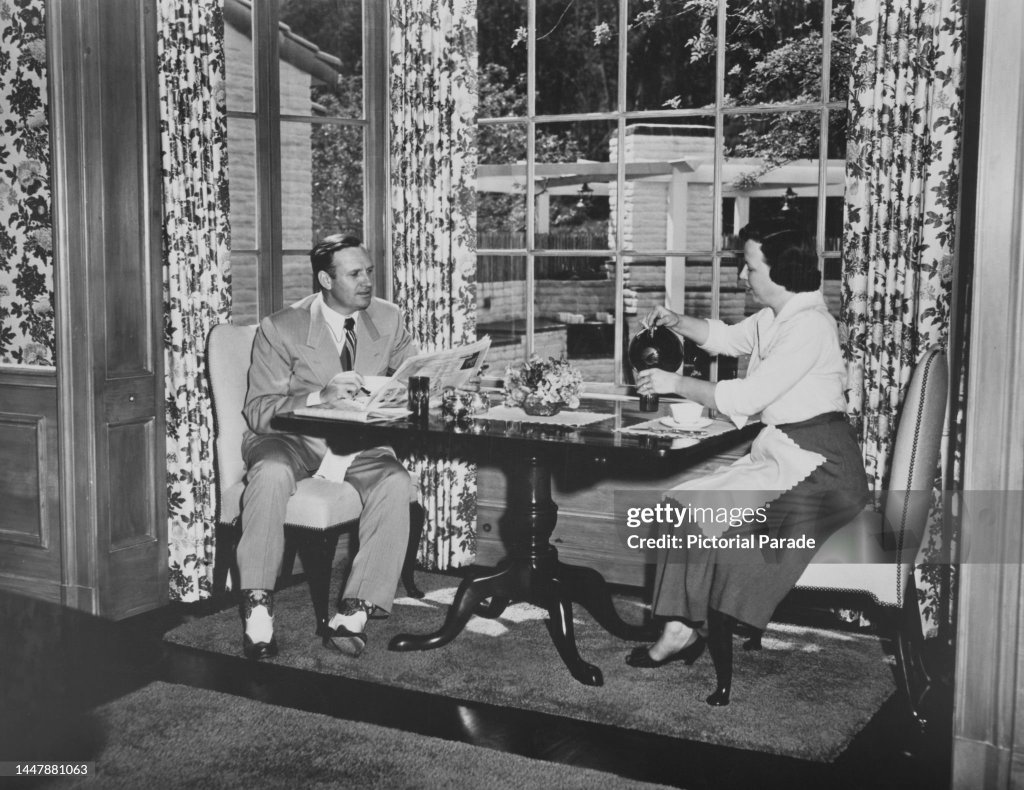
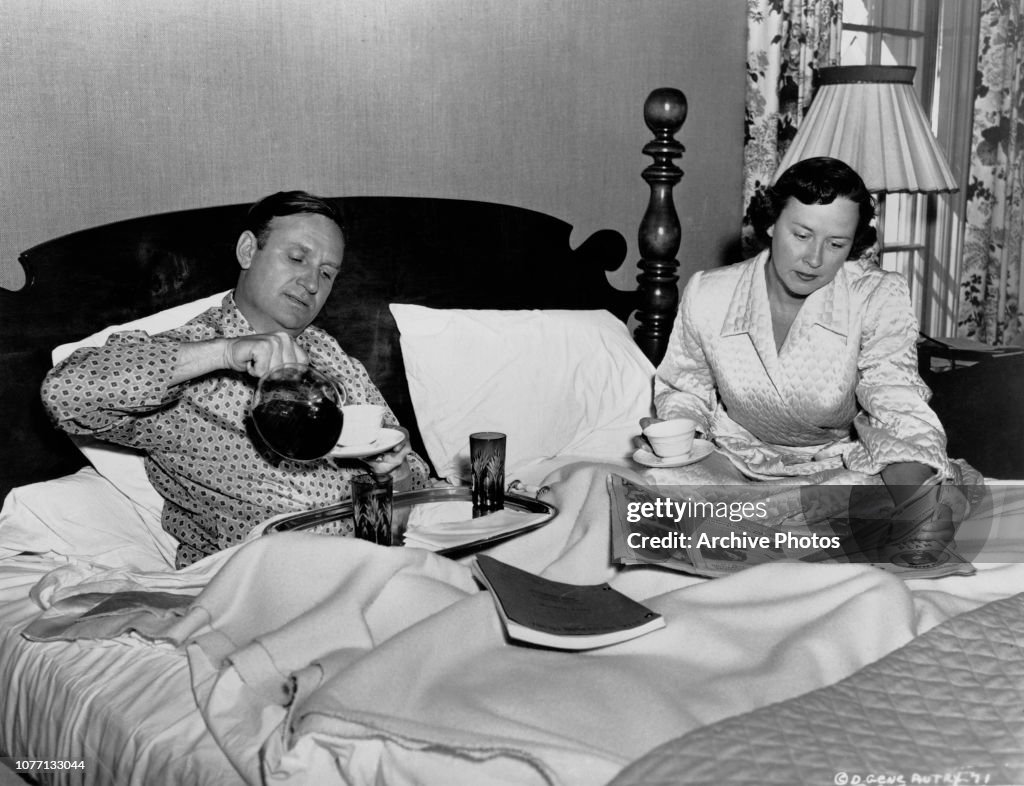
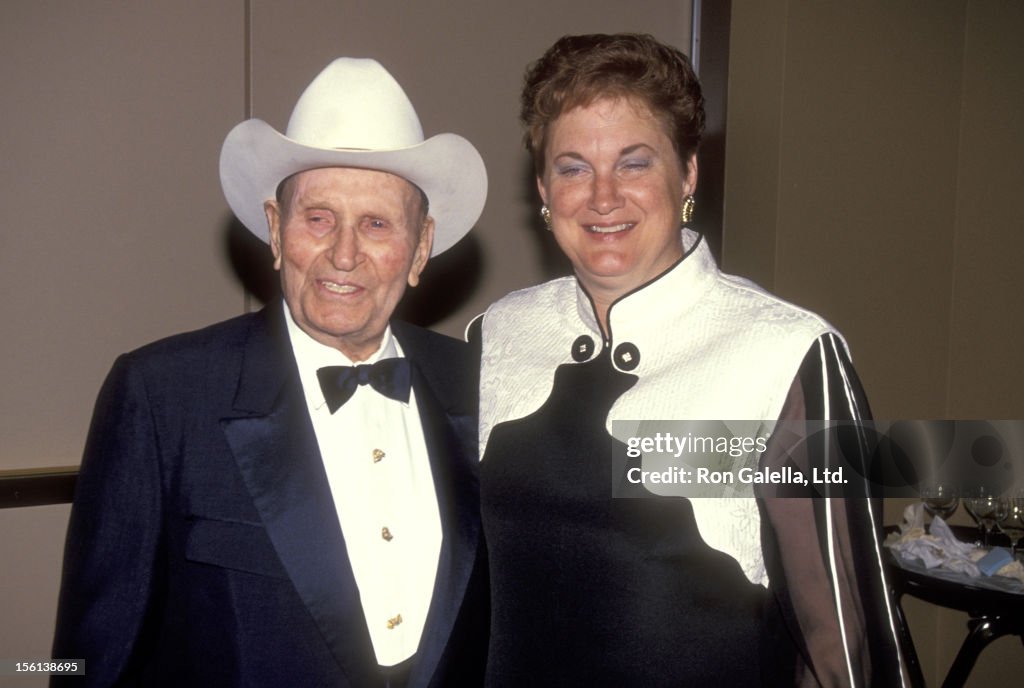
At Christmas time 1989, when he was 82, Autry was asked by then-L.A. Times columnist Mel Durslag what it would mean to finally see his Angels land in the World Series.
“By now, I guess I have tried just about every system,” Autry said. “We started out trying to build our team with old stars. Then we tried developing young players. Then we paid big sums for name players. Then we went back to young players. And now, I guess we’re giving away money again. … You know the ripple effect and how lesser players ask more as a consequence. I’m not sure any of us are doing the right thing.”
It may have not gone as planned, but the franchise’s sale to Disney did come in January of 1996. Its marketing department dove in — changed the name to the Anaheim Angels and decked the team out in periwinkle, navy and red “pinstriped PJs” as designed by the Disney team, all to mixed reviews. They even added Angels cheerleaders on the dugout roof to countdown the first pitch.
Disney had already paid a $43 million expansion fee to create the NHL’s Anaheim Mighty Ducks, and park them at an arena just beyond the Angels Stadium center field parking lot. The plan was for Disney to create a new sports regional channel called ESPN West featuring the Angels and Ducks, but it didn’t take hold.
Disney still officially owned the Angels when the won their 2002 World Series title — four years after Autry’s died at age 91 from lymphoma at his home in Studio City. But the Angels were such a small part of the Disney portfolio, when CEO Michael Eisnercame into the clubhouse, the players didn’t know who he was. Just that he wasn’t Autry.
Disney hired an investment banker to sell the team a month before the World Series and found Arte Moreno in the first month of the 2003 season.
In his sports-page obituary, the Los Angeles Times’ Ross Newhan noted:
“Amid today’s sweep of corporate ownership in baseball, the images of Gene Autry remain vivid: keeping score in the owner’s box, sharing the bench with his manager during batting practice, visiting with players in the clubhouse before and after games. (He was) a fan’s fan, the antithesis of the impersonal Disney or Fox, the last of a breed before Peter O’Malley became the last of a breed. For those who observed him, interviewed him and shared social moments with him during his 30-plus years as the club’s owner, nothing stands out more than his grass-roots passion for the game–never diminished by the frustrations and disappointments in the Angels’ star-crossed history.”
Newhan added that, in the early ‘80s, Autry once told him about his ownership philosophy:
“I suppose there are three kinds of owners. One is the type who puts up the money and runs the club himself, serving as his own general manager. The second is the type who hires a professional to run the club, then stays out of the way and keeps score. The third is the type who keeps such a low profile that the players and fans hardly know he exists. I like to think I belong to the second category. I have tried hard not to interfere with the men on the firing line. I am consulted on major decisions and the final approval is mine, but I don’t recall ever overruling someone who felt strongly his way was right.
“I have also made an effort to know the players. I drop by the clubhouse from time to time, and I try to write personal notes to each player who is traded away after long service with the club. I have never had any desire to go on the field or be in the dugout. I have wondered often why a manager did this or that, but I have always tried to restrain my second-guessing. I have never ordered a manager to play a certain player, and I have never called a manager at 3 in the morning to ask why he didn’t play the infield back with one out.”
But he did proudly display No. 26 if there was any doubt about his contribution to the franchise history.
The legacy
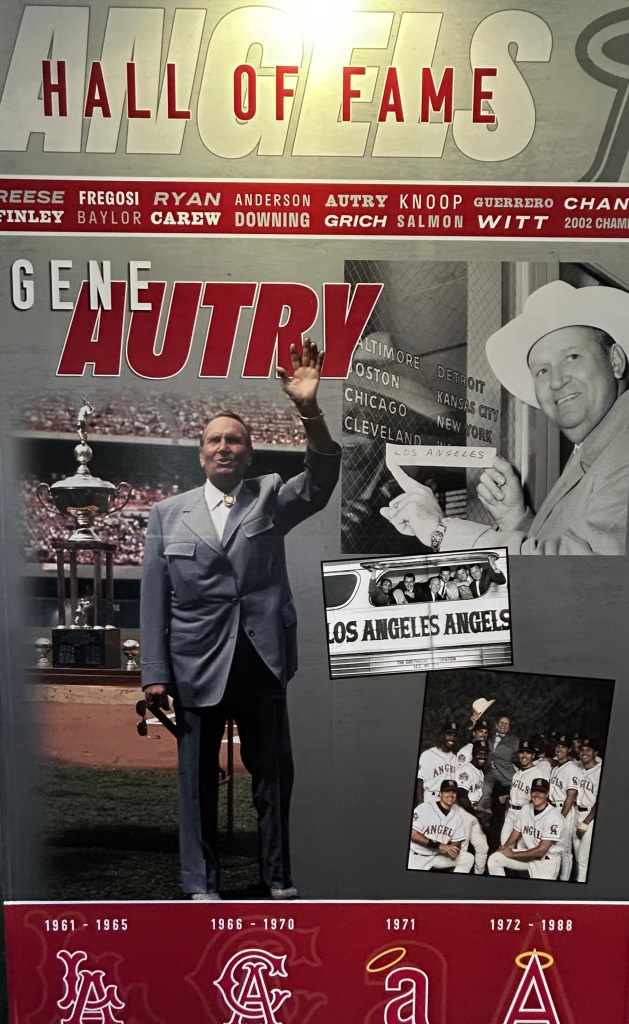
Autry is the only one in existence with five different stars on the Hollywood Walk of Fame, all on Hollywood Boulevard. They account for his music recording (635 songs), TV fame (91 episodes of “The Gene Autry Show”), movie fame (90 films), radio longevity (16 seasons of “Melody Ranch”) and live theater performance. The first four happened as part of the inaugural Walk of Fame’s Class of 1960.
The last one came in 1987 to put him over the top as a career achievement, maybe because his financing of the Angels amounted as much to the definition of “live theater” as anything else. For what it’s worth, there are now six Hollywood Walk of Fame categories. The only one now Autry is not yet recognized for is Sports Entertainment, which, at this point, seems most appropriate.

The City of Los Angeles has has a plaque for him at the famous corner of Hollywood and Highland, calling it “Gene Autry Square.” There, at least, is recognition of him as a “sportsman.”
Maybe it’s also worth noting that in 1963, he and his business partner Bob Reynolds were part of a group that purchased a 49 percent share of the NFL’s Los Angeles Rams, sold to them by owner Dan Reeves, as part of a deal where his team would be on Autry’s KMPC radio station.
Autry is also in the Pro Rodeo Hall of Fame, credited for that sport’s successes in Montana, Colorado, Nebraska and Texas from the 1940s through the 1970s.
He’s been in the Country Music Hall of Fame since 1969, got a lifetime achievement award by the Songwriters Hall of Fame in 1991 and has been the Radio Hall of Fame since 2003. He was recognized with a Pioneer Award by the Academy of Country Music, the Governor’s Award by the Los Angeles Television Academy and a lifetime Grammy Award in 2009.
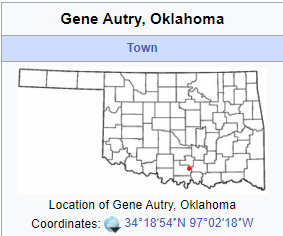
In 1991, Autry was not only added to the Oklahoma Hall of Fame but they renamed a city for him. In 1941, Berwyn, a four-square-mile parcel along the Santa Fe railroad, was rebranded to Gene Autry as a way to mark the fact he once owned a 1,500 acre ranch there. As the story goes, his California home burned down eight days before the city name was changed. The locals thought he might move back to this town in Oklahoma fulltime. But just three weeks after the renaming ceremony, Pearl Harbor happened. Autry joined the military, sold the ranch after the war, and it is now all but disappeared. The 2020 census reports a population for Gene Autry of 154.
There remain several points of interest in the Autry legacy of SoCal:

= The Parker Hotel in Palm Springs/Le Parker Meridien (4200 East Palm Canyon Drive) is the refurbished site of the former Gene Autry Hotel, which lasted from 1961 to 1994. They kept the Autry residence in tact and created a suite out of it that can be rented. Private gate, two beds, two baths. Private sauna. Just $15,000 a night. That’s midweek.
= The Gene Autry Museum of the American West, aka The Autry near the Los Angeles Zoo in Griffith Park, remains a city cultural landmark attraction since its 1988 opening and 2013 renovation.
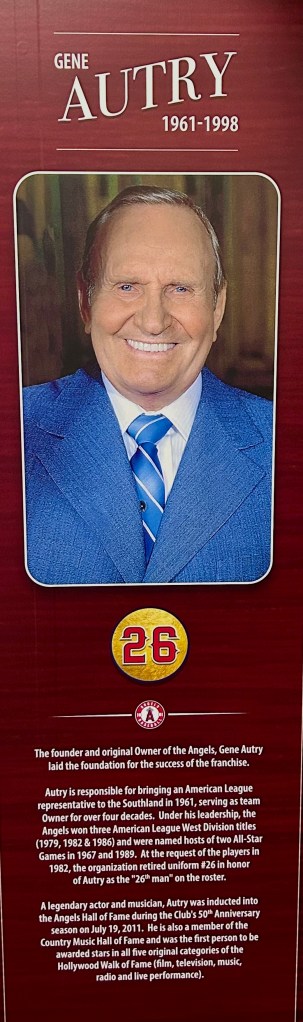
== In 1998, the Angels added a statue of Autry outside Angel Stadium, surrounded by his Hollywood Walk of Fame recognition.
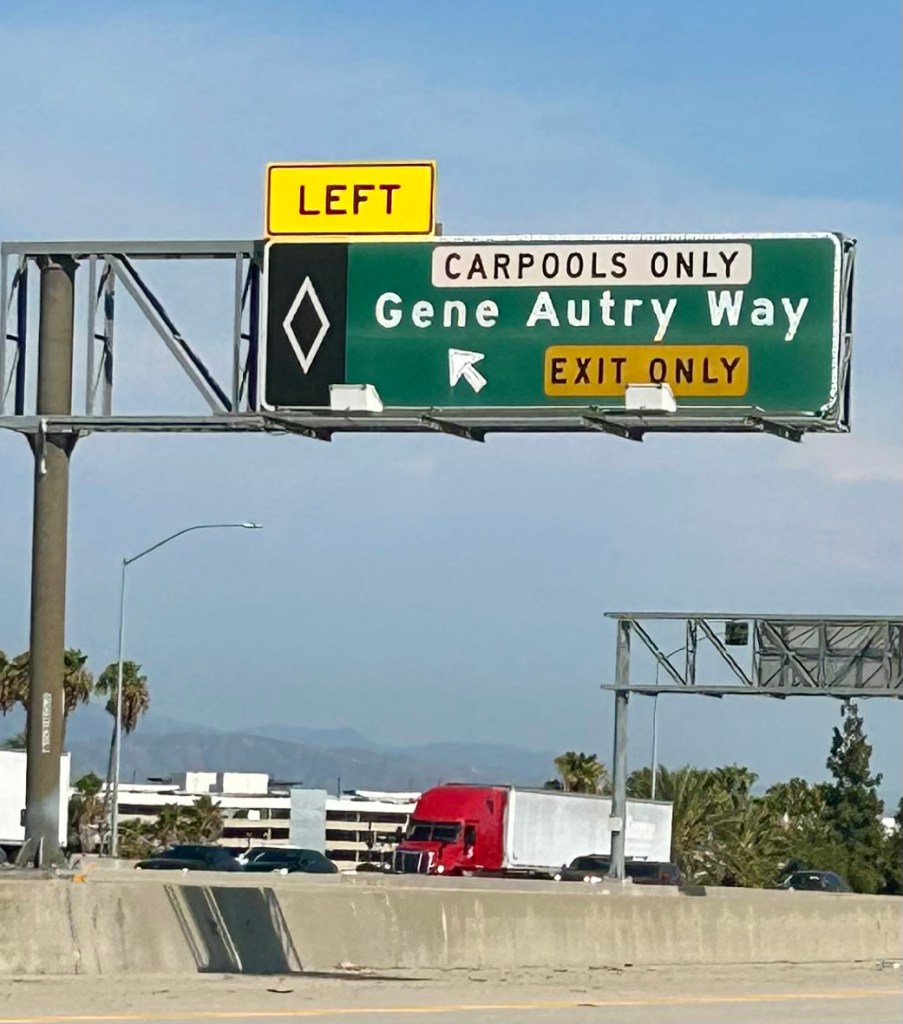
== Gene Autry Way exists as both a street exiting Interstate 5 in Orange County as well as a major thoroughfare in Palm Springs.
Then there’s the Autry Suite, furnished as it has looked like for many years with photos on the walls and period accents that make it almost look as if it’s inspired by a recreation of Walt Disney’s office space.
In Angels’ history, No. 26 once included Joe Rudi (1977 to 1980), Lou Johnson (1969), Ken Hunt (1961 to ’63), and Bill Stoneman (1974, who eventually became the team’s GM).
But even as the suites are numbered around Angel Stadium — aside from the Autry Suite — the one stamped No. 26 means something more than any of the others.
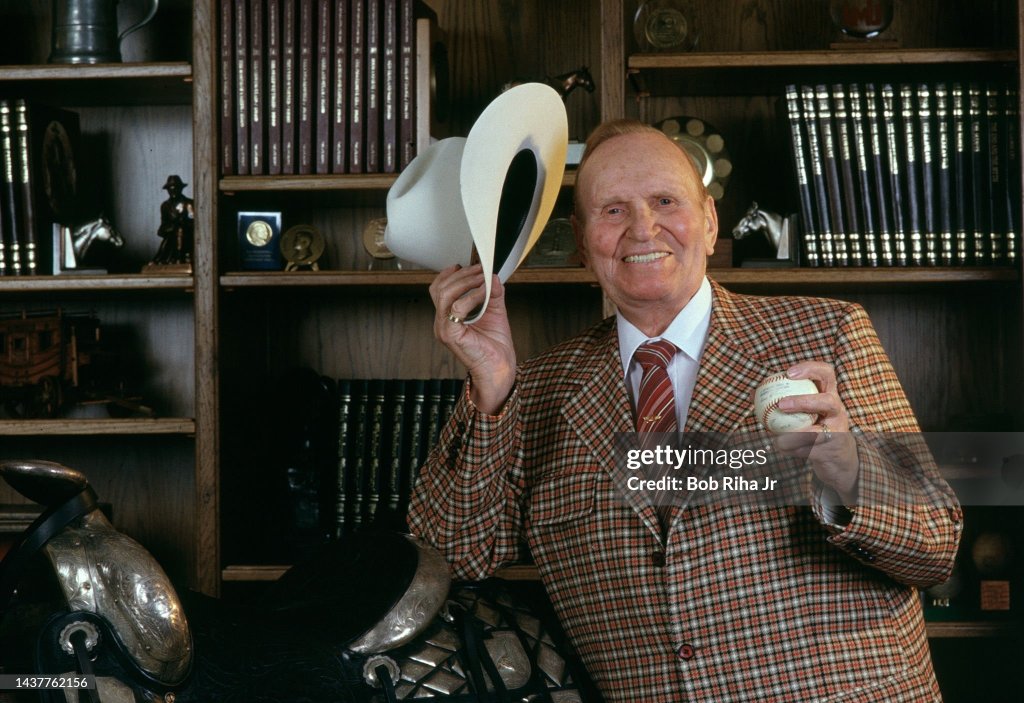
The SoCal pro team owner roster
Autry has the honor as being the first owner of a major professional sports team in Los Angeles — the expansion Angels were planted here after the Dodgers already moved from Brooklyn, the Rams moved from Cleveland, the Lakers moved from Minneapolis. The NHL came several years later.
None of those owners are more embedded in Southern California and its wild west of team-building than Autry. Walter O’Malley may be in the Baseball Hall of Fame, but there’s no Dodgers’ number retired for him.
For the purposes of this exercise, here some of the notable narratives over the years by notable owners of professional teams in Southern California, from the good to the not-so-stable:

Los Angeles Angels:
Most valuable owner: Autry, for purpose and longevity.
Most notorious owner: After Autry’s brief title transfer to Walt Disney Company (1999-2003), which didn’t endear them much to fans with the immediate uniform scheme change, Arte Moreno became MLB’s first Latino majority owner when he bought the then-Anaheim Angels for $184 million not long after the franchise won its first and only World Series title. He was listed at No. 5 on Sports Illustrated’s 101 Most Influential Minorities in Sports in June of ’03. Spending heavily on star talent, the Angels went on to win the American League West five times from 2004 to 2009. The team also remained a box-office success, drawing more than 3 million fans annually from 2003 to 2019. He oversaw the arrival of Mike Trout and Shohei Ohtani, of Albert Pujols and … Josh Hamilton? Anthony Rendon? Eh… In a 2012 GQ story, Moreno was labeled “a new (nice) Steinbrenner.” In August of 2022, some hope was raised in a team statement that Moreno was exploring the possible sale of the team. Then he changed his mind. In a 2023 piece in The Athletic, the Moreno feature came under the headline: “How did Angels squander Mike Trout and Shohei Ohtani? It starts with the owners frugality.” In Moreno’s book, he was worthy of wearing Angels jersey No. 1. Near the end of the 2026 season, as groups of fans regularly congregated in the higher regions of Angel Stadium and chanted “Sell The Team!,” Moreno finally did, after 23 years, handing it off to Stan Kroenke for a reported record-setting $4 billion, with transfer papers set for 2027. “Over the past decade, as the Angels descended from a perennial contender into a laughingstock, the man at the center of the decline was Moreno,” wrote the New York Times after extensive reporting. “Moreno meddled in baseball decisions. His occasional free-agent splurges obscured an organizational myopia that left his team with scant investments in staffing, analytical advancements and technological necessities. A toxic culture spilled into public view during the trials after Tyler Skaggs’ death. His ballpark and facilities fell into disrepair, a situation that may be remedied under the stewardship of new owner Kroenke.”

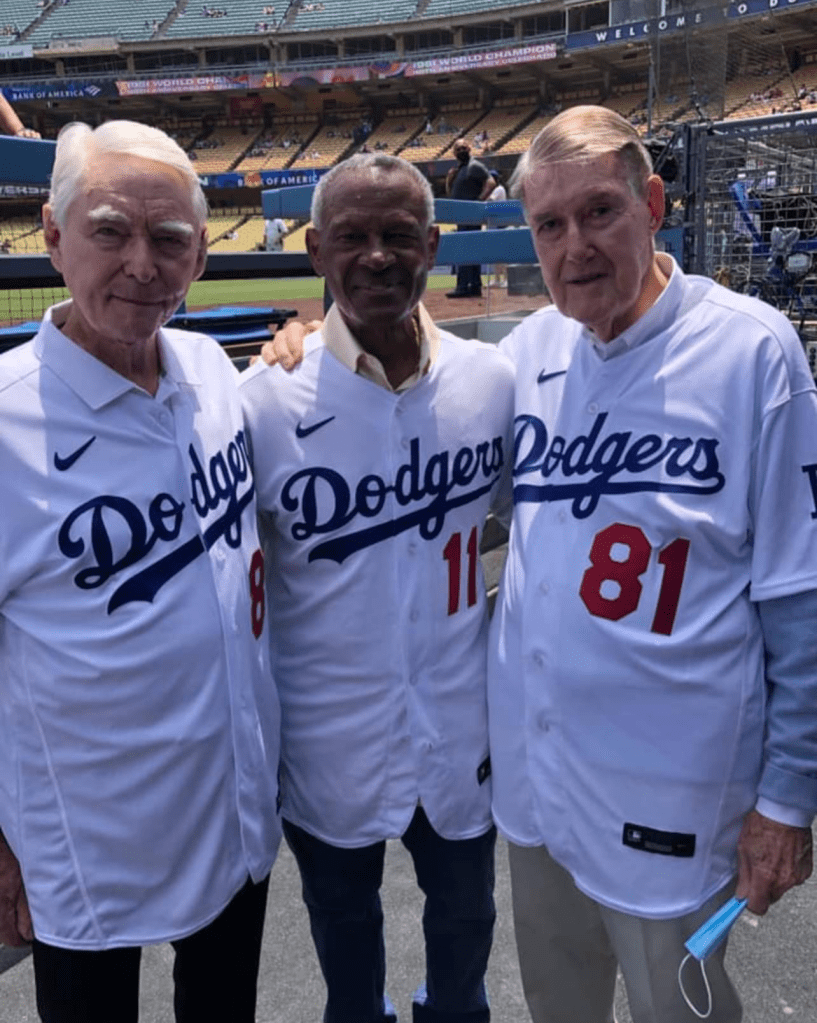
Los Angeles Dodgers:
Most valuable owner: Walter O’Malley. His revolutionary transfer and primary ownership of the franchise from Brooklyn to Los Angeles got him a Baseball Hall of Fame plaque. Ownership control through his son, Peter O’Malley, and daughter, Terry Seidler, kept the family reigns tight through 1997.
Most notorious owner: Frank and Jamie McCourt took control when the Fox Entertainment Group petered out in 2004, and kept things turned upside down for 14 years. Finally, commissioner Bud Selig put a stop to it all and created an auction situation.
Celebrity quotient: Guggenheim Baseball Management, led by banker Mark Walter, has been the headline caretaker since 2014, adding minority ownership that includes Magic Johnson, Stan Kasten, Peter Guber and Billie Jean King.
Los Angeles Lakers:

Most valuable owner: Jerry Buss’ purchase of the Lakers (as well as the Forum and the NHL’s Kings) for $67 million in 1979 came just as the franchise was to add Magic Johnson to the roster. Buss’ ownership success landed him a plaque in the Basketball Hall of Fame in 2010 as a contributor (for his five NBA titles, two WNBA titles, and his creation of a regional sports network for the team that laid the foundation for new team revenue). Buss also created one of the first arena naming rights deals for the Forum in 1988 (Great Western Bank). When Buss died in 2013, a family trust took over, and daughter Jeanie became the primary decision maker. That now looks like a wise decision to keep things away from Buss’ son, Johnny, who decided he needed to run for President of the United States in March, 2024.
Most notorious owner: In 1965, Jack Kent Cooke purchased the team from Bob Short, who forced the franchise to leave Minneapolis in 1960, for a then-record $5.1 million cash. It gave him another team in his portfolio, as well as the NFL’s Washington Redskins, and led him to build the Forum in Inglewood (moving them out of the downtown L.A. Sports Arena) to open in 1967. It was when he was going through a messy divorce that Cooke decided he had to sell it all off.
Celebrity quotient: Magic Johnson bought a 4.5 percent stake in the Lakers for $10 million in 1994 — between the years of his 1991 retirement and ’95 comeback. He sold the share in 2010, right before NBA team values exploded. Forbes estimated Johnson’s stake in the Lakers in 2010 was worth $29 million, but his stake today would be worth more than $265 million.

Los Angeles Clippers:
Most somewhat valuable owner: Steve Ballmer, the former Microsoft exec whose estimated worth of $143 billion in 2024 made him one of the Top 10 richest people on the planet, assumed control of the franchise 2014 for $2 billion. He then not only has purchased the Inglewood Forum, once home of the rival Lakers, but he built his own arena for his team opening the 2024-25 down the street. In a survey conducted by The Athletic in December 2020, Ballmer was voted the best owner in basketball. But then, in the aftermath of an NBA investigation into a salary cap circumvention payment to Kawaii Leonard, Ballmer had to fork over a $30 million fine and one-year suspension going into the 2026-27 season. “Now 12 years later, Ballmer is another disgrace in a franchise history overrun with them,” wrote Jason Lloyd for The Athletic/New York Times. “He changed the Clippers’ arena, expectations and value. He spent billions trying to ensure they would never again be treated as an NBA embarrassment. He changed everything, except the ending.”
Most notorious owner: Real estate slump lord Donald Sterling (born Donald Samuel Tokowitz) was responsible for shipping the franchise from San Diego to L.A. in 1984, squatting at the L.A. Sports Arena for 15 dreadful seasons, moving to the new Staples Center in ’99, finally imploded with a spectacular personal controversy in 2014. ESPN The Magazine in 2009 named the Clippers the worst franchise in professional sports based on Sterling’s controlling disinterest.
Celebrity quotient: Before Ballmer bought the team, rumored to be in the mix was (of course) Magic Johnson, with Oprah Winfrey, Sean Combs, Dr. Dre, Snoop Dogg, Matt Damon, Judd Apatow, David Geffen and Oscar de la Hoya. But not superfan Billy Crystal?
Los Angeles Kings:
Most valuable owner: Although Phil Anschutz and Ed Roski have their names on the 2012 and 2014 Stanley Cups, taking over the team since 1996, Jack Kent Cooke had the vision as a Canadian native looking to scratch his hockey itch to bring the sport to Southern California in 1967 along with the impetus to build a new arena for it. Cooke even gave the team a royal nickname.
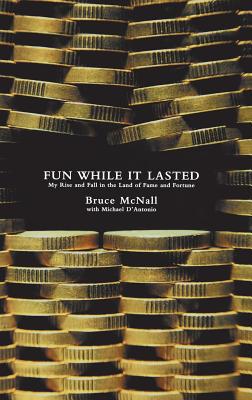
Most notorious owner: Coin collector and minority team owner Bruce McNall took the team off Jerry Buss’ hands in 1988 and orchestrated a trade to get Wayne Gretzky. Followed by … bankruptcy? Fraud? Jail time? We didn’t see that coming. McNall’s autobiography, “Fun While It Lasted: My Rise and Fall in the Land of Fame and Fortune,” came out in 2003.
Los Angeles Rams:
Most valuable owner: Stan Kroenke’s ownership since 2010 has been highlighted by his moving the franchise back to Southern California after a 20-year absence and the construction of their SoFi Stadium home in Inglewood.
Most notorious owner: Georgia Frontiere, “Madame Ram” from 1979 to 2007, was the widow of Carroll Rosenbloom (her sixth husband, who had ownership control of the team in 1972 after a swap of franchises with Robert Irsay). She had 70 percent of the team upon his mysterious death; the rest of his kids had the other 30 percent. She infamously moved the team from the L.A. Coliseum to Anaheim in 1980, and then completely uprooted it and shipped it back to her native St. Louis in 1995. n 1986, Frontiere’s seventh and final husband, composer Dominic Frontiere, was arrested and jailed for 10 months for lying to a government agent as part of a federal investigation that came from allegedly scalping 1,000 Super Bowl tickets.
Celebrity quotient: Comedian Bob Hope once said of his 10 percent share: “I like the Rams. They taught me a lesson my wallet will never forget. They’ll do better next year. They’re going to put a handle on the ball.”
Los Angeles Chargers:
Most valuable owner: At their original American Football League birth in 1960, hotel czar Baron Hilton came into the fold and was credited with handing their nickname.
Most notorious owner: The Spanos family came into the picture, first with Alex in 1984 (until his death in 2018) and then his son, Dean, since 2006, and it was their decision to move back to L.A. from San Diego in 2017. A Wall Street Journal story in 2018 had this headline: “Alex Spanos Thought He Could Manage Anything; Then He Bought the San Diego Chargers: Real-estate baron tried to run his NFL team like a construction firm until his wife finally told him to back off.”
Los Angeles Dons:
Most valuable owners: The All-American Football Conference team lasted from 1946 to 1949 as Los Angeles’ first pro football team, starting just before the NFL’s Rams move from Cleveland, and while it was run by California businessman Fernando Gonzalez III, he had partnerships with Don Ameche, Bob Hope, Bing Crosby and Louis B. Mayer. Ameche’s involvement is said to have been the reason why the team were called the Dons.

Los Angeles Aztecs:
Most valuable owners: When the North American Soccer League was around from 1974 to 1981, Elton John’s part ownership was part of the lure of having an international star such as George Best come to play.
Los Angeles Galaxy:
Most valuable owners: Founded by the Phil Anschutz group, his name is on the MLS Championship Trophy. It once put itself up for sale, in 2012. There were no suitable takers for the asking price. Ask again at a time when all the teams’ values go up again.
Los Angeles Football Club (LAFC):
Most valuable owners: The team website enlists bios on people named Bennett Rosenthal, Brandon Beck and Larry Berg. The largest celebrity share goes to Peter Guber. Minor celebrity shares have gone to Will Ferrell, Magic Johnson, Mia Hamm, Nomar Garciaparra, Tony Robbins and YouTube co-founder Chad Hurley. Plus former players Carlos Vela and Giorgio Chiellini.
Angel City FC:
Most valuable owners: At $180 million, the most valuable franchise in the history of U.S. women’s sports is the National Women’s Soccer League team based in L.A., with agent Alexis Ohanian, husband of tennis star Serena Williams, as its largest shareholder. More recognizable celeb ownership goes to Natalie Portman, Eva Longoria, Jessica Chastain, America Ferrera, Jennifer Garner, Candace Parker, Billie Jean King and Mia Hamm.
PCL’s Los Angeles Angels:
Most valuable owners: It always comes back to this. The Pacific Coast League team that launched in 1903 was purchased in 1921 by William Wrigley, Jr., then owner of the Chicago Cubs, namesake of their ballpark. He built his own stadium for his Angels to play that opened in 1926. Early in 1957, Philip Wrigley, who inherited the team from his father, sold the Angels and Wrigley Field to Brooklyn Dodgers owner Walter O’Malley for the then-astronomical sum of $3 million. The ownership of the minor league team was important as it gave O’Malley exclusive rights to major league baseball in Los Angeles, and he used this to relocate the Dodgers.
Who else wore No. 26 in SoCal sports history?
Make a case for:
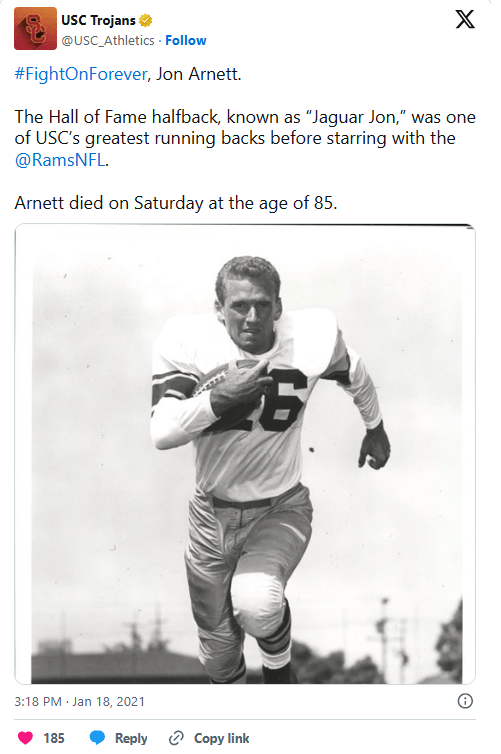
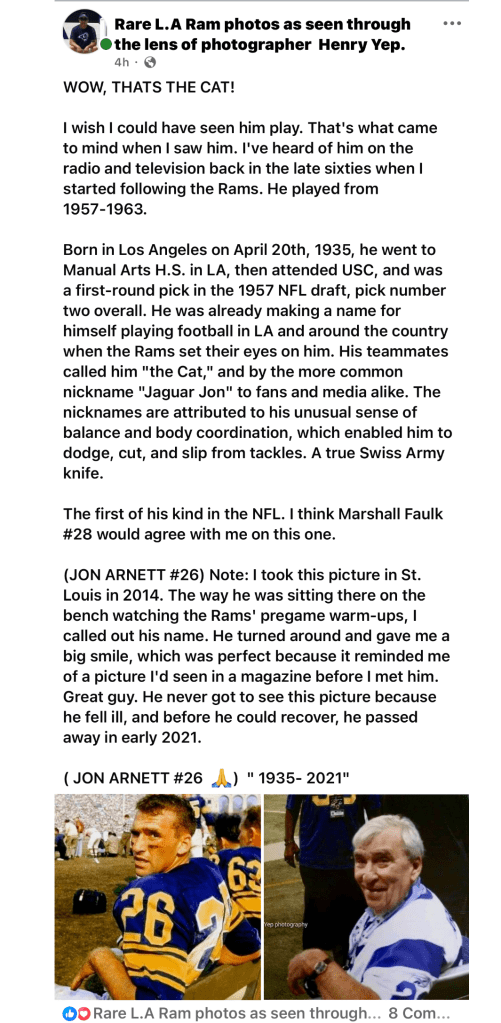
Jon Arnett, USC football tailback (1954 to 1956), Los Angeles Rams tailback (1957 to 1963):
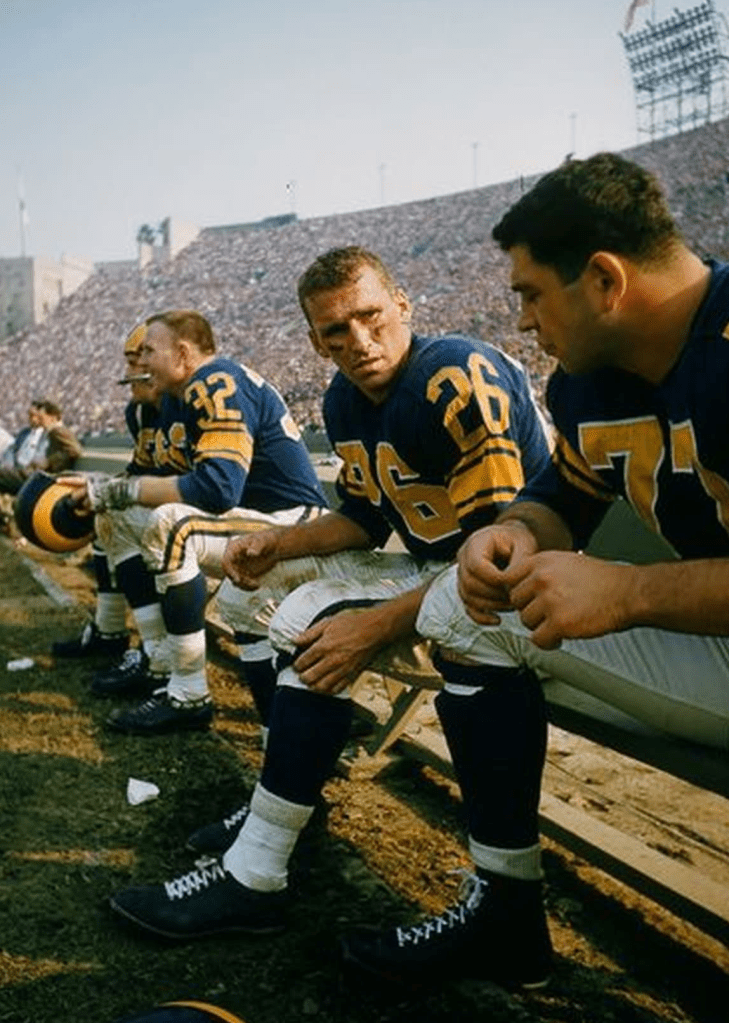
Best known: In the area of about a square mile — from Manual Arts High to USC to the Rams — the football career of “Jaguar Jon” Arnett was one that stayed very consolidated.
A cagey runner out of the backfield who returned kickoffs and punts was a two-time All-American with the Trojans, 10th in the Heisman voting as a senior. His induction into the inaugural USC Athletic Hall of Fame in 1994 was followed up a College Football Hall of Fame speech in 2001. He also would lead the Trojans in interceptions on defense and often threw for passes out of the backfield. He also was on USC’s track team (1954-55-56), placing second in the long jump at the 1954 NCAA meet. USC won the NCAA team title in 1954 and 1955. The Rams made Arnett the second pick of the 1957 NFL Draft and he played there for five Pro Bowl seasons and an All-Pro in 1958 when he led the NFL in punt return yardage.
Not well remembered: Arnett still holds the Rams’ record for longest kickoff return — 105 yards. He also has the distinction of playing for the Chicago Bears after leaving L.A. to become the primary backup to the late, great (and oft injured) Gayle Sayers.
Willie Brown, USC football tailback/defensive back (1961 to 1963) and Los Angeles Rams halfback/receiver (1964 to 1965):
Best known: Like Arnett, Brown had three seasons at USC wearing No. 26, then went straight to the NFL and was an intricate part of the Rams’ roster. This happend for Brown right after Arnett was traded to the Chicago Bears. The 1959 CIF Player of the Year from Long Beach Poly led the 1962 national champion Trojans in rushing, kickoff returns and interceptions. In 1963, as the team captain, he led the team in receiving, scoring and interceptions. He was also a standout center fielder and shortstop on the Trojans’ 1963 College World Series baseball team. Returning as an assistant football coach (1968 to 1975), Brown would be part of two national title football teams and he helped Rod Dedeaux with coaching on the 1970 College World Series title squad.
Not well remembered: Brown had two brothers who played Major League Baseball — “Downtown” Ollie Brown, known as the Original Padre as the first pick in the 1968 expansion draft by San Diego, and Oscar Brown, a teammate of Henry Aaron and Dusty Baker with the Atlanta Braves.
Chase Utley, Los Angeles Dodgers second baseman (2015 to 2018):
Best known: Those who were at Dodger Stadium on the crisp autumn day in 2015 saw Chase Utley actually break a man’s leg just playing baseball. Then they made a rule outlawing such a thing. While 13 of his 16 MLB seasons were in Philadelphia, Utley, became a most notable Dodger when there came about what was called the Utley Rule (Rule 6.01(j), which was a response to the broken dreams of New York Mets shortstop Miguel Tejada.
Not well remembered: Utley was an original draft pick by the Dodgers out of Long Beach Poly High in the second round of the 1997 June selection, No. 76 overall. He notice how many UCLA players were taken ahead of him in that draft and opted for Westwood. He became a first-round pick out of UCLA in 2000 for the Phillies, No. 15 overall. With the Dodgers, Utley was a part of four straight playoff runs. He ruled.
DeShaun Foster, UCLA football running back (1998 to 2001), UCLA head football coach (2024 to 2025):
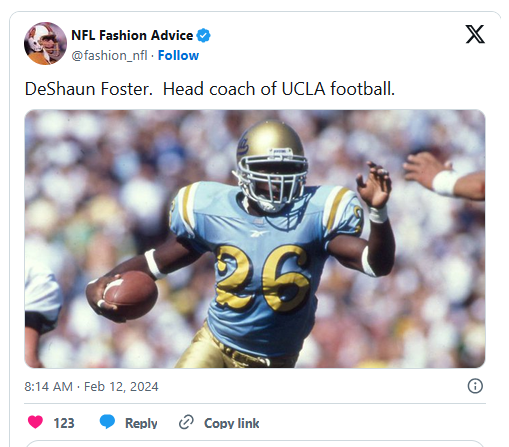
Best known: One of the most decorated running backs in Bruins history finished second in career touchdowns (44), third in rushing yards (3,194) and fifth in scoring (266 points) by the tim he was done. A second-team All-American in 2001 after leading the Pac-10 in rushing (138.6 yards per game and 1,109 total yards), scoring (9.75 points per game) and all-purpose yards (154.75 per game). Against Washington at Rose Bowl Stadium, Foster piled up a then-school record 301 rushing yards, along with four touchdowns, on 31 carries. He set another school record in 2000, rushing 42 times in UCLA’s 35-24 season-opening win versus No. 3 Alabama at the Rose Bowl. He ended the game with 187 yards and three touchdowns. Foster burst onto the scene as a true freshman for the 1998 Pac-10 champion Bruins, scoring four times in the Bruins’ 34-17 victory against USC. Foster, inducted into the UCLA Athletic Hall of Fame in 2022, was named the UCLA head football coach on February 2024 after 11 years as a college assistant, including 10 at UCLA, where he served as the running back coach and associate head coach in 2023. In ’22, he was a nominee for the Broyles Award for college football’s top assistant coach. Foster lasted just a season plus three games into the ’25 season as the head man.
Not well remembered: Foster was inducted into the California High School Football Hall of Fame’s inaugural class in 2023 for his accomplishments at Tustin High School.
Jimmy Sears, Los Angeles Chargers safety (1960):

Best known: An Inglewood High, El Camino College and USC — wearing No. 32 he finished seventh in the Heisman voting in 1952 — Sears came into the NFL as a defensive back in 1954, drafted by Baltimore but dealt to the Chicago Cardinals. After two years in the Korean War, Sears returned at age 26 as a halfback for the Cardinals. He then took another year off to become an assistant coach at USC in 1959. Sears was lured back into the pro ranks to join the new AFL’s Chargers as a strong safety and kick returner. “Frank Leahy was after me, and then Sid Gillman became the Chargers’ coach (and) he talked me into it,” Sears said of returning to play. “I made twice as much money as I could at SC. It was all a money deal (making $16,000). I’ll tell you what, coming from the Cardinals, which was a second-rate NFL team at that time, to the Chargers … I’ll put it this way, the Chargers had brand-new uniforms; they were a first-class outfit. In fact, after the first few preseason games, I thought everybody felt we were capable of holding our own. I never thought it was a step down. I always thought it was a good step up.” Sears started eight of the 10 games and had a fumble recovery. He played for the AFL’s Denver Broncos two more games. He died at age 70 in Woodland Hills in 2002.
Kurt Altenberg, UCLA football receiver (1963 to 1965):

After a celebrated prep career at Gardena’s Serra High School and one season at El Camino College in Torrance, Altenberg played three seasons for the Bruins. He set a single-game record for yards receiving, 166 against the Trojans, as a sophomore, and led the team in receiving in 1964 and 1965. His fourth-quarter, 52-yard touchdown catch from Gary Beban that gave UCLA a 20-16 upset of USC in 1965 was voted 35th on the Los Angeles Sports Council’s “100 Greatest Moments of Los Angeles Sports History” list in 2004. Altenberg was the school’s all-time leading receiver as his college career ended and he ranks high on the Bruins’ list with 87 catches for 1,446 yards.He played two games with the Washington Redskins until leg injuries convinced him to give up football and pursue a career in business.
Wendell Tyler, Los Angeles Rams running back (1977 to 1982): In the Rams’ backfield for the first six years of his 10-year NFL career, the former UCLA standout (wearing No. 22) led the league with 5.1 yards per carry in 1979.
JoJo Townsell, UCLA football receiver (1978 to 1982) and Los Angeles Express receiver (1983 to 1985): Compiling 1,691 yards receiving (18.2 yards per catch) and 19 touchdowns off four seasons at UCLA, the 5-foot-9, 180-pound Townsell was lured to the United States Football League team in L.A. to play with Steve Young and the Express for its three years of existence. He then moved on to play six seasons for the NFL’s New York Jets, who drafted him out of college in the third round of the ’83 selection and kept his rights.
Eric Karros, UCLA baseball first baseman (1986 to 1988): In the UCLA Athletic Hall of Fame since 1998. A two-time All-Pac-10 with a .365 career batting average, including hitting .415 in 1988. Drafted in the sixth round by the Dodgers in 1988.
Have you heard this story:
Leah Davis, Upland High girls flag football receiver/defensive back (2024 to present):
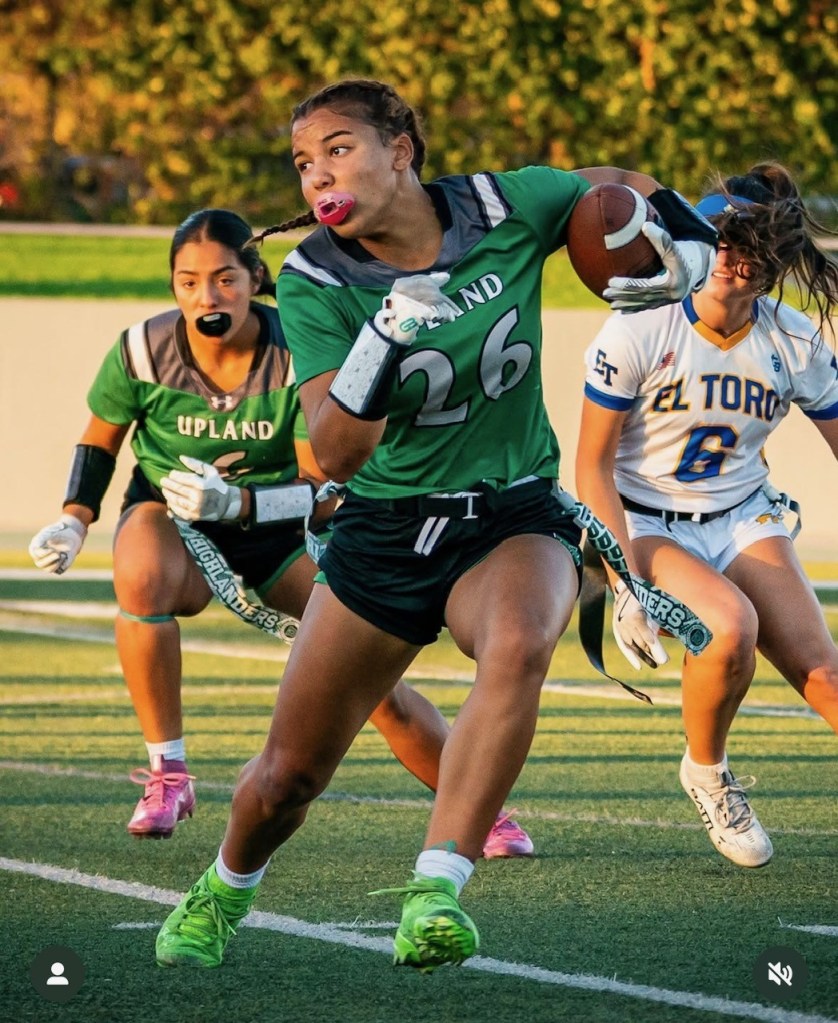
With girls high school flag football launching in popularity once the sports world came out of its COVID-19 stall, credit Davis as one seizing the moment.
As an Upland High freshman, Davis earned 2024 Baseline League Most Valuable Player and was All-CIF-SS Division II when she had 2,042 yards from scrimmage and scored 37 touchdowns to help her school win the inaugural league title. From that alone, she received eight college scholarship offers. As a sophomore, she led the nation in scoring with 352 total points and ranked second with 54 touchdowns, according to MaxPreps. She caught 112 passes for 1,626 yards, ran for more 892 yards and led her team’s defense with 158 flag pulls and 13 interceptions as Upland made it to the CIF-SS D-II semifinals. Already, Davis was attracting higher-profile travel teams. To help her stay fit, she also ran the 100-meters and 100-hurdles on the track team, helping her average 14.6 yards per reception and 8.8 yards per carry during her first two seasons.
Named the Inland Empire Player of the Year in 2026, Davis said it was her grandfather, father and two older brothers playing football that inspired her. “Something inside of me clicked when I watched them play,” Davis said about her brothers Andrew and Aiden. “I wanted to do that.”
According to the National Federation of State High School Associations, girls flag football is the fastest growing spot in the nation, emerging just after the 50th anniversary of Title IX. Although the CIF doesn’t have a state championship yet, schools have been offering the sport since 2023 through the support of the Los Angeles Rams and USA Football. California drives nearly 30 percent of all high school girls flag football players nationwide.
“You realize you’re part of a movement that’s happening nationwide, and that’s such an honor to be part of,” Davis said. “I want to be an inspiration for my city, my school and all the young girls thinking about playing.”
Slava Voynov, Los Angeles Kings defenseman (2011-12 to 2014-15):
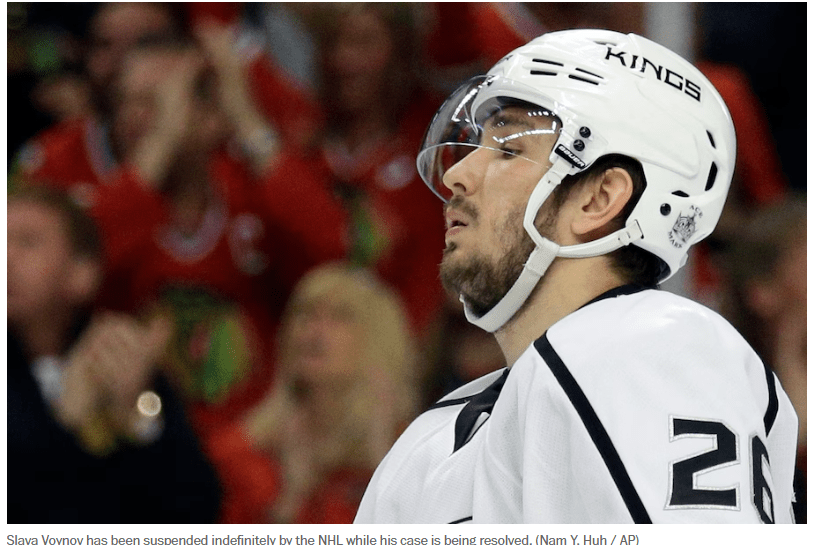
The Russian star made it through three full seasons in the NHL, two of them overlapping the team’s two Stanley Cup titles, after the Kings drafted him 32nd overall in 2008. He anchored the team’s defense with Drew Doughty. But Voynov lasted just six games into the ’14-15 season. The 24-year-old budding star was suspended indefinitely in October, 2014 for what authorities determined were acts of domestic violence against his wife, Maria Varamova, after a Halloween party. The details were not pretty. The team tried to allow him to still stay and practice, but were fined by the NHL. They eventually terminated his six-year, $25 million contract in 2015 even as Voynov pleaded not guilty in 2014, and then no contest to a reducted charge and was sentenced to 90 days in jail. He got three years of probation and counseling. He was returned to Russia through immigration officials. The suspension was permanent for “unacceptable off-ice conduct” in April of 2019 and the team cut ties with him. He continued playing professionally in Russia and was on the country’s 2018 and 2022 Winter Olympic teams. “This guy was a special player,” NBC hockey analyst Mike Milbury said during a broadcast, “and an unfortunate incident left the Los Angeles Kings without a great defenseman.”
Melia Brewer, UCLA women’s soccer defender (2025):

Graduating early from high school in Kansas, Brewer, at 16, is believed to be the youngest athlete in school history when she started as a freshman on the women’s soccer team that advanced to the NCAA tournament. Joining the UCLA team for the post-season marked her eighth game with the Bruins as a result of her participation in the FIFA under-17 Women’s World Cup in Morocco, where the Americans won their group before losing to the Netherlands on penalty kicks in the Round of 16.
Tony Gonsolin, Los Angeles Dodgers pitcher (2021 to 2025): Posting an 11-0 record and 2.02 ERA in the first half of the 2022 season, it earned him a spot in the MLB All-Star game — an exhibition game played that year at Dodger Stadium. Gonsolin came in as a reliever, gave up three runs on four hits (including two home runs) and absorbed his first loss of the season. And then went home to his cats. After elbow surgery knocked him out of the 2024 season, he made seven starts in ’25 and was finished.
We also have:
Danny Schayes, Los Angeles Lakers forward (1993-94)
Luis Gonzalez, Los Angeles Dodgers outfielder (2007)
Doug Mientkiewicz, Los Angeles Dodgers first baseman (2009)
Asante Samuel Jr., Los Angeles Chargers cornerback (2021-2024)
Anyone else worth nominating?


3 thoughts on “No. 26: Gene Autry”