

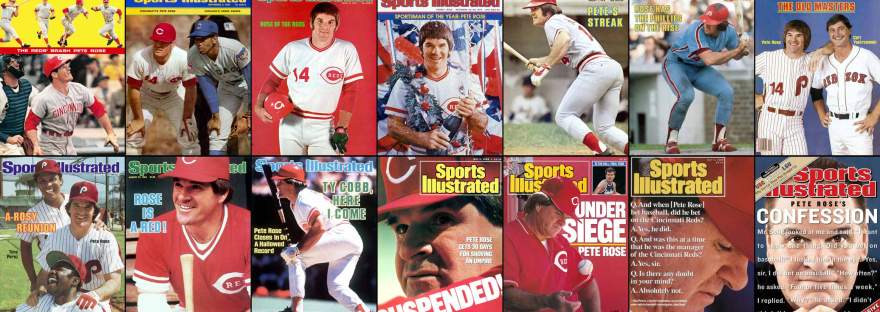
“Charlie Hustle: The Rise and Fall of
Pete Rose, and the Last Glory Days of Baseball”
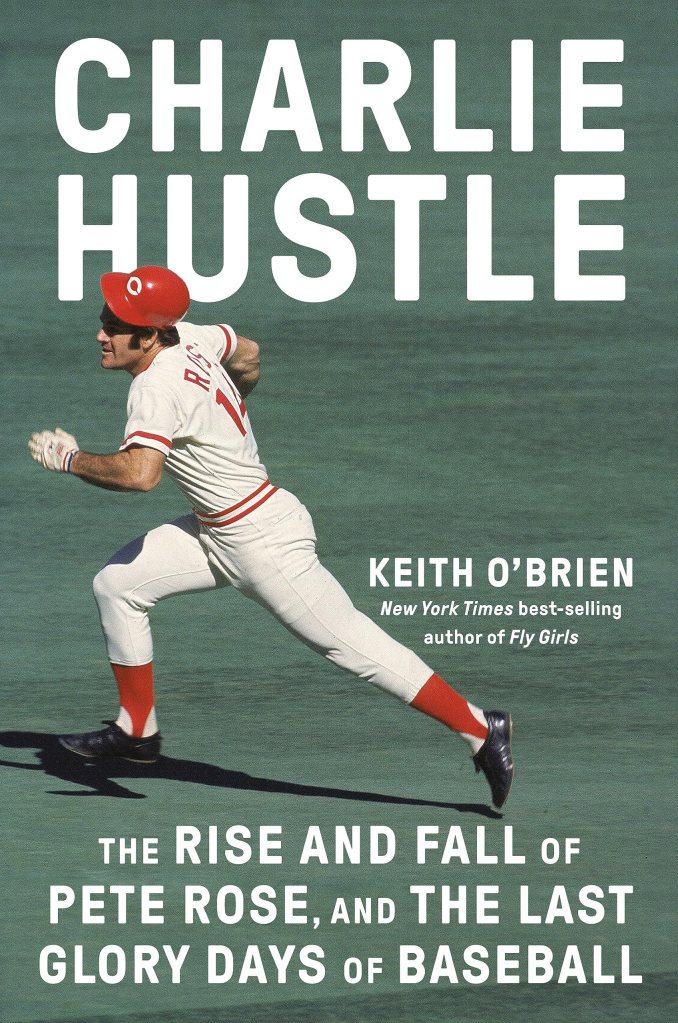
The author:
Keith O’Brien
The publishing info:
Pantheon Publishing
464 pages, $35
Released March 26, 2024
The links:
The publishers website; the authors website; at Bookshop.org; at Powells.com; at {pages}; at Walmart.com; at BarnesAndNoble.com; at Amazon.com
The review in 90 feet or less
The stories wedged into our data stream with the non-latest on Shohei Ohtani’s curious plight of paying off someone’s gambling debts — his own, his interpreter, or something else we’ve lost in translation — essentially hits on the same few notes.
A) Major League Betting … er, Baseball … in bed with gambling websites is hypocritical going back to 2018;
B) Sports wagering isn’t legal in California and maybe should never be;
C) A story of this magnitude was bound to blow up some day and “you’d be insane to think there isn’t going to be a scandal,” and;
D) didn’t we already cover this with The Life and Times and Bad Bets and No Remorse of Pete Rose?
Pull up a bench, Johnny. The story isn’t over til it’s been done over and over.

As analysis and discussion diverts to any sort of misdirection with a lack of nuance or understanding — or simple facts — Keith O’Brien, whose new book about Rose has been moving the needle since its recent release, has now been the new go-to opinionist to lean into, giving everyone an entry point to ponder as to what the MLB might have learned from its past to deal with this present crisis.

“In the earliest days of baseball’s last gambling crisis — the Pete Rose gambling scandal 35 years ago, in 1989 — the men in charge knew exactly how they wanted to handle the problem of Rose’s alleged gambling,” writes O’Brien in a piece for CNN. “For starters, they got ahead of the story.
“In February 1989, about four weeks before Sports Illustrated wrote a series of articles detailing Rose’s bets on baseball and his own team, the Cincinnati Reds, top officials in baseball’s front office invited Rose to come to New York City for a secret meeting to discuss rumors of his gambling.
“In attendance that day, aside from Rose and his lawyers, were outgoing baseball commissioner Peter Ueberroth, incoming commissioner Bart Giamatti, and Giamatti’s hand-picked deputy and close friend, Fay Vincent. And based on interviews I did for my new book ‘Charlie Hustle,’ the meeting was both friendly — and filled with lies. When the baseball officials asked Rose if he had ever bet on baseball, he denied it.
“ ‘I’m not that stupid,’ Vincent recalled him saying.
“It could have ended right there. As Rose left that day, smiles and handshakes all around, both Giamatti and Vincent found Rose believable, in part because Rose was right: He couldn’t be that stupid.”
Who, really, is that stupid?
With this Ohtani caper, the world is “radically different than the one” MLB Rose investigator John Dowd lived in 35 years ago, O’Brien continues. For one, this is a global story with Japanese reporters on top of everything. Rumors travel quicker than bets placed on phones.
O’Brien adds: “In this new world — where seemingly everyone is betting and we are often doing it from the comfort of our couches, on our phones — do fans have the stomach for a lengthy gambling investigation into their favorite player? More importantly, does baseball? It was hard enough 35 years ago when Giamatti, Vincent and Dowd put their careers on the line to pursue Rose and then banished him forever for his sins.
“ ‘I will be told that I’m an idealist,” Giamatti said in 1989. “I hope so.”
“We might be about to find out how many idealists are left.”
Here’s an idea: Find a way that Rose doesn’t keep inserting himself into another person’s mess.
In an NPR “All Things Considered” piece with Alisa Chang, O’Brien says the Ohtani story “is already the biggest gambling problem that baseball has faced since Pete Rose. And that’s not to equate Shohei Ohtani to Pete Rose. They are different stories. But the fact that we ended up here is not surprising at all.”
O’Brien, a Cincinnati native who says in the intro he’s been obsessed with the Rose story for decades and has “felt just about every emotion about Pete Rose: pride, disgust, frustration, pity and confusion … only one thing hasn’t changed over the years: my fascination with his story. He was Icarus in red stirrup socks and cleats … He was both a miracle and a disaster, and he still is today.”
With that he has generated about 100 pages just of notes at the end.
Yet, maybe we just don’t share the same fascination any more. Maybe that’s why our spikes our stuck here.
O’Brien, who has has produced various high-end books as well with “Paradise Falls,” “Fly Girls” and “Outside Shot,” has decided to jump in here with what critics and those with platforms are calling a very worthwhile pursue of more truths. They note O’Brien put in the work combing through nearly released FBI documents and talking to about 150 interview subjects for a … fresh take?
The payoff has been more immediate book sales.
I still hesitate to get caught up in any of this. Too many unanswered things floating around, lost in translation. The O’Brien book has been on the top of the stack awhile. Many great endorsements. For example, our friend Jeff Pearlman writes the blurb: “I’ve never liked Pete Rose. I’m not sure many people have liked Pete Rose. But he also may well be the most fascinating pro athlete of the last century. And that’s what makes Keith O’Brien’s richly reported, beautifully written Charlie Hustle so damn good. It’s riveting. It’s engrossing. And, like Rose, it’s impossible to ignore.”
Except, that’s exactly what we’re doing.
Ignoring. Not because we’re ignorant. We’re just worn out. Jock-strapped for a reason to keep reading.
At a time when it also seems impossible to abstain from any sort of sports wagering, we’ve managed that as well.

Aside from occasionally reading his stats — they are darn impressive — and having interviewed him several times, we’ve realized we’ve written about him far too often. Promo code 4256. Baseball’s “inglourious basterd.”

In the book world: Been there, read that, pushed it aside. Autobiographies, biographies, how-to, journalistic enterprise reporting. It’s beyond a saturation point.
The first “Charlie Hustle” was actually published nearly 50 years ago — yes, that long ago — and marketed as an “uninhibited diary” from 1975.
That was five years after his first autobiography, and four years before a kids-level book“Pete Rose: My Life in Baseball.”
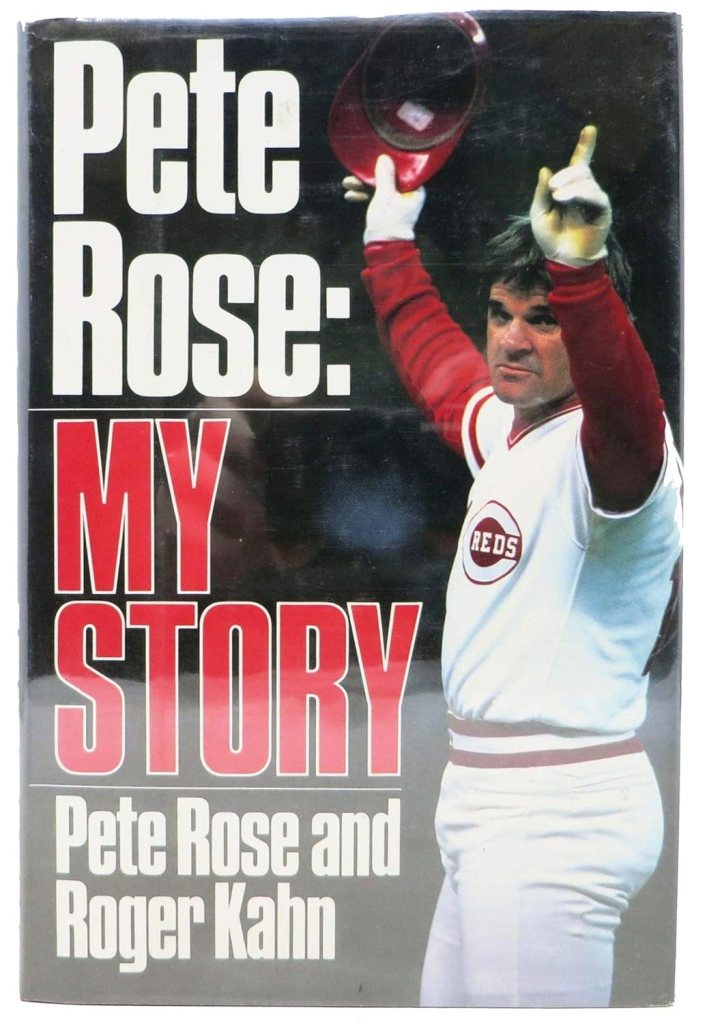
At the heart of the gambling scandal in 1989, out came “Pete Rose: My Story” with Roger Kahn, trying to tell his side.

That led to, in 1990, the counterpoint from journalist Michael Sokolove with “Hustle: The Myth, Life and Lies of Pete Rose,” which got re-released in 2005 with a refresh.
Since the turn of the century, as Rose was going through his first dozen years banned from the game, he turned to the sympathetic confessor in “Pete Rose: My Prison With Bars,” with Rick Hill, in 2004.

Now was the attempt to admit he cheated, which he does. Sort of. It also was giving Rose a chance to “confronts his demons, tackling the ugly truths about his gambling & his behavior.”
It was all something of a hope it would lead to his reinstatement. Tiny violins not included.
Rose says that he refuses to ”beg your forgiveness like a TV preacher,” and that he does not want sympathy.
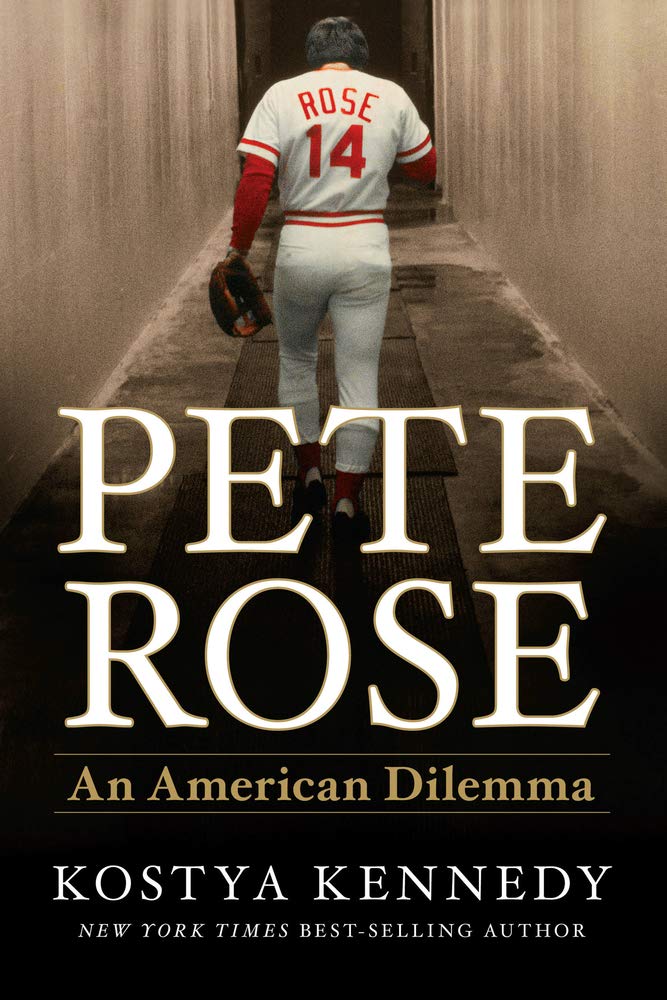
Wait another decade, and admist even more Rose attempts for weird redemption, it gets framed best in “Pete Rose: An American Dilemma,” with Kostya Kennedy in 2014, which we thought would be the last of it. What else more is there?
In 2019, Rose himself dumped another one on us, “Play Hungry: The Making of a Baseball Player,” again proving his literary chops.
Now, this.
Read all about it: There is no more dilemma. We’re done.
How it goes in the scorebook
I’m grateful there are enough scribes in the universe who’ll jump on the chance to review this. Many even say it’s worth the time.
When Will Leitch reviewed it for The Wall Street Journal he added: The author approaches his project with an undeniable appreciation of Mr. Rose’s appeal and ability to connect with the common fan, but he is not afraid of digging into often unsettling truths. Mr. Rose gave 27 hours of interviews to Mr. O’Brien, according to the author, but, perhaps inevitably, stopped returning the writer’s calls when he began to get into what his subject calls “the dirty stuff.” And there is plenty of dirty stuff. … At the end of Mr. O’Brien’s comprehensive, compulsively readable and wholly terrific book, Pete Rose, a tired old man fully estranged from his sport, sits in a brand new Cincinnati casino, signing one tchotchke after another, telling old stories from decades ago. Each item at such a signing comes with its own price, but for $35 extra, he will add a specific phrase to the signature: “I’m sorry I bet on baseball.” This admission, such as it is, came years too late—and also is only a portion of the truth. As he once told assembled reporters years earlier, after being suspended 30 games for bumping into an umpire: “I hate to say it, but I would probably do it again, if the situation came up. It’s just the way I am.”
Here’s an excerpt if you wish.
It’s easier to acknowledge and take a pass. I just don’t want to phone this one in.
The Pete Rose story here is as done and tired as a torn up betting slip. He seems more and more defiant, playing the victim in a way far too normalized as a tone to take these days.
In a recent CBS special called “You Are Looking Live,” which aired on Super Bowl Sunday and documented the history of the “NFL Today” show, did you see the clip where they invited Pete Rose to fill in for Jimmy “The Greek” Snyder” and, on live TV, do the quasi-picks of the day with Brent Musburger? What a jarring visual that was. It’s as is Rose’s attachment to betting way back then was seen as something quaint and celebrated.
That clip really didn’t hold up well. Nor does another attempt at a “let’s look at Pete Rose again.” We’re tired of getting hustled.
Or, as it says in his SABR biography by Andy Strugill, included the 2014 book, “The Great Eight: The 1975 Cincinnati Reds” (University of Nebraska Press, edited by Mark Armour):
In his 70s and still a fixture at baseball card and autograph shows, Rose spent more than 20 hours a week greeting fans and signing autographs at Caesar’s Palace in Las Vegas for much of the decade of the 2000s. So long as the individual paid the autograph fee, Rose would sign anything, including the Dowd Report and his mug shot from his tax-evasion charges. It’s all part of the hustle.
Instead of another book about Charlie Hustle …
“Cardinal Dreams: The Legacy of Charlie Peete and a Life Cut Short”

Author: Danny Spewak
The publishing info: Rowman Littlefield, 292 pages, $33.99, released March 5, 2024.
The links: At the publisher’s website; at the authors website; at Amazon.com
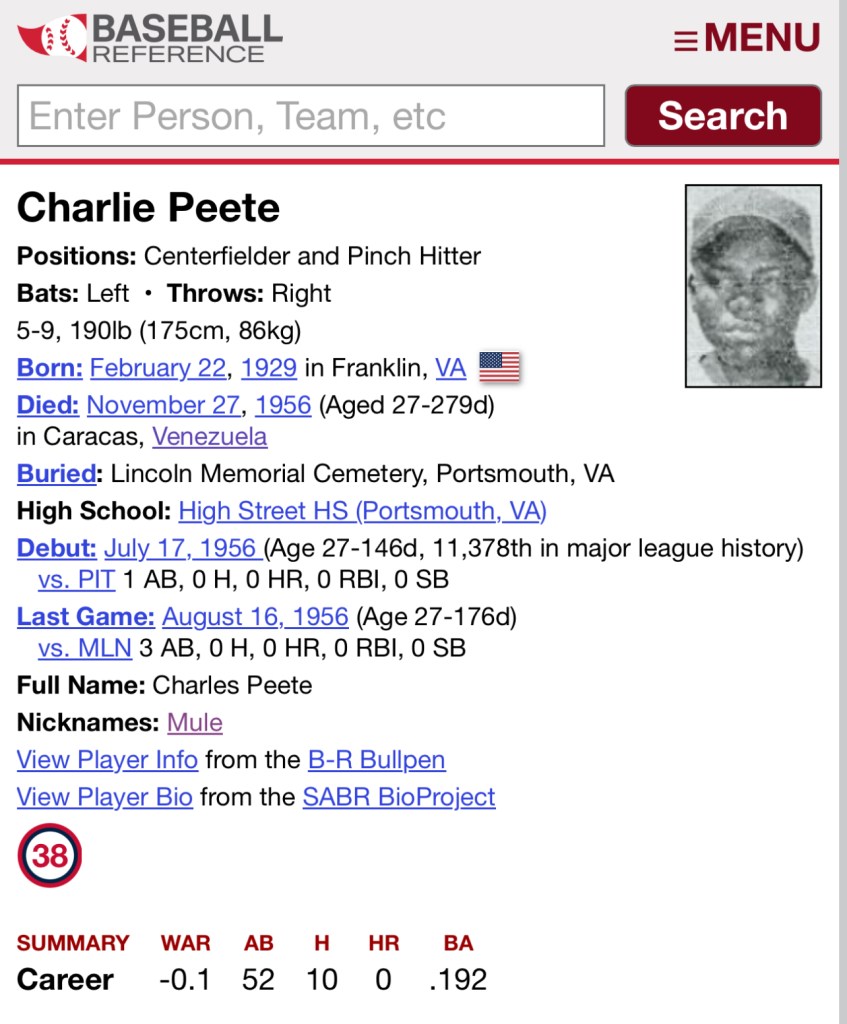
The real deal: Charlie Peete got only 59 plate appearances over 23 games for the St. Louis Cardinals during the 1956 season, finally making it by age 27. He never got another shot. He and his family — wife and two small children — were killed in a plane crash as he was going to Venezuela to play winter ball near Caracas. Note: Peete didn’t break the Cardinals’ color barrier. He came too early to play with Bob Gibson and Lou Brock during their World Series runs. Didn’t play with Curt Flood — who was in fact traded to the Cardinals as a way to replace Peete. It reminds us of Oscar Taveras, the 22-year-old Cardinals outfielder who died in 2014 in the Dominican Republic.
Peete is remembered these days with a plaque at Omaha Stadium where he was at Triple-A, and in his home town of Portsmouth with the Charlie Peete Little League. Here is also Peete’s excellent SABR.com bio as a way to get into this book and remember him as well.


 Tom Hoffarth's The Drill: More Farther Off the Wall
2 thoughts on “Day 13 of 2024 baseball books: Pete, repeat, rinse … and why does it feel we’re just getting hustled again?”