


This post is part of a media project called SoCal Sports History 101: The Prime Numbers from 00 to 99 that Uniformly, Uniquely and Unapologetically Reveal The Narrative of Our Region’s Athletic Heritage. Pick a number, and consider the list of athletes attached to it. Who wore it best? Or, what’s the most compelling story linked to it? Any person, place or thing is in play with Southern California connections. Star power, transformational achievement, longevity, notoriety and quirkiness all factor in. Whatever leads to a lively discussion and interpretation.
The most obvious choices for No. 77:
Luka Doncic: Los Angeles Lakers
Anthony Muñoz: USC football
Ron Yary: USC football
Jeff Carter: Los Angeles Kings
Lyle Alzado: Los Angeles Raiders
Alex Whitworth: Los Angeles Rams
Not-so-obvious choices for No. 77:
John McCarthy: LAFC and Los Angeles Galaxy
Adam Oates: Mighty Ducks of Anaheim
Paul Coffey: Los Angeles Kings
The most interesting story for No. 77:
Anthony Muñoz: USC football offensive lineman (1976 to 1979) via Chaffey High of Ontario
Southern California map pinpoints:
Ontario, Los Angeles (Coliseum)

Imagine if all 6-foot-6 and 278-pounds of Anthony Muñoz played tackle on the University of Illinois’ offensive line in the 1920s, paving a path for someone still considered, a century later, as the greatest college football player of all time in Harold “Red” Grange.
Both wore No. 77. Who would be best remembered for it decades later?
In “The Football 100,” a 2023 list procured by the staff of The Athletic that takes into account the 25,000-plus players who’ve suited up in the NFL during its century of existence, Muñoz is slotted as 12th from the top. Not only is he the top offensive lineman on that list, but he is positioned as the highest-ranked football player ever associated with Southern California ties.
Grange, despite his Pro Football Hall of Fame status, didn’t even make this list.
Before his own ascent into a Pro Football Hall of Fame career, Muñoz was included in ESPN’s list of the 150 greatest players in college football’s 150-year history, a place where Grange sits only at No. 6. Despite having just one healthy full season, and missing 16 games during his final two seasons, he still made it into the College Football Hall of Fame.
Three knee surgeries in four years robbed him of almost every chance to play in games against rivals UCLA and Notre Dame. Then came the 1980 Rose Bowl, where USC coach John Robinson said Muñoz’s performance was “one of the greatest things I’ve ever seen happen.”

The Chaffey High of Ontario multi-talented and curly-haired tower of power was where Muñoz first wore No. 77. He picked USC to continue with football as the draw, but baseball as the hook.
Raised by a single mom and who never knew his dad, learning the joy of sports from his older brothers, Muñoz was declared to be “too big” to play Pop Warner football. So he gravitated to baseball.
“Baseball was my first love,” Muñoz said in an NFL Films production that included him on the NFL 100 All-Time Team. “I was going to be a Major League Baseball player. I was going to be a third baseman or a pitcher. Brooks Robinson or Juan Marichal.”
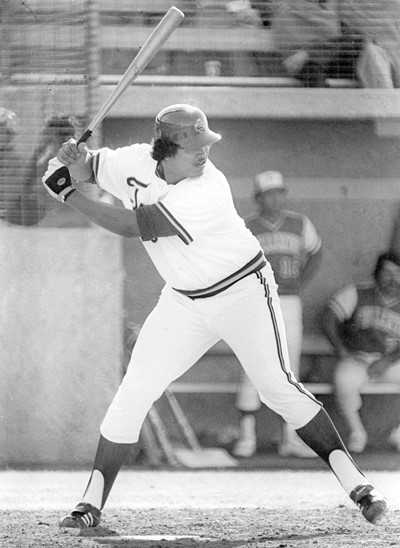
There is plenty of documentation showing Muñoz pitch and spend some menacing time in the batter’s box on USC coach Rod Dedeaux’s storied 1978 College World Series title team, which had a national-best 54-9 mark, setting the school’s single-season win record. The 1978 USC baseball team earned an 11th and final College World Series championship for Dedeaux.
It was at a time when he happily encouraged Trojan football players to join his team, including Anthony Davis, Jack Del Rio, Rodney Peete and John Jackson.
“Dedeaux was very happy to have a celebrity like Anthony Muñoz with us,” said Trojans pitcher Spiro Psaltis, a freshman on that team, told USC RipsIt Blog. “Rod loved to have athletes, if they were good enough.”

Muñoz’s strength and agility were best served on the football team’s offensive line, an intriguing reason why two Heisman Trophy winners – Charles White and Marcus Allen – emerged from the backfield following his lead.

Still, in ESPN’s 2020 list of the 150 greatest college football players in the game’s first 150 years, Muñoz is described as someone who “might have been the greatest what-if on one of the great what-if teams in college football history.”
During USC’s 1979 season-opening win over Texas Tech, Muñoz suffered a devastating left knee injury. He was out for the entire season. Or at least the last four calendar months.
As the Trojans went from pre-season No. 1, slipped to No. 4 after a Week 5 21-21 tie against Stanford, and headed into the bowl season at No. 3 with an a 10-0-1 mark, Muñoz kept pressing on, rehabbing after surgery for an injury that was not just a tear of the anterior cruciate ligaments but of other ligaments.
Over a span of 112 days from September through December, Muñoz was cleared to play in Pasadena, a place he already missed playing during his freshman and junior years because of injuries to his right knee.
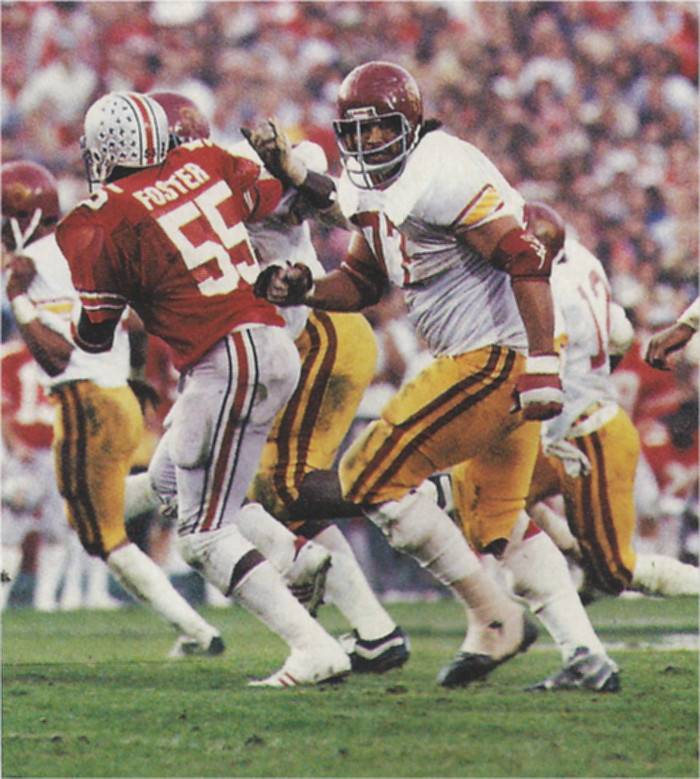
Muñoz’s presence in USC’s 17-16 win over Ohio State with offensive line mates Brad Budde, Roy Foster and Chris Foote made the Trojans’ famed 28 Pitch/”Student Body Right” work for White, who had a game-record 247 yards rushing, including the 1-yard leaping game-winning touchdown with 1:32 left, and was named Player of the Game. On the final eight-play, 83-yard drive, White had six carries, often going behind Muñoz as the weak-side offensive tackle.
“Anthony, to me, was the miracle man,” Budde told the Southern California News Group in 2017.
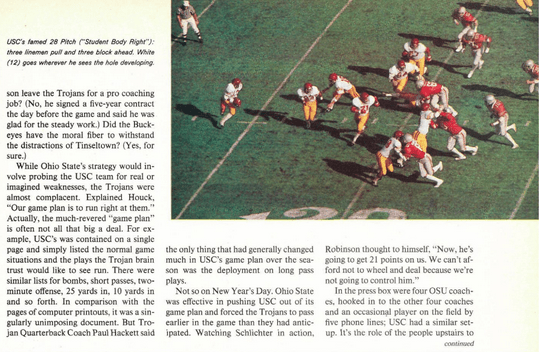
(A fascinating piece on that Rose Bowl by Doug Looney in Sports Illustrated focused on the in-game strategy calls by Pete Carrol, then the Ohio State defensive backs coach).
The Rose Bowl win not only vaulted the Trojans past the Buckeyes and into the No. 2 spot of the final poll behind undefeated Alabama, but it assured NFL teams that Muñoz was back.
Muñoz could have taken a medical redshirt year and come back for the 1980 season with USC. But according to a piece in Joe Posnanski’s 2025 book, “Why We Love Football: A History of 100 Moments,” the Cincinnati Bengals wanted offensive line helpbadly with its No. 3 overall pick in the 1980 NFL draft. Head coach Forrest Gregg was trying to decide which USC offensive line star he wanted most — Muñoz at tackle or Budde at guard. Gregg, then a 46-year-old who had been in the Football Hall of Fame for three years based on his career with Green Bay, met with Muñoz and tested him personally in drills. Muñoz knocked Gregg to the ground in the last past of the test.
“I said to myself, ‘We’ve got to have this guy’,” Gregg said. Muñoz was picked; Budde went to No. 10 by Kansas City.

While USC has only retired the jersey numbers of players who won Heisman Trophies, the program has been willing to designate No. 77 to offensive lineman who fit the standard set first by Ron Yary, Sid Smith, Pete Adams and then Muñoz.
That honor has gone to Pat Harlow, Ken Ruettgers and Jacob Rogers, the later of whom was a consensus first-team All-American blocking for Carson Palmer and Matt Leinart from 2000 to 2003.
When Muñoz arrived in Cincinnati, No. 77 was already taken by veteran left tackle Mike Wilson. Muñoz accepted No. 78 and was put at the right left-tackle spot to protect quarterback Ken Anderson. Wilson moved to right tackle. The Bengals have not retired Muñoz’s XXXL No. 78, but they haven’t reissued it since his 11-season career where he missed only three games, played on two Super Bowl teams and named to the NFL’s 75th Anniversary All-Time team. The team has only retired one number.
In his 2023 book, “Got Your Number: The Greatest Sports Legends and the Numbers They Own,” Mike Greenberg slots Muñoz at No. 78 and writes: “There is no player I have come across who has engendered the same degree of universal admiration and awe as Anthony Muñoz … he is a person who oozes character, decency and charisma from every pore … I can attest from personal experience that people will remember a player as great as any to ever set foot on a field and a man who was even greater than that.”
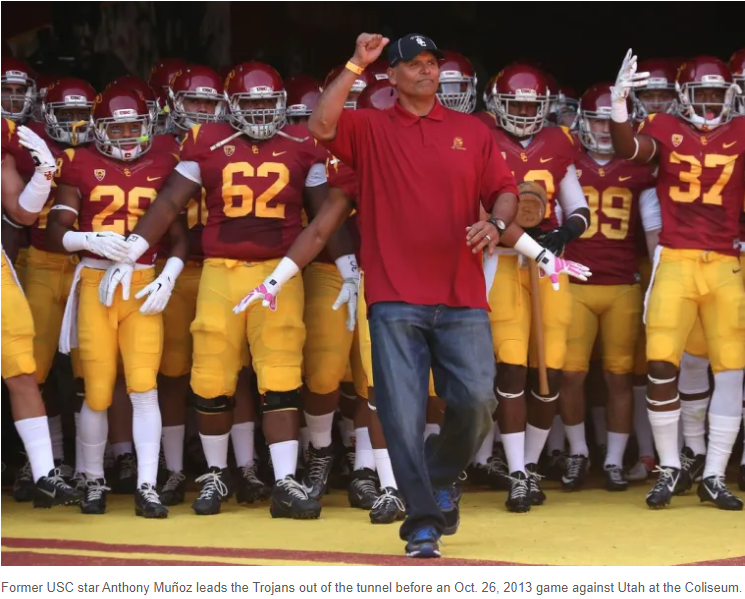
“My mom raised five kids by herself, working two to three jobs at a time to provide for us,” Muñoz has said. “I never met my dad, and I never will – he has passed away. What I do know of him is he was a heroin addict and in-and-out of jail for using and selling drugs. I was determined not to follow in his footsteps. It occurred to me that sports and education were the two ways out of my neighborhood … and I was determined to succeed.”
In his 2021 induction to the California Sports Hall of Fame, Muñoz is credited for the impact he has made in Cincinnati where he still lives, as one of the “community’s most accessible and involved advocates.” It speaks to his being named the NFL’s Man of the Year in 1991.
His son, Michael, introduced him upon his election to the Pro Football Hall of Fame on the first ballot in 1998. The next year, he was in the fourth class of the USC Athletics Hall of Fame. The Ontario-Montclair School District, where he attended, recognized him as its 2017 Model of Excellence.
The city of Ontario renamed Colony Park as the “Anthony Muñoz Hall of Fame Park” in his honor.
Note the concrete sign. As sturdy as Muñoz himself.

Who else wore No. 77 in SoCal sports history?
Make a case for:

Luka Doncic, Los Angeles Lakers forward (2024-25 to present):

The 6-foot-6, 230-pound shooting guard from Slovenia who already procured nicknames such as El Matador, Cool Hand, The Don, Wonder Boy, El Niño Maravilla, Swaggy L, and Luka Legend came to Los Angeles in a surprise trade involving Anthony Davis in early Feburary, 2025. He kept the No. 77 he made famous in Dallas, where he was the NBA 2018-19 Rookie of The Year, a five-time All-NBA player, the ’23-’24 Western Conference Finals MVP and the scoring champ that same season after posting a 33.9 points-per-game mark. He averaged 28.1 points in the 25 games with the Mavericks before the trade with a career mark of 28.6. His career best was a 73-point game in January of 2024 against Atlanta in addition to having a career best of a 21-rebound night as well as a 20-assist night, to go with 80 triple-doubles.
Ron Yary, USC football defensive line/offensive tackle (1965 to 1967):

The Bellflower High star in football, basketball and baseball spent a year at Cerritos College before becoming the Pac-8 Defensive Lineman of the Year as a sophomore at USC. Then head coach John McKay had a better idea — he moved Yary to offensive tackle to fortify the Student Body Right offense. That created a two-time All-American and the Outland Trophy winner, part of the ’67 Trojans win in the Rose Bowl and national championship blocking for O.J. Simpson. Yary became the NFL’s No. 1 overall pick by Minnesota in 1968 (the Vikings traded Fran Tarkenton to the New York Giants for that choice) and spent seven Pro Bowls in his 14 years there, on the 1969 Super Bowl winning squad. He retired as a member of the Los Angeles Rams (wearing No. 73) and inducted into the College Football Hall of Fame in 1987 (noting that USC was 24-7-1 when he played there). The Pro Football Hall of Fame welcomed him in 2001 as he was also named to that Hall’s All-1970s team. Yary was the last offensive lineman to ever be drafted first overall until the Rams picked Orlando Pace in 1997.

Jeff Carter, Los Angeles Kings center (2011-12 to 2020-21): The center piece on the team’s “That 70s Line” (with No. 73 Tyler Toffoli and No. 70 Tanner Pearson) was a key veteran acquisition in February, 2012 for Jack Johnson that drove the team to Stanley Cup wins that season and in 2014.
Paul Coffey, Los Angeles Kings defenseman (1991-92 to 1992-93): The Hall of Famer and 14-time All Star had his cup of coffee with the team for 60 games, scoring nine goals with 53 assists, another former Edmonton Oilers Stanley Cup title friend of Wayne Gretzky. Coffey also had four goals and three assists with L.A. in a six-game playoff series loss to Edmonton. He is No. 18 in “The Hockey 100” list of the greatest players in the game’s history, published in 2026, winning three Stanley Cups in Edmonton and one in Pittsburgh, second all time among defensemen with 1,531 points in 1,409 games.
Adam Oates, Mighty Ducks of Anaheim center (2002-03): The future Hockey Hall of Famer came to Anaheim as a free agent at age 40 and helped push the Ducks to the Stanley Cup Final against New Jersey. With nine goals and 36 assists in the regular season, he added four goals and nine assists in 21 post-season contests and 400 minutes of ice time. He is No. 74 in “The Hockey 100” book.
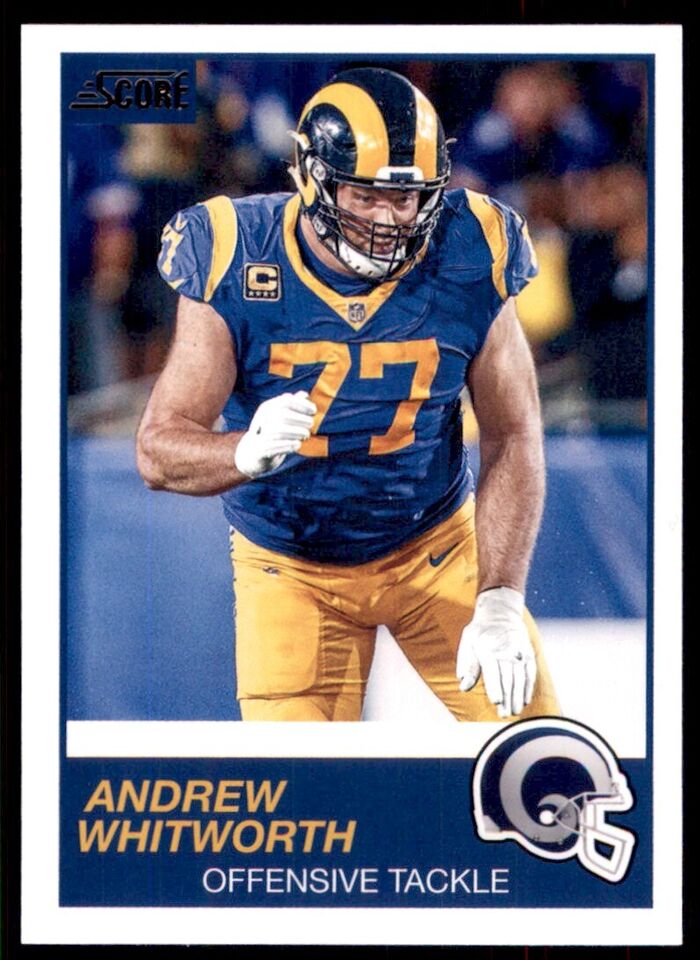
Adam Whitworth, Los Angeles Rams offensive lineman (2017 to 2021): The former Cincinnati Bengals All-Pro left tackle was brought in to L.A. at age 36, and he pulled together his 6-foot-7 and 330-pound frame through age 40 and a Super Bowl title.
Doug France, Los Angeles Rams offensive lineman (1975 to 1981): A two-time Pro Bowl tackle also got a role in the movie “North Dallas Forty.”

Vitamin Smith, Los Angeles Rams running back (1949 to 1953): Out of Sweetwater, Texas before graduating from Ventura High, Verda Thomas Smith became known as “Vitamin T” as he set an NFL record with three kicks returned for touchdowns in 1950. It stood for 17 seasons. Smith led the NFL in punt return yards with 427 in 1949 and in kickoff return yards with 742 in 1950. Enrolled in the U.S. Army, Smith was also part of the Battle of Normandy before attending Abeline Christian University. He came to the Rams as part of a famous rookie class of 1949 that included Hall of Fame quarterback Norm Van Brocklin, Elroy “Crazy Legs” Hirsch and Paul “Tank” Younger. Smith changed to No. 47 for his final two seasons with the Rams after playing on their 1951 NFL title team.
Have you heard this story:
Lyle Alzado, Los Angeles Raiders defensive end/defensive tackle (1982 to 1985):
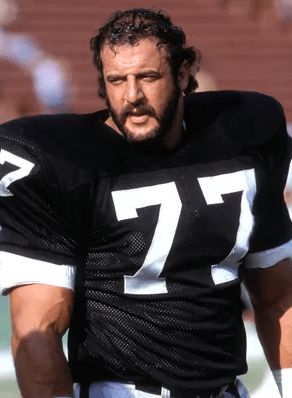

His previous 11 NFL seasons in Denver and Cleveland set the stage for his move to L.A. and what would be part of a Super Bowl title. The NFL’s ’82 Comeback Player of the Year actually thought he could make a comeback with the Raiders in 1990, five years after his retirement and a run as a network TV analyst. Two years later, “Darth Raider” he died of brain cancer at age 43, but not before going public about steroid use and claiming some 90 percent of NFL players were doing the illegal building drug.
John McCarthy, LAFC goalie (2022-2023), Los Angeles Galaxy (2024 to 2025):
The MVP of the 2022 MLS Cup should never have to buy another drink with 3252 Supporters. On the LAFC home field, he was forced into the MSL Cup final against the Philadelphia Union, his hometown team that first signed him as a third-stringer in 2015, after LAFC starting keeper Maxime Crepeau fractured his leg in the 117th minute of the second extra-time period. He gave up a go-ahead goal, but LAFC posted a goal in stoppage time to push the game into penalty shootouts. McCarthy, who hadn’t stopped a penalty try in seven MLS seasons, made two brilliant saves that secured the title. In the 2023 season, McCarthy came up with another highlight save of a Lionel Messi shot attempt when Miami made its star-studded visit to L.A. over Labor Day weekend. McCarthy started 25 games in the 2023 season as Crepeau returned in September after nearly a year of grueling rehab from the complicated injury and will start for LAFC in their MLS Cup final return against Columbus. The Los Angeles Galaxy picked him up and gave him No. 77 starting with the 2024 season — although his Galaxy online profile makes little to no mention of his achievements with the rival LAFC. The Galaxy traded him to New York late in the ’25 season.
We also have:
Reggie Willits, Los Angels Angels outfielder (2006 to 2011)
James Outman, Los Angeles Dodgers outfielder (2022, changed to No. 33 in 2023)
Adam Oates, Mighty Ducks of Anaheim center (2002-03)
Anyone else worth nominating?


“Rogers was a consensus first-team All-American who blocked for Carson Palmer and Matt Leinart at USC from 2000 to 2003 (and maybe one of the most memorable plays during Rogers’ career came in the 2004 Rose Bowl against Michigan when he took a reverse handoff from receiver Mike Williams and threw a touchdown pass to Leinart).”
Ummm… no. Big Mike Williams took the handoff and threw the TD to Leinart.
LikeLike