

This is the latest post for an ongoing media project — SoCal Sports History 101: The Prime Numbers from 00 to 99 that Uniformly, Uniquely and Unapologetically Reveal The Narrative of Our Region’s Athletic Heritage. Pick a number and highlight an athlete — person, place or thing — most obviously connected to it by fame and fortune, someone who isn’t so obvious, and then take a deeper dive into the most interesting story tied to it. It’s a combination of star power, achievement, longevity, notoriety, and, above all, what makes that athlete so Southern California. Quirkiness and notoriety factor in. And it should open itself to more discussion and debate — which is what sports is best at doing.

The most obvious choices for No. 68:
= Keith Van Horn, USC football
= Mike McKeever, USC football
= Frank Cornish, UCLA football
= Ross Stripling, Los Angeles Dodgers
The most obvious choices for No. 86:
= Marlin McKeever, USC football, Los Angeles Rams
= Jack Bighead, Pepperdine football; Los Angeles Rams

The most interesting story for No. 68 and No. 86:
= Mike McKeever, USC football offensive and defensive guard (1957 to 1960)
= Marlin McKeever, USC football offensive and defensive end / fullback / punter (1957 to 1960); Los Angeles Rams tight end / linebacker (1961 to 1966, 1971 to 1972).
Southern California map pinpoints:
South Los Angeles, the Coliseum, Montebello, Long Beach
You betcha, the way Marlin and Mike McKeever’s lives started made for a nifty ice breaker when Groucho Marx had them on his TV show in March of 1961.
So it was during a blizzard on New Year’s Day 1940, on the plains in Cheyenne, Wyoming, when Marlin arrived first. Mike followed 10 minutes later.
The thing is, their parents were told by the doctor to only expect a girl. Just one at that.
“They already named her — Mary Ann I believe,” Mike told Groucho with a chuckle as he and Marlin, along with their new brides, Judy and Susie, made to NBC Studios in Hollywood for a filming of what was then called “The Groucho Show,” an offshoot of the more famous title “You Bet Your Life.”
Their days as USC All-American football giants had just ended. When the 1960 season ended, they had a double wedding ceremony at St. Vincent de Paul Catholic Church in L.A., just blocks away from the USC campus. Later that month, they were drafted by the Los Angeles Rams.
Groucho Marx took a puff of his cigar, sized up the pair of crew-cut, 6-foot-1 and 225-pounders, and remarked: “Imagine getting all set for a baby girl named Mary Ann and suddenly these two show up.”
Groucho was fascinated with how their parents distinguished the two. Marlin said it was by writing their names in Mercurochrome on their stomachs.
“How do you know they weren’t confused?” Groucho asked. “How do you know they didn’t paint the wrong name?”
Mike spoke up: “I’ve thought about that — it’s pretty depressing so I don’t think about it too much.”
Added Marlin: “He can’t think too much, that’s the problem.”
Suddenly, they were the Smothers Brothers.
As Marlin’s wife Susie listed all the twins’ list of achievements at USC, Groucho had to ask: “Well how do you know all this?”
“I kept a scrapbook,” she replied.
A stuffed duck looking like Grouch dropped down from the ceiling to fanfare. She had said the secret word — book. When George Fenneman doled $50 each to the men, to split the $100 prize, they handed it over to their wives.
They were, after all, Academic All-Americans too.
The background
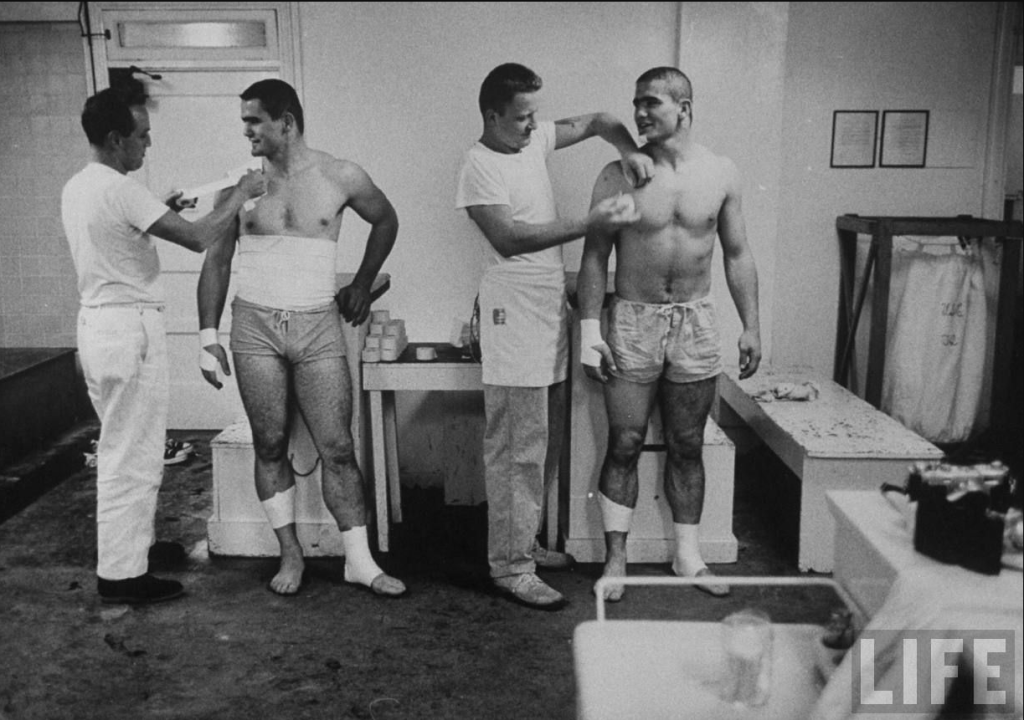
The McKeevers were most definitely the biggest men on campus at Mount Carmel High in South L.A. from 1953 to ’57.
The all-boys Catholic school took over 70th Street between Hoover and Vermont, just 20 years old at the time. The Carmelite Order that would later found Crespi High in Encino made sports an integral part of its curriculum to attract students.
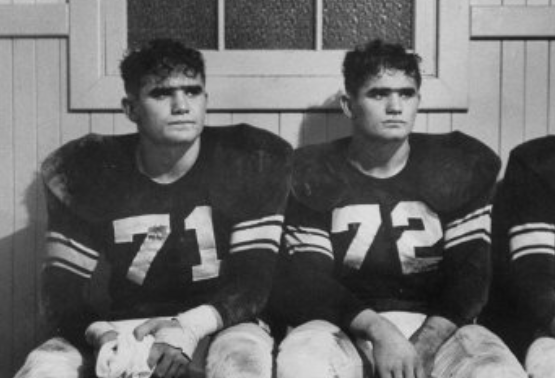
By the late ‘40s, the all-boys school had nearly 600 students, 10 times the amount when it opened in the mid-‘30s, and the athletic fields filled a city block.
Marlin McKeever was on the honor roll all four years as he played football, basketball and baseball, as well as a shot putter and discus thrower. Ditto for Mike.
As a senior, Marlin was named the Los Angeles Examiner Scholastic Association Athlete of Year, All-American Lineman of the Year and All-Catholic League. As seniors, both Marlin and Mike were named Crusader Athletes of the Year for their school.
It was a relative easy choice for the two to head just a few miles north to USC to continue school even though they had offers from some 40 colleges, including Notre Dame and Oklahoma.
“We picked USC because of its high scholastic rating, and because the team was down and we were offered a real challenge,” said Marlin.

The McKeevers were two of the top two dozen who filled the ’57 USC freshman team coached by Marv Goux — with such high expectations, some 10,000 showed up for its first game against Stanford, a 28-6 win.
“Two of the finest athletes I have ever seen,” Goux said of the McKeevers.
USC head coach Don Clark, a captain of the Trojans’ 1947 team, couldn’t wait for their eligibility to kick in. He struggling through a 1-9 season in ’59, tied for seventh in the Pacific Coast Conference, outscored 204-86.
As freshmen, Mike was first given No. 64 as an two-way guard and No. 85 went to Marlin as a two-way end. They showed up with those numbers for USC media day in August of 1958:
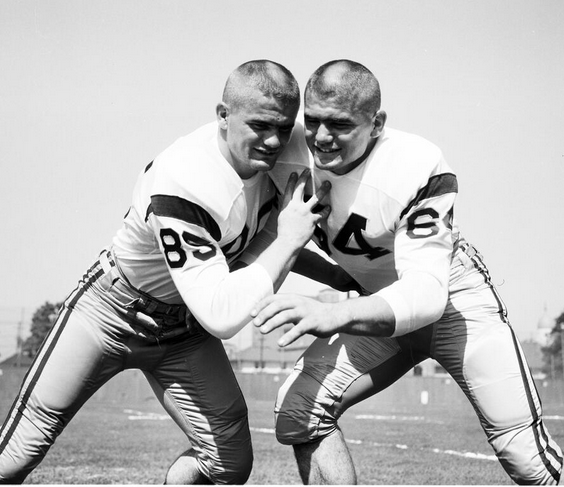
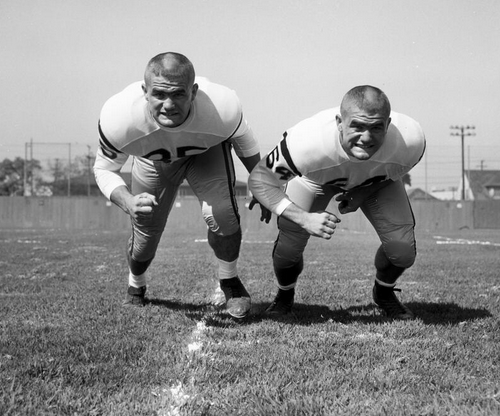
Eventually, a USC publicist wised up.
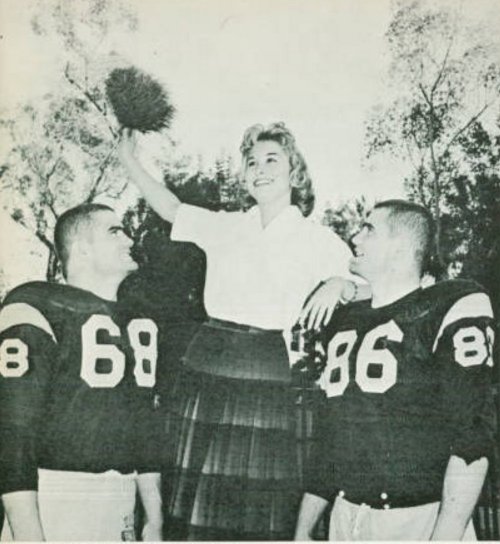
As varsity members, Mike would wear No. 68 and Marlin would get the reverse image of No. 86. It stayed within the numerical order of their positions — and now they were better positioned for the marketing team.
The McKeevers’ immediate impact as sophomores on the 1958 Trojans was helping produce a 4-2-1 record in the conference, albeit 4-5-1 overall, but they outscored their opponents 151-120. Mike led the team in tackles; Marlin had six catches for 105 yards (17.5 average), second on the team that was running-back heavy, was an All-Conference pick, also leading the team in punting.

By 1959, the Trojans would climb as high as No. 4 in the country by early November with the McKeevers gleaning headlines. But finishing with losses to UCLA and at Notre Dame, unable to score a touchdown in either, would ultimately cost Clark his head coaching job, despite an 8-2 overall mark and No. 14 season-end ranking. The Trojans’ 3-1 record in the AAWU tied for first with No. 8 Washington (10-1 overall, their only loss, to USC) and with UCLA (5-4-1) — but no Rose Bowl bid.
When Marlin, as a linebacker, and Mike, as a two-way guard, made the 1959 All-Conference and All-American selections, it was the first time a set of twins ever staked that claim to fame. But that attention came at the end of a very controversy-filled season.
USC jumped out to a 5-0 record in the ’59 season, but during a 30-28 win over Stanford, Mike McKeever was thrown out of the game for unnecessary roughness — an elbow thrown at center Doug Pursell.
By coincidence that week, Time magazine came out with a piece called “Twin Trojan Horses,” heralding the McKeevers for their contribution to USC’s 22-15 win over Washington on Oct. 17.
The story proclaimed:
The power behind Southern Cal’s surge to the top is an oldfashioned, rib-rattling line that clears the way for T-formation backs. On the basic power sweep to the right, glowering End Marlin McKeever cuts down the tackle, and glowering Guard Mike pulls out to lead the interference. “Maybe they’ll stop it the first time,” says Coach Don Clark. “Maybe the second and the third. But sooner or later they make a mistake—and you just watch us go.”
Marlin added in the piece: “We get sheer pleasure out of football — out of knocking people down. It’s just plain fun.”
Then came Week 6, on Halloween afternoon in Berkeley against Cal. Mike McKeever made a sideline tackle on Bears running back Steve Bates. As a result, the Cal player suffered a crushed cheekbone, loosened teeth, a broken nose, and his jaw had to be wired shut.
“One of the most flagrant violations I have ever seen in football,” said Bears coach Pete Elliott.
Mike McKeever wasn’t called for a penalty on that play — but he was ejected in the second half of the game when he elbowed the mouth of Cal quarterback Pete Olson, which required stitches to close the cuts.
Time magazine circled back with a story titled “Too Rough For Football,” alarmed at how the sport’s brutality had been on display — shortly after heralding it. It made sure to quote a Cal hospital staff doctor as saying Bates’ face was “crushed in, distorted, flatted and twisted by the fractured parts that hold the face in contour.” It also noted that the USC star was now being called “Mike the Knife.”
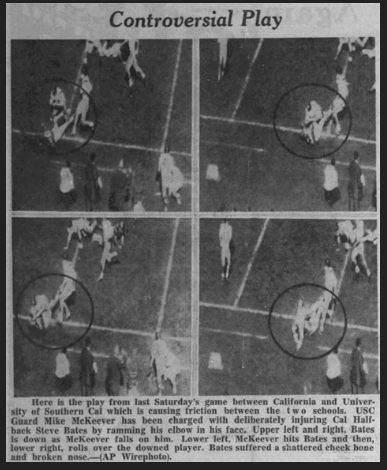
Sports Illustrated followed up with its own story under the headline “Lay Those Elbows Down, Mike,” wrapped around still frames taken from game film to illuminate the hit. California governor Ed Brown was even quoted, chiming in about the severity of the play.
USC President Norman Topping offered an apology. USC’s coaches and players were in damage control.
In that SI piece, Mike and Marlin were referred to as “the twin holy terrors of Los Angeles’ Mount Carmel High School … recruited by USC coach Don Clark to lead the school back to glory. … The press built up the brother act with enthusiasm. Galahad and Lancelot were coming to the Trojans’ rescue … USC was dumbed ‘The University of Southern McKeever’.”
The next game, Mike McKeever had 16 tackles in a 36-0 win over West Virginia, as fans in the Coliseum cheered his name every time it was said by the public address announcer for one of his plays.
All of it may have fueled the McKeever Experience when a new era of USC football came with the arrival of John McKay as the head coach in 1960.

The McKeevers were included in the Playboy All-American team entering the season, which had become a thing of prestige somehow. An October, 1960 issue of The Saturday Evening Post had a story about them, with the cover tease: “The McKeevers of USC: Football’s Fearsome Twins.” They were in Look magainze.

Look, they were also on the cover of Physical Power fitness magazine.
They became part of the heralded lineage of the USC jock-frat house known as Kappa Alpha. Sports Illustrated writer Joe Jares, also a member of the fraternity, wrote years later about the challenges of telling his classmates apart: “They even had nearly identical scars on their chins, so the easy way out was to call them both ‘McKeever’ and forget the first names.”
Jares also wrote about how Mike McKeever had been dating Judy Primrose, a USC Homecoming Queen, but she seemed puzzled that he had been passing her by on campus, virtually ignoring her. She then realized that was his brother, Marlin.
Jares added: “The twins were intensely competitive, even against each other, but when either was threatened by anything, they stood together, tough, defiant and unyielding. I remember joining with a friend to challenge them in a bar shuffleboard game at the Trojan Barrel. Even in such an insignificant thing as that they ceased all friendly kidding and went at the game with a glint of fierce combat in their eyes. We did not win a game against them; in fact, we didn’t even come close. And they did not smile when we paid off. … Having twin Irish linemen, who enrolled only after a rugged recruiting battle with Notre Dame and other football powers, was a publicity bonanza for USC. They earned good grades in finance and talked of opening a brokerage, McKeever & McKeever, someday. But they didn’t get extensive press coverage and make All-America teams just because they were twins. They were good.”
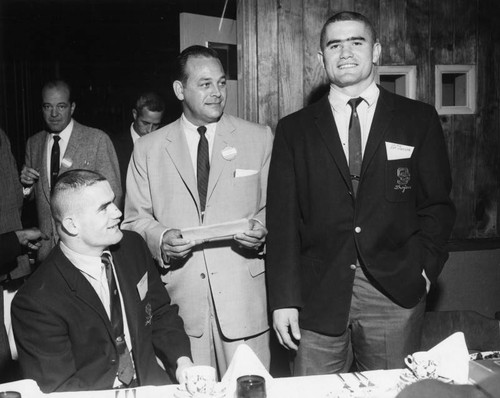

The Trojans started the 1960 preseason ranked No. 6, but losing their first three non-conference games in a row by a combined 41-6 saw them fall fast. The team suffered four shutout losses that season, including 17-0 to Notre Dame in the finale. The highlight, and perhaps career-saving moment of McKay’s inaugural 4-6 season, was a 17-6 win over No. 11 UCLA, where Marlin McKeever was named player of the game, catching a 21-yard touchdown pass.
Marlin McKeever had been moved to fullback that season yet led the team with 15 receptions for 218 yards (14.5 average), the second year in a row he was the Trojans’ leading receiver.
Mike McKeever’s trajectory as an NFL lineman prospect was abruptly changed early in his senior season.
After the Week 3 loss at Ohio State, Mike left the field after the first quarter during a 10-3 win over Georgia at the Coliseum — the first victory of John McKay’s career, as Marlin McKeever had one of four sacks against Bulldogs heralded quarterback Fran Tarkenton.
Week 4 brought Cal to the Coliseum — and Mike McKeever, as one of the team captains, met Cal running back Bates for the coin toss ceremony. But while Bates had recovered, Mike McKeever was not well. He suddenly dropped 20 pounds over two weeks.
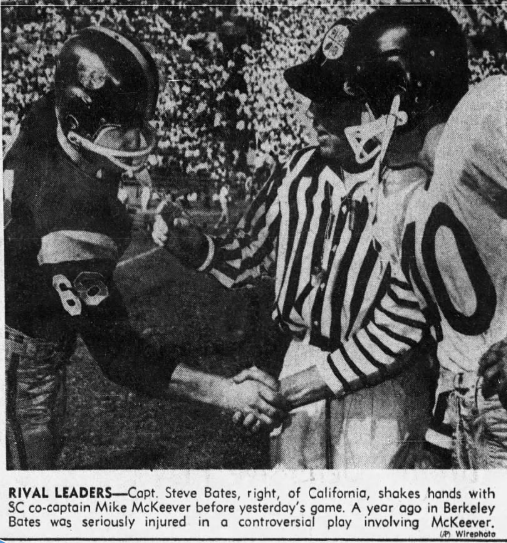
While Mike McKeever played in a 21-6 win at Stanford, with seven tackles and an intercepted pass, a blow to the head exacerbated his health issues and changed the diagnosis from a sinus infection to the need for a brain scan. News reports were that his teammates carried him to the dressing room after the game, Marlin helped get him in street clothes, and Mike was sick all the way back on the plane home.

It turned out Mike had two blood clots in his brain — an injury he may have had a month earlier — and needed two hours of surgery. He was done for the season as well as perhaps playing football again. USC ended up losing three of their last four games — but again defeated No. 11 UCLA, 17-6.
While both Marlin and Mike were Academic All-Americans — “Brawny Mike McKeever is also the brainiest on the University of Southern California football team,” the Associated Press as USC’s Football Alumni Club honored him with their Academic Achievement Award — it was Marlin who would go on to play in the 1960 East-West Shrine Game, plus the 1961 College All Star Game and the Hula Bowl. Marlin was also the USC Lineman of the Year.
“I’ll never forget watching Marlin and Mike play against Pittsburgh at the Coliseum (in 1959), and when the Trojans were recruiting me when I was a senior at Roosevelt High in L.A.,” said Mike Garrett, USC’s first Heisman Trophy winner. “I couldn’t believe how good they were.”

As Mike married Judy (a blonde) and Marlin married Susie (an auburn brunette) in a double-ring ceremony in December of 1960, perhaps fans for the first time had an honest way of separating the two.
“(I tell them apart) by their eyes, facial structure, personalities,” said Judy in an L.A. Time story prior to the wedding.
“By their chins, too,” said Susan. “The only time I was doubtful about Marlin’s identity was the time I met him at SC’s library unshaven. I’d been dating him a month but had to ask who he was.”
The 1961 NFL Draft later that month saw the Los Angeles Rams claim both McKeevers — Marlin was fourth overall in the first round, right ahead of Chicago’s choice of tight end Mike Ditka. Even thought it was doubtful he’d be able to play pro football, Mike McKeever became the Rams’ No. 172 overall pick in the 13th round. The Rams waited one more round to claim future Hall of Fame defensive end Deacon Jones.
The AFL’s Los Angeles Chargers, who were about to plan a move to San Diego, also picked both twins — Marlin as a third-rounder and Mike in the 30th round. They thought having USC teammate Ron Mix already signed during their inaugural year might help lure them over to the upstart league.
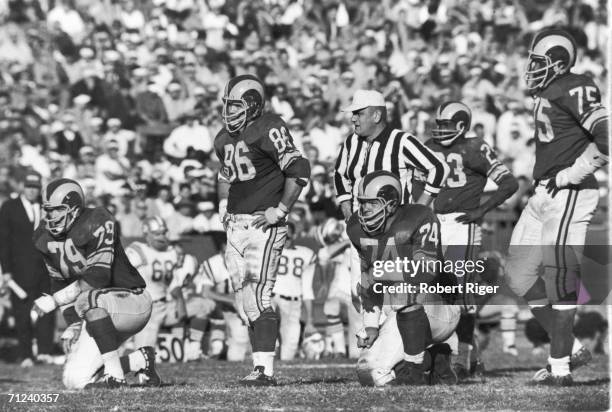
Marlin took up the Rams’ plan to make try him as both a tight end and a linebacker — a path that led to 13 years in the NFL.
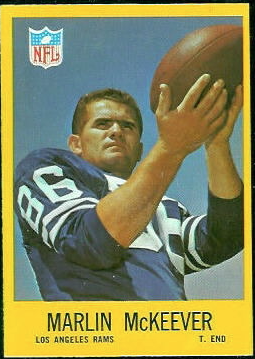
“Ever since I was a little boy I wanted to play for the Rams,” Marlin said.
There was rumors that Marlin wouldn’t play pro football unless Mike played as well, but the family’s medical team ruled that out.
“Mike wants me to play,” said Marlin.

Two stops with the Rams (1961 to ’66, including a Pro Bowl pick, then again from ‘71 to ’72) came around a career that took him to Minnesota (1967), Washington (1968 to ’70) and Philadelphia (1973). Marlin McKeever’s time as a linebacker with the Rams overlapped with the emergence of the original Fearsome Foursome on the front line.
As ones who could take their talents to Hollywood, the McKeever twins ended up playing football players in the 1961 Disney film, “The Absent-Minded Professor,” and were together in a Three Stooges film in 1962 playing Siamese cyclops twins named Ajax and Argo. Marlin was in an episode of “The Adventures of Ozzie and Harriett.” Mike appeared on “The Ed Sullivan Show.”

Mike’s career veered into the business of construction, but he held out hope of competing someday on the U.S. Olympic team in the hammer throw. Involved in charity work for City of Hope, the United Way and Big Brothers, Mike was returning home from his superintendent job in December of 1965 — the day of his fifth wedding anniversary — and was involved in a traffic accident amidst dense fog in Montebello.
Twelve days later, his wife Susan gave birth to their third child, a son, Barry. Mike’s extensive head injuries led to spending two nearly two years in a coma. He died at age 27 in 1967.
“I’ve learned to live with the death of Mike, but I’ve never gotten over it,” Marlin told the Long Beach Press-Telegram in 2003. “There’s not a day that passes that I don’t think of him. He was part of me. He will always be part of me.”
Marlin would also be involved in a car accident with Rams teammate Roman Gabriel, in August of 1966. It severed the right ring finger of Marlin’s hand. His grandkids used to call him “nine paw” because of it.
Marlin’s USC finance degree led to a career as a stock broker and insurance executive. In 1974, Marlin ran for California State Assembly as a Republican in 1974 but lost. That year, he was also director of player relations for the new World Football League and vice president of player administration for the WFL’s Southern California Sun franchise in Anaheim that included Pat Haden, J.K. McKay and Anthony Davis.
Marlin would be considered to be the USC athletic director in the early 1990s before the spot was given to Mike Garrett. His involvement in the Trojan Football Alumni Club led to the selection of Pete Carroll as the USC head coach in 2000.
In the fall of 2006, Marlin died at age 66 after suffering a head injury during a fall at his home in Long Beach. At the funeral service for Marlin, Mike’s widow Judy described the twins has having a “spiritual, emotional bond …. that existed on a level that was otherworldly. As much love as you gave to me and gave to all of us, I was in awe of the length and breadth of your love for Mike. I can only hope once he is reunited with his beloved brother, he will have the peace and serenity to which he is deserving.”
USC players wore a helmet with an “86” sticker on the back as a tribute to Marlin McKeever in the Jan. 1, 2007 Rose Bowl.
“You have to understand, Marlin McKeever wasn’t born, he was chiseled,” said former USC linebacker John Papadakis. “He’s like the rocks in the walls of Troy. He was my hero growing up. Marlin and Mike, they were like icons.”

The legacy
The Mount Carmel High School campus, despite its designation as a L.A. Historic Cultural Monument in 1979, was closed for good in 1976 and demolished in 1983. Eventual college and pro players of note, aside from the McKeevers, included Kermit Alexander (UCLA), Orlando Ferrante (USC, L.A. Chargers), John Hock (L.A. Rams), Marvin Jackson (USC), Karl Rubke (USC) and Jeff McIntyre, a linebacker who went to L.A. Southwest and then Arizona State and was the last of 10 alumni to play in the NFL in 1979.
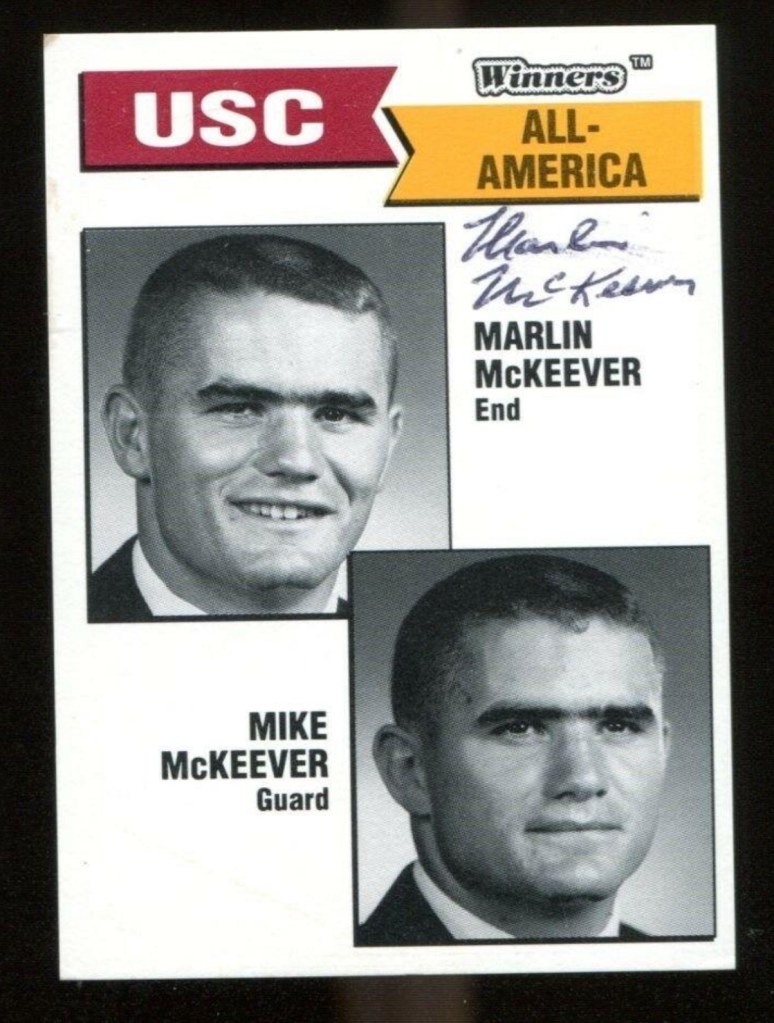
The McKeevers may be the most notable twins to ever make a mark in Southern California sports history — but not the only pair. Those in the conversation: Jason and Jarron Collins, the 7-footers born in Northridge and prepped at Harvard-Westlake in Sherman Oaks (en route to Stanford and the NBA, where Jarron wore No. 31 with the Los Angeles Clippers in 2010-11); tennis stars Bob and Mark Bryan from Camarillo and Rio Mesa High in Onxard (who held the World No. 1 doubles rankings together for 438 weeks and retired in 2020) or Heather and Heidi Burge from Palos Verdes High, the 6-foot-5 WNBA players (Heidi with the Los Angeles Sparks in 1997)
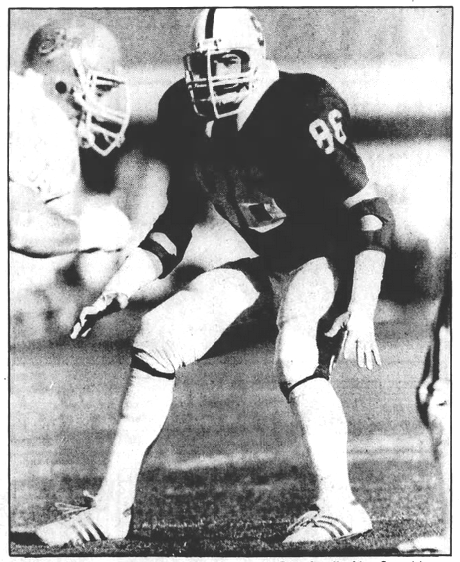
Mike McKeever’s kids also had some sports notoriety. Daughter Teri ended up as an All-American swimmer at USC — just as his wife Judy was — and became the head coach at Cal. Oldest son Mac wore Mike’s No. 68 when playing football at San Pasqual High near San Diego and then at Long Beach State; son Barry was on the same high school team and took No. 86 — which he kept when playing linebacker at Stanford (1985 to 1987). Barry had his name in the news in 1987 when he testified as a co-plaintiff in a suit against the NCAA trying to get the organization to reverse its drug-test procedures.
Mike McKeever, voted into the College Football Hall of Fame in 1987, 20 years after his death, also has name still attached to USC’s annual team MVP honor. In 2023, Mike was inducted into the California High School Football Hall of Fame.
Named to the L.A. Memorial Coliseum USC Golden Anniversary Team, picked by the Southern California Chapter of the Football Writers’ Association, the McKeever’s name is still etched on a bronze plaque on the Coliseum peristyle wall.
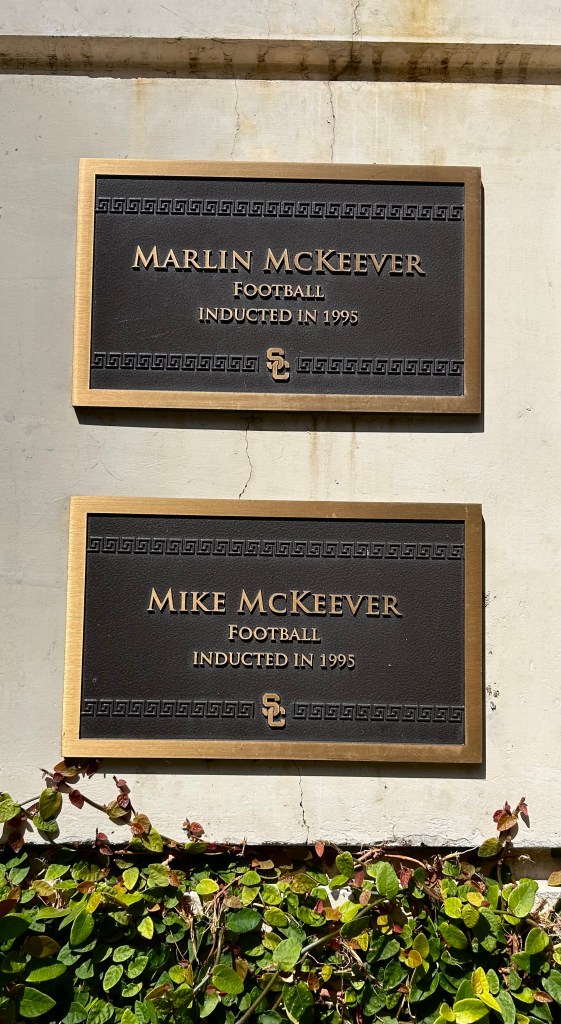
In 1995, the second class of the USC Athletic Hall of Fame put the twins in together. Former USC teammate Ron Mix, a Pro Football Hall of Famer out of Hawthorne High, would later write that his “best day” at USC didn’t come from playing, but when Marlin McKeever asked him to present him at the Hall of Fame banquet.
“The highest form of satisfaction for a football player is to have the respect of his teammates,” Mix wrote. “Marlin McKeever and Mike McKeever were players for the ages. Both loved being a USC Trojan.”
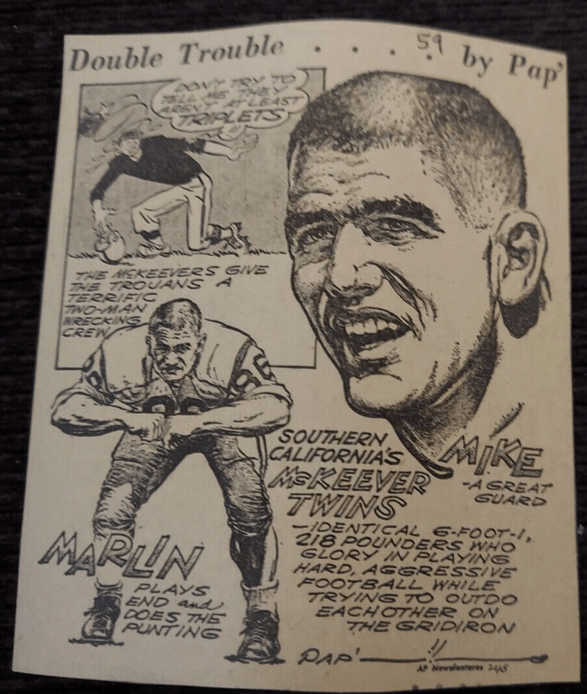
Who else wore No. 68 in SoCal sports history? Make a case for:
Keith Van Horn, USC football offensive lineman (1977 to 1980):
The 6-foot-6, 280 pounder out of Fullerton High was twice a first-team All-Pac 10 pick and earned consensus All-American honors as a senior. A member of the Trojans 1978 National Championship team, he was the 11th overall choice by the Chicago Bears in the 1981 draft, lasting 13 NFL seasons with the team.
Frank Cornish, UCLA football center (1986 to 1989):
Recruited as a defensive lineman, the 6-foot-4, 287 pounder was put on the offensive line and became a three-year starter as Troy Aikman’s snapper, first team All-Pac 10 and the Bruins offensive MVP as a senior. A sixth-round pick by San Diego in the 1990 NFL Draft, he made the All Rookie team and played on two Super Bowl teams with Dallas. His father also played defensive tackle for seven seasons in the NFL.
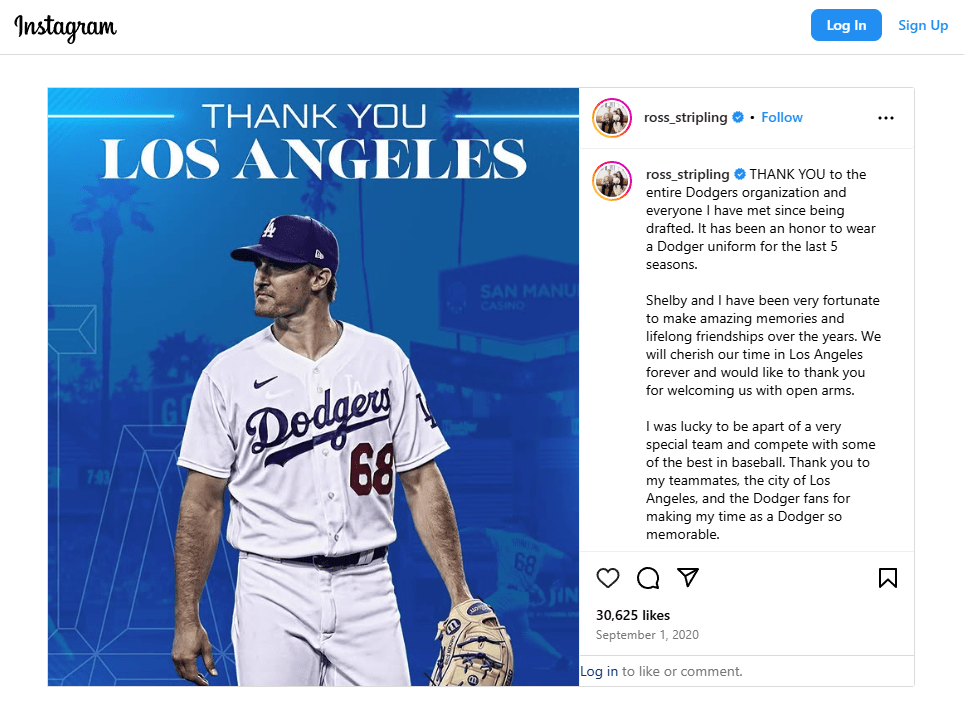
Ross Stripling, Los Angeles Dodgers pitcher (2016 to 2020):
Making the 2016 roster as the fifth starter, Stripling’s big league debut at San Francisco in April resulted in 7 1/3 no-hit innings before first-year Dodgers manager Dave Roberts took him out after 100 pitches. Even a hostile crowd at AT&T Park booed Roberts when he brought in Chris Hatcher, who was immediately greeted by a game-tying, two-run homer from rookie Trevor Brown. The no-hitter, shutout and Stripling’s chance at a win were gone in a game the Giants won on Brandon Crawford’s walk-off home run in the 10th inning. “He just said it was a tough decision, but it’s your first outing and you’ve got the whole season ahead, your whole career,” Stripling said of Robert’s move. “I said, ‘No problem, it’s the right call.’ I keep saying the right thing to do.” Stripling had not pitched that much since his 2014 Tommy John Surgery. “I was tired,” Stripling added. “It was the right call. I think you could tell I was trending downwards. It was a tough decision for him. I certainly had no ill feelings toward him one bit.” He made the NL All Star team in 2018 in a season he would go 8-6 with a 3.02 ERA in 21 starts.
Who else wore No. 86 in SoCal sports history? Make a case for:

Jack Bighead, Los Angeles Rams end (1955):
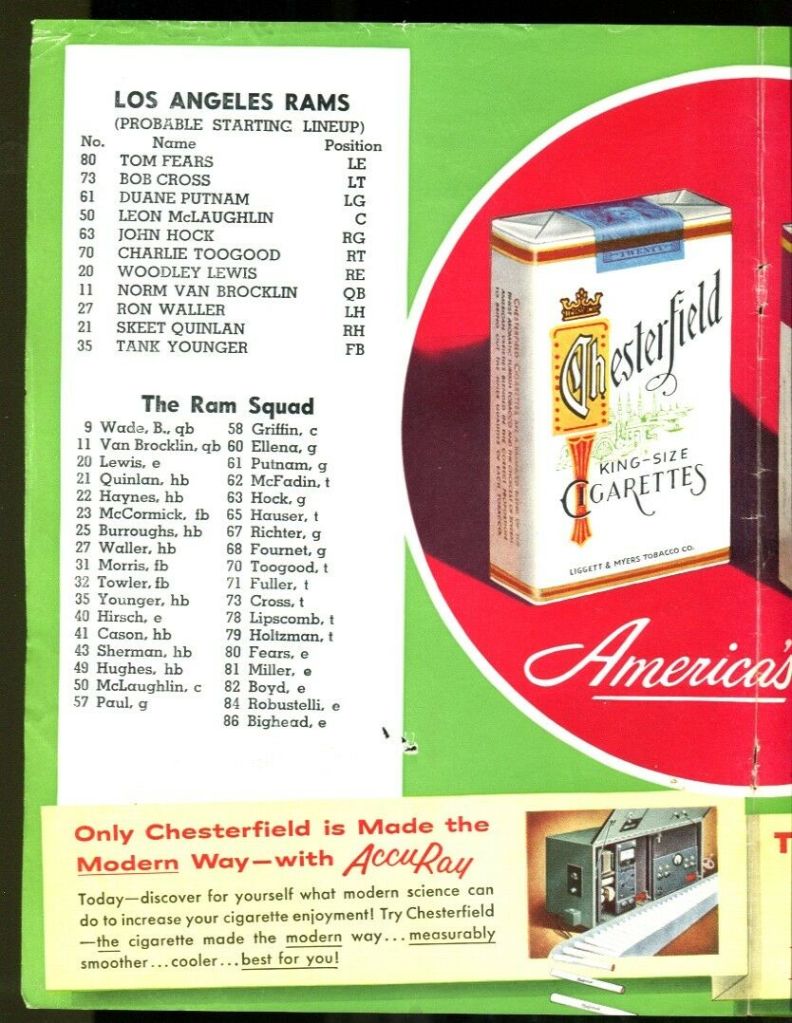
What’s in a name? A 6-foot-3, 215-pound Yuchi Indian from Oklahoma, Bighead first starred at L.A. Poly High and then earned Little All American honors at Pepperdine (1949 to 1951, wearing No. 89), as he held the program’s career records for receptions (86) and receiving yardage (1,261). After serving in the Navy during the Korean War, he returned to Pepperdine and set school records in the 440 and 220 hurdles in 1954. He played two years in the NFL, first with Baltimore (wearing No. 80) and his last with the hometown Rams in 1955. That was the year he also got his Pepperdine degree and started a teaching career in Orange County. Amidst all that he had an acting roles as a trainer for Jim Thorpe (Burt Lancaster) in “Jim Thorpe – All American” in 1951 and later in the TV series “Bonanza.” He was a 1981 induction into the Pepperdine Athletic Hall of Fame.
Charle Young, Los Angeles Rams tight end (1977 to 1979):
The USC All American (wearing No. 89) had three straight Pro Bowl seasons to start his pro career as he was picked sixth overall by Philadelphia in the 1972 NFL draft.
Rod Sherman, Los Angeles Rams receiver (1973):
The USC All American (wearing No. 12) who started out at UCLA played the last of his seven-year pro career with the hometown Rams.
Anyone else worth nominating?

 Tom Hoffarth's The Drill: More Farther Off the Wall
68 & 86 is among your best stories yet. I really enjoyed it. You omitted other notables who wore 86. How about Chuckie Brauer #86 a wide receiver on the 1965 Fullerton H.S. Indians freshman team?
On Thu, Dec 5, 2024 at 10:46 AM Tom Hoffarth’s The Drill: More Farther Off
LikeLike
You were 86’d right after that season.
LikeLike