
This post is part of a media project called SoCal Sports History 101: The Prime Numbers from 00 to 99 that Uniformly, Uniquely and Unapologetically Reveal The Narrative of Our Region’s Athletic Heritage. Pick a number, and consider the list of athletes attached to it. Who wore it best? Or, what’s the most compelling story linked to it? Any person, place or thing is in play with Southern California connections. Star power, transformational achievement, longevity, notoriety and quirkiness all factor in. Whatever leads to a lively discussion and interpretation.
The most obvious choices for No. 64:
Jack “Hacksaw” Reynolds, Los Angeles Rams
Roy Foster, USC football
The not-so-obvious choices for No. 64:
Damon Bame, USC football
The most interesting story for No. 64:
Terry Donahue, UCLA football defensive lineman (1965 to 1966), UCLA assistant football coach (1971 to 1973), UCLA football head coach (1976 to 1995)
Southern California map pinpoints:
North Hollywood, Sherman Oaks, Valley Glenn, Westwood, Pasadena (Rose Bowl), Los Angeles Coliseum, Westlake Village, Newport Beach
Reference books on the subject:
“100 Things UCLA Fans Should Know & Do Before They Die,” by Ben Bolch, 2018

Terry Donahue seized the day when it came to Jan. 1 in the college football world.
The Pasadena stadium that helped create the bigness of national sports holiday has reciprocated its appreciation.
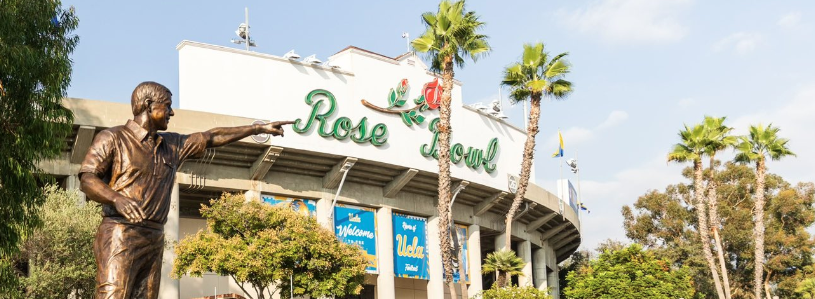
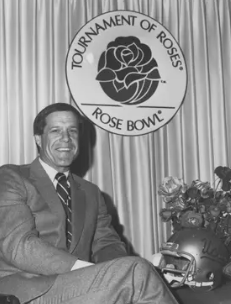
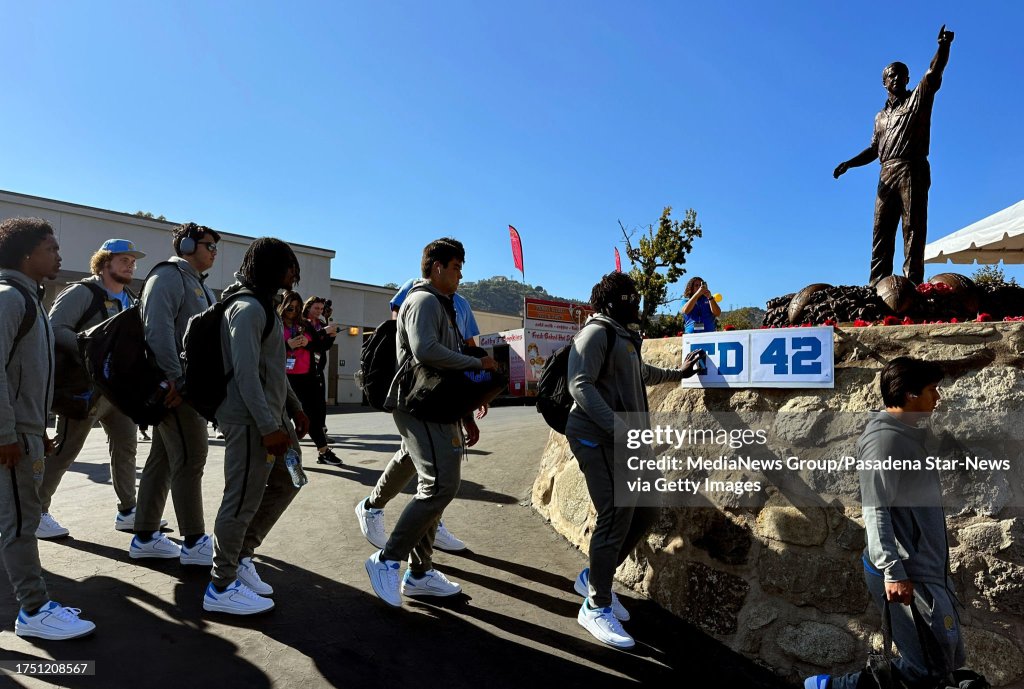
Since 2023, a statue of Donahue has been right inside Gate A of the Rose Bowl, near the ramp that leads down to the home team locker room. With his left arm, he points to the players’ entrance. At the base, 151 bronze roses purposefully are at his feet — one for each of the regular-season school-record victories he collected as UCLA’s head football coach in a 20-year span.
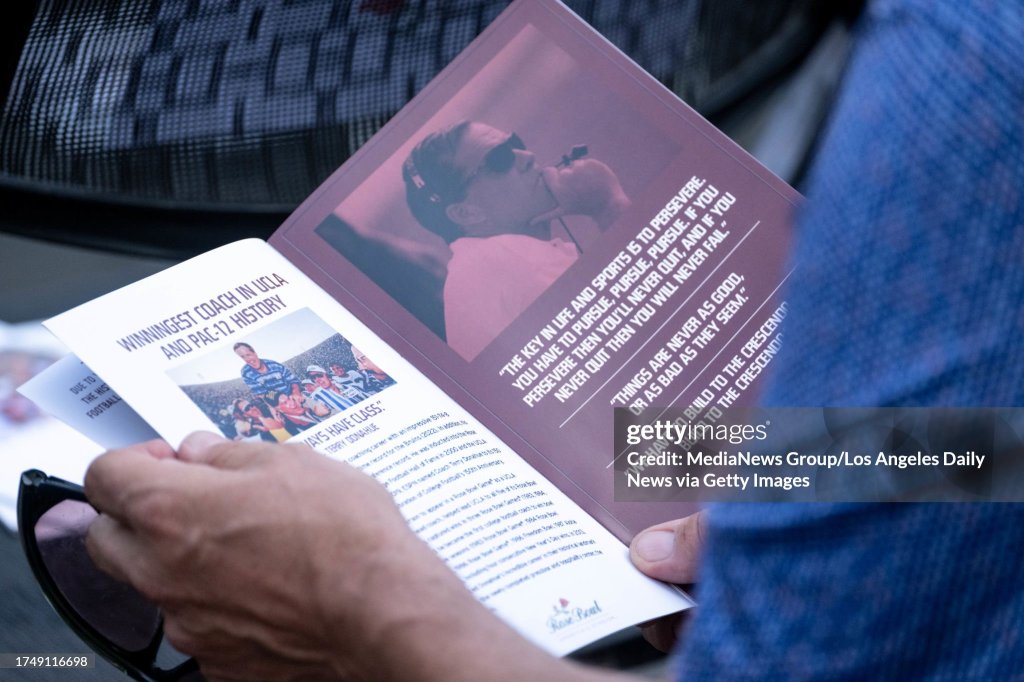
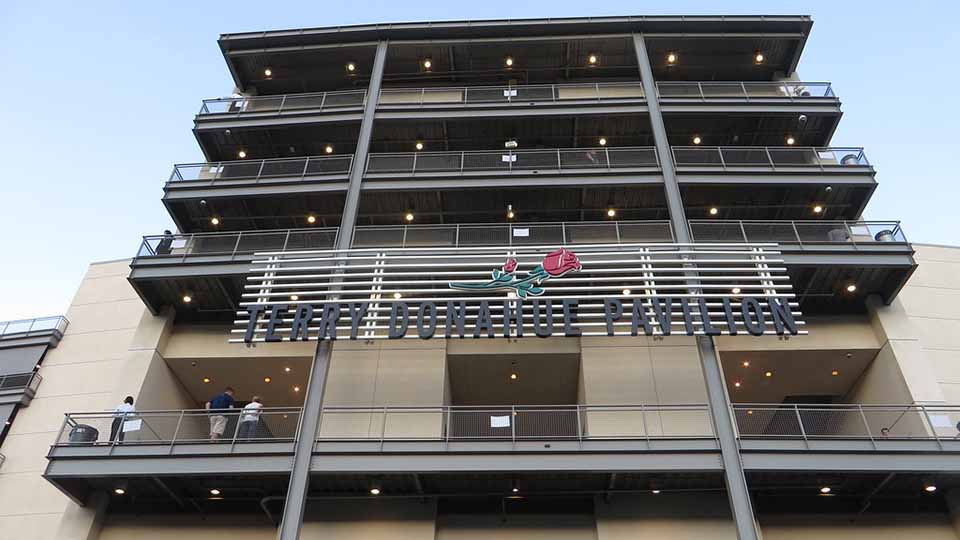
This, on top of the fact that the Rose Bowl Press Box was renamed the Terry Donahue Pavilion some 10 years earlier, and The Rose Bowl Hall of Fame inducted him in 1997, two years after he was done coaching the Bruins.
The Rose Bowl Legacy Foundation noted when that statue was propped up that Donahue is the only person associated with the Pasadena landmark and its game itself as a player, an assistant coach and a head coach at his alma mater. And it happened six times.
The first may be the most inspiring and set the foundation for the future.
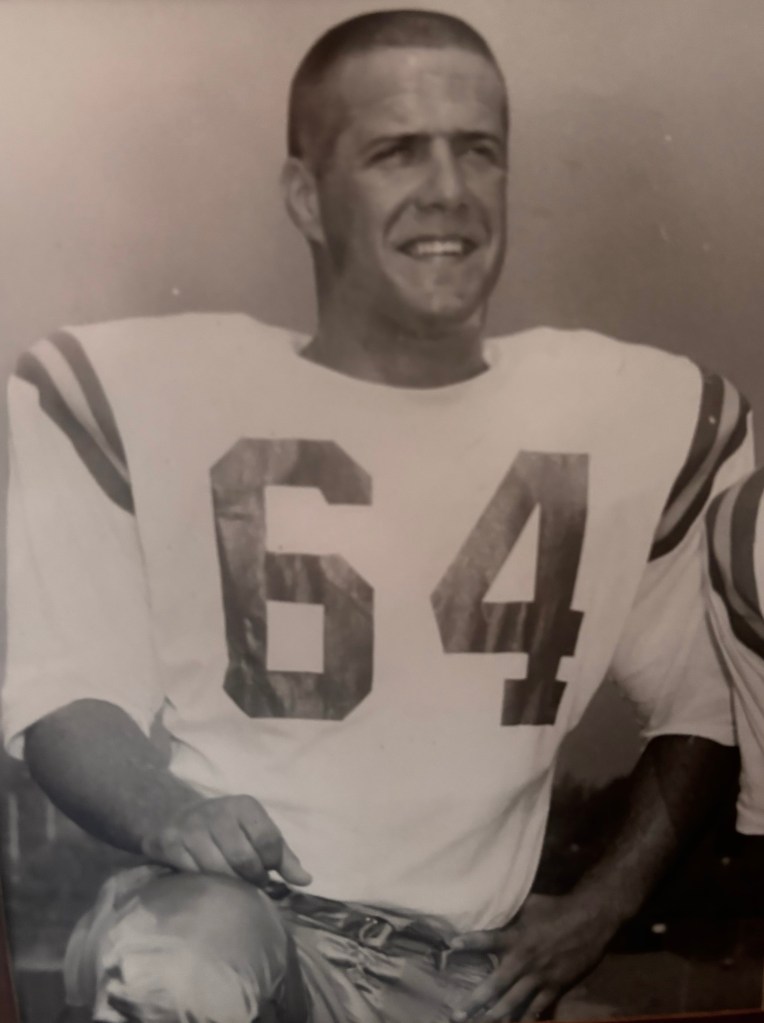
Jan. 1, 1966: UCLA toppled undefeated and No. 1 ranked Michigan State. Perhaps no one more than Donahue, wearing No. 64 on the defensive line, best represented the prevailing attitude that no one was going to intimate the so-called “Gutty Little Bruins.”
The context
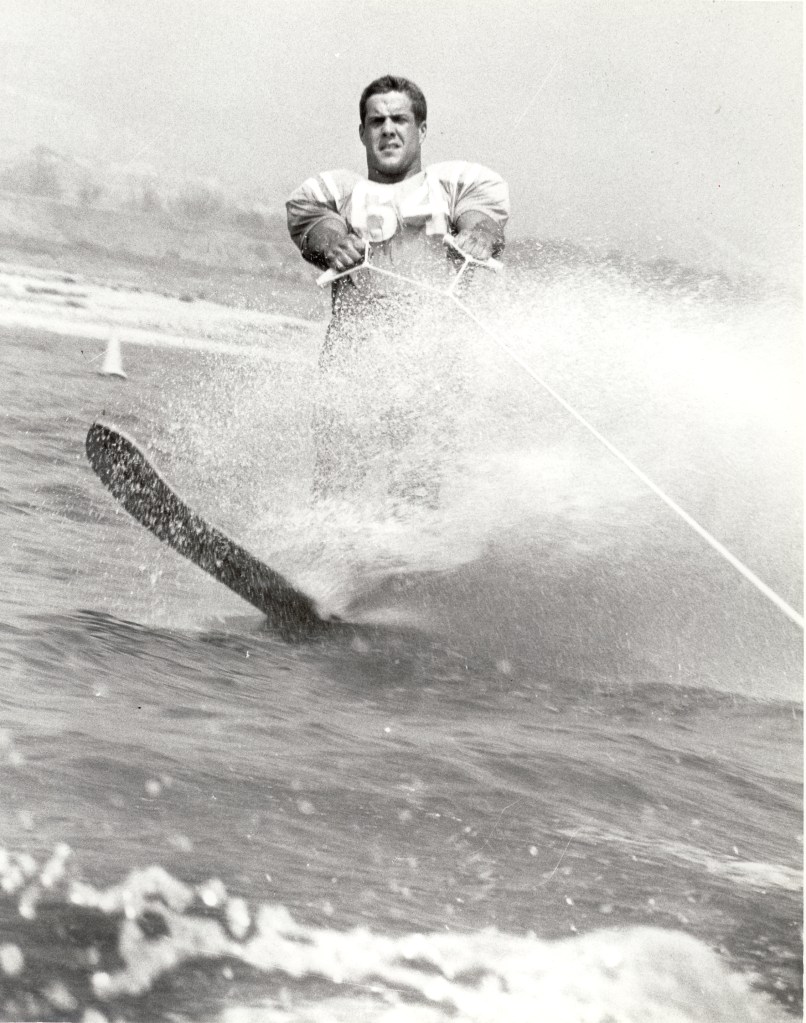
As dignified a brawler as he was a strategic fighter, Donahue punched well above his weight class as the Los Angeles-born kid growing up in North Hollywood found himself one of five boys in the family with a dad, who, as a doctor, was stitching him up from the street fights and other injuries he endured.
His football days at Notre Dame High of Sherman Oaks as a 6-foot, 195-pound starting defensive tackle was nothing miraculous. With no college recruiters knocking, he knew he was going to have to be his own corner man in his next battle. He decided San Jose State could be a landing spot as a walk-on in 1962. Nothing much came of that. He circled back home to L.A. Valley College in the Valley Glenn area of the San Fernando Valley in 1963, and, along with football, considered a career as a boxer. He won an amateur bout in a San Fernando Valley arena against an opponent who outweighed him by 40 pounds.
Donahue’s handlers were said to have him ready to take another up-and-coming young challenger named Jerry Quarry, known as “The Bellflower Bomber,” when Donahue’s true handlers — his parents — forbid it.
UCLA and head coach Bill Barnes allowed Donahue as a walk-on red-shirt in 1964, as he got up to a hefty 197 pounds. He remained a backup, a practice tackling dummy. His number wasn’t called.
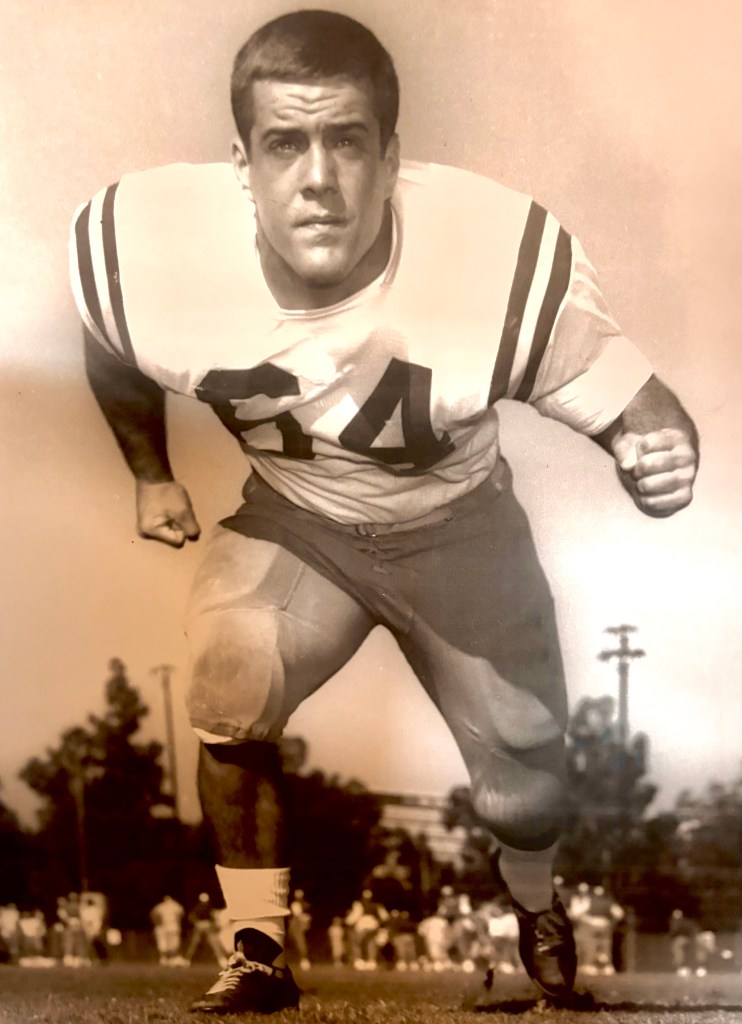
But when UCLA hired Tommy Prothro as the head coach, after his previous 10 years at Oregon State, Donahue saw a bit of an opening. Even though he would start all 21 games of his junior and senior year, and the Bruins compiled a record of 17-3-1 over that time, Prothro, from what was reported, actually thought the this kid’s name was Donny Donovan.
Once, when Donahue was ejected from a game along with the Stanford quarterback, Prothro reportedly said: “I’ll trade a defensive tackle for a quarterback anytime.”
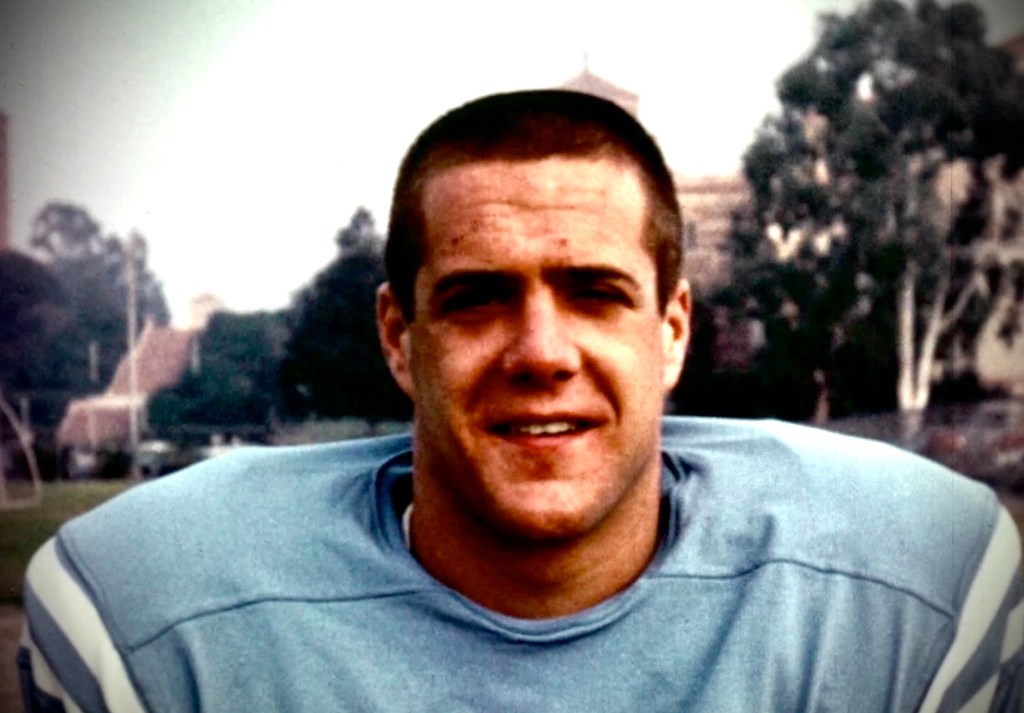
That kind of left Donahue deflated. But realistic.
“I am an overachiever,” he once told Sports Illustrated about that moment in his career. “And very, very…ah, average. Actually, ‘sorry’ is probably the word I’m searching for.”
Still, UCLA line coach Jerry Long once said of him: “Terry didn’t have a lot of ability, but he had a lot of character, high intelligence and seldom made a mistake.”
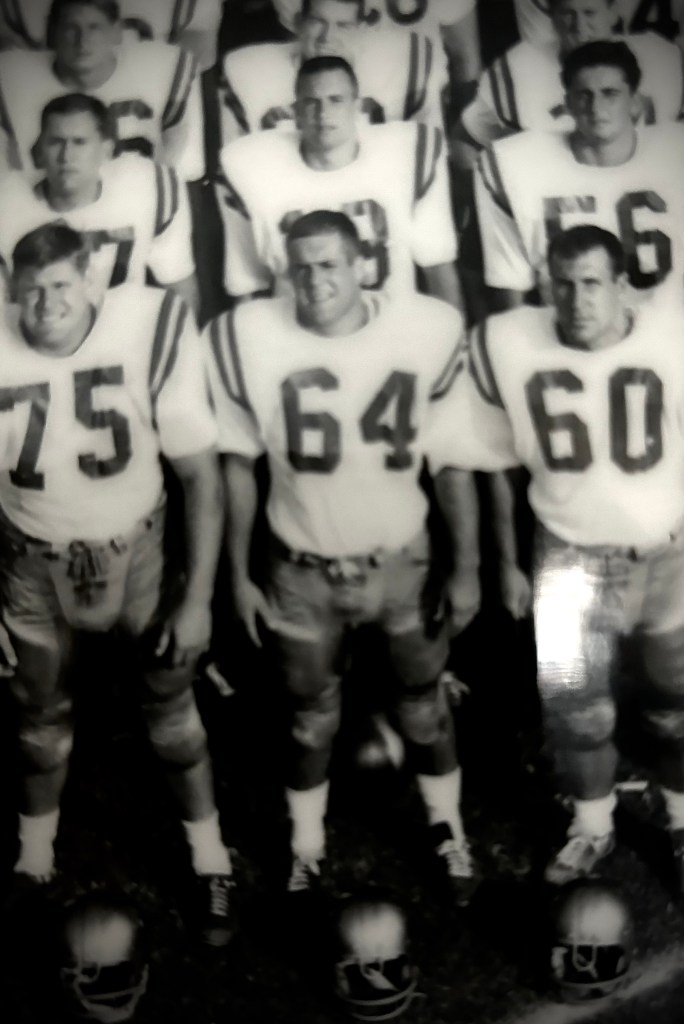
It was written that during his playing days, Donahue would race onto the field with his UCLA teammates hollering, “Plant the flag!” It was a formidable task consider no one the Bruins’ defensive line in ’65 weighed more than 225 pounds — and that weight was only attributed to Donahue teammates John Richardson, Steve Butler and Al Claman.
All those intangibles won out in the historic ’66 Rose Bowl win, as UCLA, representing the Athletic Association of Western Universities, started the season ranked No. 4, finished 7-2-1, beat USC 21-14 in the rivalry game, won the right to go to Pasadena, and then pinned a 14-12 win over the 14-point favorite Michigan State in the Rose Bowl before more than 100,000 in attendance.
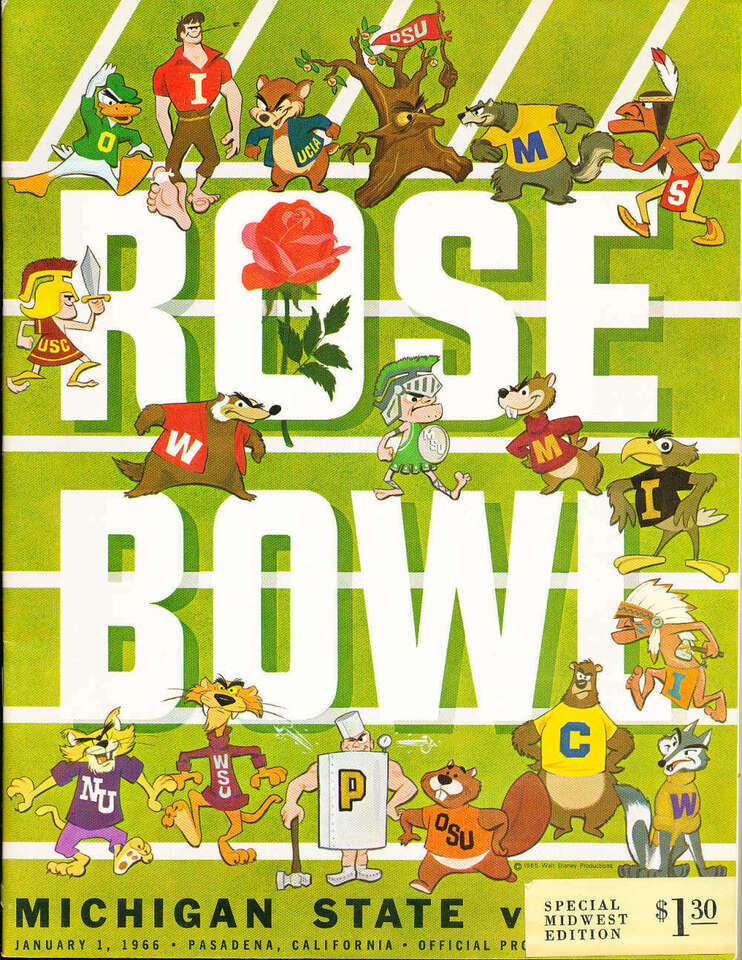
Against a Michigan State defensive line anchored by the 6-foot-7, 265-pound Bubba Smith, UCLA scored both of its touchdowns in the second quarter, on two runs by sophomore quarterback Gary Beban, the second coming after a successful onsides kick following the first TD. The Bruins’ defense, which six times stopped the Spartans on third-and-short yardage, kept them scoreless until the fourth quarter, when it also scored two TDs, but twice missed on two-point conversions. The second miss came with 31 seconds left, as UCLA defensive back Bob Stiles, named the game MVP, threw himself at Michigan State running back Bob Apisa and heroically kept him out of the end zone.
That Donahue was part of UCLA’s first Rose Bowl winning-team seemed like a template for his future.
Donahue graduated with a history degree from UCLA (eventually earning a master’s from the university in kinesiology in 1977) and followed his mentor, Pepper Rogers, who had been the Bruins’ backfield coach in ’65 and ’66, as an unpaid graduate assistant when Rogers left to head up the the University of Kansas program in 1967. Coaching the freshman team and earning money managing an apartment building while eating at the training table with the players, Donahue eventually got on Rogers’ payroll for $7,500 the next season.
Rodgers told the story this way: “When Terry graduated from UCLA, he wrote me and said he wanted to come to Kansas as my graduate assistant. He said he’d work for nothing to prove his ability. It’s hard to refuse a man who makes that kind of offer. Too many people in the coaching profession are too concerned about their position or how much money they’re going to make before they prove themselves.”
When Prothro left to coach the Los Angeles Rams in ’71 and Rogers was called back to be the Bruins’ head coach, Donahue came with him as an offensive line assistant, having put in four years at Kansas and meeting his future wife, Andrea. The bond with Rogers was so tight that when Rogers went to Georgia Tech after three seasons in Westwood, Donahue considered going with him as well. Instead, Donahue stayed as an assistant coach to new head coach hire Dick Vermeil.
As a result, Donahue experienced the Rose Bowl for the first time as a sideline instructor 10 years after he did it as a player. On Jan. 1, 1976, UCLA, a 15-point underdog, posted a 23-10 upset of No. 1 Ohio State and two-time Heisman winner Archie Griffin. Bruins quarterback John Sciarra and running back Wendell Tyler operated the veer option rushing attack — making Donahue’s tutelage of the offensive line vital for its success.
Vermeil used that win as a launching point to leave to Philadelphia and launch into a 15-year career as a Pro Football Hall of Fame head coach. But it opened a hole for Donahue.
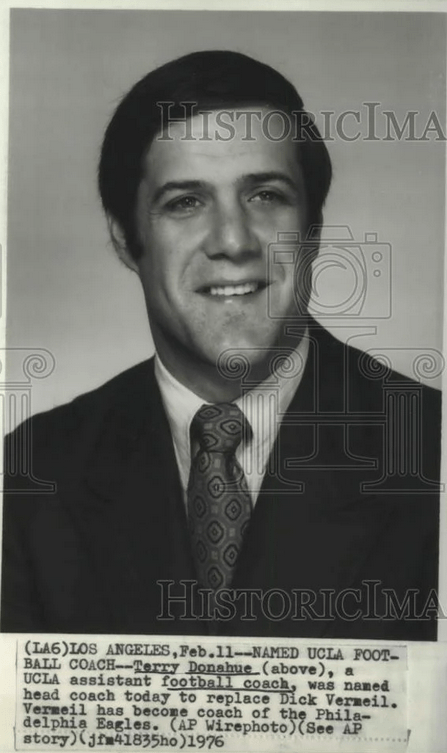
Vermeil’s departure was just before college commitment day in 1977, so the 31-year-old Donahue, who had already been on the recruiting trail, was the person the school turned to because of his Bruin DNA.
“Terry bleeds blue and gold,” said athletic director J.D. Morgan.
Morgan was also reported as saying: “Terry, if you make it til you’re 40 here, you’ll probably a good coach by then.”
Some recommendation. But the hiring took on some urgency as well — Donahue had been in contention for the open Oregon State job a few months earlier, losing out to former USC quarterback Craig Fertig.
Donahue’s first season with senior quarterback Jeff Dankworth and running backs Tyler and Theotis Brown started with a 28-10 upset of No. 3 Arizona State at Sun Devil Stadium on a nationally televised Thursday night game. The Bruins launched themselves as high as No. 2 in the rankings with a 9-0-1 record (the tie came at No. 8 Ohio State). But a loss to No. 3 USC, 24-14, in the regular season finale prevented the Rose Bowl visit. UCLA was diverted instead to the pre-Christmas-staged Liberty Bowl in Memphis, Tenn., where Bear Bryant’s Alabama team prevailed, 36-6.
Before that UCLA-USC game, a story about Donahue in Sports Illustrated said he “may be the best young coach in the country.” Donahue was asked if he ever felt nervous.
“We’re prepared and we’ve worked hard, so there’s nothing to worry about,” he said. “Now if you’ll excuse me, I’m going to go throw up.”
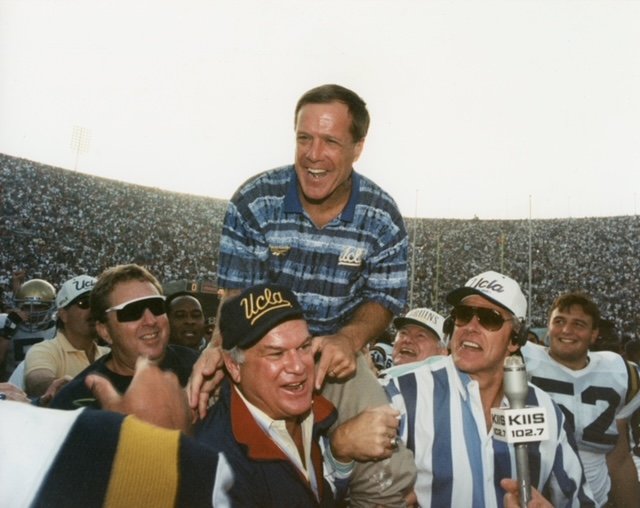
UCLA’s 7-4 finish the next season, 1977, would eventually be adjusted to 0-11 because of an illegible player violation. Up and down seasons followed, one ending with a tie in the 1978 Fiesta Bowl and a loss in the 1981 Bluebonnet Bowl. In between, Donahue hired Homer Smith as his offensive coordinator, and things changed.
In 1982, the Bruins moved out of the USC-adjacent Coliseum and made the Rose Bowl their true home field. Magic happened as Donahue’s journey came up smelling much rosier. For seven straight seasons, Donahue’s Bruins would win a bowl game. Note the New Year’s Day thread included with:
Jan. 1, 1983: Rose Bowl — No. 5 UCLA, a 24-19 win over Michigan and head coach Bo Schembechler. UCLA, a 9-1-1, received several breaks at the end of the regular season to clinch the conference title, including the memorable win over USC when Karl Morgan sacked Scott Tinsley on a two-point conversion to prevail 20-19, plus Arizona’s improbable win over rival Arizona State. “Sometimes it’s just your year to have a lot of good things happen,” Donahue would say.
Jan. 2, 1984: Rose Bowl — Unranked UCLA’s 45-9 win over No. 4 Illinois, weeks after a 27-17 win over USC to clinch the conference title at 6-1-1.
Jan. 1, 1985: Fiesta Bowl — No. 14 UCLA’s 39-37 win over No. 13 Miami and head coach Jimmy Johnson on John Lee’s game-winning field goal with 55 seconds left.
Jan. 1, 1986: Rose Bowl — No. 13 UCLA fends off No. 4 Iowa and head coach Hayden Fry, 45-28
Jan. 2, 1989: Cotton Bowl — No. 9 UCLA and Troy Aikman outlasts No. 8 Arkansas, 17-3
Add to that:
Jan. 1, 1994: No. 14 UCLA late rally falls short in a 21-16 loss to No. 9 Wisconsin, weeks after defeating USC, 27-17 at the Coliseum to win the conference via a tie breaker.
A charismatic recruiter, self-effacing optimist and looking every bit the California-bred tanned-and-ageless appearance, Donahue would coach in 233 games — more than 100 than second-place William Spaulding on that list.
He had an 8-4-1 in bowl games (ending with a 51-30 loss in the Christmas Day Aloha Bowl in Honolulu in 1995). He would coach 34 first-team All Americans, including three-time winners linebacker Jerry Robinson and Kenny Easley. UCLA also produced 14 first-round NFL draft picks during his time.
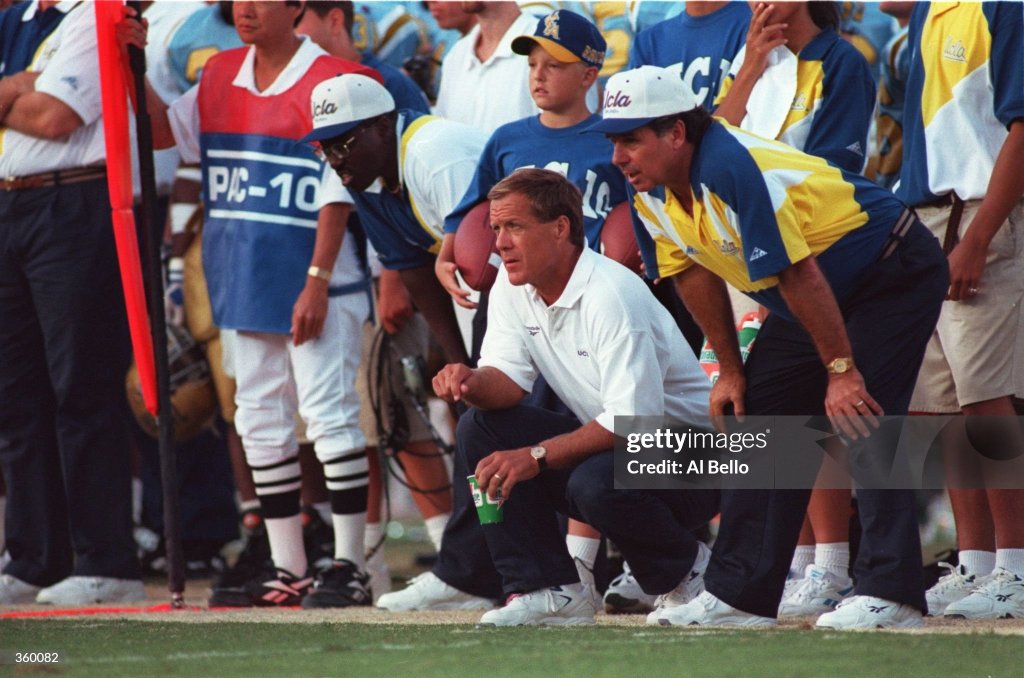
Up until his retirement, Donahue had a hand in all 10 of UCLA’s bowl victories to that point. He was also the first coach of the UCLA-USC series to record five straight victories, and the only coach to defeat the Trojans in three consecutive years twice, going 10-9-1 in his career. His win over USC in 1995 pushed him past Washington’s Don James as the all-time leader in conference history.
His induction into the College Football Hall of Fame in 2000, and the UCLA Athletic Hall of Fame in 2001, came after Donahue, after back-to-back fifth-place finishes in the conference, forgo the final three years of his contract and was lured off the sidelines to be a national TV game analyst for CBS.
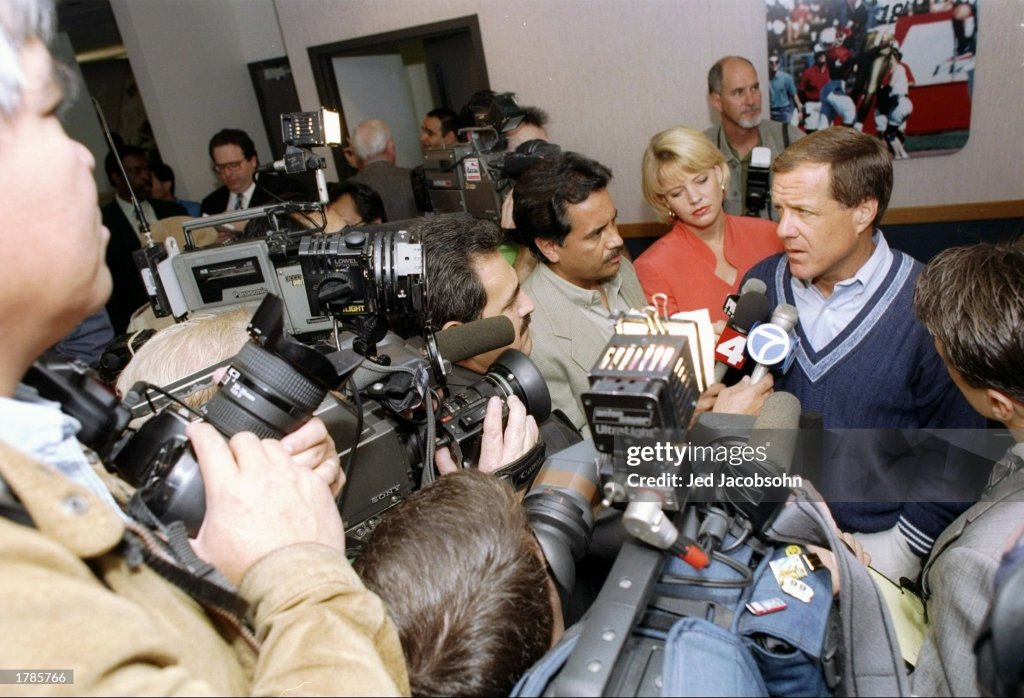
“I promised J.D. I would stay and build the program,” Donahue said on the day he announced his retirement in 1995. “I feel I’ve met my commitment.”
Years later, Donahue said he regretted the decision and felt he quit coaching too early.
He turned down opportunities to coach the Dallas Cowboys in 1998 (and reunite with Aikman) as well as head up the Atlanta Falcons. He was also linked to the idea that he could coach the Los Angeles Rams, but wasn’t into it as they were about to set sail for St. Louis. Donahue’s relationship with Bill Walsh got him to come back an executive and general manager of the San Francisco 49ers.
“Opportunity is a precious gift,” Donahue once said. “How often we give it to others, and how we respond when it is given to us, can define our lives.”
One of the things Donahue responded to as well: Taking ownership of the Billy Don Jackson recruiting at UCLA, the public relations hit taken for it years later when the player regressed as Donahue tried to treat through disciplining, and how the coach and family committed to helping the troubled player after his time in Westwood — including finding a place for him to play professional football in the USFL.
“Believe it or not, Coach Donahue,” Jackson said in 2007 when asked about who has supported him after all his troubles. “He and his wife, Andrea, would always try to make sure that I was OK. They had to keep their distance from me because of UCLA, but I truly believe that they both wanted the best for me, no matter what happened.”
The Donahue legacy includes the 2013 creation of The California Showcase, an annual free one-day combine for overlooked high school and junior college football players seeking to play at the next level. Sound familiar?
The Donahue family has remained active and impactful. At Notre Dame High, the Donahue Family Fitness Center was opened in 2016, expanding the gymnasium with $300,000 worth of new equipment.
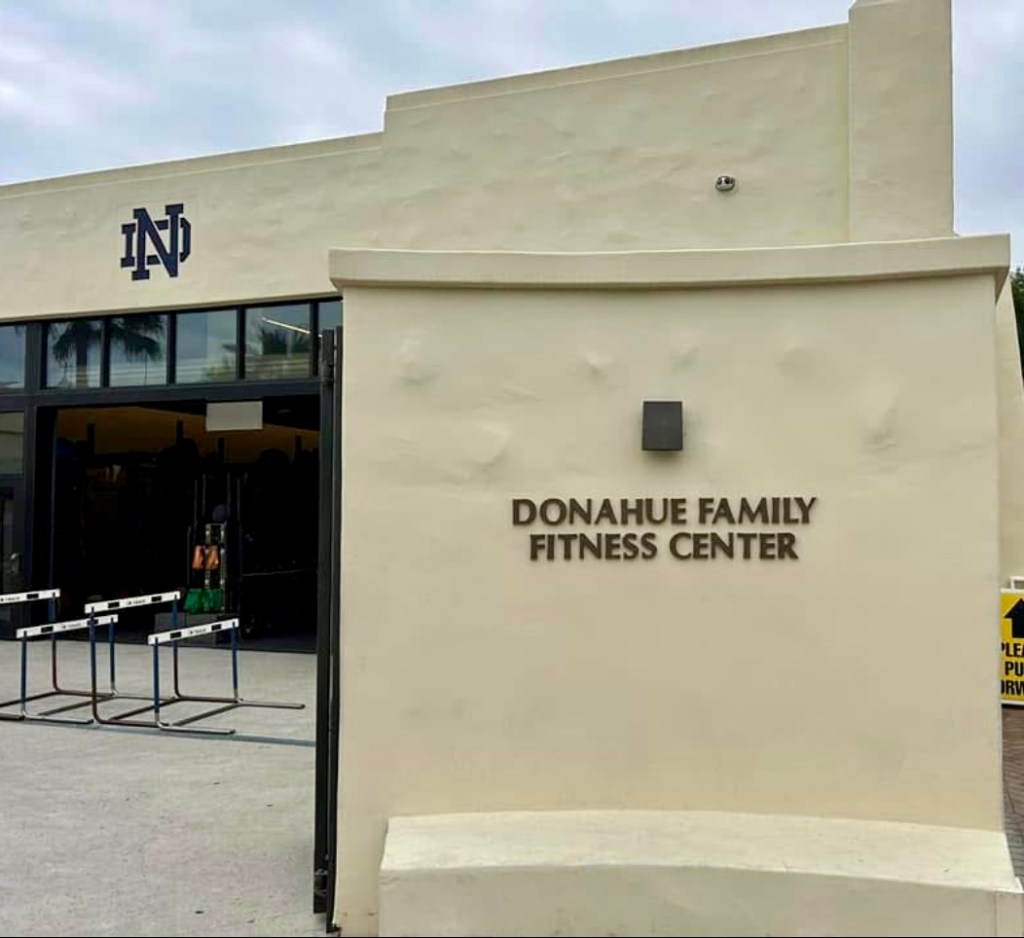
After a battle with cancer, Donahue died in Newport Beach on the Fourth of July, 2021. He was 77. At his passing, Donahue was thrown bouquets for all he accomplished, especially in this Hollywood setting.
“In a city where men who look like Terry Donahue become movie stars, Donahue became a football coach,” wrote Bill Dwyre. “We are more accustomed to football coaches who have noses like Knute Rockne‘s and growls like Ed Orgeron‘s. We don’t know how to measure George Clooney in spikes.”
The Orange County Register’s Mark Whicker wrote: “He cultivated such underdog ferocity with such monstrously talented players … The wider the shoulders, the bigger the chips. … Forever young, he becomes a nostalgic figure, harder for UCLA to replace than John Wooden.”
Donahue was remembered as well for attending Catholic Mass every morning, usually with Angelo Mazzone, a student manager when Donahue played. There was a time when Donahue’s name would come up as a candidate if the head coach came open at the University of Notre Dame.
In an extended piece that ran in the L.A. Times in 1985 and allowed for introspection, Donahue allowed that when he broke Spaulding’s school record of 72 victories he was fortunate enough to get the job in the first place.
“I certainly was not the most qualified … The reason I got it was because, at that time, there was no search committee. A search committee would have gone out and found a big-name coach or someone with a lot of experience, an older assistant coach. J.D. didn’t have to do that. I never felt I couldn’t do the job, but as I reflect back on it 10 years later, I wasn’t as far along as I thought I was — just as a lot of players aren’t as good as they think they are. J.D. took an unbelievable gamble. He took a big chance hiring me with no proven credentials, no track record as a head coach.”
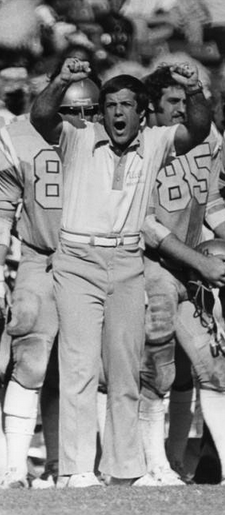
The story’s writer, Tracy Dodds, added: “Donahue is sensitive about his image. He knows what he wants it to be. And, of course, he has been successful in making it just that. Terry Donahue: A winner. A great guy. A gentleman. A family man. A religious man. A moral man. … The Santa Monica Evening Outlook, after finding no one who had a bad word to say about him concluded that he must be ‘a saint in coach’s clothing’.”
As the Rose Bowl itself pivots to an ever-changing world of bowl games and championship brackets, the place Donahue championed into National Historic Landmark status won’t be minimized. Some have suggested that as the major bowl games and stadiums continue to be used as various levels of the process in naming a champion, the Rose Bowl deserves special consideration based on all it has meant the last 100 years.
Especially if the game can remain on Jan. 1 and not be time shifted.
Heaven help us.
There is also the quote Donahue once gave to SI that continues to resonate: “Ever since I walked onto the UCLA campus to play football, my dream was to be head football coach at UCLA. I’d hate to leave this place even for heaven.”
The legacy
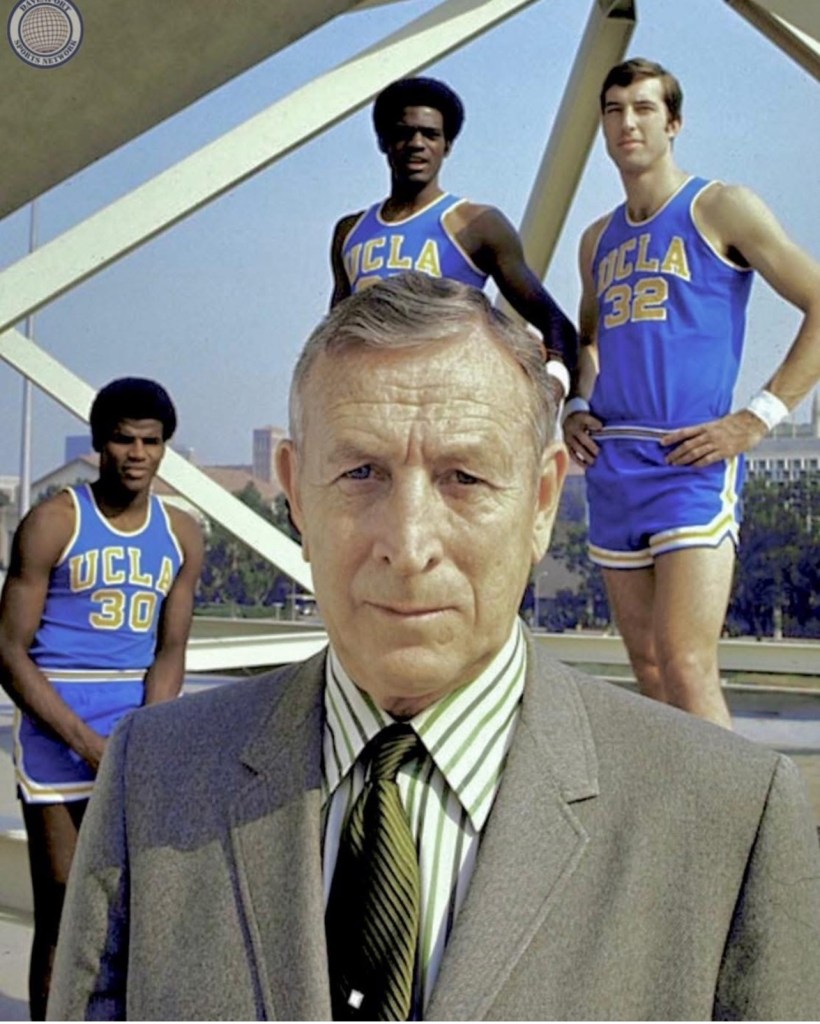
UCLA basketball coach John Wooden once said it about Donahue: “I believe that a head coach, particularly at UCLA, should be judged by his or her peers within the university community-at-large as to whether the student-athletes with whom the coach was entrusted become not only excellent athletes but also, and more importantly, better students and better all-around individuals … There is no doubt in my mind that Terry Donahue deserves the recognition of having achieved that very ethereal form of success.”
For the purposes of this SoCal history project, Donahue can represent all coaches whose tenure on the sidelines followed time spent on the playing field — or on the court, or diamond, or rink, or pitch.
For that matter, Donahue can represent the best of all coaches who aren’t identified by a number, but have a number of years to be proud of what they accomplished.
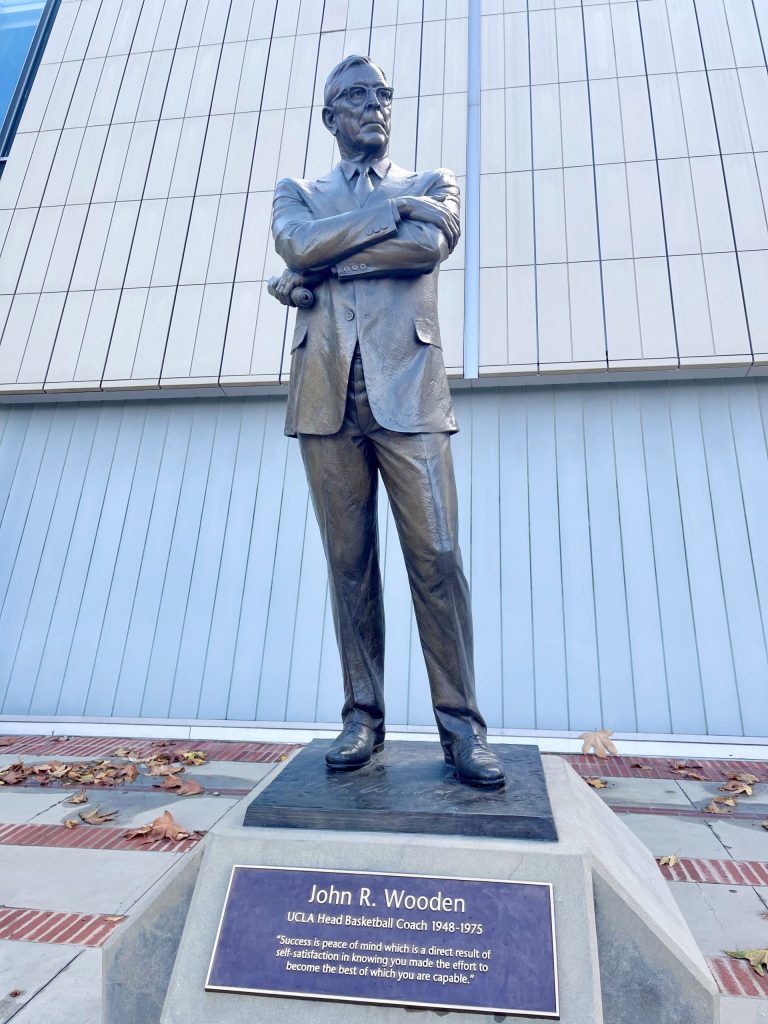
Like Wooden, and his 10 national championships from 1949 to 1975, getting into 16 tournaments (with 16 conference titles) and 12 Final Fours with a 620-147 record after his Hall of Fame playing career at Purdue. Wooden would pass the baton to Jim Harrick, a former Morningside High of Inglewood and Pepperdine coach who got into eight tournaments from 1989 to 1996 and has the only other UCLA national title in 1995. Larry Farmer, Gary Cunningham and Walt Hazzard were Wooden deciples who went into coaching after they played for UCLA. Ben Howland has three Final Four appearances for UCLA. Gene Bartow and Larry Brown were also in a Final Four. Ever heard of Caddy Works? He was the UCLA coach for 18 years prior to Wooden, from 1922 to 1939, and won 332 games.
On the UCLA football sidelines, DeShaun Foster, a standout Bruins running back wearing No. 26 from 1998 to 2001, is the latest former player since Donahue to become a head coach. It follow from Karl Dorrell (1983 to 1986 as a player; 2003 to 2007 as a coach) and Rick Neuheisel (1982 to ’83 as a player; 2008 to 2011 as a coach).
Who else wore No. 64 in SoCal sports history?
Make a case for:
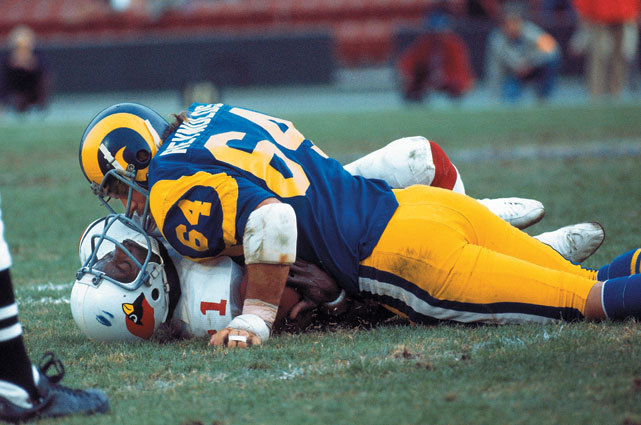
Jack “Hacksaw” Reynolds, Los Angeles Rams linebacker (1971 to 1980):
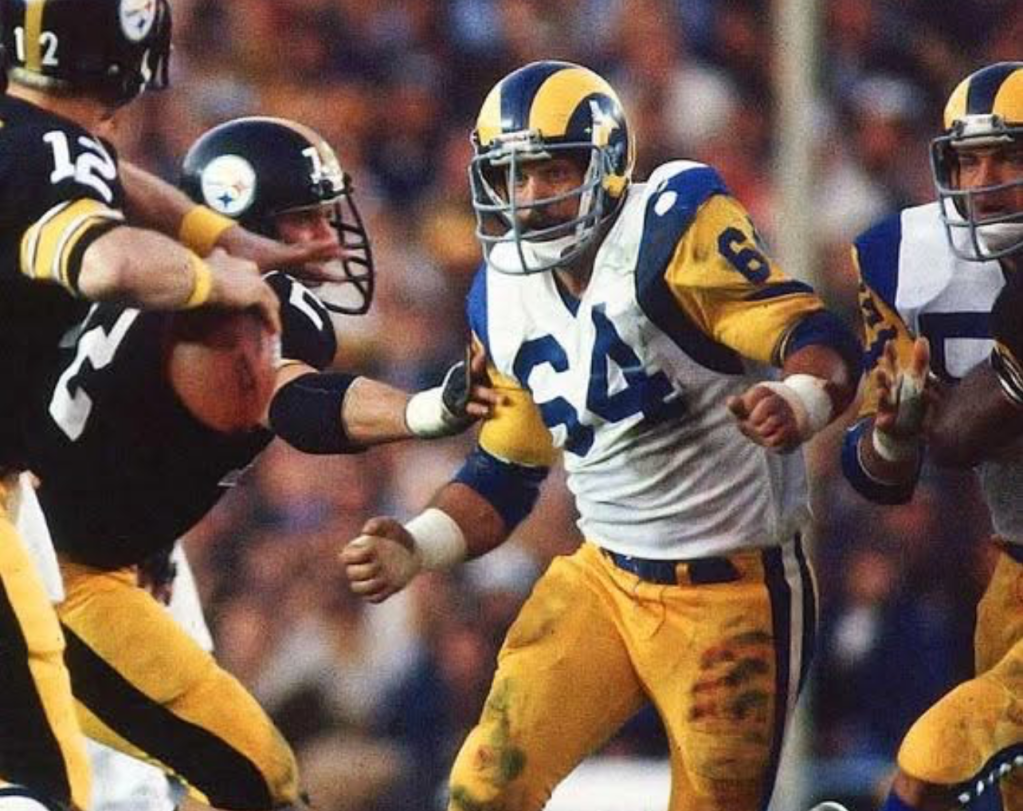
As the 22nd pick overall in the 1970 NFL draft out of Tennessee in 1970, Reynolds joined the Rams and put on No. 54. The next year, he was switched to No. 64. That became more of his identity as he became a starter in ’73, lasting through 1980, and included two Pro Bowl seasons and an appearance in the 1980 Super Bowl.
According to The Sporting News’ 2006 book “Best by Number: Who Wore What… With Distinction”: The Baltimore Colts were working on a deal to get Reynolds from the Rams in the late 1970s. Reynolds said if he came to the Colts, he wanted No. 64. The Colts already had starting offensive lineman David Taylor who wore it during their division titles in ’75, ’76 and ’77. “We were not just going to take a number off a regular player,” said Colts GM Ernie Accorsi. “So he said, ‘Well, if I can’t have 64, I want no number.’ Well, you can’t play football without a number. And then he said: ‘I always want exclusive rights to my own trademark, and the NFL and NFL Properties have no rights over me at all.’ In other words, you wouldn’t be able to print a picture in a program without his permission. So we finally said this isn’t worth the trouble. Ted Marchibroda, our coach at the time, said, ‘Enough is enough.’ ”
So the trade fell through and Reynolds stayed with the Rams before playing his final four years in San Francisco – and sticking with No. 64.
As for the nickname: Reynolds was pinned with “Hacksaw” after he used that took to relieve frustration by cutting apart an abandoned 1953 Chevy Bel Air after his team, the University of Tennessee, was upset by Ole Miss, 38-0, in 1969.
Roy Foster, USC football offensive guard (1978 to 1981):
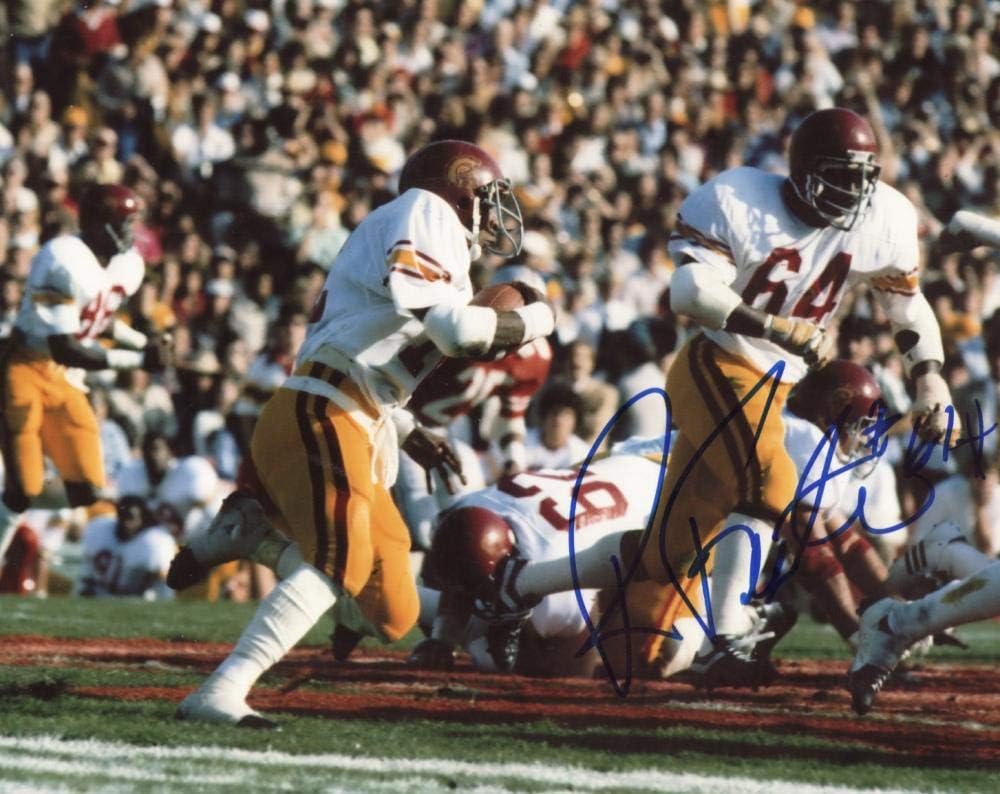
Born in L.A. and a product of Taft High in Woodland Hills, the 6-foot-4, 282-pounder played on the Trojans’ 1978 national title team as a freshman. His final final three seasons were as a first-team All-Pac 10 lineman, appearing in two Rose Bowls on a line with stars Bruce Matthews and Brad Budde. Foster’s senior season was punctuated by a first-team All-American selection and the second of two Morris Trophies, given to the top conference lineman, as a key to the success of running back Marcus Allen’s Heisman campaign. Foster was a first round pick of the Miami Dolphins in the 1982 NFL draft and later played for San Francisco — so in his career, he blocked for future Hall of Fame quarterbacks Dan Marino, Joe Montana and Steve Young.
Have you heard this story:
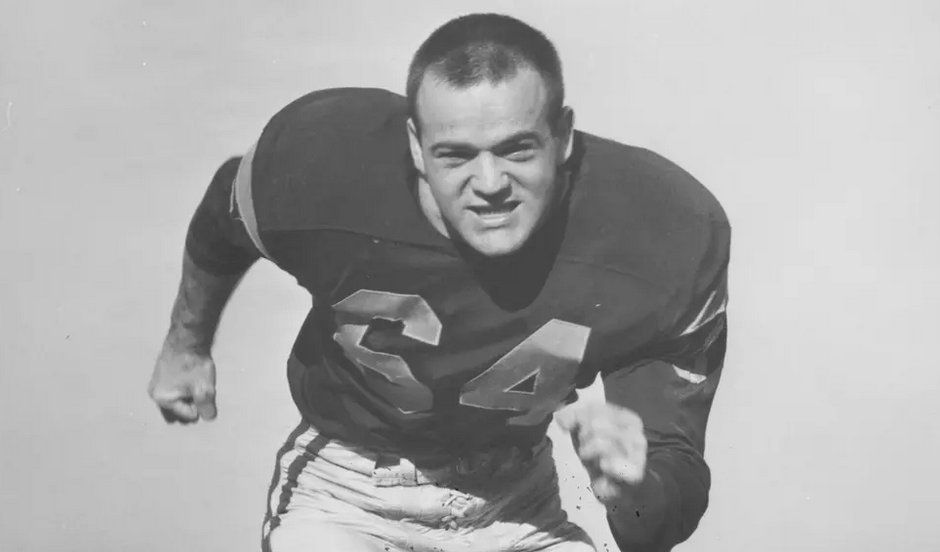
Damon Bame, USC football guard/linebacker (1962 to 1963):
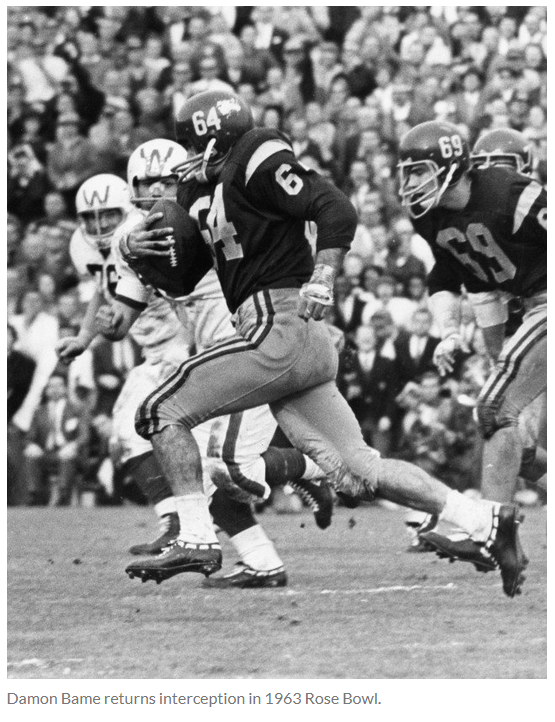
The two-time All-American out of Glendale High spent two years at Glendale Junior College before joining the ’62 Trojans national title team that went 11-0. Bame had four interceptions that season, including one in the 1963 Rose Bowl, where USC famously defeated Wisconsin, 42-37.
The story goes that when Bame was named an United Press International All-American, a USC official was about to tell him the news at football practice.
“Did I make honorable mention?” Bame asked.
“No,” the official replied.
“Third team?” Bame said.
“No,” the official replied.
“Second team?” Bame said.
“No,” the official said.
“First team?” Bame said.
“Yes,” the official said.
Bame immediately began to cry.
He then called his mother and high school coach at Glendale.
A story in the Long Beach Independent also says that Bame, “a mashed-nosed, giant-jawed, mild-mannered roughness, has been declared an all-American and it might be the upset of the year in college football.”
At the time, AP recognized Bame as a guard because linebacker wasn’t a position that was on the ballot in those days. “If we are a good team, it is because we have a good defense, and if we have a good defense it is because of Damon Bame,” said John McKay in the Independent.
Bame went on to coach in high school and college in Southern California, as well as in the World Football League.
We also have:
Caleb Ferguson, Los Angeles Dodgers pitcher (2018 to 2023)
Walker Buehler, Los Angeles Dodgers pitcher (2017), before changing to No. 21 after his first season.
Anyone else worth nominating?


1 thought on “No. 64: Terry Donahue”