

“JapanBall: Travel Guide to Japanese Baseball”

The author: Gabe Lerman, with Shane Barclay
The details: Independently published, 160 pages, $29, released Dec. 22, 2024; best available at JapanBall.com
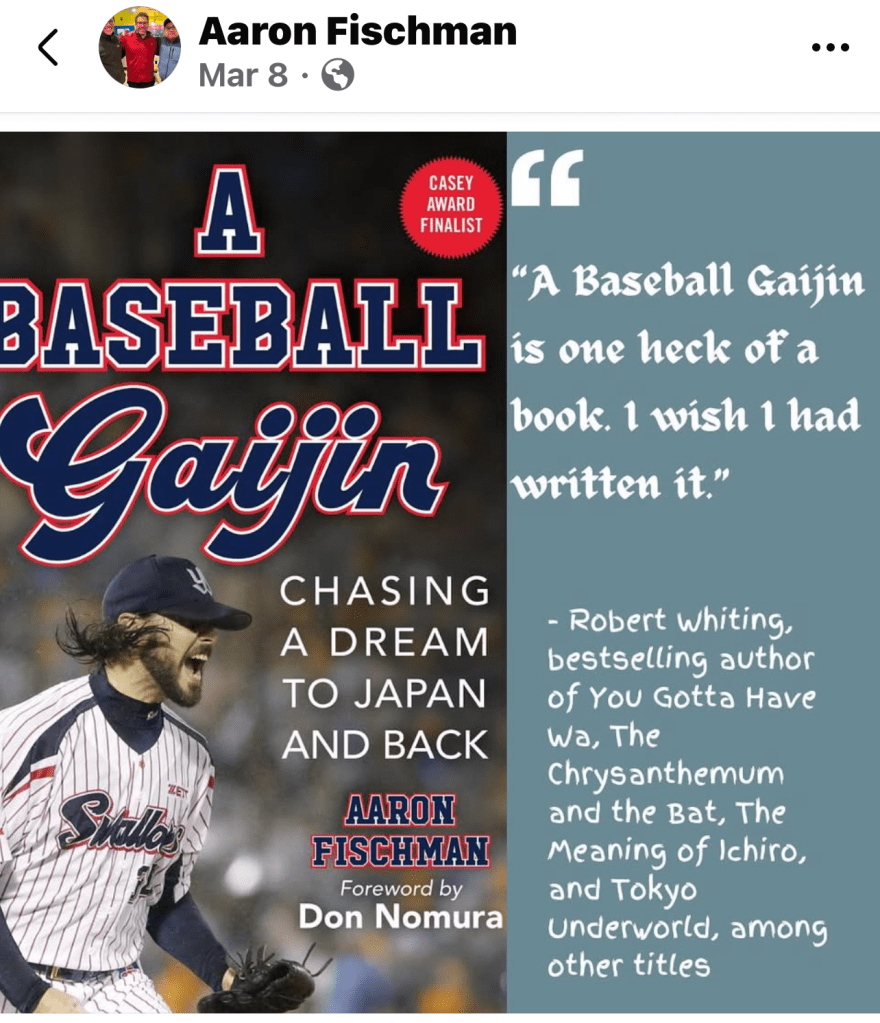
“A Baseball Gaijin: Chasing A Dream to Japan and Back”
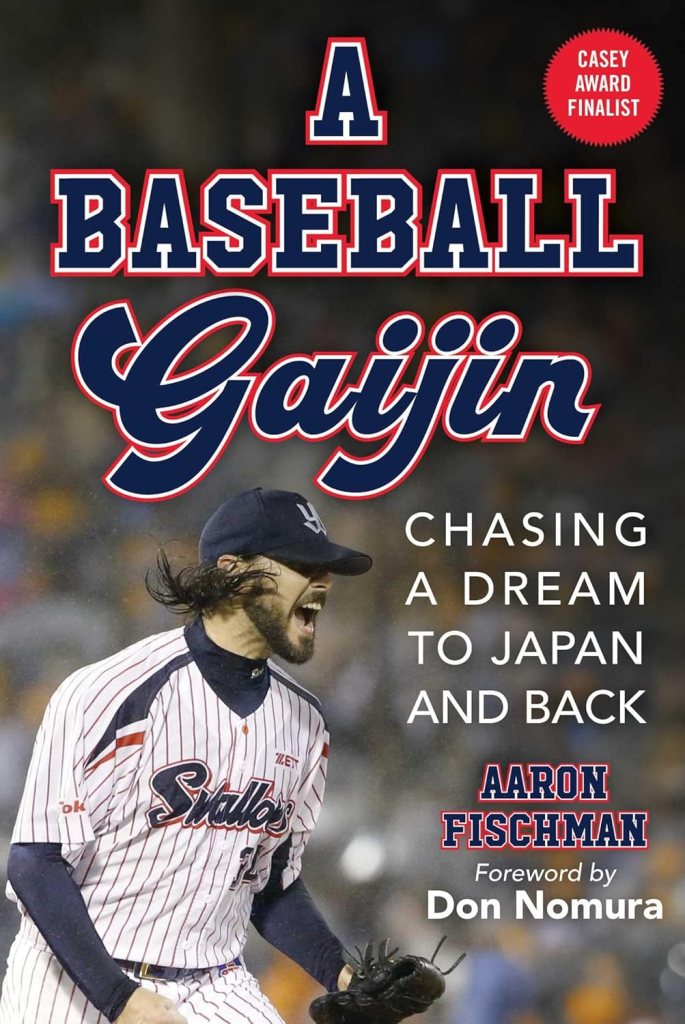
The author: Aaron Fischman
The details: Skyhorse Publishing, 371 pages, $32.99, released June, 2024; best available at the publishers website, the author’s website, JapanBall.com and Bookshop.org.
“Makeshift Fields: Chasing Baseball Across
Ireland, Scotland, England and Wales”

The author: Dale Jacobs
The details: Invisible Publishing, $17.95, 219 pages, to be released April 1, 2025; best available at the publisher’s website and Bookshop.org
A review in 90 feet or less

A year ago on this date, we purposefully launched the 2024 new baseball book review parade, aligned with the Dodgers’ trip to South Korea to open the season with a pair of games some 16 hours ahead of L.A. time against San Diego’s Padres.
Three-hundred sixty five days later comes the fragile launch of the 2025 new book baseball review parade, aligned with the Dodgers’ trip to Tokyo, Japan, to open the season with a pair of games against Chicago’s Cubs. Again 16 hours ahead.
We’re told both contests start very early on Tuesday and Wednesday — 3:10 a.m. Pacific Daylight Time — meaning again we aren’t sure if we spring ahead 48 hours, fall back to realigned with the Ides of March or just check in with Greenland’s department of defense for proper synchronization of All Things Involving Islands.
According to the chirping of USA Today hipster/longtime baseball badass writer Bob Nightengale, this trip will be like the Beatles touring the United States in the ‘60s … like Michael Jordan and the Dream Team playing at the 1992 Olympics in Barcelona … like Beyonce and Taylor Swift performing on stage together on a world tour.
You think Ohtanimania is something in Glendale, Ariz.?
MLB Network Radio’s Steve Phillips has said that with the Dodgers’ Yoshinobu Yamamoto facing the Cubs’ Shota Imanaga in the first game, and the Dodgers sending Roki Sasaki in the second game, “I don’t think that everybody here in North America appreciates how big this is going to be in Japan for baseball fans.”
Still, this trip nearly didn’t happen, from what we were hearing.

The 2025 MLB World Tour: Tokyo Series Presented by Guggenheim — preferably in all capital letters if one was able to do so — starts off a bit quirky in that the Cubs are the home team for both games, yet the Dodgers’ ownership groups gets title billing.
Follow the yen.
Before it became an official thing in July of 2024, the Dodgers’ reported sticking points centered around the idea of losing two home dates — two more opportunities they could sell out the stadium, count it toward their chase for MLB attendance dominance, and still hold the cards to host the fan-favorite Cubs in a three-game weekend series in mid-April.
The Dodgers played a little hardball, and won — not only getting these two to count against the Cubs’ schedule, but also securing naming rights, which is another investment in their future earnings (and also shows the benefits of having a hefty group of hedge funders be able call the shots on building an expensive, expansive roster with as much of the payments deferred, because, in this business setup, in this business culture, really, what could go wrong?)
Five previous times, going back to 2000, the MLB started its season with “real” games in Japan, a country that has three wins in the World Baseball Classic, including the most recent with Ohtani, and doesn’t mind comparisons of its country to the 1950s Kansas City Athletics when it comes to cultivating the next wave of MLB talent transferred to a larger display rack.
Books will likely be written about this excursion — including the two Dodgers’ exhibition games leading into it — because that’s what we do these days. Surely, the Baseball Hall of Fame in Cooperstown will be celebrating it in July when it cracks open its new exhibit, “Yakyu | Baseball: The Transpacific Exchange of the Game” — again, sponsored by Guggenheim Partners.
The Dodgers want to be on this Japanese cutting edge of player development, again, as they were with Hideo Nomo decades ago. It helps the bottom line tremendously, culturally and, we dare to say, spiritually for a team that may not even know where its soul is at this point.
Japan may be the place to re-find inner peace, and a missing bullpen piece.
It’s a place, we read recently in Travel + Leisure, where family can also reconnect. Even while watching the uriko, or female beer sellers, “flying up and down the stadium steps in fluorescent shorts and miniskirts, with kegs full of beer in their backpacks and spray guns to fill up fans’ plastic glasses.”
Hair-bending coffee might be the beverage of choice for the Dodgers’ season opener. And finding yourself in need of reading material to stay awake before the first official pitch of ’25, here are three that should provide a passport to comfort without any TSA shakedown:
To get his head around navigating a guide to enjoy all there is about authentic Japanese baseball, Toronto-based Lerman took the template from a public transportation journey he once mapped out to experience the Original Six NHL home cities and applied it to what he called the “All Japan Great Baseball Train Tour” in 2019 — a 17-day train jaunt that hit on all 12 of the Nippon Professional Baseball ballparks.
“It came down to — no one had (done the trip) before, someone should, and I could,” Lerman explained in an interview above on JapanBaller Spotlight.
An IT consultant by day for IBM Canada who has put his storytelling voice to nifty use doing play-by-play of the NPB’s Pacific League for its English YouTube channel, Lerman “blames” his best-friend Nick for moving to Japan for two years to work and starting this current engagement with the NPB. The first game was in 2013 — watching a Chiba Lotte Marines home game against the visiting Tohoku Rakuten Golden Eagles, and having it end in extra innings on a “Sayōnara” home run.
“We were absorbed by the fan atmosphere,” Lerman said. “The Chiba Lotte Marines fans in the right field bleachers are absolute nutters. Maybe the best in the Pacific League.”
A trip to see the Hanshin Tigers in ’15 caused Lerman to define them as his “ride or die squad.”
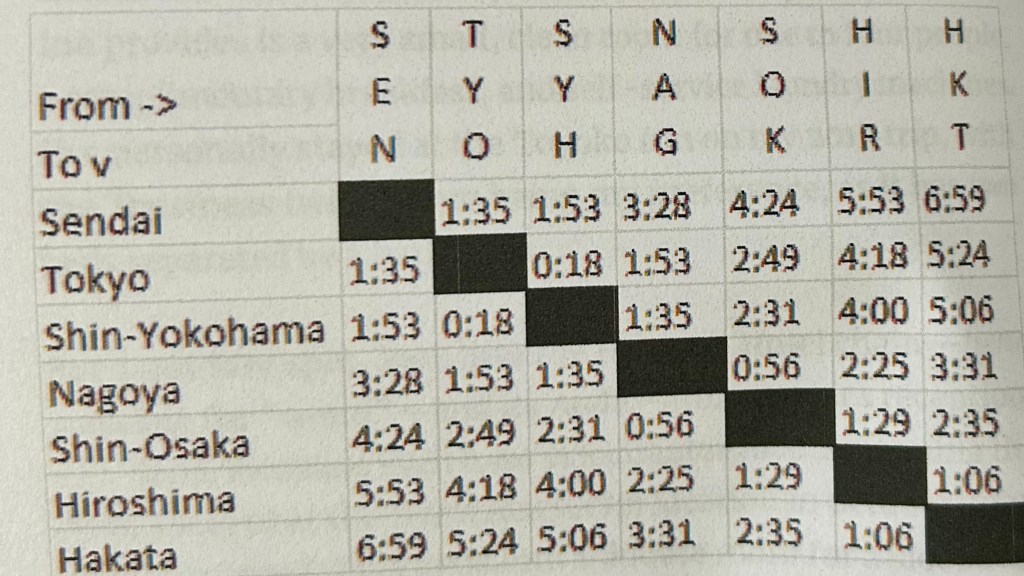
The Dodgers-Cubs game in the Tokyo Dome, aka “The Big Egg,” is the longtime home of the Tokyo Yomiuri Giants, and may soon be past its expiration date. Like the former Metrodome in Minneapolis, the roof is supported by air, so, as Lerman notes, the entry and exit points are giant revolving doors to “avoid a mass exit or entrance deflating the place.”
Lerman also notes that it’s usually better to arrive in Tokyo from the Haneda Airport (HND) as it is closer to downtown and travel connections, including a remarkable monorail that connects with train stations. By that point, he also advises to do all your immigration processing on the plane flight over and get a series of QR codes that will facilitate navigation when one is presumably jet lagged and the mind is rather numbed at this point.
Other key points Lerman makes: Bring extra deodorant and melatonin, download the translation app and avoid the overpriced Japan Rail Pass.
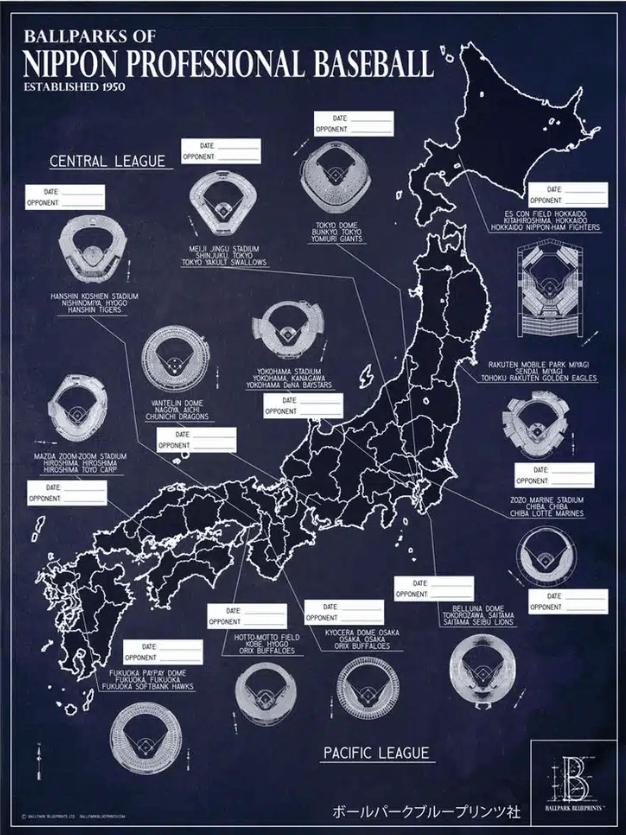
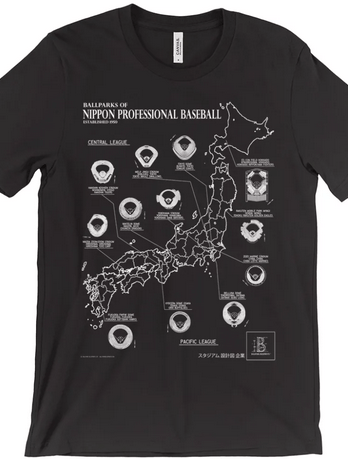
Lerman’s quiet partner in all this is his relationship with Barclay, whose international baseball travel company JapanBall not only negotiates tourist trips that Lerman has mapped out here, but also journeys to South Korea, the Dominican Republic, Europe and the Alaska Midnight Sun game along with the Pacific Northwest.
In our book, the thing that makes Lerman’s guide even more top notch is the official endorsement of Rob Fitts, the esteemed Japanese baseball historian (see “Pioneers of Japanese American Baseball” and “Issei Baseball: The Story of the First Japanese American Ballplayers” who was just name the recipient of the SABR Henry Chadwick Award).
Fitts’ fitting back-cover blurb: “I’ve been attending NPB games for over 30 years and I learned something new and useful on nearly every page.”
The travelogue segue to Fischman’s portrait of a baseball gaijin — the Japanese term for “foreigner” or “outsider,” mostly applied to anyone there who is non-Asian — leads to the discovery of how Tony Barnette discovered his own path to the Japanese game as a not-so-desperate side trip to reshape his career arch, develop a strategy and circle back to the MLB when the time was right.
The 6-foot-1, 190-pound right-handed pitcher hardly stood out as an MLB prospect when he was a 10th-round pick by the Arizona Diamondbacks in 2006. It seemed more of a calculated risk Barnette could help them since he spent the previous two seasons at Arizona State developing into form after the previous two years at a smaller Arizona college, all of which was an adventure for someone born in Alaska and growing up in the state of Washington.
Barnette’s due diligence was a steady four-year elevator ride through the D-backs’ Rookie League, Single-A, Double-A and, after a stop in the Arizona Fall League, posting a career best 29 starts and 14 wins at Triple-A Reno, where he was making $2,100 a month in 2009. There was also that 5.79 ERA that stood out as a red flag for the Aces’ ace. It wasn’t in the cards for him.

The D-backs, coming off an NL-West worst 70-92 season guided by two managers, somehow didn’t see much of a future for the 25-year-old Barnette in 2010. Maybe some spot starts during emergency situations during the season.
Barnette swallowed hard and thought it was worth taking a $500,000 annual offer from the NPB’s Tokyo Yakult Swallows to see what might happen.
Again, follow the yen. And grab three suitcases. Even if the odds were not in his favor to make it back to MLB land following a Japanese sojourn.
(Also, if this makes Barnette feel any better: The 2010 D-backs finished last again in the NL West at 65-97, had another managerial change, and the ace of the starting rotation, Rodrigo Lopez, led the league with 16 losses, in a group that included Ian Kennedy, Dan Haren, Edwin Jackson, Barry Enright and Joe Saunders).
Barnette’s adventure started with the Swallows (they’re named after the bird that come back to Capistrano, OK?) and playing home games at Meiji Jingu Stadium — which, we learned in Lerman’s book, was built in 1926 and is one of four big-time baseball stadiums in the world left standing where Babe Ruth once played.
In the span of six NPB seasons, Barnette transformed himself from reliable starter, to middle reliever, to a lock-down closer for the Swallows, culminating in a 2015 trip to the Japan Series. Fischman details Barnette’s “cinematic twists and turns” that reveals resilience, strong will and having the flexibility to trust his coaches in developing a cutter as well as a split-finger pitch that could help him get out of jams. Along the way, he starts his family. He also changes his number from 64 to 34, feeling “34 was way more Showtime” and made him feel more part of the team, as well as using ZZ Top’s “Sharp Dressed Man” as his entrance song from the bullpen.
When Barnette thought it was worth capitalizing on his Japanese experience and trying to see if an MLB team wanted him, there was a possible reunion with the Diamondbacks — only to have them drop him at the last moment. Their roster payroll froze following the six-year, $206 million ultra-contract signing of free-agent pitcher Zack Greinke in December, 2015. The record-breaking deal came as he skipped out on the Dodgers after winning 51 games over three seasons, and coming off a 19-3 year with a 1.66 ERA.
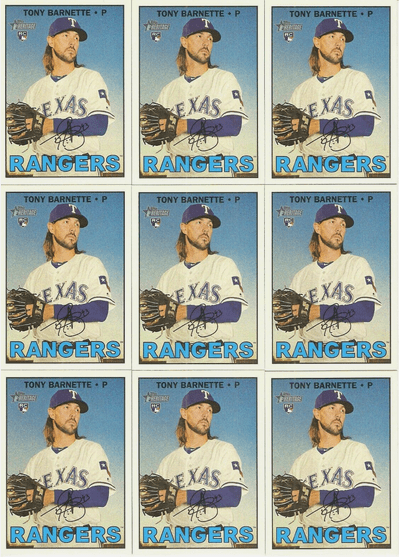
Instead, Barnette found himself as 32-year-old rookie, landing with the Texas Rangers, after sniffs by the Padres, Orioles and Cubs. He had himself a two-year, $3.5 million deal.
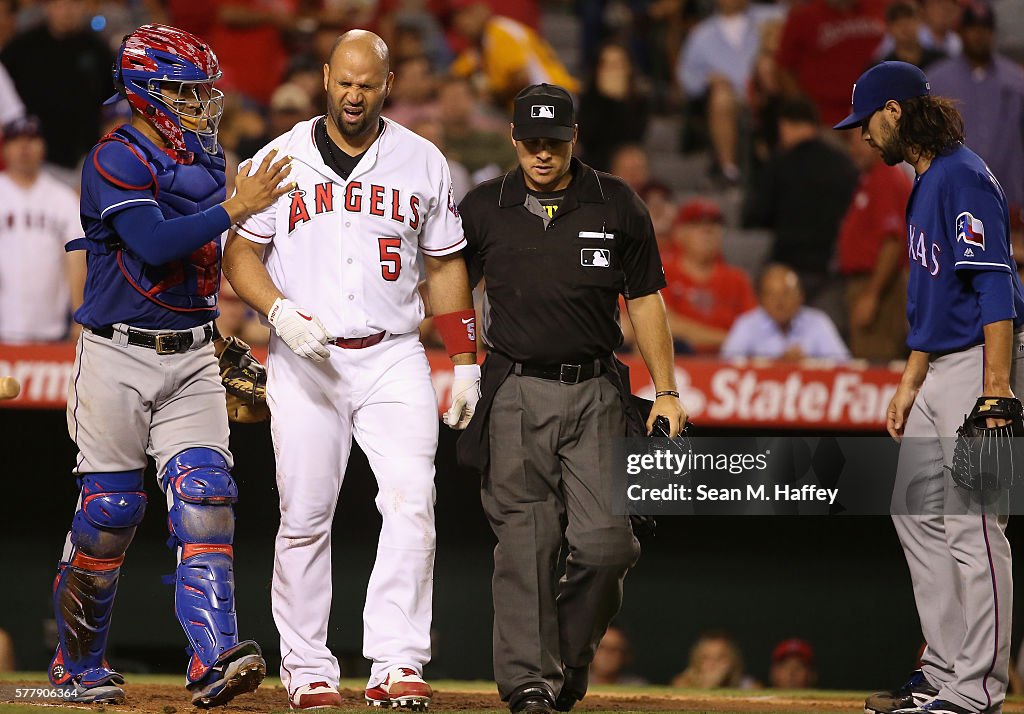
For what it’s worth, Angels fans may recall Barnette was the Rangers’ reliever who in July of 2016 hit Albert Pujols in the helmet on an 0-2 pitch at Angel Stadium. Pujols wasn’t hurt, but it didn’t look all that great. Barnette credited the fact his fastball topped out at 92 mph was maybe his saving grace.
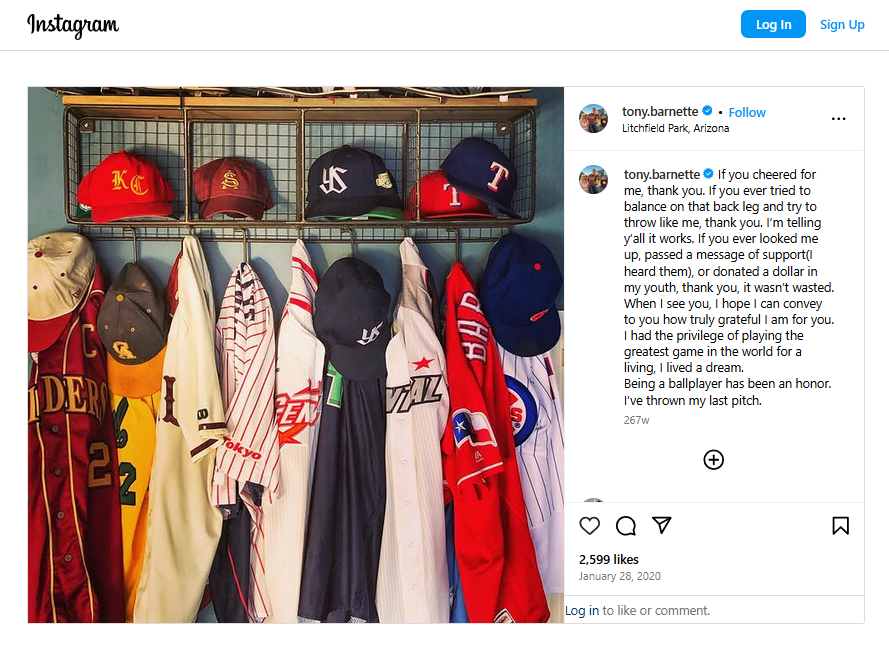
In January of 2019, Barnette decided it was time to post on his Instagram feed that he had retired after four MLB seasons. At age 35, it was time.
As Robert Whiting pointed out in his 2009 classic, “You Gotta Have Wa,” a play off the song “You Gotta Have Heart” from “Damn Yankees,” Japanese baseball for the curious Yankee-American player will always be dealing with some sort of culture clash at the start. But in today’s world, it should be far less problematic to navigate.
Barnette, through Fischman’s storytelling and research, certainly proves that. They both found the wa.
With “Makeshift Fields,” if we consider how baseball in the U.S. and Japan is at one major peak, consider how the game in Ireland, Scotland, England and Wales is at a stage quite innocent and pure.
This is a nice reunion with Jacobs, a professor from Windsor, Ontario, in Canada who in 2021 did “100 Miles of Baseball: Fifth Games, One Summer” with his wife, Heidi, exploring all levels of the game within the radius of their home base.
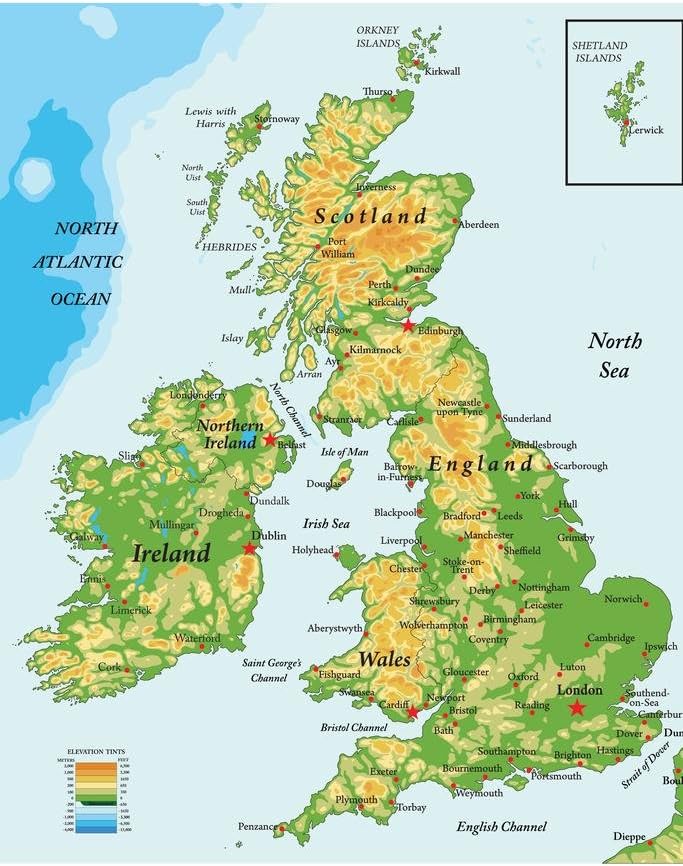
Here, Jacobs takes a seven-week trip in the summer of 2023 almost by mistake. He thought he was researching basketball in Ireland as a history project. He typo’d baseball instead. Maybe it was luck he followed through on it.
Winding through Dublin and Cork, to Aberdeen and Edinburgh, Dundee and Cardiff, to Leicester, London, Essex, Norwich and Slough, Jacobs comes away with a new appreciation of the game, its culture, and how, even if its played in rain and cold (like his hometown), its fragility needs caretakers like those in this part of the world to keep the seeds properly gardened.
Jacobs sums it up best in his epilogue: On one hand, baseball is baseball, with its idiosyncratic rules and a wide range of talent — including many women who play in England and Scotland. But the feel is much different, more precarious, more communal. It caters to those, for example, who are on the autistic spectrum, giving players an opportunity to play a team sport while focusing on individual achievement. It is also far less physical than the more common sports of football/soccer, hurling, cricket, camogie, Gaelic football or rugby.
Yes, baseball is a “thing” in this part of the globe. It’s a thing they’ve made it for themselves. Whether or not MLB sends two teams to London every so often to chew on the big-league experience.
“As so many people have told me, you have to love baseball to play it in Ireland or Scotland or England or Wales,” Jacobs concludes. “Chasing baseball to all of these places reaffirms for me why it is I love this game.”

How it goes in the scorebook
Well, I never been to England
But I kinda like the Beatles
Well, I headed for Las Vegas
Only made it out to Needles
Can you feel it?
Must be near it
Feels so good
Whoa, feels so good
– “Never Been to Spain,” Three Dog Night, 1971.
Nothing lost in the translation or the transportation of ideas in these three gems.
We’ll refrain from the urge to create a haiku-like summation, and bank instead on the idea that all three are composed in matter-of-fact, straight-forward reporting style. Not a lot of fluff or excess verbiage. Sticking to the point, and sticking the landing.
Lerman’s “JapanBall” should be mandatory, and thoroughly digested, long before going to any international airport terminal. He’s done all the research you need. Don’t overthink it. Just do it this way. (Again, he points out, if you want to connect with the most “Anglophone” fanbase, just go to games with the Hokkaido Nippon Ham Fighters. But don’t go in June. That’s when most games in the NPB get rained out).
Fischman’s “Gaijin” is what one can best save to read on the overseas flight toward the Land of the Rising Sun — especially if the in-flight movie is Tom Selleck’s “Mr. Baseball” from 1992 that doesn’t really hold up well these days, with a 12 percent ranking on RottonTomatoes.com. A 2024 Casey Award finalist for those at Spitball Magazine that judge the year’s best baseball books going back to 1983, “Gaijin” is a project that Fischman notes in his acknowledgements that could have actually been a much deeper and denser manuscript. The USC journalism grad smartly paired it down, as well as adding two-dozen pages in the back to show all his research work. In retrospect, perhaps the best part of Fischman’s collaboration on the narrative is having the trust of Barnette’s wife, Hillary, tell so much of the story from start to finish, as she too was along for the ride of her life as well. The wife’s journey is often more complex than the player who is a creature of habit and just goes and does what he’s told.
Jacobs’ “Makeshift Fields” is, according to a publishers’ overview, an ode to Dave Bidini’s 2001 “Tropic of Hockey: My Search for the Game in Unlikely Places.” We can also liken it to the 2022 book, “Grassroots Baseball: Route 66,” where photographer Jean Fruth took her camera and captured moments of what the game looks like along the iconic U.S. highway from Chicago to L.A. and many points in between. “Makeshift Fields” makes the readers feel as if they are right in the middle of something special in a land not so far away, and maybe it’s worth taking a trip, in the other direction from Japan, to see what the starting point of all this can still look like.
Also to note: Invisible Publishing, which did “Makeshift Fields,” continues on as an independent, non-profit company based in Canada that “produces fine Canadian literature for those who enjoy such things.” The company should get extra credit for even sending a review copy to someone in the United States at this moment in time.
Extra innings: More to consider
== “In the Japanese Ballpark: Behind the Scenes of Nippon Professional Baseball,” by Robert K. Fitts will be released this fall by University of Nebraska Press (304 pages, $36.95).

Fitts talks to those who play, oversee, promote, and watch the Japanese game — 26 in all, including Bobby Valentine, Trey Hillman, Robert Whiting and Ambassador Ryozo Kato — to find out its secret sauce. That includes players, managers, interpreters, trainers, data analysts, marketing directors, ballpark workers, cheerleaders, beer vendors, writers, agents and card dealers. Compare and contrast the cultural aspects that make Nippon Professional Baseball different from MLB.
== This:

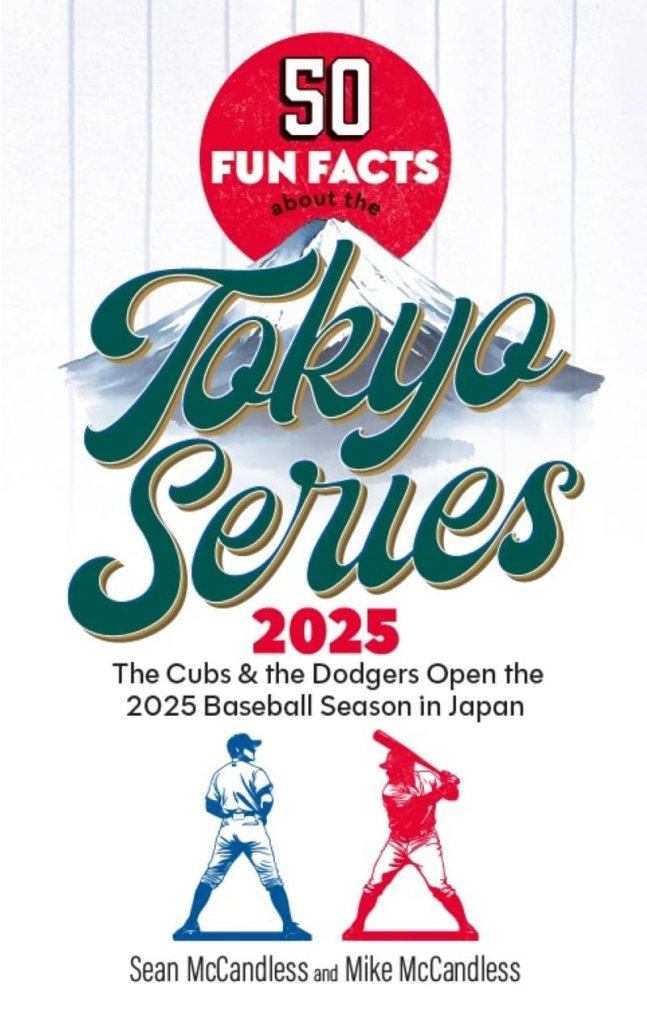
Touchwood Press released a “50 Fun Facts” compilation about this 2025 Tokyo Series back in February if that’s of interest as well. Above is the publisher’s blurb all about it. Translate it at your own risk, with tariff restrictions.

 Tom Hoffarth's The Drill: More Farther Off the Wall
1 thought on “Day 1 of 2025 baseball book reviews: Tariff-free travelogues”