


“The Baseball Stadium Guide”
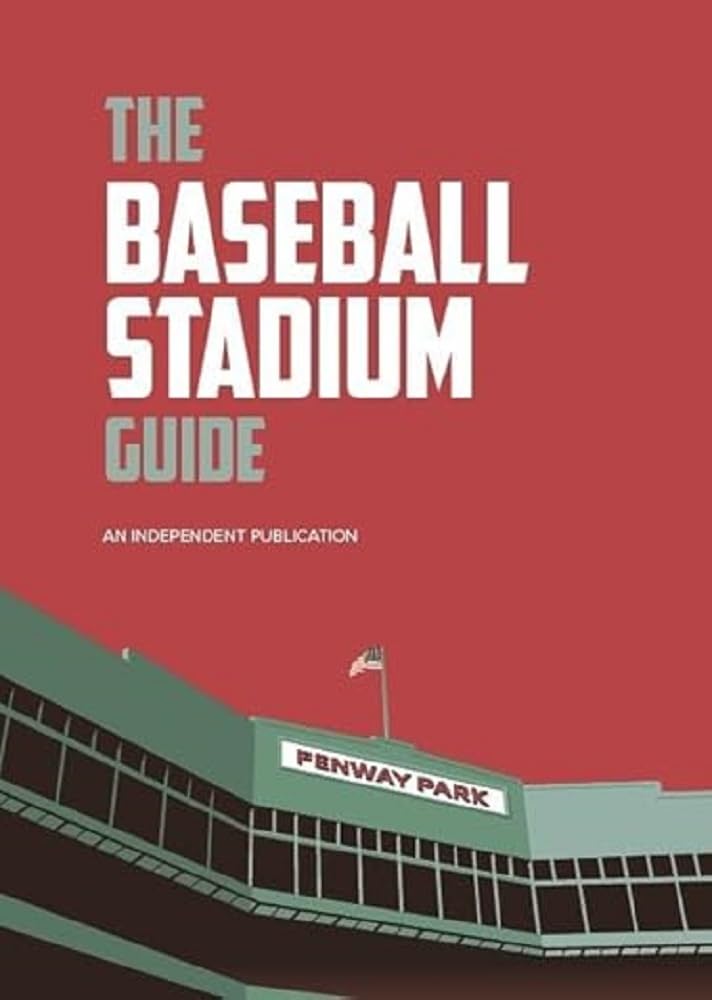
The author: Ian McArthur
The illustrator: Daniel Brawn
The details: Aspen Books/Pilar Box Red Publishing,112 pages, $28.99, re-released March 11, 2025; best available at the publishers website.
“The Modern Baseball:
History of MLB Through the
Art of the Logoball”

The author: Tyler Burton
The details: Self published, 220 pages, $49.99 softbound, $99.99 hardbound, released June 2024; best available at the author’s website.
“Movies With Balls:
The Greatest Sports Films
of All Time, Analyzed and Illustrated”
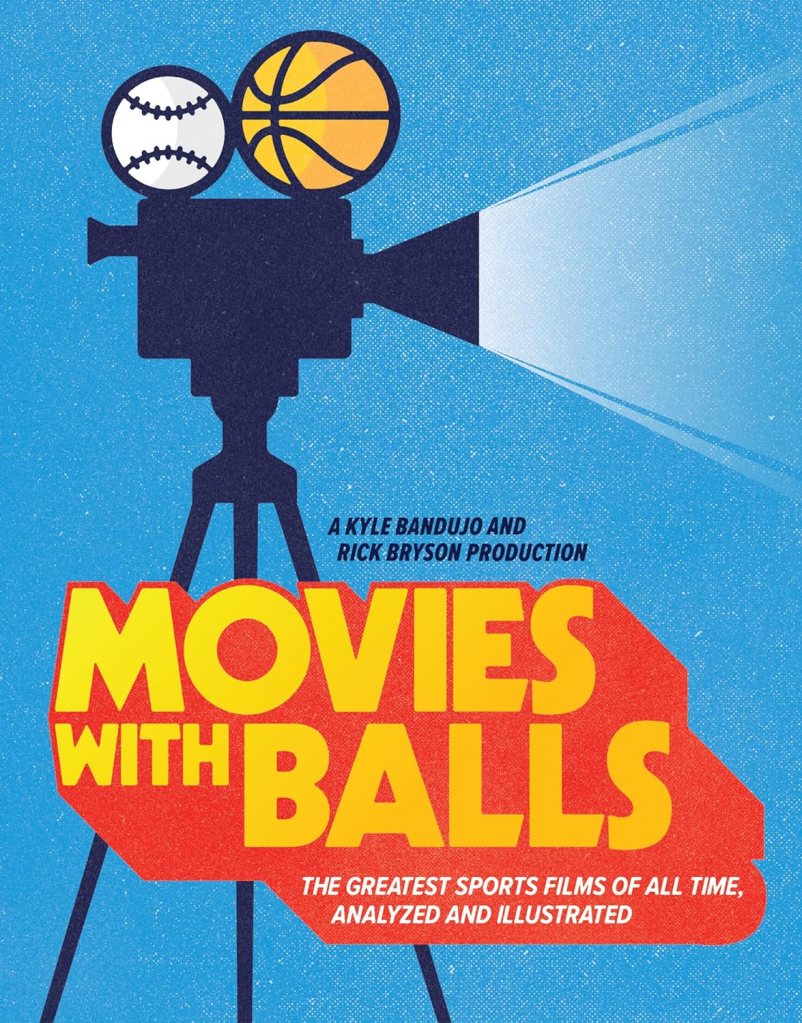
The illustrators/authors: Rick Bryson and Kyle Bandujo
The details: Penguin/Random House, 256 pages, $24.99, released September of 2024; best available at the publishers’ website, Bookshop.org and the book’s official site.
“Movies and the Church
of Baseball: Religion in the
Cinema of the National Pastime”
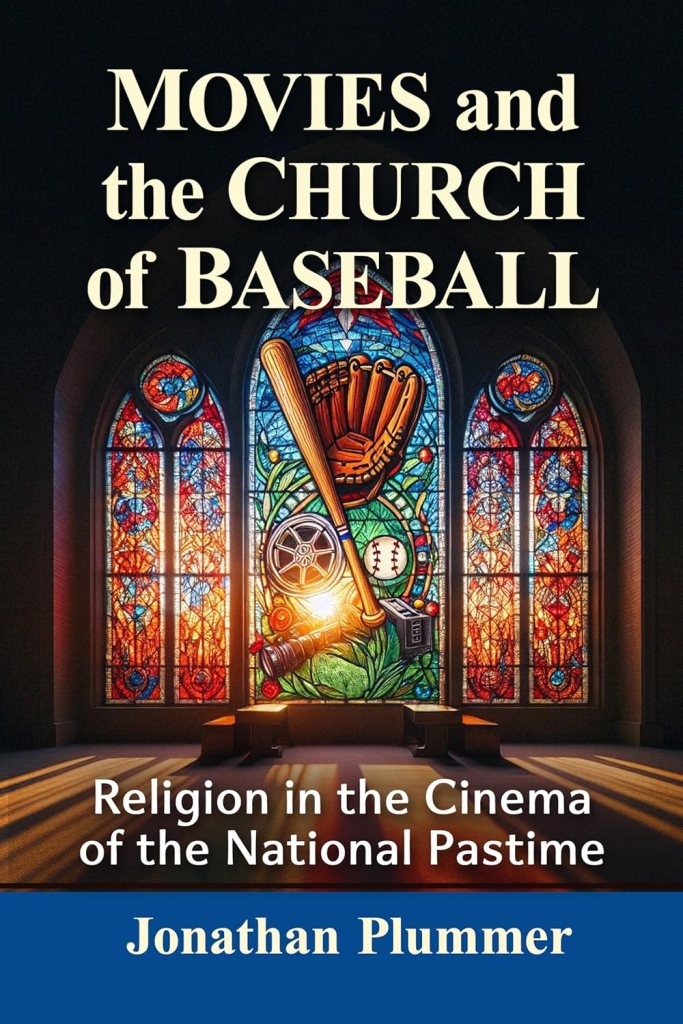
The author: Jonathan Plummer
The details: McFarland, 198 pages, $55, released Feb. 6, 2025; best available at the publishers website and Bookshop.org
A review in 90 feet or less

One major transactional aspect of the Art of the Game’s exhibits you hopefully encounter at Dodger Stadium or Angel Stadium (as well as one at formerly named Staples Center) centers on the art of a deal.
Sales tax included. It can be pricey quickly. Check yourself.
Once you sign your name on the credit card statement, the exchange rate is you get something with someone else’s signature on it, perhaps far-more-famous (but not necessarily in Southern California). It adds to the composition of a nifty limited-edition portrait or other piece that brings lifetime admiration.
Justify it as an investment. A Jackson Pollock-meets-Reggie Jackson-meets-A.J. Pollock moment. But don’t stuff it away in a safe deposit vault. Show it off.
This monetized artwork goes in a place where as many as possible can see, admire it, maybe even envy it. Here’s where you, as a patron of the arts, have chance to express your allegiance to the game, bold and beautifully, through a framed painting, photograph, mixed-media… all with the most intoxicating element that you’ve again become a representation of nostalgia’s powerful lure.
You have purchased a memory.

Over at the studios of S. Preston Art + Designs down Orange County way at Anaheim Garden Walk, the experience of minimalist graphic art is maximize in his showroom. He has harnessed the genre, especially his signature ballpark art, which first caught our attention in 2018 for an L.A. Times multi-media story.
It was our hope that S. Preston’s work already done and on the wall could have been the “Vin-imalist” cover piece for “Perfect Eloquence: An Appreciation of Vin Scully,” but so much of his handicraft had already been used by University of Nebraska Press on other baseball book covers.
Still, S. Preston had that ready-made portrait we still dream of having it repurposed. And someone special would buy a framed print for us.
These are his minimalist interpretations of Dodger Stadium (here and here) and of Angel Stadium (here and here). Enjoy.
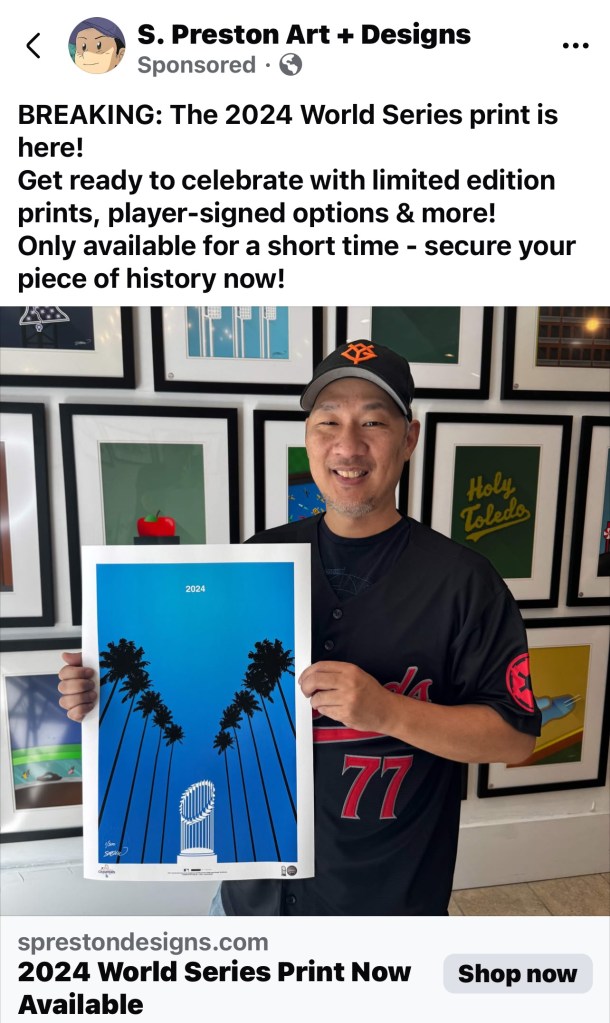
His latest, a representation of the Dodgers’ 2024 World Series title that is speechless (as is its purpose), came out in the moments after the championship was clinched (as is his custom). It exudes class, context and a coolness that’s unique to his storytelling medium.
Baseball’s history told through visual media gives our eyes something to dart to on our office wall when we’re trying to think of a particular word or phrase, evoke a feeling or sensation, or just admire someone’s meticulous way of imitating the life on a diamond.
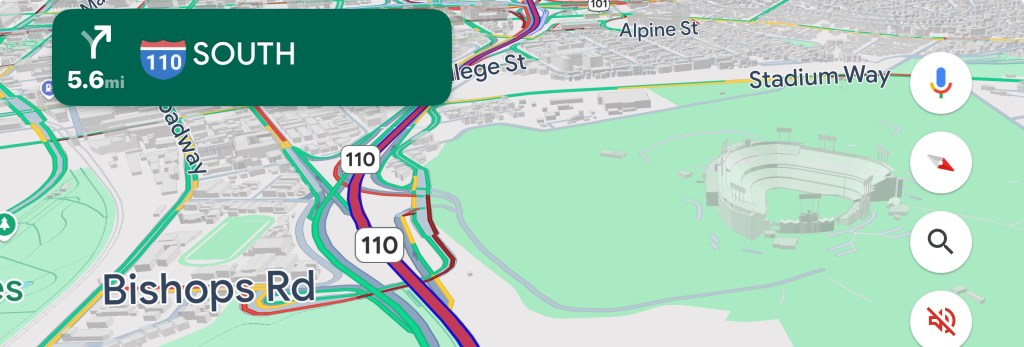
Would anyone have ever considered GoogleMap.com as a source of discovered artwork?
We did recently did as our iPhone became locked on to why it was tough go of it one afternoon trying to slog down the 110 — it figured out with its famous red-lining markings that this was Dodgers game-day traffic.
Look at the artistic portrayal of Dodger Stadium through its AI interpretation first. Now notice how it seems the stadium is sitting in the middle of a pasture with one road in. Now wonder there’s a sea of headlights that make it look like Iowa and the “Field of Dreams” ending.
Maybe this is a new “found art” discovery, just as we recently learned about “found poetry.”
As our Stadium Way entry point to “The Baseball Stadium Guide,” we acknowledge there have been a concession-stand-full of stadium-related books written and produced on this appreciation of baseball cathedrals.
Many are oversized picture books that dazzle the eye; others are very intricate how-to-navigate-the-place, here-are-the-hacks survival guides. Like 2022’s “Remarkable Ballparks.” Or 2023’s “Baseball Field Guide.” Most prominent and dominant, and academic, is Paul Goldberger’s 2021 “Ballpark: Baseball in the American City,” through the prism of the Yale educated, New York Times and Vanity Fair architectural criticism work.
We even sought his opinion, based on his book, about what kind of ballpark could be envisioned for Long Beach as the city was used as a negotiation ply by Angels’ ownership when putting out the idea of moving unless the stadium and its surrounds weren’t upgraded (and you saw the corruption that led to).
What will set this baseball stadium “guide” apart is its brevity and humor complimenting its artistic beauty. We don’t need all that data (year built, how much it cost, capacity seating, etc.). Put it all in context and wrap it around a piece of art, much like the S. Preston conceptualization, this time drawn up by Daniel Brawn, who unfortunately get very little visual credit for his design work aside from a mention in the acknowledgements.
Brawn also jazzed up a book similar to this called “The Football Stadium Guide” by the same publisher that highlights “soccer” facilities in the UK and would certainly excite those who’ve experienced such hallowed venues.
On that note, there’s a sublime subtitle on the cover: “An Independent Publication.”

Iain McArthur’s bio on the publisher’s website is listed simply as “experienced North American and European sports writer.” His LinkedIn bio (he’s #OpenToWork) adds that he’s from Edinburgh, Scotland and is primarily a proofreader, reviewer and interviewer for football (soccer) publications and rock music platforms and started this project in 2023.
Some of his better punchlines in the book:
On the White Sox’s Guaranteed Rate Field (not Comiskey Park): “In a 2007 episode of ‘The Simpsons,’ Homer visits Chicago and is shown walking past the iconic entrance marquee of Wrigley Field, and then a featurless stadium whose signage says ‘Wherever the White Sox Play’.”
On Wrigley Field: “Elwood Blues never actually lived at 1060 West Addison Street in Chicago; it’s just a fake address he gave to fool the police, but what we now know as Wrigley Field has been there since 1914. … Only service animals as defined by federal law are permitted on Wrigley Field property, so while the park just might be the G.O.A.T., it’s still a no-go for actual goats.”
On Cincinnati’s Great American Ballpark: “Whilst it definitely lives up to two of the three words in its name by being American and a ballpark, for all its charms, GABP has yet to witness a truly successful home team … the Reds have still to win even a single post-season game at home. Greatness awaits.”
He may now be our most favourite baseball scribe in the UK. But please give equal credit to Brawn for holding his brawniness in the art department by capturing of each venue.
Well, almost each venue.

The original book was published in 2023. The version you’d find today, supposedly updated in March of ’25, will lack a few glaring realities as it says it covers 13 parks, 10 fields, five stadiums, one Centre and one Coliseum among the “old jewel boxes” and “multi-sport enormo-domes” and “back to the future retroparks” as well as “modern techno parks.”
Here, the Houston Astros’ home spot is called “The Juice Box,” aka Minute Maid Park. The originally (and sadly) named Enron Field is now called … let’s see here … Daikin Park. What’s so wrong about going back to the Eighth Wonder of the World — The Houston Astrodome? If it’s still good enough for the Bad News Bears …
The book neither reflects the fact that the Tampa Bay Rays and Oakland-ish Athletics are now wedged into nearby Triple-A stadiums, not really worthy of an artistic rendition, as they wait out a) a dome rebuild/new stadium or b) a franchise relocation. So you honor the past instead.
Speaking of honoring:

The two-page entry describing the Angels’ current home notes something that hadn’t dawned on me: Since it was originally built in 1966, as the Angels moved out of their sharing agreement at Dodger Stadium/Chavez Ravine, that makes this place the fourth-oldest ballpark in the MLB pecking order. All the remodeled versions of this almost have made it felt like a re-do than a make-over. Today’s incarnation is so different from the original (with the open parking lot and the Big A scoreboard, and those are both so different from the place when it was repurposed for the NFL’s Rams and regular football games.
A thought: Next facelift, go retro and make it look like the old L.A. Wrigley Field, the Angels’ first home in 1961 and the one the PCL Angels most frequented. And go back to 1950s pricing.
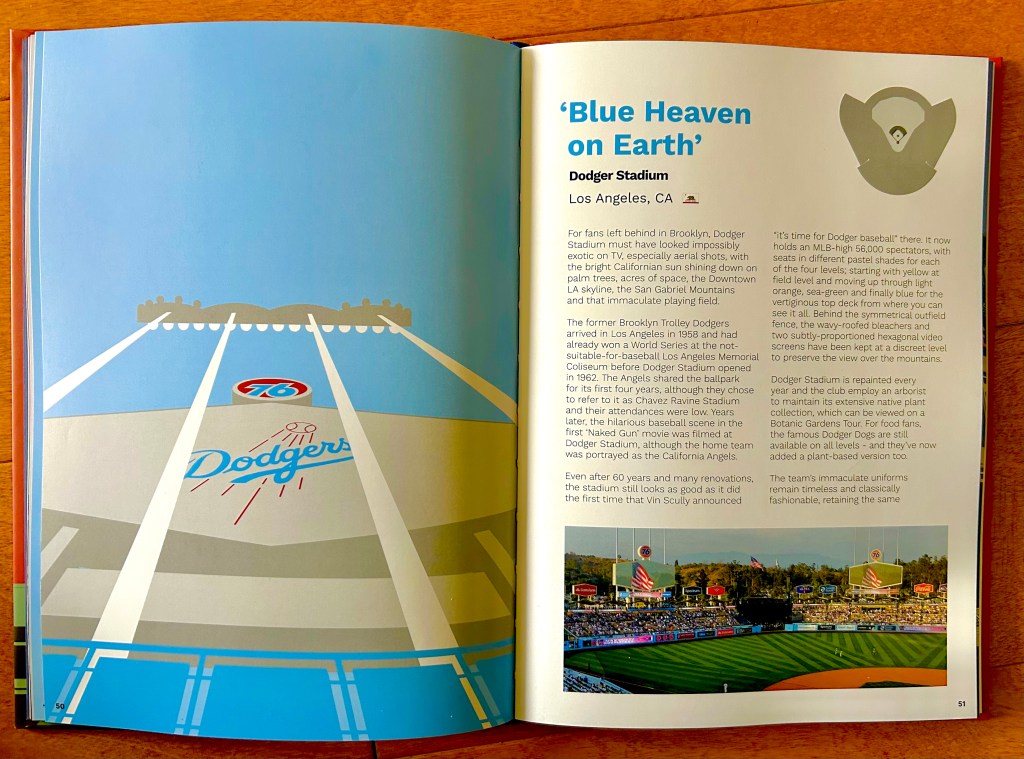
The Dodger Stadium four-page entry opens with this neck-craning view of the outfield scoreboard that is quite striking — sans the 76 logo on top (remember when it was hijacked by a Mercedes Benz logo during a sell-our-souls ad swap that also saw the foul poles painted red in honor of a middle-Eastern airlines that is nowhere to be found now?)
The nuggets of info culled here include McArthur’s observation: “The Dodgers have probably the most upbeat and cheerful ‘win’ song in baseball in Randy Newman’s ‘I Love L.A.’ so it is a shame that all that love has often evaporated by the time the fans (who leave early) escape the parking lot.”
Amen to that.
I was taking ground balls one day at Dodger Stadium — the media writers once in a while were allowed to wear unis, split up sides, have a game, enjoy the experience — and looking into my glove, I spotted something interesting.

The ball had a blue 20th anniversary logo on it. But I couldn’t think of what had happened two decades prior that would have warranted this on a Allen H. Selig-approved Rawlings official MLB muddied-up sphere.
So the next ball hit to me went past me, because I wasn’t paying attention.
“The Modern Baseball: History of MLB Through the Art of the Logoball” may be of help, if we stitch out facts together.
The Logoball Experience is one we honest didn’t know anything about until it kept popping up on our Facebook account. We relented and went balls in when limited edition 12-by-12 softcovers (signed) were offered (at 25 percent off), knowing we’d have one of 2,400.
With more digging in, we figured out that as of last October, 2024, more than $18,000 was pledged by 191 backers on KickStarter.com to get this project off the ground. We were even impressed.
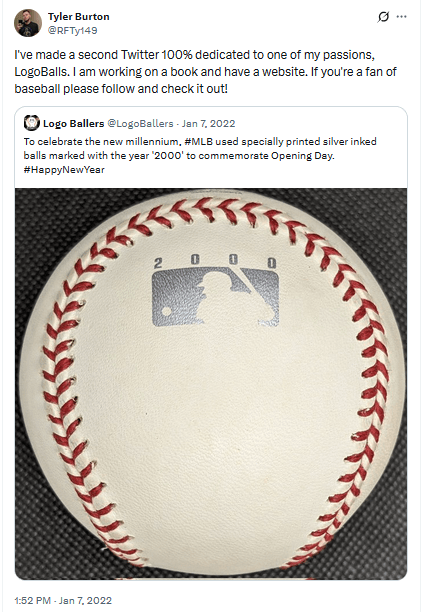
Less a vanity project and more a storytelling opportunity, it takes some gumption to do a book based on a collection of balls (wait for the Getty Lee book, “72 Stories,” coming soon). But that’s its simple brilliance.
We didn’t realize so many balls put into play had been postmarked like a piece of mail, validating an event in the game’s history that made it special. Those who caught foul balls or home runs might have never known until they saw it. Or, fielded balls that were likely taken from a batting practice bag.
Tyler Burton’s entry point to all this was becoming a member of the right-field bleacher’s “collective group of misfits” at Oakland Athletics’ home games in the now-abandoned Oakland Coliseum.
“Although I have spent years at the ballpark, my favorite moments have been the ones spent this year at the ballpark with my 3-year-old son, Oakland’s last. Writing about baseball knowing the game I fell in love with is being ripped away, is tough. Although, knowing that I would teach my son the game through this book – being able to share the history of the game through a different perspective, is something I am proud of. My hope is that you are able to pick up this book and see the game of baseball in a whole new way, and be able to share that with the one’s you love.”
The unique hobby Burton has of collecting baseballs over the years that have special stamped logos on them makes folks like Zack Hample and his “concierge service” of escorting fans to games and catching balls with them for $1,500 even less self-aware of his pursuit of happiness.

Baseballs are tactile. They need to be felt, smelled and cherished. Weighed in the hand, flipped from one to the other. Pearls or mudded. Horsehide or cowhide. Handmade or machine cranked out. More and more, you see a retired player-turned-TV analyst talking with a ball in his hand. That’s his talking stick. His pacification.
The Philadelphia Phillies’ 1983 100th anniversary logo ball got it started with red ink set off by the black printing. Jackie Robinson logo balls every April 15, starting in 1997, should be lined up and admired somewhere instead of another bobblehead.
(And now we realize we really could do without the special Home Run Derby logo balls, with the State Farm logo. That’s like shooting T-shirts out of a cannon. Nothing special there. Not even the “moneyball.” Give us the 2010 Civil Rights Game ball instead).
Every logo has a story. Not every ball has a logo. Now it’s in a story book. Burton’s book is a like a show-and-tell event, and we’re the captive audience.

Hey, wait. There on page 97. It’s the Colorado Rockies’ 20th anniversary logo ball, from 2013. That’s what we have. Somehow at Dodger Stadium’s recycled ball bag.
Mystery solved. And we had a ball along the way.

So what if …
Maybe “The Natural” was a work of fiction, but if there was an actual ticket for the New York Knights-Pittsburgh Pirates playoff game on Oct. 9, 1939, what what it would look like?
It’s a natural, healthy, curiosity that graphic arts designed Rick Bryson had.
“If you pay attention, during the film you actually see a ticket being torn at the gate,” Bryson’s writing partner, Kyle Bandujo, expounds on page 137 of “Movies With Balls: The Greatest Sports Films of All Time, Analyzed and Illustrated. “But in spite of the film’s exquisite production value, this prop ticket was a huge fail. We think a ticket for a playoff game in 1939 would have been art directed to to the max — Roy Hobbs’ final game certainly deserved a ticket for ‘the best there ever was’.”
No argument with any of that — see the very top of the post to witness what Bryson dreamed up as his dream ticket stub — but we pause to smile.
Our retired pops spent some 40 years a movie prop house specializing in authentic (and cleared) materials for a small company in North Hollywood, a master of spinning the wheel of the hot-type letterpress machines that can be admired at the International Printing Museum in Carson.

One of his best gigs was being on the team that created the printed material asked by those making “The Natural.” That included the sheets of Roy Hobbs baseball cards seen on a printing press, and the Life magazine covers, scorecards rarely seen in the detail used … and tickets.
He never knew what would get a full-on closeup, or be just a minor visual. Surely, the bandwidth went toward the creation and fine tuning of the more prominent items, often created with as much original machinery as were used on those days. Today most has been modernized to replicate the graphics you see Bryson is accustomed to working with. Had “The Natural” been created as a film in the last 10 years, it surely would have been far easier to get into so much detail.
Thankfully, that’s why a book like this resonates.
The premise is to take sports films that are fiction and imagine real elements. Once that’s germinated, the discussion of the film’s merits come into play — how believable was this character? Who’s the real unsung hero? How could the movie be presented in other graphic visuals?
These two geniuses ran with the idea. And we all benefit.

It’s a product of the modern social media era as well — Bryson sent a Twitter DM to Bandujo, who had the “Big Screen Sports” podcast, now with more than 375 episodes.
The 26 sportsflicks they’ve narrowed it down to allow baseball to be in the discussion with “Bull Durham,” “The Bad News Bears,” “The Sandlot,” “Major League” and “Field of Dreams.” This is unlike any other collection of movie reviews, or tribute books to particular films/behind the scenes oral histories. It’s difficult to clearly describe.
It must be experienced. Two thumbs up guaranteed.
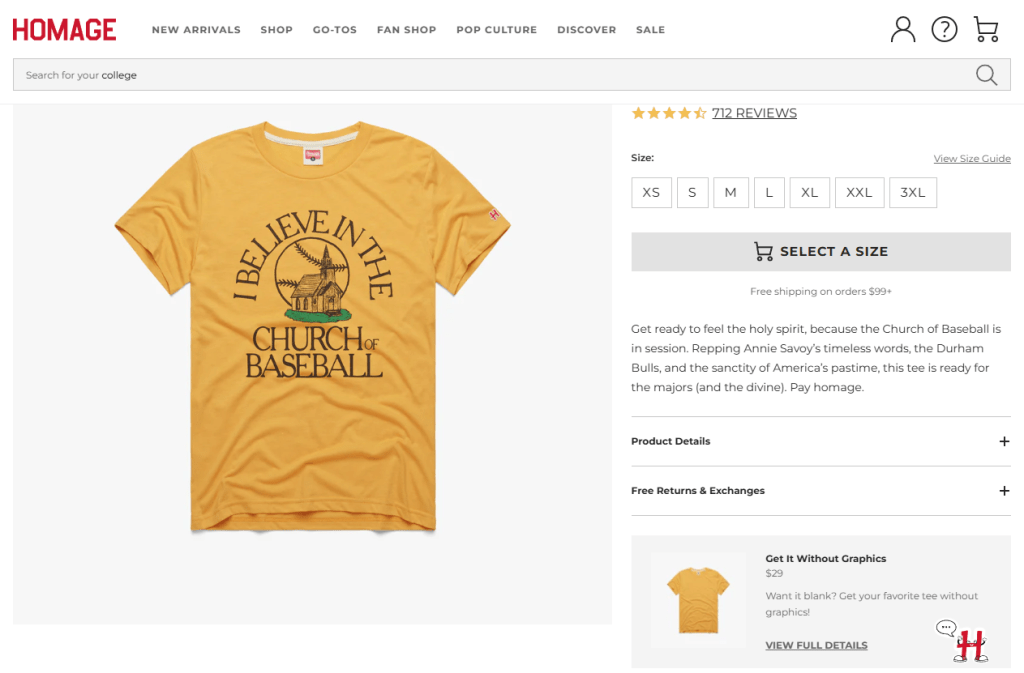
With “Movies and the Church of Baseball: Religion in the Cinema of the National Pastime,” Jonathan Plummer takes the overarching media platform of film and drills deeper in how baseball is seen through the prism of organized religion as well as just an overarching spiritual element.
We’ve always appreciated the mystique of how religion and baseball overlap to a point where often a group of people can get the same satisfaction and contentment from one over the other — going back to “The Natural,” you wonder why Roy Hobbs was spared from death because he had a bigger purpose in the world (to knock out some stadium lights?)
Although Plummer, a professor of film and TV at Solent University in Southampton, England puts a very much academic spin on this subject, paired up with “Movies With Balls,” it’s a large comforting blanket of hope, a realization that things usually will get better in times of disrepair and despair, and those players who’ve managed to combine the two are much more grounded in their world view.
Think, for example, of the way two versions of the film “Angels In the Outfield” are expressed to reflect their times and who they were appealing to.
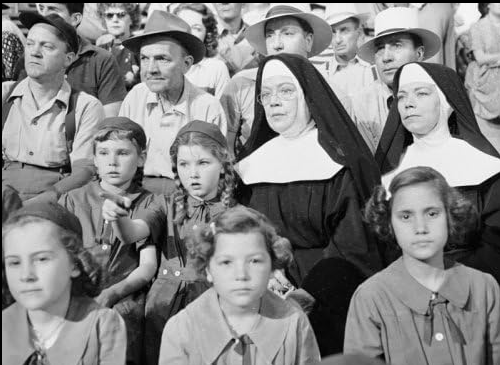
The 1951 version is focused on a Pittsburgh Pirates manager Guffy McCovern (played by Paul Douglas) who finds angelic help as a way to make him stop cursing. There’s alsoa kid’s point of view in how to believe and trust, with the calming influence of Jennifer Paige (played by Janet Leigh) and Sister Veronica (played by Ellen Corby). It’s also of halo-rrific help, if you are truely seeking angels, to do this filming at Wrigley Field in Los Angeles, then-home of the PCL’s Los Angeles Angels. The strong religious backbone of America at this time can be felt in this storytelling.
The movie’s Disney-fied remake in 1994 — five years before the company took official ownership of the MLB’s California/Anaheim/L.A. Angels and was present for its only World Series champion — can get more mystical with its special effect/CGI effect now in the tool box, but it’s storytelling again leans into now a foster kid (Joseph Gordon-Levitt) who works deals with Angels manager George Knox (Danny Glover, who channels his inner Dusty Baker). There’s also Angels pitcher Mel Clark (Tony Danza), the character Al Angel (Christopher Lloyd), plus Angels utility player Danny Hemmerling (played by future Oscar winner Adrien Brody) and outfielder Ben Williams (played by future Oscar winner Matthew McConaughey) that make this more a box-office-inducing project with its star power (whether or not some of that star power was realized at the time).
The book, reflecting on this academic-type discussion, can also divert deeper into its premise. Such as: Did Babe Ruth partake in “a miracle” when he hit a homer for the kid in the hospital as portrayed clumsily by William Bendix in “The Babe Ruth Story”? In “Field of Dreams,” as Shoeless Joe Jackson asks Ray Kinsella the question “Is this heaven?” and we all catch our breath, how do you not believe in a higher power giving us the grace to live on this planet and experience life as we know it?
Something to ponder amidst life’s bigger philosophical storytelling platforms.
How they go in the scorebook
Picture this: Something artsy doesn’t have to be fartsy when it’s heaven scented. Or, gives baseball a taste of heaven on Earth.
Baseball seems to be a great leveler of art’s various platforms as demonstrated here in book form. These could easily be four books recommended for a Baseball As Art and History 101 class at your local adult ed extension course.
Just one thing: “Movies and the Church of Baseball” does list at $55. Because the author is from England, tariffs are in place? Seems like a rather extensive ask for a contribution to the collection basket. Negotiate with your higher being on coming to terms with this acquisition.

You can look it up: More to ponder

== Heads up baseball movie buffs: Ron Shelton told us last summer he continues to work on a screenplay based on the book by Richard Ben Cramer called “What Do You Think of Ted Williams Now?“, which was a piece for Esquire magazine in 1986 trying to pin down a spotlight on someone who epitomized “The American Man.” Cramer was given the assignment and found Williams to be all that, and more. Shelton’s idea lead actor for this biopic is … wait for it … Kevin Costner. Shelton told us about how he envisions the movie starting — Williams crash lands a plane during the Korean War, sliding off a runway and into a jungle. Loud explosion. Feared dead. Amidst the smoke, Williams appears, walking back toward the runway. U.S. Colonel meets him, amazed at what he just saw. Asks Williams for his autograph, and the signature blows up on the screen as the title of the film.
Stay tuned.
== More art to consider:
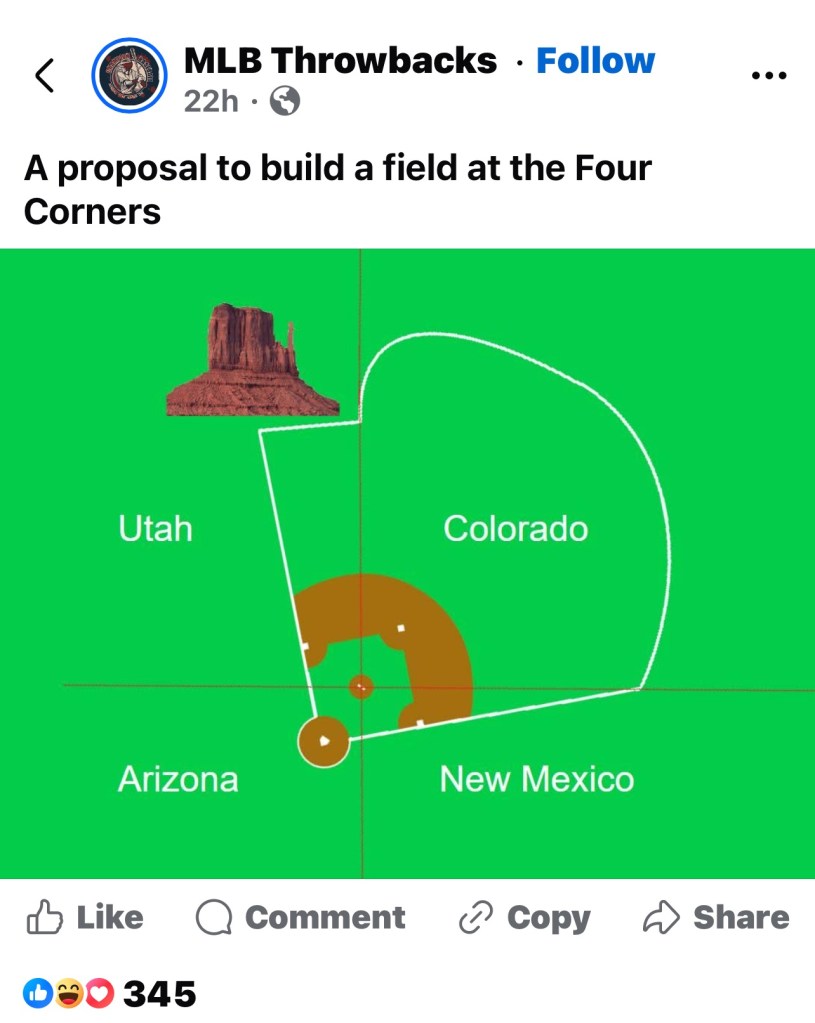
== The back cover of Tyler Burton’s Logoball book is a piece of work unto itself:

== Also in a museum wing near you:
- “The Art of Baseball: The Watercolors of James Fiorentino” by James Fiorentino with writer John Molari, forward by Don Mattingly, Peter E. Randall Publisher, 144 pages, $40, released Feb. 11, 2025; best available at the publishers website and the artists’ book website.
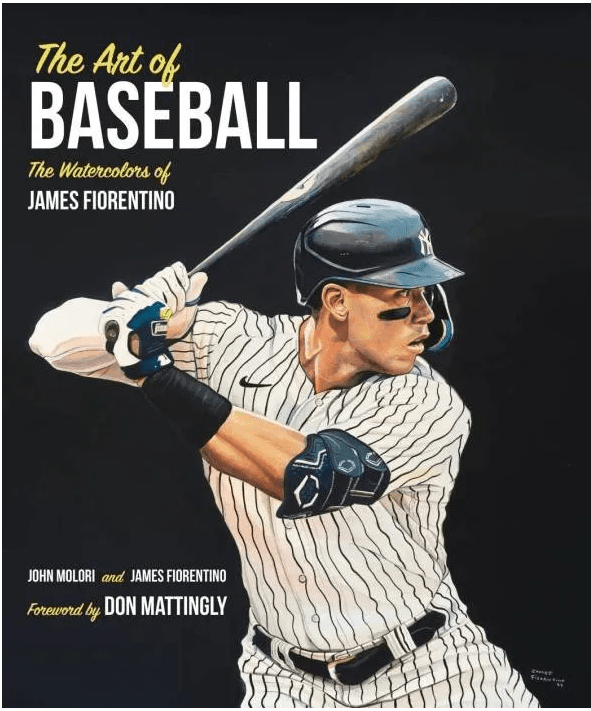
Writer Dan Schlossberg did a swell Substack post of this post calling the New Jersey-based Fiorentino “an All-Star as an artist and as a person” and this book is “a keeper … a strikingly-gorgeous hardcover book that is too good for most coffee tables.” A Yankee-centric art book includes most of the stories behind the work, such as the time when he was 14 and met Joe DiMaggio at a card show and asked him to sign one of his original works. Fiorentino has painted for Topps, Upper Deck and personal requests from athletes. He reminds us of Laguna Beach-based Dave Hobrecht and “The All-Time Dodgers Art Book,” with his collection of charcoal sketches.
Coming up:

- “Black Baseball’s Heyday: Capturing an Era in Art and Words,” art by Anthony High, written by Denny Dressman (McFarland, $39.95, 98 pages, expected to be released June 2025; best found at the publisher’s website and BookShop.org)
High, part of the Negro League Baseball Museum’s traveling show “Shades of Greatness,” is a Kansas City-based artist with paintings that reflect the Negro League experience as well as his love of jazz. Dressman, who retired from the Rocky Mountain News in Denver, now writes for The Villager newspaper in suburban Denver.
== Does this below count as stadium art?
It does in our book if you’re documenting the one-and-only season of the MLB Seattle Pilots, previously used for the PCL Seattle Rainiers, the Negro League’s Seattle Steelheads, the University of Washington Huskies, and now is a Lowe’s Home Improvement store where inside there are basepaths marked and a pitchers’ mound reconstituted near the cash registers:

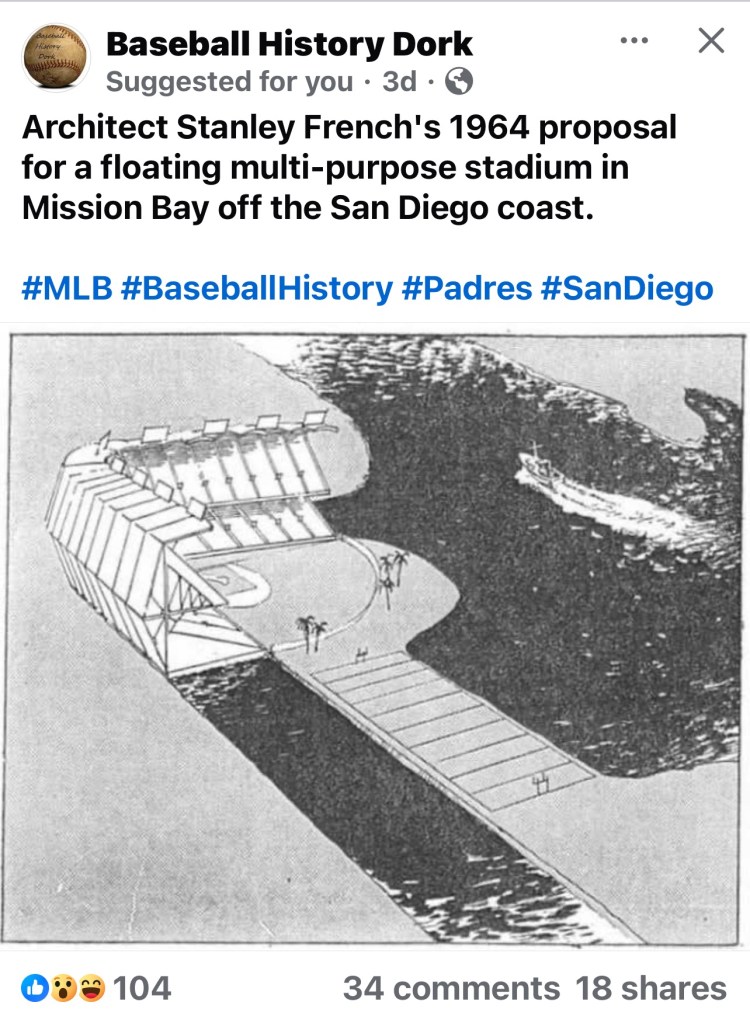
== If we can float another idea: More historic ballpark art worth sharing.
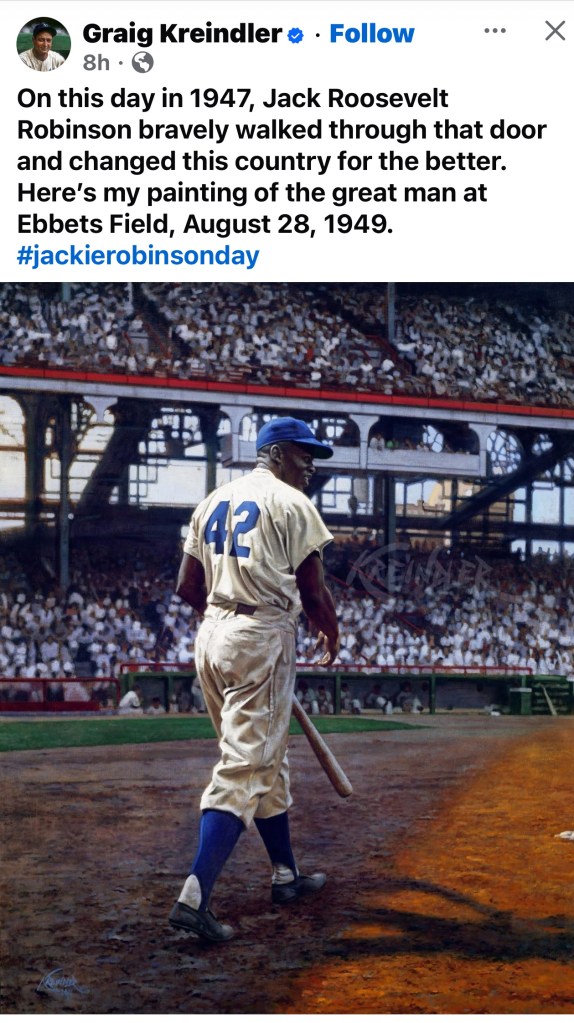
== At some point will Graig Kreindler do a book of his most impactful artwork?
We recently shot him an email about this idea. His response: “Definitely hoping for a book to happen. Working on it now, sorta. Or at least putting together something that’ll hopefully get a publisher or two interested. Fingers crossed on all accounts.”
That’s the fact, Jack. And here’s a swell piece from TheFanFiles.com on him.

 Tom Hoffarth's The Drill: More Farther Off the Wall
1 thought on “Day 11 of 2025 baseball book reviews: You outta be in pictures”