

“A Time for Reflection:
The Parallel Legacies of Baseball Icons
Willie McCovey and Billy Williams”

The author: Jason Cannon
The details: Rowman & Littlefield, $35, 328 pages, released Feb. 4, 2025; best available at the publishers website and Bookshop.org.
“A Giant Among Giants:
The Baseball Life of Willie McCovey”

The author: Chris Haft
The details: University of Nebraska Press, $32.95, 240 pages, released Feb. 1, 2025; best available at the publishers website and Bookshop.org.
A review in 90 feet or less
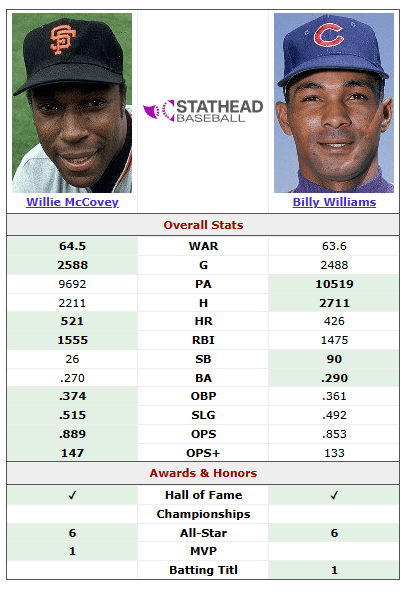
The software wizardry made available by Stathead Baseball, resourcing Baseball Reference data, is such a cool tool. Compare and contrast MLB players from different eras.
Or, two dudes who led a very parallel lives.
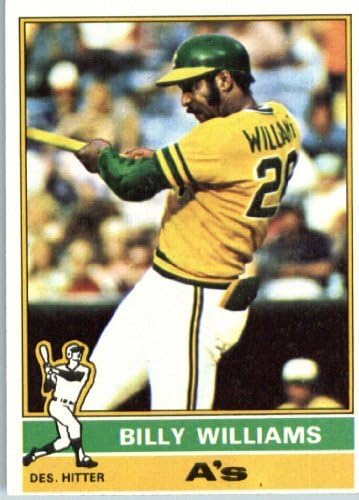
What is doesn’t show is that, during the last month of the 1976 season when the five-time defending AL West champion Oakland A’s, scrambling to overtake the Kansas City Royals, made a curious roster move.

It made Billy Williams and Willie McCovey, two National League big-time names, unlikely 38-year-old teammates trading mercenary at-bats. Based on decades of seeing these two on their baseball cards, the versions that appeared now were as jarringly abnormal in kelly green-and-yellow as Joe DiMaggio was when recruited to coach for the franchise in 1968.
In the course of their careers, Williams and McCovey each made the NL All Star team six times, but only once were they together — the 1968 exhibition at the Houston Astrodome. In a predictable 1-0 NL win (it was the Year of the Pitcher), the only run scored when McCovey grounded into double play in the first inning, pushing across Giants teammate Willie Mays, making Don Drysdale the winner. McCovey, starting at first base and hitting third, proceeded to strike out three times against Blue Moon Odom, Denny McLain and Sam McDowell. Williams got into the game as a pinch hitter in the sixth inning and flew out against McLain.
(Footnote: In the 1969 All Star Game, McCovey homered off both Odom and McLain and was named the game’s MVP in a season where he was also the NL MVP).
Now, in Oakland, eight years later, decline evident, Williams and McCovey were serviceable as a DH, a position that had only come about in 1973 when the American League rule-makers felt there wasn’t enough offense and this was a way to keep old, reliable hitters contributing if their time playing out on the field in the National League was a bit problematic.
(Tell that one to Shohei Ohtani).
After the 1974 season, Williams was traded by Chicago to Oakland for Manny Trillo, Darold Knowles and Bob Locker, and it was framed as a gesture to finally get him on a playoff team after years of missing out with the Cubs. It worked. As the A’s full-time DH in ’75, Williams hit 23 homers and 81 RBIs, third on the team in each category, but Oakland was swept in the best three-of-five AL Championship Series — something that seems preposterous after playing 162 games to win one of two divisions. Williams was 0-for-7 in three games for his only playoff appearance.
A’s manager Chuck Tanner, who just replaced Al Dark, who just replaced Dick Williams, who had won three World Series titles in a row, was just trying to squeeze more lemonade out of what he’d been given as the ’76 season winded down.
It would be Williams’ final MLB campaign, and it seemed as it could be a final curtain call for McCovey as well.
Williams got in as the A’s DH in 106 games, and a handful more games in left field. McCovey, purchased off the San Diego Padres’ roster in late August, only got into nine games as the DH in September, collecting five hits in 24 at bats, producing not a homer nor an RBI.
On Oct. 2, the next-to-last game of the regular season, Oakland had the visiting Angels come in. Eliminated from the AL West race by now, just 3,139 were in attendance at the Oakland Coliseum for the hangover of the final weekend.
The A’s trailed 8-7 in the bottom of the ninth. Williams started the inning with a one-out single off Angels reliever Dick Drago. It was the last of Williams’ 2,711 hits. A strapping young Don Baylor went in to run for Williams. The next hitter, McCovey, hitting for Matt Alexander, singled to right. Now the tying run was on. The speedy Billy North went in to run for McCovey.
Ken McMullen’s one-out single scored Baylor to tie it up and send it into extra innings. Gene Tenace’s 14th inning single with the bases loaded won it for Oakland.
It meant nothing. It meant something.
(Another footnote: In the season finale the next day, Nolan Ryan went the distance for the Angels in a 1-0 shutout, striking out 14 and giving up just two hits. McCovey was in the starting lineup, but refused to play, so Tanner swapped him out. McCovey did come up as a pinch hitter in the ninth trying, trying to tie it up and maybe finish his career with some fireworks, but he flew out to left.)
And, turns out, Big Mac wasn’t done.
San Francisco, where he played his first 15 seasons, took him back. For four more seasons.
He actually won the NL Comeback Player of the Year, hitting 28 homers, driving in 86 and posting a .280 average at age 39 in 1977. He even got an official MVP vote, which put him higher in the rankings than Cincinnati Reds catcher Johnny Bench (31 homers, 109 RBIs, .275 average). Because he made it into 48 games in the 1980 season, McCovey, the 1959 NL Rookie of the Year, became a rare four-decade participant.
Forty five of his career 512 homers came against the Dodgers. His final at bat was at Dodger Stadium — an eighth-inning sacrifice fly off reliever Rick Sutcliffe that gave the Giants a 4-3 lead in an eventual 7-3 win in 10 innings on July 6, ’80.
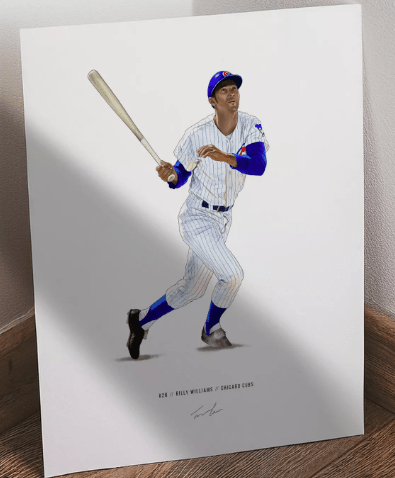
Two books out since February feel overdue in our due diligence sizing up these two men — neither officially named William as their first name, born six months and just a few miles from each other, and just four years after the birth of Henry Aaron in Mobile, Alabama.
It’s no stretch that Stretch McCovey and Sweet Swingin’ Billy from Whistler/Young Blood will always be connected in so many ways, including a Baseball Hall of Fame plaque. But it is a bit uncanny when you put them side-by-side and contemplate why this hasn’t been such an obvious copacetic career path that can easily be celebrated as a statement of their abilities, their consistency, their disposition.
They played a bit in the shadow of a larger-than-life African-American teammate — Mays, with McCovey; Ernie Banks with Williams — but in staying in their lanes, they picked up the team when needed, came through when was their turn, and it wasn’t in their nature to steal a spotlight.
First, the back-of-the-baseball-card foundational basics:
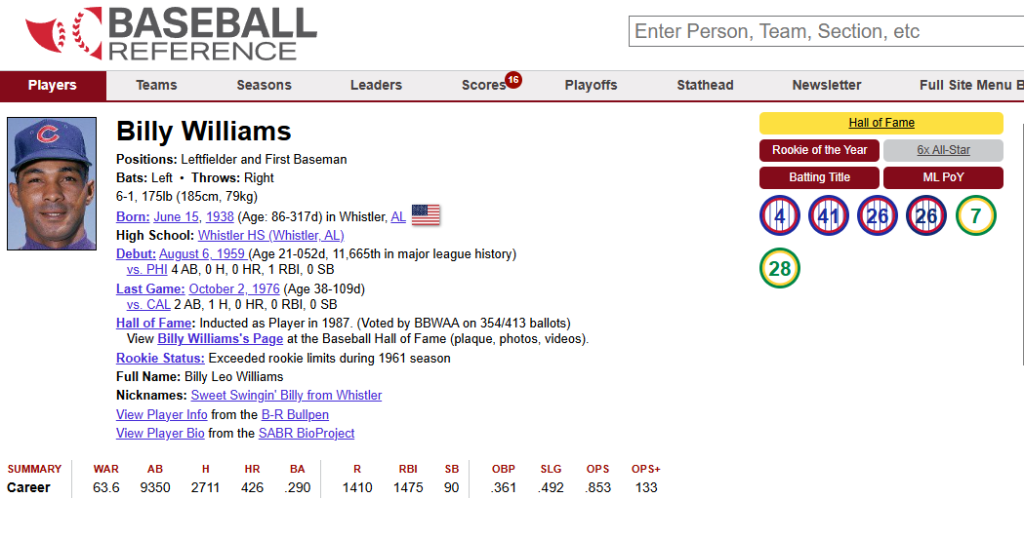
Billy Leo Williams was a Hall of Fame inductee in 1987 after six seasons of eligibility. The first four words on his plaque is “soft-spoken, clutch peformer.”
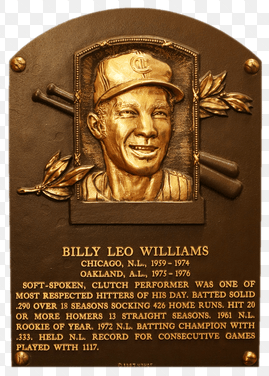
The 1961 NL Rookie of the Year at age 23 hit.278 in 146 games with 25 homers and 86 RBIs, and a 1.2 WAR that season (he was voted ahead of Milwaukee’s Joe Torre and his 3.4 WAR. Led the league in games played in ’65, 66, ’68, ’69 and ’70 while setting the NL record for consecutive games played at 1,117 through the end of the ’70 season (later broken by Steve Garvey).
A .290 career hitter, five times .300 or better, six NL All-Star appearances (’62, ’64, ’65, ’68, ’72 and ’73), 426 career homers, 1,475 career RBIs, two-time NL MVP runner up (1970 and 1972), named on an MVP ballot eight seasons, led the NL with 137 runs and 205 hits in ’70 while batting .322, led the NL in hitting at .333 and slugging .606 (with 37 homers and 122 RBIs) in ’72. One post-season appearance with Oakland in 1975 (0-for-7 in the ALCS).
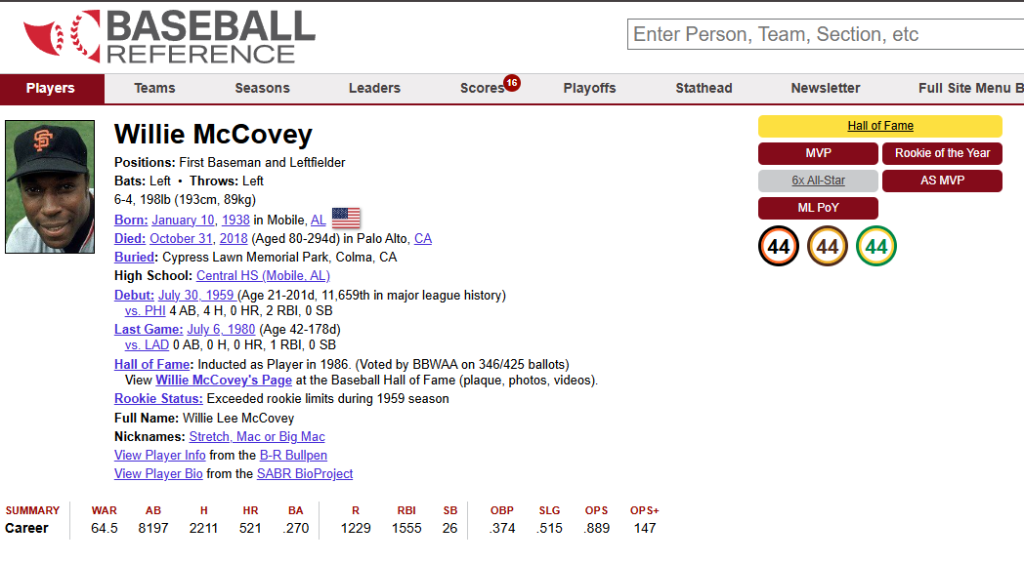
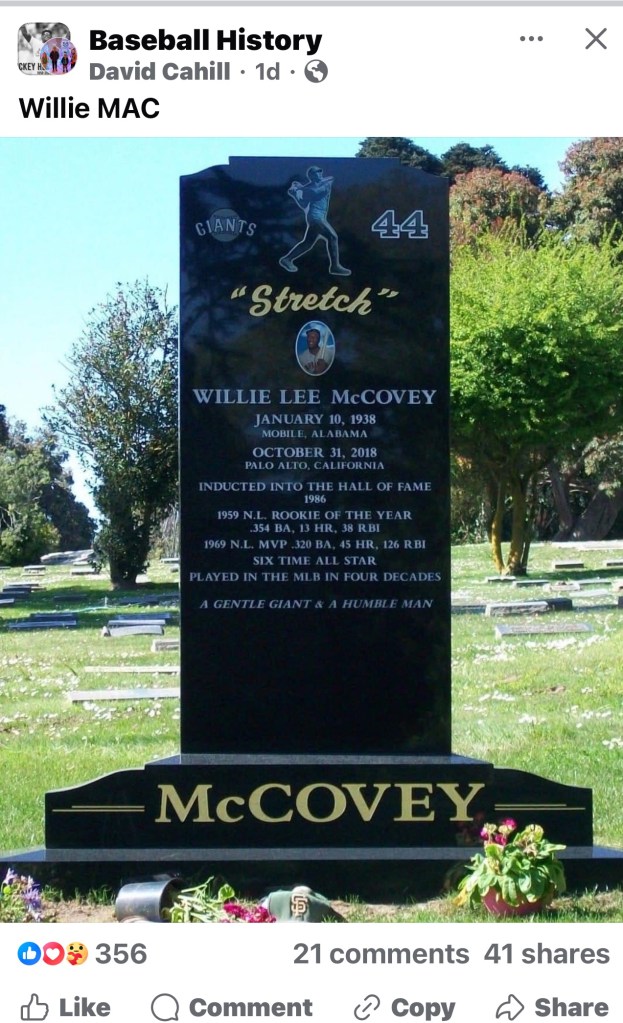
Willie Lee McCovey was a Hall of Fame inductee in 1986, his first year of eligibility. It says on his tombstone: “A gentle giant and a humble man.”
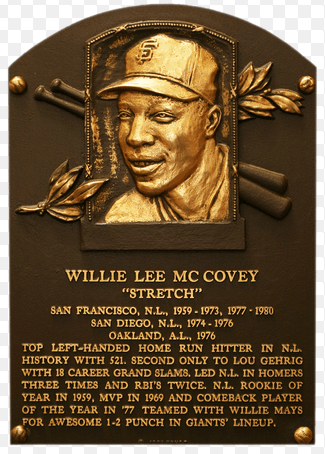
The 1959 NL Rookie of the Year at age 21 was a unanimous choice despite playing just 52 games with 192 at bats (13 homers, 38 RBIs, 3.1 WAR).
A .270 career hitter, twice .300 or better, six NL All-Star appearances (’63, ’66, ’68, ’69, 70 and ’71), 521 career homers, 1,555 career RBIs, 1969 NL MVP, named on an MVP ballot eight seasons. Led the NL in home runs three times (44 in 1963, 36 in 1968 and 45 in 1969). Led the NL in RBIs twice (105 in ’68 and 126 in ’69).
Two post-season appearances with San Francisco in 1962 (3 for 16) and 1971 (6 for 14) with three homers and seven RBIs total in eight games, including a four-game World Series vs. the Yankees in ’62.
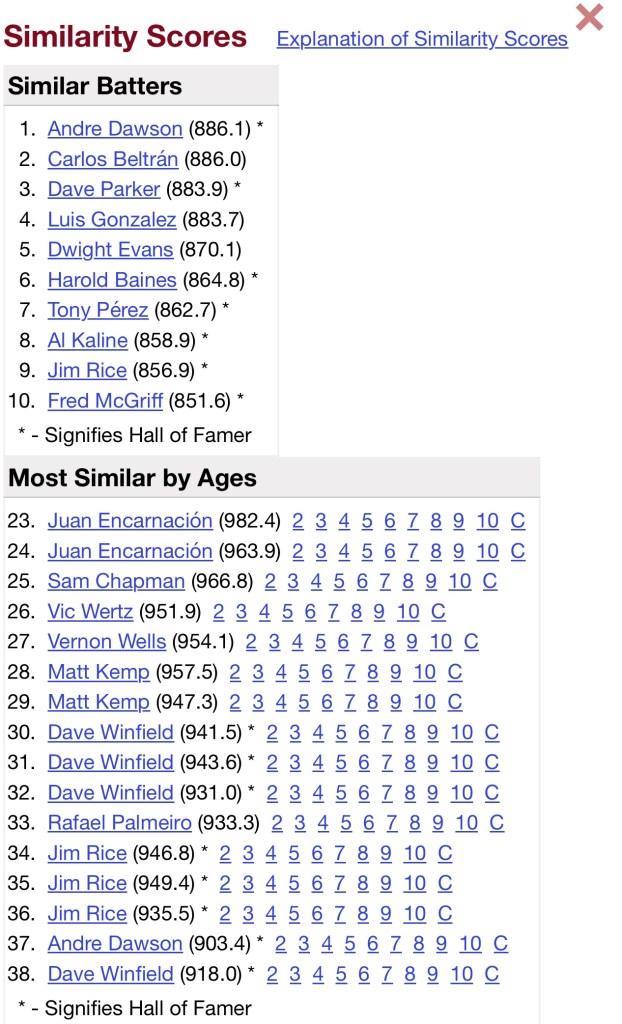
Williams most compares statistically, and from the eye test, to Hall of Famers like Andre Dawson, Dave Parker and Tony Perez. Dave Winfield and Fred McGriff are also in that mix. Bill James’ Hall of Fame monitor gives Williams a 122 mark (with a likely Hall of Famer registering a 100). His 41.3 seven-year peak WAR measures up to the “average” Hall of Fame left fielder in that window (41.7).
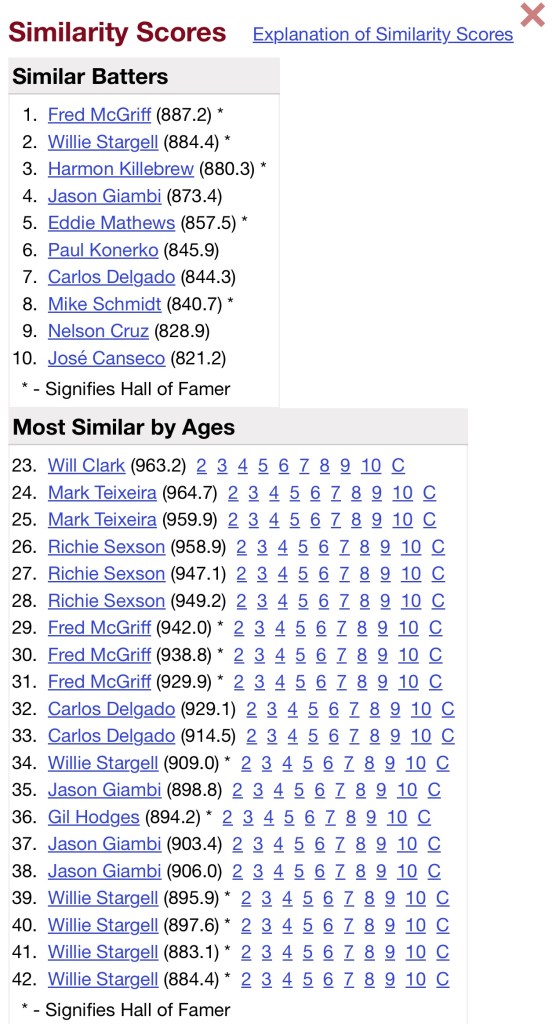
McCovey seemed to be more along the lines of Willie Stargell in stature and intimidation. It’s nice to see the data at one point even connected him to Gil Hodges. Bill James’ Hall of Fame monitor gives McCovey a 111 mark (with a likely Hall of Famer registering a 100). His 44.8 seven-year peak WAR exceeds the “average” Hall of Fame first baseman in that window (42.0).
Now, divert your eyes from the number crunching and name dropping.
Jason Cannon’s “Parallel Lives” came with a heads up during a 2022 review of his fantastic project, “Charlie Murphy: The Iconoclastic Showman Behind the Chicago Cubs,” which won the 2023 Larry Ritter Book Award, presented to the author of the best book about baseball in the Deadball Era (1901 to 1919).
Cannon writes on page 227:
“Narratives tell us a lot about how a person’s life is viewed by the society in which they lived. Legacies tell us as much about another person’s accomplishments as much as they enlighten us about what we value. The legacies of Billy Williams and Willie McCovey convey their depth of commitment to their craft, kindness and humility. Their careers require study beyond the simplistic conclusions that they were great athletes who played in the shadows of bigger stars. They deserve appreciation in their own right. … Their legacies challenge all of us to stand up for what is right. Billy Williams called for reflection in his Hall of Fame speech as he asked those running the sport to think about the state of opportunities for minorities in the game of baseball. McCovey made personal phone calls to Giants officials seeking accountability to a diversity commitment. Reflection brings awareness and understanding and can lead to change. Both Williams and McCovey spoke directly to the challenging status quos they faced throughout their careers on and off the field.”
The exploration of why these two matter, together, doesn’t get much more clear as to the intent of the project than that for Cannon, “a writer intrigued by the underexplored” as he branded on his website.

The graduate of Cal State Los Angeles (MA, English) and Cal State Fullerton (MA, American Studies) now based in the Denver suburb of Parker as a high school English teacher at Legend High got into this profession (he revealed to us at a recent NINE convention in Arizona of baseball writers) because of a recommendation that came from Vin Scully, when Cannon reached out to him for career advice. He still has the letter.
In Cannon’s seeking out those who knew both players best — including cooperation from key family members — the narratives become richer and more than just symbolic.
They were connected at the roots and couldn’t help but affect change based on those who came before them, the era they played of Civil Rights, and the weight their voices carried afterward.
The first example comes on page 14, when Cannon writes about how McCovey saw the Brooklyn Dodgers hold a three-day tryout camp in his hometown of Mobile. “But there was a catch. Black players could participate for only a sliver of time on the final day of the workout. Henry Aaron had been to one of these auditions and hadn’t been signed. Despite the discouraging circumstances, McCovey gave it a shot. He showed up and went through the paces but the Dodgers declined to follow up with him. ‘The black kids didn’t really get much of a look and I guess I wasn’t good enough during that hour because I’m here now,’ reflected McCovey years later while wearing a Giants uniform.”
Just before he signed with the New York Giants, he took a train to Los Angeles for Christmas in 1954 to visit his older brother, Wyatt, who found work.
“I fell in love with Los Angeles,” McCovey would say. “It was the first time I’d been away from home. I’d been to such places as Biloxi, Mississippi, to play sandlot ball, but this was my first big trip.”
He could have perhaps come back in Dodger blue if things were different.
In “A Giant Among Giants,” Chris Haft, who spent 14 years covering the Giants for the San Jose Mercury News and MLB.com, seized on the moment of McCovey’s passing in 2018 after long health battles to collect nearly 100 interviews, more research material and observations as to why his story needed context and closure.
Haft wrote for MLB.com on the day of McCovey’s death:
“How lucky I was to see Willie McCovey hit a home run in the first Major League game I attended (if you’re curious, he smoked it off Pirates left-hander Bob Veale in the fifth inning on May 24, 1969 at Candlestick Park). How incredibly fortunate I am to have covered baseball for most of the last three decades, a journey which led me back to the team I embraced as a youth, thus enabling me to meet McCovey and conduct multiple pinch-me-I-must-be-dreaming interviews with him.”
Haft also revealed one conversation he had with McCovey:
Me: Willie, what do you recall about Juan Marichal’s big league debut (a one-hit shutout against Philadelphia on July 19, 1960)?
McCovey: Well, it’s kind of hard for me to comment on that game, since I was the guy who was sent down when Juan got called up!
Haft, who cranked out one of the “If These Walls Could Talk” editions for the Giants in 2017 (capitalizing on the team’s 2010, ’12 and ’14 World Series titles), then helped Giants clubhouse manager Mike Murphy write his 2020 memoir, tasks himself with first putting McCovey’s stats into some explainable order — a whole chapter tries to explain his success against the Dodgers’ Don Drysdale. McCovey had a .336 career mark (43 for 128) with 12 homers in 11 seasons against Drysdale, starting off 19-for-35 (.543) with seven homers from 1959 to 1962 during the first wave of Giants-Dodgers games on the West Coast.
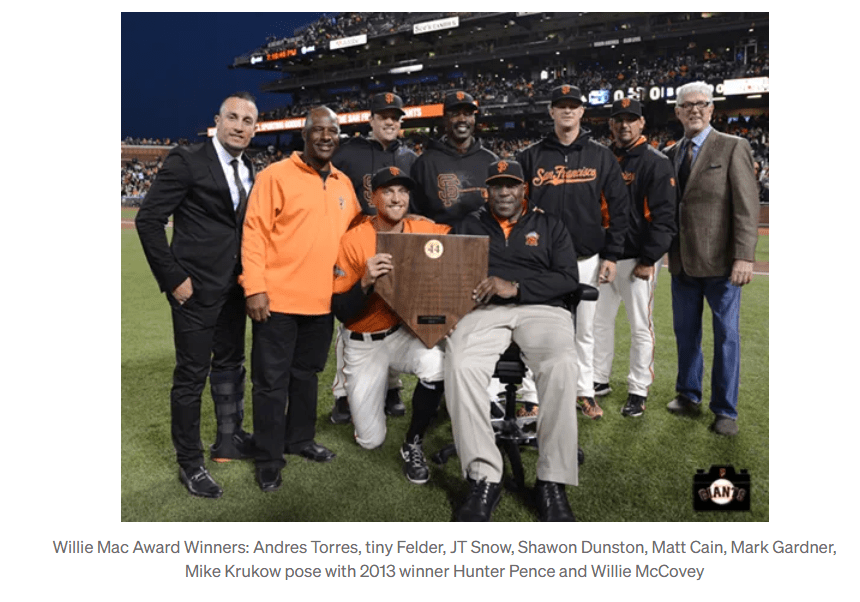
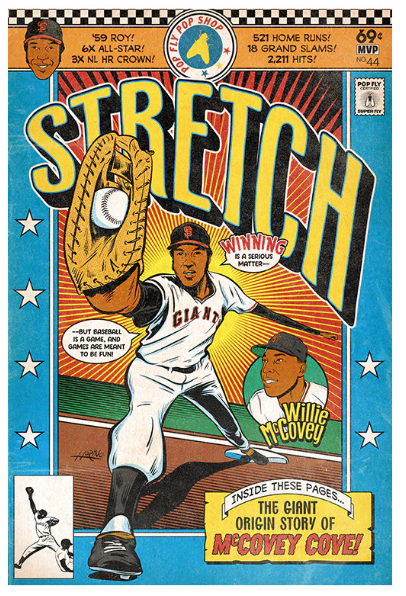
The rest is recapping why the Giants still have the Willie Mac Award for the most inspirational — not for the person who hit the most homers into McCovey Cove beyond the right-field wall and had to get them out of the ocean — and why McCovey’s presence is still felt the post-Candlestick era.
It was trainer Joe Liscio who called him “a giant among Giants,” and Haft who writes on pages 3-4: “Willie Mays was the most admired Giant for his multi-talented greatness, although he remained underappreciated for years after the franchise moved West … (seeing him as) an interloper from Manhattan (until he set the NL career record for homers in 1966) … Barry Bonds was reviled on the road but hailed in San Francisco …
“McCovey was the one who people wanted to hug the most.”
How it goes in the scorebook
The sweetest double play you didn’t see coming.
Cannon devotes more to the theme of his project, a professional work that incorporates objectivity and experience. He can see the bigger picture. Haft’s emotional investment with the abilities to make it a viable manuscript for Giants fans are commendable as well.
Given enough time for reflection — again, the books have been out since February — and feeling fortunate to have seen both play during the ‘60s and ‘70s, the two will now forever be linked for the right reasons in my memory bank.
They may have had a sweet left-handed swing, but they seem to be even sweeter men based on these profiles.
(And, yes, my wife still refers to one of them as Billy Dee Williams. You think the actor, whose real name was William December Williams Jr., born in 1937, was cognitive of that as to not to confused himself with the “real” Billy Williams? The force was with him.)
You can look it up: More to ponder
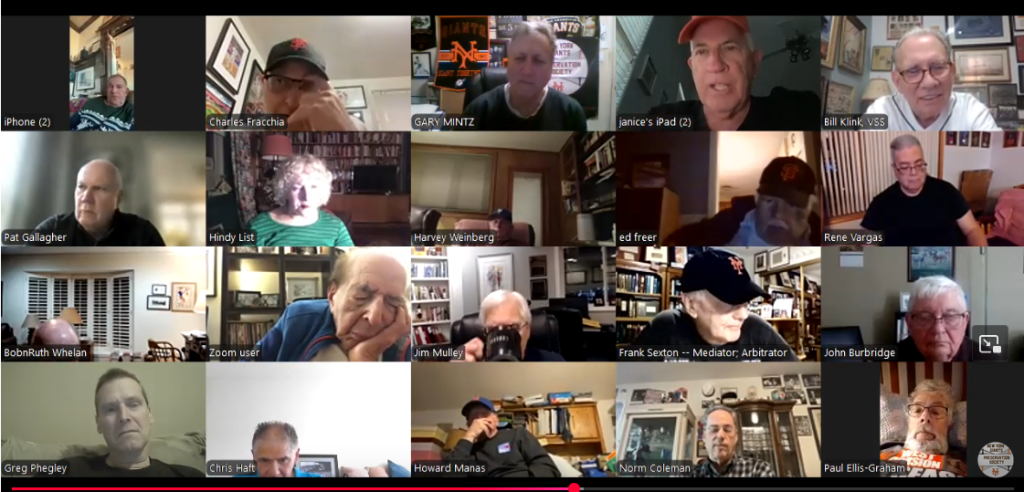
== In early February, Haft did a Zoom call with the swell group of guys at the New York Giants Preservation Society. The link is here. The screen save is above. Note the guy third row down from the top, two squares in from the left. “Zoom user.” He’s riveted.
== Jason Cannon also talks about his book with “The Setup Man” podcast above as well as on a Zoom meeting with the New York Giants Preservation Society below that includes Allison McCovey, Willie’s daughter.
== In Charlie Beavis Baseball Research’s review of Cannon’s “Parallel Legacies” — aside from his L4C3R3 rating — there is an interesting comparison of it to Haft’s strict bio of McCovey:
“There is more about McCovey’s baseball career in Haft’s book, while Cannon does more summarizing of on-field baseball material. For example, the six baseball seasons 1963 to 1968 are condensed into one chapter in Cannon’s book, while they comprise three chapters in Haft’s book. Cannon spends more time on McCovey’s pre-baseball life than post-baseball, whereas Haft has the opposite focus.
“Cannon also devotes more space than Haft to character and cultural-impact issues, the hallmark aspects of a good biographer. Cannon obtained far more input from first-wife Karen than did Haft (who mentioned her just once in his book), while Haft had deeper discussions with second-wife Estella than did Cannon. Daughter Allison seemed equally forthcoming to both authors.
“There is a temptation to believe that there is more McCovey-related content in Haft’s 180-page book solely about McCovey than in Cannon’s 230-page book about both McCovey and Williams (if halved, just 115 pages per man). The two books, though, devote roughly the same volume of main text to McCovey. The tighter typography in Cannon’s book makes up for the ostensible page shortfall, 41 lines per page compared to 34 lines in Haft’s book (due to the smaller leading between lines in Cannon’s book) and narrower white-space margins that enable wider lines of text.”
All of which just proves to some, in the end, it’s all about the type of typography you use in the cleanup spot.
== From the WaxPackGods Facebook post:
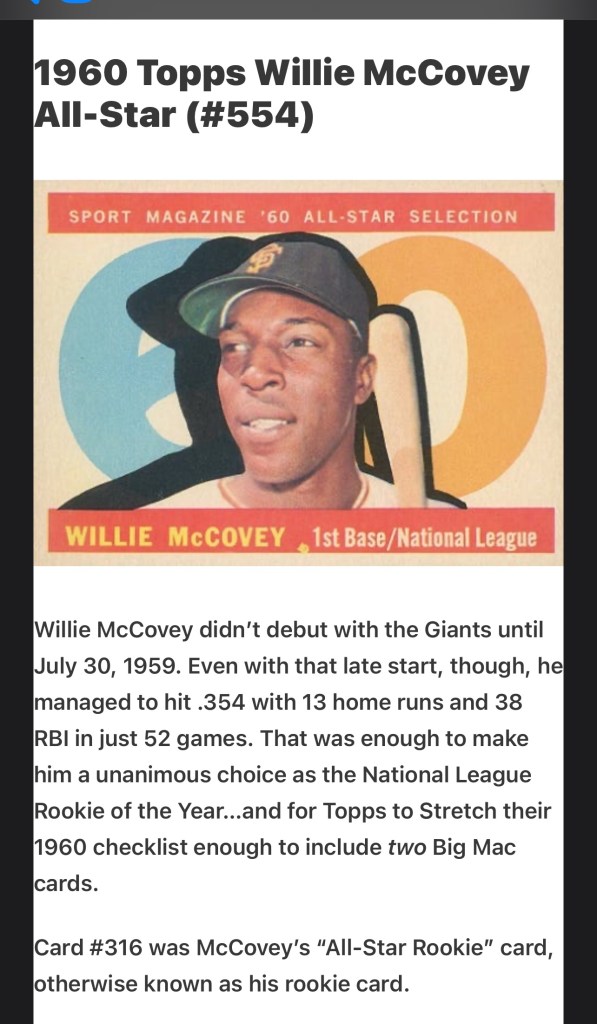
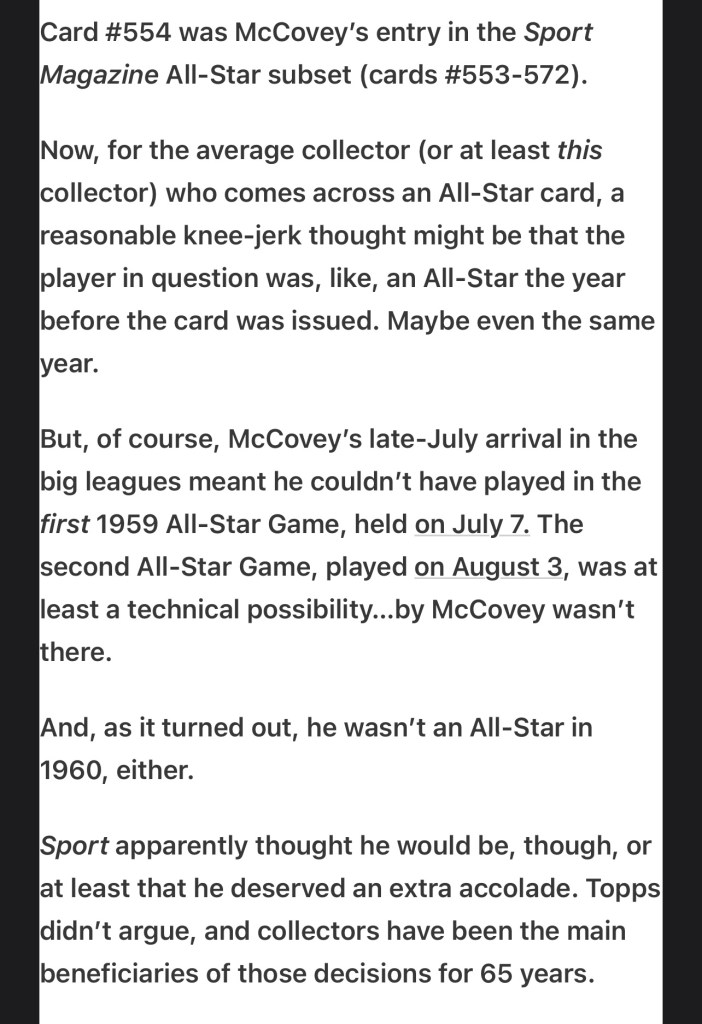
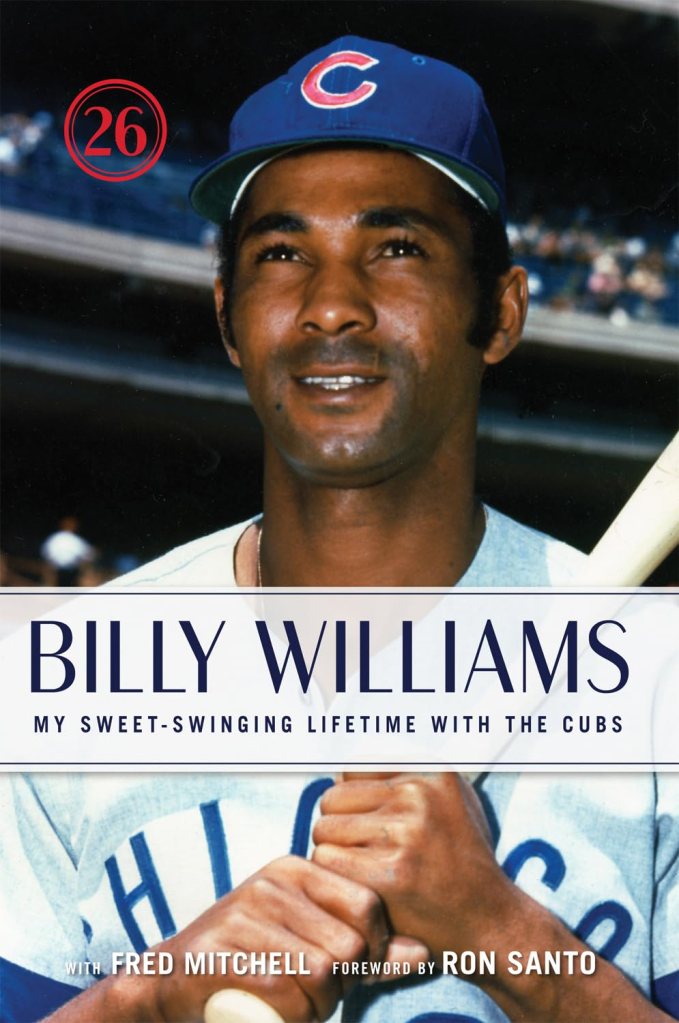
== More on Williams from his 2008 biography with Fred Mitchell (Triumph Books). More on McCovey from a 1988, 28-page photo book from Woodford Publishing called “Stretch.“
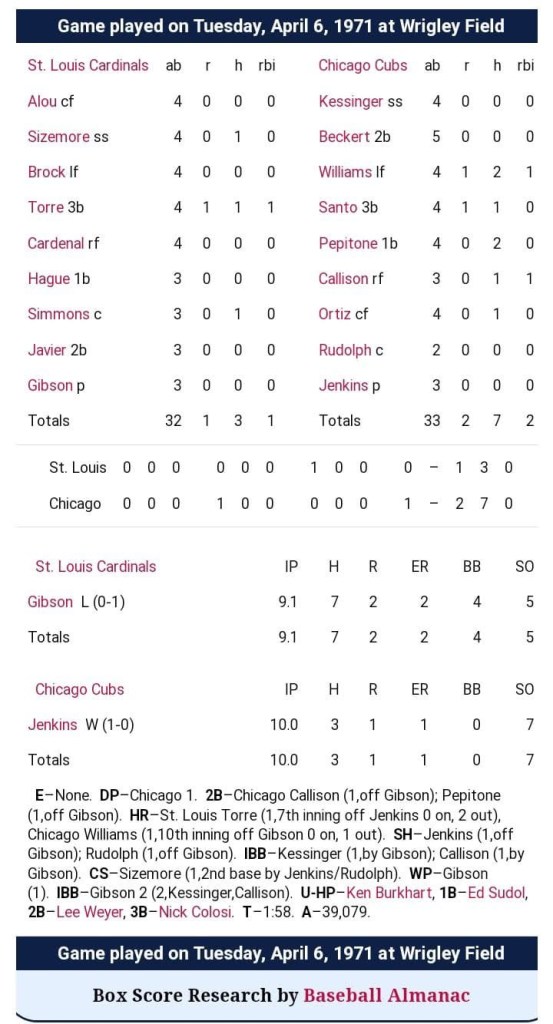
== One more tidbit on Williams: On Opening Day 1971 at Wrigley field, the Cubs’ Ferguson Jenkins faced the Cardinals’ Bob Gibson. The game was knotted at 1-1 after nine innings, and both were still pitching. Because of course they were. Williams ended it in the bottom of the 10th with a one-out homer. Fly the “W” flag. It took less than two hours.


1 thought on “Day 16 of 2025 baseball book reviews: Willie, Billy, and the Alabama shakes”