

This post is part of a media project called SoCal Sports History 101: The Prime Numbers from 00 to 99 that Uniformly, Uniquely and Unapologetically Reveal The Narrative of Our Region’s Athletic Heritage. Pick a number, and consider the list of athletes attached to it. Who wore it best? Or, what’s the most compelling story linked to it? Any person, place or thing is in play with Southern California connections. Star power, transformational achievement, longevity, notoriety and quirkiness all factor in. Whatever leads to a lively discussion and interpretation.
The most obvious choices for No. 84:
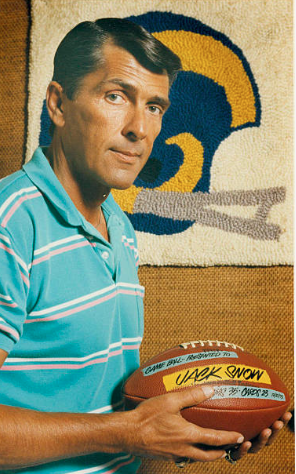
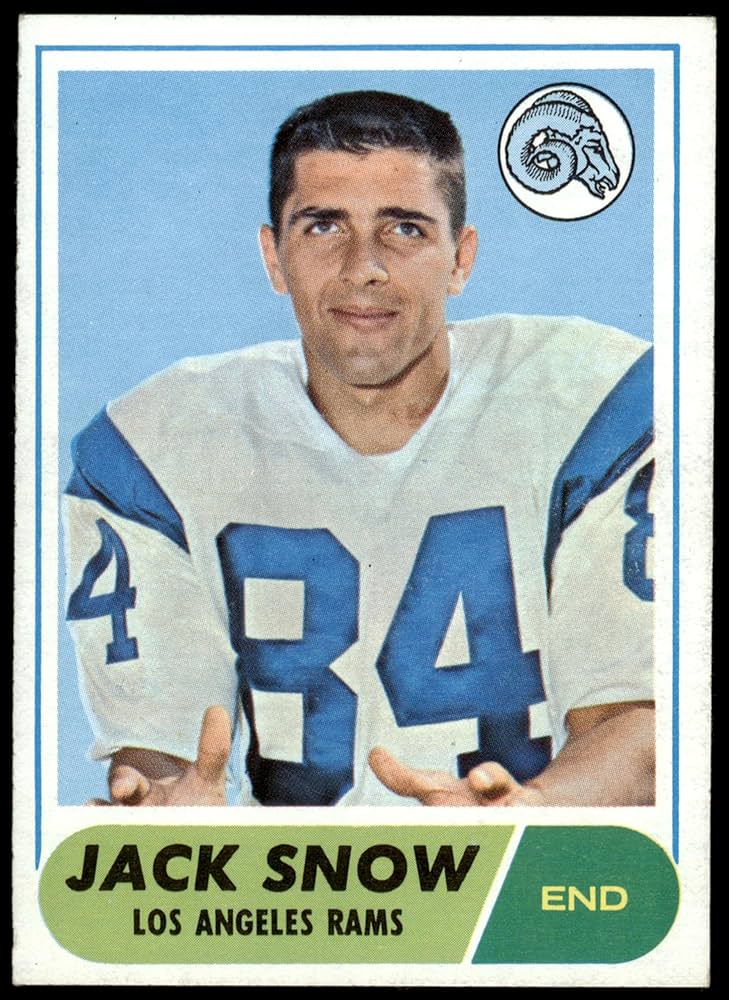
Jack Snow, Los Angeles Rams
Jerry Robinson, UCLA football
Bob Klein, USC football
Charlie Weaver, USC football
Shaun Cody, USC football
The not-so-obvious choices for No. 84:
Andy Robustelli, Los Angeles Rams
Paul Maguire, Los Angeles Chargers
The most interesting story for No. 84:
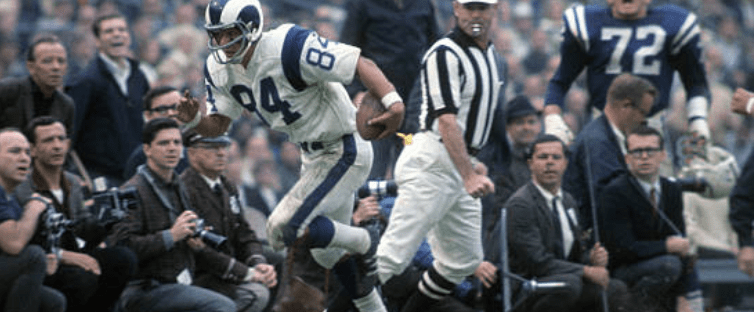
Jack Snow, Los Angeles Rams receiver (1965 to 1975) via St. Anthony High in Long Beach
J.T. Snow, California Angels first baseman (1993 to 1996) via Los Alamitos High
Southern California map pinpoints:
Long Beach, Los Alamitos, Los Angeles (Coliseum), Anaheim
Whatever joy came from hearing about a “snow day” for kids going to school is pretty much lost for anyone growing up in Southern California.
The closest thing anyone could make of that term was that, if you followed the Los Angeles Rams in the ’60s and ’70s, it meant Jack Snow had himself quite a day.
Ironically, and for what it’s worth, Jack Snow’s aversion to snow was what kept him L.A. bound.
The Long Beach native from St. Anthony High gave the Minnesota Vikings the cold shoulder after they picked him in the third round of the 1965 NFL Draft, following a season where he set several school records at the University of Notre Dame — a place where rain and snow and gloom of chilly nights in South Bend, Indiana were rather common.
On the bright side, Show was also picked in the ’65 AFL Draft by the San Diego Chargers. At that time, the rival leagues could bargain with players. Alabama quarterback Joe Namath was a prime example.
When the Los Angeles Rams engineered a trade with Minnesota to get the rights to Snow, it turned out that greater Southern California was all the greater for it.
Soon would come a California Angels sure-handed first baseman who earned an MLB Gold Glove. Maybe not such a surprise as he was a chip off the block coming from a sure-handed NFL Pro Bowl wide receiver.
There’s your weather update on what a real SoCal “Snow day” looked like.
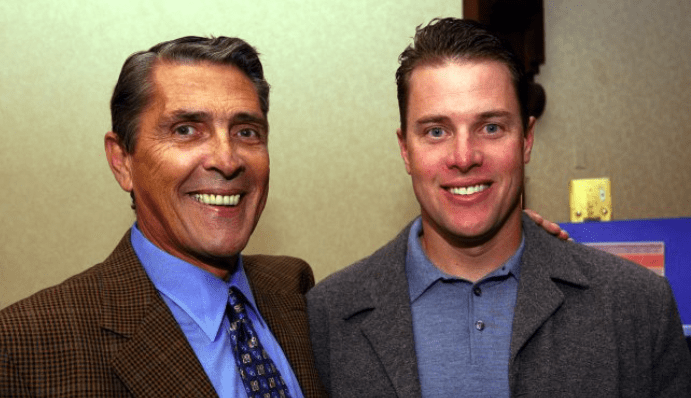
Jack Snow, Class of ’61, was inducted into the St. Anthony High inaugural Hall of Fame ceremony in 2013, five years after he had passed away. He was 62, and was taken down by tragic complications from a staph infection.
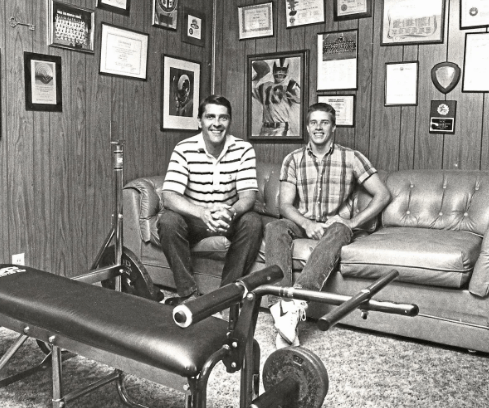
His son, Jack Thomas Snow, better known as J.T., admits he didn’t know his father’s true athletic ability until it was too late to really nail him down on it.
J.T. had retired from a 16-year MLB career — four of them as the Angels’ first baseman, after enjoying three-sport stardom at Los Alamitos High — and was talking to a Long Beach Press-Telegram reporter about how he found out more about pop’s legacy. It came from just hanging around with his dad’s former teammates, coaches and friends at the funeral.
“Every one of them came up to me and said, ‘Your dad was probably one of the best athletes in Long Beach at the time, if not of all time.’ And I was like, ‘You’re kidding me. He never said that.’
“They said, of course, he was a hell of a football player, he was a great baseball player, he could have played basketball or ran track. I got a big smile on my face because he never let on to me about that. He just said he was someone who had to work really hard and give all he had.”
J.T. had always seen a different side.
A father who was demanding, tough and strict. Just as his father was.
For two years, Jack and J.T. didn’t even speak to each other — overlapping a period where Merry Carole, Jack’s wife and J.T.’s mother, was undergoing cancer treatment that eventually took her life.
That dynamic was difficult for everyone in the family. Now, J.T. had a time to reflect on it all.
“He was just an old-school guy who was very black and white; not a lot of gray,” said J.T. “He stuck to his word and he expected the best out of all of us whether it was school or sports. Until we were all grown and had kids, then he had grandkids, he softened up a lot. But I don’t think I could have ever made it to where I got without him. I think if he would have been easier on me, like a lot of parents, there is no way I would have gotten to where I got.
“He was a great father.”
The background
St. Anthony High honored Jack Snow with 10 varsity letters– all-state in football where he played offensive and defensive end, all-city and all-league in baseball where he had a .458 batting average and was captain of the 1960 Catholic League title team. Jack’s father instructed him to stay in shape by going to the local YMCA every day after school to work out.
A scholarship offer to Snow from the University of Notre Dame appealed to his religious upbringing, and as a mecca of college football at that time, Snow made that initial journey to the Midwest.
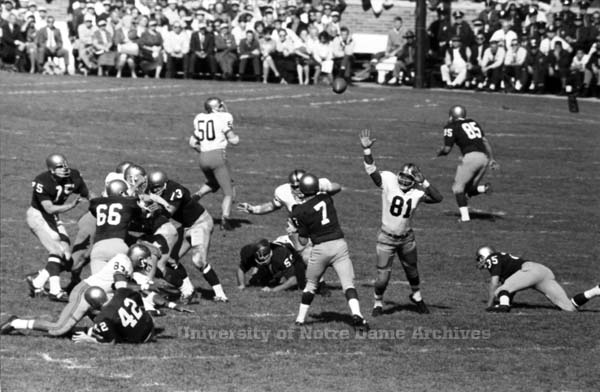
By his senior season, Snow was on a 9-1 Irish team ranked No. 3 ranked in the polls. He had become not just an All American receiver, but also fifth in the Heisman Trophy voting after he led the nation and set school records with 60 catches for 1,114 yards and nine touchdowns, with an 18.6 yard-per-catch clip in just 10 games.
Snow had spent the first two years there in near obscurity. As a senior, the breakthrough was that he had passes thrown to him by eventual Heisman winning quarterback John Huarte, the former Mater Dei High of Santa Ana star and a SoCal high school rival. Snow accounted for more than half of Huarte’s individual passing stats of 114 completions for 2,062 yards and 16 TDs that season.
The Rams might have been primed to take Snow in a star-studded 1965 NFL Draft — they had the No. 9 overall choice — but Minneosta blocked them out by snatching him away with the No. 8 pick. The Rams settled on Washington State defensive back Clancy Williams.
A chill must have gone down Snow’s spine.
Snow dreaded the idea of playing in snow, frigid, dreary Metropolitan Stadium. The Vikings head coach was former Rams legend Norm Van Brocklin, and their quarterback was a 25-year-old Fran Tarkenton, coming off his first Pro Bowl season.
For Snow, it was a mater of practicality and survival. And the fact the San Diego Chargers plowed through its own ’65 American Football League Draft and figured out that all it would cost them for the rights to Snow was a modest seventh-round choice/No. 57 overall.
And, the AFL had juice at the time.
Namath would reject the NFL — the St. Louis Cardinal’s first-round, No. 12 overall pick — and take up residence and financial gain in the AFL as the New York Jets’ first pick, No. 2 overall. Another future Pro Football Hall of Famer, receiver Fred Biletnioff, also took the AFL (Oakland, second round, No. 11 overall) over the NFL (Detroit, third round, No. 39 overall).
Snow had leverage to shovel out of whatever snow bank he felt was burying him.
Since the Vikings feared they would lose Snow straight out for nothing, their people started talking to the Rams’ people. The Vikings worked a deal for Snow’s right, receiving Red Phillips, the Rams’ three-time All-Pro flanker who by then had lost his starting role, and reserve second-year defensive lineman Gary Larsen, who would have two Pro Bowl seasons with Minnesota in ’69 and ’70.
“It’s a question of values,” Rams president and principal owner Dan Reeves told the New York Times, after he had also help orchestrate trades during that time with general manager Elroy Hirsch to acquire former All Pro linebacker Dan Currie and former All-Pro flanker Tommy McDonald from other teams.
“You know exactly what you’re giving away, but you don’t know what you’re getting in return. Every trade is a gamble. Sometimes a trade may open up a new horizon for a player. But you can never count on that happening.”
Snow’s track record also left some questions. At Notre Dame, he had just 10 receptions in his sophomore and junior years, listed as a hybrid fullback. He was moved to split end by new head coach Ara Parseghian during his senior season and lost 15 pounds to be more effective in that position.
Could he make it in the NFL with that body frame? Was his success due in most part to his partnership with Huarte?
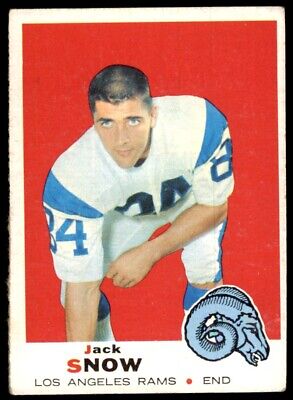
As a 22-year-old rookie in 1965, on what would be a 4-10 team, Snow was immediately put in the Rams’ starting lineup at left end and had 38 receptions for 559 yards and three touchdowns. McDonald, at flanker, more than doubled those stats, and the 1966 season was similar.
But in 1967, Snow’s first and only Pro Bowl season coincided with the emergence of Roman Gabriel as the Rams’ starting quarterback, George Allen figuring things out during his second year as the head coach, and Howard Schnellenberger coming inn as the Rams’ receivers coach. The team had an 11-1-2 finish to win the NFC Coastal Division.
While Rams flanker Bernie Casey was also a Pro Bowl pick, making 53 receptions for 871 yards and eight TDs, Snow did more with less.
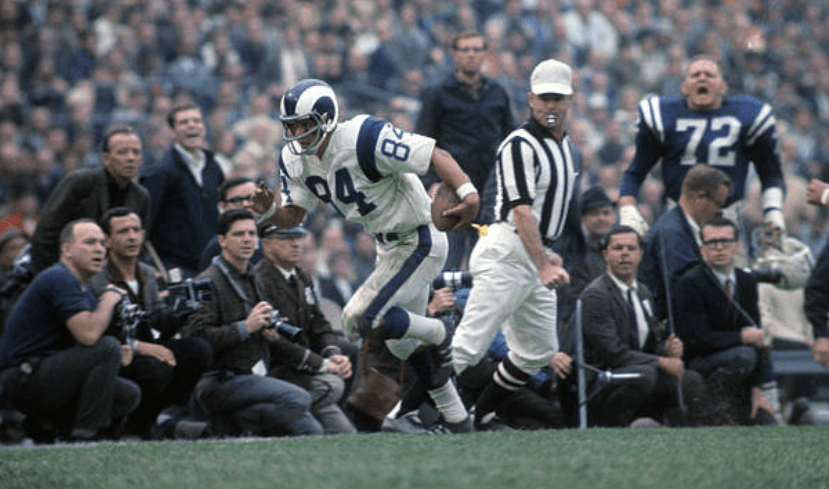
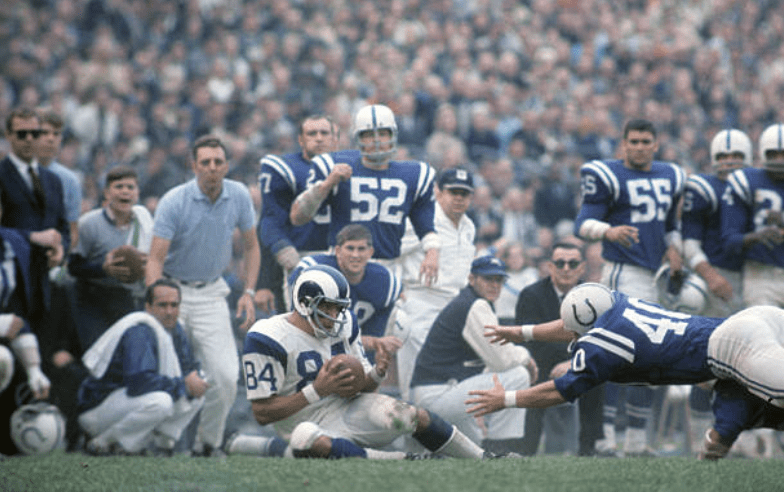
His 735 yards came on just 28 receptions, creating a league-best 26.3 yards per catch. Two of his eight TD catches that season came in a noteworthy 24-24 tie at Baltimore in Week 5, where he had a 53-yard scoring reception in the first quarter and 80-yarder in the third quarter, both from Gabriel. Snow had just three catches in that game for 151 yards.
For that ’67 season, Gabriel also made the Pro Bowl, along with halfback Les Josephson (800 yards rushing, 400 yards receiving, eight total TDs). The Rams were flying.
Insert here that during the 1967 off season, in February of ’68, J.T. Snow was born in Long Beach.
Even though the Rams build a 10-3-1 record in 1968, Snow somehow remained a bit under the radar, a third option behind tight end Billy Truax and flanker Casey. His 29 catches for 500 yards amounted to 17.2 a catch, with a long of 54 yards.
Snow didn’t lead the Rams in balls caught until 1969 — 49 for for 734 yards (15.0 per catch, a long of 74 yards) and six touchdowns during an 11-3 season. Snow followed that up a team-best 51 catches for 859 yards and seven TDs (16.8 per catch, a long of 71 yards) during a 9-4-1 season in 1970.
More comfortable in his own skin, Snow also took his cue from other Rams teammates and tried to see what he could do in movies and TV. There’s an uncredited Snow reference in the 1969 space flick “Marooned” with Gregory Peck and Gene Hackman, playing the role of a NASA space flight control center screen-watcher. He looked the part as a clean-cut, rugged man of knowledge. Snow is also the 1971 movie “Doctors’ Wives,” uncredited as an orderly.
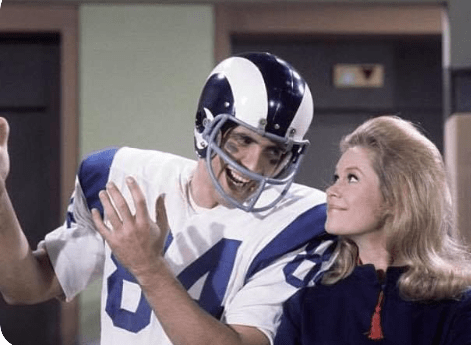
Snow was in an ’69 episode of the popular TV series “Bewitched” – Season 5, Episode 29, “Samatha’s Shopping Spree,” playing himself as a store manikin come to life when Samatha’s cousin and mother played a practical joke on her.
The most realistic thing he did came after his retirement — playing a version of himself, a Rams’ player named “Cassidy,” in the 1978 “Heaven Can Wait” with Warren Beatty. It features the Rams playing Pittsburgh in the Super Bowl. Look fast for a shot of Snow in a locker room scene.
In 1971 and ’72, as Tommy Prothro took over Rams’ teams hovering around the .500 mark, the franchise was in some limbo for a new buyer after Reeves’ death. With Allen gone, Prothro’s offense relied more on a diverse crew of receivers. Snow still had a team-best 666 yards receiving and five TDs in ’71 (18.0 per catch, long of 68), plus 590 yards receiving and four TDs in ’72 (19.7 yards per catch, long of 57).
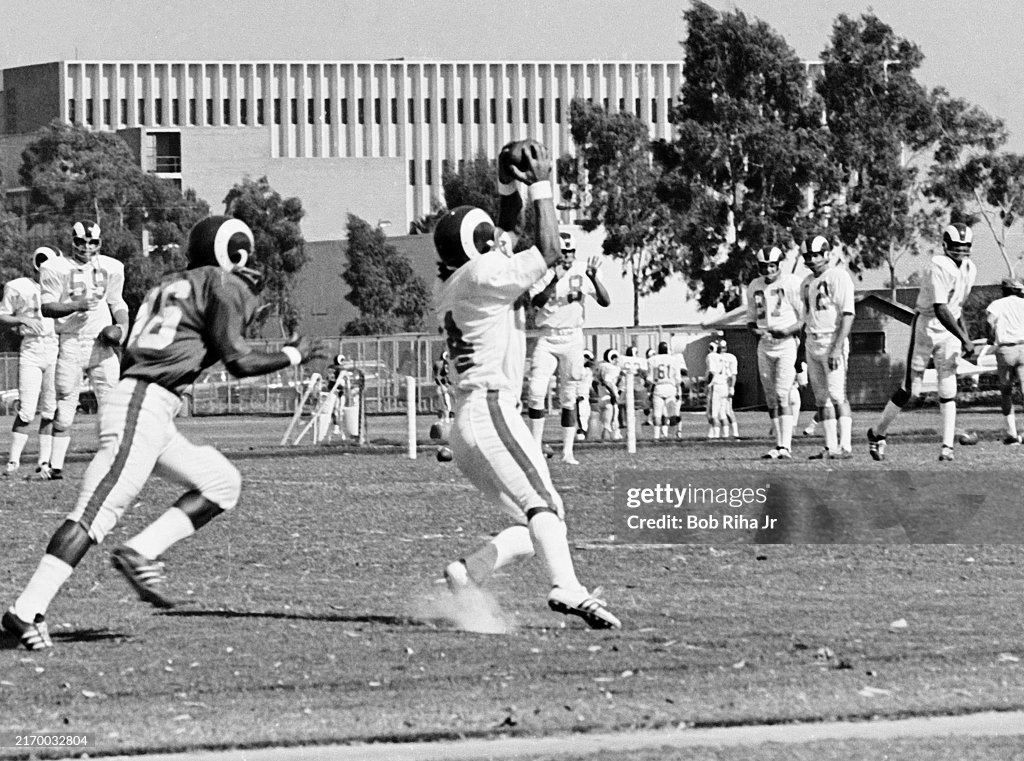
Chuck Knox’s arrival as head coach came in 1973, and an NFC West title with a 12-2 record came with Carroll Rosenbloom as the new owner saw change. John Hadl was the quarterback. Harold Jackson was the new top big-yard receiver (coming to L.A. from Philadelphia in exchange for Gabriel). Snow, at age 30, had just 16 catches for 252 yards and two TDs. Fullback Jim Bertelsen actually had more catches (19) and yards (267) to go with 854 yards rushing, even his key role was blocking for 1,000-yard rusher Lawrence McCutheon.
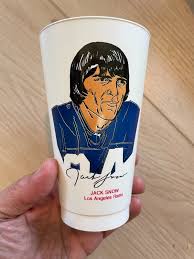
Snow had 24 catches for 397 yards (16.5 per catch) during the Rams’ 10-4 season of 1974, with James Harris the primary QB. The Rams won the NFC West but lost the conference title to Minnesota. That was the beginning of the end.
By 1975, Snow found himself not starting a game for the first time in his career. He had just four catches for 86 yards and a TD. Jackson and Ron Jessie were primary targets for Harris on Knox’s 12-2 team that lost in the NFC title game.
Snow’s career ended with him second all-time in Rams’ history with 6,012 yards and 45 touchdowns, and third with 340 receptions. He missed only one start in his career prior to that ’75 season — 139 starts in 150 games. His 17.7 yards-per-reception average is third behind tight end Bob Boyd (20.5) and Elroy Hirsch (18.4) for Rams players with more than 3,500 total career yards.
At the end of the 2025 season — 50 years after he retired — Snow remained seventh all-time in Rams’ games played, sixth in reception yards and touchdowns, 11th in receptions, and 10th in the ProFootballReference.com Approximate Value with 76.
J.T. Snow was 6 years old when his father was done with professional sports.
After trying the real estate business in Newport Beach, Jack Snow came back as Ray Malavasi’s receivers coach for the Rams in 1982. The team finished 2-7 and Malavasi was replaced by John Robinson for the ’83 season.
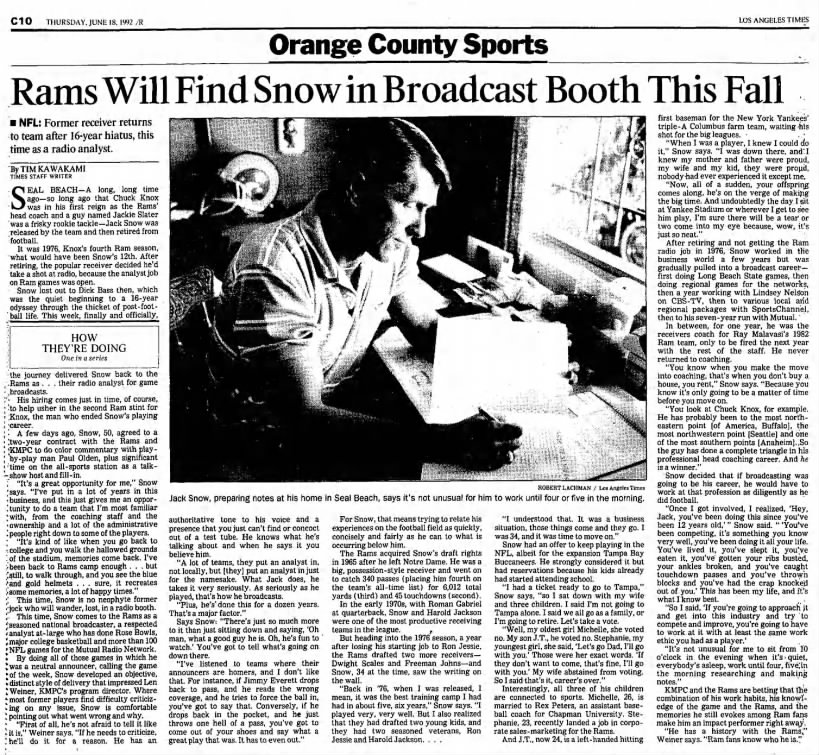
By 1992, Snow found a new audience as the Rams’ radio game analyst for KMPC-AM (710). That started with the team’s final three years in Anaheim, and he moved with the franchise to St. Louis to continue.
Snow’s former offensive coordinator coach at Notre Dame, Tom Panga, had never doubted Snow could be a good broadcaster.
“He understood the game,” Panga told the South Bend Tribune. “Many announcers don’t. They fake their way through and give you hackneyed expressions they’ve used for a thousand years. Jack was on top of it. He knew what he was talking about. He was fair and clean.”
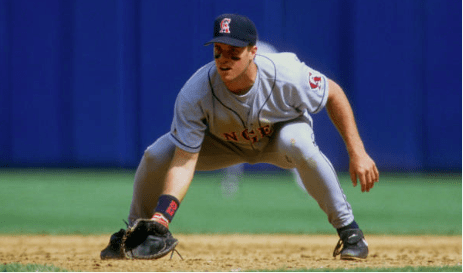
By 1992, J.T. Snow debuted as a 24 year old first baseman with the New York Yankees. A season later, he was sent to the Angels in a trade for pitcher Jim Abbott.
The Angels valued him for the four seasons, but with Terry Collins as the new manager in 1997, they wanted to move young center fielder Darrin Erstad to start at first base. The Angels dealt Snow to the San Francisco Giants before that ’97 season for some help at the top half of the starting rotation, left-hander Allen Watson. He gave up an AL-league high 37 homers in his 35 starts and finished 12-12, leaving for free agency after his second year.
That time frame also marked the high-tension Snow family split. Years of Jack’s hypercritical approach to J.T.’s career seemed to have worn thin on his son, who was upset that while he was playing in Anaheim, his dad decided to stay with the Rams when they left Southern California at a time when Merry Carole started cancer treatments. J.T. and Jack Snow didn’t talk for more than two years, starting in ’96.
In J.T. Snow’s first spring training with the Giants, on March 11, 1997, during an exhibition game in Scottsdale, Ariz., he was hit in the eye by a fastball from Seattle’s Randy Johnson, a pitch that had ricocheted off his wrist. Doctors worried about long-term effects.
J.T. called his parents’ for their help, mostly to talk to his mother. It started the process of repairing the family rift.
Merry Carole, named so because she was born on Christmas Day 1943, died in 1998. She and Jack, her high school sweetheart, had been married for 34 years.
“I got my sports, my drive and mentality and work ethic from my dad; I got my personality from my mom,” said J.T.
As for resolving the family issues, J.T. has also remarked: “It says more about people who can turn things around than to just sweep them under the carpet. My dad did a lot to provide for our family by going out every Sunday and getting his body beat up, and I’ll always be grateful for that. My mom was the calming influence in the family. He was a tough guy who demanded a lot from me and my sisters. If I was struggling, I called mom and she always put things into perspective.”
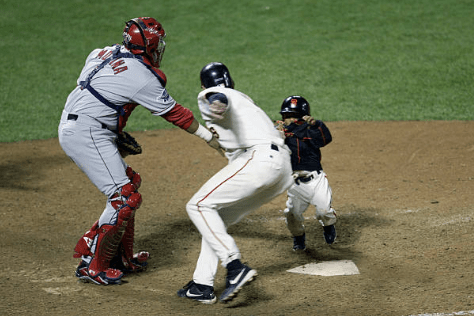
As J.T. played for the Giants in 2002 against the Angels during the World Series, Jack Snow added his take on it: “I played in two NFC championship games and neither one compares to watching your son in the World Series. … There comes a time when every son gets made at his dad, only you don’t hear about the other ones. What we went through was very normal. But we’re through it now.”
The wear and tear of his NFL career led to Jack Snow needed double hip replacement surgery in the spring of 2005. By Thanksgiving of that year, Snow developed a staph infection that started as a sinus infection but entered his bloodstream and seeped into his artificial hip joints.
He died at Barnes-Jewish Hospital in St. Louis after two months of battling infections. He was just shy of his 63rd birthday.

J.T. Snow, then 37, had finished nine seasons with the Giants, and that winter he wanted to come back for one last full season as a DH and first baseman with Boston in 2006. It also gave him the opportunity to wear No. 84 in his dad’s honor.
“It’s not a typical baseball number, but it’s to honor him because I wouldn’t be here without his support and upbringing,” Snow said, recorded in the book, “Red Sox By the Numbers.” “He knew I was going to sign with Red Sox and he know I was going to wear his number. I think he felt good about it.”
Roman Gabriel told USA Today: “To me, J.T. wearing his father’s number is the most exceptional honor a son can bestow upon his father. Jack deserves such an honor.”
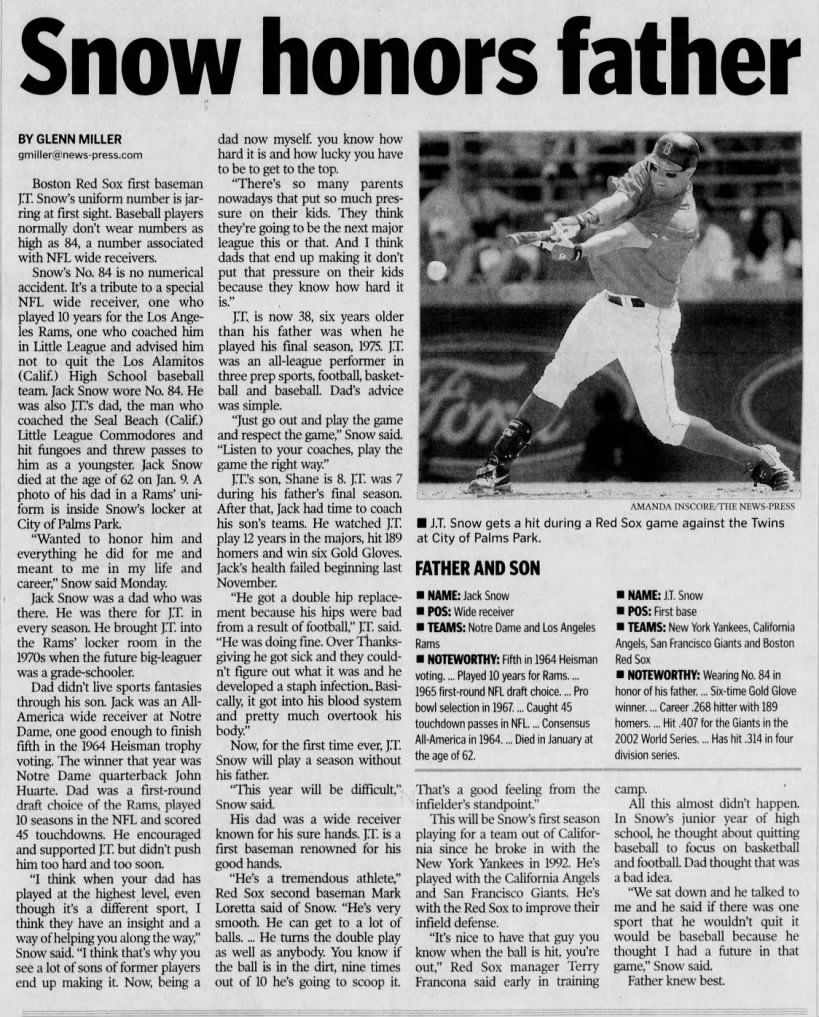
Jack Snow had once coached J.T.’s Seal Beach Little League teams. He brought him into the Rams’ locker room in the 1970s when J.T. was still in grade school. J.T. saw what professional athletes looked like and did on a regular basis.
J.T. said he remembered how his dad never let him quit the Los Alamitos High baseball team when he wanted to focus on football and basketball. That determination led to J.T. going to the University of Arizona to play baseball and become a New York Yankees draft pick.
J.T. Snow told the Fort Myers News Press that when he once was thinking of quitting baseball, “we sat down and he said if there was one sport (for me) it would be baseball because he thought I had a future in the game.”
Rewind to Jack Snow’s career at Notre Dame. He considered leaving the school before his senior year. Then-head coach Joe Kuharich and assistant Hugh Devore had limited him to just 128 receiving yards prior.
Huarte said that when he attended Snow’s funeral, he met Snow’s St. Anthony High coach, who said Snow confided in him that he wanted to transfer.
“His coach said, ‘No, you stay there’,” said Huarte in the South Bend Tribune. “You got get a quarterback who’ll throw to you and spend time with you. Run the patterns.’ Basically encouraged Jack to do exactly what he did (with me) — work on patters and catching the ball.”
Huarte also told the paper: “You look back and it’s a precious experience. I was lucky to go to Notre Dame. And so much of my success was related to Jack Snow.”
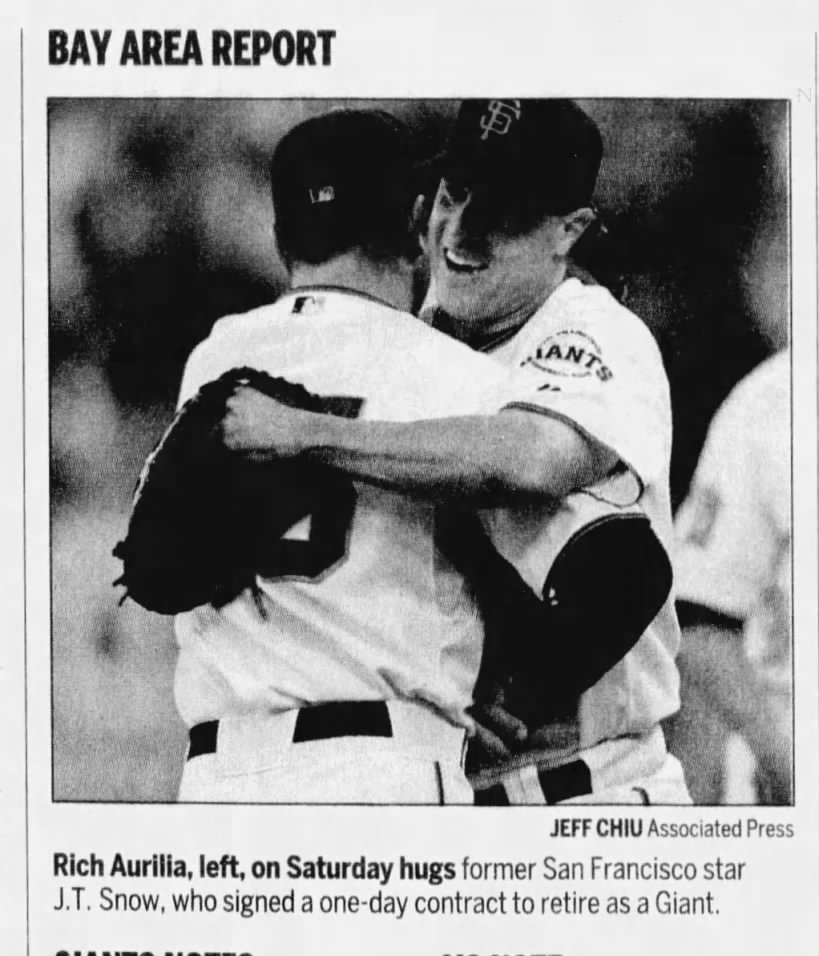
J.T. Snow, who hit .205 in 44 at bats for the Red Sox in 2006, was done with playing baseball when he took a job in the Giants’ front office in ’07 and also did some broadcasting — like his father. There came an idea eventually that he could sign a one-day contract, make one last more appearance with the Giants — Sept. 27, 2008 against the Dodgers at AT&T Park — and officially finish his career.
On that day, the Giants put Snow in the starting lineup and allowed him to take the field and throw infield practice from first base. He then came off the field as Travis Ishikawa replaced him.
J.T. Snow’s career totals reflect a .268 batting average, with a career-best .327 in 107 games for the Giants in 2004. He hit 189 home runs, drove in 877, and had six straight Gold Gloves from 1995 to 2000.
His best statistical season with the Angels came in 1995: 24 homers, 102 RBIs and a .289 average.
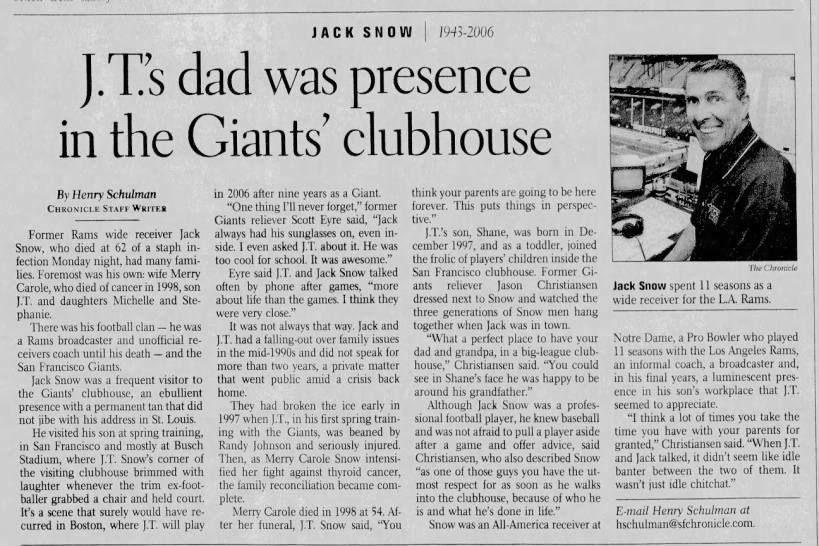
Embedded in an obituary that appeared in the New York Times in January of 2006, Jack Snow was remembered as a reliable link on five division championships, bridging the time of Gabriel-to-Hadl-to-Harris.
“He was one of the few guys we had that would go across the middle and catch that football,” Rams star Deacon Jones told The Associated Press. “He was tough, tough as nails. Jack had the greatest hands in that time period. You won’t talk about his speed, but his speed was deceiving. He would catch that slant pattern over the middle, and I’ve seen him outrun some guys that we thought were fast.”
Added McCutcheon, a five-time Pro Bowl running back who stayed in contact with Snow: “I’ve always thought of him as a no-nonsense guy who took life by the horns. He enjoyed life, enjoyed his kids and was very proud of them.”
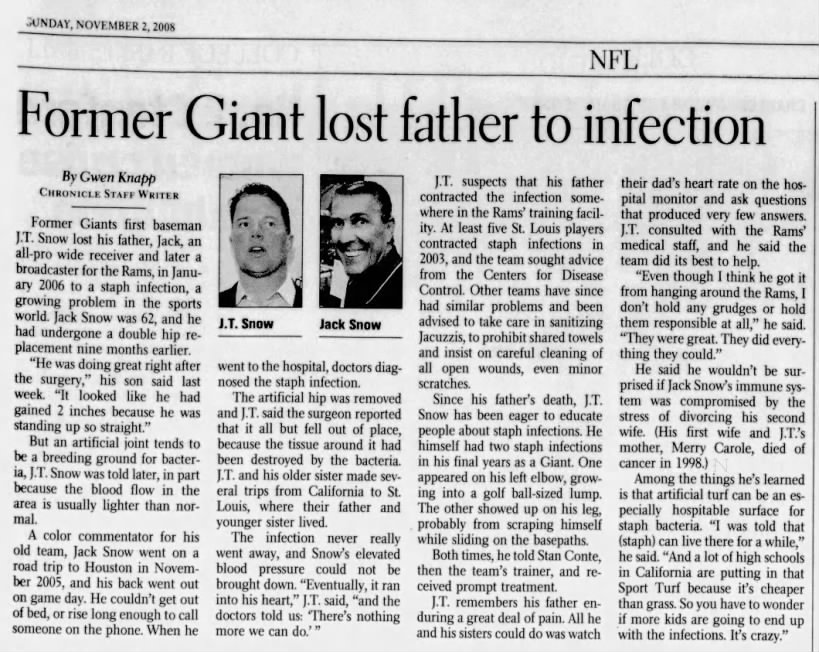
The Associated Press reporting also brought up how Snow’s fate mirrored other contagious infections that had plagued the Rams after their move to St. Louis in 1995. In 2003, five players developed drug-resistant infections after suffering turf burns, and two or three San Francisco 49ers developed infections after playing the Rams early that season. The outbreak was the subject of an article in the New England Journal of Medicine. In August of 2005, then-linebackers coach Joe Vitt was hospitalized three days with a staph infection in his left hand. Vitt took over as head coach of the Rams in October, when Mike Martz was found to have endocarditis, a bacterial infection of the heart’s lining.
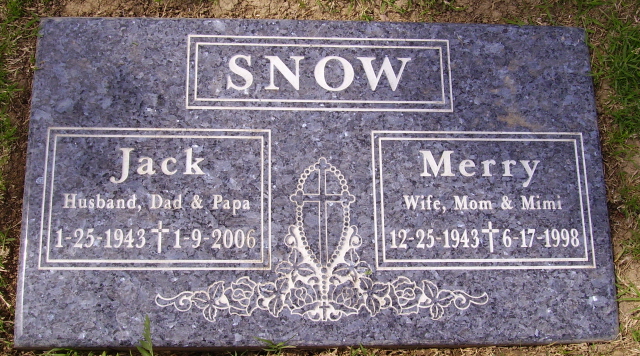
The legacy
Back to the 2013 induction in the St. Anthony’s Athletic Hall of Fame: A story came up about how Jack Snow was once helping Jeff Severson, a seven-year NFL defensive back out of Long Beach Wilson High and Long Beach State, do some play-by-play work on his alma mater 49ers football games by acting as his game analyst.
Severson said he reminded Snow of a reception he made in that epic game against Baltimore, calling it “one of the most unbelievable catches of all time. … Roman Gabriel threw him a pass. The ball comes own at a point … was out of reach, but Jack caught the back half of the ball, which is like impossible because it’s like catching a bar of soap. And I would always kid Jack. I’d say, ‘Jack, I know you don’t remember this story, but I remember you catching a ball against the Colts.’
“He’d go, ‘No, I don’t remember … but it was against Lenny Lyles and the Colts and it was third down and 6.’ ”
Severson, who eventually turned to acting after an NFL career with Washington, Houston and Denver overlapped Snow’s last four seasons, recalled how after he was drafted by Washington and getting ready to play for George Allen, Snow invited him to sit down at the Elks Lodge in Long Beach and strategize.
“I thought that was very thoughtful because he kind of filled me in on what to expect next,” said Severson, who had set an NCAA record with 15 interceptions in 1970 while with Long Beach State. “When Jack and I sat down to have a beer, it connected me. It made me feel really good.”
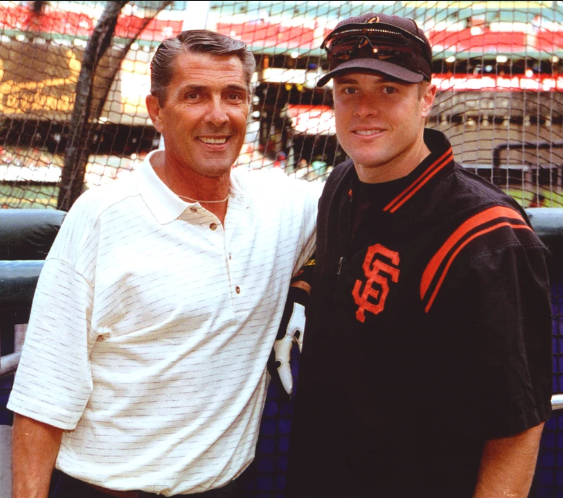
J.T. Snow remembered again in 2013: “I have played a lot of celebrity golf tournaments where there are guys that played against my dad. And the one thing they all say is that he was just a good guy and a great teammate. Those are the things you like to hear.”
In the meantime, The Jack and J.T. Snow Scientific Research Foundation, also known as The Snow Foundation, was established in 2011 to benefit those suffering from Wolfram Syndrome, a genetic disorder. Jack’s granddaughter, Raquel Gebel, born to his daughter Stephanie, has the condition when she was born in 2005, nine months before Jack Snow died.
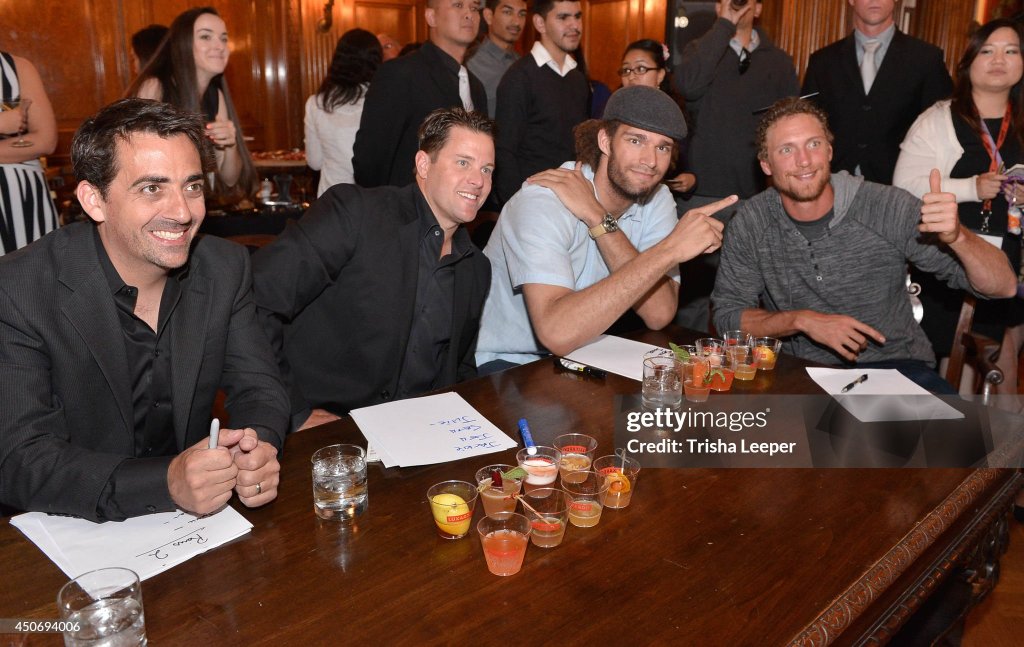
There are currently no drug therapies or cures that exist for Wolfram syndrome, which appears as Type 1 diabetes but leads to vision and hearing loss and cognitive decline. As a result, more than 60 percent of Wolfram patients die before age 30.
In a story former Kansas City Star reporter Randy Covitz wrote for the Snow Foundation website, it was noted that during Jack Snow’s playing career, he represented several charitable causes, including the Susan G. Komen Foundation for breast cancer, the Epilepsy Foundation and Juvenile Diabetes Research Foundation. Snow’s other daughter, Michelle, has a son, Jacob, first afflicted with diabetes as a young child.
“We got this thing rolling,” said J.T. of the foundation. “We need to raise a lot more money to make sure people like Raquel are going to be taken care of. We’re kind of bummed out that my dad’s not around because he would have taken this and would have gotten a lot of attention for it. He would get people to buy in and to get into their checkbooks and help us raise money for these doctors who are studying Wolfram syndrome.”
Adds Stephanie about her father: “He was an out-of-the-norm athlete. He would go out and publicly speak and give his fee to the Rams’ charitable foundation. He was always doing things for people, and he never expected anything in return.”
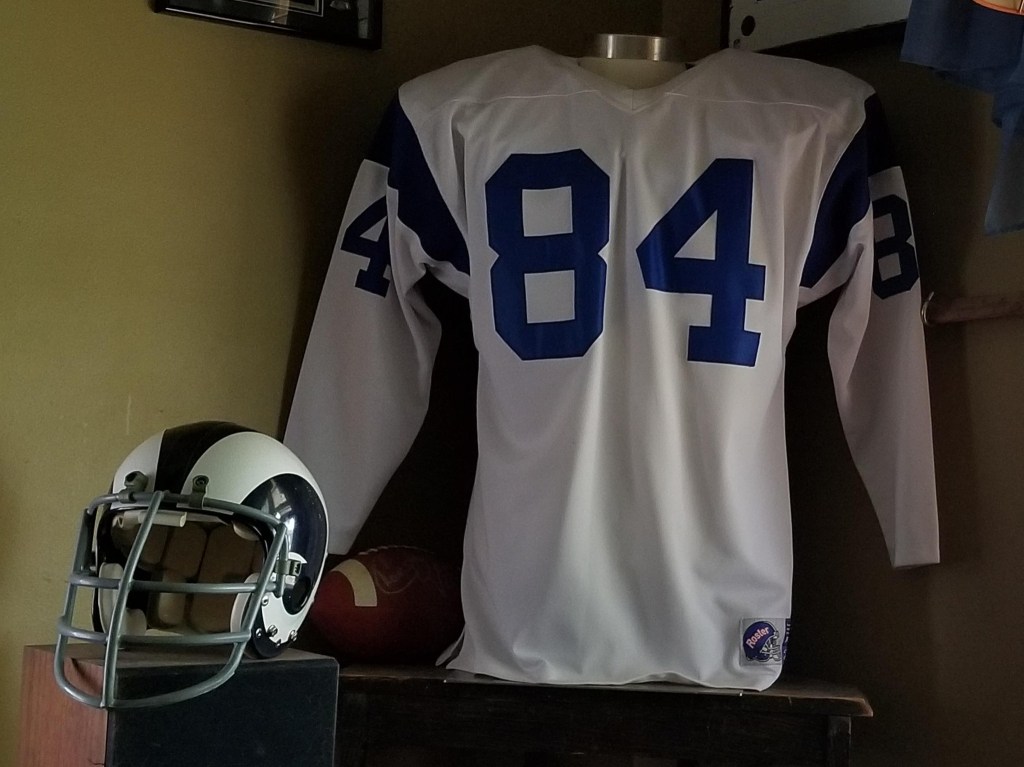
Who else wore No. 84 in SoCal sports history?
Make a case for:
Jerry Robinson, UCLA football linebacker (1975 to 1978):
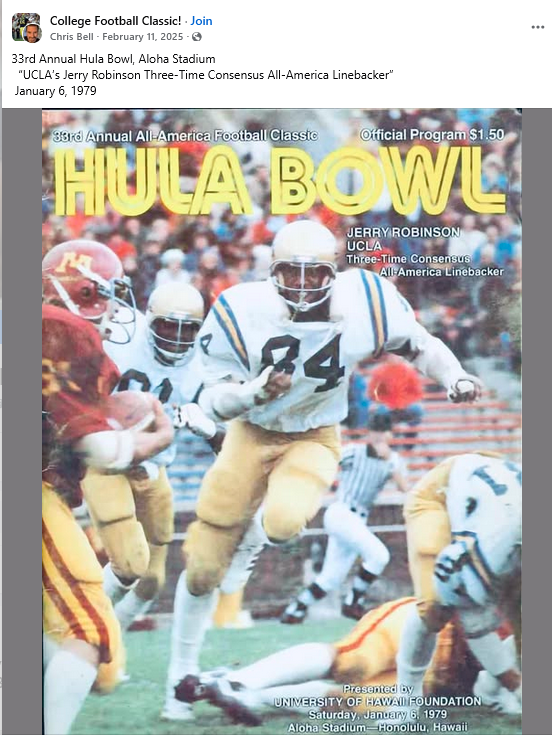
Best known: UCLA’s first three-time first-team consensus All American (safety Kenny Easley is the other), and the first in the country since the 1940s, Robinson was thought of enough to finish 10th in the 1978 Heisman voting as he ended his college career with a then-school record 468 tackles. A 1996 College Football Hall of Fame inductee, Robinson was also the first UCLA player to score three defensive touchdowns on interceptions returns, averaging 78.6 yards in return for those 18 points. He added one more pick returned for 26 yards as a senior. When the Associated Press named its All-Time All American team in 2025, Robinson was in the company of fellow linebackers Lawrence Taylor (North Carolina), Brian Bosworth (Oklahoma), Dick Butkus (Illinois), Derrick Thomas (Alabama) and Chris Spielman (Ohio State). On ESPN’s list of the Top 150 players in the 150 years of college football, Robinson rated No. 89, ahead Spielman (No. 143) as well as before USC’s Junior Seau (No. 105), Baylor’s Mike Singletary (No. 108), Florida State’s Derrick Brooks (No. 115) and Miami’s Warren Sapp (No. 122) at the linebacker position. In 1999, Sports Illustrated included him on its All-Century Team for college football. Drafted in the first round by the Philadelphia Eagles in 1979, Robinson played the final seven years of his 13 year NFL career with the Los Angeles Raiders, wearing No. 57. UCLA retired his No. 84 and inducted him into its Athletic Hall of Fame in 1991.
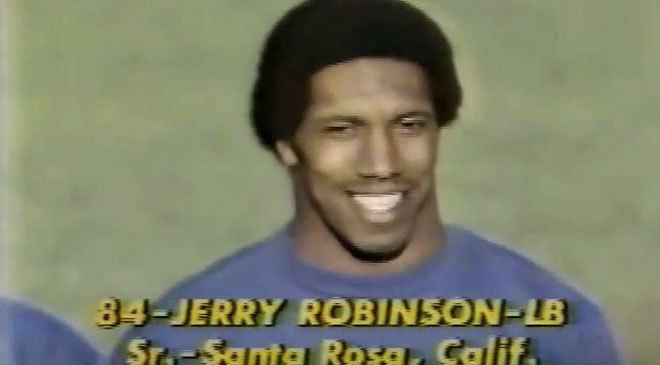
Not well known: Robinson came to UCLA from Cardinal Newman in Santa Rosa also as a star 100-yard sprinter and high jumper, and was pegged as a tight end by head coach Pepper Rodgers’ staff. But when Dick Vermeil took over as head coach, he persuaded Robinson to move to inside linebacker — just before the Rose Bowl against Ohio State, at the end of Robinson’s freshman campaign. Eventual new head coach Terry Donahue would help shaped Robinson into the position with the help of heralded linebacker assistant coach Jed Hughes.
Bob Klein, USC football tight end (1966 to 1968):
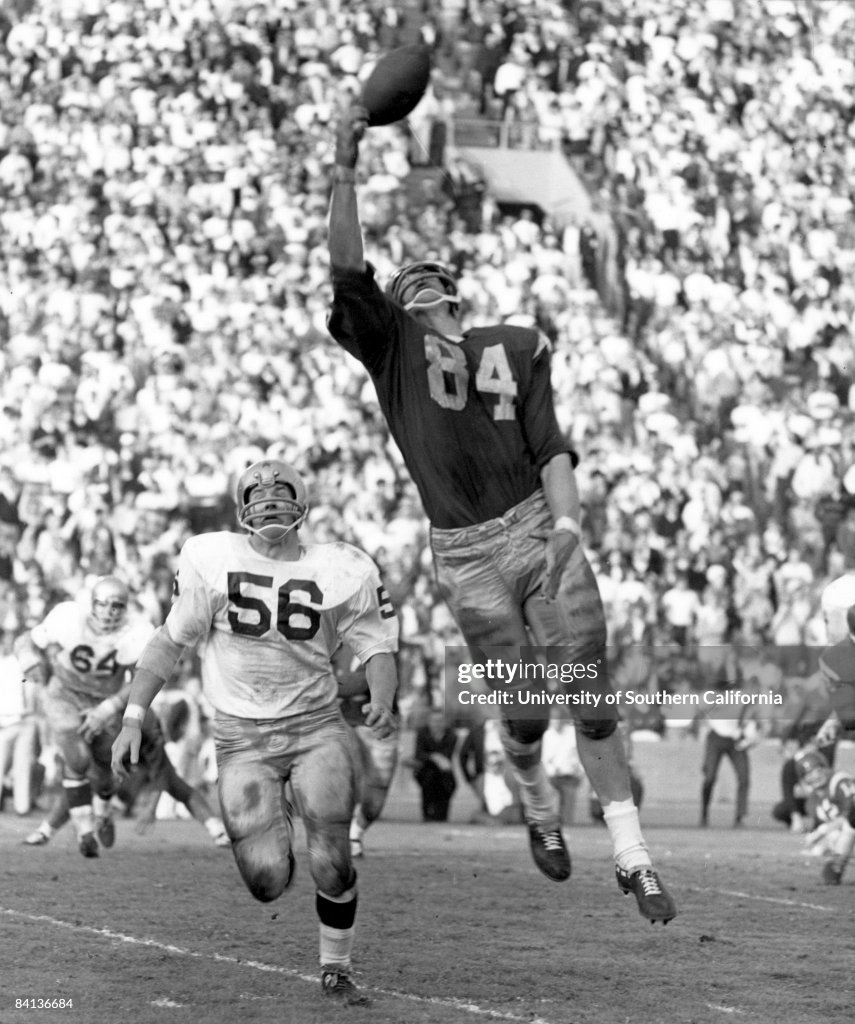
Best known: Born in South Gate, the 6-foot-5, 235 pounder out of St. Monica High in Santa Monica started on USC’s 1967 national title team. After his senior year, he was picked 21st overall by the Los Angeles Rams (wearing No. 80, from 1969 to 1976). In a 1985 vote of the fans, Klein was named as the tight end on the Los Angeles Rams’ 40th Anniversary Team.
Charlie Weaver, USC football defensive lineman (1969 to 1970):
Best known: A junior college transfer from Arizona Western, Weaver was part of USC’s “Wild Bunch” in with Al Cowlings, Jimmy Gunn, Tody Smith and Bubba Scott, ending up 1970 All-American and first-team All-Pac-8 honors as well as USC’s Most Inspirational Player that season. Detroit picked him in the second round of the 1971 NFL Draft and he lasted 10 seasons in the league. He was inducted into the USC Athletic Hall of Fame in 2018.
Shaun Cody, USC football defensive tackle (2001 to 2004):
Best known: The 6-foot-4, 307-pounder was a freshman at Damien High in La Verne before moving over to Los Altos High in Hacienda Heights and helping the team to a 14-0 record and CIF Division VII title. USA Today named him its All-USC Defensive Most Valuable Player in 2000. At USC, Cody started the final eight games of his freshman season and was first-team Freshman All-American. A consensus All-American and Pac-10 Defensive Player of the Year by his senior season, he had a career-best 45 tackles, 10 sacks, two forced fumbles, two fumble recoveries and three pass deflections. The Detroit Lions made him the 37th overall pick/second round in the 2005 NFL Draft and he spent eight seasons in the NFL, starting 68 of 112 games. Cody became a USC radio game analyst starting in 2019, having spent the prior five years on the broadcast’s post-game show.
Have you heard this story:
Andy Robustelli, Los Angeles Rams right defensive end (1951 to 1955):
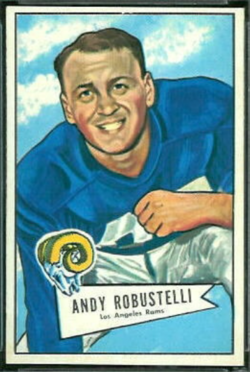
Best known: For someone picked 228th overall and buried in the 19th round out of the now-defunct Arnold College during the 1951 NFL Draft, and then ending up in the Pro Football Hall of Fame, it seems rather preposterous. But Robustelli, a 6-foot-1, 230-pounder, did it after playing the first five of 14 NFL seasons with the Rams, who had to convince him not to sign a pro baseball contract with the New York Giants. In that time, Robustelli was in two Pro Bowls, made first-team All-AP twice, and was on the second AP team two more times. A two-way end in college, where he played after serving in the Navy during World War II, Robustelli returned the only two interceptions he had in his Rams career for touchdowns in 1952 and ’55. The Stamford, Conn., was done with L.A. when he was traded by the Rams to the New York Giants in 1956, and during his nine seasons, he had a larger spotlight winning in an NFL championship game his first season, playing in the title game five more times, and being named the 1962 winner of the Bert Bell Award at age 37 as the best player in the NFL, a rarity among defensive players when he recorded 12 sacks. He played in 174 NFL games, missing only one, and had the NFL record with 22 fumble recoveries when he retired, 13 of them coming with the Rams. Robustelli maintained a high profile in the NFL as the Giants first general manger in 1973 when he took over day-to-day control of the team from owner Wellington Mara.
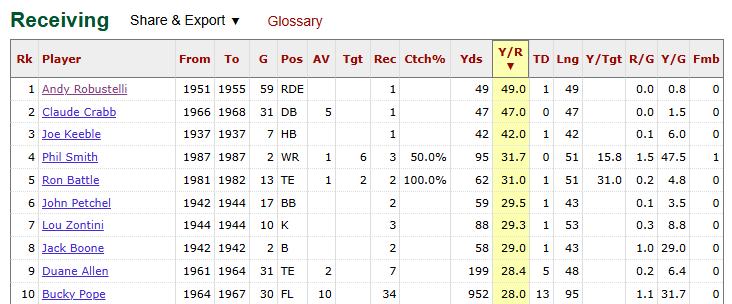
Not well known: In the final game of the 1954 season, a 35-27 win at the Coliseum against Green Bay, Robustelli, who started as usual as right defensive end, lined up wide on the punt team during a fourth-down snap. Norm Van Brocklin faked the punt, pitched it 10 yards to Robustelli, and he bullied his way past defenders for a 49 yard touchdown. It was the only catch he had in his Rams’ career. So in the Rams’ all-time statistical leaders, he remains the leader in yards per reception according to ProFootballReference.com.
Paul Maguire, Los Angeles Chargers linebacker/punter (1960):
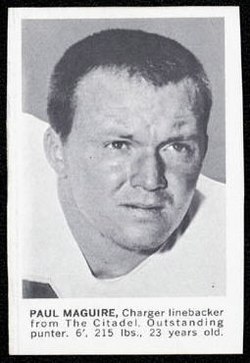
Assembling a roster their inaugural season of 1960, the Los Angeles Chargers of the American Football League took the 22-year-old Maguire out of The Citadel and gave him the job of right-side linebacker. But they needed his talents as a coffin-corner kick punter more. Maguire led the AFL that year with 40.5 yards a punt, but that would only rank ninth-best in his 11-season career. Moving with the team to San Diego, Maguire was in three AFL title games, became a Pro Bowl pick in ’62 when he led the AFL with 79 punts and 3,289 yards, and then it was off to play in Buffalo in 1964. In that year’s AFL title game, Maguire nailed a 78-yard punt that went out of bounds at the Chargers’ 2 yard line with two minutes left that sealed the Bills’ victory. Done with a pro football career at 33 in 1970, Maguire created a stellar career as a TV analyst, starting first with NBC, then going to the upstart ESPN to do college football in 1979. He became part of NBC’s No. 1 NFL team in 1995 with Dick Enberg and Phil Simms, and was in the network booth for Super Bowls XXX and XXXII in ’96 and ‘98. He did college game broadcasts through 2008.
Anyone else worth nominating?


1 thought on “No. 84: Jack Snow (and JT Snow)”