Day 22 of 30 baseball book reviews for 2018: So then Lasorda says to Piazza … Aw, let’s just go eat

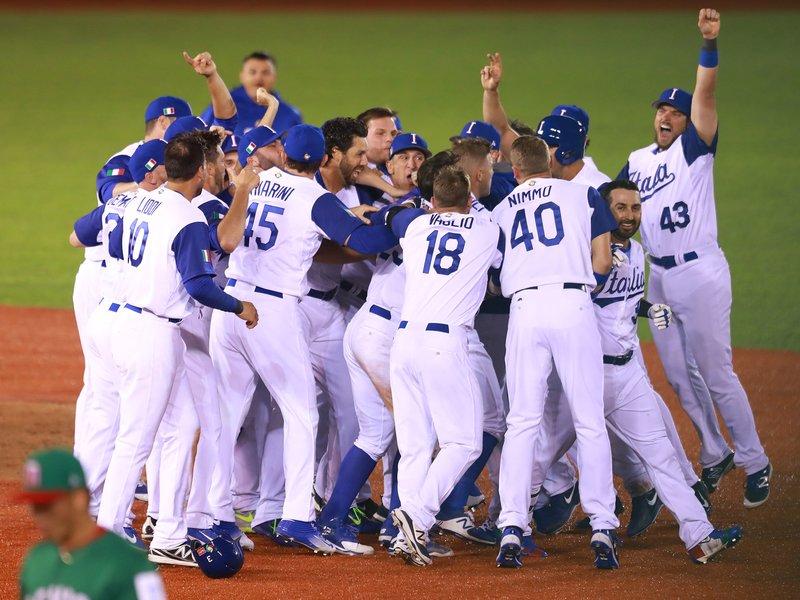
World Baseball Classic - Pool D - Game 1 - Italy v Mexico
Team Italy celebrates after scoring five runs in the bottom of the ninth inning to upset Mexico, 10-9, in Guadaljara, Mexico during the 2017 World Baseball Classic pool play.


The book:
“Baseball Italian Style: Great Stories Told by Italian American Major Leaguers from Crosetti to Piazza”
The author: Lawrence Baldassaro
How to find it: Sports Publishing, 292 pages, $24.99, released March 6.
The links: At Amazon.com, at the publisher’s website.

1a91L7JPcccVLA review in 90-feet or less: Mike Piazza says on page 204:
“My dad said he would be called ‘dago’ and ‘wop’ when he was a kid,”  “and all the Irish kids would want to fight him, and he would try so hard to assimilate himself to be an American. Then when he grew up and started losing that ethnic identity, he would strive to be more Italian.
“I remember, this Italian Amerian group gave me the Brian Piccolo Award. At the banquet, I was giving a little bit of history of my family and I said I’m only half Italian, my mother is Slovak. There was this deafening silence over the crowd, and my dad said, ‘Why did you tell them that?’
“I said, ‘It’s your fault; you married a Slovak.’”
In what could have easily come off as something perpetuating stereotypes or cultural chest-bumping, Baldassaro manages in his assembling a collection of first-hand stories of more than 40 players, managers, umpires and a couple of GMs to dig a little deeper about each of their Italian roots, what it means to them and how it shaped their attitudes about life, kinship and how the game should be played.
1a516fS0sYxoLBaldassaro, a professor emeritus of Italian at the University of Wisconsin-Milwaukee, started this as a project related to his 2011 book, “Beyond DiMaggio: Italian Americans in Baseball,” and realized he had interviews amassed along the lines of Lawrence Ritter’s 1996 oral history project, “The Glory of Their Times.”
“Just to be clear: readers should not expect to find dreamy reveries of the timelessness and sociological significance of baseball,” Baldassaro writes in the introduction. “To be sure, there are, on occasion, nostalgic reminiscences of bygone days. But by and large, the narrators provide a dispassionate look into the game as they know it.”
And all seem to have a Joe DiMaggio worship-related story along the way.
The lineup is impressive.
For those with Southern California ties, there are the usual suspects from Joey Amalfitano to Barry Zito, with Tommy Lasorda, Mike Scioscia, Ned Colletti, Joe Torre, Jim Fergosi, Al Ferrara and Bobby Valentine thrown in.
For those going back to the playing days of the 1930s – Frank Crosetti, Phil Cavarretta or Nino Bongiovanni – up until Anthony Rizzo or Joey Votto of modern day, you can read how the times changes through generations in how they identified and then perhaps never thought much else about their background when it came to the giant melting pot of baseball. To some, playing for Italy in the World Baseball Classic was the highlight of their professional career. That’s interesting considering how Lasorda explains things as he remembers them as a kid.
Continue reading “Day 22 of 30 baseball book reviews for 2018: So then Lasorda says to Piazza … Aw, let’s just go eat” →
Sports Media Column Version 04.22.18: Brockmire vs. Musburger … for all the Tostitos?

In the time between we documented Hank Azaria’s trip to L.A. to promote Season 2 of IFC’s “Brockmire,” and the time the column finally posted, Brent Musburger has retaliated.
Azaria, as Brockmire, went off on a Musburger-related rant, the video of which on the Rich Eisen show we have included in this column or, watch above.
Since then, Musburger replied via Twitter:

The response:

Musburger then circled back to Eisen’s show on Friday to say this:

Friday, Azaria was on the Dan Patrick Show — as himself — so we’re wondering if he even saw it.

Yo, Brent: Why don’t you have a bobblehead?
Let the star-cross-promotion begin.

Day 21 of 30 baseball book reviews for 2018: When WAA wins out over WAR, it’s a win-win for everyone … and this formula appears to bear that out

IMG_2715

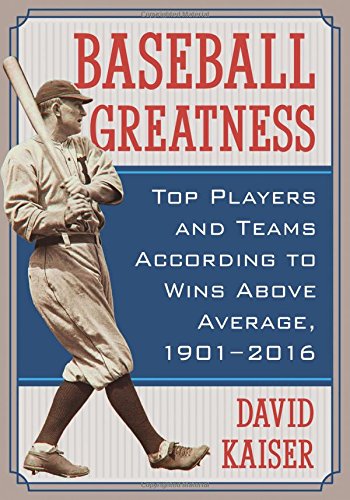
The book: “Baseball Greatness: Top Players and Teams According to Wins Above Average, 1901-2017”
The author: David Kaiser
How to find it: McFarland Books, $35, 250 pages, released Feb. 16.
The links: At Amazon.com, at the publisher’s website.

1a51-8SplfQ3LA review in 90-feet or less: In one of the most unassuming yet powerfully potent paperbacks anyone can possibly find and reference today to win a baseball argument, SABR veteran Kaiser, a 70-year-old university history professor and well-received author from Watertown, Mass., almost single-evenhandedly  waters down all the arguments that Wins Against Replacement (WAR) is a superior measurement of one’s greatness when compared to how Wins Above Average (WAA) determines the greatness of a player within the context of his team’s success.

Individually, WAR has taken sabermetrics to new levels of understanding about an individual performance. But what if this guy’s team doesn’t win? Isn’t that the point of the game?
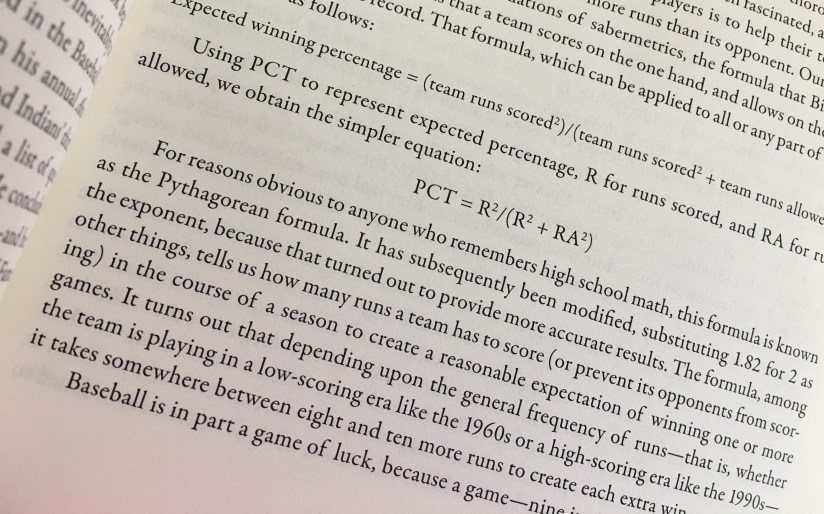
WAA, a Pythagorean formula that can be applied to any player in any era, is simple: Expected winning percentage equals teams runs scored squared divided by the sum of teams run scored squared and teams runs allowed squared. It has since been modified to substitute 1.82 for 2 as the exponent, but … you get the general point and decimal points. Hopefully.
If not, Kaiser has a basic explanation in the intro, but a much more detailed breakdown in the appendix.
He takes us chapter by chapter, era by era as determined by sociological experts (The Lost Generation, Boomers, Gen X, etc.) and redefines what players contributed the most to their team’s successes by running these new set of numbers.
Trust us, it’s not all that difficult to digest.
Just know that for someone to have star-season status in Kaiser’s calculations, he must have a 4 WAA, meaning his team probably won four additional games because of him in the lineup rather than an “average” player.
With that, Kaiser’s standard for greatness is a player who has five or more seasons of a 4 WAA or better, a standard he calculates has been met 93 times in baseball history so far (that’s one half of one percent of all who have played). There have been 1,773 “superstar” seasons posted by players since 1901, about 15 per year.
Take it for what it’s worth with this quote as well from Kaiser:

220px-David_kaiser“With the obvious exception of track and field, there are few if any human endeavors, inside or outside of sport, in which performance can be measured as accurately as in baseball. And now, with more than a century’s worth of evidence upon which to draw, using simple, powerful statistical methods, we find, generation after generation, an astonishingly small number of men who are much, much better than everyone else, and who indeed have shaped the broader story of winners and losers to a remarkable extend. … This book is about how great players make great teams. Historically, hitters have been more important than pitchers, all the more so because great pitchers very rarely remain great for very long.”
Sold.
And with that, a few intriguing things to note from Kaiser’s findings that relate to Dodgers’ history: Continue reading “Day 21 of 30 baseball book reviews for 2018: When WAA wins out over WAR, it’s a win-win for everyone … and this formula appears to bear that out” →

Day 20 of 30 baseball book reviews for 2018: The Hawk, in full flight, ready for a final approach

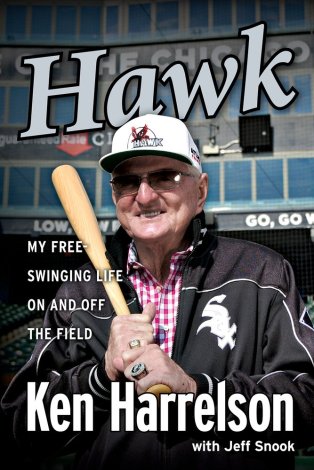
The book: “Hawk: I Did It My Way”
The author: Ken Harrelson, with Jeff Snook
How to find it: Triumph Books, 384 pages, $27.95, due out May 29
The links: At Amazon.com, at the publisher’s website.

1a71Ui505WEmLA review in 90-feet or less: Ken Harrelson is the guy you wish was a teammate of Jim Bouton when the later was in the process of writing “Ball Four” in 1969.
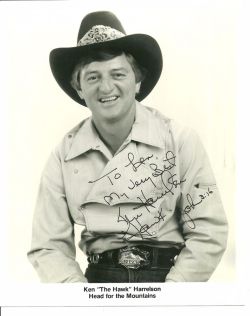
As Bouton was starting that season in Seattle, then getting traded to Houston, Harrelson was in … let’s see. He started in Kansas City, just had a great ’68 season with the Red Sox, but then they sent him to … Oh, right, Cleveland.
By page 176, this happens:

“Baseball always has had its superstitions, more than any other sport. I didn’t create them, but I believed in many of them. Some are too crude to detail. (Some struggling ballplayers would try anything to get out of a funk.) Another was, “If you are going badly at the plate, get into a fight to change your luck.”
We were in Oakland and I was in a major funk at the plate. Lew Krausse Jr., my old buddy from the Athletics, was still playing for the A’s and we had made arrangements to meet after the game. I told him I was going to look for the biggest guy I could find and start a fight.
“Lew and I headed to a nightclub and it wasn’t long before he spotted one for me. The guy was about 6-foot-5 and walked right by our table. Lew elbowed me, saying, “There he is.”
“I noticed the big guy went out to dance with his girl, so I grabbed another girl and headed to the dance floor. I bumped into the big guy “accidentally.”
” ‘Don’t do that again!’ he screamed at me.
” ‘Well, let’s go!’ I shot back.
b86b3f0bb98a1b2284956c352fbd4c70“I happened to be wearing a new pair of cowboy boots. We headed out of the club and as I walked down three steps toward the street, I turned around to swing at him when my feet came out from under me. I hadn’t broken in those boots and it was as if I was standing on ice. He landed a good shot to my eye and I swung again and missed. We started to fight before the police arrived to break it up.
“The police recognized him as soon as they arrived, cuffed his hands behind his back, and loaded him up in the back of a paddy wagon. I noticed he had blood all over his shirt.
Just before they closed the door, he looked at me and said, ‘I know who you are!’
“That was unsettling to hear, to say the least.
“I headed back to the Edgewater Inn and went to Sam (McDowell’s) room. Sam always carried a gun in his bag. Back then, you could stick one right in your luggage wherever you traveled. I explained what happened and asked him if I could borrow his gun. Sam went over to his bed and reached underneath his pillow. He pulled out his pistol and handed it to me. He was sleeping with a gun under his pillow!
“Before we left Oakland, the other guy’s lawyer came over to the Edgewater Inn to see me. After I told him there was no way I would be pressing charges, he said his client’s clothes were ruined in the fight and he wanted to be reimbursed to the tune of $700.
I couldn’t get $700 out of my pocket fast enough. I paid the lawyer, gave Sam back his gun, and that was the end of it.” Continue reading “Day 20 of 30 baseball book reviews for 2018: The Hawk, in full flight, ready for a final approach” →

Day 19 of 30 baseball book reviews for 2018: Poetry in motion — A chance this trio deserves Hall of Fame treatment depends on how you tinker with their impact on history

IMG_2670The book: “Tinker to Evers to Chance: The Chicago Cubs and the Dawn of Modern America”
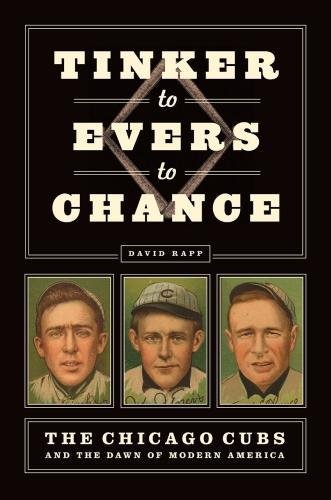
The author: David Rapp
How to find it: University of Chicago Press, 336 pages, $27.50, released April 2
The links: At Amazon.com, at the publisher’s website.

1a51q70uhubELA review in 90-feet or less: Using the ironic eight-line poem about an infield that anchored a team to the World Series 100 years ago as a starting point, Rapp goes around the horn to make a case that they were not only justified by their stanza super powers, but makes a case they carried the game during that era with an extensive background check that’s a surprisingly thorough in what could otherwise be a rehash of previous works on the subject.
The preface thankfully explains how “Baseball’s Sad Lexicon” came into being in 1910 – a printing error, where the New York Evening Mail came up short on F.P. Adams’ column and had to dream up six more lines to fill it out.
If only journalism history was that glamorous.
And thanks for teaching us the word “gonfalon.”
Unlike “Casey at the Bat,” this “terse ditty used a different kind of irony to celebrate three living ballplayers and their sport’s newfound status as the ‘national pastime’.” So there.

Now consider that from 1906 to 1910, manager Frank Chance’s team won 530 games – a major-league record to this day – plus two World Series titles and four NL pennants. The threesome became a threesome in 1903 and didn’t split up until eight seasons later when Chance retired. Without that, there’s no foundation and context for what the Dodgers’ infield of Garvey, Lopes, Russell and Cey did in the 1970s and early ‘80s — a feat that didn’t even warrent a clever haiku about them.
The timing of the Tinker-Evers-Chance chance gathering — and let’s go ahead and answer now the Abbott and Costello-like trivia question about who was the third baseman, a pretty good player himself in Harry Steinfeldt — happened at a time when baseball needed a post-King Kelly push into credibility. The game was starting to get shoved into the deplorable category of prize fighting and horse racing as corrupt and unsavory.
It needed family values. Continue reading “Day 19 of 30 baseball book reviews for 2018: Poetry in motion — A chance this trio deserves Hall of Fame treatment depends on how you tinker with their impact on history” →