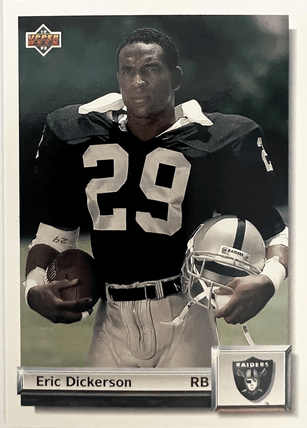
No. 11: John Elway

This is the latest post for an ongoing media project — SoCal Sports History 101: The Prime Numbers from 00 to 99 that Uniformly, Uniquely and Unapologetically Reveal The Narrative of Our Region’s Athletic Heritage.  Pick a number and highlight an athlete — person, place or thing — most obviously connected to it by fame and fortune, someone who isn’t so obvious, and then take a deeper dive into the most interesting story tied to it. It’s a combination of star power, achievement, longevity, notoriety, and, above all, what makes that athlete so Southern California. Quirkiness and notoriety factor in. And it should open itself to more discussion and debate — which is what sports is best at doing.

The most obvious choices for No. 11:

= Anze Kopitar: Los Angeles Kings
= Matt Leinart: Mater Dei High football, USC football
= Pat Haden: Los Angeles Rams
= Jim Everett: Los Angeles Rams
= Jim Fergosi: Los Angeles/California Angels
= Manny Mota: Los Angeles Dodgers
= George Best: Los Angeles Aztecs

The not-so-obvious choices for No. 11:

= Don Barksdale: UCLA basketball
= Bill Sharman: USC basketball
= Norm Van Brocklin: Los Angeles Rams
= Dwight Anderson, USC basketball

The most interesting story for No. 11:
John Elway: Granada Hills High football quarterback and baseball pitcher (1977 to 1979)
Southern California map pinpoints:
Granada Hills; Northridge; Dodger Stadium


Nov. 9, 1977, Valley News of Van Nuys.

John Elway’s 16-year NFL career, all with the Denver Broncos (1983 to 1998): Back-to-back Super Bowl wins to close out the 20th Century and his playing days, including the game MVP Award in the final contest he played; 47 fourth-quarter comebacks; 300 touchdown passes; 51,475 yards passing (second all-time upon his retirement) and going into the Pro Football Hall of Fame in his first year eligible of 2004.

Elway’s four-year college career, all at Stanford (1979 to 1982): Two-time Pac-10 player of the year, second in the Heisman voting as a senior, career passing leader with 9,349 yards and 77 touchdowns, No. 33 in ESPN’s list of the greatest 150 college football players in the game’s first 150 years, and No. 1 overall NFL Draft pick.

But what best sums up the high school legend of John Elway at Granada Hills?

“Oh, John, you are God’s gift to womanhood. You are the perfect specimen.”

Elway admitted to a Valley News of Van Nuys reporter in the fall of 1977 that some girl at school gave him that note in the hall, and then ran off before he could figure out who sent it. Elway, who had come to Granada Hills a year earlier as a sophomore, was still a bit shy and feeling his way around Southern California.

Before he made No. 7 somewhat his identity in college and the NFL, there was a vintage No. 11 Elway, both in football and baseball, who upon graduation was the focus of a Valley News story in its June 30, 1979 edition with the headline: “Is Elway best Valley athlete of all time?”

The questions still comes up in conversation 40 years later.
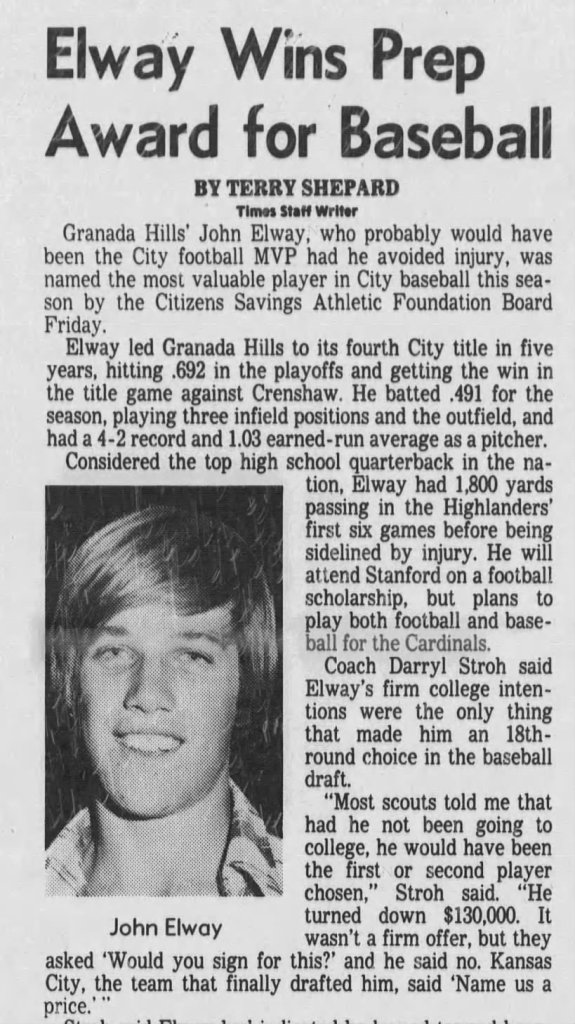
Los Angeles Times, June, 1979.

He didn’t win an MVP as a high school senior in football. His trophy came in baseball.
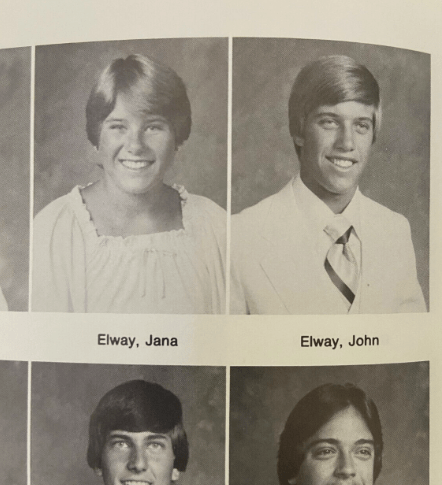
Elway’s Granada Hills High School senior class yearbook –the 1979 Tartan — has action shots of Elway playing football, basketball and baseball. There’s also the senior photo section, with John in his white suit and striped tie and large smile, next to his twin sister, Jana. Alphabetically, she came first.

They were actually considered “old” seniors,” born in late June, turning 19 right after that graduation. To all others in the high school athletic world of Southern California, maybe that didn’t seem quite fair.

In Elway’s high school yearbook from his junior year in 1978, with Jana again, next to him in their class shots, less dressed up and more “Fast Times at Ridgemont High” mode.
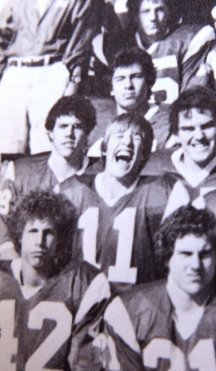
A classic shot of Elway in a football team photo shows him laughing out loud.

When you’re the son of a nomadic college football coach — John’s dad, Jack, brought the family to Northridge for a three-year run as the program’s head coach after he was a quarterbacks coach at Washington State — the fact you got to have three years at one school in Southern California was seen as something of a lucky break. Even when Jack left Northridge to take the head job at San Jose State in 1979, John stayed back to finish his high school at Granada Hills.

John Elway would consider going to nearby USC for college, but he gravitated to Stanford. He’d become the 1983 No. 1 overall draft pick of the NFL’s Baltimore Colts in a quarterback-rich field, nudge a trade to the Denver Broncos, and become one of the game’s legendary figures.

“John Elway was one of the single greatest athletes who ever lived,” says Adam Schefter, the ESPN NFL reporter, near the end of a 2025 Netflix documentary, “Elway,” that takes viewers through his life from high school to the Hall of Fame.

A 2004 Pro Football Hall of Fame inductee is celebrated as the only player in NFL history to pass for more than 3,000 yards and rush for more than 200 yards in the same season seven consecutive times. He is the second QB to record more than 40,000 yards passing and 3,000 yards rushing during his career.

He even got to play for his dad, who was as Stanford’s head coach starting in 1984.

But that time in Granada Hills … That’s when Elway cranked it up to 11.

Continue reading “No. 11: John Elway”
No. 72: Bailey (and all the other mascots)

This is the latest post for an ongoing media project — SoCal Sports History 101: The Prime Numbers from 00 to 99 that Uniformly, Uniquely and Unapologetically Reveal The Narrative of Our Region’s Athletic Heritage.  Pick a number and highlight an athlete — person, place or thing — most obviously connected to it by fame and fortune, someone who isn’t so obvious, and then take a deeper dive into the most interesting story tied to it. It’s a combination of star power, achievement, longevity, notoriety, and, above all, what makes that athlete so Southern California. Quirkiness and notoriety factor in. And it should open itself to more discussion and debate — which is what sports is best at doing.

The most obvious choices for No. 72:

= Miguel Rojas, Los Angeles Dodgers
= Don Mosebar: USC football and Los Angeles Raiders

The not-so-obvious choices for No. 72:

= Jack McDowell: Anaheim Angels
= Art Alper: UCLA basketball
= Kent Hill: Los Angeles Rams

The most interesting story for No. 72:
Bailey, Los Angeles Kings mascot (2007 to present)
Southern California map pinpoints:
Los Angeles (Staples Center/Crypto.com Arena)


Kings mascot Bailey holds up a sign that reads #Believe during Game 1 of the 2014 Stanley Cup Final between the Rangers and the Kings at Staples Center. (Chris Williams/Icon Sportswire via Getty Images)

Before we take the temperature in the room …

In 2008, when Belle met Bailey, something magic seemed to be happening.

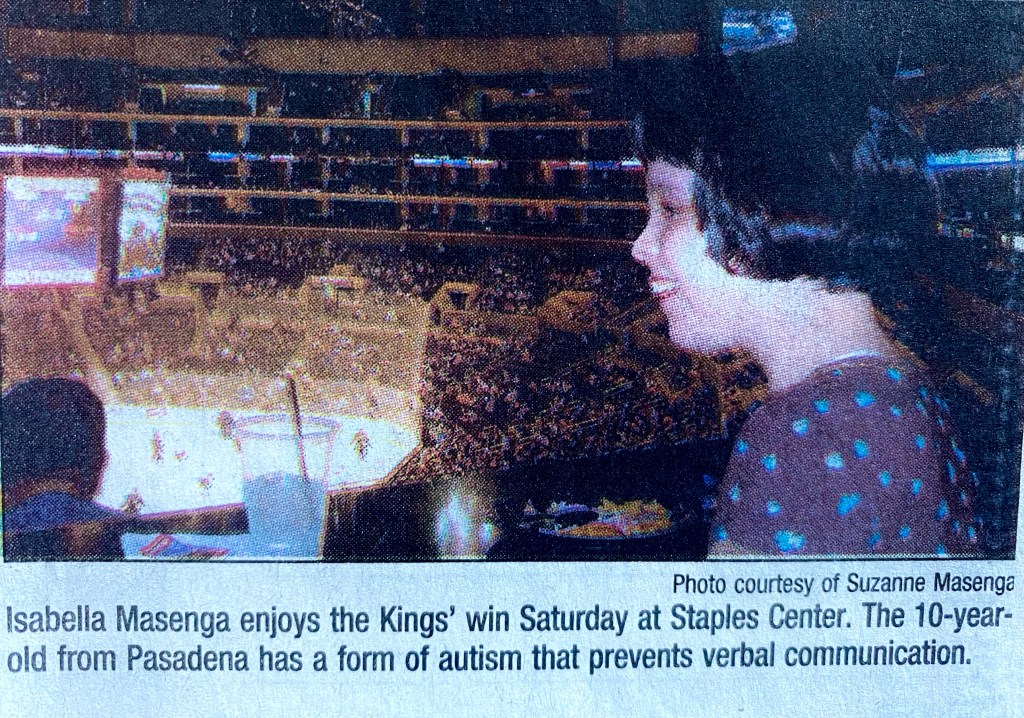
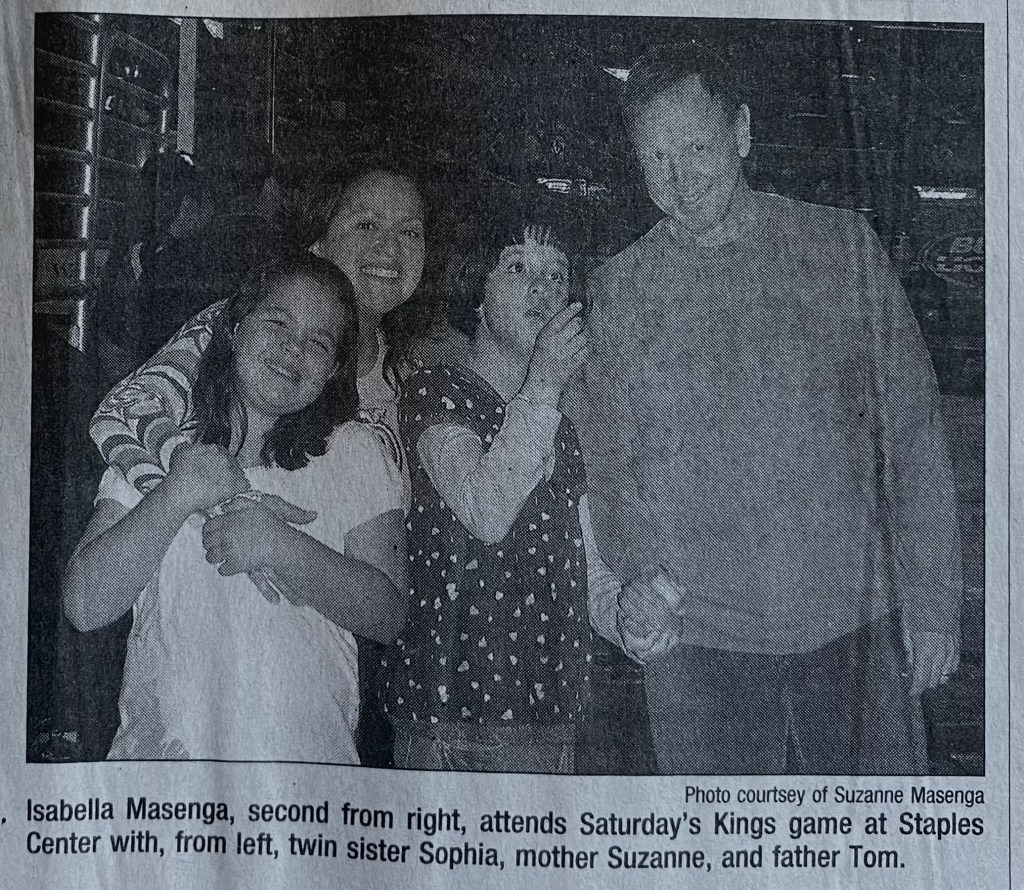
Isabella Masenga, whose parents call her Bellie, was almost 10 years old when she asked if they could take her to a Los Angeles Kings’ hockey game at Staples Center. They didn’t even realize she knew hockey existed.

Her mom said it was “probably the best day of her life” at the time. Her dad said it was “the happiest I’ve ever seen her.”

As we wrote in a story for the Southern California News Group at the time, what made it special was that Bellie’s wish to see a Kings game could only be communicated through a special portable word processor. She had a form of autism that prevented her from verbal interaction.

A group of 12 went with her, including her two caretakers, and her twin sister Sophia. None knew how Bellie might react with all the audio and visual stimulation.

They arranged to have a suite at Staples Center, and Kings personnel made it a VIP experience.

Including having their team mascot, Bailey, pay a visit. Bellie knew who he was. They embraced.

The Kings won in a shootout that Saturday afternoon against Dallas. They also crowned a new fan. That was the goal. Assist to Bailey.

The courageous humans who squeeze into exaggerated over insulated costumes and prance around at a sporting event impersonating a team mascot – occasionally wearing a jersey with a number attached – need to be recognized.

Along with the caveat: Why do any L.A. or O.C. teams even need to cheapen themselves with this idea? Because others do it? It’s fan-friendly? It’s great PR – no matter how bizarre the figure (see: Gritty, Philadelphia).

Of all the non-primal mascots in Southern California history, perhaps the NHL’s Los Angeles Kings is likely the most  identifiable. And the largest.

Continue reading “No. 72: Bailey (and all the other mascots)”

No. 77: Anthony Munoz

This is the latest post for an ongoing media project — SoCal Sports History 101: The Prime Numbers from 00 to 99 that Uniformly, Uniquely and Unapologetically Reveal The Narrative of Our Region’s Athletic Heritage.  Pick a number and highlight an athlete — person, place or thing — most obviously connected to it by fame and fortune, someone who isn’t so obvious, and then take a deeper dive into the most interesting story tied to it. It’s a combination of star power, achievement, longevity, notoriety, and, above all, what makes that athlete so Southern California. Quirkiness and notoriety factor in. And it should open itself to more discussion and debate — which is what sports is best at doing.

The most obvious choices for No. 77:
= Luka Doncic: Los Angeles Lakers
= Anthony Munoz: USC football
= Ron Yary: USC football
= Jeff Carter: Los Angeles Kings
= Paul Coffey: Los Angeles Kings
= Lyle Alzado: Los Angeles Raiders
= Alex Whitworth: Los Angeles Rams
= John McCarthy: LAFC and Los Angeles Galaxy

The most interesting story for No. 77:
Anthony Munoz: USC football offensive lineman (1976 to 1979) via Chaffey High of Ontario
Southern California map pinpoints:
Ontario, Los Angeles (Coliseum)

******

Freshman Anthony Munoz (77) stands out on the Coliseum sidelines during a 1976 game against UCLA. (Photo by Neil Leifer /Sports Illustrated via Getty Images)

At 6-foot-6 and 278 pounds, as svelte was he was imposing, Anthony Munoz fit the framework of the game’s most talented No. 77 since the heralded Harold “Red” Grange.

Imagine if Munoz played tackle on the University of Illinois’ offensive line in the 1920s actually throwing blocks for someone still considered a century later as the greatest college football player of all time. Or even later during Grange’s career making the NFL a viable option for players while with the Chicago Bears.

In scanning the enjoyable “The Football 100,” a 2023 list procured by the staff of The Athletic that takes into account the 25,000-plus players who’ve suited up in the NFL during its century of existence, Munoz is slotted as 12th from the top. Not only is he the top offensive lineman on that list, but he is positioned as the highest-ranked football player ever associated with Southern California ties.

Grange, despite his Pro Football Hall of Fame status, didn’t quite do enough to make that list.

Before Munoz’s ascent into a Pro Football Hall of Fame career, he was also included in the Top 100 of ESPN’s list of the 150 greatest players in college football’s 150-year history (where Grange is only No. 6). Munoz’s recognition came despite a history of injury issues that could have brought him much more fame. That still got him into the College Football Hall of Fame.

Maybe it’s because of how he responded to those setbacks – three knee surgeries in four years, robbing him of almost every chance he had during his career to play in games against rivals UCLA and Notre Dame — that we find elevating him to this position for our purposes ultimately justified. It goes to what his USC coach, John Robinson, said about his performance in the 1980 Rose Bowl, calling it “one of the greatest things I’ve ever seen happen.”

Continue reading “No. 77: Anthony Munoz”

No. 58: Cal State Northridge

This is the latest post for an ongoing media project — SoCal Sports History 101: The Prime Numbers from 00 to 99 that Uniformly, Uniquely and Unapologetically Reveal The Narrative of Our Region’s Athletic Heritage.  Pick a number and highlight an athlete — person, place or thing — most obviously connected to it by fame and fortune, someone who isn’t so obvious, and then take a deeper dive into the most interesting story tied to it. It’s a combination of star power, achievement, longevity, notoriety, and, above all, what makes that athlete so Southern California. Quirkiness and notoriety factor in. And it should open itself to more discussion and debate — which is what sports is best at doing.

The most obvious choices for No. 58:

= Rey Maualuga: USC football
= Al Sparlis: UCLA football
= Isiah Robertson: Los Angeles Rams
= Roman Phifer: UCLA football; Los Angeles Rams

The most interesting choice for No. 58:
Cal State Northridge: Athletic program (1958 to present)
Southern California map pinpoints:
Northridge


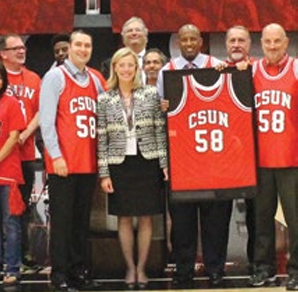
In February of 2014, Cal State Northridge’s athletic department took the honorable approach in making an intriguing declaration: It would retire the No. 58 among all its sports teams.

Not to honor a particular athlete in a specific sport. Or find some way to acknowledge how the campus was used in the 1984 classic, “The Karate Kid,” as the site for the All Valley Karate Championship.

It was to honor its entire faculty.

The number represents the year – 1958 – when the university launched as San Fernando Valley State, separating itself from a satellite campus of Cal State L.A.

It’s been better known as sun-drenched CSUN since 1972.

Brandon Martin, the CSUN athletic director at the time and former USC basketball guard who once prepped at Cleveland High in Reseda, was someone who we had come to know and admire. He said of this move:

“This is a fitting tribute to our faculty for its nearly 60 years of service and for supporting our athletics programs during times of challenge and prosperity … “I am proud of our student-athletes who excel in the classroom. Building a solid academic foundation is paramount for success now and later in life.”

On the day before Valentine’s Day, a heart-felt Faculty Appreciation Night took place with the halftime ceremony to retire the number at a CSUN-Cal Poly San Luis Obispo men’s basketball game played at the team’s home gym, The Matadome. CSUN then went out and lost a game where it never had a lead, 62-55, falling to 12-14 overall, 4-7 in the Big West, before an announced attendance of 1,083.

Eh, that happens. At least they almost scored 58 points.

Mind you, later that 2014 year, UCLA announced it would retire No. 42 from all its athletic teams to honor Jackie Robinson, its most heralded sports person – who actually never wore No. 42 at the school when he was there from 1939 to 1941, playing football, basketball and a little baseball, and deciding not to graduate. But that’s beside the point.

CSUN did it first, with a number that even makes sense. On a SoCal landscape when some of the most recognizable institutes for higher learning are dominated by a certain private school (USC) and a very visible University of California system entity (UCLA), let’s hear it for the power of the California State system campuses of Long Beach State, Cal State L.A., Cal State Fullerton, Cal State Dominguez Hills, Cal State Bakersfield, Cal State San Bernardino, Cal Poly Pomona, Cal Poly San Luis Obispo, Cal Sate Channel Islands …

And the one up on the northern ridge of the San Fernando Valley as its north star.

Continue reading “No. 58: Cal State Northridge”

No. 29: Eric Dickerson

This is the latest post for an ongoing media project — SoCal Sports History 101: The Prime Numbers from 00 to 99 that Uniformly, Uniquely and Unapologetically Reveal The Narrative of Our Region’s Athletic Heritage.  Pick a number and highlight an athlete — person, place or thing — most obviously connected to it by fame and fortune, someone who isn’t so obvious, and then take a deeper dive into the most interesting story tied to it. It’s a combination of star power, achievement, longevity, notoriety, and, above all, what makes that athlete so Southern California. Quirkiness and notoriety factor in. And it should open itself to more discussion and debate — which is what sports is best at doing.

The most obvious choices for No. 29:

= Eric Dickerson: Los Angeles Rams and Los Angeles Raiders
= Rod Carew: California Angels
= Adrian Beltre: Los Angeles Dodgers
= Eric Turner: UCLA football

The not-so-obvious choices for No. 29:

= Harold Jackson: Los Angeles Rams
= Billy Smith: Los Angeles Kings

The most interesting story for No. 29:
Eric Dickerson: Los Angeles Rams running back (1983 to 1987); Los Angeles Raiders running back (1992)
Southern California map pinpoints:
Anaheim; Los Angeles (Coliseum)


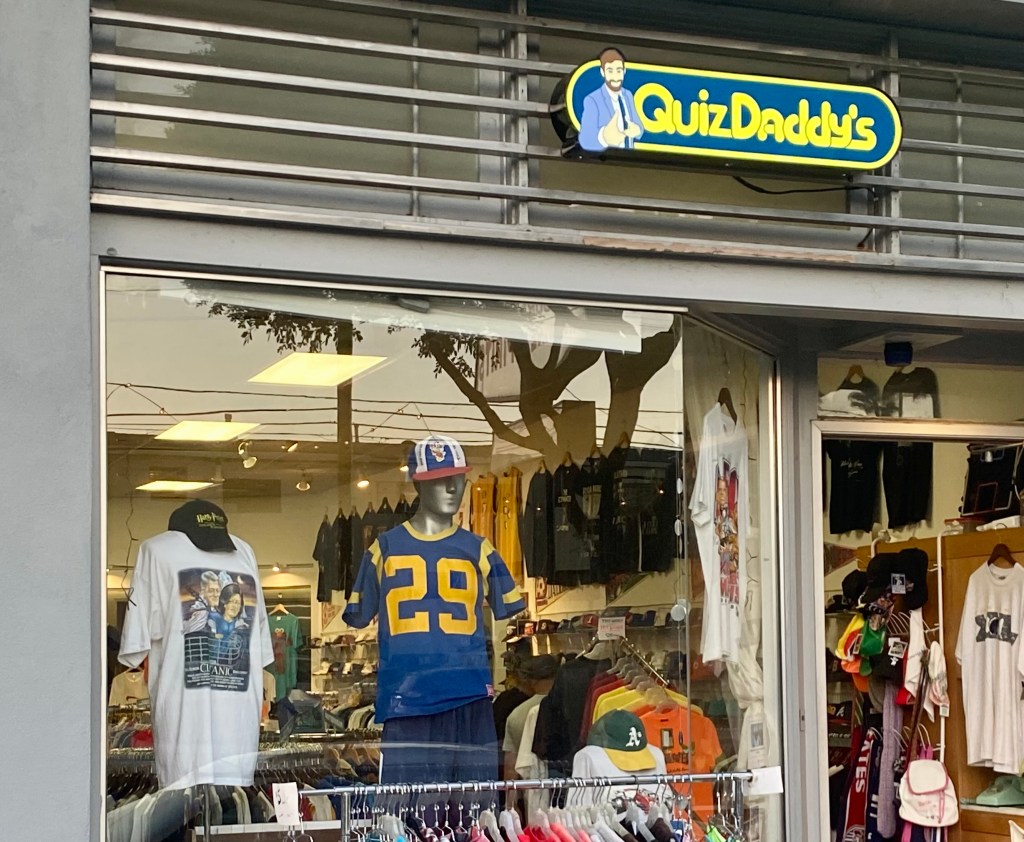
Amidst a collection of fading Star Wars memorabilia and outdated Elton John concert T-shirts, the window of a vintage clothing store on Main Street in Santa Monica knows how to cash in nostalgia and draw customer attention with a Rams’ No. 29 blue-and-gold jersey.

The gold numbers are bold and dynamic. Large and upright.

Like Eric Dickerson.

All that was missing were a pair of aviator goggles, a neck roll and boxy shoulder pads.

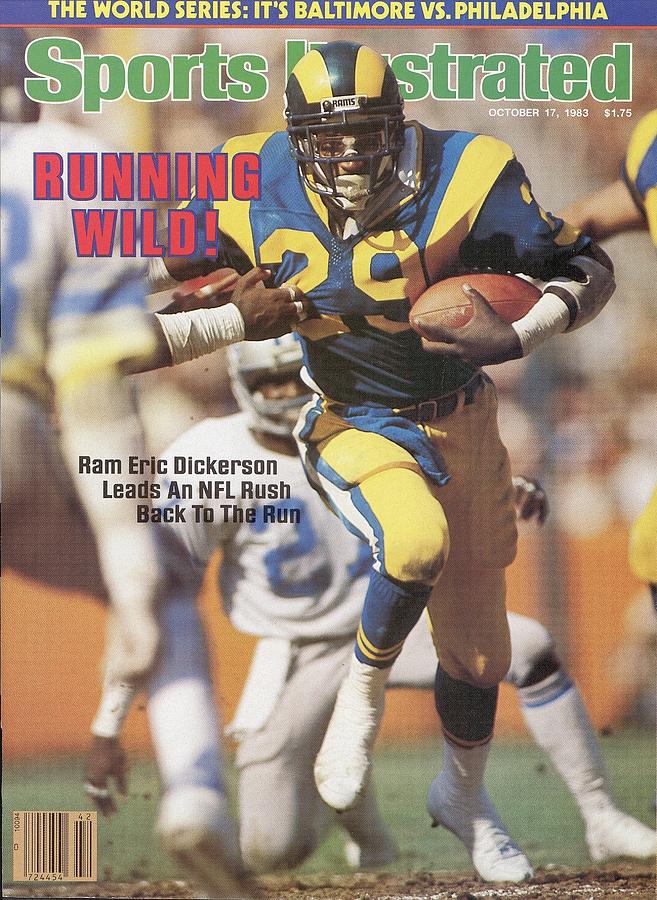
A running style that almost made him look like a thoroughbred race horse shifting through the pack of competitors with deft precision, Dickerson was only around for four-plus seasons in Los Angeles for the Rams, and none were in Los Angeles.

The greatest single-season in yards accumulated for an NFL runner in league history came in 1984, in Anaheim. The most polarizing contract debate about the same player’s future came three years later. Cashing in on his own notoriety.

Dickerson had a series of nicknames in his career. “Mr. Fourth Quarter,” because of his stamina; “Number One,” because he was often the first choice in the offensive play calling.

He was also “Mr. Benny,” for his known frugality.

For obvious reasons, he was also “The Dick.”

The bickersome Dickerson left Southern California in 1987. Prematurely. To some, it left the Rams in a ramshackle status for years beyond.

Dickerson did come back to L.A., with enemy colors, for one last statement, in 1992.

At least 20 years after his NFL retirement, in 2016, when the Rams moved back to L.A., Dickerson signed a one-day contract with the Rams so he could officially quit on his terms with the team.

By then, who was paying attention?

The background

June 18, 1986: Eric Dickerson with a cake celebrating his NFL single-season rushing record (Mike Mullen/Los Angeles Herald-Examiner Collection/L.A. Public Library)

On Pro Football Reference.com, under players “whose career was of similar quality and shape,” Eric Dickerson is determined to be on par at various points in his career with Franco Harris, Barry Sanders, Thurman Thomas, Tony Dorsett, Marcus Allen, Walter Payton, Emmitt Smith and O.J. Simpson. Dickerson ultimately is most compared to Simpson, since it was Simpson’s single-season NFL rushing record that Dickerson right past blew past 12 years after Simpson was the first to break 2,000 yards.

Six Pro Bowls, five first-team All Pro selections and four rushing titles were on Dickerson’s resume when he retired in 1993 with 13,259 yards. At the time, only Payton (16,726) had more yards. Jim Brown, considered the benchmark of any NFL running back, had retired with 12,312 in 1965 with a standard no one came close to until Payton passed him more than a decade later.

Dickerson was the Texas native from a city famous for making bed mattresses. He wore No. 19 for four years when he was part of a “Pony Express” backfield at Dallas’ Southern Methodist University, twice leading the nation in rushing and third in the 1982 Heisman voting behind Herschel Walker and John Elway.

In the 1983 NFL draft, Dickerson landed in the Rams’ laps at No. 2 overall because, in the famous “Year of the Quarterback” draft, Elway went No. 1 (to Baltimore, traded to Denver), and the first round included Jim Kelly, Dan Marino, Todd Blackledge, Tony Eason and Ken O’Brien. Dickerson already angered Houston fans by stating flatly that he didn’t want to play for the Oilers and later irritated more Texans by asserting that he hated the Dallas Cowboys.

In cool and collected SoCal, Dickerson set the NFL record with 2,105 yards rushing in 16 games, which adds up to 131 yards a game. A 5.6 yards per carry went with a league-best 14 touchdowns, which were four fewer than he scored as a rookie the year before when he also racked up 1,808 yards.

In 1985, he thought he was worth more money. He held out the first two games of the season. Some Rams fans seemed to side with team management and some threw Monopoly money at him, others setting fire to their own No. 29 jerseys.

In a 2025 USA Today story about the NFL’s timeline of the most notable holdouts, Dickerson was at the top. While he did returning and help the Rams to the playoffs with his 1,234 rushing yards and 12 touchdowns, the damage was done.

Back to a full season in ’86 at age 26, Dickerson piled up another 1,821 yard rushing season on a phenomenal 404 rushing attempts. For the third season in his first four years, he also went past 2,000 in total offense, leading the league each time.

Those first four seasons as a Ram also accounted for about 7,000 yards rushing and about 1,600 carries. As of 2025, three of the top 25 NFL single-season rushing seasons were posted by Dickerson in a Rams’ uniform at age 23, 24 and 26.

But when the 1987 season started, the Rams were again baffled by Dickerson’s latest training camp holdout. He was making $682,000 that season. The Rams offered him $975,000. Not the million-a-year Dickerson thought he was worth.

So after the first three games, Dickerson’s incessant complaining led the Rams to trade him to Indianapolis in a blockbuster 10-player, three-team deal. The Rams hardly got a even trade, accepting Greg Bell and Owen Gill to fill his place.

The Colts gave Dkcierson a four-year, $5.6 million deal.

By 1988, Dickerson was back to leading the league with 1,659 yards rushing.

Dickerson still wore No. 29 the entire time.

Still, “The Dick” was underneath.

The Colts suspended him for part of the 1991 season for “conduct detrimental to the team,” and subsequently traded him to the Los Angeles Raiders for the 1992 season. The Raiders, using him as a situational running back, released him at age 32. He signed with the Atlanta Falcons.

He retired in 1993 after four games, never having played in the Super Bowl. But he had a smokescreen.

Continue reading “No. 29: Eric Dickerson”