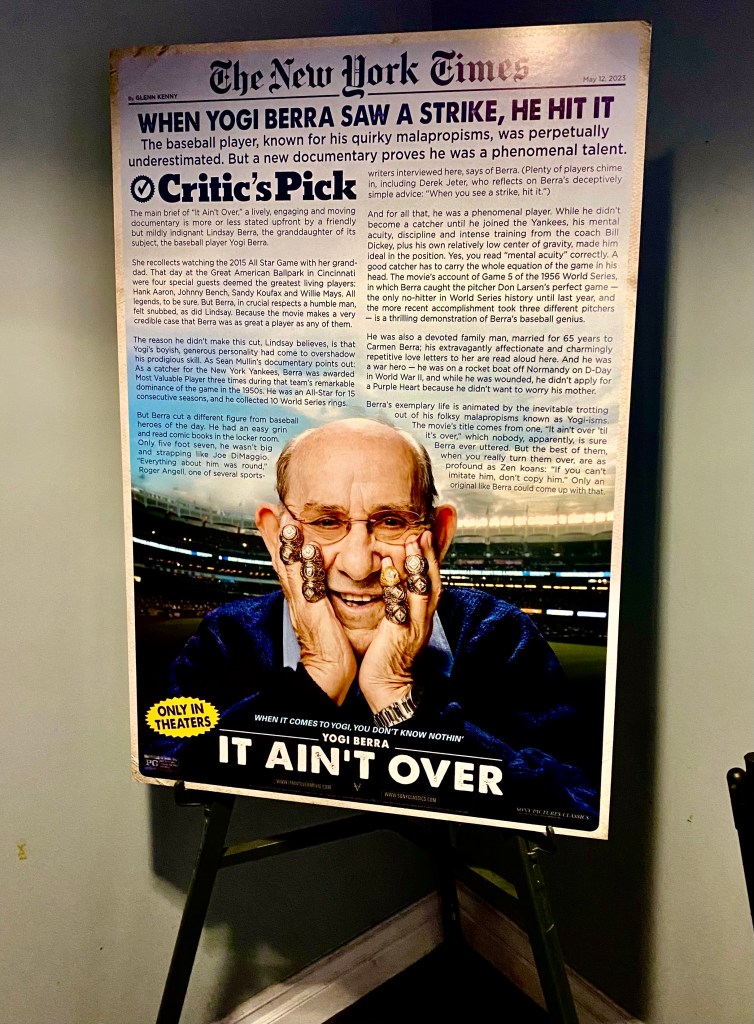
Day 18 of 2023 baseball books: Good grief is on a diamond not so rough

“Making It Home: Life Lessons From
A Season of Little League”

The author:
Teresa Strasser

The publishing info:
Berkley Books/Penguin Random House
352 pages; $18
Released June 6, 2023

The links:
The publishers website
The authors website
At Bookshop.org
At Powells.com
At Vromans.com
At TheLastBookStoreLA
At Skylight Books
At Diesel Books
At Target
At BarnesAndNoble.com
At Amazon.com

The review in 90 feet or less

If we can ask without raising any suspicion: What in blue blazes ever happened to Yasiel Puig?

A 2016 Topps Opening Day foil card of Yasiel Puig still carries a $4.80 value.

The quick-reference site Baseball-Reference notes that the now-31-year-old right fielder from Cienfuegos, Cuba who defected/was smuggled into the U.S. through Mexico, has no statistical evidence of playing anywhere in 2023.

The Dodgers, who signed him in 2012, saw him finish second in NL Rookie of the year in ’13, make the NL All-Star team in ’14, featured on the cover of “MLB The Show” video game in ’15, appears in the ’17 and ’18 World Series for them, and then … Poof. One can only be so patient. (We had advocated the Dodgers trade Puig to the Marlins for Giancarlo Stanton right around that ’15 season. Straight up. Stanton returns to SoCal, Puig goes to Cuba-adjacent Miami. It was a missed opportunity once Stanton hit 59 homers and drove in 132 runs during his last year with the Marlins, winning the NL MVP, then defecting to the Yankees).

Puig was traded to Cincinnati after ’18, was shipped to Cleveland in a Trevor Bauer deal, fell off the earth, navigated through the Dominican Winter League, the Mexican League and most recently, South Korea’s KBO.

Puig is/was really in a league of his own. And his own undoing. A March, 2022 story in the Korean Herald noted: Though he has gone 1-for-9 with three strikeouts in his first four games prior to Thursday, the Cuban slugger hasn’t seemed fazed by his sluggish performance. Earlier this week, Puig uploaded a video of himself dancing, maskless, in an alley in Itaewon, a popular nightlife district in Seoul, on Instagram. Puig was technically violating South Korea’s mask mandate at the height of the pandemic here. The country reported a record 621,328 COVID-19 cases Thursday morning, with an average of over 380,000 over the past seven days.

If he never plays again, he’ll go out a Hero. As in, his last team was the Kiwoom Heroes, where he hit .277 with 21 homers and 73 RBIs in 126 KBO games. If he’s deemed a villan, it’s because the last we heard from him involved a guilty plea to federal law enforcement regarding bets he placed with an illegal sports betting operation, but then he changed the plea to not guilty because of “significant new evidence.”

As his Wikipedia profile recalls, he was given the nickname “The Wild Horse” by Dodgers broadcaster Vin Scully.

We think of him more as “Little League Puig.”

It created a more legitimate visual for us. Because whenever he hit the ball, it seemed he would not stop running until someone tagged him out. And whenever he caught the ball, he knew nothing of what a cut-off man was supposed to do, and overthrew him in an attempt to catch a runner trying to advance.

Sometimes it worked. Often, it didn’t. Live and learn. Like in Little League. Except Puig didn’t seem to do much of the second part.

A Little League Home Run (or LLHR in the scorebook) is something to behold, and Puig occasionally gave us those treats in a big-league uniform. You run and run and run until the defense gives up. It’s the ultimate example of faith that, somehow, you’ll make it home unscathed, and your teammates will celebrate your arrival.

Or, you won’t make it home, and your teammates will groan.

We dare recall a time in July of 2013 when Puig broke up a scoreless game in the bottom of the 11th inning by hitting the ball over the fence, flipping his bat, and sliding into home plate.

The story the next day in USA Today read: “Yasiel Puig had been relatively quiet since the All-Star break. We say relatively because he was still spectacular in the field and was hitting at an impressive clip, but hadn’t crushed a 600-foot home run while saving a baby from a burning building and simultaneously throwing out Sid Bream in the 1992 NLCS.
“After Sunday, he is quiet no more.”

Here’s the point (finally): When “Little League Puig” took the field, there was as much cringing as there was celebrating life. He didn’t know better. Or did he? It was open for discussion. Often, one couldn’t differentiate if Little Leaguers imitated Puig, or the opposite.

When Teresa Strasser and her father, Nelson, parked their lawn chairs down the first-base line to watch Teresa’s son play (under the managerial guidance of her husband, Daniel), there were cringe moments. But also celebrations of life. It was a reckoning of past ineptness in the parental lessons that were supposed to be passed down to the next generation.

Thanks to the framing of what they watched during the Little League season in Phoenix, the Purple Pinstripes, performing at the Ingleside Middle School diamond, provided the visual setting, but discussions of life and what things from the past meant were far more front and center.

The pace of a baseball game can allow for these meaningful conversations to take place on what can be common ground.

Sometimes books find us for this annual review series in a most delightful round-about sort of way. This is another great example, one best slotted in the biography/memoir category, but as the author points out on her Twitter feed, it’s far more about the intersection of baseball and grief.

Continue reading “Day 18 of 2023 baseball books: Good grief is on a diamond not so rough” →

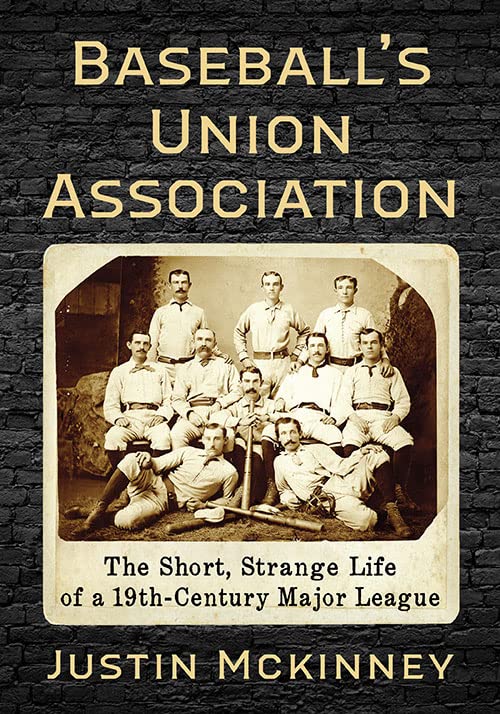
Day 17 of 2023 baseball books: Look for the Union label, talking a walk on the wild side of 1884

“Baseball’s Union Association: The Short,
Strange Life of a 19th-Century Major League”
The author:
Justin McKinney

The publishing info:
McFarland
277 pages, $49.95
Released Nov. 11, 2022

The links:
The publishers website
At Bookshop.org
At Vromans.com
At TheLastBookStoreLA
At Skylight Books
At Target
At BarnesAndNoble.com
At Amazon.com

“Baseball’s Wildest Season:
Three Leagues, Thirty-Four Teams
and the Chaos of 1884″

The author:
William J. Ryczek

The publishing info:
McFarland
273 pages, $45
Released March 10, 2023

The links:
The publishers website
At Bookshop.org
At Powells.com
At TheLastBookstoreLA.com
At Vromans.com
At SkylightBooks.com
At Barnes & Noble.com
At Amazon.com

The reviews in 90 feet or less

More to establish some justice than to insure any sort of domestic tranquility, the imperfect Union Association was formed — or throw together — as Option C for anyone aspiring to play what was considered major-league baseball in 1884, the 14th such season on record for such an enterprise.

It lasted all of one season. These things happen.

For context: Eighteen-hundred and eighty-four was less than 20 years removed from the official end of the Civil War. Chester A. Arthur was sheepishly trying to navigate his way around the White House in the wake of James Garfield’s assassination (and his assassin’s eventual hanging before a live audience as his punishment). The Depression/Recession of 1882-1885 was derailing some of the heralded progress going on during the Gilded Age.

It was a country 140 years ago that was still very short of developing its prefrontal cortex. something still somewhat evident in today’s world.

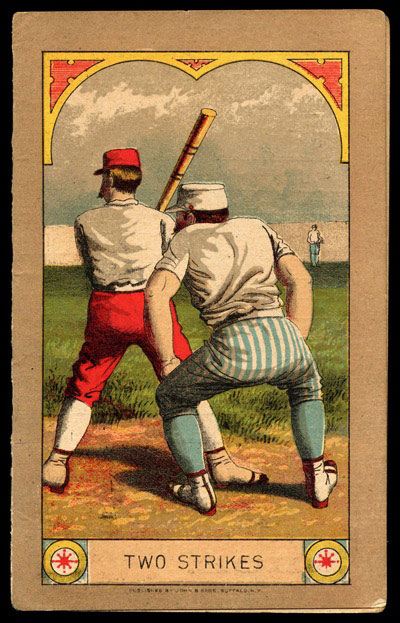
An 1884 Union League scorecard was sold at auction for more than $3,000 in 2004.

At baseball-refernece.com, the official existence of all 12 teams (in 13 cities) that came and went in the Union Association, along with details about its 94-19 champion St. Louis Maroons, is rightly placed amidst the data produced by the National League (started in 1876) and the American Association (started in 1882 but exhausting itself in 1891, a decade before the official American League came into being in 1901). This is where you’ll first see the existence of the Milwaukee Brewers, the Boston Reds (sans the Sox) and the Washington Nationals amidst the Wilmington Quicksteps, the Baltimore Monuments and the Cincinnati Outlaw Reds.

It’s where the Legend of Fred Dunlap exists.

St. Louis’ 25-year-old 5-foot-8 second baseman posted his Union-best .412 batting average, 13 homers, 185 hits, 160 runs, .621 slugging percentage and 1.069 OPS in 101 games, which looks practically Hall of Fame worthy. Dunlap, who defected to the Maroons for that 1884 season after playing four seasons for the National Association’s Cleveland Blues, would fade away with the 44-91-4 Washington Statesmen of the American Association in 1891 before dying at age 43, penniless, disabled from an ankle injury. Dunlap was better remembered for being on the 1887 Detroit Wolverines team that won the World Series against St. Louis’ Brown Stockings.

We’ve caught wind of the Players League of 1890. The Federal League of 1914-15. The National Association had also come and gone in the early 1870s. The Continental League, created by Branch Rickey in the late 1950s as a way to force MLB to expand. But anything short of what Bill James had covered in his Historical Baseball Abstract (and making a case the Union League not be recognized as a major league) is the reason why Justin McKinney, inspired by his Society of American Baseball Research brethren, decided to research and document even more about this one-and-done enterprise through newspaper clippings and the Baseball Hall of Fame excavation.

McKinney says his goal from the start is “to convince you that the Union Association is more than just Fred Dunlap, Henry Lucas (the Maroons’ diminutive, free-spending owner and league president), and a debate about league quality. It is about the spiteful magnates, disgruntled superstars, hungry youngsters, drunks, screw-ups, castoffs, anonymities, future stars, never-weres, hangers-on, and fanatics who did battle with the baseball establishment.”

Continue reading “Day 17 of 2023 baseball books: Look for the Union label, talking a walk on the wild side of 1884” →
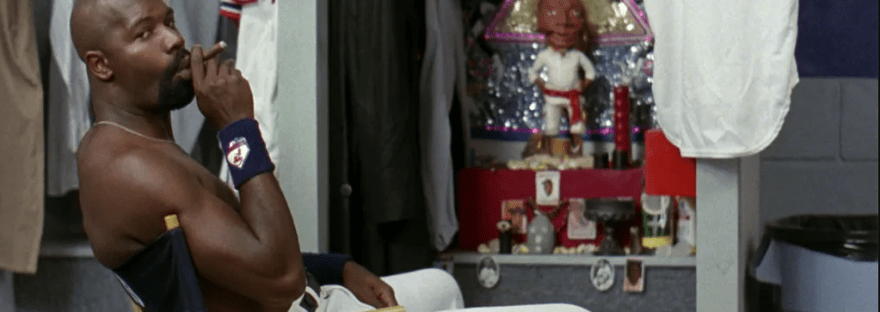
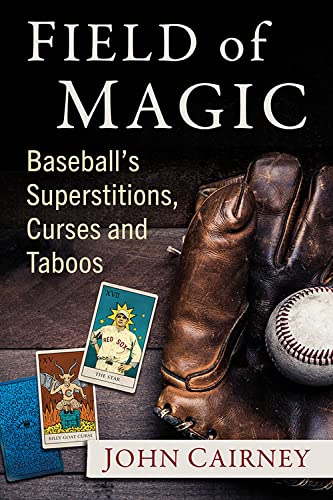
Day 16 of 2023 baseball books: When you believe in things you don’t understand then you suffer … superstition ain’t the way

“Field of Magic: Baseball’s Superstitions,
Curses and Taboos”

The author:
John Cairney

The publishing info:
McFarland
215 pages; $29.95
Released January 20, 2023

The links:
The publishers website
The authors website
At Bookshop.org
At Powells.com
At Vromans.com
At TheLastBookStoreLA
At Skylight Books
At Diesel Books
At PagesABookstore.com
At BarnesAndNoble.com
At Amazon.com

The review in 90 feet or less

In October, 1981, a column in the Boston Herald American by a Chicago writer named Ron Berler sold us a story that claimed “it is utterly impossible for a team with three or more ex-Cubs to win the World Series.” Call is ECF for short. There is no little blue pill solution for it.

Berler’s theory noted a pattern he observed since 1945, which had been the last time the Cubs were in the World Series. He found 13 teams with at least three ex-Cubs on their roster that made it to the Fall Classic over that 36-year period. And 12 of them lost. He was probably also painfully aware that Cubs’ history was all about having to shoulder such things as cursed billy goats and  inopportune black cats.


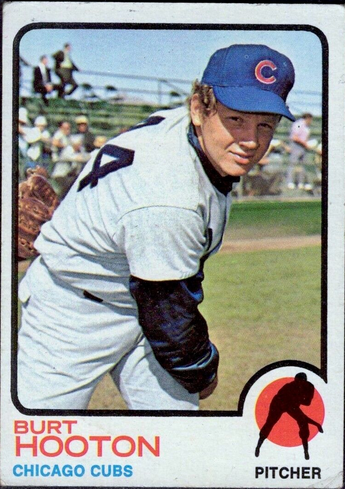
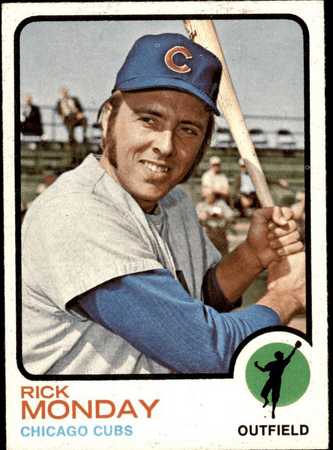
By Berler’s theory, at the time it came out, the Dodgers’ eventual winning the World Series in ‘81 was only logical – the Yankees actually had five ex-Cubs on their roster at the time. The Dodgers had only two – Burt Hooton and Rick Monday. Soon after, they would dispatch Davey Lopes, Ron Cey and Jay Johnstone to the Cubs – the essence of being sent out to pasture.

But it also explained how the Dodgers’ ’77 and ’78 World Series losses to the Yankees.

In ’77, their ex-Cubs contingent was just Hooton (who spent ’71 to ’75 with Chicago) until the Dodgers added Monday and relief pitcher Mike Garman (’76) in a deal for Bill Bucker and Ivan de Jesus.

In ’78, Berler noted that the Dodgers rid themselves of Garman but replaced him with outfielder Billy North, who came via Oakland in that odd Glenn Burke deal but had Cubs’ DNA in him from ’71 and ’72.

Actually, Garman was still with the Dodgers when North arrived and they overlapped three days before Garman was traded to Montreal in late May for a two young arms.

Berler can also explain how the ’66 Dodgers were humiliated by Baltimore a year after defeating Minnesota for the title. In ’65, they had just Jim Brewer and Lou Johnson as their ex-Cubs. In ’66, they added outfielder Wes Covington and made it three. Not a good move.

At last, the 2001 Arizona Diamondbacks, which included former Cubs star Mark Grace, won the World Series against the Yankees. It caused Grace, who had spent the previous 13 seasons in Chicago, to declare: “We beat the ex-Cub Factor.” Also on those D’backs were ex-Cubs outfielder Luis Gonzalez (who had the Game 7 game-winning hit off Mariano Riviera) and relief pitcher Miguel Batista.

When the Cubs won the 2016 World Series, they used 45 players during that season. Just seven years later, all of them are gone except pitcher Kyle Hendricks (who led the ’16 Cubs, and the NL, with a 2.13 ERA). One of those ex-Cubs is outfielder Jason Heyward, added to the 2023 Dodgers to go with ex-Cubs Shelby Miller (who pitched two innings for the Cubs in ’21) and Trace Thompson (35 at bats for the Cubs in ’21).

It behooves these Dodgers to release one of those three immediately. We kinda know which one. Leave no trace of why this decision is necessary.

Continue reading “Day 16 of 2023 baseball books: When you believe in things you don’t understand then you suffer … superstition ain’t the way” →

Day 15 of 2023 baseball books: Oh, Cey, can you see where this is all going?

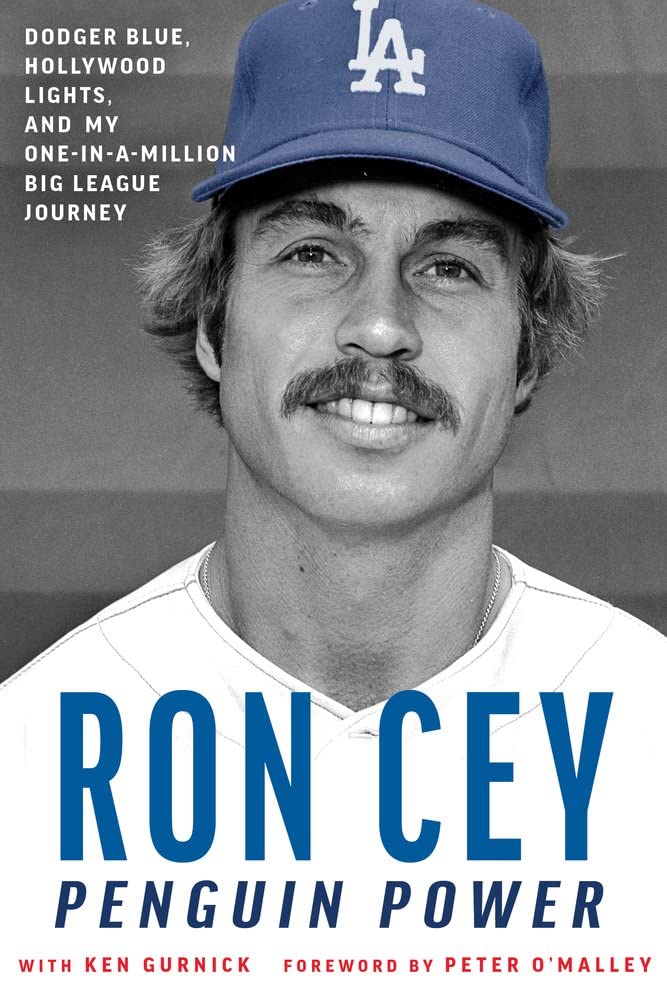
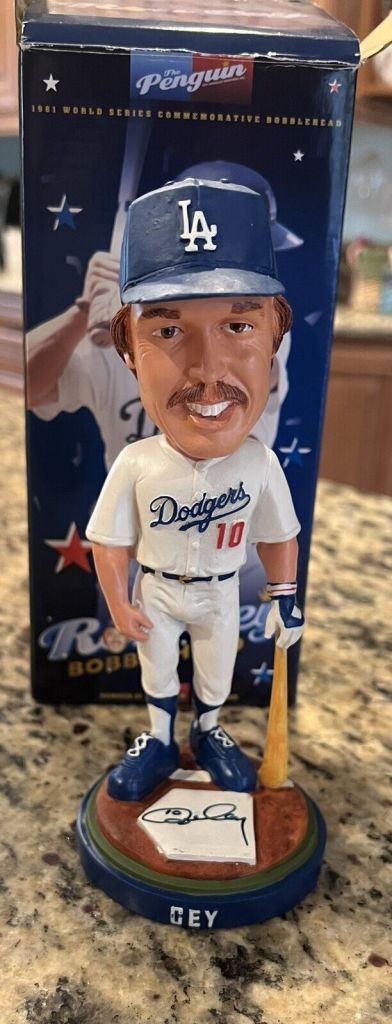
“Penguin Power: Dodger Blue, Hollywood Lights and
My One-in-a-Million Big League Journey”

The author:
Ron Cey
With Ken Gurnick

The publishing info:
Triumph Books
256 pages; $30
To be released June 13, 2023

The links:
The publishers website
At Bookshop.org
At Powells.com
At Vromans.com
At TheLastBookStoreLA
At Skylight Books
At Diesel Books
At BarnesAndNoble.com
At Amazon.com

The review in 90 feet or less

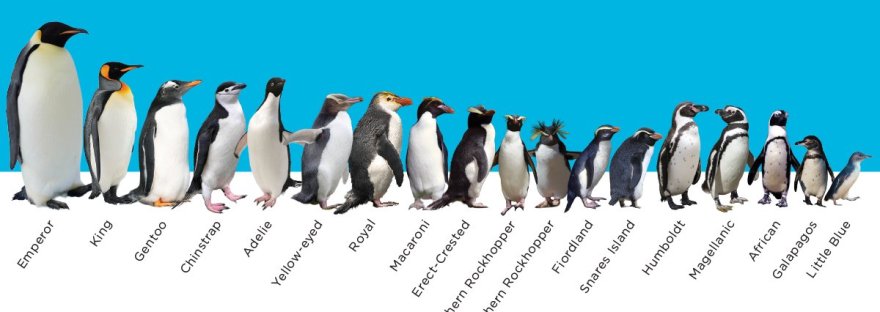
Penguins may not have been an endangered species at the time we were trying to figure out the world in the ‘60s and ‘70s. But you weren’t given much of a choice to figure out where you supposed to best nest.

It was all pretty black and white, actually.

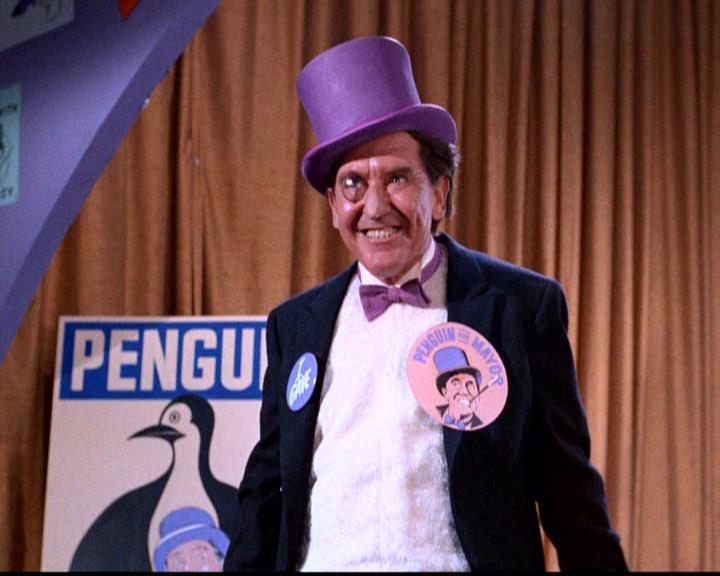
Over there, the super-villainous, mastermind mobster character from the TV “Batman” series. Burgess Meredith in a fat suit as the “Gentleman of Crime” with the purple top hat (we had no idea with our black-and-white TV), sporting a monocle, smoking a cigarette from a long-stem holder, and wielding an umbrella that became a weapon of deception (or even a helicopter so he could escape harm). He did it while making this weird quacking noise — maybe from the emphysema he was developing putting away packs of Lucky Strikes. This version of “The Penguin” was not to be trusted while he ran the devious Iceberg Lounge nightclub.

Not actual size. Close, but …

Then there was Ron Cey. A polar opposite.

Cey did nothing villainous to unseat Steve Garvey as the Los Angeles Dodgers’ hot-corner hot shot. At a time when the franchise was creating its personality and a model of success in  the early 1970s, Cey and Garvey were on different sides of the baseball spectrum (and infield) but meant to be joyful teammates.

If Garvey stood for all that was good and pure about baseball and life, Cey wasn’t necessarily on the other end, but he just knew to keep his head down, do his job, and success would come. For everyone’s betterment, Garvey was taken off third and moved to first base (by Garvey’s act of deceit, it appears), Cey anchored third, Davey Lopes and Bill Russell moved from the outfield to play second base and shortstop respectively, Bill Buckner went to left field, Bobby Valentine was unceremoniously taken out of the picture, and a long-running unscripted L.A.-based dynasty began.

If there was any good-vs.-evil script, it came to a head in Game 5 of the 1981 World Series. The Hated Yankees, and their flame-throwing relief pitcher nicknamed “Goose,” plunked Penguin with a fastball in the eighth inning of that contest, perhaps taking him out of the decision-making process in a disturbing fashion. Cey went to the hospital, wasn’t feeling quite right, and two nights later, in Gotham City, he returned with two hits as the Dodgers clinched the World Series in Game 6.

(And if you’re not sure about Rich Gossage and his evil ways …)

Throughout his career, and beyond, Cey has been accessible, honest, fair and thoughtful. He took ownership of things he could help fix and was a true team leader. All of that comes across in this book that allows him to be in the present and talk about all aspects of his playing and personal career, a narrative helped shape from longtime Dodgers’ beat-writer (now retired) Ken Gurnick.

However …

Continue reading “Day 15 of 2023 baseball books: Oh, Cey, can you see where this is all going?” →

Day 14 of 2023 baseball books: Bananas foster frenzy

“Banana Ball: The Unbelievably True Story
of the Savannah Bananas”

The author:
Jesse Cole
With Don Yaeger

The publishing info:
Dutton/Penguin/Random House
272 pages; $29
Released May 16, 2023

The links:
The publishers website
The authors website
At Bookshop.org
At Powells.com
At Vromans.com
At TheLastBookStoreLA
At Skylight Books
At BarnesAndNoble.com
At Amazon.com

The review in 90 feet or less

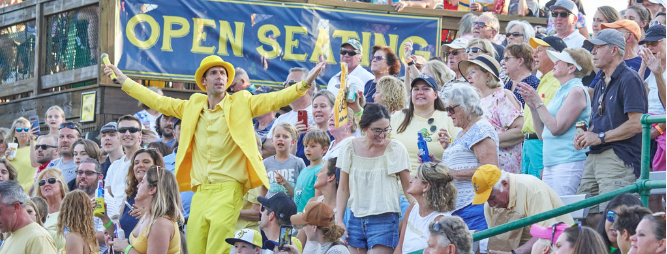
We didn’t go bananas when the email arrived May 17 informing us that we’d been aced out on getting in on any lottery tickets that would have provided access to the upcoming Savannah Bananas’ visit to the once-named Epicenter in Rancho Cucamonga for appearances on July 21 and 22.

It’s part of this year’s 33 cities in 22 states tour. The place holds about 6,500 and everything is sold.

Wait’ll next year, it advised.

There’s no appeal process. Pun intended.

In the meantime, we have read that if we try to go into the secondary market and secure a ticket from someone on the downlow who is considered to be a “booger eater,” which in banana slang must be something awful, then that makes us just as corrupt.

The Savannah Banana Republic is a real thing.

Continue reading “Day 14 of 2023 baseball books: Bananas foster frenzy” →