
Day 3 of 2022 new baseball books: The persnickety guy who came before Vin Scully was pretty good, too

“Red Barber: The Life and Legacy
of A Broadcasting Legend”
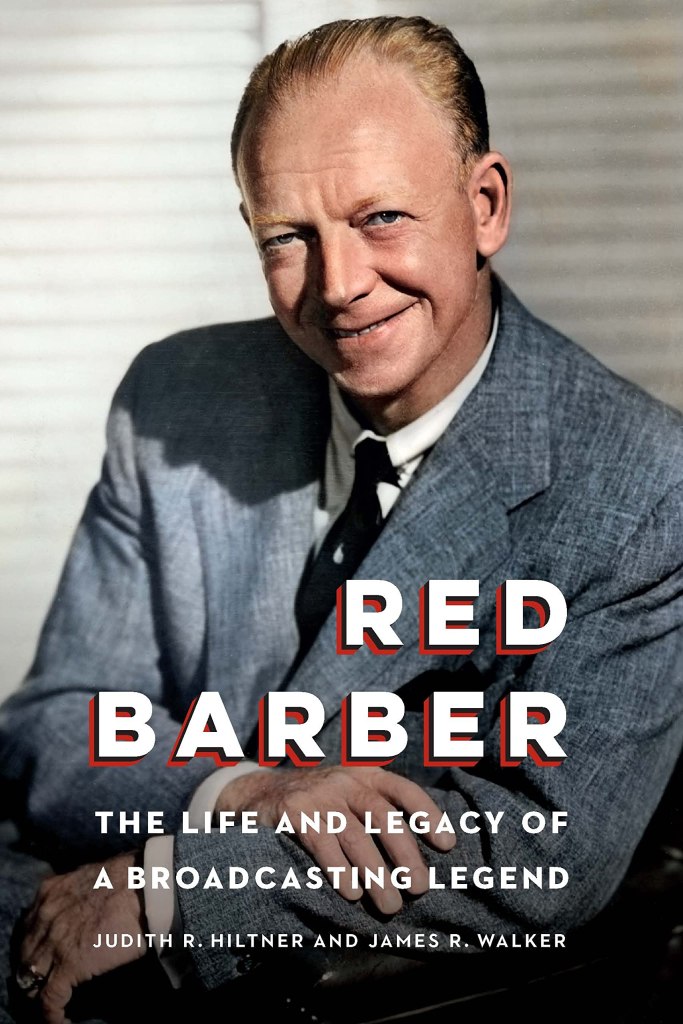
The authors:
James Walker
Judith Hiltner

The publishing info:
University of Nebraska Press
544 pages
$36.95
Released April 1, 2022

The links:
The publishers website
At Bookshop.org
At Indiebound.org
At Powells.com
At Vromans.com
At TheLastBookStoreLA
At PagesABookstore.com
At Amazon.com
At BarnesAndNoble.com

The review in 90 feet or less

Seventy-two years ago on this day – April 18, 1950 – a fresh-faced 22-year-old red head from Fordham University named Vin Scully called the first Major League Baseball game of his career.

Pull up a chair. This could take a minute to put into context.

Those Dodgers of Brooklyn, coming off their second World Series appearance in three years, had a burgeoning Hall of Fame pedigree. Reigning NL MVP Jackie Robinson was hitting cleanup. Pee Wee Reese led off, Duke Snider hit third, Gil Hodges was sixth and Roy Campanella was incredibly No. 8. Don Newcombe was on the mound. They endured a 9-1 loss to Robin Roberts at Philadelphia’s Shibe Park on Opening Day to the soon-to-be-named Whiz Kids Phillies – the same team that would also outlast them on the last game of the season in a 10-inning thriller at Ebbets Field to win the National League pennant.

A couple of other future Hall of Fame voices were also there to chronicle it.

From Mark Langill’s Dodgers MLB.com blog in 2020 on the 70th anniversary of Vin Scully’s debut.

The start of Scully’s 67-year career working for the team was because of a need to fill an opening in the team’s WMGM radio booth — Ernie Harwell left to join the broadcasting team for the New York Giants, the franchise Scully grew up admiring, and perhaps the Dodgers were lucky Scully wasn’t experienced enough at the time to even be considered for that position paired with Russ Hodges.

Already on this Dodgers’ broadcast team was Connie Desmond, who Scully would later characterize as someone like a favorite uncle.
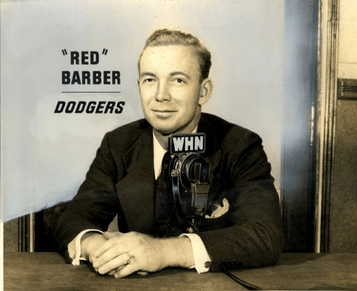
From The Sporting News archives, for auction by MearsOnlineAuctions.com

There was also Red Barber.

The then-42-year-old had been the original voice of the Dodgers 12 seasons earlier when they started doing games on WHN radio, teaming with Al Helfer in 1939. Barber recruited Scully, an intern at CBS Radio affiliate WTOP in Washington DC to cover a Maryland-Boston University football game in November, ’49, on the Fenway Park press box rooftop amidst horrible weather. Barber found he could become Scully’s mentor and taskmaster, calling him “a pretty appealing young green pea. You could tell this was a boy who had something on the ball.”

Barber who got Branch Rickey to sign off on hiring Scully just three years after Rickey made some history with Robinson.

At that point in time, the Dodgers were launching a new experiment doing games on New York’s WOR-TV. They needed more voices. Barber was ready to try this new visual experiment — he already had the historical footnote of being the broadcaster on the first televised baseball game in August of ’39.
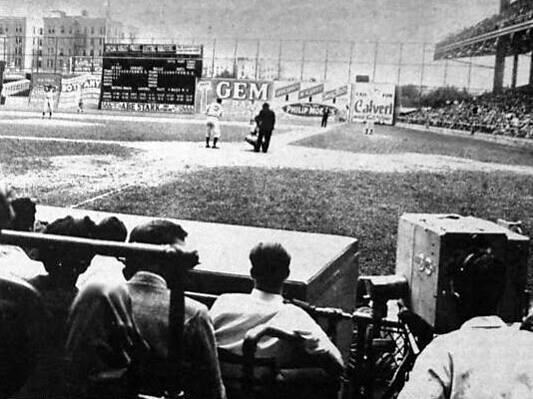
As it turned out, Barber and Scully only overlapped four seasons. Barber was gone after a dispute with new team owner Walter O’Malley and went to work for the rival New York Yankees.

Scully endured, made the move to L.A., and the rest was …

A lengthy, definitive bio someday will be done on Scully – we continue to discount the book that historian Curt Smith slap-dashed together in 2010, without Scully’s cooperation or blessing, justifying it because Scully was a public figure whose career was of notable interest. No doubt. But Scully, who turned 93 last November, pushes back often when requests are made to do his life story. A public person, but a very private man.

Just like Barber.

And to tell Scully’s story, we need to first know Barber’s.

The foundation has been laid first by a publisher that has dedicated itself to encouraging and preserving baseball history at (almost) any cost, and now by a husband-and-wife team of academics, recently retired as professors at Saint Xavier University, and enough fans of the game to know where to start, find more untapped material to work with, and then take the leap of faith there would be an appreciative audience for this task that needed twice the size of a normal biography to tell it — plus 60 more when you throw in the footnotes, bibliography and index.

Continue reading “Day 3 of 2022 new baseball books: The persnickety guy who came before Vin Scully was pretty good, too”
Day 2 of 2022 baseball books: Breaking news — the Dodgers’ way to play baseball in ’22 doesn’t concern you

“How to Beat a Broken Game:
The Rise of the Dodgers in a League on the Brink”

The author:
Pedro Moura

The publishing info:
Public Affairs publishing
272 pages
$29
Released March 29, 2022

The links:
The publishers website
At Bookshop.org
At Indiebound.org
At Powells.com
At Vromans.com
At TheLastBookStoreLA.com
At PagesABookstore.com
At Amazon.com
At BarnesAndNoble.com

The review in 90 feet or less

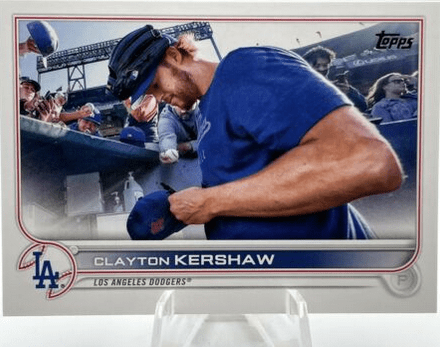
Pardon the interruption, but when Tony Kornheiser and Michael Wilbon appeared on their daily ESPN chat show last Wednesday, it seemed as if just minutes had passed since the Dodgers’ Clayton Kershaw was pulled from his start at Minnesota amidst seven perfect innings of work. That is, 21 Twins up, 21 down. An efficient 80 pitches for those keeping track (27 swings, 17 misses). Thirteen Ks and no walks.

The debate was fresh and hot, not half-baked.

This is what’s wrong with baseball,” Wilbon declared. “There are people running baseball who just care about … innings pitched, number of pitches … that’s all they give a damn about. Baseball is 140-plus years old. And you meant to tell me … If I were Clayton Kershaw I would have stood there and said to (manager) Dave Roberts when he asked for the ball: ‘Naw, I’m not giving it to you. … What are you gonna do? You gonna slap me?’ …”

(Flashback to Max Scherzer/Dave Roberts, 2021 one-game NL wildcard playoffs.)

“Baseball is driven by these lunatic people who control the numbers from the front office,” Wilbon continued. “I find them loathsome. And they’re killing the game.”

Kornheiser counterpunched: Kershaw was likely OK with the decision, he had an elbow injury last year, missed the playoffs, came back to the Dodgers instead of going free agent to another team because of the opportunity for a World Series run, had a short spring training season, and it’s only the second week of the season.

Wilbon wasn’t having it.

“You know what numbers geek would do? He’d tell Jackie Robinson on April 15, 1947, ‘You know, you’ve had a couple at bats, why don’t you come on out so we can save you.’ … Baseball is ‘less than.’ They’ve turned it over to people who don’t give a damn about the game and its soul. These people are crushing the game. … They’re awful people, Tony. I hate what they’ve done to baseball.”

Kershaw’s post-game response to the media had some edge, but not what it could have been: “Blame it on the lockout. Blame it on my not picking up a ball for three months (during the off season). I knew going in that my pitch count wasn’t going to be 100. It’s a hard thing to do, to come out of a game when you’re doing that. We’re here to win. This was the right choice.”

L.A. Times columnist Bill Plaschke wrote that everything the Dodgers did in this scenario was “perfect.” Yet he also pointed out: “Critics of Roberts will angrily note the incredible stat that he has managed the only two pitchers in history to be pulled from a perfect game after seven innings — Rich Hill in 2016, and Kershaw on Wednesday. But while the decision on Hill was questionable — it was late in the season and Hill didn’t want to leave the mound — anybody who closely follows the Dodgers surely understands that the Kershaw decision was a no-brainer.”

And, for the record, let’s also not overlook the times Roberts was compelled to yank Ross Stripling from a no hitter after 7 1/3 innings and 100 pitches in his MLB debut (April of 2016 in San Francisco). He then removed Walker Buehler, in his third MLB starts, from a no-hitter after six innings in that odd rain-delayed game in Mexico against San Diego after 93 pitches (May of 2018).

This Kershaw scenario could be seen from a mile away while watching it unfold live on SportsNet LA. Like taking a mouthwatering cake out of the oven when it could still use another 10 minutes, then watching it collapse in on itself because some who wrote the recipe algorithm decided they knew better.

Just three pages into Pedro Moura’s new book — there’s a image of Kershaw on the cover, by the way — this preamble is etched:

Pedro Moura, the current national baseball writer for Fox Sports who covered the Dodgers for the L.A. Times, Orange County Register and The Athletic.

“Forty years ago, the people pioneering the study of sabermetrics, the use of statistical analysis to pursue truths about baseball, never expected their work would be one day be adopted by every one of Major League Baseball’s teams. … Whatever the measures are called (today), few, if any, teams use them more than the Dodgers. Through 2020, two dozen employees with multidisciplinary degrees worked out of a converted clubhouse at Dodger Stadium, ideating ways to quantify and predict success … The franchise has come to define this fractured era. … Every decision (baseball operations chief Andrew Friedman) made was governed by the guiding principle of optionality, a term co-opted from Wall Street, where he had his professional start. The idea is to render no decision absolutely necessary, to preserve as many possible choices as long as possible. It manifests in many ways, most notably in the Dodgers’ relative lack of desperation. Desperate teams make decisions they will regret. Because of Friedman’s patience and ownership’s resources, the Dodgers stand perpetually ready to seize on opportunities created by another team’s desperation.”

Nutshell, you’ve been cracked. And in the process, you’re fracking things up.

Continue reading “Day 2 of 2022 baseball books: Breaking news — the Dodgers’ way to play baseball in ’22 doesn’t concern you”

Day 1 of 2022 baseball books: 75 years in, retelling Jackie Robinson’s true-blue story finds a reason and a season

“True: The Four Seasons of Jackie Robinson”

The author:
Kostya Kennedy

The publishing info:
St. Martin’s Press
278 pages
$26.99
Released April 12, 2022

The links:
At the author’s website
At the publishers website
At Bookshop.org
At Indiebound.org
At Powells.com
At Vromans.com
At TheLastBookStoreLA.com
At PagesABookstore.com
At Amazon.com
At BarnesAndNoble.com

The review in 90 feet or less

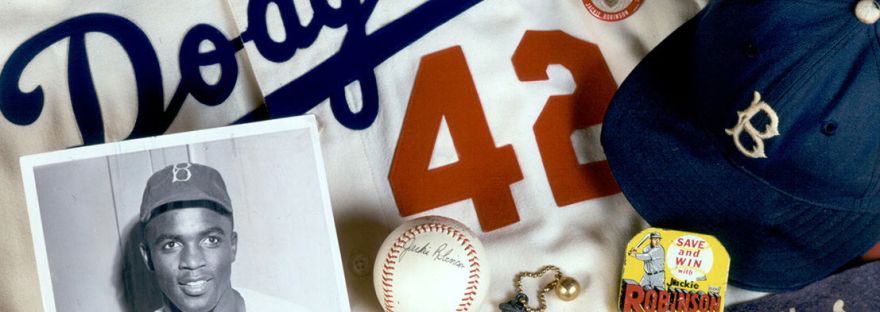
So what would Jackie Robinson do …

  • If he knew tonight’s annual tribute to him at Dodger Stadium wasn’t easily available to fans in Los Angeles, who are likely to settle in, flip on the TV and get blindsided by the fact this all exclusively on the Internet, streaming on their smart phone via something called Apple TV+ ? You mean … That’s it?
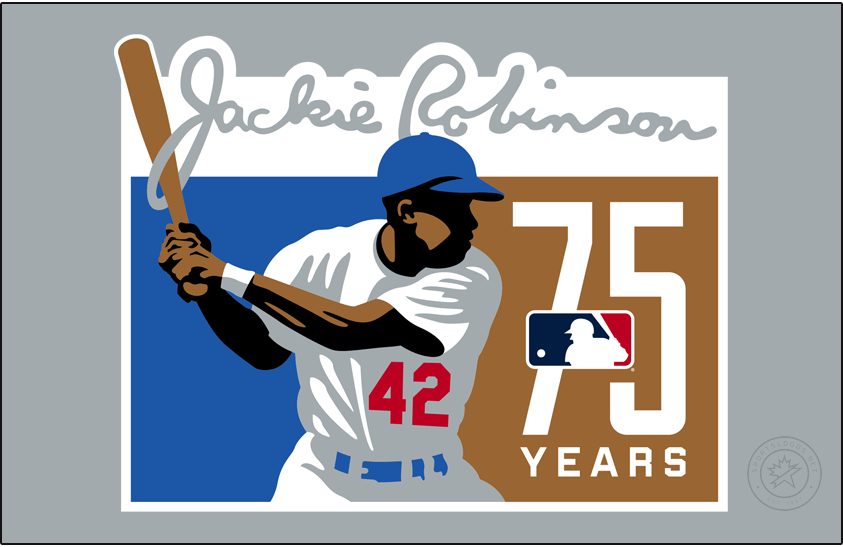
  • If he saw the MLB image of him created for this occasion depicted him wearing a white wrist band? How did that subliminal piece of design work its way in? Really, who is this, Dusty Baker?
  • If he was informed the first 40,000 who come to the game get a “free” Jackie Robinson jersey. That is, if they’ve already paid for an inflated ticket that starts at $50 and goes to $1,250 (the range given on the team’s website). That also grants the ability to whomever has this entry pass to slip on the shirt and take a selfie next to the Robinson statue in the center field plaza. (Actually, could any of this be worse than when a beer swill company hijacked his ghost for a sketchy 2019 campaign that claimed to pay him “honor”)?
  • If he was asked to write the forward to a few more books written about him that strategically align with the diamond anniversary of the first time he stepped on an MLB diamond?

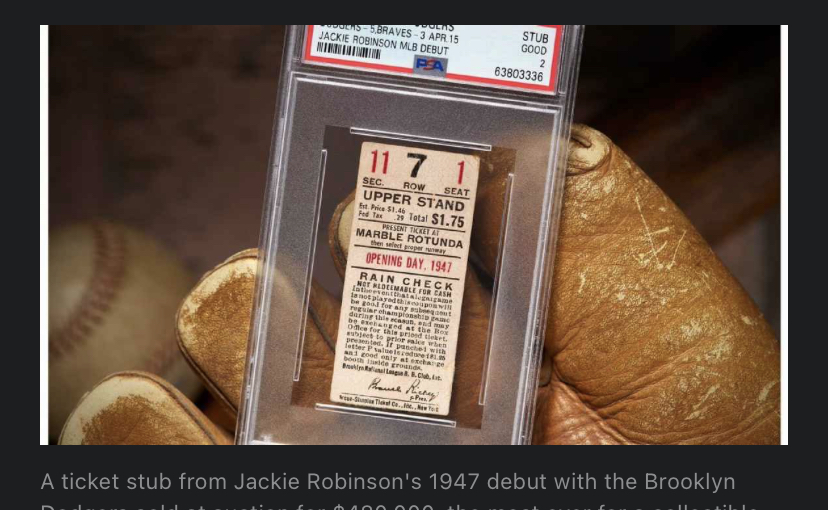
Given, the first three things connected to tonight’s Dodger Stadium activity almost wasn’t going to happen. The prolonged labor strife that was said to have wiped out the first week of the season was ready to chew up more of the schedule before the realization that it wasn’t a great PR move to have April 15, 2022 slip past everyone as collateral damage.

But now 50 years after his death, and 75 years after his MLB debut, these “WWJRD” are worthy asks. It is echoed in the words colleague Ron Rapoport wrote for the L.A. Times this week, an essay headlined: “Baseball reveres Jackie Robinson, but Robinson didn’t revere baseball. Here’s why”

So the feel-good institutionalization of the annual Robinson tributes has led me to a conclusion that might be uncharitable, but here it is. Baseball is lucky that Robinson died at the young age of 53 because to him the self-satisfied celebrations of Jackie Robinson Day would be just another example of white America’s patronizing indifference to the struggle of Black America.

It has to be said.

(Also consider Nancy Armour’s piece in USA Today: “MLB behind the times 75 years after Jackie Robinson breaking color barrier” and Tyler Kepner’s piece in the New York Times: ” ‘This Is American History’: The Hall of Fame reconsiders race” with Dave Winfield and Ken Griffey Jr. among the advisers on a permanent exhibit that re-examines the contributions of Jackie Robinson and others.)

Still, one can’t ignore this anniversary, and another opportunity to open up the Robinson-related lens for scholarly interpretations, public reflection and, of course, some shared profits along the way.

Thankfully, it is with a regal prose and elegance storytelling that Kostya Kennedy, the former Sports Illustrated senior scribe, comes up with a new framework for interpreting Robinson’s impact and legacy. Don’t expect a sweeping start-to-finish narrative here. Those have been done over and over, some exceptionally wall. With all the options to pick from, Kennedy may have leaned into his previous books on the historical importance of Joe DiMaggio and Pete Rose and set himself a path to choose a quartet of pivotal years in Robinson’s life:

Continue reading “Day 1 of 2022 baseball books: 75 years in, retelling Jackie Robinson’s true-blue story finds a reason and a season”

The 2022 baseball book parade of reviews will start …

It is with mixed emotions, messages and metaphors that I go against the shift in front of me and attempt to safely swing away at a new batch of baseball book reviews for 2022*.

Our favorite illustration from the last few months as the baseball labor stupor lingered on.

*- subject to our whims, whimpers and wistful memories of how much easier this once was.

Sixty one years after the 1961 season, and in my Year 61 of Life, we are all about the asterisk – that five-point heraldic star that just floats around the sentence to indicate “hang on, we need to explain more” or “don’t look at these missing letters because it can get nasty.* “

* Holy f***.

I intend to put my ass at risk, knowing there can be a huge downside to all this.

For those who aren’t up to our speed ball, it has been an exercise in empathy for the authors and efficiency on our end trying to crank out 30 reviews of new spring baseball books and post them, once a day, during the month of April. It was deemed something of a success for many years starting in 2011*.

Continue reading “The 2022 baseball book parade of reviews will start …”

On praying again for Gil Hodges, an enlightening documentary before the next Hall vote, and one kid’s remembrance

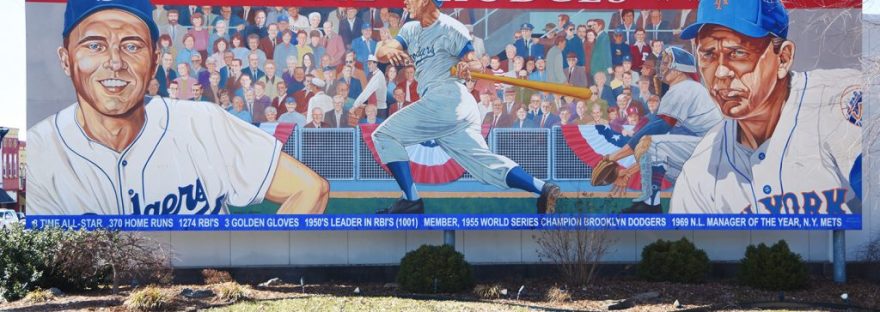
Photo above:
The baseball career of Gil Hodges is memorialized on a 52-by-16-foot mural in his hometown of Petersburg, Indiana, painted in 2009. Photo by Richard G. Biever of the IndianapolisConnection.org.

Story updated with names of Golden Era Committee members who will vote:

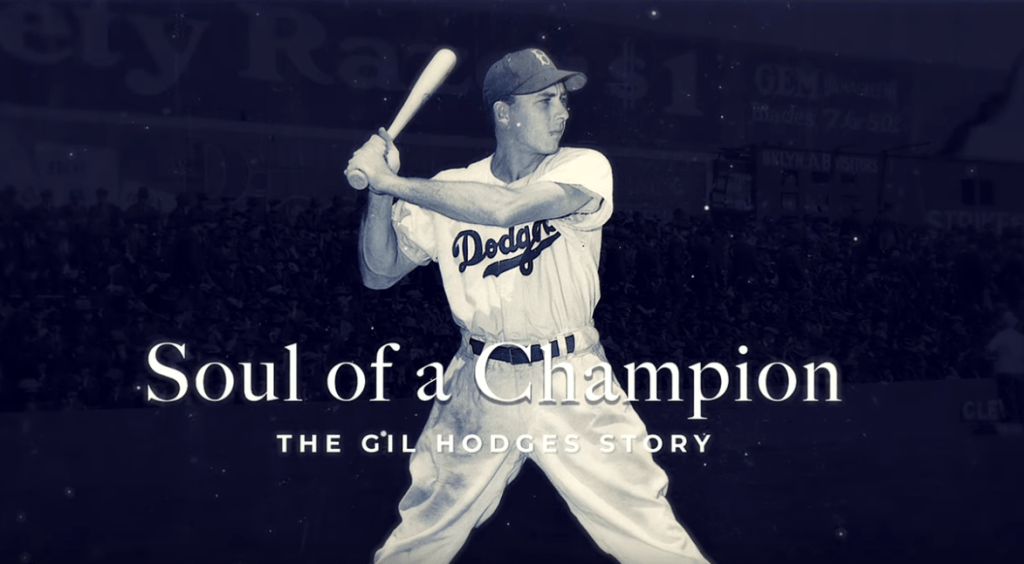
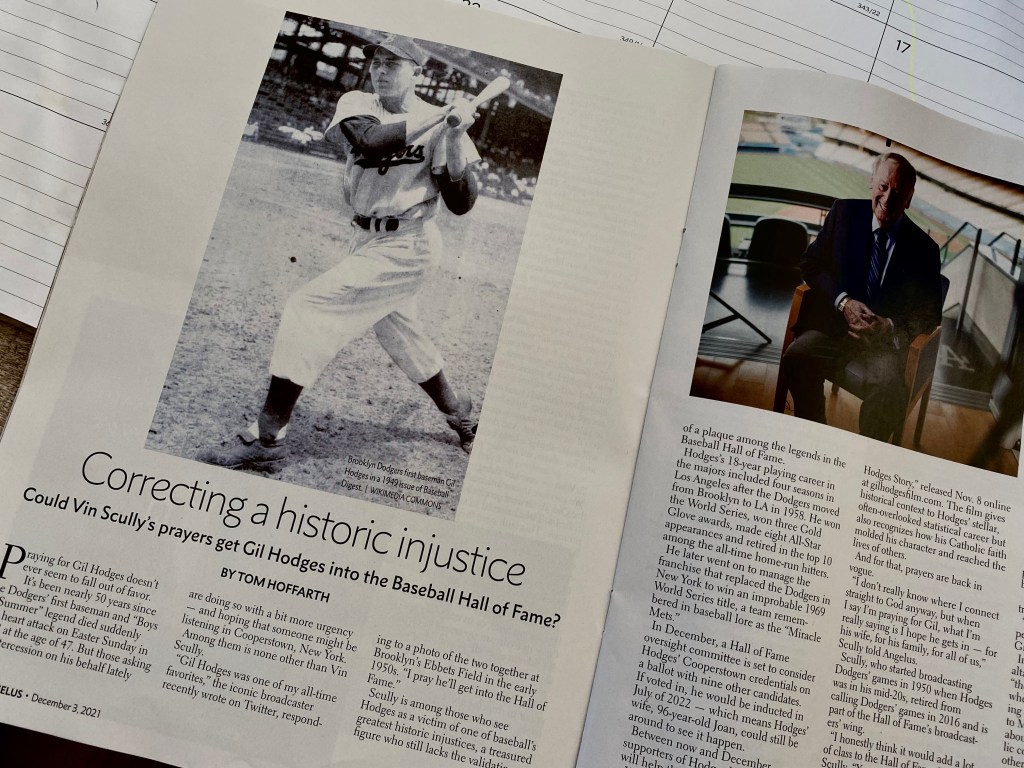
Our latest piece for Angelus News focuses on how Gil Hodges’ long and winding road toward an induction into the Baseball Hall of Fame will be re-enforced and augmented this time by a new documentary that highlights his Catholic faith and influence on others in “Soul of A Champion: The Gil Hodges Story.”

The vote by another one of the Hall’s Veterans Committee offshoots — a lever that was finally pulled to get the Cooperstown induction of Pee Wee Reese in 1984 and Walter O’Malley in 2008 — takes place Dec. 5.

Results will be announced that day at 3 p.m. PDT on the MLB Network.

The 16-member Hall of Fame Board-appointed electorate charged with the review of the Golden Days Era features Hall of Fame members Rod Carew, Fergie Jenkins, Mike Schmidt, John Schuerholz, Bud Selig, Ozzie Smith and Joe Torre; major league executives Al Avila, Bill DeWitt, Ken Kendrick, Kim Ng and Tony Reagins; and veteran media members/historians Adrian Burgos Jr., Steve Hirdt, Jaime Jarrin and Jack O’Connell.

The ballot with 10 names not only includes Hodges, but former Dodgers Maury Wills and Dick Allen, plus Minnie Minoso, Ken Boyer, Jim Kaat, Roger Maris, Danny Murtaugh, Tony Oliva and Billy Pierce. If we had a vote — and there is no limit on how many can be approved — we’d push for Hodges, Wills, Allen, Minoso and even consider Maris.

Alas, Hodges has been dead now longer than he was alive, and more than 50 years after his passing, one of the game’s most treasured and revered figures who somehow lacks the validation of a plaque among the game’s other elite. At the end of his playing career, he was the greatest right-handed hitting home run leader in National League history, for starters, and a key member of two World Series titles in two different cities for the Dodgers, bridging that history.

But if there was a silver lining, Gil Jr., told us recently: “You know if he’d been voted into the Hall 50 years ago, we wouldn’t be talking about him today. He’d almost be an afterthought. But because of these votes every so often, we get a chance to look at his life again and appreciate it. So maybe that’s not a bad thing.”

In that regard, we are not apt to refer to Hodges as a victim here (even though that’s what is says in the third paragraph of our Angelus story, inserted by perhaps an overzealous editor). We also aren’t keen on referring to this an “injustice,” as was inserted into the headline in the Angelus story.

We suspect Gil Hodges would rebuff that characterization as well. As we continually review the process by which he has been as close as one vote in 1993 to get in, but has received less than three votes in a recent attempt, this begs for more refinement to make sure that, despite what many agree is an egregious oversight, eventually it can be corrected. This time, perhaps, while his wife, Joan, is still with us at age 95.

Continue reading “On praying again for Gil Hodges, an enlightening documentary before the next Hall vote, and one kid’s remembrance”